Disclosure: As an Amazon Associate, airfryerkitchensupply.com earns from qualifying purchases. Links on this page are affiliate links; they cost you nothing extra. Prices and availability change often, so check the current Amazon listing before you buy.
This pie dish pros and cons guide is for home bakers who want a pie that slices cleanly, with a bottom crust that is cooked through rather than pale and soft, and a dish that feels safe to carry when it is full and hot. It compares glass, ceramic, and metal honestly, explains the soggy-bottom fixes that actually work, and covers the thermal-shock rules that keep glass and ceramic dishes safe for years of baking.
Quick Verdict and Key Takeaways
A pie dish is worth its cupboard space for anyone who bakes pies more than occasionally, because a shallow baking dish or a rimmed sheet cannot give pastry the support, depth, and even heating that a proper dish provides. It suits patient bakers willing to follow simple heat-care rules. It does not suit bakers who want to move a dish straight from freezer to fierce heat without checking maker guidance, or who only ever bake flat tarts that a different pan serves better.
In this guide
The Pros — Pie Dish Pros and Cons Advantages in Practice
A Cooked-Through Bottom Crust Is Achievable
With the right material and a preheated sheet underneath, the base stops being the weak point of the pie.
Depth is the decision bakers most often get wrong by accident. A standard-depth dish suits most single-crust and many double-crust pies, giving a balanced ratio of filling to pastry in every slice. A deep-dish version holds a generous mound of fruit and is wonderful for a tall apple pie, but that extra filling releases extra juice, takes longer to set at the centre, and makes the soggy-bottom problem harder, not easier. Choose depth for the pies you actually bake most often, not for the one spectacular pie you imagine baking once a year.
Cleaning and care decide how long a pie dish stays pleasant to use. Baked-on fruit sugars release more easily after a soak in warm water than under aggressive scrubbing, and that patience protects glazes and coatings alike. Avoid sudden cold water on a dish that is still hot, both for safety and for the life of the dish. Store dishes nested only if the maker allows it and the surfaces are protected, keep ceramic rims from clanking against each other, and dry metal promptly so it stays ready for the next bake without fuss.
You Can Watch, Learn and Adjust
Glass in particular turns every bake into information, because the base is visible before you slice.
An egg-wash seal is one of the oldest qualitative tricks for protecting a bottom crust, and it asks for no special equipment. Brushing the unbaked base lightly before the filling goes in creates a thin barrier that helps slow the soak of juices into the raw pastry while it sets. It is not magic, and it will not rescue a pie that is underbaked, but combined with a hot sheet underneath and a filling that is not swimming in liquid, it tips the odds noticeably toward a base that slices cleanly instead of slumping.
Quiche and savoury pies deserve a mention because they test a dish differently. Egg fillings are unforgiving about leaks, so a solid one-piece dish is a safer home for them than anything with a loose base, and they reward even heat because the centre should set just as the edges finish. A shallow standard dish often serves quiche better than a deep one, since a very deep egg filling can stay loose in the middle while the pastry over-browns. The dish that is perfect for a tall fruit pie is not automatically perfect for everything with a crust.
Oven-to-Table Serving
Glass and ceramic dishes present a pie beautifully, with fluted ceramic rims helping a crimp hold its shape.
A pie dish is also a general baking dish in disguise, and that second life matters when cupboard space is tight. The same dish that bakes a pie will roast a small batch of vegetables, bake a cobbler or a crumble, hold a quiche for brunch, or carry a baked pasta for two. If you are choosing a first dish, that versatility argues for a standard depth and a neutral material you will reach for weekly. If you already own a versatile dish, a second one in a different material is a smarter buy than a duplicate, because it widens what you can do.
Carrying a filled, hot pie dish is a safety task, not an afterthought. Always use two mitts, not one mitt and a tea towel, because a filled dish is heavier and less balanced than it looks and juices can shift the weight as you move. Clear and prepare the landing surface before you open the oven, keep the path short and unobstructed, and set the dish on a dry cloth, a wooden board, or a rack, never straight onto a cold counter. Children, pets, and dangling sleeves have no place near that short journey.
One Dish, Many Jobs
Pies, quiches, cobblers, crumbles, and small savoury bakes all fit the same standard dish.
The soggy bottom is the most common pie disappointment, and it is rarely caused by one single mistake. Usually it is a stack of small things: a very wet filling, a dish that heats gently, a pie placed high in the oven, and a bake cut short because the top looked done. Fixing it works the same way, as a stack of small things in your favour. Bake low, give the base direct heat from a preheated sheet underneath, let fruit fillings bubble at the centre and not just at the edges, and resist slicing until the pie has rested long enough for the filling to set.
Finally, remember that the baker matters more than the dish. Every material in this guide can produce an excellent pie in practised hands, and every material can produce a pale base in a rushed bake. What a good dish does is remove friction: it heats predictably, releases slices willingly, cleans without drama, and feels safe to carry when full and hot. Choose the dish whose habits match your habits, and then bake in it often enough that its behaviour becomes second nature. That familiarity, more than any single feature, is what turns out reliably good pies.
Even, Predictable Heating
A dedicated dish heats the filling and pastry together more predictably than improvised containers.
Carrying a filled, hot pie dish is a safety task, not an afterthought. Always use two mitts, not one mitt and a tea towel, because a filled dish is heavier and less balanced than it looks and juices can shift the weight as you move. Clear and prepare the landing surface before you open the oven, keep the path short and unobstructed, and set the dish on a dry cloth, a wooden board, or a rack, never straight onto a cold counter. Children, pets, and dangling sleeves have no place near that short journey.
Quiche and savoury pies deserve a mention because they test a dish differently. Egg fillings are unforgiving about leaks, so a solid one-piece dish is a safer home for them than anything with a loose base, and they reward even heat because the centre should set just as the edges finish. A shallow standard dish often serves quiche better than a deep one, since a very deep egg filling can stay loose in the middle while the pastry over-browns. The dish that is perfect for a tall fruit pie is not automatically perfect for everything with a crust.
Leftovers Stay Simple
A pie can cool, be covered, and refrigerate in the dish it baked in, saving washing and transfers.
A pie dish is also a general baking dish in disguise, and that second life matters when cupboard space is tight. The same dish that bakes a pie will roast a small batch of vegetables, bake a cobbler or a crumble, hold a quiche for brunch, or carry a baked pasta for two. If you are choosing a first dish, that versatility argues for a standard depth and a neutral material you will reach for weekly. If you already own a versatile dish, a second one in a different material is a smarter buy than a duplicate, because it widens what you can do.
Carrying a filled, hot pie dish is a safety task, not an afterthought. Always use two mitts, not one mitt and a tea towel, because a filled dish is heavier and less balanced than it looks and juices can shift the weight as you move. Clear and prepare the landing surface before you open the oven, keep the path short and unobstructed, and set the dish on a dry cloth, a wooden board, or a rack, never straight onto a cold counter. Children, pets, and dangling sleeves have no place near that short journey.
The Cons — Honest Limitations
Thermal Shock Is a Real Risk
Glass and ceramic can be damaged by sudden temperature change, so cold counters and cold liquid are genuine hazards, not fine print.
An egg-wash seal is one of the oldest qualitative tricks for protecting a bottom crust, and it asks for no special equipment. Brushing the unbaked base lightly before the filling goes in creates a thin barrier that helps slow the soak of juices into the raw pastry while it sets. It is not magic, and it will not rescue a pie that is underbaked, but combined with a hot sheet underneath and a filling that is not swimming in liquid, it tips the odds noticeably toward a base that slices cleanly instead of slumping.
Quiche and savoury pies deserve a mention because they test a dish differently. Egg fillings are unforgiving about leaks, so a solid one-piece dish is a safer home for them than anything with a loose base, and they reward even heat because the centre should set just as the edges finish. A shallow standard dish often serves quiche better than a deep one, since a very deep egg filling can stay loose in the middle while the pastry over-browns. The dish that is perfect for a tall fruit pie is not automatically perfect for everything with a crust.
A Filled Dish Is Heavy
Ceramic especially makes the two-mitt carry a serious task that not every baker finds comfortable.
Carrying a filled, hot pie dish is a safety task, not an afterthought. Always use two mitts, not one mitt and a tea towel, because a filled dish is heavier and less balanced than it looks and juices can shift the weight as you move. Clear and prepare the landing surface before you open the oven, keep the path short and unobstructed, and set the dish on a dry cloth, a wooden board, or a rack, never straight onto a cold counter. Children, pets, and dangling sleeves have no place near that short journey.
Quiche and savoury pies deserve a mention because they test a dish differently. Egg fillings are unforgiving about leaks, so a solid one-piece dish is a safer home for them than anything with a loose base, and they reward even heat because the centre should set just as the edges finish. A shallow standard dish often serves quiche better than a deep one, since a very deep egg filling can stay loose in the middle while the pastry over-browns. The dish that is perfect for a tall fruit pie is not automatically perfect for everything with a crust.
The Soggy Bottom Is Not Automatic History
A gentle-heating dish under a wet filling will still undercook a base if the bake is rushed or badly positioned.
The cautions with ceramic mirror those for glass. Sudden temperature swings are the enemy, so a hot ceramic dish belongs on a dry cloth or wooden board, never on a cold counter, and cold liquid should never be poured into a dish that has just come out of a hot oven. Broiler guidance varies by maker and by glaze, so check the guidance for your exact dish rather than assuming. Ceramic can also chip at the rim if it is stacked carelessly or knocked in a crowded cupboard, so store it with a little breathing room.
Depth is the decision bakers most often get wrong by accident. A standard-depth dish suits most single-crust and many double-crust pies, giving a balanced ratio of filling to pastry in every slice. A deep-dish version holds a generous mound of fruit and is wonderful for a tall apple pie, but that extra filling releases extra juice, takes longer to set at the centre, and makes the soggy-bottom problem harder, not easier. Choose depth for the pies you actually bake most often, not for the one spectacular pie you imagine baking once a year.
Deep Dishes Complicate Setting
Extra depth means extra juice and a centre that takes longer to set, which punishes impatience.
Carrying a filled, hot pie dish is a safety task, not an afterthought. Always use two mitts, not one mitt and a tea towel, because a filled dish is heavier and less balanced than it looks and juices can shift the weight as you move. Clear and prepare the landing surface before you open the oven, keep the path short and unobstructed, and set the dish on a dry cloth, a wooden board, or a rack, never straight onto a cold counter. Children, pets, and dangling sleeves have no place near that short journey.
A pie dish is also a general baking dish in disguise, and that second life matters when cupboard space is tight. The same dish that bakes a pie will roast a small batch of vegetables, bake a cobbler or a crumble, hold a quiche for brunch, or carry a baked pasta for two. If you are choosing a first dish, that versatility argues for a standard depth and a neutral material you will reach for weekly. If you already own a versatile dish, a second one in a different material is a smarter buy than a duplicate, because it widens what you can do.
Broiler Rules Vary
You cannot assume a dish is broiler-safe, so finishing a top under fierce direct heat needs maker confirmation.
A pie dish is also a general baking dish in disguise, and that second life matters when cupboard space is tight. The same dish that bakes a pie will roast a small batch of vegetables, bake a cobbler or a crumble, hold a quiche for brunch, or carry a baked pasta for two. If you are choosing a first dish, that versatility argues for a standard depth and a neutral material you will reach for weekly. If you already own a versatile dish, a second one in a different material is a smarter buy than a duplicate, because it widens what you can do.
Carrying a filled, hot pie dish is a safety task, not an afterthought. Always use two mitts, not one mitt and a tea towel, because a filled dish is heavier and less balanced than it looks and juices can shift the weight as you move. Clear and prepare the landing surface before you open the oven, keep the path short and unobstructed, and set the dish on a dry cloth, a wooden board, or a rack, never straight onto a cold counter. Children, pets, and dangling sleeves have no place near that short journey.
Storage Takes Thought
Ceramic rims chip when stacked carelessly, and a collection of dishes eats cupboard space quickly.
A pie dish is also a general baking dish in disguise, and that second life matters when cupboard space is tight. The same dish that bakes a pie will roast a small batch of vegetables, bake a cobbler or a crumble, hold a quiche for brunch, or carry a baked pasta for two. If you are choosing a first dish, that versatility argues for a standard depth and a neutral material you will reach for weekly. If you already own a versatile dish, a second one in a different material is a smarter buy than a duplicate, because it widens what you can do.
Cleaning and care decide how long a pie dish stays pleasant to use. Baked-on fruit sugars release more easily after a soak in warm water than under aggressive scrubbing, and that patience protects glazes and coatings alike. Avoid sudden cold water on a dish that is still hot, both for safety and for the life of the dish. Store dishes nested only if the maker allows it and the surfaces are protected, keep ceramic rims from clanking against each other, and dry metal promptly so it stays ready for the next bake without fuss.
Representative Dishes Behind This Assessment
The balance above is not abstract; it comes from living with dishes like these, one in each material and tier.

Pyrex Basics Pie Plate
The Pyrex Basics Pie Plate represents the glass approach at a entry tier, and its character follows from that material more than from any single feature. Glass heats steadily rather than aggressively, so the bottom crust tends to brown more gently than it does in metal. That gentleness suits delicate fillings and bakers who worry about scorching, but it also means a wet fruit filling can leave the base underdone if you rush. The honest fix is patience and position: bake low in the oven, give the pie time, and consider starting it on a preheated flat sheet so heat reaches the base from the first minutes rather than arriving late.
In everyday use, the Pyrex Basics Pie Plate is best judged on the pies you bake most. Fruit pies show its strengths clearly, because juices test both the base and the release. Bakers who understand that brief will get consistent results from it, while bakers expecting it to behave like a different material entirely will blame the dish for a mismatch that was really about expectations. Read the maker guidance that comes with it, especially anything about broilers, freezer use, and sudden temperature changes, and treat that guidance as part of the product itself.
Serving and storage round out the picture for the Pyrex Basics Pie Plate. It should move from oven to a prepared landing spot with two mitts, rest there undisturbed while the filling sets, and then either go to the table or, once cooled, be covered for the refrigerator. Washing is easiest after a patient soak rather than immediate scrubbing. Best for: bakers whose habits match glass and who want a entry-tier dish for regular pie baking. Not suited for: bakers who need the opposite material behaviour, or anyone unwilling to follow basic thermal-shock care.

Emile Henry Modern Classics Pie Dish
The Emile Henry Modern Classics Pie Dish represents the ceramic approach at a premium tier, and its character follows from that material more than from any single feature. The cautions with ceramic mirror those for glass. Sudden temperature swings are the enemy, so a hot ceramic dish belongs on a dry cloth or wooden board, never on a cold counter, and cold liquid should never be poured into a dish that has just come out of a hot oven. Broiler guidance varies by maker and by glaze, so check the guidance for your exact dish rather than assuming. Ceramic can also chip at the rim if it is stacked carelessly or knocked in a crowded cupboard, so store it with a little breathing room.
In everyday use, the Emile Henry Modern Classics Pie Dish is best judged on the pies you bake most. Custard and cream pies reward its even, predictable heating more than speed does. Bakers who understand that brief will get consistent results from it, while bakers expecting it to behave like a different material entirely will blame the dish for a mismatch that was really about expectations. Read the maker guidance that comes with it, especially anything about broilers, freezer use, and sudden temperature changes, and treat that guidance as part of the product itself.
Serving and storage round out the picture for the Emile Henry Modern Classics Pie Dish. It should move from oven to a prepared landing spot with two mitts, rest there undisturbed while the filling sets, and then either go to the table or, once cooled, be covered for the refrigerator. Washing is easiest after a patient soak rather than immediate scrubbing. Best for: bakers whose habits match ceramic and who want a premium-tier dish for regular pie baking. Not suited for: bakers who need the opposite material behaviour, or anyone unwilling to follow basic thermal-shock care.
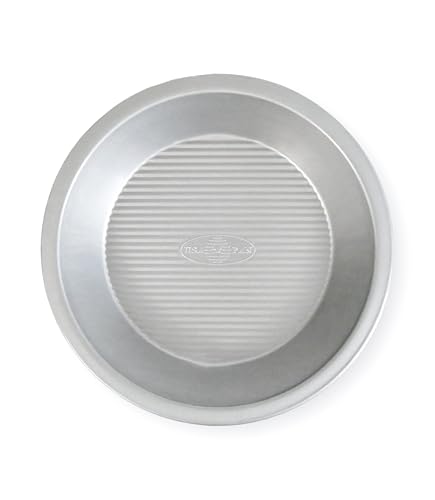
USA Pan Pie Pan
The USA Pan Pie Pan represents the metal approach at a mid tier, and its character follows from that material more than from any single feature. Where metal really shines is repeat baking. If you bake several pies in a row for a bake sale, a holiday, or a freezer stock-up, a light metal pan cools faster between bakes, stores in a fraction of the space of a ceramic dish, and lets you rotate pans without dedicating a whole shelf. The honest limitation is that you cannot see the bottom crust through it, so you learn to judge doneness by the bubbling of the filling at the centre, the colour of the visible crust, and time earned from your own previous bakes.
In everyday use, the USA Pan Pie Pan is best judged on the pies you bake most. Double-crust pies are its natural home ground, where edge behaviour matters as much as the base. Bakers who understand that brief will get consistent results from it, while bakers expecting it to behave like a different material entirely will blame the dish for a mismatch that was really about expectations. Read the maker guidance that comes with it, especially anything about broilers, freezer use, and sudden temperature changes, and treat that guidance as part of the product itself.
Serving and storage round out the picture for the USA Pan Pie Pan. It should move from oven to a prepared landing spot with two mitts, rest there undisturbed while the filling sets, and then either go to the table or, once cooled, be covered for the refrigerator. Washing is easiest after a patient soak rather than immediate scrubbing. Best for: bakers whose habits match metal and who want a mid-tier dish for regular pie baking. Not suited for: bakers who need the opposite material behaviour, or anyone unwilling to follow basic thermal-shock care.

OXO Good Grips Glass Pie Dish with Lid
The OXO Good Grips Glass Pie Dish with Lid represents the glass approach at a mid tier, and its character follows from that material more than from any single feature. Glass is the material that lets you learn the fastest, because you can see the bottom crust while the pie is still in the oven. Lift the dish carefully with two mitts, tilt it just enough to catch the light, and you can judge whether the base looks pale and soft or golden and set, without cutting a slice and hoping. That visibility changes how you bake: instead of guessing from the colour of the top alone, you start making small, calm decisions about whether the pie needs a little longer on a lower rack or whether it is ready to come out and rest.
In everyday use, the OXO Good Grips Glass Pie Dish with Lid is best judged on the pies you bake most. Savoury pies and quiches suit it well, provided the filling is not excessively wet. Bakers who understand that brief will get consistent results from it, while bakers expecting it to behave like a different material entirely will blame the dish for a mismatch that was really about expectations. Read the maker guidance that comes with it, especially anything about broilers, freezer use, and sudden temperature changes, and treat that guidance as part of the product itself.
Serving and storage round out the picture for the OXO Good Grips Glass Pie Dish with Lid. It should move from oven to a prepared landing spot with two mitts, rest there undisturbed while the filling sets, and then either go to the table or, once cooled, be covered for the refrigerator. Washing is easiest after a patient soak rather than immediate scrubbing. Best for: bakers whose habits match glass and who want a mid-tier dish for regular pie baking. Not suited for: bakers who need the opposite material behaviour, or anyone unwilling to follow basic thermal-shock care.
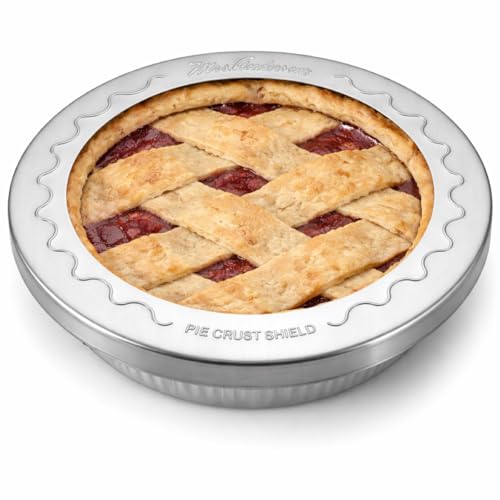
Mrs. Anderson’s Baking Pie Dish
The Mrs. Anderson’s Baking Pie Dish represents the ceramic approach at a mid tier, and its character follows from that material more than from any single feature. Ceramic dishes tend to have the most handsome rims, often fluted, and that fluting is not just decoration. A fluted edge gives your crimp something to follow, helps a decorative edge hold its shape, and makes a simple homemade pie look finished before it even goes into the oven. If you bake for gatherings, for photographs, or for the pleasure of carrying something beautiful to the table, ceramic earns its place on presentation alone, provided the baking underneath is sound.
In everyday use, the Mrs. Anderson’s Baking Pie Dish is best judged on the pies you bake most. Holiday baking, with several pies in rotation, is where its durability and handling count most. Bakers who understand that brief will get consistent results from it, while bakers expecting it to behave like a different material entirely will blame the dish for a mismatch that was really about expectations. Read the maker guidance that comes with it, especially anything about broilers, freezer use, and sudden temperature changes, and treat that guidance as part of the product itself.
Serving and storage round out the picture for the Mrs. Anderson’s Baking Pie Dish. It should move from oven to a prepared landing spot with two mitts, rest there undisturbed while the filling sets, and then either go to the table or, once cooled, be covered for the refrigerator. Washing is easiest after a patient soak rather than immediate scrubbing. Best for: bakers whose habits match ceramic and who want a mid-tier dish for regular pie baking. Not suited for: bakers who need the opposite material behaviour, or anyone unwilling to follow basic thermal-shock care.
What the Trade-Offs Mean for You
Depth is the decision bakers most often get wrong by accident. A standard-depth dish suits most single-crust and many double-crust pies, giving a balanced ratio of filling to pastry in every slice. A deep-dish version holds a generous mound of fruit and is wonderful for a tall apple pie, but that extra filling releases extra juice, takes longer to set at the centre, and makes the soggy-bottom problem harder, not easier. Choose depth for the pies you actually bake most often, not for the one spectacular pie you imagine baking once a year.
Resting is part of baking, not a delay before the real event. A fruit pie sliced too soon will run, no matter how good the dish is, because the filling needs time to thicken as it cools. Custard and cream pies need their own patience, often a full chill, before the texture the recipe promises actually arrives. A dish that holds heat gently, ceramic especially, keeps a pie warm for serving, while a pie that must chill and then travel may be easier in a lighter dish with a secure lid. Match the dish to the whole life of the pie, not just the hour in the oven.
Quiche and savoury pies deserve a mention because they test a dish differently. Egg fillings are unforgiving about leaks, so a solid one-piece dish is a safer home for them than anything with a loose base, and they reward even heat because the centre should set just as the edges finish. A shallow standard dish often serves quiche better than a deep one, since a very deep egg filling can stay loose in the middle while the pastry over-browns. The dish that is perfect for a tall fruit pie is not automatically perfect for everything with a crust.
How to Buy Smart
Resting is part of baking, not a delay before the real event. A fruit pie sliced too soon will run, no matter how good the dish is, because the filling needs time to thicken as it cools. Custard and cream pies need their own patience, often a full chill, before the texture the recipe promises actually arrives. A dish that holds heat gently, ceramic especially, keeps a pie warm for serving, while a pie that must chill and then travel may be easier in a lighter dish with a secure lid. Match the dish to the whole life of the pie, not just the hour in the oven.
Carrying a filled, hot pie dish is a safety task, not an afterthought. Always use two mitts, not one mitt and a tea towel, because a filled dish is heavier and less balanced than it looks and juices can shift the weight as you move. Clear and prepare the landing surface before you open the oven, keep the path short and unobstructed, and set the dish on a dry cloth, a wooden board, or a rack, never straight onto a cold counter. Children, pets, and dangling sleeves have no place near that short journey.
A pie dish is also a general baking dish in disguise, and that second life matters when cupboard space is tight. The same dish that bakes a pie will roast a small batch of vegetables, bake a cobbler or a crumble, hold a quiche for brunch, or carry a baked pasta for two. If you are choosing a first dish, that versatility argues for a standard depth and a neutral material you will reach for weekly. If you already own a versatile dish, a second one in a different material is a smarter buy than a duplicate, because it widens what you can do.
Setup and Care That Reduce the Cons
Freezing is another job many bakers ask of a pie dish, whether freezing an unbaked pie for later or storing leftovers. Here the thermal-shock rules matter in reverse: a dish going from freezer toward a hot oven faces exactly the sudden change that stresses glass and ceramic, so follow the maker guidance for your exact dish and, where the guidance is unclear, let the dish lose its deep chill before it meets serious heat, or choose metal for freezer-to-oven work. Never assume a dish is freezer-to-oven safe because it looks sturdy.
Carrying a filled, hot pie dish is a safety task, not an afterthought. Always use two mitts, not one mitt and a tea towel, because a filled dish is heavier and less balanced than it looks and juices can shift the weight as you move. Clear and prepare the landing surface before you open the oven, keep the path short and unobstructed, and set the dish on a dry cloth, a wooden board, or a rack, never straight onto a cold counter. Children, pets, and dangling sleeves have no place near that short journey.
A pie dish is also a general baking dish in disguise, and that second life matters when cupboard space is tight. The same dish that bakes a pie will roast a small batch of vegetables, bake a cobbler or a crumble, hold a quiche for brunch, or carry a baked pasta for two. If you are choosing a first dish, that versatility argues for a standard depth and a neutral material you will reach for weekly. If you already own a versatile dish, a second one in a different material is a smarter buy than a duplicate, because it widens what you can do.
Bottom Line
The pros outweigh the cons for regular pie bakers, provided the cons are managed with habits rather than ignored. Choose the material whose limitations you mind least, because you will live with those limitations every bake, while the strengths of any good dish quickly become invisible in the best way: pies simply turn out as expected.
Practical Notes From Regular Baking
Resting is part of baking, not a delay before the real event. A fruit pie sliced too soon will run, no matter how good the dish is, because the filling needs time to thicken as it cools. Custard and cream pies need their own patience, often a full chill, before the texture the recipe promises actually arrives. A dish that holds heat gently, ceramic especially, keeps a pie warm for serving, while a pie that must chill and then travel may be easier in a lighter dish with a secure lid. Match the dish to the whole life of the pie, not just the hour in the oven.
An egg-wash seal is one of the oldest qualitative tricks for protecting a bottom crust, and it asks for no special equipment. Brushing the unbaked base lightly before the filling goes in creates a thin barrier that helps slow the soak of juices into the raw pastry while it sets. It is not magic, and it will not rescue a pie that is underbaked, but combined with a hot sheet underneath and a filling that is not swimming in liquid, it tips the odds noticeably toward a base that slices cleanly instead of slumping.
Metal is not the prettiest serving vessel, and most bakers who use it either serve slices from the kitchen or slip the whole pan onto a board or stand at the table. Some metal pans have removable or textured surfaces and coatings whose care guidance differs, so follow the maker guidance for washing and for metal utensils rather than assuming every pan can be treated the same. A plain, sturdy metal pan washed by hand and dried promptly will usually outlast trendier finishes.
Cleaning and care decide how long a pie dish stays pleasant to use. Baked-on fruit sugars release more easily after a soak in warm water than under aggressive scrubbing, and that patience protects glazes and coatings alike. Avoid sudden cold water on a dish that is still hot, both for safety and for the life of the dish. Store dishes nested only if the maker allows it and the surfaces are protected, keep ceramic rims from clanking against each other, and dry metal promptly so it stays ready for the next bake without fuss.
Related Guides
the pie dish buying guide guide
the is a pie dish worth it guide
the air fryer cake pan sizes and fit guide
the best small cake pans for air fryers guide
The Trade-Offs in Daily Life: Where a Pie Dish Earns Its Place and Where It Does Not
Most advice about a pie dish focuses on the day you buy it, yet satisfaction is decided later, at the oven and the table it may be carried to, during baking pies, quiches and bakes that go from oven to serving. So work backwards from daily life: fix the routine, the space and the people in your mind first, and only then weigh the features that looked persuasive on a product page. The first check is the depth and diameter against your usual fillings and pastry quantities, and it outranks everything else, because no styling or extra capacity compensates when that basic fit is wrong. First impressions flatter almost everything. The one-month verdict, after the routine has tested the pie dish properly, is the opinion worth trusting and acting on.
Other people in the household get a vote too, since the person who cleans, moves, stores or shares the pie dish will find friction that the buyer, focused on the main job, can easily miss. Ask which part of the pie dish will look tired first and whether that tiredness is cosmetic, cleanable, repairable or terminal, because the answer sets the realistic lifespan. Every item leaves a footprint on the home beyond its dimensions: noise, mess, heat, moisture, effort or visual clutter. Weigh that footprint for a pie dish as seriously as its size. A rotation or spare strategy suits some households, where one pie dish rests, dries, charges or waits in reserve while another works, and it can double useful life for surprisingly little organisation.
- Sort disadvantages into fatal flaws and ones a routine can manage.
- Give daily annoyances more weight than twice-a-year inconveniences.
- Test the verdict against your busiest week rather than your easiest.
- Choose the compromise your household complains about least.
- Score every advantage by how often your household will feel it.
Sometimes the right purchase is smaller than planned because an existing possession covers the heavy or rare jobs, leaving the new pie dish to specialise in the frequent ones. Apply this thinking to real candidates, such as the Pyrex Basics Pie Plate or the Emile Henry Modern Classics Pie Dish: open the current listing, confirm the dimensions, parts and care details, and only then judge the photographs. Compatibility deserves a slower look than it usually gets, because a pie dish never works alone; it must suit the surfaces, fittings, storage, light and other items already around it. The second check is whether the material suits the bakes you make, from crisp pastry to slow puddings, a point shoppers skip because it is hard to judge from photographs, yet it is painfully obvious within the first week of ownership.
Check what the purchase does not include, because the missing mat, fitting, filter, cover, tool or connector discovered after delivery is a small cost and a large irritation. There is always a learning curve, however small. Decide who in the household faces the steepest part of it with this pie dish and whether the design helps or hinders them. When every option looks equally good, the missing information is rarely about the products; it is about your household, and that is the gap to close before spending anything. The most future-proof question is also the simplest: if your routine changed moderately, would this pie dish adapt, or would it become the wrong tool kept out of guilt?
Storage between uses is part of ownership, so decide where the pie dish and anything it needs will live when idle, and be honest if the only answer is a surface you cannot spare. Lists of advantages and disadvantages flatten real life, so translate each point into a frequency: something that happens daily outweighs something that happens twice a year, whatever the bullet points suggest. Specification creep is real.
Frequently Asked Questions
Can you see if the bottom crust is done?
Only a glass dish lets you look at the base directly, and even then you should lift it carefully with two mitts and tilt it just enough to catch the light. With ceramic or metal you judge by other signs: filling bubbling at the centre, a top crust that is deeply coloured rather than merely blonde, and the timing you have learned from your own oven. None of these signs works alone, which is why experienced bakers combine two or three before deciding a pie is finished.
How do you stop a soggy bottom crust?
Stack small advantages rather than hunting for one miracle. Bake the pie low in the oven, set the dish on a preheated flat sheet so heat reaches the base early, consider a light egg-wash seal on the raw base before filling, and make sure the filling is not excessively wet before it goes in. Then bake until the filling bubbles at the centre and rest the pie properly before slicing, because a pie cut too soon will seem soggy even when the crust itself baked well.
Is a deep-dish pie dish better than a standard one?
Neither is better in the abstract; they suit different pies. A standard depth gives a balanced slice and sets reliably, which makes it the safer first and only dish for most kitchens. A deep dish holds a generous mound of fruit and makes a spectacular tall pie, but the extra filling releases more juice and takes longer to set, so it demands more care against a soft base. Buy depth for the pies you bake often, not for a single imagined occasion.
Can a hot glass or ceramic dish go on a cold counter?
No, and this is one of the clearest safety rules in pie baking. A hot dish on a cold stone counter, a wet surface, or a cold metal surface can be shocked by the sudden temperature difference. Rest every hot dish on a dry cloth, a wooden board, or a rack instead, and never pour cold liquid into a dish that has just come out of the oven. Broiler use also varies by maker, so check the guidance for your exact dish rather than assuming it is allowed.
How should you carry a filled hot pie dish?
Treat it as a planned task. Use two proper mitts, prepare a clear landing spot on a dry cloth or wooden board before you open the oven, keep the path short, and move slowly because a filled dish is heavy and its weight can shift. This matters most with ceramic, the heaviest material once filled, but it applies to every material. Never carry a hot filled dish one-handed, and never use a damp towel as a substitute for a mitt.
Can one pie dish also work for quiche and cobblers?
Yes, and that versatility is a good reason to choose a standard-depth dish first. A solid one-piece dish holds egg fillings for quiche without leaking, bakes cobblers and crumbles happily, and can roast small batches of savoury food between pies. A very deep dish is less ideal for quiche, whose centre can stay loose, so if savoury baking matters as much as fruit pies, let that influence your depth choice. One well-chosen dish used weekly beats a specialised dish used twice a year.

