Disclosure: As an Amazon Associate, airfryerkitchensupply.com earns from qualifying purchases. Links on this page are affiliate links; they cost you nothing extra. Prices and availability change often, so check the current Amazon listing before you buy.
This is a pie dish worth it guide is for home bakers who want a pie that slices cleanly, with a bottom crust that is cooked through rather than pale and soft, and a dish that feels safe to carry when it is full and hot. It compares glass, ceramic, and metal honestly, explains the soggy-bottom fixes that actually work, and covers the thermal-shock rules that keep glass and ceramic dishes safe for years of baking.
Short Answer and Key Takeaways
Worth it if you bake pies, quiches, or cobblers at home with any regularity and you are tired of pale bases and improvised containers. Not worth it if you bake a pie once a year and a borrowed dish has always sufficed, or if your baking is entirely flat tarts and sheet bakes that other pans already serve well. The value is not novelty; it is repeatability, a crust that cooks through, and a dish that carries a full pie safely.
In this guide
What You Actually Get — the Is a Pie Dish Worth It Question in Detail
An egg-wash seal is one of the oldest qualitative tricks for protecting a bottom crust, and it asks for no special equipment. Brushing the unbaked base lightly before the filling goes in creates a thin barrier that helps slow the soak of juices into the raw pastry while it sets. It is not magic, and it will not rescue a pie that is underbaked, but combined with a hot sheet underneath and a filling that is not swimming in liquid, it tips the odds noticeably toward a base that slices cleanly instead of slumping.
The soggy bottom is the most common pie disappointment, and it is rarely caused by one single mistake. Usually it is a stack of small things: a very wet filling, a dish that heats gently, a pie placed high in the oven, and a bake cut short because the top looked done. Fixing it works the same way, as a stack of small things in your favour. Bake low, give the base direct heat from a preheated sheet underneath, let fruit fillings bubble at the centre and not just at the edges, and resist slicing until the pie has rested long enough for the filling to set.
Finally, remember that the baker matters more than the dish. Every material in this guide can produce an excellent pie in practised hands, and every material can produce a pale base in a rushed bake. What a good dish does is remove friction: it heats predictably, releases slices willingly, cleans without drama, and feels safe to carry when full and hot. Choose the dish whose habits match your habits, and then bake in it often enough that its behaviour becomes second nature. That familiarity, more than any single feature, is what turns out reliably good pies.
The Real Costs Beyond Money
Finally, remember that the baker matters more than the dish. Every material in this guide can produce an excellent pie in practised hands, and every material can produce a pale base in a rushed bake. What a good dish does is remove friction: it heats predictably, releases slices willingly, cleans without drama, and feels safe to carry when full and hot. Choose the dish whose habits match your habits, and then bake in it often enough that its behaviour becomes second nature. That familiarity, more than any single feature, is what turns out reliably good pies.
Cleaning and care decide how long a pie dish stays pleasant to use. Baked-on fruit sugars release more easily after a soak in warm water than under aggressive scrubbing, and that patience protects glazes and coatings alike. Avoid sudden cold water on a dish that is still hot, both for safety and for the life of the dish. Store dishes nested only if the maker allows it and the surfaces are protected, keep ceramic rims from clanking against each other, and dry metal promptly so it stays ready for the next bake without fuss.
A pie dish is also a general baking dish in disguise, and that second life matters when cupboard space is tight. The same dish that bakes a pie will roast a small batch of vegetables, bake a cobbler or a crumble, hold a quiche for brunch, or carry a baked pasta for two. If you are choosing a first dish, that versatility argues for a standard depth and a neutral material you will reach for weekly. If you already own a versatile dish, a second one in a different material is a smarter buy than a duplicate, because it widens what you can do.
Who It Pays Off For
The cautions with ceramic mirror those for glass. Sudden temperature swings are the enemy, so a hot ceramic dish belongs on a dry cloth or wooden board, never on a cold counter, and cold liquid should never be poured into a dish that has just come out of a hot oven. Broiler guidance varies by maker and by glaze, so check the guidance for your exact dish rather than assuming. Ceramic can also chip at the rim if it is stacked carelessly or knocked in a crowded cupboard, so store it with a little breathing room.
A pie dish is also a general baking dish in disguise, and that second life matters when cupboard space is tight. The same dish that bakes a pie will roast a small batch of vegetables, bake a cobbler or a crumble, hold a quiche for brunch, or carry a baked pasta for two. If you are choosing a first dish, that versatility argues for a standard depth and a neutral material you will reach for weekly. If you already own a versatile dish, a second one in a different material is a smarter buy than a duplicate, because it widens what you can do.
Ceramic is usually the heaviest choice once filled, and that weight matters more than most product pages admit. A deep ceramic dish full of apples, juices, and pastry is a serious two-handed, two-mitt lift from oven to counter. Plan the landing spot before you open the oven door, clear it, and move slowly. Bakers with limited grip strength sometimes prefer to bake in a lighter dish and accept a plainer presentation, and that is a perfectly reasonable trade rather than a compromise to apologise for.
Who Should Skip It
Depth is the decision bakers most often get wrong by accident. A standard-depth dish suits most single-crust and many double-crust pies, giving a balanced ratio of filling to pastry in every slice. A deep-dish version holds a generous mound of fruit and is wonderful for a tall apple pie, but that extra filling releases extra juice, takes longer to set at the centre, and makes the soggy-bottom problem harder, not easier. Choose depth for the pies you actually bake most often, not for the one spectacular pie you imagine baking once a year.
Finally, remember that the baker matters more than the dish. Every material in this guide can produce an excellent pie in practised hands, and every material can produce a pale base in a rushed bake. What a good dish does is remove friction: it heats predictably, releases slices willingly, cleans without drama, and feels safe to carry when full and hot. Choose the dish whose habits match your habits, and then bake in it often enough that its behaviour becomes second nature. That familiarity, more than any single feature, is what turns out reliably good pies.
Carrying a filled, hot pie dish is a safety task, not an afterthought. Always use two mitts, not one mitt and a tea towel, because a filled dish is heavier and less balanced than it looks and juices can shift the weight as you move. Clear and prepare the landing surface before you open the oven, keep the path short and unobstructed, and set the dish on a dry cloth, a wooden board, or a rack, never straight onto a cold counter. Children, pets, and dangling sleeves have no place near that short journey.
Strengths and Trade-Offs of Owning One
Strengths
- Reliable bottom crusts become a habit rather than luck.
- One dish covers sweet pies, savoury pies, quiches, and fruit bakes.
- Serving and storing leftovers happen in the same dish.
Trade-offs
- Glass and ceramic need thermal-shock care for life.
- A filled dish is heavy and demands a planned two-mitt carry.
- Cupboard space and careful storage are ongoing costs.
The soggy bottom is the most common pie disappointment, and it is rarely caused by one single mistake. Usually it is a stack of small things: a very wet filling, a dish that heats gently, a pie placed high in the oven, and a bake cut short because the top looked done. Fixing it works the same way, as a stack of small things in your favour. Bake low, give the base direct heat from a preheated sheet underneath, let fruit fillings bubble at the centre and not just at the edges, and resist slicing until the pie has rested long enough for the filling to set.
Cleaning and care decide how long a pie dish stays pleasant to use. Baked-on fruit sugars release more easily after a soak in warm water than under aggressive scrubbing, and that patience protects glazes and coatings alike. Avoid sudden cold water on a dish that is still hot, both for safety and for the life of the dish. Store dishes nested only if the maker allows it and the surfaces are protected, keep ceramic rims from clanking against each other, and dry metal promptly so it stays ready for the next bake without fuss.
Alternatives to Consider

Pyrex Basics Pie Plate
The Pyrex Basics Pie Plate represents the glass approach at a entry tier, and its character follows from that material more than from any single feature. Glass heats steadily rather than aggressively, so the bottom crust tends to brown more gently than it does in metal. That gentleness suits delicate fillings and bakers who worry about scorching, but it also means a wet fruit filling can leave the base underdone if you rush. The honest fix is patience and position: bake low in the oven, give the pie time, and consider starting it on a preheated flat sheet so heat reaches the base from the first minutes rather than arriving late.
In everyday use, the Pyrex Basics Pie Plate is best judged on the pies you bake most. Fruit pies show its strengths clearly, because juices test both the base and the release. Bakers who understand that brief will get consistent results from it, while bakers expecting it to behave like a different material entirely will blame the dish for a mismatch that was really about expectations. Read the maker guidance that comes with it, especially anything about broilers, freezer use, and sudden temperature changes, and treat that guidance as part of the product itself.
Serving and storage round out the picture for the Pyrex Basics Pie Plate. It should move from oven to a prepared landing spot with two mitts, rest there undisturbed while the filling sets, and then either go to the table or, once cooled, be covered for the refrigerator. Washing is easiest after a patient soak rather than immediate scrubbing. Best for: bakers whose habits match glass and who want a entry-tier dish for regular pie baking. Not suited for: bakers who need the opposite material behaviour, or anyone unwilling to follow basic thermal-shock care.

Emile Henry Modern Classics Pie Dish
The Emile Henry Modern Classics Pie Dish represents the ceramic approach at a premium tier, and its character follows from that material more than from any single feature. The cautions with ceramic mirror those for glass. Sudden temperature swings are the enemy, so a hot ceramic dish belongs on a dry cloth or wooden board, never on a cold counter, and cold liquid should never be poured into a dish that has just come out of a hot oven. Broiler guidance varies by maker and by glaze, so check the guidance for your exact dish rather than assuming. Ceramic can also chip at the rim if it is stacked carelessly or knocked in a crowded cupboard, so store it with a little breathing room.
In everyday use, the Emile Henry Modern Classics Pie Dish is best judged on the pies you bake most. Custard and cream pies reward its even, predictable heating more than speed does. Bakers who understand that brief will get consistent results from it, while bakers expecting it to behave like a different material entirely will blame the dish for a mismatch that was really about expectations. Read the maker guidance that comes with it, especially anything about broilers, freezer use, and sudden temperature changes, and treat that guidance as part of the product itself.
Serving and storage round out the picture for the Emile Henry Modern Classics Pie Dish. It should move from oven to a prepared landing spot with two mitts, rest there undisturbed while the filling sets, and then either go to the table or, once cooled, be covered for the refrigerator. Washing is easiest after a patient soak rather than immediate scrubbing. Best for: bakers whose habits match ceramic and who want a premium-tier dish for regular pie baking. Not suited for: bakers who need the opposite material behaviour, or anyone unwilling to follow basic thermal-shock care.
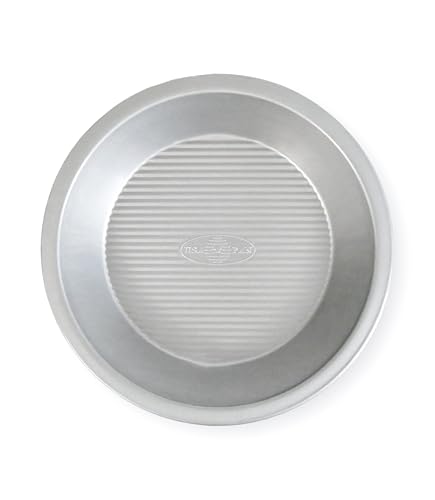
USA Pan Pie Pan
The USA Pan Pie Pan represents the metal approach at a mid tier, and its character follows from that material more than from any single feature. Where metal really shines is repeat baking. If you bake several pies in a row for a bake sale, a holiday, or a freezer stock-up, a light metal pan cools faster between bakes, stores in a fraction of the space of a ceramic dish, and lets you rotate pans without dedicating a whole shelf. The honest limitation is that you cannot see the bottom crust through it, so you learn to judge doneness by the bubbling of the filling at the centre, the colour of the visible crust, and time earned from your own previous bakes.
In everyday use, the USA Pan Pie Pan is best judged on the pies you bake most. Double-crust pies are its natural home ground, where edge behaviour matters as much as the base. Bakers who understand that brief will get consistent results from it, while bakers expecting it to behave like a different material entirely will blame the dish for a mismatch that was really about expectations. Read the maker guidance that comes with it, especially anything about broilers, freezer use, and sudden temperature changes, and treat that guidance as part of the product itself.
Serving and storage round out the picture for the USA Pan Pie Pan. It should move from oven to a prepared landing spot with two mitts, rest there undisturbed while the filling sets, and then either go to the table or, once cooled, be covered for the refrigerator. Washing is easiest after a patient soak rather than immediate scrubbing. Best for: bakers whose habits match metal and who want a mid-tier dish for regular pie baking. Not suited for: bakers who need the opposite material behaviour, or anyone unwilling to follow basic thermal-shock care.

OXO Good Grips Glass Pie Dish with Lid
The OXO Good Grips Glass Pie Dish with Lid represents the glass approach at a mid tier, and its character follows from that material more than from any single feature. Glass is the material that lets you learn the fastest, because you can see the bottom crust while the pie is still in the oven. Lift the dish carefully with two mitts, tilt it just enough to catch the light, and you can judge whether the base looks pale and soft or golden and set, without cutting a slice and hoping. That visibility changes how you bake: instead of guessing from the colour of the top alone, you start making small, calm decisions about whether the pie needs a little longer on a lower rack or whether it is ready to come out and rest.
In everyday use, the OXO Good Grips Glass Pie Dish with Lid is best judged on the pies you bake most. Savoury pies and quiches suit it well, provided the filling is not excessively wet. Bakers who understand that brief will get consistent results from it, while bakers expecting it to behave like a different material entirely will blame the dish for a mismatch that was really about expectations. Read the maker guidance that comes with it, especially anything about broilers, freezer use, and sudden temperature changes, and treat that guidance as part of the product itself.
Serving and storage round out the picture for the OXO Good Grips Glass Pie Dish with Lid. It should move from oven to a prepared landing spot with two mitts, rest there undisturbed while the filling sets, and then either go to the table or, once cooled, be covered for the refrigerator. Washing is easiest after a patient soak rather than immediate scrubbing. Best for: bakers whose habits match glass and who want a mid-tier dish for regular pie baking. Not suited for: bakers who need the opposite material behaviour, or anyone unwilling to follow basic thermal-shock care.
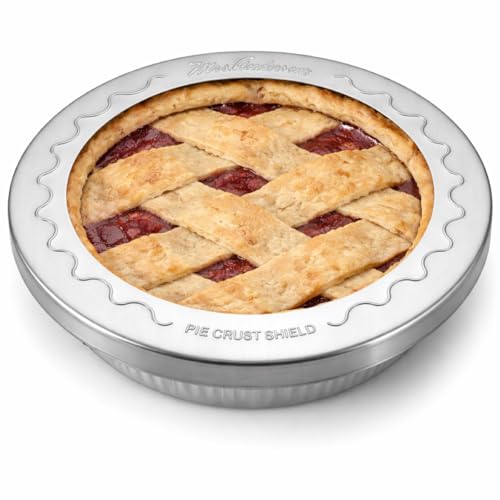
Mrs. Anderson’s Baking Pie Dish
The Mrs. Anderson’s Baking Pie Dish represents the ceramic approach at a mid tier, and its character follows from that material more than from any single feature. Ceramic dishes tend to have the most handsome rims, often fluted, and that fluting is not just decoration. A fluted edge gives your crimp something to follow, helps a decorative edge hold its shape, and makes a simple homemade pie look finished before it even goes into the oven. If you bake for gatherings, for photographs, or for the pleasure of carrying something beautiful to the table, ceramic earns its place on presentation alone, provided the baking underneath is sound.
In everyday use, the Mrs. Anderson’s Baking Pie Dish is best judged on the pies you bake most. Holiday baking, with several pies in rotation, is where its durability and handling count most. Bakers who understand that brief will get consistent results from it, while bakers expecting it to behave like a different material entirely will blame the dish for a mismatch that was really about expectations. Read the maker guidance that comes with it, especially anything about broilers, freezer use, and sudden temperature changes, and treat that guidance as part of the product itself.
Serving and storage round out the picture for the Mrs. Anderson’s Baking Pie Dish. It should move from oven to a prepared landing spot with two mitts, rest there undisturbed while the filling sets, and then either go to the table or, once cooled, be covered for the refrigerator. Washing is easiest after a patient soak rather than immediate scrubbing. Best for: bakers whose habits match ceramic and who want a mid-tier dish for regular pie baking. Not suited for: bakers who need the opposite material behaviour, or anyone unwilling to follow basic thermal-shock care.
A rimmed sheet with a tart ring, or a shallow oven dish you already own, remains a fair alternative for occasional baking, and the honest comparison is about frequency. The more often you bake, the more a dedicated dish earns its space, because its advantages repeat every single time while its costs stay flat. Occasional bakers feel the costs, regular bakers feel the advantages, and that asymmetry is the heart of the worth-it question.
How to Get the Most Value If You Buy
Quiche and savoury pies deserve a mention because they test a dish differently. Egg fillings are unforgiving about leaks, so a solid one-piece dish is a safer home for them than anything with a loose base, and they reward even heat because the centre should set just as the edges finish. A shallow standard dish often serves quiche better than a deep one, since a very deep egg filling can stay loose in the middle while the pastry over-browns. The dish that is perfect for a tall fruit pie is not automatically perfect for everything with a crust.
The soggy bottom is the most common pie disappointment, and it is rarely caused by one single mistake. Usually it is a stack of small things: a very wet filling, a dish that heats gently, a pie placed high in the oven, and a bake cut short because the top looked done. Fixing it works the same way, as a stack of small things in your favour. Bake low, give the base direct heat from a preheated sheet underneath, let fruit fillings bubble at the centre and not just at the edges, and resist slicing until the pie has rested long enough for the filling to set.
Cleaning and care decide how long a pie dish stays pleasant to use. Baked-on fruit sugars release more easily after a soak in warm water than under aggressive scrubbing, and that patience protects glazes and coatings alike. Avoid sudden cold water on a dish that is still hot, both for safety and for the life of the dish. Store dishes nested only if the maker allows it and the surfaces are protected, keep ceramic rims from clanking against each other, and dry metal promptly so it stays ready for the next bake without fuss.
The Decision Checklist
- Do you bake a pie, quiche, or cobbler at least several times a year?
- Have pale or soggy bottom crusts frustrated you before?
- Will you follow simple heat-care rules for glass or ceramic?
- Can you carry a filled dish comfortably with two mitts?
- Do you have storage space where rims will not be knocked?
- Would a standard depth cover most of what you bake?
If most answers are yes, a pie dish is worth it, and the remaining choice is material. If most are no, borrow or improvise until your baking habits change, then revisit the question with this guide and its companion pieces.
Practical Notes From Regular Baking
An egg-wash seal is one of the oldest qualitative tricks for protecting a bottom crust, and it asks for no special equipment. Brushing the unbaked base lightly before the filling goes in creates a thin barrier that helps slow the soak of juices into the raw pastry while it sets. It is not magic, and it will not rescue a pie that is underbaked, but combined with a hot sheet underneath and a filling that is not swimming in liquid, it tips the odds noticeably toward a base that slices cleanly instead of slumping.
Resting is part of baking, not a delay before the real event. A fruit pie sliced too soon will run, no matter how good the dish is, because the filling needs time to thicken as it cools. Custard and cream pies need their own patience, often a full chill, before the texture the recipe promises actually arrives. A dish that holds heat gently, ceramic especially, keeps a pie warm for serving, while a pie that must chill and then travel may be easier in a lighter dish with a secure lid. Match the dish to the whole life of the pie, not just the hour in the oven.
Depth is the decision bakers most often get wrong by accident. A standard-depth dish suits most single-crust and many double-crust pies, giving a balanced ratio of filling to pastry in every slice. A deep-dish version holds a generous mound of fruit and is wonderful for a tall apple pie, but that extra filling releases extra juice, takes longer to set at the centre, and makes the soggy-bottom problem harder, not easier. Choose depth for the pies you actually bake most often, not for the one spectacular pie you imagine baking once a year.
Where metal really shines is repeat baking. If you bake several pies in a row for a bake sale, a holiday, or a freezer stock-up, a light metal pan cools faster between bakes, stores in a fraction of the space of a ceramic dish, and lets you rotate pans without dedicating a whole shelf. The honest limitation is that you cannot see the bottom crust through it, so you learn to judge doneness by the bubbling of the filling at the centre, the colour of the visible crust, and time earned from your own previous bakes.
Practical Notes From Regular Baking
Metal is the fastest route to a browned bottom crust, and that single fact explains why so many experienced pie bakers keep at least one metal pan even if they prefer the look of ceramic. Metal conducts heat quickly and directly, so the base starts cooking early instead of lagging behind the filling, and the edges tend to colour evenly. For bakers whose recurring frustration is a pale, soggy base under a juicy filling, switching to metal, or starting a glass or ceramic pie on a preheated sheet, is the change most likely to help.
Cleaning and care decide how long a pie dish stays pleasant to use. Baked-on fruit sugars release more easily after a soak in warm water than under aggressive scrubbing, and that patience protects glazes and coatings alike. Avoid sudden cold water on a dish that is still hot, both for safety and for the life of the dish. Store dishes nested only if the maker allows it and the surfaces are protected, keep ceramic rims from clanking against each other, and dry metal promptly so it stays ready for the next bake without fuss.
Glass is the material that lets you learn the fastest, because you can see the bottom crust while the pie is still in the oven. Lift the dish carefully with two mitts, tilt it just enough to catch the light, and you can judge whether the base looks pale and soft or golden and set, without cutting a slice and hoping. That visibility changes how you bake: instead of guessing from the colour of the top alone, you start making small, calm decisions about whether the pie needs a little longer on a lower rack or whether it is ready to come out and rest.
Depth is the decision bakers most often get wrong by accident. A standard-depth dish suits most single-crust and many double-crust pies, giving a balanced ratio of filling to pastry in every slice. A deep-dish version holds a generous mound of fruit and is wonderful for a tall apple pie, but that extra filling releases extra juice, takes longer to set at the centre, and makes the soggy-bottom problem harder, not easier. Choose depth for the pies you actually bake most often, not for the one spectacular pie you imagine baking once a year.
Practical Notes From Regular Baking
Freezing is another job many bakers ask of a pie dish, whether freezing an unbaked pie for later or storing leftovers. Here the thermal-shock rules matter in reverse: a dish going from freezer toward a hot oven faces exactly the sudden change that stresses glass and ceramic, so follow the maker guidance for your exact dish and, where the guidance is unclear, let the dish lose its deep chill before it meets serious heat, or choose metal for freezer-to-oven work. Never assume a dish is freezer-to-oven safe because it looks sturdy.
The soggy bottom is the most common pie disappointment, and it is rarely caused by one single mistake. Usually it is a stack of small things: a very wet filling, a dish that heats gently, a pie placed high in the oven, and a bake cut short because the top looked done. Fixing it works the same way, as a stack of small things in your favour. Bake low, give the base direct heat from a preheated sheet underneath, let fruit fillings bubble at the centre and not just at the edges, and resist slicing until the pie has rested long enough for the filling to set.
Depth is the decision bakers most often get wrong by accident. A standard-depth dish suits most single-crust and many double-crust pies, giving a balanced ratio of filling to pastry in every slice. A deep-dish version holds a generous mound of fruit and is wonderful for a tall apple pie, but that extra filling releases extra juice, takes longer to set at the centre, and makes the soggy-bottom problem harder, not easier. Choose depth for the pies you actually bake most often, not for the one spectacular pie you imagine baking once a year.
Glass heats steadily rather than aggressively, so the bottom crust tends to brown more gently than it does in metal. That gentleness suits delicate fillings and bakers who worry about scorching, but it also means a wet fruit filling can leave the base underdone if you rush. The honest fix is patience and position: bake low in the oven, give the pie time, and consider starting it on a preheated flat sheet so heat reaches the base from the first minutes rather than arriving late.
Practical Notes From Regular Baking
For serving, glass is quietly practical. It looks clean on the table, it does not react with acidic fruit fillings, and leftovers can be covered and refrigerated in the same dish the pie baked in. The trade-off is weight and fragility in a different sense: glass is not the heaviest option, but a filled pie is heavy in any material, and glass will not forgive being knocked hard against a granite edge. Treat it as a long-term kitchen tool rather than a disposable pan and it repays that care for years.
Depth is the decision bakers most often get wrong by accident. A standard-depth dish suits most single-crust and many double-crust pies, giving a balanced ratio of filling to pastry in every slice. A deep-dish version holds a generous mound of fruit and is wonderful for a tall apple pie, but that extra filling releases extra juice, takes longer to set at the centre, and makes the soggy-bottom problem harder, not easier. Choose depth for the pies you actually bake most often, not for the one spectacular pie you imagine baking once a year.
Where metal really shines is repeat baking. If you bake several pies in a row for a bake sale, a holiday, or a freezer stock-up, a light metal pan cools faster between bakes, stores in a fraction of the space of a ceramic dish, and lets you rotate pans without dedicating a whole shelf. The honest limitation is that you cannot see the bottom crust through it, so you learn to judge doneness by the bubbling of the filling at the centre, the colour of the visible crust, and time earned from your own previous bakes.
Cleaning and care decide how long a pie dish stays pleasant to use. Baked-on fruit sugars release more easily after a soak in warm water than under aggressive scrubbing, and that patience protects glazes and coatings alike. Avoid sudden cold water on a dish that is still hot, both for safety and for the life of the dish. Store dishes nested only if the maker allows it and the surfaces are protected, keep ceramic rims from clanking against each other, and dry metal promptly so it stays ready for the next bake without fuss.
Practical Notes From Regular Baking
Finally, remember that the baker matters more than the dish. Every material in this guide can produce an excellent pie in practised hands, and every material can produce a pale base in a rushed bake. What a good dish does is remove friction: it heats predictably, releases slices willingly, cleans without drama, and feels safe to carry when full and hot. Choose the dish whose habits match your habits, and then bake in it often enough that its behaviour becomes second nature. That familiarity, more than any single feature, is what turns out reliably good pies.
Resting is part of baking, not a delay before the real event. A fruit pie sliced too soon will run, no matter how good the dish is, because the filling needs time to thicken as it cools. Custard and cream pies need their own patience, often a full chill, before the texture the recipe promises actually arrives. A dish that holds heat gently, ceramic especially, keeps a pie warm for serving, while a pie that must chill and then travel may be easier in a lighter dish with a secure lid. Match the dish to the whole life of the pie, not just the hour in the oven.
Glass heats steadily rather than aggressively, so the bottom crust tends to brown more gently than it does in metal. That gentleness suits delicate fillings and bakers who worry about scorching, but it also means a wet fruit filling can leave the base underdone if you rush. The honest fix is patience and position: bake low in the oven, give the pie time, and consider starting it on a preheated flat sheet so heat reaches the base from the first minutes rather than arriving late.
Glass is the material that lets you learn the fastest, because you can see the bottom crust while the pie is still in the oven. Lift the dish carefully with two mitts, tilt it just enough to catch the light, and you can judge whether the base looks pale and soft or golden and set, without cutting a slice and hoping. That visibility changes how you bake: instead of guessing from the colour of the top alone, you start making small, calm decisions about whether the pie needs a little longer on a lower rack or whether it is ready to come out and rest.
Related Guides
the pie dish buying guide guide
the pie dish pros and cons guide
the air fryer cake pan sizes and fit guide
the best small cake pans for air fryers guide
Worth It for Whom? A Pie Dish Break-Even Test Based on Your Actual Routine
The purchase is the easy part. A pie dish proves itself at the oven and the table it may be carried to, in the middle of baking pies, quiches and bakes that go from oven to serving, long after the packaging has gone. So work backwards from daily life: fix the routine, the space and the people in your mind first, and only then weigh the features that looked persuasive on a product page. The first check is the depth and diameter against your usual fillings and pastry quantities, and it outranks everything else, because no styling or extra capacity compensates when that basic fit is wrong. Measure the real space, including clearance for doors, drawers, lids, handles and people passing, and write the numbers down before comparing anything, because memory is generous in exactly the wrong direction.
Oversizing is the quietest buying mistake: capacity you never use still has to be stored, cleaned, moved and worked around every single day. Photograph complicated setups before you change them and note settings that worked. With a pie dish, your own records become the manual for your particular home. Read the included-parts list as carefully as the feature list. Many disappointing first days with a pie dish are simply the discovery that an essential accessory was never in the box. Apply this thinking to real candidates, such as the Pyrex Basics Pie Plate or the Emile Henry Modern Classics Pie Dish: open the current listing, confirm the dimensions, parts and care details, and only then judge the photographs.
- Set the minimum usage that justifies keeping it.
- Set a one-month review date to test your own prediction.
- State what the simpler alternative leaves undone.
- Count honest uses in a typical month before deciding.
- Include space, upkeep and parts in the true cost.
Ask the least enthusiastic person in the home what would annoy them about it. Their answer usually identifies the storage, cleaning or noise issue that the buyer was too optimistic to see. Think about what the pie dish has to live alongside. The neighbouring furniture, fittings and appliances in your home are fixed facts, and the newcomer is the one that has to fit in. Decisions sharpen when they are written. Three must-do jobs, one tolerated weakness and one absolute deal-breaker will separate suitable options for a pie dish faster than any feature table. When a shortlist refuses to separate, stop comparing headline features and compare failure modes instead, since you will meet the weaknesses weekly and the strengths only occasionally.
Notice when the pie dish will be used in a hurry and when it will be used with time to spare, because speed and ceremony reward different designs. Wear arrives at predictable points: hinges, seals, edges, handles, surfaces and anything that is folded, dragged, filled or emptied. Inspect those areas in photographs and descriptions before you buy. Do not test your decision against a calm day. Test it against the rushed morning, the crowded evening or the week everything happens at once, because that is when a pie dish earns or loses its place. Nothing is kept forever. Favour the pie dish you could repair, rehome or responsibly retire over the one that becomes an awkward problem the day it stops working.
Next, consider whether the material suits the bakes you make, from crisp pastry to slow puddings. Listings rarely volunteer this information, so you have to go looking for it, and the looking is worth the minutes it takes. If a guest can use the pie dish correctly without instruction, the design is intuitive; if they cannot, expect the same friction, softened only by habit, in your own routine. The first fortnight involves unlearning old habits as much as learning new ones, so allow the pie dish that adjustment period before delivering a final verdict, unless a basic fit check has failed. The most future-proof question is also the simplest: if your routine changed moderately, would this pie dish adapt, or would it become the wrong tool kept out of guilt?
Most faults that appear months in are really maintenance or setup faults wearing a disguise, so return to the basics, position, load, cleanliness and fit, before concluding anything has failed. Edge cases matter here: a deep-filled pie in a dish bought for shallow tarts, or the reverse. A pie dish chosen with that situation in mind will not need replacing the first time life deviates from the brochure.
Frequently Asked Questions
Can you see if the bottom crust is done?
Only a glass dish lets you look at the base directly, and even then you should lift it carefully with two mitts and tilt it just enough to catch the light. With ceramic or metal you judge by other signs: filling bubbling at the centre, a top crust that is deeply coloured rather than merely blonde, and the timing you have learned from your own oven. None of these signs works alone, which is why experienced bakers combine two or three before deciding a pie is finished.
How do you stop a soggy bottom crust?
Stack small advantages rather than hunting for one miracle. Bake the pie low in the oven, set the dish on a preheated flat sheet so heat reaches the base early, consider a light egg-wash seal on the raw base before filling, and make sure the filling is not excessively wet before it goes in. Then bake until the filling bubbles at the centre and rest the pie properly before slicing, because a pie cut too soon will seem soggy even when the crust itself baked well.
Is a deep-dish pie dish better than a standard one?
Neither is better in the abstract; they suit different pies. A standard depth gives a balanced slice and sets reliably, which makes it the safer first and only dish for most kitchens. A deep dish holds a generous mound of fruit and makes a spectacular tall pie, but the extra filling releases more juice and takes longer to set, so it demands more care against a soft base. Buy depth for the pies you bake often, not for a single imagined occasion.
Can a hot glass or ceramic dish go on a cold counter?
No, and this is one of the clearest safety rules in pie baking. A hot dish on a cold stone counter, a wet surface, or a cold metal surface can be shocked by the sudden temperature difference. Rest every hot dish on a dry cloth, a wooden board, or a rack instead, and never pour cold liquid into a dish that has just come out of the oven. Broiler use also varies by maker, so check the guidance for your exact dish rather than assuming it is allowed.
How should you carry a filled hot pie dish?
Treat it as a planned task. Use two proper mitts, prepare a clear landing spot on a dry cloth or wooden board before you open the oven, keep the path short, and move slowly because a filled dish is heavy and its weight can shift. This matters most with ceramic, the heaviest material once filled, but it applies to every material. Never carry a hot filled dish one-handed, and never use a damp towel as a substitute for a mitt.
Can one pie dish also work for quiche and cobblers?
Yes, and that versatility is a good reason to choose a standard-depth dish first. A solid one-piece dish holds egg fillings for quiche without leaking, bakes cobblers and crumbles happily, and can roast small batches of savoury food between pies. A very deep dish is less ideal for quiche, whose centre can stay loose, so if savoury baking matters as much as fruit pies, let that influence your depth choice. One well-chosen dish used weekly beats a specialised dish used twice a year.
Count your last year of baking honestly. If pies, quiches or cobblers appeared most months, a dedicated dish pays for itself in crusts you can judge and slices that release cleanly; the Pyrex Basics suits bakers who watch the bottom brown, while Emile Henry suits those who carry the dish straight to the table. If pie happens once at a holiday, a borrowed dish or a sturdy USA Pan metal pan is enough. Choose standard depth first, rest it on wood or cloth, and let frequency — not aspiration — decide.

