Disclosure: As an Amazon Associate, airfryerkitchensupply.com earns from qualifying purchases. Links on this page are affiliate links; they cost you nothing extra. Prices and availability change often, so check the current Amazon listing before you buy.
Learning how to choose an oven thermometer matters because the wrong choice fails quietly: a dial too small to read through your window, a hook that will not fit your racks, a lens fogged within a season. This guide on how to choose an oven thermometer walks through the deciding criteria in order — legibility, mounting, range, build and brand — then shows the picks that satisfy them and three worked examples of real buyers choosing well. The short version: buy the clearest dial from an established temperature maker that mounts securely at your main rack. The evidence behind that advice starts with what your oven is really doing, in our oven thermometer review.
Key Takeaways
- Step one is always legibility: if you cannot read it through your door, nothing else matters.
- Match the mount to your racks before you fall for a dial design.
- Cover your real range — low-and-slow sessions to your oven’s maximum — and no more.
- Established temperature brands, clear stated use, simple construction: that is the quality signal.
- Verify any new thermometer against a second instrument during its first week.
In this guide
What You Need to Know Before Comparing
No home oven holds one steady temperature, and understanding that single fact explains almost everything an oven thermometer reveals. The heating element or burner switches on, the cavity overshoots the set point, the heat switches off, and the temperature drifts down until the control calls for heat again. The dial on the front panel reports the average the manufacturer chose to display, smoothed and rounded, not the swinging reality around your food. An independent thermometer sitting beside the tray shows the swing itself: the peaks that can scorch the top of a cake and the troughs that can leave the centre underdone, even though the recipe time has fully elapsed.
Calibration drift is the slow, quiet problem. Ovens age, sensors tire, door seals compress, and a control that was honest when the appliance was new can gradually settle into running consistently hotter or cooler than the number on the dial. Nothing dramatic breaks, so nothing gets repaired; instead, everything you bake is mysteriously a little off, a little pale or a little dark, for years. A thermometer exposes drift in one preheat. If the offset is consistent, many ovens allow a calibration adjustment, and even when they do not, you can simply set the dial to compensate once you know the truth.
Hot spots are the second revelation. Heat does not arrive evenly in most ovens: the back corners often run hotter than the front, the top rack behaves differently from the middle, and the side near the element can brown food noticeably faster than the opposite side. A thermometer moved methodically from zone to zone, with the oven fully preheated and left to settle between moves, turns that vague suspicion into a map. Once you know your oven’s map, you stop blaming recipes. You rotate trays on purpose, you choose the honest rack for delicate bakes, and you avoid the corner that always catches.
There is a quiet virtue in an instrument with no battery and no software. A dial oven thermometer works during a power flicker, never asks for pairing, never needs charging the night before a big bake, and presents its information as a needle you can interpret at a glance from across the room. That simplicity is also its limitation: it cannot record, alert or graph, and it asks you to come and look. For many home cooks that trade is exactly right. The tool’s job is to tell the truth about the cavity, and a needle over a clear scale does that with nothing to go wrong.
How to Choose an Oven Thermometer in Six Steps
Step 1: Judge the dial at reading distance
Readability deserves honest treatment, because it is where cheap oven thermometers most often disappoint. Steam, splatter and the slow bake-on of cooking vapours cloud the glass over time, and a dial that was crisp in the box can become a guessing game through a fogged lens and a closed oven door. Larger dials with bold markings age more gracefully than small, finely divided ones. Wiping the glass clean while the thermometer is cold, before a bake rather than after, preserves clarity, and choosing a model whose markings you can read at arm’s length through your own oven window is a legitimate, practical buying test.
Step 2: Match hanging or standing to your racks
Placement starts with a choice between hanging and standing. Many dial models offer both: a hook that slips over a rack bar and a flat base or feet that let the instrument stand on the rack itself. Hanging keeps the thermometer up in the air stream at the height of the food and keeps it clear of trays being slid in and out. Standing is simpler and works when rack bars are awkwardly spaced, but a standing unit can be knocked by a tray and can read the rack’s own conducted heat if it sits touching hot metal rather than standing in open air.
Step 3: Confirm the range covers how you cook
Low-and-slow cooking is the opposite test: holding a modest temperature steadily for hours. Here the thermometer’s value is in the troughs of the cycle, because an oven whose average looks right can dip low enough, often enough, to stretch cooking times and dry food at the surface. Checking the reading periodically through a long braise or a slow roast, and noting how far it wanders, tells you whether your oven can be trusted unattended at low settings. If it wanders badly, you learn to set the dial a touch differently and to check in more often, which is still useful knowledge.
High-heat cooking pushes an oven thermometer to its limits, so match the instrument to the job. Pizza and flatbread sessions run an oven at its maximum for a long preheat, and any thermometer left inside must be rated by its maker for that environment; check the listing rather than assuming. Many cooks use the thermometer to verify the long preheat has truly saturated the stone or steel, then remove it with mitts before launching the pizza. Used that way, the dial is a preheat referee rather than a permanent resident, and it still settles arguments about whether the oven was really ready.
Step 4: Weigh build and lens quality over features
Most oven thermometers for home use are simple dial instruments that live inside the cavity, with a bimetallic element moving a needle across a printed scale. They need no battery, no cable and no app, and they tolerate being left in the oven permanently. The alternative approach is a probe on a heat-resistant cable connected to a display outside the door, which adds alerts and easier reading but also adds a cable to route and electronics to protect. Neither approach is automatically better. The dial suits set-and-forget checking; the cabled probe suits cooks who want to be called when a target is reached.
Step 5: Buy the brand’s honesty, not its adjectives
Buying well comes down to a short list of honest criteria. Dial size and legibility come first, because an unreadable thermometer is decoration. Construction comes next: a case and lens that tolerate life inside an oven, a hook and base that suit your racks, and markings that cover the range you actually cook in, from low-and-slow to your oven’s maximum. Brand support and clear instructions matter more than exotic features. Finally, buy from a maker who states the instrument’s intended use plainly. Vague listings that promise everything usually deliver a dial you cannot read through your own oven door.
Step 6: Plan placement and safe handling before it arrives
Repositioning a thermometer in a hot oven is a job for oven mitts and patience, never for bare fingers or a hurried tea towel. The instrument, the rack and the surrounding air are all at baking temperature, and the natural instinct to nudge it quickly with a fingertip is exactly how small burns happen. The safe routine is to open the door fully, let the first rush of heat pass, grip the thermometer’s edge or hook with a mitt, move it deliberately, and close the door and wait for the reading to settle again before trusting it. Better still, decide placement before preheating whenever you can.
Rack position changes what the thermometer should tell you. The reading that matters is the temperature at the height where the food actually sits, not at the oven’s own sensor, which may live near the top or back wall. When you test, place the thermometer on the middle rack first for a baseline, then repeat at the rack you use for bread and at the one you use for trays of vegetables. Note the differences in a notebook or on a card kept with your recipes. That small record becomes your personal translation table between recipe instructions and your oven’s real behaviour.
Gear for This Guide
Full reviews are in our oven thermometer reviews.

Taylor Classic Oven Thermometer
Taylor Classic Oven Thermometer. It is the archetypal hang-it-and-forget-it dial: a familiar round face, a hook for the rack and a base for standing, presented without fuss. It sits in the entry tier, so judge it on dial clarity, how securely it hangs or stands, and how honestly it keeps reading after months of heat cycles rather than on extras it never promised. Treat the listing as a starting point: check the current Amazon listing for the exact configuration, confirm the dial markings suit the way you cook, and remember that placement in your own oven will matter more than any small difference between honest dial models. Best for: cooks who want a simple, always-present reference in the oven they use most. Not suited for: anyone who needs an alert from another room, because a dial inside a closed oven can only be read when you open the door and look.

Rubbermaid Commercial Oven Thermometer
Rubbermaid Commercial Oven Thermometer. It borrows its manner from commercial kitchens, where instruments are handled constantly and are expected to shrug off daily heat cycles without complaint. It sits in the entry-to-mid tier, so judge it on dial clarity, how securely it hangs or stands, and how honestly it keeps reading after months of heat cycles rather than on extras it never promised. Treat the listing as a starting point: check the current Amazon listing for the exact configuration, confirm the dial markings suit the way you cook, and remember that placement in your own oven will matter more than any small difference between honest dial models. Best for: cooks who want a simple, always-present reference in the oven they use most. Not suited for: anyone who needs an alert from another room, because a dial inside a closed oven can only be read when you open the door and look.

CDN DOT2 ProAccurate Oven Thermometer
CDN DOT2 ProAccurate Oven Thermometer. It comes from a maker whose name is built on temperature instruments, and the emphasis falls on a clear, purposeful dial rather than decoration. It sits in the mid tier, so judge it on dial clarity, how securely it hangs or stands, and how honestly it keeps reading after months of heat cycles rather than on extras it never promised. Treat the listing as a starting point: check the current Amazon listing for the exact configuration, confirm the dial markings suit the way you cook, and remember that placement in your own oven will matter more than any small difference between honest dial models. Best for: cooks who want a simple, always-present reference in the oven they use most. Not suited for: anyone who needs an alert from another room, because a dial inside a closed oven can only be read when you open the door and look.
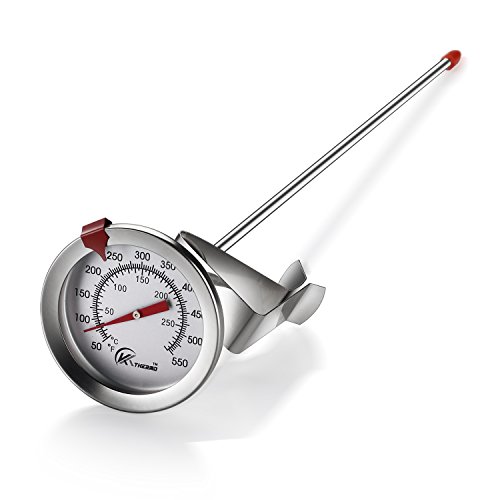
KT THERMO Oven Thermometer
KT THERMO Oven Thermometer. It is a straightforward large-dial design of the sort many bakers buy in pairs, so two zones of the same oven can be watched at once. It sits in the entry tier, so judge it on dial clarity, how securely it hangs or stands, and how honestly it keeps reading after months of heat cycles rather than on extras it never promised. Treat the listing as a starting point: check the current Amazon listing for the exact configuration, confirm the dial markings suit the way you cook, and remember that placement in your own oven will matter more than any small difference between honest dial models. Best for: cooks who want a simple, always-present reference in the oven they use most. Not suited for: anyone who needs an alert from another room, because a dial inside a closed oven can only be read when you open the door and look.
Common Mistakes
The common mistakes are predictable. Placing the thermometer against a wall or touching the rack so it reads conducted heat instead of air. Reading it too soon, before the cavity has stabilised after preheating or a door opening. Leaving it in one forgotten corner and treating that corner’s story as the whole oven’s truth. Never cleaning the lens, then complaining the dial is unreadable. And the deepest mistake: buying the thermometer, confirming the oven runs hot, and then changing nothing, neither the dial setting nor the rack nor the rotation habit. Measurement only pays when it changes behaviour.
Every door opening costs heat, and a thermometer makes that cost visible. Crack the door to peek and you can watch the needle fall, then watch how long the oven takes to recover after you close it. That simple observation cures two bad habits: constant peeking, which destabilises everything, and loading food slowly with the door wide open. It also argues for reading the dial through the oven window with the interior light on whenever your model and window allow it, reserving door openings for moments when you genuinely need to act on what you see.
Pro Tips
Serious bakers sometimes run two thermometers at once, one at each end of the rack, and the practice is worth copying for a single diagnostic session even if you never do it again. Two readings expose the gradient across the cavity in a way one moved thermometer cannot, because the oven is in the same state for both. If the difference is small, you can relax and rotate out of habit rather than necessity. If it is large, you have found the reason one side of every tray browns first, and you can plan tray position and rotation around a measured fact.
Convection ovens add a fan to the puzzle, and a thermometer helps there too. Moving air evens out some hot spots but creates its own patterns near the fan outlet, and many cooks are advised to reduce the set temperature when using the fan, which raises the obvious question of what temperature the cavity truly reaches. Testing with the fan on and off, at the racks you use most, shows whether the recommended reduction matches your appliance. It also reveals whether the fan setting genuinely improves evenness in your oven or simply adds noise to an already honest cavity.
Gas and electric ovens misbehave in different accents. Gas burners cycle with a visible flame and can create a hotter floor and moister cavity air, while electric elements often produce stronger radiant heat from above when the broiler element joins in. A thermometer does not care which fuel you use; it reports the air temperature where the food sits in either case. That neutrality is the point. Rather than collecting folklore about your fuel type, you gather readings from your own appliance, in your own kitchen, across the settings you actually use, and you cook from those.
Keep a small card with your recipes recording your oven’s offset at your two most-used settings and racks. That card, written once from thermometer evidence, quietly improves every recipe you own without changing a single ingredient — the highest-value outcome this small instrument can deliver, and the reason our oven thermometer buying guide treats the habit as part of the purchase.
Worked Examples
The sourdough baker needs a genuinely verified long preheat and a clear dial at the baking rack: a mid-tier hanging model, checked seasonally, is the right buy.
Preheating is where a thermometer first earns its place. Most ovens signal ready far too early, when the air near the sensor has reached temperature but the walls, racks and baking stone are still soaking up heat and the cavity has not stabilised. Food loaded at the beep enters an oven that is still climbing and swinging, which is why the first batch so often bakes differently from the second. Watching an independent dial teaches patience with evidence: you see the reading settle near the set point and stay there through a full cycle, and only then do you load the tray.
The renter with an elderly oven needs diagnosis before commitment: two entry dials for a full hot-spot map, then a decision about compensation versus calling the landlord.
You can sanity-check an oven thermometer without laboratory equipment. The point is not to certify it but to catch a unit that has become wildly dishonest after a drop or years of service. Compare it against a second thermometer you trust, side by side in the same preheated oven, and expect agreement within a reasonable margin for home instruments rather than perfection. If a dial has a reset or calibration feature, follow the maker’s instructions carefully and only adjust when you are confident in the reference. A thermometer you have checked is a tool; one you have never questioned is an opinion.
The family roast cook needs range and robustness more than delicacy, plus the food-side partner instrument.
Care is simple but not optional. An oven thermometer should be wiped down while cold with a damp cloth when splatter builds up, and it should never be plunged into water or left soaking, because moisture inside the case clouds the glass and can corrode the movement. Avoid harsh scouring on the printed dial, which is the part you most need to preserve. Store a spare unit in a drawer rather than loose among heavy pans. Treated gently, a dial thermometer is one of the longest-lived tools in the kitchen, asking for nothing but an occasional clean lens and a safe place to hang.
Each profile pairs naturally with how to use a meat thermometer for the food itself and trays from best baking sheet and cooling racks. If your profile is none of these, the value test in is an oven thermometer worth it and the ledger in oven thermometer pros and cons will place you.
Related Guides
Keep exploring: oven thermometer review, oven thermometer reviews, oven thermometer buying guide, oven thermometer pros and cons, is an oven thermometer worth it, meat thermometer review, best bakeware for toaster ovens, best baking sheet and cooling racks.
More From the Test Kitchen
Holiday cooking is the stress test that converts sceptics. A large bird, trays rotating on two racks, a door opening far more often than usual — every weakness in an oven’s behaviour is amplified at exactly the moment failure costs most. A thermometer earns unusual trust on those days because it separates the oven’s contribution from the cook’s: when the reading is right and stable, attention can go to basting, timing and guests. Many owners report that the instrument they bought for curiosity becomes, by the second holiday season, the first thing they check when the oven goes on.
There is a repair decision a thermometer informs better than any other cheap test. If readings show a consistent, stable offset, compensation or a calibration adjustment may be all the oven needs. If readings swing wildly, lag far behind setting changes, or differ chaotically between sessions, the instrument has documented a symptom worth showing a technician. Arriving at a service visit with written readings — dates, settings, racks and observed temperatures — changes the conversation from vague complaint to evidence, and can save a second visit. Keep those notes with the appliance paperwork.
Renters benefit in a particular way. You may not be authorised to adjust or repair a landlord’s oven, but you are entirely free to measure it. A thermometer tells you how to compensate with the dial you have, which rack to trust, and how long a true preheat takes in that specific kitchen. If the readings reveal something extreme, they also give you a factual, unemotional basis for a conversation with the landlord. When you move, the instrument moves with you, ready to audit the next oven on its first weekend.
Recipe development and careful recipe following both depend on the same quiet assumption: that the temperature in the recipe is the temperature in your oven. Cookbook authors test in ovens they know, and their timings inherit those ovens’ habits. Your thermometer is the translation layer between their kitchen and yours. Once you know your offset, you can even annotate favourite recipes in pencil — set higher, set lower, rotate halfway — so the translation survives your memory. Over a year, those small annotations become one of the most valuable documents in the kitchen.
Energy use is an underappreciated angle. An oven running hotter than its dial claims wastes energy on every session, and long compensating bakes in a cool-running oven waste time and fuel in the other direction. Cooking at the temperature the recipe actually intends, for the time it actually needs, is the efficient pattern, and it is unreachable while the cavity’s true temperature is unknown. The thermometer will not transform a household energy bill, but it removes a steady, invisible inefficiency from one of the most power-hungry appliances in the home.
Teaching new cooks is easier with a thermometer on the rack. Beginners are often told to learn their oven, which is sound advice with no method attached. A dial gives the method: preheat together, watch the swing, note where the needle settles, and compare it with the dial’s claim. That single supervised session teaches more about heat than a month of unexplained successes and failures. It also builds the habit of verifying rather than assuming, which transfers to meat thermometers, pan temperatures and every other measurement a confident cook eventually makes.
Dual markings deserve a practical mention for households that cook from international recipes. Many dials print both major scales, which saves mental arithmetic mid-recipe, but crowded dual scales can be harder to read at a glance than a single bold one. Decide which scale you will actually use weekly and prioritise its legibility when choosing. Converting a recipe’s temperature once, in pencil, on the recipe itself, is still the most reliable method; the thermometer’s job is to confirm the cavity, not to serve as a conversion chart under pressure.
A second oven, a range’s smaller cavity, or a much-used countertop oven each needs its own audit. Behaviour does not transfer between cavities, even in the same appliance: the small oven that seems fierce for toast may be honest for baking, or the reverse. Run the same simple protocol in each — preheat, settle, read at the working rack, note the offset — and label the notes clearly by cavity. Cooks who skip this step often compensate the wrong oven for months, applying the main oven’s correction to a cavity that never needed it.
Frozen and convenience foods are an honest everyday test. Their instructions assume a standard oven, and their results — crisp base or soggy one, browned top or pale — are sensitive to real cavity temperature in ways busy cooks blame on the product. Verifying your oven once improves every packet instruction you will ever follow, because the gap between your oven and the assumed standard is finally known. It is not glamorous, but for many households this, rather than celebration baking, is where the thermometer quietly pays its way week after week.
Storage between uses is rarely discussed and often done badly. A thermometer left loose in a drawer of heavy utensils gets knocked, and a knocked dial is a suspect dial. Hang it in the oven it serves, or keep it in a small box or on a hook where it will not be crushed. If you own two, store the spare with its lens protected. The instrument’s whole value rests on being believed, and belief is preserved by boring, gentle handling far more than by anything purchased alongside it.
Glass is not the only readability factor; lighting matters too. Many ovens have an interior light that makes a dial genuinely readable through the window, and using it for a quick check is better than opening the door and dumping heat. If your oven’s window is small or darkened with age, position the thermometer where the light reaches it best, which may mean the front of the middle rack rather than the back. Experiment while the oven is cold, sighting through the closed door, until the dial’s usual home is somewhere you can actually see.
There is a difference between checking an oven and chasing it. New owners sometimes adjust the set point after every small needle movement, fighting the natural cycle and never letting a bake settle. The cycle is normal; what matters is where the swing is centred and how wide it runs at your working rack. Watch a full cycle or two before judging, note the approximate high and low, and make one calm correction if the centre is off. Thermometers reward patience and punish fiddling, like most measuring instruments in most crafts.
Finally, know what a thermometer cannot settle. It cannot tell you whether a cake is baked through, whether a roast is safe, or whether bread has finished — those judgements belong to probes in the food, skewers, colour, sound and experience. What it settles, completely, is the environment those judgements happen in. Cooks who keep that boundary clear get the best from both instruments and blame neither for the other’s job. Cooks who blur it end up distrusting a good dial for failing at work it never claimed to do.
Parallax is a small reading error with a simple cure. A dial needle sits slightly above the printed scale, so viewing it from an angle shifts the apparent reading. Read the dial as squarely as you can through the window, at eye level with the instrument, rather than from above while standing back. It takes two seconds and removes a source of disagreement between cooks in the same kitchen, where one person swears the oven runs hot and the other, reading from a different angle, swears it does not. Consistent reading position is part of consistent baking.
Weekend batch cooking shows the swing at its most practical. When trays go in back to back for meal preparation, the oven rarely returns to the same state between loads: a cold, heavy tray pulls the temperature down, and recovery takes longer than the door-open moment suggests. Watching the dial between batches teaches a rhythm — load, close, wait for recovery, then start the timer — that makes batch results consistent enough to plan a week around. Without that rhythm, the first tray and the fourth are effectively cooked in different ovens.
There is a confidence dividend that rarely appears in buying guides. Cooks who know their oven’s true temperature stop hedging: they stop opening the door to check colour every few minutes, stop adding just-in-case minutes that dry food out, and stop apologising for results before anyone has tasted them. That confidence is not bravado; it is what measurement feels like from the inside. The instrument costs a hook on a rack, and what it returns, beyond accuracy, is a calmer cook — which is a quality-of-life upgrade disguised as a thermometer.
Sceptics sometimes ask whether a thermometer merely replaces one untrusted dial with another. The fair answer is that it replaces an unexamined dial with an examined one. You cross-check the instrument when it arrives, you compare it against a second unit or a known reference, and you re-check it seasonally. The oven’s own sensor, by contrast, is never checked by anyone after installation day. Trust in the kitchen, as elsewhere, should belong to whichever claim has survived testing — and only one of these two instruments ever gets tested.
Consider the specific case of delicate custards, cheesecakes and meringues, where the margin between set and spoiled is narrow and the penalty for overshoot is texture rather than colour. These are the bakes where a modest, consistent offset does its worst damage invisibly, because nothing looks wrong until the slice is cut. Cooks who specialise in such things tend to be the most thermometer-loyal of all, not from fussiness but from scar tissue: each of them can name the dessert that taught the lesson.
A thermometer also disciplines recipe times. Published timings assume the stated temperature from the moment the food goes in; a cook who loads into a still-climbing oven and starts the timer immediately has quietly shortened the bake while believing otherwise. Aligning the timer with a verified, stabilised cavity makes published timings behave the way their authors intended, which reduces the mysterious variability that makes people distrust good recipes. Fewer distrusted recipes means a wider repertoire actually gets cooked.
If you share a kitchen, leave the thermometer’s findings where others can use them: the offset and the honest rack, written on a card inside a cupboard door. Shared knowledge prevents the quiet sabotage of a second cook resetting the dial to the number they expect rather than the number your oven needs. It also turns a private measurement into household infrastructure, like knowing which tap is hot. Small, written, shared facts are how kitchens become reliable places rather than collections of individual habits.
A Working Decision Checklist for Choosing an Oven thermometer: Measurements, Habits and Deal-Breakers
Choosing well is a sequence, not a hunch. For an oven thermometer, the reliable order is to fix the constraints of the oven and the dishes whose results it will help you judge first, then the habits of the people using it, and only then compare individual products. The checklist below follows that order, and each step exists because skipping it is a known route to a return, a compromise or a product that lives unused in a cupboard.
Do this step before looking at any individual product. Start with fit, because fit failures cannot be fixed by enthusiasm later. In practice that means three things: check the dial or display size so it reads easily through your oven door; confirm where it can hang or stand in your oven without touching elements or walls; and look at the temperature range against the hottest and coolest jobs you do. Write the answers down rather than holding them in your head, because an oven thermometer is usually chosen over several browsing sessions, and the constraint you checked on Monday is the one forgotten by Friday. If any of the three checks produces an awkward answer, treat it as information about format, not as a problem to wave away — a different format of oven thermometer often removes the conflict entirely, while a compromise on fit tends to be re-litigated every time the product is used.
Skipping this step is how good budgets buy the wrong format. Then picture the product in its real situations rather than its best one. The routine cases are easy to imagine: a home baker whose cakes reveal every hot spot in the oven, or roasting routines where the dial setting and real temperature disagree. The more useful exercise is the harder day: an oven that runs hot at the back, so placement changes the reading; and preheating readings taken too early, before the oven has settled into its cycle. An oven thermometer does not need to be perfect in those moments, but it does need a workable answer to them — a way to be moved, covered, adjusted, cleaned or simply tolerated until conditions improve. If the honest answer is that the hard day would make you stop using it altogether, that is a decision-grade fact, and it is far cheaper to learn it now than after delivery.
Write the answer down; memory edits measurements surprisingly fast. Most disappointments trace back to a short list of avoidable errors. The common ones here are: hanging the thermometer where it touches a rack or wall and reads that surface instead; judging the oven by a single glance during the preheat swing; and assuming the dial is wrong forever rather than learning your oven’s consistent offset. Notice that none of them is really about build quality. They are sequencing errors — deciding before measuring, assuming instead of checking, or copying someone else’s setup whose space and habits differ from yours. Reading any listing for an oven thermometer with those three errors in mind is a fast filter: if the page in front of you encourages one of them, slow down and return to your own measurements and routine.
End the choosing process with this pass, and then stop second-guessing. A final decision pass can be kept deliberately short. Confirm the measurements against the space one last time. Confirm the format against the routine it will actually join, including who else uses it and how often. Confirm the upkeep list is acceptable as a standing habit, not a launch-week intention. And confirm that the edge case most likely in your household has a workable answer. Four confirmations, honestly answered, separate a considered purchase of an oven thermometer from a hopeful one.
Frequently Asked Questions
How often should I check my oven against a thermometer?
Make it a seasonal habit: before the heavy baking season, after any repair or new door seal, and whenever results mysteriously change. Ovens drift slowly as sensors age and seals compress, so a check once or twice a year catches the slide early. Each check takes a single preheat with the thermometer at your usual rack. Record the offset where you keep recipes, and you will never have to rediscover it from a failed bake.
Do I leave an oven thermometer in the oven all the time?
Most dial models are designed to live in the oven, hanging from a rack or standing where they will not collide with trays. Leaving it in place means the truth is available at every preheat without a special test session. Just keep it clear of elements and walls, wipe the lens while it is cold when splatter builds up, and check occasionally that its hook or base still holds it steady after months of trays sliding past.
Why does my oven thermometer disagree with the oven dial?
Because the two instruments measure different things in different places. The oven’s own sensor sits where the manufacturer placed it and its display is smoothed and rounded; your thermometer reads the air where the food actually sits, through the full swing of the heating cycle. A consistent difference usually means calibration drift in the oven, while a difference that changes by rack points to hot spots. Either way, the reading beside the food is the one your baking experiences.
Should an oven thermometer hang or stand?
Both work when done properly. Hanging from a rack bar keeps the instrument in the air stream at food height and clear of sliding trays, while standing on a flat base suits racks whose bars are awkwardly spaced. What matters is that it sits in open air, not touching walls, racks or elements, because contact measures conducted heat instead of the cavity air your food cooks in. Choose the arrangement that stays stable in your oven.
How do I move an oven thermometer when the oven is hot?
Use proper oven mitts, open the door fully, let the first rush of heat escape, and grip the edge or hook of the instrument deliberately rather than nudging it with fingertips. Move it once, close the door, and allow time for the reading to settle before trusting the new position. Whenever possible, decide placement before preheating, while everything is cold and unhurried. Burns in the kitchen most often come from small, hurried adjustments exactly like this one.
Can an oven thermometer help with a convection oven?
Yes. A fan evens some hot spots but creates its own patterns, and makers often advise reducing the set temperature for fan cooking, which raises the question of what the cavity truly reaches. Testing with the fan on and off, at the racks you use most, shows whether the suggested reduction matches your appliance. The readings turn generic advice into settings you have verified in your own oven, for both fan and conventional modes.
Notes From Real Kitchens
Picture two trays of cookies baked back to back. The first tray, loaded the moment the oven beeped, spreads unevenly and browns at the back edge; the second, loaded twenty minutes later into a stabilised cavity, bakes evenly. Without a thermometer the difference looks like inconsistency in the dough. With one, the explanation is plain: the oven was still climbing during the first tray. The practical lesson changes shopping and scheduling alike — preheat earlier, load once, and let the instrument, not the beep, declare the oven ready.
Think of a roast chicken that is always ready later than the recipe promises, with skin that pales while the cook waits. A thermometer placed beside the bird shows a cavity running cool through every cycle, so the bird is effectively roasting at a gentler heat than intended. Raising the set point to deliver the intended temperature restores the recipe’s timing and browning in one step. The thermometer did not cook anything; it simply removed a translation error between the recipe writer’s oven and yours that had been taxing every meal.
Think of a roast chicken that is always ready later than the recipe promises, with skin that pales while the cook waits. A thermometer placed beside the bird shows a cavity running cool through every cycle, so the bird is effectively roasting at a gentler heat than intended. Raising the set point to deliver the intended temperature restores the recipe’s timing and browning in one step. The thermometer did not cook anything; it simply removed a translation error between the recipe writer’s oven and yours that had been taxing every meal.
Imagine testing a new baking steel for pizza night. The manufacturer urges a long preheat, the oven dial claims maximum, and yet the first pizza emerges pale underneath. A thermometer session the next day, with readings taken as the steel soaks, shows how slowly the cavity truly stabilises at its top setting. Armed with a real preheat time instead of a hopeful one, the second pizza night delivers the crisp base the steel promised. The instrument’s contribution was patience, measured in degrees rather than guessed in minutes.
Consider a familiar scene: a sponge cake that has baked perfectly a dozen times suddenly sinks. The recipe has not changed and the ingredients came from the same shelf, so suspicion falls on technique. A thermometer tells a different story — the oven, accurate last year, now runs cool enough to matter, perhaps after a repair or a tired seal. One reading replaces weeks of self-doubt, and the fix is a small turn of the dial rather than a new recipe. Scenes like this, repeated across bread, roasts and cookies, are why experienced cooks treat the dial as a witness rather than an accessory.
Picture two trays of cookies baked back to back. The first tray, loaded the moment the oven beeped, spreads unevenly and browns at the back edge; the second, loaded twenty minutes later into a stabilised cavity, bakes evenly. Without a thermometer the difference looks like inconsistency in the dough. With one, the explanation is plain: the oven was still climbing during the first tray. The practical lesson changes shopping and scheduling alike — preheat earlier, load once, and let the instrument, not the beep, declare the oven ready.
Think of a roast chicken that is always ready later than the recipe promises, with skin that pales while the cook waits. A thermometer placed beside the bird shows a cavity running cool through every cycle, so the bird is effectively roasting at a gentler heat than intended. Raising the set point to deliver the intended temperature restores the recipe’s timing and browning in one step. The thermometer did not cook anything; it simply removed a translation error between the recipe writer’s oven and yours that had been taxing every meal.
Imagine testing a new baking steel for pizza night. The manufacturer urges a long preheat, the oven dial claims maximum, and yet the first pizza emerges pale underneath. A thermometer session the next day, with readings taken as the steel soaks, shows how slowly the cavity truly stabilises at its top setting. Armed with a real preheat time instead of a hopeful one, the second pizza night delivers the crisp base the steel promised. The instrument’s contribution was patience, measured in degrees rather than guessed in minutes.
Consider a familiar scene: a sponge cake that has baked perfectly a dozen times suddenly sinks. The recipe has not changed and the ingredients came from the same shelf, so suspicion falls on technique. A thermometer tells a different story — the oven, accurate last year, now runs cool enough to matter, perhaps after a repair or a tired seal. One reading replaces weeks of self-doubt, and the fix is a small turn of the dial rather than a new recipe. Scenes like this, repeated across bread, roasts and cookies, are why experienced cooks treat the dial as a witness rather than an accessory.

