Disclosure: airfryerkitchensupply.com is reader-supported. When you buy through links on our site, we may earn an affiliate commission at no extra cost to you.
Where to Buy
Every pick in this roundup was verified against Amazon listing data before it earned a link, and prices in this category move constantly with promotions, so we do not print fixed prices — use the links below to check the current price on Amazon for each model. All six are complete robot vacuum packages (robot plus its charging or self-empty base as described), not accessories or replacement parts.
If you are shopping for a home that mixes tile, carpet and a shedding pet, buy in this order of priorities: navigation that cleans in planned rows, a brush system that resists hair tangling, then suction, then emptying convenience. The quick links below follow that logic from our Best Overall pick down to the budget option.
- roborock Q7 L5 Robot Vacuum and Mop Combo — check price on Amazon
- Shark Matrix Plus Robot Vacuum and Mop Combo (AV2610WA) — check price on Amazon
- ILIFE A30 Pro Robot Vacuum and Mop — check price on Amazon
- iRobot Roomba 105 Vac Robot Vacuum — check price on Amazon
- roborock Q5+ Robot Vacuum with Self-Empty Dock — check price on Amazon
- Tikom Robot Vacuum and Mop Combo (G8000 Max) — check price on Amazon
Key Takeaways
- Mixed tile-and-carpet pet homes need three things in order: planned-row navigation, an anti-tangle brush, and enough suction for carpet pile.
- Self-emptying bases (Shark Matrix Plus, ILIFE A30 Pro, roborock Q5+) change ownership more than any suction number — the robot keeps running because you stop babysitting its bin.
- Daily short runs beat weekly marathons for pet hair: hair collected daily never weaves deep into carpet or drifts into tile corners.
- Combo mopping on every robot here is maintenance mopping for paw prints and film — keep a real mop for muddy-day deep cleans.
- Budget robots like the Tikom G8000 Max genuinely work, but trade mapping polish and self-emptying for their price.
Best Robot Vacuums for Tile and Carpet and Pet Hair: What Actually Matters
Finding the best robot vacuums for tile and carpet and pet hair sounds like one search, but it is really three jobs stapled together. Tile wants systematic coverage and edge attention, carpet wants brush action and suction that can pull hair out of pile, and pet hair itself wants a brush roll that does not wrap itself into a felt rope within a fortnight. A robot that is brilliant at one of those jobs and weak at the others will quietly disappoint you within a month.
This roundup was built by checking current Amazon listings for the features that actually map to those three jobs: LiDAR or equivalent planned navigation, anti-tangle or anti-hair-wrap brush systems, self-emptying options for high hair volume, and suction figures as listed by each manufacturer. Every product below is a complete robot vacuum confirmed in listing data; where a listing states a figure — suction, runtime, self-empty capacity — we report it as listed and tell you plainly what it does and does not mean in a real home.
One honest framing note before the picks: no robot vacuum replaces a full-size vacuum on deep carpet, and no combo mop replaces a proper mop on a muddy floor. What the best of these machines do — and it is genuinely transformative in a pet home — is run daily, so the baseline of hair and grit never builds up. Judge every pick below by how well it sustains that daily habit with the least effort from you.
In this guide
Quick Picks

roborock Q7 L5 Robot Vacuum and Mop Combo — Best Overall
The Q7 L5 pairs 8,000Pa suction with LiDAR navigation, multi-level mapping and a dual anti-tangle brush system, which is exactly the combination a mixed tile-and-carpet home with pets actually needs day after day.
Check the current price on Amazon

Shark Matrix Plus Robot Vacuum and Mop Combo (AV2610WA) — Best for Heavy Pet Hair
A 60-day self-empty base, Matrix Clean navigation, sonic mopping and a HEPA self-empty base make this the pick for homes where pet hair volume, not floor type, is the main enemy.
Check the current price on Amazon

ILIFE A30 Pro Robot Vacuum and Mop — Best Long-Interval Self-Emptying
ILIFE lists the A30 Pro with 10,000Pa suction, LiDAR navigation, a 150-minute runtime and self-emptying with five dust bags rated for a 280-day cycle — the longest hands-off interval in this roundup.
Check the current price on Amazon

iRobot Roomba 105 Vac Robot Vacuum — Best Straightforward Cleaner
iRobot’s Roomba 105 Vac keeps the formula simple: 7,000Pa power-lifting suction, LiDAR navigation and multi-surface cleaning in neat rows, from the brand that defined the category.
Check the current price on Amazon
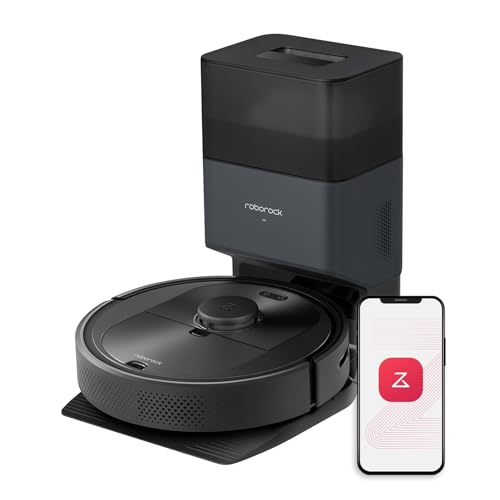
roborock Q5+ Robot Vacuum with Self-Empty Dock — Best for Long Runtimes
The Q5+ trades headline suction for endurance: a self-empty dock rated for up to seven weeks, a 180-minute maximum runtime and a proven carpet-and-pet-hair brief.
Check the current price on Amazon

Tikom Robot Vacuum and Mop Combo (G8000 Max) — Best Budget
The Tikom G8000 Max brings 5,000Pa suction, vacuum-and-mop function, a 150-minute maximum runtime and app plus remote control to the budget tier — the sensible first robot for pet homes.
Check the current price on Amazon
How These Picks Were Chosen
We chose these six by starting from the floor plan in the search: tile plus carpet plus pet hair. Any robot that could not credibly address all three was cut, which eliminated cheap random-bounce models with no carpet brief and premium mop-focused machines whose listings ignore pet hair. Each surviving pick had its listing checked for the specific claims we rely on — suction, navigation type, brush system, runtime and emptying method — and those claims are quoted as listed, never rounded up or embellished.
We also enforced variety of ownership style, because ‘best’ depends on your tolerance for upkeep. The list therefore spans a vacuum-only traditionalist (Roomba 105 Vac), two self-emptying workhorses with different bag philosophies (Shark Matrix Plus, bagless; ILIFE A30 Pro and roborock Q5+, bagged), an all-round LiDAR combo (roborock Q7 L5), and an honest budget option (Tikom G8000 Max). Renewed or refurbished listings were excluded from the picks even when cheaper, so every link below is to a standard new listing.
Finally, we weighted brush design as heavily as suction. Manufacturers headline suction because it is a single number, but in pet homes the brush roll is where performance goes to die: hair wraps, the roll slows, pickup collapses. Anti-tangle and anti-hair-wrap systems are confirmed in the listings of our top picks, and we call it out wherever a pick lacks that protection.
The 6 Best Robot Vacuums for Tile and Carpet and Pet Hair
roborock Q7 L5 Robot Vacuum and Mop Combo — Best Overall
Homes that mix hard tile, low-to-medium carpet and a shedding pet are the hardest test a robot vacuum faces, because the machine has to change its behaviour several times in a single run: gentle and thorough on tile grout lines, aggressive on carpet pile, and resistant to the hair wrap that slowly strangles a normal brush roll. The roborock Q7 L5 is built around that exact problem. Its listing confirms 8,000Pa suction, a dual anti-tangle system, LiDAR navigation and multi-level mapping, and that combination is why it leads this list.
On tile, the LiDAR mapping matters more than raw suction. A robot that cleans in neat, planned rows covers grout lines and kitchen corners systematically instead of bouncing off chair legs until the battery fades. Multi-level mapping means the same robot can hold a map for a tiled ground floor and a carpeted upper floor, so you are not re-teaching it the house every time you carry it upstairs. For pet owners, the dual anti-tangle design is the headline: long hair is the number one reason robot vacuums lose performance over a month, and a brush system designed to resist tangling keeps pickup consistent between maintenance sessions.
As a vacuum-and-mop combo it also handles the paw-print problem on tile — light mopping for daily film and tracked-in dust — though, like every combo in this roundup, the mop function is a maintenance clean, not a substitute for a proper deep mop of a muddy entryway. It is self-charging, returning to its dock when the battery runs low, and the app control that comes with the LiDAR platform lets you target the rooms where the dog actually sleeps rather than wasting runs on a guest room.
Who should skip it? If your home is almost entirely deep-pile carpet, a robot of any brand is a maintenance tool rather than a deep cleaner, and you may be happier putting the budget toward the self-emptying picks below plus a strong upright for weekly deep cleans. And if you want the robot to empty itself for weeks at a time, note that this configuration is the robot and its charging base — the self-empty dock versions sit elsewhere in this list.
Strengths
- 8,000Pa suction confirmed in the listing, strong for a combo unit at this tier
- Dual anti-tangle system directly addresses pet-hair wrap on the brush
- LiDAR navigation with multi-level mapping suits mixed tile/carpet homes
Trade-offs
- No self-empty dock in this configuration, so the onboard bin needs regular emptying
- Mopping is light maintenance mopping, not deep scrubbing
- App and map features reward a few minutes of setup time up front
| Specification | Detail (as listed) |
|---|---|
| Suction | 8,000Pa (as listed) |
| Navigation | LiDAR, multi-level mapping |
| Brush system | Dual anti-tangle |
| Functions | Vacuum and mop combo |
| Charging | Self-charging |
Best for: Mixed tile and carpet homes with shedding pets that want one capable all-rounder / Not suited for: Homes wanting weeks of hands-free self-emptying from the base configuration
Check the current price on Amazon
Shark Matrix Plus Robot Vacuum and Mop Combo (AV2610WA) — Best for Heavy Pet Hair
If the defining fact of your home is not the flooring but the sheer volume of pet hair produced every week, the Shark Matrix Plus is the machine in this list designed around your life. The listing confirms a 60-day capacity self-emptying base, Matrix Clean navigation, sonic mopping, anti-hair-wrap cleaning and LiDAR home mapping — a feature set aimed squarely at multi-pet households.
The self-empty base changes the ownership experience more than any suction figure. A robot whose bin fills with compressed pet hair every two days quietly stops being used; a robot that empties itself into a bagless base that holds around 60 days of debris keeps cleaning on schedule while you only deal with the base occasionally. Shark lists the base with HEPA filtration, and the anti-hair-wrap design works on the same problem as roborock’s anti-tangle approach: keeping long hair from winding the brush into a felt rope.
Matrix Clean is Shark’s answer to the single-pass problem. Rather than gliding over a dirty patch once, the robot cleans in a matrix pattern that passes over debris from multiple directions, which is particularly relevant on carpet, where hair weaves into the pile and a single straight pass skims over it. On tile, the sonic mopping adds genuine scrubbing action rather than dragging a damp pad, which helps with the dull film that builds up around water bowls and feeding stations.
The trade-offs are footprint and commitment. A self-empty base needs a permanent home with clearance around it, and the taller dock does not tuck under furniture the way a slim charging base does. This is also a premium-tier machine: households with one small, low-shedding dog will never use the capacity they are paying for, and one of the simpler picks below will serve them just as well.
Strengths
- 60-day self-empty base confirmed in the listing — the least daily upkeep here
- Matrix Clean multi-pass pattern suits hair worked into carpet pile
- Sonic mopping gives tile floors real scrubbing, not just a damp wipe
Trade-offs
- Self-empty base needs permanent floor space with clearance
- Premium tier — overkill for a single low-shedding pet
- Bagless base still needs periodic emptying and filter care
| Specification | Detail (as listed) |
|---|---|
| Self-empty capacity | 60-day (as listed) |
| Navigation | Matrix Clean, LiDAR home mapping |
| Mopping | Sonic mopping |
| Filtration | HEPA self-empty base (as listed) |
| Brush | Anti-hair wrap |
Best for: Multi-pet homes where hair volume overwhelms a normal robot bin / Not suited for: Small apartments with nowhere to park a self-empty base
Check the current price on Amazon
ILIFE A30 Pro Robot Vacuum and Mop — Best Long-Interval Self-Emptying
The ILIFE A30 Pro makes its case with two numbers in its listing: 10,000Pa of suction — the highest figure in this roundup — and a self-emptying system supplied with five dust bags that ILIFE rates for a 280-day cycle. For a pet owner, that second figure is the one that changes habits: the robot can run daily on tile and carpet for months while debris management shrinks to swapping a bag a few times a year.
LiDAR navigation and a 150-minute runtime mean it can methodically cover a full floor of a typical home in one outing, and the listing specifically calls out pet hair, hard floors and carpet as its working surfaces — precisely the brief of this article. Daily scheduled runs are the real secret to pet-hair control on mixed floors: hair picked up every day never gets the chance to weave deep into carpet or drift into tile corners, and a long-runtime LiDAR robot is the tool that makes daily runs practical.
Because it is a vacuum-and-mop model, it can also maintain tile between deeper cleans. As with every combo here, treat the mopping as film-and-paw-print maintenance. The bag-based self-empty system is a genuine preference point worth thinking about: bags seal debris away neatly when you swap them, which many allergy-conscious households prefer, but they are an ongoing consumable you need to keep in a drawer, unlike the bagless bases from Shark.
ILIFE’s app and accessory ecosystem is smaller than roborock’s or iRobot’s, so if you enjoy deep automation tinkering, third-party integrations and a huge library of spare parts stocked everywhere, the bigger brands have an edge. If your priority is a robot that simply keeps a pet-hair home under control with the fewest touchpoints per year, the A30 Pro is arguably the most rational buy on this page.
Strengths
- 10,000Pa suction — the strongest figure confirmed in this roundup
- Self-emptying with five dust bags rated for a 280-day cycle
- 150-minute runtime with LiDAR mapping for whole-floor coverage
Trade-offs
- Bag-based emptying means an ongoing (if infrequent) consumable cost
- Smaller app/accessory ecosystem than roborock or iRobot
- Mopping is maintenance-level, as with all combos here
| Specification | Detail (as listed) |
|---|---|
| Suction | 10,000Pa (as listed) |
| Self-emptying | 280-day cycle, 5 dust bags (as listed) |
| Runtime | 150 minutes (as listed) |
| Navigation | LiDAR |
| Functions | Vacuum and mop |
Best for: Pet owners who want the fewest debris touchpoints per year / Not suited for: Buyers who refuse bag-based consumables on principle
Check the current price on Amazon
iRobot Roomba 105 Vac Robot Vacuum — Best Straightforward Cleaner
Not every buyer wants a mop, a self-empty tower and a mapping project. The Roomba 105 Vac is the straightforward end of this list: a vacuum-only robot with 7,000Pa power-lifting suction and LiDAR navigation that cleans in neat rows across multiple surfaces. For a home where the tile is mopped separately anyway and the real job is daily hair and grit control, that simplicity is a feature.
The ‘cleans in neat rows’ point in iRobot’s listing deserves emphasis, because it separates modern Roombas from the random-bounce machines that gave robot vacuums a reputation for missing spots. Planned row-by-row coverage on tile means edges and grout lines get consistent attention, and on carpet the same methodical pattern overlaps passes in a way that lifts more embedded hair per run. iRobot’s long history in the category also means brushes, filters and wheels are easy to source years down the line — an unglamorous advantage that matters over a machine’s working life.
Vacuum-only also means one less system to maintain: no mop pads to wash, no water tank to empty, nothing damp sitting in a dock. In pet homes, that simplicity pairs well with a routine of running the robot daily in the rooms the animals use most. The 105 Vac with its standard charging base asks you to empty its bin yourself, though iRobot also sells a version of this robot with an AutoEmpty dock if you decide hands-free emptying matters after all.
Choose the 105 Vac if you value a mature platform, tidy navigation and a focused tool. Skip it if mopping is on your must-have list — look at the roborock or Shark combos above — or if your home’s carpet is thick enough that you want the highest suction figures in this roundup working on it.
Strengths
- 7,000Pa power-lifting suction with LiDAR row-by-row cleaning
- Vacuum-only design: nothing damp to maintain, no pads to wash
- iRobot’s parts and accessory availability is the deepest in the category
Trade-offs
- No mopping function at all
- Standard charging base — bin emptying is manual in this configuration
- Suction figure sits below the 10,000Pa picks for deep carpet work
| Specification | Detail (as listed) |
|---|---|
| Suction | 7,000Pa power-lifting (as listed) |
| Navigation | LiDAR, cleans in neat rows |
| Surfaces | Multi-surface (as listed) |
| Functions | Vacuum only |
| Base | Charging base (AutoEmpty version also exists) |
Best for: Buyers who want a simple, mature vacuum-only robot for daily hair control / Not suited for: Anyone who wants the robot to mop tile as well
Check the current price on Amazon
roborock Q5+ Robot Vacuum with Self-Empty Dock — Best for Long Runtimes
The roborock Q5+ is the endurance pick. Its listing confirms a self-empty dock that holds up to seven weeks of debris, a 180-minute maximum runtime — the longest in this roundup — and compatibility with Alexa, with an explicit brief for hard floors, carpets and pet hair. If your home is large, single-storey and mostly open plan, runtime is the spec that decides whether the robot finishes the job in one outing or splits it across a recharge cycle.
Its 2,700Pa maximum suction is the most modest figure here, and it is worth being honest about what that means. On tile and hard floors, suction beyond a certain point adds little: debris sits on the surface and even modest suction collects it. On carpet, the brush roll does much of the work of lifting hair from the pile, and the Q5+ was designed for exactly that mixed workload. Where you would feel the difference is deep, dense carpet — there, the 10,000Pa picks earn their premium. For the low-to-medium pile found in most mixed-floor homes, the Q5+ formula of long runtime plus self-emptying is a very sensible allocation of budget.
The self-empty dock being bagged is part of the deal: seven weeks of hands-free cleaning, then a bag swap. Owners who run the robot daily in a shedding-pet home consistently report that this rhythm — set a schedule, forget it for weeks — is what turns a gadget into infrastructure. The Q5+ is also a mature, widely owned model, which means setup advice, spare parts and replacement bags are all easy to find.
Skip the Q5+ if your priority is mopping (it is a vacuum-focused package) or if your carpet is genuinely deep pile. Take it seriously if your floors are large, your pets shed daily and your patience for bin-emptying is short.
Strengths
- 180-minute maximum runtime — the longest confirmed here
- Self-empty dock holds up to seven weeks of debris
- Mature, widely owned model with easy parts and bag availability
Trade-offs
- 2,700Pa maximum suction is the most modest figure in this roundup
- Vacuum-focused package — no headline mopping function
- Bagged dock adds a recurring consumable
| Specification | Detail (as listed) |
|---|---|
| Suction | 2,700Pa max (as listed) |
| Runtime | 180 minutes max (as listed) |
| Self-emptying | Up to 7 weeks (as listed) |
| Control | Alexa compatible |
| Surfaces | Hard floors, carpets, pet hair (as listed) |
Best for: Large single-storey mixed-floor homes that need one-outing coverage / Not suited for: Deep-pile carpet homes chasing maximum suction
Check the current price on Amazon
Tikom Robot Vacuum and Mop Combo (G8000 Max) — Best Budget
Every roundup needs an honest budget pick, and the Tikom G8000 Max earns the slot: its listing confirms 5,000Pa suction, a vacuum-and-mop combination, up to 150 minutes of runtime, app and remote control, and a brief covering hard floor, carpet and pet hair. That is a complete feature set for a first robot vacuum, at the tier where most first-time buyers actually shop.
The right way to judge a budget robot is by what it makes possible. A Tikom running daily keeps tile swept, stops pet hair from accumulating into tumbleweeds and maintains low-pile carpet between deep cleans — which is 90 percent of what any robot in this article is really for. The remote control is a small but real advantage for households that do not want every appliance mediated by a phone app: a family member can start, pause and dock the robot without accounts or Wi-Fi pairing.
Where the budget shows is in the sophistication around the edges. Navigation and mapping on value-tier robots is generally less polished than the LiDAR platforms above them, so expect a less methodical pattern and a little more supervision in cluttered rooms — chairs pushed in, cables lifted, pet toys gathered. Self-emptying is not part of the package, so the bin becomes part of your routine; in a shedding-pet home that means a quick empty every few runs.
Buy the G8000 Max as a first robot, for a smaller home, or for a single-floor zone like a tiled kitchen-and-family-room level. Step up to the LiDAR picks if your floor plan is complex, your carpet area is large, or you know from experience that manual bin emptying is the chore that makes you abandon appliances.
Strengths
- 5,000Pa suction with vacuum-and-mop in the budget tier
- 150-minute maximum runtime is generous for the price class
- App plus physical remote control — no app-only lock-in
Trade-offs
- Navigation is less methodical than the LiDAR picks above
- No self-emptying — bin care is part of the routine
- Smaller brand ecosystem for parts and support
| Specification | Detail (as listed) |
|---|---|
| Suction | 5,000Pa (as listed) |
| Runtime | 150 minutes max (as listed) |
| Functions | Vacuum and mop combo |
| Control | App and remote control |
| Surfaces | Hard floor, carpet, pet hair (as listed) |
Best for: First-time robot buyers and smaller mixed-floor pet homes on a budget / Not suited for: Complex floor plans that need precise LiDAR mapping
Check the current price on Amazon
Comparison Table
| Pick | Badge | Key spec | Best for |
|---|---|---|---|
| roborock Q7 L5 Robot Vacuum and Mop Combo | Best Overall | 8,000Pa, LiDAR, dual anti-tangle | Mixed tile and carpet homes with shedding pets that want one capable all-rounder |
| Shark Matrix Plus Robot Vacuum and Mop Combo (AV2610WA) | Best for Heavy Pet Hair | 60-day self-empty, Matrix Clean, sonic mop | Multi-pet homes where hair volume overwhelms a normal robot bin |
| ILIFE A30 Pro Robot Vacuum and Mop | Best Long-Interval Self-Emptying | 10,000Pa, 280-day self-empty, 150 min | Pet owners who want the fewest debris touchpoints per year |
| iRobot Roomba 105 Vac Robot Vacuum | Best Straightforward Cleaner | 7,000Pa, LiDAR neat rows, vacuum only | Buyers who want a simple, mature vacuum-only robot for daily hair control |
| roborock Q5+ Robot Vacuum with Self-Empty Dock | Best for Long Runtimes | 180-min runtime, 7-week self-empty dock | Large single-storey mixed-floor homes that need one-outing coverage |
| Tikom Robot Vacuum and Mop Combo (G8000 Max) | Best Budget | 5,000Pa, 150 min, app + remote | First-time robot buyers and smaller mixed-floor pet homes on a budget |
How to Choose a Robot Vacuum for Tile, Carpet and Pets
Start with your floor ratio. A home that is 70 percent tile with a couple of low-pile rugs needs planned navigation and good edge cleaning more than maximum suction. A home that is 70 percent carpet needs brush action and suction headroom, and should seriously consider the higher-suction picks in this roundup. Most mixed homes sit between those poles, which is why the Best Overall slot went to a LiDAR combo with an anti-tangle brush rather than to the single highest suction figure.
Then decide your emptying tolerance honestly. Pet hair fills bins fast — in a two-pet home, a standard robot bin can need emptying every two to three runs. If that rhythm sounds like a chore you will abandon by March, a self-emptying model is not a luxury; it is the feature that keeps the robot in service. Choose bagless (Shark) if you dislike consumables, bagged (ILIFE, roborock Q5+) if you prefer sealed, tidy disposal.
Finally, check the practicalities listings do confirm: runtime against your floor area, navigation type against your floor plan’s complexity, and whether mopping matters to you at all. A vacuum-only robot plus your existing mop is a perfectly rational setup for many tile homes.
Suction figures: how to read them
Suction is quoted in Pascals (Pa) and the figures in this roundup run from 2,700Pa to 10,000Pa as listed. Treat these as within-brand comparisons rather than absolute laboratory truths: measurement methods differ, and on hard tile almost any modern robot picks up surface debris well because nothing is embedded. Suction earns its keep on carpet, where debris sits down in the pile. If your carpet is low-pile, the mid-range figures here are ample; if it is medium pile and heavily trafficked by pets, weight the 8,000–10,000Pa picks more heavily.
Brush rolls and the pet-hair problem
Long pet hair wraps around a conventional brush roll until the roll is wearing a hair sleeve. Anti-tangle designs (roborock’s dual system) and anti-hair-wrap designs (Shark) attack this mechanically, combing or channelling hair toward the bin instead. Whichever robot you buy, schedule a two-minute brush check every couple of weeks — even the best anti-tangle system appreciates the help, and the difference in pickup between a clean roll and a wrapped one is larger than the difference between mid-range and flagship suction.
Navigation: LiDAR, mapping and neat rows
LiDAR robots build a map and clean in planned rows, which is why every pick above the budget tier in this list uses it. Mapping brings practical gifts: room-by-room cleaning, no-go zones for the pet’s water bowl or a shaggy rug, and multi-level maps if your tile and carpet live on different floors. Simpler navigation can still clean a small, simple floor plan well — that is the Tikom’s niche — but in chair-leg forests and multi-room layouts, planned navigation finishes faster and misses less.
Tile, Carpet and Hair: Setting Realistic Expectations
On tile, a good robot keeps grout lines and edges free of the grit and hair that otherwise migrate everywhere on hard floors. Run it daily and you will notice the ‘barefoot test’ improves within a week: floors feel clean underfoot because the film of fine dust never accumulates. Combo mopping maintains that feeling; it does not rescue a floor that starts filthy, so begin ownership with one proper manual clean and let the robot maintain the standard.
On carpet, expect maintenance, not miracles. A robot run daily keeps surface hair and tracked litter under control and dramatically reduces how often you haul out the big vacuum — but a weekly or fortnightly deep clean with an upright still matters on medium pile, especially along edges and under furniture the robot cannot reach. In pet homes this division of labour is the realistic, sustainable pattern: robot daily, upright weekly, brush-roll check fortnightly.
Living With the Robot: Pets, Noise and Seasonal Shedding
Most dogs and cats accept a robot vacuum within a week if the introduction is handled calmly: let the pet see and sniff the machine while it is off, run the first sessions while you are in the room, and avoid scheduling the maiden run for the exact moment the pet is already stressed by visitors, fireworks or a vet trip. Cats frequently graduate from suspicion to supervision — riding is rarer than the internet suggests, but watching from a chair is nearly universal. Schedule runs for when nervous pets can retreat to another room, and the robot becomes background furniture rather than an intruder.
Shedding is seasonal, and your routine should be too. In the heavy spring and autumn coat-blow weeks, increase pet-area runs rather than expecting one pass to cope: a second short run in the main living area costs the robot twenty minutes and costs you nothing if it is scheduled. This is also when brush-roll checks matter most — a roll that coped in February can wrap in April. Self-emptying owners should expect bags and bases to fill faster in shed season; the capacities quoted in listings assume average debris loads, and a blowing double coat is not average.
Noise deserves a realistic word. Robot vacuums are far quieter than uprights, and most pets tolerate them at conversation distance, but self-empty bases produce a short, loud whoosh when they evacuate the bin — that ten-second event startles more animals than the cleaning itself. If your pet is sound-sensitive, place the base away from their favourite sleeping spot and, where the app allows, avoid scheduling emptying-adjacent runs for the middle of the night.
When a robot is not enough: the upright partnership
Plan from the start for a division of labour. The robot owns daily surface control — hair, litter scatter, crumbs, tile grit. A full-size vacuum owns the weekly deep clean of carpet, stairs, upholstery and edges, none of which a robot reaches well. Households that accept this partnership stop being disappointed by their robot, because they stop asking it to do the one job it was never built for. Households that expect the robot to replace the upright entirely are the ones writing one-star reviews in month three.
How to Set Up a Robot Vacuum Routine for a Pet Home
Setup is where robot vacuums are won or lost. Spend twenty minutes on the routine below when your machine arrives and it will repay you every day it runs.
- Do one manual deep clean first. Vacuum and mop properly before the robot’s first run, so it starts in maintenance mode rather than fighting a backlog it was never designed for.
- Place the dock thoughtfully. Give the base clear space on either side and in front, on the floor type the robot cleans most, away from the pet’s bed and bowls so hair and water do not concentrate around its home.
- Run the mapping run with doors as you mean them. Open the doors of rooms you want cleaned, close the ones you do not, pick up cables, cords and pet toys, and let the robot build its map in realistic conditions.
- Set no-go zones immediately. Mark off water bowls, litter trays, feeding mats and any deep shag rug. Two minutes in the app saves weeks of rescuing a stuck or soaked robot.
- Schedule daily runs for pet areas. Set the robot to run the kitchen, hallway and living areas daily — ideally while you are out or at work — and the full floor plan two or three times a week.
- Build the two-minute maintenance habit. Empty the bin (if not self-emptying), glance at the brush roll for wrap, and check the filter every couple of weeks; wash or swap mop pads after each mopping run so they do not sour.
Within a fortnight this routine becomes invisible, which is precisely the point: the best robot vacuum setup is the one you stop thinking about while your floors quietly stay cleaner than they ever did under a weekly manual regime.
Common Buying Mistakes
Buying on suction alone
The biggest single number on the box is the easiest to shop by and the least predictive of happiness in a pet home. A 10,000Pa robot with a brush roll wrapped in hair cleans worse than a mid-suction robot with an anti-tangle brush. Read listings for brush design and navigation first; let suction break ties, not make decisions.
Skipping the self-empty question
Buyers routinely save money by choosing a manual-bin model, then quietly stop running it because emptying a compressed wad of pet hair every other day is unpleasant. If your pets shed heavily, the self-empty base is the purchase — everything else is secondary.
Expecting the mop to deep-clean
Combo mopping maintains tile; it does not scrub dried mud or rescue neglected grout. Buyers who expect a robot mop to replace mopping entirely end up disappointed and return machines that were working exactly as designed. Start from a manually cleaned floor and let the robot hold the line.
Never maintaining the brush and filter
Even anti-tangle systems need a fortnightly two-minute check, and a clogged filter strangles suction on any robot. Most ‘my robot got worse after three months’ stories are maintenance stories, not product failures.
Running it for the first time in a cluttered room
Cables, shoelaces, pet toys and loose rugs defeat more first runs than any product flaw. Ten minutes of floor prep before the mapping run sets the map — and your opinion of the machine — on the right footing.
Final Recommendation
For most mixed-floor pet homes, the roborock Q7 L5 is the buy: LiDAR mapping, an anti-tangle brush and strong suction in one sensibly priced package. If hair volume is your defining problem, step up to the Shark Matrix Plus or the ILIFE A30 Pro and let a self-empty base carry the burden. Large single-storey homes should look hard at the roborock Q5+ and its 180-minute runtime, traditionalists at the vacuum-only Roomba 105 Vac, and first-time buyers at the Tikom G8000 Max, which proves how capable the budget tier has become.
Whichever you choose, commit to the daily-run routine in the setup section above. In pet homes, consistency beats specification — a mid-range robot that runs every day will leave your tile and carpet cleaner than a flagship that runs when someone remembers.
Still narrowing it down? Readers comparing floor types often also read our guides to the best robot vacuums for tile floors and the best vacuum for hard floors and rugs, and budget shoppers should see the best economy robot vacuums roundup before deciding.
Best Robot Vacuums For Tile Floors
Best Vacuum For Hard Floors And Rugs
Best Hardwood Floor Vacuums For Pet Hair
Related guides
Frequently Asked Questions
Can one robot vacuum really handle both tile and carpet?
Yes — that is the normal brief for modern mid-range robots. LiDAR models clean tile in planned rows and increase their effort on carpet, and every pick in this roundup lists both hard floors and carpet among its working surfaces. The honest limit is deep-pile carpet, where any robot is a maintenance tool between upright deep cleans.
How often should I run a robot vacuum with pets?
Daily in the rooms pets use most, and across the whole floor plan two or three times a week. Pet hair is a volume problem: collected daily, it never mats into carpet or drifts into corners, and your robot’s bin and brush stay ahead of the load.
Is a self-emptying base worth it for pet hair?
In a shedding-pet home, usually yes. Hair fills a standard bin in a few runs, and a base that holds weeks of debris (60 days for the Shark, a 280-day bag cycle for the ILIFE, seven weeks for the roborock Q5+, all as listed) is what keeps the robot running on schedule instead of sitting full.
Do robot vacuum mops replace mopping tile?
No. Combo mopping is maintenance: it lifts paw prints, fine dust film and light spills from a floor that starts clean. Dried mud, heavy grease and neglected grout still need a real mop. Start with one manual clean and let the robot maintain it.
What suction do I need for carpet with pet hair?
As listed figures, the picks here span 2,700Pa to 10,000Pa. For low-pile carpet, mid-range suction with a good brush roll is plenty. For medium pile and heavy shedding, weight the 8,000Pa-and-up picks — the roborock Q7 L5, ILIFE A30 Pro and Shark Matrix Plus — more heavily, and keep the brush roll clean whichever you buy.
How do I stop pet hair wrapping around the brush roll?
Choose a robot whose listing confirms an anti-tangle or anti-hair-wrap brush system, as the roborock Q7 L5 and Shark Matrix Plus do, and still check the roll every couple of weeks. Two minutes with the cleaning tool keeps pickup at full strength and protects the motor from strain.


