Disclosure: airfryerkitchensupply.com is reader-supported. When you buy through links on our site, we may earn an affiliate commission at no extra cost to you.
Where to buy
All six wet/dry vacuums below are sold on Amazon and were verified against Amazon’s product data — five fresh for this guide, one from this programme’s verified cache. Each one is positioned by its own listing as a quiet or noise-reduced machine.
- DEWALT STEALTHSONIC Wet Dry Shop Vac, 6 Gallon, DXV06P-QT — check price on Amazon
- DEWALT STEALTHSONIC Ultra Quiet Wet/Dry Vacuum, 16 Gallon, DXV16P-QTA — check price on Amazon
- Shop-Vac Ultra Quiet Shop Vacuum, 6 Gallon — check price on Amazon
- Shop-Vac Ultra Quiet Wet/Dry Vacuum, 12 Gallon — check price on Amazon
- ECOMAX Ultra Quiet Shop Vacuum, 5 Gallon — check price on Amazon
- DEWALT Wet Dry Vacuum with Blower and Muffler, 16 Gallon, DXV16PA — check price on Amazon
Introduction
The best quiet shop vacuums exist because the classic shop vac has one notorious flaw: it is loud enough to dictate when and where you can work. A standard wet/dry vacuum’s roar rules out early mornings, shared workshops, apartment garages, occupied homes and any jobsite with neighbours or customers nearby. The quiet class answers with motors and housings designed around noise reduction — DEWALT’s STEALTHSONIC line names the idea outright, Shop-Vac sells an Ultra Quiet range, and mufflers tame the exhaust note on conventional machines. This guide rounds up six verified options from 5 to 16 gallons, all positioned by their own listings as quiet or noise-reduced machines.
A note on how we talk about noise here, because this category invites invented numbers. None of the verified listings in this guide states a decibel figure in its title, so this guide prints none. What we report is each listing’s own language — “Ultra Quiet”, “Whisper-Quiet Operation”, “Noise Reduction”, a muffler in the box — and the practical reality behind the category: these machines are designed to be dramatically easier to be around than a standard shop vac, to the point where conversation near them and working without hearing protection become reasonable for typical cleanup sessions. Judge them on that design intent and your setting, not on a number nobody verified.
Every pick is a complete wet/dry vacuum — no mufflers, filters or accessories standing in for machines (the one muffler mention here is a feature of a complete DEWALT vacuum that includes one). Capacities, horsepower and hose/cord figures are quoted only where listings state them.
Key Takeaways
- Quiet shop vacs are a designed class, not a setting: look for lines named for quiet (STEALTHSONIC, Ultra Quiet) or included mufflers.
- No decibel figures are printed in this guide, because none of the verified listings states one — be wary of any guide that invents them.
- Capacity still rules the purchase: 5-6 gallons for garages and cars, 12-16 for workshops and jobsite debris.
- All six picks are complete wet/dry machines verified on Amazon.
- Quiet operation expands when you can work — early, late, and around other people — which is the real product being bought.
In this guide
Quick Picks

DEWALT STEALTHSONIC Wet Dry Shop Vac, 6 Gallon, DXV06P-QT — Best Overall
The purpose-built quiet machine in the sweet-spot size: ultra quiet motor with powerful suction and a complete attachment set, per the listing, for garage, workshop, jobsite and basement. Check the current price on Amazon.

DEWALT STEALTHSONIC Ultra Quiet Wet/Dry, 16 Gallon, DXV16P-QTA — Best Large Capacity
The quiet treatment at full workshop scale: a 16-gallon noise-reduction vac listed for jobsite and workshop duty. Big tank, civilised voice. Check the current price on Amazon.

Shop-Vac Ultra Quiet Shop Vacuum, 6 Gallon — Best Value Quiet
The originator’s own quiet line at 6 gallons and 4.5 peak HP, with a 7 ft hose and 15 ft cord per the listing — quiet-class cleaning at a value tier. Check the current price on Amazon.

Shop-Vac Ultra Quiet Wet/Dry Vacuum, 12 Gallon — Best Mid-Size
12 gallons and 5.5 peak HP with “Whisper-Quiet Operation” in the listing’s own words, a 7-ft hose and a long 25-ft cord — the workshop middle ground. Check the current price on Amazon.

ECOMAX Ultra Quiet Shop Vacuum, 5 Gallon — Best Budget Compact
A 5-gallon, 4 HP ultra quiet machine with on-board storage, positioned for garage, workshop and jobsite at the budget end of the quiet class. Check the current price on Amazon.
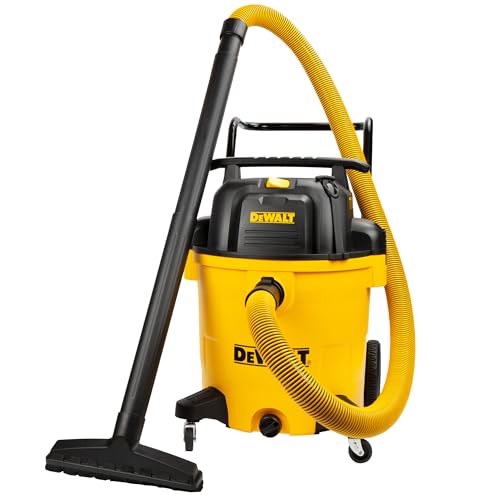
DEWALT Wet Dry Vacuum with Muffler, 16 Gallon, DXV16PA — Best Muffler-Equipped
A 16-gallon, 6.5 HP, 116CFM 3-in-1 wet/dry/blower machine that ships with a muffler — the conventional-power route to a quieter exhaust note. Check the current price on Amazon.
How These Picks Were Chosen
The selection ran in two passes. A fresh verification pass for this batch searched Amazon’s catalogue directly for quiet wet/dry vacuums, which is what surfaced the DEWALT STEALTHSONIC range, Shop-Vac’s Ultra Quiet models and the ECOMAX. This programme’s verified cache contributed the muffler-equipped DEWALT DXV16PA. Three gates then applied. First, complete machines only — the search results in this category include standalone mufflers, filters and dust bags, all excluded as picks. Second, the listing itself had to position the machine as quiet: a named quiet line, “ultra quiet” or “whisper-quiet” language, noise-reduction claims, or an included muffler. Standard shop vacs, however excellent, were excluded — a quiet guide that lists ordinary machines helps no one. Third, noise honesty: no listing here states a decibel figure in its title, so none is printed, and relative claims are reported in the listings’ own terms.
Within the six, capacity does the organising: compact 5-6 gallon machines for garages, cars and small workshops; a 12-gallon middle; and two 16-gallon machines for serious debris volume. Two philosophies of quiet are represented — motors designed quiet from the start (STEALTHSONIC, Ultra Quiet lines) and a powerful conventional machine tamed by a muffler (DXV16PA) — because buyers arrive at this search from both directions.
The 6 Best Quiet Shop Vacuums
1. DEWALT STEALTHSONIC Wet Dry Shop Vac, 6 Gallon, DXV06P-QT — Best Overall
The STEALTHSONIC line is DEWALT’s answer to the shop vac’s reputation, and the 6-gallon DXV06P-QT is its most versatile size: an ultra quiet motor with powerful suction and a complete matching attachment set, listed for garage, workshop, jobsite and basement. Six gallons is the capacity that fits real life — car interiors, garage floors, workshop benches, the occasional spill — in a machine one person carries easily and stores in a corner. The quiet design is the headline, but the completeness matters: a full attachment set means the quiet machine is also the only machine you reach for.
Who it suits: homeowners, garage and basement workshops, apartment-adjacent workspaces, and anyone whose cleaning happens near other people. Who should skip it: contractors generating serious debris volume (the 16-gallon picks), and buyers on the tightest budgets (the ECOMAX and Shop-Vac 6-gallon undercut it).
Strengths
- Purpose-built ultra quiet motor — quiet is the design brief, not an accessory.
- 6-gallon sweet spot: real capacity, one-person handling.
- Complete matching attachment set listed — no accessory hunt before first use.
Trade-offs
- Jobsite-scale debris will fill 6 gallons quickly.
- Quiet-line positioning carries a premium over standard vacs of similar size.
- 5 HP class (per the listing’s model description) suits cleanup and maintenance more than demolition duty.
Spec box (from the verified listing)
- Model: DXV06P-QT, STEALTHSONIC line
- Capacity: 6 gallons
- Power: 5 HP (per listing)
- Positioning per listing: ultra quiet motor, powerful suction; garage, workshop, jobsite, basement
The DXV06P-QT leads because it defines the category’s centre: a machine quiet enough to change when and where you work, sized for the jobs most people actually do, from a maker whose standard vacs set the loudness baseline this line exists to fix.
Best for: garages, home workshops and neighbour-conscious cleaning / Not suited for: heavy contractor debris volume
Check the current price on Amazon
2. DEWALT STEALTHSONIC Ultra Quiet Wet/Dry, 16 Gallon, DXV16P-QTA — Best Large Capacity
Scale changes nothing about noise’s cost: a 16-gallon jobsite vac running beside a crew, a client or a classroom is exactly where loud machines cause real problems. This STEALTHSONIC applies the line’s ultra quiet, noise-reduction design at the full 16-gallon size, listed as a heavy-duty shop vacuum for jobsite and workshop, in DEWALT yellow. It is the pick for renovation dust, workshop shavings and big liquid pickups where stopping to empty a small tank every ten minutes is its own inefficiency.
Who it suits: workshops, renovation and jobsite users, and properties with serious periodic cleanup. Who should skip it: apartment and small-garage users — a full 16-gallon tank is furniture-sized — and car-detailing-only buyers.
Strengths
- Quiet-line design at the largest capacity in this guide.
- Noise reduction positioning stated in the listing itself.
- Heavy-duty jobsite brief: fewer emptying stops, bigger pickups.
Trade-offs
- Size and weight when full demand storage space and two-hand respect.
- Premium tier of this guide.
- Overkill — in cost and footprint — for car-and-bench duty.
Spec box (from the verified listing)
- Model: DXV16P-QTA, STEALTHSONIC line
- Capacity: 16 gallons
- Positioning per listing: ultra quiet, noise reduction, heavy duty; jobsite/workshop
- Colour listed: Yellow
Choose this when the job is big and the setting is sensitive — the combination standard vacs serve worst. It is the professional form of the quiet idea: full capacity, full duty cycle, civilised volume.
Best for: jobsites, workshops and large cleanups near people / Not suited for: small spaces or light duty only
Check the current price on Amazon
3. Shop-Vac Ultra Quiet Shop Vacuum, 6 Gallon — Best Value Quiet
Shop-Vac is the brand that named the category, and its Ultra Quiet 6-gallon model brings the quiet brief to a value tier: 4.5 peak HP, attachments included, a 1-7/8 in x 7 ft hose and a 15 ft cord, per the listing, for jobsite, garage, workshop and home. The hose diameter is a practical detail worth noticing — the wider 1-7/8 inch hose swallows workshop debris that chokes narrower hoses, which matters more in daily use than spec-sheet horsepower.
Who it suits: value-first buyers, home workshops, and anyone upgrading from a deafening budget vac. Who should skip it: buyers wanting the quietest possible design regardless of tier (STEALTHSONIC), and large-volume users.
Strengths
- Quiet-class machine from the category’s founding brand, at a value tier.
- Wide 1-7/8 in hose handles real workshop debris.
- 15 ft cord plus 7 ft hose gives a useful working radius.
Trade-offs
- 4.5 peak HP is the modest end of this guide’s power range.
- 6-gallon capacity fills fast on renovation work.
- Value-tier fittings and plastics versus the DEWALT machines.
Spec box (from the verified listing)
- Model: 5430541, Ultra Quiet line
- Capacity: 6 gallons; 4.5 peak HP
- Hose: 1-7/8 in x 7 ft; cord: 15 ft (per listing)
- Use listed: jobsite, garage, workshop, home
The honest summary: this is where quiet stops being a premium feature. If the only thing standing between you and a civilised workshop is the tier, Shop-Vac’s own quiet model is the straightforward answer.
Best for: value buyers wanting genuine quiet-class design / Not suited for: heavy-duty or prestige buyers
Check the current price on Amazon
4. Shop-Vac Ultra Quiet Wet/Dry Vacuum, 12 Gallon — Best Mid-Size
The 12-gallon Ultra Quiet is the guide’s middle path: 5.5 peak HP, a 7-ft hose and a notably long 25-ft cord, with the listing’s own phrase “Whisper-Quiet Operation” as its positioning. Twelve gallons is the workshop size that swallows a weekend’s project debris without the 16-gallon footprint, and the 25-foot cord is a genuine workflow feature — one outlet serves a whole garage or small workshop, which matters because dragging a vac past its cord’s end mid-job is how messes spread.
Who it suits: serious home workshops, small trade users, and property maintenance. Who should skip it: car-only users (too big), and maximum-capacity contractors (the 16-gallon picks).
Strengths
- Whisper-quiet positioning in the listing’s own words.
- 25-ft cord is the longest reach in this guide — one outlet, whole room.
- 12-gallon capacity balances volume against storage.
Trade-offs
- Mid-size still means a substantial stored footprint.
- Shop-Vac’s value construction versus DEWALT’s jobsite armour.
- 5.5 peak HP suits cleanup and projects, not industrial extraction duty.
Spec box (from the verified listing)
- Model: 5430098, Ultra Quiet line
- Capacity: 12 gallons; 5.5 peak HP
- Hose: 7 ft; cord: 25 ft (per listing)
- Positioning per listing: whisper-quiet operation, powerful suction
Between the compacts and the giants, this is the workshop natural: enough tank for projects, enough cord for the room, and a voice low enough to work at hours a standard vac would make antisocial.
Best for: home workshops and small trade use / Not suited for: car-only or industrial duty
Check the current price on Amazon
5. ECOMAX Ultra Quiet Shop Vacuum, 5 Gallon — Best Budget Compact
ECOMAX’s 5-gallon machine is the budget door into the quiet class: an ultra quiet wet/dry vac at 4 HP with on-board storage, positioned for garage, workshop and jobsite. Its listing makes the strongest relative noise claim in this guide — language we record in the accompanying notes and deliberately paraphrase here as the maker’s own positioning rather than a measured figure. What is verifiable and sufficient: this is a machine designed and sold as an ultra quiet model, at the smallest capacity and friendliest tier in the roundup, with the on-board storage that keeps a compact vac’s accessories from scattering.
Who it suits: budget buyers, car and garage detailers, small-space workshops, and as a second, quiet vac beside a big loud one. Who should skip it: anyone whose debris volume is serious, and brand-loyal buyers.
Strengths
- Lowest tier in this guide for a purpose-built ultra quiet machine.
- Compact 5-gallon format stores anywhere and carries one-handed.
- On-board storage keeps the attachment set with the machine.
Trade-offs
- 5 gallons empties often on workshop debris.
- 4 HP is cleanup-class power.
- Lesser-known brand: long-term parts and support are less proven than DEWALT or Shop-Vac.
Spec box (from the verified listing)
- Model: EM18421P-5A
- Capacity: 5 gallons; 4 HP
- Positioning per listing: ultra quiet wet and dry; garage, workshop, jobsite
- Features named in listing: on-board storage
The ECOMAX is the pick that proves quiet is no longer a premium-only idea. For an apartment garage or a small bench workshop, it may be all the shop vac — and all the quiet — you ever need.
Best for: tight budgets, cars and small workshops / Not suited for: high-volume debris
Check the current price on Amazon
6. DEWALT Wet Dry Vacuum with Blower and Muffler, 16 Gallon, DXV16PA — Best Muffler-Equipped
The DXV16PA represents the other road to quiet: a full-power conventional machine — 16 gallons, 6.5 HP, 116CFM, a 3-in-1 wet/dry/blower in a large poly tank, per its listing — that ships with a muffler to tame the exhaust note. A muffler does not redesign the motor, but exhaust roar is a large share of a shop vac’s perceived loudness, and diffusing it makes a powerful machine markedly easier to work around. The blower function adds the leaf-and-dust clearing duty that pure vacs cannot do.
Who it suits: buyers who want maximum conventional power and airflow with a quieter exhaust, workshops that also blow debris, and existing DEWALT users. Who should skip it: buyers wanting designed-in quiet above all (the STEALTHSONIC line), and small-space users.
Strengths
- Included muffler addresses exhaust noise on a full-power machine.
- 116CFM airflow and 6.5 HP — the strongest conventional specs here, as listed.
- 3-in-1 wet/dry/blower versatility at 16 gallons.
Trade-offs
- A muffler quiets the exhaust, not the whole machine — expect improvement, not STEALTHSONIC-class hush.
- Large poly tank needs real storage space.
- Blower use is, by nature, not a quiet activity.
Spec box (from the verified listing)
- Model: DXV16PA
- Capacity: 16 gallons; 6.5 HP; 116CFM (per listing)
- Functions: wet / dry / blower, 3-in-1
- Included per listing: muffler
Think of the DXV16PA as the pragmatist’s quiet vac: it refuses to trade power for politeness and instead bolts politeness onto power. For workshops whose first requirement is capability, it is the right compromise — and its muffler can be the difference between working at 7 a.m. and waiting until nine.
Best for: maximum power with a tamed exhaust note / Not suited for: quiet-at-all-costs buyers
Check the current price on Amazon
Comparison Table
| Pick | Badge | Key spec | Best for |
|---|---|---|---|
| DEWALT STEALTHSONIC 6 Gallon DXV06P-QT | Best Overall | Ultra quiet motor, 6 gal, 5 HP | Garages and home workshops |
| DEWALT STEALTHSONIC 16 Gallon DXV16P-QTA | Best Large Capacity | Ultra quiet noise reduction, 16 gal | Jobsites and big cleanups |
| Shop-Vac Ultra Quiet 6 Gallon | Best Value Quiet | 4.5 peak HP, 7 ft hose, 15 ft cord | Value buyers |
| Shop-Vac Ultra Quiet 12 Gallon | Best Mid-Size | 5.5 peak HP, whisper-quiet, 25 ft cord | Serious home workshops |
| ECOMAX Ultra Quiet 5 Gallon | Best Budget Compact | 4 HP, on-board storage | Cars, small spaces, tight budgets |
| DEWALT DXV16PA with Muffler | Best Muffler-Equipped | 16 gal, 6.5 HP, 116CFM, blower + muffler | Maximum power, tamed exhaust |
How to Choose a Quiet Shop Vacuum
Start with your setting, because “quiet” is relative to an audience. A detached garage with no neighbours needs less hush than a basement workshop under a sleeping baby, a shared makerspace, or a jobsite inside an occupied office. The stricter your setting, the more you should favour the designed-quiet lines (STEALTHSONIC, Shop-Vac Ultra Quiet, ECOMAX) over the muffler compromise, good as that compromise is. If your problem is mainly your own comfort during long sessions, any pick here transforms the experience versus a standard vac.
Capacity comes next, and it should be matched to debris, not ambition. Cars, benches and garage floors: 5-6 gallons, carried easily and emptied without a grunt. Project workshops: 12 gallons, so a weekend’s sawdust and offcuts fit one tank. Renovation and jobsite work: 16 gallons, accepting the storage footprint as the price of uptime. Oversizing is the common error — a half-empty 16-gallon tank is just a heavier, bulkier 6-gallon vac with worse manners in a small room.
Then read reach: hose length plus cord length is your working radius from an outlet. The Shop-Vac 12-gallon’s listed 25-ft cord is the standout here; in big spaces it can matter more than a gallon of capacity. Check hose diameter too if your debris is chunky — the Shop-Vac 6-gallon’s 1-7/8 in hose is sized for workshop waste rather than dust alone.
Finally, keep your noise expectations honest. These machines are designed to be far easier to be around than standard shop vacs; they are not silent, and no wet/dry vacuum is. Any source that quotes you a precise decibel figure for a machine whose own listing does not state one is inventing precision. Buy the design intent — quiet-line motor, noise-reduction housing, or a muffler in the box — and the verified capacity and reach, and you will get the machine the listing promised.
How to Keep a Shop Vac Quiet and Working Well
- Keep filters clean. A clogged filter makes any motor work harder and louder, and strangles suction. Tap or replace filters on the maker’s schedule — more often in drywall or fine-dust work.
- Use dust bags for fine debris where the model supports them. Bags keep fine dust out of the filter, preserving both suction and the machine’s designed sound profile across a long session.
- Fit and keep the muffler (DXV16PA). The muffler only earns its keep attached and intact. Check it is seated before loud jobs, and store it with the machine, not in a drawer across the shop.
- Mind the hose and seals. Leaks whistle and hiss, adding noise that owners blame on the motor. Seat the hose fully, check tank latches, and replace cracked cuffs.
- Empty before the tank is packed. A brim-full tank forces the motor to labour and changes the machine’s note. Two-thirds is a good working ceiling for debris, and always drain liquids promptly.
- Work on a mat, store on a mat. A hard tank on bare concrete transmits vibration as noise. A rubber mat under the machine in use and in storage is the cheapest decibel-free improvement in this guide.
- Switch to wet mode properly. Remove or configure the filter as the manual directs before liquid pickup, and empty and dry the tank after — a machine stored wet smells, corrodes and works worse.
Quiet Vacs in Shared and Sensitive Spaces
The quiet shop vac’s real market is anywhere a standard vac’s roar has social or practical consequences. Consider the settings our picks’ listings name — garage, workshop, jobsite, basement, home — and the hours attached to them. In a home with a night-shift sleeper, a baby, or thin party walls, a designed-quiet machine converts vacuuming from a negotiated event into a background chore that happens when the mess happens. In shared workshops and makerspaces, it is the difference between cleaning as you go — the habit that keeps shared spaces usable — and letting debris accumulate until a loud, resented deep-clean. On jobsites inside occupied buildings — offices being renovated floor by floor, schools in term time, healthcare-adjacent spaces where dust control and calm both matter — a quiet wet/dry machine is close to a professional requirement, and the STEALTHSONIC 16-gallon exists for exactly that contract.
There is also a hearing-comfort argument that deserves plain statement. Standard shop vacs are loud enough that hearing protection is sensible advice for extended use; a machine designed to run dramatically quieter reduces that burden for the quick and medium jobs that make up most of a vac’s life. We make no decibel claims — the listings state none — but the direction of travel is the product: every pick here was engineered to be easier on the ears than the conventional machine it replaces, and users feel that difference in the first ten seconds. If your workshop sessions end with ringing ears and a headache, the upgrade is not a luxury; it is the tool finally matching the human operating it.
Wet and Dry Technique: Getting the Most From the Machine
A wet/dry vac rewards correct mode discipline. For dry work, the filter is the machine’s lungs: keep it fitted, clean and — for fine dust like drywall or cement — paired with a dust bag where the model supports one, because fine dust is what clogs filters, strangles suction and makes motors labour audibly. Work in overlapping passes on floors, use the crevice tool at edges where debris actually accumulates, and let the hose diameter work for you on chunky waste rather than forcing everything through a narrow nozzle. For wet work, switch the machine to its wet configuration exactly as the manual directs — typically removing or swapping the dry filter and confirming the float shut-off moves freely — then vacuum liquids in steady passes, watching the tank level rather than discovering it via the float’s changed note.
After wet work, the two minutes that protect the machine: empty the tank, rinse if the spill was anything but clean water, and leave the tank open to dry before storage. A wet/dry vac stored sealed and damp develops the musty tank smell that owners blame on the machine rather than the storage. Cords and hoses deserve the same respect — coil without kinks, check cuffs for cracks that whistle and leak, and keep the attachment set with the machine (the ECOMAX’s on-board storage and the STEALTHSONIC 6-gallon’s complete set both serve this discipline). Technique is unglamorous, but it is what separates a vac that performs as listed for years from one that fades in a season — quietly or otherwise.
Common Buying Mistakes
Trusting invented decibel figures. If a review quotes an exact dB number that the manufacturer’s listing never states, treat the whole review as fiction. This guide prints none, deliberately.
Buying a standard vac and a muffler and expecting a quiet-line machine. A muffler helps the exhaust; a designed-quiet motor and housing address the whole sound. Know which of the two philosophies you are buying — both are in this guide, labelled.
Oversizing the tank. Capacity you never fill is weight and storage you always pay. Match gallons to your real debris.
Ignoring cord and hose reach. A quiet vac tethered to constant outlet-hopping still disrupts a room. Add hose and cord lengths before you buy.
Using the workshop vac as a dust extractor without bags. Fine dust destroys filters and raises noise and strain. Bag fine work where supported.
Storing it wet. Liquid left in the tank is the fastest route to odour and corrosion. Drain, rinse if needed, dry open.
Two Philosophies of Quiet: Designed-In vs Muffled
This guide contains both answers to shop vac noise, and choosing between them deserves a direct comparison. Designed-quiet machines — the STEALTHSONIC line, Shop-Vac’s Ultra Quiet models, the ECOMAX — attack noise at its sources: motor design, housing and airflow path are engineered together so the whole machine runs easier on the ear, at every throttle and every task. Their quiet is intrinsic; nothing to attach, nothing to forget, nothing to replace. The muffler philosophy, represented by the DXV16PA, keeps a conventional full-power machine and treats the exhaust — historically the loudest single element — with an add-on diffuser. Its quiet is real but partial, and it travels with an accessory that must be fitted to work.
The decision rule is about what you will not compromise. If noise is the primary problem — the setting forbids it, the hours demand it, your ears insist on it — buy designed-quiet and let capacity choose the model. If power and airflow are the primary requirements and noise is the tax you want reduced, buy the muffler machine and accept its honest partial result. What does not work is confusing the two: expecting muffler results from a designed-quiet price, or designed-quiet results from a muffler. Both philosophies are represented in this guide precisely so the compromise is chosen with eyes open, and the comparison table’s key-spec column names which philosophy each pick embodies.
Shop Vac Safety: The Quiet Machine Still Demands Respect
A quieter machine invites a dangerous assumption — that a friendlier sound means a gentler tool — so this guide closes its advice with the safety fundamentals that apply to every pick here. Never vacuum flammable liquids, hot ash or smouldering debris with a standard wet/dry vac, whatever its noise level; the category has specialised machines for ash, and they are not in this guide. Keep the float shut-off functional for wet work: it is the device that stops liquid reaching the motor, and a machine run with a jammed float is being run toward failure. Treat extension cords as part of the machine — rated for the load, fully uncoiled, kept out of the wet zone — and keep hands, hair and clothing away from the intake when clearing blockages, with the machine unplugged first.
Hearing deserves its own sentence even here: for long sessions, especially with the muffler-class machine at full work, hearing protection remains a sensible habit — quieter is a direction, not a destination. And store the machine dry, drained and with its cord loosely coiled; the majority of shop vac deaths are storage deaths, not work deaths. Respect those rules and the picks in this guide will repay you with years of civilised, capable service — which is, after all, the entire point of buying the quiet version of anything.
Accessories That Complete a Quiet Setup
The machine is the headline, but four accessories decide how quiet and capable the system feels in practice. First, dust bags where the model supports them: for fine dust they protect the filter, hold suction steady across the session, and keep the motor’s workload — and therefore its voice — consistent from first pass to last. Second, a muffler or diffuser for any conventional machine in the house that is not being replaced: the DXV16PA ships with one, and owners of standard vacs should know the category exists, while remembering it treats the exhaust only. Third, a rubber mat for the machine’s parking spot and working position, which absorbs the vibration that hard floors turn into room-filling hum. Fourth, spare filters on the shelf: the quietest vac in the world gets loud and weak on a clogged filter, and the owner who must wait a week for a replacement will run it clogged and conclude the machine was oversold. None of these accessories is glamorous; together they are the difference between a quiet specification and a quiet workshop.
Buying for a Business: Noise as a Workplace Feature
For readers buying professionally — facilities managers, cleaning services, workshop owners — the quiet vac deserves a line in the business case, not just the toolbox. Noise governs scheduling: a quiet wet/dry machine can work during occupied hours, which removes the premium-rate early-morning and evening cleaning windows that loud machines impose, and lets spill response happen when spills happen rather than at closing time. Noise governs client perception: a cleaning service that arrives with civilised equipment in a medical office, a school or a boutique hotel is selling exactly the discretion those clients pay for, and can say so truthfully. Noise governs staff retention more than owners expect: crews given machines that do not punish their ears report the difference in terms no manager should ignore. Against those gains, the quiet premium in this guide’s tiers is small and one-off, while bags and filters — the real running costs — are shared with the loud machines they replace. The facilities conclusion mirrors the home one, scaled: buy the capacity your debris demands, from a designed-quiet line, and let the machine work all the hours the building is awake.
From Loud to Quiet: What Owners Notice First
Ask owners who have made this switch what changed, and the answers cluster in a useful order. First, timing: jobs that waited for a free, neighbour-safe hour now happen immediately — the spill at 7 a.m., the sawdust at 9 p.m. Second, duration: sessions get longer and calmer, because the machine stops taxing the operator, so corners get done that a loud session would have skipped. Third, company: other people stay in the room. Conversation continues over a designed-quiet vac in a way it never does over a standard one, which quietly changes a workshop from a solitary bunker into a shared space again. None of these benefits appears on a spec sheet, and all of them are the actual product. That is why this guide ranks design intent and honest listing language above invented numbers: the quiet you can verify is the quiet that changes the day.
Final Recommendation
Most buyers should choose the DEWALT STEALTHSONIC 6-gallon: purpose-built quiet, right-sized, complete with attachments. Workshops needing volume should take the Shop-Vac Ultra Quiet 12-gallon for its reach and middle capacity, or the STEALTHSONIC 16-gallon for full jobsite scale. Value buyers get genuine quiet design from the Shop-Vac Ultra Quiet 6-gallon, tight budgets and small spaces from the ECOMAX 5-gallon, and power-first buyers from the muffler-equipped DEWALT DXV16PA. Whichever you pick, you are buying back your mornings, evenings and neighbours’ goodwill — the shop vac finally included in the hours when life happens.
Related guides in this programme: Best Large Shop Vacuums, Best Bissell Wet Dry Vacuums, Best Cordless Wet Dry Vacuums, Best Wet Dry Vacuum For Hardwood Floors And Area Rugs, Best Professional Bagged Hepa Filter Vacuums, Best Vacuum Cleaner Hardwood And Throw Rugs.
Frequently Asked Questions
How quiet is a “quiet” shop vacuum, really?
Quiet enough to change how you work: these machines are designed to run at a level where conversation nearby and working without the standard vac’s roar are realistic for typical cleanup sessions. We deliberately print no decibel figures, because none of the verified listings states one — any precise number you see elsewhere for these models should be treated with suspicion. Buy the design intent from a named quiet line, not a borrowed statistic.
Does a muffler make a regular shop vac as quiet as a STEALTHSONIC?
No — it makes it meaningfully quieter at the exhaust, which is a large part of the perceived noise, but the motor and housing of a conventional machine still produce their full sound. The muffler-equipped DXV16PA in this guide is the power-first compromise; the STEALTHSONIC and Ultra Quiet lines are designed quiet from the motor out.
What size quiet shop vac do I need?
Match tank size to debris: 5-6 gallons for cars, garages and bench work; 12 gallons for project workshops; 16 gallons for renovation and jobsite volume. Bigger is not better — it is heavier, bulkier and no quieter.
Can a quiet shop vac handle wet pickups?
Yes — every pick here is a wet/dry machine. Follow the maker’s wet-mode instructions (usually a filter change or removal), empty liquids promptly, and dry the tank before storage.
How long do quiet shop vacs last?
As long as their standard counterparts when maintained the same way — the quiet design changes acoustics, not the fundamental duty cycle of the motor and tank. The lifespan killers are the usual ones: clogged filters run for months, tanks stored wet, cords yanked and kinked, and machines run past their debris ceiling session after session. Follow the maintenance sequence in this guide — clean filters, fresh bags for fine work, drained and dried storage — and a designed-quiet machine should deliver years of service at the volume it was bought for. When suction fades on an older machine, check the filter, the hose seals and the tank latch before concluding the motor is tired; in our experience of the category, the cheap part is usually the guilty one.
Will a quiet shop vac have weaker suction?
Not by design. The listings here pair quiet positioning with working power figures — up to 6.5 HP and 116CFM on the muffler-equipped DEWALT, 5.5 peak HP on the mid Shop-Vac. Quiet in this class comes from motor and housing design and exhaust management, not from detuning the machine into uselessness.
Do quiet shop vacs need special filters or bags?
They use the same consumable logic as their standard siblings — model-specific filters and, where supported, dust bags — and keeping those consumables fresh is part of how the machine keeps its designed sound. A clogged filter makes the motor labour louder and weaker at once, which owners sometimes misread as the quiet design failing. Stock a spare filter with the machine, change bags before they are packed, and the vac you bought is the vac you keep. Check your exact model’s consumables on its listing before the first big job, not during it.
Can I use a quiet shop vac in an apartment?
That is one of its best use cases. A designed-quiet machine at 5-6 gallons — the STEALTHSONIC 6-gallon, the Shop-Vac Ultra Quiet 6-gallon or the ECOMAX 5-gallon — handles car interiors, balcony and garage work and indoor spills at a volume that respects neighbours and household members in a way a standard vac cannot. Store it in a cupboard or corner, run it at civilised hours, and it behaves like the appliance it was designed to be. Check your building’s quiet-hours rules anyway; quiet is considerate, not silent.
Is a bigger quiet shop vac louder than a smaller one?
Not necessarily in any way you can predict from capacity alone. Noise comes from motor design, housing and airflow management, not from tank size — a designed-quiet 16-gallon machine like the STEALTHSONIC in this guide is built to run easier on the ear than a conventional 5-gallon budget vac, whatever the size difference suggests. That is why this guide compares design lines rather than assuming small equals quiet: judge each machine by whether quiet was its design brief, as stated in its listing, and treat capacity as a separate decision about debris, storage and handling.
Where does shop vac noise actually come from?
Three sources: the motor itself, the exhaust airflow, and vibration transmitted into the floor. Designed-quiet machines address the first two in their construction; the third is yours to fix with a mat under the machine. A muffler addresses the exhaust specifically, which is why it helps as much as it does.


