Disclosure: airfryerkitchensupply.com is reader-supported. When you buy through links on our site, we may earn an affiliate commission at no extra cost to you.
Where to buy
All six chairs below are sold on Amazon and were confirmed against Amazon’s product data before earning a link. Each one centres on adjustable lumbar support and ergonomic fit — the features that matter for long, comfortable days at a desk.
- Steelcase Leap Office Chair — check price on Amazon
- Hbada E3 Air Ergonomic Office Chair — check price on Amazon
- SIHOO M18 Ergonomic Office Chair — check price on Amazon
- HON Ignition 2.0 Ergonomic Office Chair — check price on Amazon
- SIHOO Doro C300 Pro V2 Ergonomic Office Chair — check price on Amazon
- FLEXISPOT ErgoX Premium Ergonomic Office Chair — check price on Amazon
Introduction
People searching for the best office chairs for sciatica and lower back pains are usually searching at the end of a long, uncomfortable workday. We want to be straight with you about what a chair can and cannot do, because this category is full of overpromising. A chair is furniture, not a medical device. No office chair treats sciatica, cures back conditions, or replaces advice from a clinician — and you should be suspicious of any listing that implies otherwise. What a well-designed ergonomic chair genuinely does is support a healthier sitting posture, let you adjust the fit to your own body, and make it easier to sit comfortably through a workday and to change position often. That comfort-and-posture support is what this guide evaluates, and it is the honest reason these six chairs are worth your attention.
Every pick here was verified through Amazon’s product data, and each one is built around the same core toolkit: an adjustable lumbar support that meets your lower back where it actually curves, a seat and backrest shaped for long sessions, and enough adjustment — height, armrests, tilt, headrest — to fit different bodies and desks. We describe features exactly as the listings state them, and we frame everything in comfort and ergonomics terms. If you have a diagnosed back condition, treat this guide as a furniture shortlist to discuss alongside professional advice, not as a remedy.
One more piece of honesty: the best chair in the world loses to a bad sitting routine. The buying guide below covers setup and habits — monitor height, feet flat, regular movement breaks — because the chair is only half of comfortable desk work. The other half is how you use it.
Key Takeaways
- A chair supports comfort and posture; it does not treat sciatica or any medical condition. Buy it as ergonomic furniture, not as therapy.
- Adjustable lumbar support is the headline feature — it should meet the curve of your lower back and be repositionable as you shift.
- Fit is personal: seat height, seat depth, armrest position and tilt tension all need to adjust to your body, not the average body.
- Movement matters as much as support: the best setup makes it easy to change position and take short standing breaks.
- All six picks are complete chairs verified on Amazon; lumbar cushions and accessories were excluded from the picks.
In this guide
Quick Picks

Steelcase Leap Office Chair — Best Premium Ergonomic Chair
The long-standing premium benchmark, with LiveBack technology and a Natural Glide System designed to support your back as you move and recline, per the listing. For buyers who want one chair for a decade of desk work. Check the current price on Amazon.

Hbada E3 Air Ergonomic Office Chair — Best Adjustable Lumbar Support
A 3-zone dynamic lumbar support system with a 3D adjustable headrest and 4D armrests — the most adjustment-forward design in this guide. Check the current price on Amazon.

SIHOO M18 Ergonomic Office Chair — Best Value Ergonomic Chair
Mesh back, headrest, adjustable lumbar support and a wide cushion, with a listed capacity of 330 lbs — the accessible entry into genuinely adjustable seating. Check the current price on Amazon.
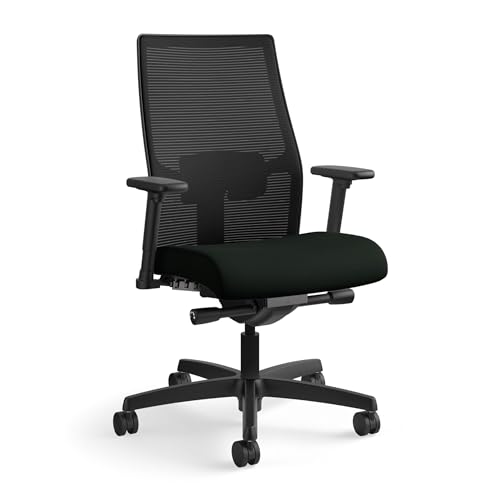
HON Ignition 2.0 Ergonomic Office Chair — Best for Shared and Office Use
A workplace staple with lumbar support and adjustable arms, designed to fit many different sitters across a working day — ideal for shared desks and home offices that double as guest workstations. Check the current price on Amazon.

SIHOO Doro C300 Pro V2 Ergonomic Office Chair — Best for Long Hours
Full-body adaptive support, breathable mesh, 8D armrests, a footrest and 135° recline — built for people whose workdays stretch well past eight hours. Check the current price on Amazon.

FLEXISPOT ErgoX Premium Ergonomic Office Chair — Best for Recline and Movement
Dynamic lumbar support with recline and tilt functions, adjustable armrests, mesh and a footrest — for sitters who work in more than one position across the day. Check the current price on Amazon.
How These Picks Were Chosen
Three gates shaped this shortlist. First, complete chairs only: the search results for back-comfort seating are full of lumbar cushions and support pillows, which can be useful accessories but are not office chairs, so every accessory was excluded from the picks. Second, verified ergonomic substance: each chair’s listing had to state real ergonomic features — adjustable lumbar support, ergonomic back design, meaningful adjustability — rather than relying on a padded silhouette and the word “comfort”. Third, language discipline: we chose chairs whose listings describe ergonomic support and comfort, and we describe them in those terms throughout this guide. Where listings in this category use medical phrasing, that phrasing stays out of our recommendations; a chair earns its place here by fit and adjustability, not by promises.
Within those gates we spread the picks across budgets and working styles: a premium benchmark (Steelcase), two adjustment-maximalist designs (Hbada, SIHOO Doro), an accessible value chair (SIHOO M18), a shared-office all-rounder (HON), and a recline-friendly option (FLEXISPOT). All six were confirmed through Amazon’s product data in this programme’s verified cache; the exact listing titles are recorded in the notes published with this article.
We also weighted adjustability over padding. Thick foam feels impressive in a showroom and compresses within a year; a chair whose lumbar support, seat height, armrests and tilt can be dialled to your body keeps fitting you as your body, desk and habits change. That is the through-line of every review below.
The 6 Best Office Chairs for Long, Comfortable Desk Days
1. Steelcase Leap Office Chair — Best Premium Ergonomic Chair
The Leap is the chair this category is measured against, and its listing names the two ideas behind it: LiveBack technology, which lets the backrest follow the shape and movement of your spine as you shift, and the Natural Glide System, which supports you as you recline instead of pushing your body forward away from the desk. In comfort terms, that means the lumbar region stays supported through the small movements of a real workday — leaning in to read, leaning back to think — rather than only in one perfect posture you hold for four minutes. The listed finish is Onyx, and the listing notes wheels suited to carpet.
Who it suits: full-time desk workers who sit six-plus hours daily and want a long-service premium chair; buyers who have been through cheap chairs and are done replacing them. Who should skip it: anyone on a starter budget — the SIHOO M18 covers the ergonomic basics at a much lower tier — and buyers who want a footrest-and-recline lounge style, which is the FLEXISPOT and Doro’s territory.
Strengths
- LiveBack backrest moves with you, keeping lower-back support consistent as posture changes.
- Natural Glide recline keeps you supported and positioned relative to your desk while leaning back.
- Premium build intended for years of daily use — the buy-once end of this guide.
Trade-offs
- Premium tier pricing within this category.
- Adjustment richness takes a proper setup session to dial in — budget twenty minutes, not two.
- Traditional office aesthetic; it will not read as a lifestyle chair in a styled home office.
Spec box (from the verified listing)
- Back support: LiveBack technology (per listing)
- Recline: Natural Glide System (per listing)
- Colour listed: Onyx
- Base: wheels for carpet (per listing)
The honest framing for the Leap is investment in daily comfort infrastructure. If your back feels worst at your desk, the highest-leverage furniture purchase is the chair engineered most seriously around how backs actually move — and among verified listings, that is this one. It will not fix a medical condition, and Steelcase’s listing does not claim it will; it will give your working posture the best support this guide can point to.
Best for: full-time desk workers wanting premium, movement-following support / Not suited for: starter budgets
Check the current price on Amazon
2. Hbada E3 Air Ergonomic Office Chair — Best Adjustable Lumbar Support
The E3 Air’s headline, per its listing, is a 3-zone dynamic lumbar support — a back system divided into zones that can support different parts of the back’s curve rather than pressing one pad into one spot. Around it: a 3D adjustable headrest and 4D adjustable armrests, in a grey finish. For sitters whose discomfort centres on the lower back, a zoned, dynamic support is the most direct ergonomic answer a chair can offer: it aims to stay in contact with your back’s curve as you sit tall, perch, or lean.
Who it suits: sitters who have tried fixed lumbar pads and found them either absent or intrusive; taller users who will use the headrest adjustment; anyone who fidgets and wants the chair to keep up. Who should skip it: buyers who prefer a simple chair with two levers — the E3 rewards people who enjoy dialling in a fit — and those who want a footrest, which this model does not list.
Strengths
- 3-zone dynamic lumbar support targets the back’s curve in sections, per the listing.
- 3D headrest and 4D armrests give an unusually complete adjustment set.
- Swivel ergonomic design in a neutral grey that suits home offices.
Trade-offs
- Many adjustments mean a real setup process — and re-adjustment if someone else uses the chair.
- No footrest listed, unlike the Doro and ErgoX picks.
- Newer brand than the Steelcase and HON names here; long-term parts support is less proven.
Spec box (from the verified listing)
- Lumbar: 3-zone dynamic lumbar support
- Headrest: 3D adjustable
- Armrests: 4D adjustable
- Colour listed: Grey
Think of the E3 Air as the tinkerer’s ergonomic chair. Its value is not any single feature but the granularity: when a standard chair’s lumbar pad sits an inch too high or too firm, there is nothing to do about it; here, zones and multi-axis arms give you something to do. For comfort-focused buyers who know their current chair fails them in a specific spot, that granularity is exactly the point.
Best for: sitters who want maximum lumbar adjustability / Not suited for: set-it-and-forget-it minimalists
Check the current price on Amazon
3. SIHOO M18 Ergonomic Office Chair — Best Value Ergonomic Chair
The M18 is where genuine ergonomic adjustment starts at an accessible tier: a mesh back with headrest, adjustable lumbar support, 2D armrests, a wide cushion and tilt lock, with the listing stating a 330 lb capacity. The mesh back matters for comfort across seasons — it breathes in summer in a way padded backs do not — and the adjustable lumbar support puts the single most important feature for this guide’s readers within reach of the tightest budget on this page.
Who it suits: first-time ergonomic buyers, students and home workers upgrading from a dining chair, and anyone who needs a stated higher weight capacity. Who should skip it: buyers wanting premium materials and the longest service life, and sitters who know they need multi-zone or dynamic lumbar systems.
Strengths
- Adjustable lumbar support and headrest at the value end of the market.
- Breathable mesh back suits warm rooms and long sessions.
- Listed 330 lb capacity and wide cushion fit a broad range of sitters.
Trade-offs
- 2D armrests adjust less completely than the 4D/8D sets on pricier picks.
- Value-tier materials will not match the Leap’s decade-scale durability.
- Tilt lock is basic compared with the dynamic recline systems above it.
Spec box (from the verified listing)
- Back: mesh, with headrest
- Lumbar: adjustable lumbar support
- Armrests: 2D
- Capacity stated in listing: 330 lbs
- Features: wide cushion, tilt lock
The M18’s role in this guide is proof that the ergonomic essentials are not luxury goods. If your current seat is a kitchen chair and your back complains by mid-afternoon, the jump to adjustable lumbar support, a shaped mesh back and a proper headrest is the single biggest comfort upgrade available at any price — and this is its most accessible verified form.
Best for: first ergonomic chair on a budget / Not suited for: buyers wanting premium longevity
Check the current price on Amazon
4. HON Ignition 2.0 Ergonomic Office Chair — Best for Shared and Office Use
HON builds for workplaces, and the Ignition 2.0 shows it: an ergonomic chair with lumbar support and adjustable arms, described in its listing in terms of workstation comfort for focused work. Its virtue for this guide is breadth — it is designed to fit many different bodies across a day, which is exactly what a shared desk, a small office, or a home office that hosts two different sitters needs. Where the Hbada rewards personal fine-tuning, the Ignition aims to be quickly, sensibly comfortable for whoever sits down next.
Who it suits: shared workstations, small businesses furnishing several desks, and households where two people alternate in one chair. Who should skip it: solo sitters who want to sculpt a highly personal fit (the E3 Air) or lounge features like a footrest (the Doro).
Strengths
- Lumbar support and adjustable arms cover the ergonomic essentials for varied sitters.
- Workplace-grade design intent: built for all-day, multi-user duty.
- Black, neutral styling fits any office without shouting for attention.
Trade-offs
- No headrest or footrest in the listing’s feature set.
- Less personal fine-tuning than the zoned/dynamic lumbar designs.
- Utilitarian looks — function first, décor second.
Spec box (from the verified listing)
- Support: lumbar support (per listing)
- Arms: adjustable
- Colour listed: Black
- Positioning: ergonomic desk chair for workstation use
There is a comfort argument for the Ignition that rarely gets made: a chair two people share gets adjusted twice as often, and chairs that are easy to adjust actually get adjusted. If your household or office will pass one chair between sitters of different heights, a straightforward ergonomic chair that resets in seconds protects both backs better than a masterpiece of personalisation locked to one body.
Best for: shared desks and small offices / Not suited for: solo users wanting maximum personal tuning
Check the current price on Amazon
5. SIHOO Doro C300 Pro V2 Ergonomic Office Chair — Best for Long Hours
The Doro C300 Pro V2 is built for the longest days: full-body adaptive support, breathable mesh throughout, 8D armrests, an integrated footrest and a 135° recline, per its listing, in jet black. The design idea is position variety — upright for focused work, reclined with the footrest for reading, calls and thinking — because across a ten-hour day, the most comfortable posture is the next one. The adaptive support aims to follow those changes without constant lever-pulling.
Who it suits: remote workers pulling long sessions, people who take calls and reading breaks in their chair, and warm-room workers who need full mesh. Who should skip it: buyers in small rooms — a reclining chair with a footrest needs space behind and beneath — and those who prefer a firm, simple, upright-only seat.
Strengths
- Full-body adaptive support with breathable mesh for long sessions.
- Footrest plus 135° recline builds genuine position variety into the day.
- 8D armrests are the most adjustable in this guide — arms stop being a compromise.
Trade-offs
- Largest footprint here once reclined; measure your room.
- Feature density means more setup and more moving parts.
- Mesh feel is firmer and cooler than padded chairs — a preference, not a flaw.
Spec box (from the verified listing)
- Support: full-body adaptive support (per listing)
- Armrests: 8D
- Recline: 135°
- Extras: footrest; breathable mesh; colour listed: Jet Black
A note on the footrest, in this guide’s comfort framing: its value is not medical, it is behavioural. A chair that makes a five-minute reclined pause easy is a chair whose owner actually takes that pause — and regular posture changes are the habit every ergonomics guide recommends. The Doro is engineered to make the right habit the lazy habit.
Best for: long workdays and position variety / Not suited for: small rooms or upright-only sitters
Check the current price on Amazon
6. FLEXISPOT ErgoX Premium Ergonomic Office Chair — Best for Recline and Movement
The ErgoX pairs dynamic lumbar support with a full recline and tilt function, adjustable armrests, mesh construction and a footrest, per its listing. Where the Doro emphasises adaptive support, the ErgoX emphasises movement mechanics: a chair tuned for sitters who rock, lean and shift through tasks rather than holding one position. FLEXISPOT’s background in adjustable desks shows in that movement-first design brief.
Who it suits: active sitters, people pairing a chair with a sit-stand desk who still sit most of the day, and anyone whose comfort depends on frequent small posture changes. Who should skip it: buyers wanting the plushest padded seat, and purists who want a fixed, formal task chair.
Strengths
- Dynamic lumbar support that responds as you move and recline.
- Recline and tilt functions plus a footrest encourage position variety.
- Mesh construction keeps long sessions cooler.
Trade-offs
- Movement-rich chairs feel “busy” to sitters who like a locked, still seat.
- Footrest and recline need room, like the Doro.
- Premium-mid tier: above the M18, below the Leap’s positioning.
Spec box (from the verified listing)
- Lumbar: dynamic lumbar support
- Functions: recline and tilt; adjustable armrests
- Extras: footrest; mesh; colour listed: Black
- Positioning: home and office use
Choose between the ErgoX and the Doro by temperament: the Doro adapts to you, the ErgoX moves with you. Both philosophies serve the same comfort goal — a back that is supported through a varied day rather than braced in a single position — and both are honest ergonomic tools, which is all any chair in this guide claims to be.
Best for: active sitters and sit-stand desk users / Not suited for: sitters who want a still, formal chair
Check the current price on Amazon
Comparison Table
| Pick | Badge | Key spec | Best for |
|---|---|---|---|
| Steelcase Leap | Best Premium Ergonomic Chair | LiveBack technology, Natural Glide System | Full-time desk workers, buy-once quality |
| Hbada E3 Air | Best Adjustable Lumbar Support | 3-zone dynamic lumbar, 3D headrest, 4D arms | Maximum personal fine-tuning |
| SIHOO M18 | Best Value Ergonomic Chair | Adjustable lumbar, mesh back, 330 lb listed capacity | First ergonomic chair on a budget |
| HON Ignition 2.0 | Best for Shared and Office Use | Lumbar support, adjustable arms | Shared desks, small offices |
| SIHOO Doro C300 Pro V2 | Best for Long Hours | Adaptive support, 8D arms, footrest, 135° recline | Long workdays, position variety |
| FLEXISPOT ErgoX | Best for Recline and Movement | Dynamic lumbar, recline and tilt, footrest | Active sitters, sit-stand users |
How to Choose an Office Chair for Back Comfort
Begin with the lumbar support, because it is the feature this search is really about. Your lower back curves inward, and a chair supports it by meeting that curve with gentle, consistent contact. Three designs appear in this guide: adjustable pads you position yourself (M18, Ignition), dynamic or zoned systems that adapt as you move (Hbada E3, ErgoX, Doro), and Steelcase’s LiveBack, where the backrest itself flexes with your spine. None is automatically best — a fixed-position worker may love a pad set once and forgotten, while a fidgeter needs a system that follows. What matters is that the support reaches your lumbar curve at your sitting height, which is why adjustability beats any single “ergonomic” shape.
Second, fit the seat to your legs. Seat height should let your feet rest flat with knees at roughly a right angle; if a chair’s minimum height leaves your feet dangling, no lumbar system will save the setup — you will slide forward chasing the floor and the lumbar support will miss its target entirely. Seat depth matters too: you want a small gap between the seat edge and the back of your knees. Wider, deeper seats suit larger sitters (note the M18’s wide cushion and stated capacity), while petite sitters should check minimum heights and depths carefully on the listing before ordering.
Third, treat armrests and headrests as fit tools, not luxury trim. Armrests at the right height let your shoulders drop instead of hunching toward your ears — a tension pattern many people misread as a back problem that starts at the chair. The multi-axis arms on the Hbada (4D) and Doro (8D) exist to solve exactly that positioning. A headrest only earns its place if it meets the back of your head when you lean back; the adjustable headrests on the M18 and E3 Air are there to be positioned, not admired.
Finally, decide your movement style. If you work in one focused posture, a well-set adjustable chair is enough. If your day mixes typing, calls, reading and thinking, a recline-friendly design (Doro, ErgoX) or a movement-following back (Leap) will keep you supported through all of it. The chair should fit your day, not an idealised version of it.
How to Set Up Your Chair and Desk for a Comfortable Workday
- Set seat height first. Sit down, feet flat on the floor, knees at about a right angle. If your feet do not reach comfortably, lower the chair; if the chair will not go low enough for your desk, use a footrest rather than perching.
- Position the lumbar support. Adjust it until you feel even, gentle contact in the small of your back — present, not pushing. On zoned and dynamic systems, sit for ten minutes and re-check; supports settle as cushions warm.
- Set the armrests. Raise or lower them until your forearms rest lightly with shoulders relaxed and elbows near a right angle. If the arms collide with the desk, lower or swing them rather than sitting further back.
- Dial the tilt tension. You should be able to lean back with gentle effort and return upright without a lurch. Too stiff and you will never recline; too loose and you will slump.
- Match the desk and screen. Your monitor’s top should sit around eye level at arm’s length, and your keyboard should let your wrists float neutrally. A perfect chair under a badly placed screen still produces a hunched worker.
- Build in movement. Every half hour or so, change position: recline for a call, stand for a minute, walk for water. Use the chair’s recline as a feature, not a failure of discipline — that is what it is for.
Ergonomic Chair Features, Decoded
Chair listings compress a lot of engineering into abbreviations, so here is what the terms in this guide actually mean for your comfort. 2D, 4D and 8D armrests count the directions the arms adjust: height and width on basic sets, adding forward-back sliding and pivot as the number climbs. More axes mean a better chance the armrest lands exactly under your forearm — worthwhile if your shoulders tense up by afternoon, overkill if they never do. Dynamic lumbar support describes a support that responds to your movement, typically a flexible or sprung structure that maintains contact as you shift, as opposed to a pad fixed at one height and depth. Zoned support, as on the Hbada E3 Air, divides that contact across sections of the back so the curve is met in more than one place.
Tilt lock simply fixes the backrest at a chosen angle; tilt tension controls how much effort reclining takes. They sound similar and do different jobs — the M18’s tilt lock suits a sitter who picks one angle and works, while the recline-and-tilt systems on the ErgoX and Doro suit sitters who drift through angles all day. LiveBack and Natural Glide are Steelcase’s names for its flexing backrest and its recline geometry; we use the brand’s terms because they describe specific mechanisms rather than generic qualities. Seat depth adjustment, where offered, slides the seat pan forward or back — the quiet hero feature for very tall or petite sitters, since it is what creates that small, crucial gap behind the knees.
The pattern to notice: every meaningful term describes an adjustment or a movement. A listing full of such terms is describing a chair that can be fitted; a listing full of adjectives — plush, executive, luxurious — is describing a photograph. When your back is the customer, fit beats adjectives every time.
One Chair, Two Settings: Home Office and Workplace
The same chair behaves differently depending on where it works. In a workplace, chairs face shared use, facilities budgets and eight-hour standardisation: that is HON’s home turf, and the Ignition 2.0’s quick, legible adjustments are a feature there, not a simplification. A chair that needs a manual and twenty minutes per new sitter will simply never be adjusted in an office, and an unadjusted ergonomic chair is just a chair. If you are furnishing even a two-desk studio, weight the shared-use picks accordingly.
At home, the calculus flips. The chair is yours alone, so deep personalisation pays off — the Hbada’s zones, the Doro’s adaptive support — because you set it once and benefit for years. Home also blurs the workday’s edges: the chair hosts morning email, afternoon deep work, evening reading. Recline and footrest models earn their space here, turning the work chair into the room’s reading chair after hours, which matters in smaller homes where one chair must do everything. Home buyers should also check the unglamorous details listings mention in passing — the Leap’s listing, for instance, specifies wheels for carpet; hard-floor homes should confirm wheel suitability for any model before ordering, since the wrong casters scuff floors and roll too freely.
Either way, measure the space. Reclining chairs need clearance behind them; footrests need it beneath. The best ergonomic chair is the one that fits your body, your desk and your room simultaneously — and the listings give you the dimensions to check all three before the box arrives.
Common Buying Mistakes
Believing a chair can treat a medical condition. It cannot. Chairs support posture and comfort; sciatica and back conditions deserve professional assessment. Any listing promising cures is telling you something about its honesty, not its engineering.
Buying padding instead of adjustability. Thick foam compresses and dates quickly. Adjustable lumbar support, seat height and armrests keep fitting you for years — that is where the money belongs.
Ignoring seat height range. A chair that cannot go low enough (or high enough) for your body and desk makes every other feature irrelevant. Check the listing’s dimensions against your desk height before ordering.
Skipping the setup. Ergonomic chairs arrive set for nobody. Twenty minutes with the adjustments, following the sequence above, is the difference between the chair you bought and the chair you reviewed in your head.
Sitting perfectly still all day. Even ideal posture becomes uncomfortable when held for hours. The healthiest feature of the recline-friendly picks here is that they make movement easy — use it.
Buying a lumbar cushion instead of a chair, or vice versa. Cushions are accessories that can improve a decent chair; they cannot give a broken or unsupportive chair an ergonomic back. This guide’s picks are complete chairs for that reason.
When to Replace the Chair You Have
Many readers of this guide are not first-time buyers; they are sitting in the problem. A chair is ready for replacement when its adjustments no longer hold — a gas lift that sinks an inch by lunchtime, a tilt that drifts, armrest pads that wobble — because a chair that cannot keep its settings cannot keep its support either. Foam tells the same story: a seat cushion that has compressed into a hard, bottoming-out pan changes your sitting height and angle, quietly moving the lumbar support away from where your back needs it. Visible cracks in a mesh back, a backrest that flexes asymmetrically, or casters that no longer roll straight are all end-of-service signals, not quirks to live with.
There is also a fit-based reason to replace a chair that is technically fine: your body or your work changed. A chair bought for two hours of evening email is not the chair for a new full-time remote job; a chair fitted to you five years and several stone ago may no longer meet your back where it curves. In those cases the honest move is to re-buy against your current day, using the fit checks in this guide, rather than adding cushions to a mismatch. And when you do replace, the old chair’s failure points are your best shopping list — every wobble and ache is a specification for its successor.
Your First Week With a New Ergonomic Chair
Set expectations correctly and a good chair gets a fair trial. Day one is for setup: work through the sequence in this guide slowly, then sit and work normally rather than posing in textbook posture. Most people need two or three small re-adjustments across the first days — lumbar contact a touch firmer, armrests a touch lower — as the novelty fades and real habits return. That iteration is the product working as designed; a chair you never adjust after unboxing is a chair whose adjustability you paid for and declined.
By the end of the first week, judge the chair on the right evidence: not whether your back feels transformed — furniture does not do that, and this guide has not promised it — but whether the end of the workday feels different from the old chair’s end of day. Less fidgeting to find a tolerable position, fewer stands forced by discomfort rather than chosen as breaks, shoulders that stay down while you type. Those are the honest returns on an ergonomic purchase, and they compound quietly across months of workdays. If instead you find one specific spot the chair cannot fit — a lumbar zone that misses, a seat edge that presses — use the remaining adjustment range deliberately before concluding the chair is wrong for you; most first-week disappointments are setup problems wearing a product problem’s clothes.
Beyond the Chair: The Rest of the Comfort Setup
A chair is the largest single piece of the desk-comfort puzzle, but it is not the whole puzzle, and honest guidance should say so plainly and early. The monitor decides your neck angle: a screen set too low will pull your head forward out of even the best backrest’s reach, so raise it to eye level with a stand, an arm or a stack of books before blaming the chair. The desk decides your shoulder height: if the work surface sits too high, your shoulders climb toward your ears no matter how good the armrests are, and if it sits too low you will lean and slump to meet it. Keyboard and mouse position decide your wrists and, through them, your upper back tension across a day.
Lighting plays a quieter role than people expect. Glare or a dim screen makes you lean in and squint, and an hour of leaning undoes an ergonomic chair’s careful geometry. Position the screen to avoid window reflections, and light the desk evenly. Finally, the floor matters: a footrest for shorter sitters, a chair mat that lets casters roll instead of drag — dragging casters make you push with your legs and twist to move, thousands of small strains a week. None of these accessories replaces the chair; all of them let the chair do its job. Work through them in order — screen, desk height, arms, light, floor — after the chair itself is set up, and you will have addressed the full system your back actually experiences.
Final Recommendation
If budget allows one chair for years of full-time work, the Steelcase Leap is the premium standard for movement-following back support. If your priority is dialling lumbar support precisely to your own back, choose the Hbada E3 Air. Long-hour workers should look at the SIHOO Doro C300 Pro V2 or the FLEXISPOT ErgoX for recline and position variety; shared desks are best served by the HON Ignition 2.0; and anyone upgrading from a basic chair on a budget will feel the biggest single jump with the SIHOO M18. Whichever you choose, set it up properly and keep moving through the day — the chair supports the habit, and the habit does the heavy lifting.
Related guides in this programme: Best Chairs For Back And Neck, Best Chairs With Adjustable Lumbar Support, Best Ergonomic Chairs For Posture, Best Ergonomic Office Chairs Back Pain, Best Desk Chairs Mesh, Best Chairs For Sitting At Desk.
Frequently Asked Questions
Can an office chair cure sciatica or back pain?
No. A chair is ergonomic furniture: it can support a more comfortable posture, reduce the strain of a badly fitting seat, and make long desk days easier on your body. It cannot diagnose, treat or cure sciatica or any other condition. If you have persistent pain or symptoms, see a qualified clinician — and use this guide to choose better furniture alongside that advice, not instead of it.
What is the most important chair feature for lower-back comfort?
Adjustable lumbar support that actually meets the curve of your lower back at your sitting height. After that, correct seat height — feet flat, knees near a right angle — because a lumbar support aimed at the wrong height helps nobody. The picks here range from adjustable pads to zoned dynamic systems so you can match the mechanism to how you sit.
Is a mesh back better than a padded back?
Mesh breathes, stays cooler and holds its shape well over time; padding feels softer initially and insulates more in cold rooms. For long sessions in warm spaces, most people find mesh more comfortable. It is a preference informed by your room, not a quality ranking.
How long should I sit before taking a break?
A practical rhythm is to change position or stand briefly every 30 minutes or so, with a short walk every hour when you can. Recline-friendly chairs make the in-chair part easy; the standing part is up to you. Regular small changes beat one heroic stretch at 5 p.m.
What if I am between sizes or share my chair?
Choose breadth of adjustment over specialised fit: chairs like the HON Ignition 2.0 are designed to suit many sitters, and wide-capacity options like the SIHOO M18 (listed at 330 lbs with a wide cushion) cover larger frames. If two people share, favour chairs whose main adjustments move quickly without tools.
How long should a good ergonomic chair last?
A quality ergonomic chair in daily use should serve for years — the premium end of this guide is built with a decade in mind, while value-tier chairs typically give several years before foam and mechanisms tire. The lifespan signals are consistent across brands: a gas lift that still holds height, tilt mechanisms that still lock, mesh or upholstery without sag or tears, and casters that roll true. Care extends all of it — keep casters free of hair and grit, tighten accessible bolts once a year, and keep mesh and upholstery clean per the maker’s instructions. When adjustments stop holding, the chair has stopped supporting, whatever the calendar says.
Should I buy a lumbar cushion instead of a new chair?
Only if your current chair is fundamentally sound — good seat, right height, stable base — and merely lacks lower-back contact. If the chair itself is worn, the wrong size, or a non-adjustable dining chair, a cushion is a patch on the wrong problem; the complete chairs in this guide are the durable fix.


