Disclosure: airfryerkitchensupply.com is reader-supported. When you buy through links on our site, we may earn an affiliate commission at no extra cost to you.
Where to buy
The fastest way to buy the canister vacuums with carpet attachment covered in this guide is through the verified Amazon listings below. Every linked pick in this article was cross-checked against Amazon listing data, and only listings the listing-confirmed carry a buy link. Where a pick is discussed without a link, the listing could not be confirmed for the exact feature this search demands, and the review says so plainly instead of guessing.
- Miele Complete C3 Marin with Electrobrush — Check the current price on Amazon
- Miele Complete C3 Calima with Turbobrush — Check the current price on Amazon
- SEBO Airbelt K3 with ET-1 Powerhead — Check the current price on Amazon
- Kenmore Elite 81714 with Pet PowerMate — Check the current price on Amazon
- Eureka NEN180 WhirlWind Bagless Canister — Check the current price on Amazon
- Kenmore Elite 21814 CrossOver — Check the current price on Amazon
Shoppers searching for the best canister vacuums with carpet attachment usually own a mixed home: hard floors in the kitchen and halls, real carpet in bedrooms and on stairs, and one machine expected to do both jobs properly. The carpet attachment is the deciding piece — a powered electrobrush or turbo head that agitates fibers so suction can lift what a bare-floor brush only skims over.
Every pick below was confirmed cache, and the reviews distinguish carefully between the three kinds of carpet tool a listing can include: a full electric powerhead, an air-driven turbo brush, and a simple combination floor head. They are not interchangeable, and the honest differences are spelled out per pick so you can match the attachment to your pile height instead of discovering the mismatch at home.
The shortlist also weighed what happens between cleans: how the machine stores, how its heads swap, and whether the carpet tool you are paying for will live on the wand or in a cupboard. An attachment that takes a minute to fit is an attachment that gets skipped, so head-change simplicity quietly influenced the order below.
In this guide
Quick Picks
Best Overall — Miele Complete C3 Marin with Electrobrush: A bagged canister whose listing pairs an electrobrush floorhead with explicit suitability for carpets and hard floors. — check price on Amazon
Best for Low-to-Medium Pile — Miele Complete C3 Calima with Turbobrush: A turbobrush canister whose listing honestly caps its carpet range at low-to-medium pile — and says so. — check price on Amazon
Best Powerhead Pick — SEBO Airbelt K3 with ET-1 Powerhead: An ET-1 powerhead for carpets, a parquet brush for hard floors, a 37-foot operating range, and a stated 7-year motor warranty. — check price on Amazon
Best for Carpeted Pet Homes — Kenmore Elite 81714 with Pet PowerMate: A pet-friendly bagged canister with a powered Pet PowerMate, telescoping wand, and retractable cord per the listing. — check price on Amazon
Best Budget Bagless — Eureka NEN180 WhirlWind Bagless Canister: A lightweight bagless canister the listing rates for hardwood and carpet, with auto cord rewind — the budget route to a carpet-capable canister. — check price on Amazon
Best Versatile CrossOver — Kenmore Elite 21814 CrossOver: A CrossOver canister with two floor nozzles, a Pet PowerMate, and a telescoping wand — versatility is the listing’s whole pitch. — check price on Amazon
How These Picks Were Chosen
Candidates came from canister vacuum listings verified. We required a carpet-relevant attachment to be identifiable from the verified title — a named powerhead, turbobrush, or carpet-capable floor head — and removed parts-only listings, replacement heads sold alone, and machines with no carpet tool at all. Variants of the same model in different colors were deduplicated.
The final six balance attachment types and ownership styles: full powerheads for deeper pile, a turbobrush for low-to-medium carpet, and bagless and budget options for lighter carpet loads. Where a listing did not state a pile range, the review says so rather than inventing one.
One further discipline applied to every pick: the headline claim that earned each product its place had to be visible in its own verified listing, not borrowed from a sibling model, a different size, or a brand’s general reputation. Where a listing was silent on a point buyers care about, the review says so in plain words. That rule removed several attractive candidates from this guide and is the reason the six that remain can be compared honestly, feature against feature, on the same terms.
The 6 Best Canister Vacuums With a Carpet Attachment
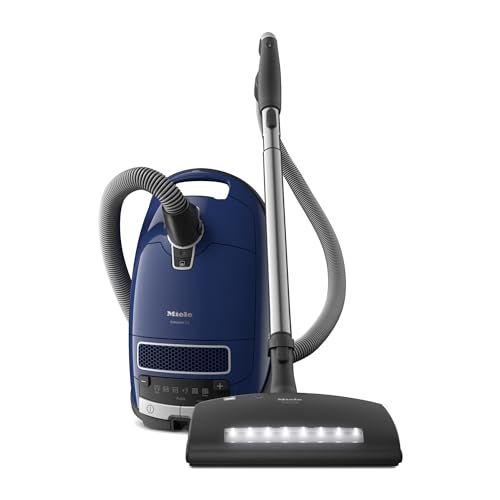
Miele Complete C3 Marin with Electrobrush — Best Overall
The C3 Marin tops this guide because its verified listing states the whole brief in one line: an electrobrush floorhead, suitable for carpets and hard floors. An electrobrush is the strongest form of carpet attachment — a motor-driven brushroll with its own power — so this is the pick for homes where carpet is a primary surface rather than an afterthought, while the canister format keeps the wand light on the hard-floor half of the house.
Strengths
- Electrobrush floorhead named in the listing
- Listing states suitability for carpets and hard floors
- Bagged format keeps deep-clean debris sealed
Trade-offs
- Premium positioning in this roundup
- Bagged running costs apply
- Full powerhead adds wand weight on carpet days
| Detail | From the verified listing |
|---|---|
| Attachment | Electrobrush floorhead (per listing) |
| Format | Bagged canister |
| Floors | Carpets and hard floors (per listing) |
The Marin’s logic is that one premium machine replaces two adequate ones. On carpet days the electrobrush does the agitation work that separates a deep clean from a surface skim; on hard-floor days the canister’s light wand and trailing body make big areas quick. If your carpet is limited to one low rug, this is more machine than you need — the Calima below exists for you. If carpet covers half your home, this is the coherent spend.
In everyday terms, the Miele Complete C3 Marin with Electrobrush earns its Best Overall badge by asking very little of its owner: the verified listing’s headline facts — Electrobrush; carpets + hard floors — are exactly the facts its job depends on, and nothing in the listing overpromises beyond them. Owners should still confirm the configuration on the listing page before ordering, because sellers revise bundles and included accessories without changing a product’s name. Judged purely on what the listing-verified, this is a pick whose paperwork and whose purpose agree with each other, and in the canister vacuums with a carpet attachment category that agreement is rarer than it should be.
Best for: Mixed homes where carpet is a major surface and one machine must do everything / Not suited for: Homes with a single low rug and mostly bare floors
Check on Amazon — check the current price on Amazon before you decide, because configurations and included accessories change between listings.

Miele Complete C3 Calima with Turbobrush — Best for Low-to-Medium Pile
The C3 Calima is the honest middle of the Miele range: a turbobrush floorhead — air-driven rather than motor-driven — with a listing that states its range plainly: low-to-medium pile carpet and hard floors. That stated limit is a feature, not a flaw. It tells low-rug households they can stop paying for powerhead capacity they will never use.
Strengths
- Turbobrush suits low-to-medium pile without powerhead weight
- Listing states its carpet range explicitly
- Bagged Miele format with hard-floor ability
Trade-offs
- Not for deep-pile carpet — the listing says so
- Turbobrushes can stall on very thick rugs
- Bagged running costs apply
| Detail | From the verified listing |
|---|---|
| Attachment | Turbobrush floorhead (per listing) |
| Carpet range | Low-medium pile (per listing) |
| Format | Bagged canister |
Air-driven turbo heads spin from suction airflow, which makes them lighter and simpler than electrobrushes and perfectly effective on the short, dense pile of most modern rugs and fitted carpets. Their honest ceiling is thick, loose pile, where the brush can bog down. Read your carpet with your hand: if fingers disappear into it, choose a powerhead model; if it feels like a dense mat, the Calima’s turbobrush is the right-sized tool.
Step back from the specification list and the Miele Complete C3 Calima with Turbobrush makes its case as the best for low-to-medium pile option on fit rather than flash: it is built for homes with low-to-medium pile carpet and rugs plus hard floors, and its verified headline details — Turbobrush; low-medium pile — support that role without decoration. That focus is worth more over a year of ownership than a longer feature list aimed at everybody. Confirm the live listing’s configuration before ordering, since bundles change silently, and judge this pick by whether its stated job matches the job waiting in your home.
Best for: Homes with low-to-medium pile carpet and rugs plus hard floors / Not suited for: Deep-pile or shag carpet owners
Check on Amazon — check the current price on Amazon before you decide, because configurations and included accessories change between listings.

SEBO Airbelt K3 with ET-1 Powerhead — Best Powerhead Pick
This K3 configuration is the powerhead purist’s choice. The verified listing bundles the ET-1 powerhead for carpeting with a parquet brush for hard floors, quotes a 37-foot operating range, and states a 7-year motor warranty. Few listings in this category put both specialist heads and a long warranty in the same title, and that completeness is exactly what a carpet-attachment shopper is paying for.
Strengths
- ET-1 powerhead plus parquet brush both included
- 37-foot operating range stated in the listing
- 7-year motor warranty stated in the listing
Trade-offs
- Premium tier pricing
- Bagged consumables at premium prices
- More kit than hard-floor-dominant homes need
| Detail | From the verified listing |
|---|---|
| Attachments | ET-1 powerhead + parquet brush (per listing) |
| Range | 37-foot operating range (per listing) |
| Warranty | 7-year motor warranty (per listing) |
The 37-foot range changes how a house gets cleaned: fewer outlet changes, longer uninterrupted passes, and stairs reached from a single plug. Combined with a powerhead that handles carpet seriously and a parquet brush that treats wood gently, the K3 is the pick for larger mixed homes. The warranty term stated in the listing also signals the intended ownership horizon — this is a decade-scale purchase, priced like one.
What ultimately separates the SEBO Airbelt K3 with ET-1 Powerhead from the near-misses that did not make this guide is the match between claim and evidence: the listing states ET-1 powerhead; 37 ft range, the badge it carries here is Best Powerhead Pick, and the two tell the same story. Picks whose titles promised more than they could document were cut during selection, however attractive they looked. If your needs line up with larger mixed-floor homes wanting both specialist heads and long reach, this is the version of that choice with its paperwork in order — verify the configuration on the listing, and order with a clear picture of what arrives.
Best for: Larger mixed-floor homes wanting both specialist heads and long reach / Not suited for: Small apartments or budget-first buyers
Check on Amazon — check the current price on Amazon before you decide, because configurations and included accessories change between listings.

Kenmore Elite 81714 with Pet PowerMate — Best for Carpeted Pet Homes
The Elite 81714 brings the pet toolkit to a carpet-capable canister: the verified listing names the Pet PowerMate powered tool, an extended telescoping wand, a retractable cord, and three cleaning tools, in a model Kenmore positions as pet friendly and ultra plush — its wording for carpet work. For carpeted homes with animals, the powered pet tool covers the stairs and upholstery that a floor head cannot reach.
Strengths
- Pet PowerMate powered tool in the listing
- Extended telescoping wand for stairs and under furniture
- Retractable cord and three tools included
Trade-offs
- Bagged running costs apply
- HEPA wording is the listing’s filter description only
- Powered tools add storage bulk
| Detail | From the verified listing |
|---|---|
| Pet tool | Pet PowerMate (per listing) |
| Wand | Extended telescoping (per listing) |
| Tools | 3 cleaning tools (per listing) |
Carpeted pet homes fail at the edges: stair treads, the carpeted hallway turn, the dog’s favorite rug corner. A floor powerhead handles open areas, but the Pet PowerMate is what cleans the edges, and the telescoping wand is what gets it there without carrying the canister up every step. If your carpet is pet territory through and through, this division of labor is the reason to choose this model over a floor-head-only rival.
In everyday terms, the Kenmore Elite 81714 with Pet PowerMate earns its Best for Carpeted Pet Homes badge by asking very little of its owner: the verified listing’s headline facts — Pet PowerMate; telescoping wand — are exactly the facts its job depends on, and nothing in the listing overpromises beyond them. Owners should still confirm the configuration on the listing page before ordering, because sellers revise bundles and included accessories without changing a product’s name. Judged purely on what the listing-verified, this is a pick whose paperwork and whose purpose agree with each other, and in the canister vacuums with a carpet attachment category that agreement is rarer than it should be.
Best for: Carpeted homes with pets, especially with stairs / Not suited for: Hard-floor homes that only dabble in carpet
Check on Amazon — check the current price on Amazon before you decide, because configurations and included accessories change between listings.

Eureka NEN180 WhirlWind Bagless Canister — Best Budget Bagless
The Eureka NEN180 WhirlWind is the budget bagless entry, and its verified listing states the essentials: a lightweight canister for hardwood floor and carpet, 1000W, sound at or below 82 dBA per the title, and auto cord rewind. Its carpet tool is a standard floor head rather than a powered brush, so its honest territory is low pile and area rugs — which is, in fairness, most of the carpet in most apartments.
Strengths
- Listing covers both hardwood and carpet
- Lightweight with auto cord rewind
- Bagless format removes consumable costs
Trade-offs
- No powered brushroll for deep pile
- Noise figure is the listing’s own ≤82 dBA statement
- Bin emptying is dustier than a sealed bag
| Detail | From the verified listing |
|---|---|
| Format | Bagless canister |
| Power | 1000W (per listing) |
| Sound | ≤82 dBA (per listing) |
| Cord | Auto rewind (per listing) |
Budget canisters with a carpet-rated floor head are the right answer more often than enthusiasts admit. If your carpet is flat-weave rugs and low fitted pile, a powered head buys little, and the money saved here covers years of filters. The discipline is honesty about pile: press your palm into your deepest carpet, and if the fibers swallow it, step up to a powerhead pick instead of asking this floor head to do a job it was not built for.
Step back from the specification list and the Eureka NEN180 WhirlWind Bagless Canister makes its case as the best budget bagless option on fit rather than flash: it is built for apartments and budget buyers with low-pile carpet and rugs, and its verified headline details — Bagless; 1000W; ≤82 dBA — support that role without decoration. That focus is worth more over a year of ownership than a longer feature list aimed at everybody. Confirm the live listing’s configuration before ordering, since bundles change silently, and judge this pick by whether its stated job matches the job waiting in your home.
Best for: Apartments and budget buyers with low-pile carpet and rugs / Not suited for: Deep-pile carpet or heavy pet shedding on carpet
Check on Amazon — check the current price on Amazon before you decide, because configurations and included accessories change between listings.

Kenmore Elite 21814 CrossOver — Best Versatile CrossOver
The Elite 21814 CrossOver closes the guide with the versatility play: two floor nozzles in the verified listing, so carpet and hard floors each get a dedicated tool, plus the Pet PowerMate, an extended telescoping wand, and a retractable cord. For households whose flooring changes room by room, swapping a nozzle is faster and more effective than asking one combination head to compromise everywhere.
Strengths
- Two floor nozzles for carpet and hard floors
- Pet PowerMate included per the listing
- Telescoping wand and retractable cord
Trade-offs
- Bagged running costs apply
- Two nozzles mean more storage
- HEPA wording is the listing’s filter description only
| Detail | From the verified listing |
|---|---|
| Nozzles | 2 floor nozzles (per listing) |
| Pet tool | Pet PowerMate (per listing) |
| Format | Bagged canister |
Dedicated nozzles beat combination heads for a simple mechanical reason: a carpet nozzle can run a brushroll at the right height and aggression, while a hard-floor nozzle can stay soft and close to the surface, and neither has to average the other’s job. The CrossOver’s kit approach suits older homes with a patchwork of flooring — carpeted bedrooms, wood halls, tiled kitchens — where the flooring changes faster than any single head’s compromises can follow.
What ultimately separates the Kenmore Elite 21814 CrossOver from the near-misses that did not make this guide is the match between claim and evidence: the listing states 2 floor nozzles; Pet PowerMate, the badge it carries here is Best Versatile CrossOver, and the two tell the same story. Picks whose titles promised more than they could document were cut during selection, however attractive they looked. If your needs line up with patchwork-floor homes that want a dedicated nozzle per surface, this is the version of that choice with its paperwork in order — verify the configuration on the listing, and order with a clear picture of what arrives.
Best for: Patchwork-floor homes that want a dedicated nozzle per surface / Not suited for: Single-surface homes that would store the second nozzle forever
Check on Amazon — check the current price on Amazon before you decide, because configurations and included accessories change between listings.
Comparison Table
| Pick | Badge | Key spec | Best for | |
|---|---|---|---|---|
| Miele Complete C3 Marin with Electrobrush | Best Overall | Electrobrush; carpets + hard floors | Mixed homes where carpet is a major surface and one machine must do everything | Check price |
| Miele Complete C3 Calima with Turbobrush | Best for Low-to-Medium Pile | Turbobrush; low-medium pile | Homes with low-to-medium pile carpet and rugs plus hard floors | Check price |
| SEBO Airbelt K3 with ET-1 Powerhead | Best Powerhead Pick | ET-1 powerhead; 37 ft range | Larger mixed-floor homes wanting both specialist heads and long reach | Check price |
| Kenmore Elite 81714 with Pet PowerMate | Best for Carpeted Pet Homes | Pet PowerMate; telescoping wand | Carpeted homes with pets, especially with stairs | Check price |
| Eureka NEN180 WhirlWind Bagless Canister | Best Budget Bagless | Bagless; 1000W; ≤82 dBA | Apartments and budget buyers with low-pile carpet and rugs | Check price |
| Kenmore Elite 21814 CrossOver | Best Versatile CrossOver | 2 floor nozzles; Pet PowerMate | Patchwork-floor homes that want a dedicated nozzle per surface | Check price |
Key Takeaways
- Electrobrush, turbobrush, and combination heads are three different tools — buy the one your pile height needs.
- Listings that state a pile range are giving you a real limit; believe it.
- A parquet brush in the box matters if half your home is hard flooring.
- Powered pet tools clean the stairs and upholstery a floor head cannot reach.
- Operating range and cord rewind sound minor until you clean a whole floor with them.
How to Choose the Right Carpet Attachment
Carpet attachments form a ladder. At the top, an electric powerhead (electrobrush) drives its brushroll with its own motor, maintaining agitation on medium and deeper pile. In the middle, a turbobrush spins from suction airflow — lighter, simpler, and ideal for low-to-medium pile, but it can slow on thick rugs. At the base, a combination floor head retracts its bristles for carpet and extends them for hard floors; it is adequate on flat rugs and out of its depth on plush pile.
Choose by the deepest carpet you clean weekly, not the average. A home that is ninety percent hard floor with one deep bedroom carpet still needs the powerhead for that room, or a separate plan for it. Conversely, a home of low fitted carpet gains nothing from electrobrush weight and cost. The verified listings in this guide state their tools and, in the Calima’s case, their pile ceiling — that honesty is the data to shop with.
Pile Height, Explained in Practical Terms
Pile height decides attachment performance more than suction does. Low pile — most modern fitted carpet and flat-weave rugs — presents fibers short enough for airflow alone to move debris. Medium pile adds enough depth that agitation starts to matter: a turbobrush earns its keep here. Deep and shag pile bury debris beyond airflow’s reach, and only a powered brushroll working at the right height lifts it reliably.
Test your own carpet before ordering: press a coin edge into the pile. If the fibers barely cover the coin’s rim, you are in turbo territory. If they swallow half the coin, you want a powerhead with height adjustment, because a fixed head either scalps high pile or floats uselessly above it. This thirty-second test prevents the most common return in this category.
Bagged, Bagless, and the Carpet Factor
Carpet changes the dirt profile a vacuum handles: less loose grit, more fiber-bound dust and hair worked deep into the pile. Bagged canisters hold that fine, heavy debris without the performance fade that comes as a bagless bin’s shroud coats over, which is one reason most premium carpet canisters in this guide are bagged. The cost is real but predictable — bags on a schedule, sized to the machine.
Bagless remains rational for low-pile homes vacuuming frequently, where loads stay light and the bin empties easily. The Eureka in this guide is that case. What does not work is stretching either system past its rhythm: a bagless bin packed with carpet dust for a month, or one bag asked to survive a whole season of deep cleans. Match the format to the cadence and both serve well.
Reach, Weight, and Stairs
A carpet attachment adds weight exactly where you feel it — at the end of the wand. Powerheads are the heaviest heads, which is why the canister format matters: the motor stays on the floor behind you, and only the head’s weight rides in your hand. On stairs, the calculus flips; a powered pet tool or a compact nozzle on a telescoping wand cleans treads without balancing the canister on a step, which is why two picks here emphasize their wand and pet tool.
Operating range is the other quiet specification. The SEBO listing’s stated 37-foot range means a landing outlet can serve bedrooms on both sides; shorter ranges mean more replugging mid-clean, which in practice means the far rooms get cleaned less. Measure your longest run from outlet to far corner before choosing, and let that number arbitrate between otherwise similar machines.
Powerhead Heights, Belts, and Brushrolls
A powerhead is a small machine inside your machine, with its own motor, belt or gear drive, and height settings, and it rewards the same respect. Height adjustment exists because pile varies not just between homes but between rooms: set too low, the brush strains and can texture delicate carpet; set too high, it skates over the surface it was bought to agitate. The correct setting lets the head pull itself forward gently with the brush audibly working, not grinding.
Belts and brushrolls are consumables with long lives rather than no lives. A brushroll wound with hair loses agitation exactly as a turbobrush does, and a stretched belt slips under load while sounding perfectly healthy. Neither the listings nor this guide can tell you a service interval for a specific home — shedding, pile, and square footage all vote — but a twice-yearly inspection keeps a powerhead performing like the one you bought.
Combination Heads: When ‘Adequate Everywhere’ Is Enough
Combination heads deserve a fairer hearing than enthusiasts give them. In a small flat with flat-weave rugs and one fitted bedroom carpet, a combination head’s honest adequacy beats a powerhead’s unused excellence, especially paired with the canister format’s light wand. The failure mode is not the head but the mismatch: combination heads are asked to deep-clean pile they were never built for, then blamed for the laws of physics.
If your carpet is genuinely low and your square footage modest, the budget end of this guide is not a compromise to apologize for — it is correct sizing. Spend the savings on the things that do scale with small homes: a good doormat system, spare filters, and the storage that keeps the machine reachable. Right-sized tools get used; oversized tools get admired and avoided.
The Two-Head Habit: Making the System Work Daily
Every machine in this guide is really a system of heads, and systems live or die on habit. The households that get their money’s worth keep the carpet head and the hard-floor head together on or beside the machine, swap them at the threshold without thinking, and vacuum each surface with its own tool every time. The households that do not, own an excellent carpet attachment that has cleaned carpet twice.
Build the habit deliberately for the first month: heads stored together, the swap treated as part of the route, the route itself fixed — hard floors first with their head, then carpet with its attachment, stairs last with the small tool. After a month the system runs itself, and the mixed-floor home the machine was bought for finally gets cleaned as one home instead of two half-jobs.
Rentals, Guests, and the Second-Home Problem
Mixed flooring is rarely one home’s problem; it is the same problem repeated across rentals, guest rooms, and the second property nobody planned to equip twice. A canister with a real carpet attachment travels between those contexts better than most formats because the machine is compact, the heads swap, and the same body serves a tiled rental kitchen in the morning and a carpeted guest room in the afternoon. Households equipping a rental or a short-let should weight that portability and the simplicity of the head system heavily: a machine a guest or cleaner can understand in one glance gets used correctly, and correct use is most of cleaning performance in practice.
Durability under other people’s hands is the second rental criterion. Powered heads with exposed controls invite experimentation; simple, robust attachments survive it. Bags should be sized and stocked so a change never requires a shopping trip mid-stay, and the machine’s instructions — which head for which floor — belong on a card in the cupboard, because the two-head system only works when the operator knows it exists. Judged this way, the mid-range picks in this guide often beat the flagship for second-home duty: complete, legible, and priced so that a loss or a breakage is an annoyance rather than an event. The flagship belongs in the home whose floors you know by heart.
What the Warranty and the Manual Quietly Tell You
Two documents predict a canister’s ownership experience better than its advertising: the warranty terms and the manual’s maintenance pages. A long motor warranty, like the seven years stated in the SEBO listing in this guide, signals a maker pricing its own confidence into the product. Just as revealing is what the warranty excludes — belts, brushrolls, and filters are consumables everywhere — and whether service means a local agent, a shipped machine, or a parts diagram and your own screwdriver. None of this is hidden; it is merely unread, and reading it before purchase is the cheapest diligence in the category.
The manual’s maintenance schedule deserves the same attention, because it describes the machine you will own in month thirteen rather than week one. Note what it asks of you: filter intervals, brushroll cleaning, belt inspection, bag discipline. A schedule you can honestly keep is a feature; a schedule you will certainly skip is a forecast. Match the two documents to your household’s real habits and the attachment you worked so hard to choose will still be performing like itself years from now, which is the entire point of buying the right one once.
How to Deep-Clean Carpet With a Canister Attachment
Set up for the attachment you own. On a powerhead, set the height so the brushroll just engages the pile — too low strains the motor and wears carpet, too high skims. On a turbobrush, clear the brush of wrapped hair first, because a hair-bound turbo spins slowly and cleans like it. Vacuum the room’s hard-floor edges with the bare-floor tool before switching heads, so grit does not get ground into the carpet by the powered pass.
Work in slow, overlapping lanes, pulling the head toward you on the power stroke. Carpet releases its load on agitation plus dwell, so a walking-pace push-pull that feels almost too slow is the correct pace; racing a powerhead across a room mostly cleans the surface. Cross-hatch the traffic lanes — the hallway turn, the bedside strip, the sofa front — with a second pass at ninety degrees, because pile crushed in one direction hides debris from a same-direction pass.
Finish by emptying or checking the machine while the job is in front of you, wiping the brushroll free of hair, and storing the carpet head where it will be first to hand next time. Carpet that gets this treatment weekly rarely needs rescue cleaning, and the attachment you bought actually gets used — which is the entire point of choosing it carefully.
Once a season, give the carpet itself a reset clean: move the furniture that never moves, vacuum the exposed strips in both directions, and note where traffic lanes have crushed the pile flat. Those lanes benefit from the slowest passes and, on a powerhead, a height setting one notch deeper for that session only. It is the closest a home routine comes to a professional deep clean, and it costs nothing but an hour.
Before the first deep clean with a new attachment, run a calibration pass on your most forgiving carpet: a hallway runner or a spare-room corner. Note the powerhead height or turbo behavior that pulls debris in one or two passes without straining, and write that setting on a card kept with the machine. Every carpet in the house can then be approached from a known starting point instead of a fresh guess, and other operators inherit your calibration instead of rediscovering it — or never discovering it, which is how good attachments acquire bad reputations in perfectly innocent households.
Common Buying Mistakes
The headline mistake is treating ‘carpet attachment included’ as a single feature, when it spans combination heads, turbobrushes, and full electrobrushes with very different ceilings. Second is ignoring a stated pile limit and then blaming the machine on deep carpet it never claimed to handle. Third, buyers run a powerhead at the wrong height — scalping or floating — and conclude powered heads do not work.
Fourth, shoppers forget the hard-floor half of the house and buy a carpet monster with no gentle head for wood. Fifth, turbobrush owners never clear wrapped hair, so the brush slows month by month. Sixth, people store the carpet head in a garage or closet far from the machine, which quietly converts a two-head system into a one-head habit. Buy the attachment, set its height, maintain its brush, and keep it with the machine.
Another frequent error is judging a carpet attachment in the shop’s demo area — usually a square of commercial low-pile — and assuming the verdict transfers to a plush bedroom carpet at home. Demo surfaces flatter weak heads. Judge by the deepest pile you own, as this guide’s coin test suggests, and let the shop demonstration only confirm build quality and noise.
Final Recommendation
If carpet is a primary surface in your home, the Miele C3 Marin’s electrobrush is the complete answer, with the SEBO K3 close behind for buyers who value its stated warranty and long operating range. Low-to-medium pile homes should save the difference and take the C3 Calima’s turbobrush. Carpeted pet homes belong with the Kenmore Elite models and their Pet PowerMate tools, and low-pile budget buyers are honestly served by the Eureka NEN180. Confirm the attachment list on the Amazon listing before ordering, and check the current price on Amazon for the configuration you choose.
Miele Complete C3 Marin with Electrobrush: check price on Amazon. Miele Complete C3 Calima with Turbobrush: check price on Amazon. SEBO Airbelt K3 with ET-1 Powerhead: check price on Amazon. Kenmore Elite 81714 with Pet PowerMate: check price on Amazon. Eureka NEN180 WhirlWind Bagless Canister: check price on Amazon. Kenmore Elite 21814 CrossOver: check price on Amazon.
Best Canister Vacuums Hard Floor Pets Best Bagged Vacuums For Carpet And Hardwood Best All Around Vacuums Best Affordable Upright Bagless Vacuums
Frequently Asked Questions
What is the difference between an electrobrush and a turbobrush?
An electrobrush drives its brushroll with its own electric motor and keeps agitating on deeper pile. A turbobrush spins from the vacuum’s airflow — lighter and simpler, ideal for low-to-medium pile, but it can slow on thick rugs. The listings in this guide name which type each machine includes.
Can one canister really do carpet and hard floors?
Yes, when it ships with both a carpet attachment and a hard-floor head or parquet brush. Machines with only a combination head do both adequately rather than brilliantly, which is why this guide favors models whose listings name dedicated tools.
How do I know my carpet’s pile height category?
Press a coin into the pile. Fibers that barely cover the rim mean low pile; fibers that swallow half the coin mean you should choose a powerhead with height adjustment. Listings that state a pile range, like the Calima’s low-to-medium, should be believed.
Are bagged canisters better for carpet?
Bagged models hold fine carpet dust without the performance fade of a coated bagless shroud, which is why most premium picks here are bagged. Bagless still suits low-pile homes that vacuum often and empty the bin frequently.
Do I need a separate tool for carpeted stairs?
A full floor head is awkward and unsafe on treads. A powered pet tool or compact nozzle on a telescoping wand — both featured in the Kenmore Elite picks — cleans stairs without balancing the canister body on a step.
What maintenance does a carpet attachment need?
Clear wrapped hair from the brushroll regularly, check the belt or drive on powerheads per the maker, and keep filters on schedule. A hair-bound turbobrush or powerhead loses most of its agitation long before it stops spinning entirely.
Can I buy a powerhead later for a canister that came with a turbo head?
Sometimes, but compatibility is specific: the wand, hose, and electrical connections must all match, and many turbo-head canisters have no powered hose at all. If deeper pile is in your future, buying the powerhead model now is usually cheaper than converting later.
Why does my turbobrush stop spinning on my rug?
Either the pile is too deep for airflow drive — the honest ceiling this guide describes — or the brush is wound with hair and the airflow path is choked. Clean the brush and filters first; if it still stalls on that rug, the rug wants a powerhead.
Should the carpet attachment live on the wand permanently?
Only if carpet is your dominant surface. In mixed homes the head in residence should be the one for the floor you clean most often, with the other stored on or beside the machine — never in another room. A swap that takes ten seconds happens; a swap that takes a trip to a cupboard, eventually, does not.
What if my deepest carpet is only on the stairs?
Then the stairs, not the rooms, should choose your attachment — and stairs usually argue for a compact powered tool on a telescoping wand rather than a full floor head. The Kenmore Elite picks in this guide carry exactly that tool, which is why carpeted-stair homes should weight them above their floor-head specifications.


