Disclosure: airfryerkitchensupply.com is reader-supported. When you buy through links on our site, we may earn an affiliate commission at no extra cost to you.
Where to buy
All six machines below are sold on Amazon and were cross-checked against Amazon’s catalog data before earning a link. Model numbers are quoted from the makers’ listings so you can match the exact machine; check the current price on Amazon for the configuration you choose, since bundles and included formulas vary.
- BISSELL CrossWave Turbo, 3888A — Check the current price on Amazon
- Tineco Floor ONE S5 Smart Cordless Wet Dry Vacuum — Check the current price on Amazon
- BISSELL CrossWave Pet Pro, 2306A — Check the current price on Amazon
- BISSELL CrossWave HydroSteam, 35151 — Check the current price on Amazon
- Tineco iFLOOR 2 Complete Wet Dry Vacuum — Check the current price on Amazon
- DEWALT 20V MAX Wet/Dry Shop Vacuum, DCV581H — Check the current price on Amazon
Introduction: two different machines hide inside this search
People searching for the best vacuums for wet floors usually mean one of two things, and confusing them is how money gets wasted. The first need is a floor washer: a machine that vacuums and mops hard floors at the same time, laying down clean water, scrubbing, and sucking the dirty water back up — the tool for kitchens, bathrooms, mudrooms, and the daily film of spills and paw prints. The second need is a wet/dry utility vacuum: a machine that can inhale a puddle, a flooded corner, or a burst pipe’s aftermath without dying — volume and toughness over finesse. This roundup is honest about covering both. Five picks are floor washers from the two brands that define the category, BISSELL’s CrossWave family and Tineco’s floor washers; the sixth is a DEWALT wet/dry shop vacuum for the jobs a floor washer should never be asked to do. Every machine was verified, and the features we cite — steam, dual tanks, water recovery, filter type — are the ones stated in the makers’ own listing data.
One safety rule before anything else, because it decides which machine you may use: standing water near electrical outlets, appliances, or any chance of a live circuit is a job for shutting off power first and, if there is real depth, for a pump or a professional — not for any vacuum in this guide. These machines are for wet floors, spills, and shallow water on hard surfaces, used as their makers intend.
Key Takeaways
- Floor washers (CrossWave, Tineco) vacuum and mop simultaneously with clean/dirty water separation — they are for routine wet messes on hard floors.
- Wet/dry shop vacuums (the DEWALT) move volume and survive debris, but they do not scrub or leave a finished floor.
- Self-cleaning cycles and dual-tank systems are the features that decide whether a floor washer stays pleasant to own.
- Steam (the HydroSteam) is the upgrade for dried-on and greasy kitchen messes; pet-specific models earn their place with hair-handling brush design.
- Cordless buys freedom and a runtime limit; corded buys endless runtime and a cord to manage. Match to your floor area.
In this guide
Quick Picks
- Best Overall: BISSELL CrossWave Turbo, 3888A — the all-in-one vacuum-and-mop for hard floors and area rugs, corded for unlimited runtime. Check price on Amazon
- Best Cordless Smart Washer: Tineco Floor ONE S5 — cordless, with a digital display and a design brief built around sticky messes and pet hair. Check price on Amazon
- Best for Pet Homes: BISSELL CrossWave Pet Pro, 2306A — the pet-tuned CrossWave for simultaneous vacuuming and washing on hard floors and rugs. Check price on Amazon
- Best with Steam: BISSELL CrossWave HydroSteam, 35151 — a 3-in-1 that adds steam for sanitizing-style cleaning of hard floors. Check price on Amazon
- Best Compact Cordless: Tineco iFLOOR 2 Complete — dual-tank cordless washing with a stated 90% water recovery and self-cleaning. Check price on Amazon
- Best for Spills and Volume: DEWALT DCV581H — a 2-gallon cordless/corded wet/dry shop vacuum with a HEPA filter, built for water pickup a floor washer should not attempt. Check price on Amazon
How These Picks Were Chosen
We split the category by job first, then ranked within it. For floor washers, the deciding features were water management (separate clean and dirty tanks, so you never mop with dirty water), stated water recovery, self-cleaning provisions for the brush roll, and whether the machine also handles area rugs for the inevitable border zones. For the utility slot, the deciding features were tank volume, power-source flexibility, and filtration. Every machine’s claims in this guide trace to its maker’s listing data as returned by Amazon listing data — the Tineco iFLOOR 2’s “90% water recovery” is the maker’s stated figure, the DEWALT’s “HEPA filter” is the maker’s stated filter type, and where a listing did not state a figure (runtime minutes, tank liters) we do not invent one in the spec boxes. We excluded spray mops and electric mops that do not vacuum, robot mops (a different ownership proposition, linked below), and any wet/dry vacuum whose listing did not confirm wet pickup.
The 6 Best Vacuums for Wet Floors

1. BISSELL CrossWave Turbo, 3888A — Best Overall
The CrossWave is the machine that created this category, and the Turbo is its straightforward, corded, all-in-one expression: the listing describes a vacuum mop combo for hard floors and area rugs that vacuums and washes in the same pass. That single-pass design is the entire value proposition — instead of vacuuming the kitchen, then filling a mop bucket, then mopping, you walk the room once and both jobs happen, with clean solution going down and dirty water coming back into a separate tank. Corded power means the runtime question never arises, which suits larger homes and anyone who cleans whole floors rather than spot zones. For most households with mostly hard floors and a routine wet-mess problem — cooking splashes, bathroom floors, entryway slush — this is the default recommendation.
Strengths
- Vacuums and washes simultaneously on hard floors and area rugs
- Corded: no runtime limit or battery aging to manage
- The category’s most established platform, with wide formula and parts availability
Trade-offs
- The cord limits reach and needs outlet planning on big floors
- Brush roll and tanks need rinsing after use — the two-minute tax on every session
- Not a tool for standing water, debris piles, or construction messes
| Spec | Detail (from maker’s listing) |
|---|---|
| Model | CrossWave Turbo, 3888A |
| Type | All-in-one wet/dry vacuum mop combo |
| Surfaces | Hard floors and area rugs |
| Power | Corded |
| Runtime / tank size | Not stated in listing title |
Ownership, honestly: a floor washer asks for a small ritual — empty the dirty tank, rinse the brush, let parts dry — and households that skip it end up with a machine that smells and underperforms, which is an owner problem the design cannot fully solve. Do the ritual and the CrossWave format is transformative for hard-floor homes: the water in the dirty tank after a “clean-looking” kitchen floor is the most persuasive demo in home cleaning. Keep it off deep standing water and dry debris piles; it is a washer, not a shop vac, and the DEWALT below exists for the other half of wet work.
Best for: Most hard-floor homes wanting one-pass vacuum-and-wash / Not suited for: Standing water, workshops, or anyone who will not rinse parts after use
Check the current price on Amazon

2. Tineco Floor ONE S5 — Best Cordless Smart Washer
The Floor ONE S5 is Tineco’s flagship-style answer to the CrossWave idea, executed cordlessly with a digital display and a brief the listing states plainly: a smart cordless wet/dry vacuum and mop for hard floors, with a long run time, aimed at sticky messes and pet hair, in a space-saving design. The cordless format changes how the machine gets used — it comes out for the breakfast spill and the muddy paw incident, not just the weekly whole-floor session — and for many homes that frequency is worth more than raw capacity. The digital display is the visible part of Tineco’s “smart” pitch: the machine communicates its status rather than leaving you to guess at battery and dirt levels.
Strengths
- Cordless freedom for quick, frequent wet-mess response
- Digital display communicates machine status at a glance
- Listing brief targets sticky messes and pet hair specifically
Trade-offs
- Battery runtime bounds your session size; big homes may need two passes of charging
- Exact runtime minutes are not stated in the listing title — check the product page
- Cordless flagships sit at the premium end of this category’s tiers
| Spec | Detail (from maker’s listing) |
|---|---|
| Model | Floor ONE S5 |
| Type | Smart cordless wet/dry vacuum and mop |
| Surfaces | Hard floors |
| Display | Digital display |
| Runtime | “Long run time” per listing; minutes not stated in title |
Choose the S5 when your wet-floor problem is frequent and scattered — a dog, a toddler, a kitchen that cooks daily — rather than one big weekly clean. The space-saving design note in the listing matters in apartments and smaller homes, where a corded machine plus its cord management competes for closet room. As with every washer here, its world is hard floors; it is not the machine for a flooded laundry room, and its battery makes it the wrong tool for very large single-session areas unless your floor plan splits naturally into zones.
Best for: Frequent spot-and-zone cleaning, pet homes, apartments / Not suited for: Very large homes cleaned in one long session
Check the current price on Amazon

3. BISSELL CrossWave Pet Pro, 2306A — Best for Pet Homes
The Pet Pro is the CrossWave tuned for the houses where the wet floor and the hair arrive together. The listing’s brief is explicit: an all-in-one vacuum and mop for hard floors, in purple, that vacuums and washes simultaneously, including on area rugs. The pet specialization in this family centers on handling hair through the wash cycle without the brush becoming a felted rope — the daily reality in dog and cat homes, where a standard washer’s brush can wind hair faster than it washes. If your wet-floor problem wears fur, the pet-tuned version of the platform is the rational default over the standard Turbo, and the simultaneous wash means the paw-print trail gets washed, not just vacuumed dry.
Strengths
- Pet-tuned brush handling for hair-heavy homes
- Simultaneous vacuum and wash on hard floors and area rugs
- Corded platform: no runtime ceiling for whole-house sessions
Trade-offs
- Cord management, like the Turbo
- Pet homes will rinse tanks and brushes more often — hair sees to that
- Still a washer, not a wet/dry utility vac, for big water events
| Spec | Detail (from maker’s listing) |
|---|---|
| Model | CrossWave Pet Pro, 2306A |
| Type | All-in-one wet/dry vacuum mop |
| Surfaces | Hard floors, area rugs |
| Color | Purple (per listing) |
| Power | Corded platform (CrossWave family) |
A practical note for pet households: run the machine more often and more briefly. Two ten-minute passes a week keep the hair load inside what the brush and tanks handle gracefully, while one heroic monthly session asks the machine to process a felted backlog. Also rinse the dirty tank immediately — hair plus dirty water plus time is an odor equation with only one answer. For the pet home that also has area rugs at the doors, the rug capability in the brief is not a bonus; it is where half the mud lives.
Best for: Dog and cat homes with hard floors and muddy traffic / Not suited for: Hair-free homes (the standard Turbo is the simpler buy)
Check the current price on Amazon

4. BISSELL CrossWave HydroSteam, 35151 — Best with Steam
The HydroSteam adds the one weapon the rest of this list does not have: steam. The listing describes a 3-in-1 wet/dry vacuum mop with a steam function for sanitizing, positioned as a hard floor cleaner with a sanitize formula included. Steam changes the mess equation for dried-on and greasy contamination — the kitchen floor around the stove, the entryway in road-salt season, the bathroom floor that never quite feels clean — because heat loosens what water and a brush alone negotiate with slowly. It remains a CrossWave underneath, vacuuming and washing in the same pass, so the steam is an added mode on a familiar platform rather than a separate appliance to store.
Strengths
- Steam mode for dried-on, greasy, and high-hygiene jobs
- 3-in-1 vacuum, wash, and steam on the CrossWave platform
- Sanitize formula included per the listing
Trade-offs
- Steam needs heat-up time and care around steam-sensitive flooring — check your floor maker’s guidance for sealed wood and laminate
- Most complex machine here to run and rinse
- Overkill for homes whose messes are light and daily
| Spec | Detail (from maker’s listing) |
|---|---|
| Model | CrossWave HydroSteam, 35151 |
| Type | 3-in-1 wet/dry vacuum mop with steam |
| Surfaces | Hard floors |
| Included | Sanitize formula (per listing) |
| Power | Not stated in listing title |
A floor-compatibility caution that matters: steam and wood floors have a complicated relationship, and some floor manufacturers advise against steam on their products. The HydroSteam’s steam is a mode, not a mandate — use the wash modes for routine cleaning and reserve steam for tile, sealed stone, and the floors whose makers allow it. Bought with that understanding, this is the pick for the household whose wet-floor problem includes a hygiene streak: rental turnovers, illness season deep-cleans, and kitchens that cook with oil daily.
Best for: Greasy kitchens, tile, hygiene-focused deep cleans / Not suited for: Floors whose makers prohibit steam, or light daily messes
Check the current price on Amazon

5. Tineco iFLOOR 2 Complete — Best Compact Cordless
The iFLOOR 2 Complete is the approachable end of Tineco’s washer line, and its listing is unusually specific: it vacuums and washes simultaneously, uses a dual-tank system, states 90% water recovery, and is self-propelled and self-cleaning. That water recovery figure deserves attention because it decides how the floor feels afterward — high recovery means the machine picks back up most of what it lays down, so floors dry fast and do not feel filmy. The dual-tank system is the hygiene core shared with the S5: clean water and solution go down, dirty water comes back into a separate tank, and you are never re-depositing the last room’s dirt. Self-cleaning addresses the category’s ownership tax, flushing the brush path at the dock so the rinse ritual shrinks.
Strengths
- Stated 90% water recovery for fast-drying, film-free floors
- Dual-tank system keeps clean and dirty water separate
- Self-propelled and self-cleaning per the listing — the low-effort cordless option
Trade-offs
- Compact class: smaller tanks mean more refills on big floors
- Cordless runtime limits single-session area
- Less raw capability than the S5 for heavy sticky messes
| Spec | Detail (from maker’s listing) |
|---|---|
| Model | iFLOOR 2 Complete |
| Type | Cordless wet/dry vacuum, hard floors |
| Water recovery | 90% (maker’s stated figure) |
| Tanks | Dual-tank system |
| Extras | Self-propelled, self-cleaning |
This is the washer we would hand to a first-time floor-washer owner: apartment hard floors, a kitchen-bathroom-entry circuit, a household that wants the result without adopting a maintenance hobby. Its limits are honest ones — tank size and battery — and they only bite when the home is large. Within its class it makes the strongest spec-sheet case on this page for the money-adjacent virtues: dry-fast floors, separated water, and a machine that cleans itself before you put it away.
Best for: Apartments, first-time washer owners, kitchen-bath circuits / Not suited for: Large homes needing long single sessions
Check the current price on Amazon
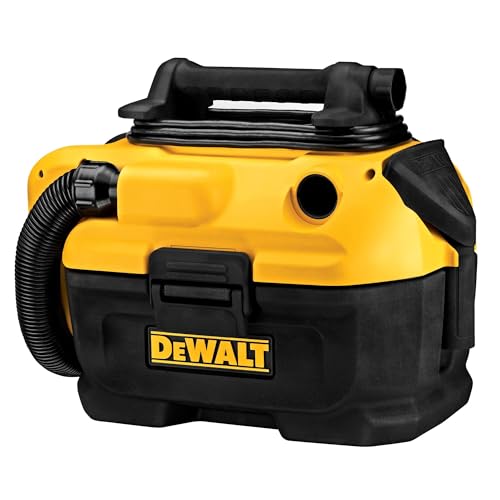
6. DEWALT 20V MAX Wet/Dry Shop Vacuum, DCV581H — Best for Spills and Volume
Everything above is a floor washer. This is the other animal: a 2-gallon wet/dry shop vacuum that runs cordless on DEWALT’s 20V MAX battery platform or corded when an outlet is near, with a wide nozzle and a washable HEPA filter per the maker’s listing. Its job in a wet-floor household is everything the washers must not do: the washing machine hose spill, the water heater’s puddle, the aquarium accident, the garage and basement water that carries grit and debris. Two gallons of tank swallows a spill in one trip, the HEPA filter (the listing’s stated type) keeps fine dust respectable on dry duty, and the tool-only format suits anyone already holding DEWALT batteries.
Strengths
- True wet pickup with a 2-gallon tank for real spill volume
- Cordless or corded flexibility on a major battery platform
- Washable HEPA filter per the listing; wide nozzle for fast water intake
Trade-offs
- It does not wash or scrub — floors still need mopping after a pickup
- “Tool only”: battery and charger are separate if you are not on the platform
- Utilitarian noise and manners; a workshop tool, not a kitchen appliance
| Spec | Detail (from maker’s listing) |
|---|---|
| Model | DCV581H |
| Capacity | 2 gallon |
| Power | Cordless (20V MAX) and corded |
| Filter | HEPA filter, washable (per listing) |
| Format | Tool only |
Read the badge carefully: this pick wins its slot by refusing the washers’ job description. If your “wet floor” searches come from a basement that takes water, a laundry room with aging hoses, or a garage that floods at the door line, this — possibly alongside a washer for the finished floors — is your machine. Use the wet pickup as directed, empty and dry the tank after water duty so it does not sour, and let the washable filter dry fully before dry vacuuming resumes. For routine kitchen floors, it is the wrong tool, and we say so in its own review rather than letting the badge oversell it.
Best for: Spills with volume, basements, garages, DEWALT battery owners / Not suited for: Routine floor washing or anyone wanting a finished floor in one pass
Check the current price on Amazon
Comparison Table
| Pick | Badge | Key spec | Best for |
|---|---|---|---|
| BISSELL CrossWave Turbo 3888A | Best Overall | Corded vacuum-mop, hard floors + rugs | Most hard-floor homes |
| Tineco Floor ONE S5 | Best Cordless Smart Washer | Cordless, digital display | Frequent spot cleaning, pets |
| BISSELL CrossWave Pet Pro 2306A | Best for Pet Homes | Pet-tuned vacuum-mop | Hair plus mud households |
| BISSELL CrossWave HydroSteam 35151 | Best with Steam | Vacuum + wash + steam | Grease, tile, deep cleans |
| Tineco iFLOOR 2 Complete | Best Compact Cordless | 90% recovery, dual tank, self-cleaning | Apartments, first washer |
| DEWALT DCV581H | Best for Spills and Volume | 2 gal wet/dry, HEPA filter, cordless/corded | Basements, garages, big spills |
How to Choose a Vacuum for Wet Floors
Name your water. A daily film of spills and prints is a washer’s job. Occasional puddles with grit are a shop vac’s job. A home can honestly need both, and many do — the washer for finished floors, the utility vac for the basement and garage. Buying a washer to face a flooding basement, or a shop vac to maintain a kitchen, are the two expensive mistakes in this category.
For washers, water management is the spec that matters. Dual tanks (clean down, dirty back, never mixed) are non-negotiable at this point — every washer here has separated water in its design. Water recovery decides dry time and film; the iFLOOR 2’s stated 90% is the benchmark figure on this page. Self-cleaning decides whether the brush stays fresh between sessions.
Corded versus cordless is a floor-plan question. Corded CrossWaves clean a whole large house without a thought. Cordless Tinecos get used three times as often for small messes. Estimate your real session length, not your aspirational one, and choose accordingly.
Check your floors against the machine. All washers here are hard-floor machines with varying area-rug tolerance; none is a carpet cleaner. Steam adds a compatibility check with your floor’s maker. Sealed surfaces only, always — unsealed wood and water are enemies regardless of machine.
Budget for the consumables. Washers use cleaning formula, filters, and eventually brush rolls; shop vacs use filters and bags for dry duty. None of it is exotic, but the household that stocks a spare filter owns a machine that never sits idle waiting for parts.
How to Use a Floor Washer on Wet Floors, Step by Step
- Dry-pick the big debris first. A quick pass with a broom or dry vacuum for grit and hair keeps the washer’s tanks and brush doing water work, not gravel work.
- Fill the clean tank as directed with water and the maker’s formula at the stated ratio — more formula is not more clean; it is more residue.
- Work in slow lanes. Pull back slowly to let the machine lay water and scrub, push forward to recover it. Rushing is how floors end up wet and streaked.
- Overlap at edges and transitions, and give the machine an extra slow pass where rugs meet hard floor.
- Empty the dirty tank immediately, rinse it and the brush roll, and run the self-cleaning cycle if your model has one.
- Let parts air-dry before reassembly. A washer stored wet is a washer that smells; five minutes of drying is the whole secret.
- For the shop vac on a spill: confirm power safety first, use the wide nozzle, empty before the tank overfills, and dry the tank and filter after water duty.
Common Buying Mistakes
- Using a floor washer on standing water. Washers recover the water they lay down plus a mess’s worth — they are not pumps or flood tools. Deep water is the shop vac’s (or a professional’s) territory.
- Skipping the post-use rinse. Dirty tanks and brushes left overnight are the number one cause of “my washer smells and stopped working well.”
- Over-formula-ing. Excess solution leaves a sticky film that attracts dirt faster. Measure the ratio.
- Expecting a washer to deep-clean carpet. Area-rug refreshing is in some briefs; carpet extraction is a different machine class entirely.
- Ignoring floor-maker guidance on steam and water. Especially with wood and laminate, the floor’s warranty cares about your machine choice even if the machine’s marketing does not.
- Buying cordless for a mansion, corded for a studio. Match the power format to the session you will actually run.
Reading This Category’s Price Tiers
We do not print prices here — bundles shift them constantly — but the tier logic is stable enough to navigate by. Cordless compact washers like the iFLOOR 2 form the accessible tier of the washer market; full-size cordless flagships (the S5’s class) and steam models (the HydroSteam’s class) sit above them, charging for battery capacity, displays, and heat. Corded CrossWaves occupy the value-for-capability middle: no battery to price in, no runtime to apologize for. The DEWALT prices like the professional tool it is, with the caveat that “tool only” means the battery ecosystem is a separate investment if you are not already on it — and a genuine bargain if you are. Across all tiers, the recurring costs are modest and predictable: formula, filters, and the occasional brush roll. Judge any machine here by cost per clean floor over years, and the ranking in this guide mostly prices itself.
A closing observation from the category’s own logic: the best vacuum for wet floors is the one whose tank you are willing to rinse. Every performance difference among the five washers here is smaller than the difference between a maintained machine and a neglected one, and the DEWALT’s entire virtue is that it asks almost nothing between emergencies. Choose by job, buy by floor plan, and then keep the two-minute ritual — the rankings above assume you will, and they reward the machines that make the ritual easiest to keep. Do that, and a wet floor stops being an event and becomes a two-minute errand, which is the entire promise this category makes and, chosen well, actually keeps.
Final Recommendation
For the typical hard-floor home, the CrossWave Turbo is the safe center of this category; the Tineco S5 and iFLOOR 2 trade its cord for grab-and-go convenience at two sizes, the Pet Pro and HydroSteam specialize the platform for hair and for steam, and the DEWALT stands apart as the volume tool. Continue the research in the cluster: Best Bissell Wet Dry Vacuums goes brand-deep, Best Cordless Wet Dry Vacuums isolates the battery question, Best Standing Wet Dry Vacuums covers upright utility formats, Best Robot Vacuums Mops explores the automated route, and Best Wet Vacuums Upholstery Stains handles the furniture side of wet messes.
Wet Floors, Room by Room
Kitchen. The highest-frequency wet floor in the house: cooking splashes, sink drips, dishwasher dribbles, and grease film. Any washer here earns its keep weekly; the HydroSteam’s steam mode is the specialist for the greasy zone in front of the stove, and a compact cordless (iFLOOR 2) suits the galley layout where a corded machine’s cable fights cabinet corners.
Bathroom. Small area, high water density, and hair. A cordless washer’s grab-and-go nature wins; rinse the brush religiously, because bathroom hair plus dirty water is the fastest route to a sour machine. Watch water around the toilet base — a washer cleans the floor there beautifully, but a puddle that returns daily is a wax-ring problem, not a cleaning problem.
Entryway and mudroom. Weather’s front line: slush, mud, road salt. The Pet Pro and the standard CrossWave both handle the hard floor and the entry rug in one pass, which is why rug capability matters here more than anywhere. In salt season, frequency beats intensity — melted salt water left sitting is what damages finishes.
Laundry room. The room where the DEWALT earns its slot. Hose drips are a washer’s snack; a hose failure is gallons. Keep the utility vac’s tank empty and ready here, and treat any standing water around the machine’s electrical connections with the power-off rule from the introduction.
Basement and garage. Utility territory entirely: concrete, grit, and volume. The shop vac’s wide nozzle and 2-gallon tank are built for it; floor washers should stay upstairs where the finished floors are. If water arrives regularly, the vacuum is a mitigation, and the fix is drainage — a distinction worth stating plainly in a buying guide.
Owning a Floor Washer: The First Month, Honestly
Week one with any washer in this guide is revelatory: the dirty tank shows you what mopping was leaving behind, and floors feel different underfoot. The households that still love the machine in month six share three habits. They run it more often than they planned — short sessions, because the machine made them easy. They treat the two-minute rinse as part of the session, not an optional epilogue. And they keep the consumables — formula, a spare filter — in the same closet as the machine, so nothing ever waits on a delivery. The households that abandon washers share one habit instead: the heroic monthly deep-clean, in which a neglected machine meets a month of film, underperforms, and gets blamed. If you recognize yourself in the second pattern, choose the self-cleaning iFLOOR 2 or the S5 and let the dock do more of the ritual for you. If you are a first-pattern household, any pick here will feel like a household upgrade out of proportion to its size.
Shop Vac Technique for Water, Briefly
Using the DEWALT (or any wet/dry vac) on water well is a small skill. Remove or configure the filter setup as the maker directs for wet pickup — the DCV581H’s washable HEPA filter is part of its design, so follow its manual’s wet-use guidance rather than generic shop-vac folklore. Work from the edge of the puddle inward so the nozzle always has a seal against the floor, empty the tank before it reaches the float shutoff’s neighborhood, and afterward run the machine dry for a few seconds to clear the hose. Then the step everyone skips: leave the tank open to dry. A sealed, damp shop vac grows the smell that makes people dread using it, and an open, dry one is ready for the next hose failure at 11 p.m., which is when hose failures schedule themselves.
Floor Types and Water: A Compatibility Guide
Tile and sealed stone. The natural home of every machine here. Washers excel, steam is welcome, grout lines appreciate the brush action. This is the floor type where you can buy capability without a compatibility worry.
Sealed hardwood. Washers are designed for it and use controlled water — far less than a string mop leaves standing. The disciplines: do not let solution pool at board seams, keep recovery passes slow so water comes back up, and check the finish’s condition; a worn finish is a water path no machine can be blamed for finding. Steam only if the floor’s maker allows it.
Laminate and LVP. Water-resistant surfaces with vulnerable seams and cores in laminate’s case. Washers with high recovery — the iFLOOR 2’s stated 90% is the relevant figure — are the right match, because what matters is how little water stays behind. Avoid steam on laminate unless the maker explicitly permits it; heat plus seam moisture is laminate’s known enemy.
Concrete. Indestructible by these machines and the shop vac’s home turf. A washer can clean a finished basement’s sealed concrete; raw dusty concrete belongs to the DEWALT and a broom.
Area rugs over hard floors. The CrossWave briefs include area rugs, and used as directed they refresh rug surfaces and pick up the wet traffic film. They do not extract deep-down water from a soaked rug — a rug that has taken a real soaking needs lifting, drying, and air, not a surface pass.
The Two-Machine Household
Readers sometimes treat this guide’s split — five washers, one utility vac — as indecision. It is actually the recommendation. A floor washer maintains finished floors at a standard no utility vac can touch, and a utility vac survives water events no washer should meet; the pair covers the whole wet-floor problem for less specialization risk than either alone. If budget forces one purchase, sequence by pain: the household whose pain is daily dirty floors buys the washer first and borrows utility capacity from a bucket and towels until the second purchase; the household whose pain is a basement that takes water buys the DEWALT first and mops the kitchen like it is 1995 until the washer arrives. What not to do is split the difference with a single mid-thing that neither washes well nor survives grit — the category’s graveyard is full of those.
Seasonal Wet Floors: Slush, Salt, and Storm Season
Wet floors have a calendar. Winter brings entryway slush and road salt, which is mildly corrosive and worth removing promptly — a washer pass at the door zone twice a week in salt season protects finishes better than any single deep clean. Spring brings the basement’s annual test and the garden hose’s return; that is the DEWALT’s season, and the time to check its filter and empty its tank before you need it at midnight. Summer adds pool and patio traffic — wet footprints on kitchen tile are a cordless washer’s perfect use case, thirty seconds at a time. Autumn returns mud. The point of the calendar is purchasing timing: households that buy the washer in the season they are suffering use it immediately and learn it; households that buy in the calm season should still run it weekly, because a washer stored for months with damp parts starts its real season already smelling. Whatever the season, the dirty tank test never lies — run any pick here over a floor you believe is clean, and let the recovered water grade your previous method.
What We Left Out, and Why
Three neighboring categories were excluded on purpose. Dedicated carpet cleaners and extractors answer a different question — deep carpet water and soil — and would have diluted a hard-floor guide. Robot vacuum-mops automate light maintenance well but cannot match a walk-behind washer’s scrubbing or a shop vac’s volume; they are linked in the final recommendation for readers whose priority is automation over depth. Steam mops without vacuum capability clean a pre-vacuumed floor respectably, but they ask you to own the two-step process this category exists to collapse. Within the included categories, we also passed over washers whose listings did not confirm dual-tank separation or wet pickup in their own data — in a category built on water claims, unverified water claims are disqualifying.
Frequently Asked Questions
Can a vacuum really clean a wet floor, or is it just moving dirty water?
A proper floor washer does genuinely clean: it lays down clean solution from one tank, scrubs with a brush roll, and recovers the dirty water into a separate tank. The dirty tank’s contents after one session are the proof — that water and grit left the floor and stayed off it.
Are these machines safe on hardwood?
On sealed hardwood, used as directed, washers are designed for the job — but they use less water than a mop, which is the point. Unsealed or worn-finish wood should not be wet-cleaned by any machine. Steam deserves extra caution: check your floor maker’s guidance before using the HydroSteam’s steam mode on wood or laminate.
What should I use for a flooded basement corner?
First, kill power to the area if there is any doubt. For shallow water without debris, the DEWALT wet/dry vacuum in this guide handles pickup; for depth, continuous inflow, or any sewage involvement, that is pump-and-professional territory, not vacuum territory.
How often do brush rolls and filters need attention?
Rinse after every use — that is the habit that keeps these machines performing. Replacement intervals vary by model and household load; stock a spare filter so a drying filter never sidelines the machine, and follow the maker’s schedule on the product page.
Cordless or corded for a two-story home?
Cordless, usually: carrying a corded washer up stairs and re-plugging per room is the friction that makes people stop washing floors. The Tineco picks exist for exactly this layout; keep the corded CrossWaves for single-level, large-area cleaning.
Do floor washers replace mopping entirely?
For routine hard-floor cleaning, effectively yes — they vacuum, wash, and dry in one pass, which is more than a mop does. Corners, baseboard edges, and the strip behind the toilet still reward an occasional hand pass, and a dried-on disaster may want a pre-soak. But the weekly mop-and-bucket ritual is what these machines retire.
How long do floors stay wet after washing?
Minutes, with good recovery technique — slow pull-back passes and a full recovery stroke. High-recovery designs like the iFLOOR 2 (stated 90% water recovery) leave the least behind. A floor that stays wet for half an hour is telling you the recovery pass was rushed or the dirty tank was full.
My washer leaves streaks. What am I doing wrong?
Usually one of three things: too much formula in the clean tank (measure the ratio), a dirty tank allowed to fill past its line so recovery weakens, or passes made too fast for the recovery stroke to lift the water back. Slow down, halve the formula to the stated ratio, and empty the dirty tank earlier than feels necessary — streaks are a technique report, not a machine verdict.
Is a wet/dry shop vacuum safe to use on water near outlets?
Only with the power question settled first. If water has reached outlets, appliances, or cords, turn off the circuit before any vacuum comes near it, and keep the machine’s own cord and connections dry. Shallow water on an open floor, away from electrical contact, is the shop vac’s normal work; anything beyond that is a professional’s job.
What is the difference between a floor washer and a wet/dry shop vacuum?
A floor washer is a cleaning appliance: it applies clean solution, scrubs, and recovers dirty water, leaving a finished floor. A wet/dry shop vacuum is a pickup tool: it inhales water and debris into a tank, including volumes and grit that would harm a washer, but it leaves the floor merely emptied, not cleaned. Most wet-floor households eventually want both, for different rooms and different emergencies.
Can I use my own cleaning solution in a floor washer?
Use the maker’s formula or one the maker approves for the machine. Off-label solutions can foam excessively, leave residue, or damage seals and sensors, and they void the easy life you bought the machine for.


