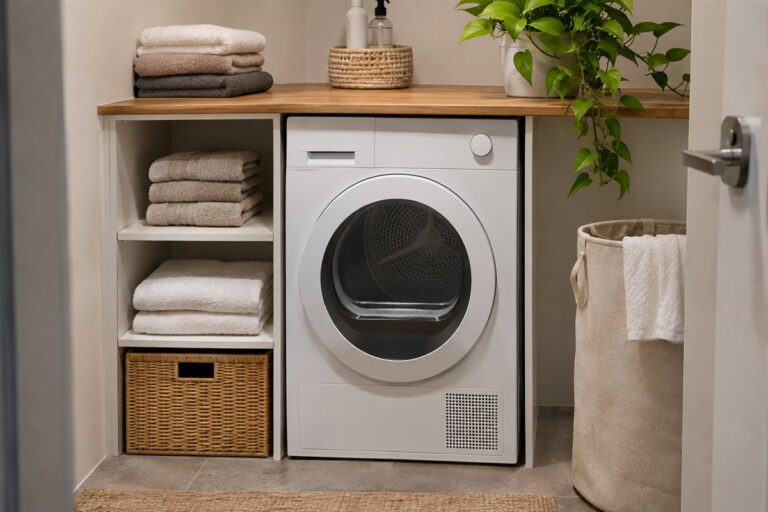
A gas dryer heats the drum with a gas burner and uses electricity for the motor and controls. It needs a gas line, a power outlet and proper venting, so the first question is whether your laundry room is set up for it. This guide helps you compare the features that matter before you look at listings.
We have not used these products ourselves, so we do not describe how any dryer performs. We describe features and installation needs only. Check your hookups, measure the space, and ask a licensed installer about the gas line, then go through the checklist below.
As an Amazon Associate we earn from qualifying purchases. Links on this site are affiliate links, and they do not change the information we give.
In this guide
Quick Picks
| Pick | Product | Best For |
|---|---|---|
| 1 | GE Profile PTD60GBSRWS 7.4 cu. ft. Gas Dryer | Best overall front load |
| 2 | Samsung DVG50BG8300V 7.5 cu. ft. Smart Gas Dryer | Best for steam and sanitize cycles |
| 3 | Kenmore 7.0 cu. ft. Front Load Gas Dryer | Best straightforward value |
| 4 | LG WashTower WKGX201HBA with 7.4 cu. ft. Gas Dryer | Best stacked laundry center |
| 5 | GE GTD72GBSNWS 7.4 cu. ft. Gas Dryer with HE Sensor Dry | Best top-load pair dryer |
Our Picks

1. GE Profile PTD60GBSRWS 7.4 cu. ft. Gas Dryer — Best overall front load
GE’s Profile-series gas dryer gives you a 7.4 cu. ft. front-load drum, sized to pair with a full-size washer so bulky loads like comforters tumble freely instead of packing tight. It is factory set for natural gas, and like every model in this guide it needs a vent run to the outdoors, so measure your duct length and bends against the manual before it arrives. Sensor dry cycles sit alongside timed settings, which matches the moisture-sensing point in the checklist: the dryer can end the cycle when the load is dry rather than running a fixed clock. The front-load layout stacks with a compatible kit or stands beside its matching GE Profile washer. Check the listing for the current door-swing arrangement and confirm a licensed installer for the gas hookup. Choose this one for a mainstream front-load pair with a large drum.

2. Samsung DVG50BG8300V 7.5 cu. ft. Smart Gas Dryer — Best for steam and sanitize cycles
Samsung’s 7.5 cu. ft. front-load gas dryer is the largest drum in this group, and it adds steam functions that most basic gas models skip. The Steam Sanitize+ cycle is aimed at refreshing loads and reducing wrinkles and odors, while Sensor Dry adjusts time and temperature so clothes are not baked past dry. The finish is Brushed Black with a steel and glass door, and the unit is DOE certified. It is a front loader, so it can stand beside a matching Samsung washer or stack with the maker’s kit where the laundry room is narrow. As the guide above stresses, confirm your gas supply type, the vent path and the door swing against the spec sheet before ordering, and have the gas line connected professionally. Pick this dryer if steam refresh and the biggest drum are your priorities.
View Samsung DVG50BG8300V 7.5 cu. ft. Smart Gas Dryer on Amazon
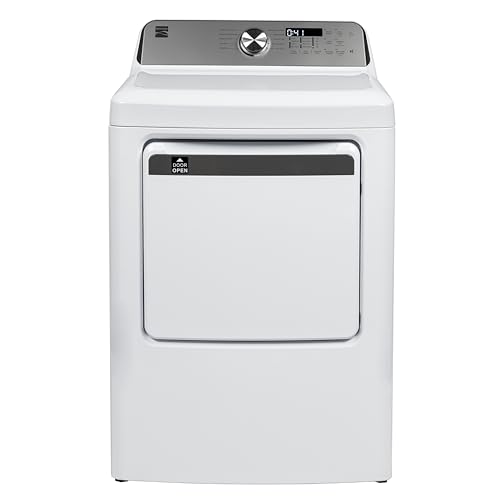
3. Kenmore 7.0 cu. ft. Front Load Gas Dryer — Best straightforward value
This Kenmore front-load gas dryer covers the checklist basics in a 7.0 cu. ft. drum and is sold and shipped by Amazon.com, which can simplify delivery compared with appliance-store channels. Its Wrinkle Guard feature keeps the drum tumbling after the cycle ends to reduce wrinkles and static while a load waits, and Smart Sensor Drying adjusts the cycle to the load instead of running a fixed time. An LED display fronts the controls, and the cycle list includes Express Dry for small, urgent loads and an Energy Saver option the maker says trims energy use. It is a white, front-load design that pairs with a matching Kenmore washer or stands alone. You still need the gas line, a 120-volt outlet and an outdoor vent, installed per the manual. Choose it if you want sensor drying and wrinkle care without paying for steam or smart features.


4. LG WashTower WKGX201HBA with 7.4 cu. ft. Gas Dryer — Best stacked laundry center
The WashTower answers the stacking question in the checklist in a different way: instead of two separate units and a kit, the washer and gas dryer arrive as one tower with the Center Control panel at reachable height in the middle. The lower washer is 4.5 cu. ft. and the upper gas dryer is 7.4 cu. ft., in a single 27-inch-wide footprint for narrow laundry closets — measure the total height and the door swing before ordering, since a tower cannot be unstacked later. The dryer section includes steam, and the gas burner is rated at 20,000 BTU in LG’s spec table. The finish here is Black Steel. Because the gas connection and vent serve one combined unit, plan the hookup with a licensed installer as the guide advises. Pick the WashTower if floor space is your binding constraint.

View LG WashTower WKGX201HBA with 7.4 cu. ft. Gas Dryer on Amazon
5. GE GTD72GBSNWS 7.4 cu. ft. Gas Dryer with HE Sensor Dry — Best top-load pair dryer
GE’s GTD72GBSNWS is a 7.4 cu. ft. dryer in the top-load-matching format, built to sit beside a top-load washer rather than a front loader. Its HE Sensor Dry uses moisture sensing to end cycles when clothes are dry, and the model line adds steam and Wi-Fi connectivity on this version, with an ENERGY STAR rating noted in the manual set. The aluminized alloy drum and a long-vent design rated for runs up to 120 feet in this family make it worth a look if your vent path is long or bends more than usual — confirm the exact limit in the manual for this model. We could not verify a single Amazon listing ASIN for this exact model, so the button runs an Amazon search locked to the full model code GTD72GBSNWS; check that code on the listing before you buy.
View GE GTD72GBSNWS 7.4 cu. ft. Gas Dryer with HE Sensor Dry on Amazon
What to Look For
| Factor | Why it matters | What to check |
|---|---|---|
| Fuel type and hookup | A gas dryer needs a gas supply, and some models are set up for propane only with a conversion. | Confirm what your home has and what the manual says about conversion. |
| Drum capacity | A bigger drum lets bulky items tumble more freely. | Compare the stated capacity with your usual washer size. |
| Venting | Gas models must vent outdoors, and long or bent ducts reduce airflow. | Measure the duct run and count the bends against the maker’s limit. |
| Moisture sensing | Sensors stop the cycle when clothes are dry, which can help protect fabrics. | See if the controls offer sensor cycles, timed cycles and low-heat settings. |
| Dimensions and door | Doors that swing the wrong way can block the laundry nook. | Measure width, depth and height, and check for a reversible door. |
| Stacking and pairing | A matching washer can be stacked or placed side by side. | Check for a stacking kit and the combined height. |
Setup and Care Tips
- Have a licensed professional connect and check the gas line and the vent.
- Use rigid or semi-rigid metal duct, as the maker advises, and keep the run short.
- Clean the lint screen after every load.
- Clean the vent duct on a regular schedule following the manual.
- Leave space around the dryer for airflow and for service access, and keep the area around it free of boxes and cleaning products.
Mistakes to Avoid
- Buying a gas model for a home that has no gas supply in the laundry room.
- Using plastic or foil duct that the maker does not recommend.
- Ignoring the duct length and number of bends.
- Overfilling the drum so clothes cannot tumble.
- Installing the dryer yourself when the manual calls for a licensed installer.
Checking Your Laundry Room Hookups Step by Step
Before comparing models, confirm what your laundry space can actually support. For a gas dryer, three things must line up: a gas supply with a shutoff valve within reach, a standard household outlet for the motor and controls, and a vent path to the outdoors. Look behind your current dryer, if there is one, and note whether the gas connection is a flexible line with a nearby valve and whether the outlet is a normal plug or a higher-voltage receptacle. A higher-voltage outlet usually points to an electric dryer, which is a different product.
Find out what kind of gas your home uses. Natural gas and propane need different settings, and the manual explains whether a model ships set for one and what conversion is possible. Do not guess. If you are unsure, ask your gas supplier or a licensed installer to check the line, the valve and the pressure requirement in the manual. Older homes may have lines that need updating to meet current rules.
Also check practical access. Can the new dryer pass through doors and hallways? Is there room to reach the valve and the vent after installation? Is the floor level and strong enough? Writing these answers down before shopping prevents surprises on delivery day and lets you rule out models that will not fit your situation.
Venting Routes and Duct Choices
Venting is where many gas dryer problems start. Combustion gases and moist air must leave the building through a duct that runs to the outdoors, and the duct must follow the maker’s limits on length and number of bends. Every elbow and extra meter of duct adds resistance, which can lengthen drying cycles and let lint build up faster. Measure the actual path from the dryer to the outside wall, count the turns and compare them with the maximum in the manual.
Choose duct material with care. Rigid metal is generally preferred because it keeps a smooth interior and resists crushing. Semi-rigid metal can work in tight spots when the manual allows it. Plastic or foil accordion duct is often discouraged because it can trap lint and sag, so read what the maker says. The exterior vent cap should open freely and have no screen that clogs with lint.
Think about where the vent exits. Short routes through an outside wall are better than long ones through a ceiling or roof. If your laundry is in a basement or interior closet, the route may be harder, and an installer can advise on options. Never vent a gas dryer into a garage, attic or crawl space. If a proper vent cannot be built, you may need to consider a different type of dryer instead.
Drum Size, Cycles and Fabric Care
Drum capacity should match the washer you own or plan to buy. A common rule is that the dryer drum should be larger than the washer drum so clothes have room to tumble, because tightly packed loads dry slowly and wrinkle. Check the stated capacity and compare it with your typical loads, including bulky items like comforters and towels.
Cycles and sensors make a bigger difference to daily use than a long cycle list. Moisture sensors measure how damp the load is and stop the cycle when it is dry, which can help avoid over-drying. Timed cycles give manual control, and low-heat or delicate settings suit synthetics, activewear and items with care labels that warn against high heat. Look for wrinkle-release or refresh options if you use them, and for a cool-down phase.
Consider drum features too. Interior lights, reversible drums and smooth interiors reduce snagging. Door swing matters in tight rooms, so confirm whether the door is reversible. A wide door opening helps with bulky loads. Read how the maker describes noise and vibration, since the dryer may share a wall with living space. Higher tiers generally add more sensors, steam options and app control, while basic models keep the controls simple. Choose the features you will use.
Safety Habits Around Gas and Lint
A gas appliance deserves routine safety habits. Know where the gas shutoff valve is, and learn the smell of the odorant added to household gas. If you smell gas, follow the instructions from your gas supplier and emergency services: avoid switches and flames, ventilate and leave the building if needed. Installing a carbon monoxide alarm and a smoke alarm near the laundry area is a sensible precaution, and local rules may require them.
Lint is a fire risk. Clean the lint screen after every load, and check the area around it for lint that escapes. Clean the vent duct and the exterior hood on a schedule the manual suggests, and more often if you notice longer drying times, a hot laundry room or a burning smell. Hiring a professional to clean ducts is an option if your run is long.
Keep the area around the dryer clear of boxes, cleaning products, solvents and anything flammable. Do not dry items that have been soaked with flammable substances such as oil, gasoline or cleaning solvents, as the manual will explain. Leave space around the unit for airflow. Never operate a dryer with a damaged cord, a loose gas connection or a blocked vent, and have a licensed professional inspect it after any suspected leak.
Running Costs, Lifespan and Knowing When to Replace
Running costs depend on local gas and electricity prices, how often you dry laundry and how efficiently the dryer works. Gas dryers are often described as cheaper to run than electric ones in places where gas is inexpensive, but that varies by region, so compare local rates instead of assuming. Look for the efficiency information the maker publishes, and treat it as a claim made under test conditions.
Budget tiers are easiest to see by controls and build. Entry models offer timed cycles and a few heat levels. Mid-range models usually add moisture sensors, more cycle options and quieter operation. Premium models tend to add steam, smart features and larger drums. Choose by how you do laundry, not by the longest list.
Ask pre-purchase questions: Does the installation quote include the gas connection and vent? What does the warranty cover for the burner and drum? Are parts and service available locally? What are the delivery and haul-away terms?
Signs it may be time to replace the dryer include cycles that take much longer even after cleaning the vent, a drum that squeals or no longer turns, a burner that fails to ignite or clicks repeatedly, scorched smells, door seals that no longer close, and repairs that approach the cost of a new machine. Any gas smell should be treated as urgent, and the dryer should not be used until it has been checked.
Gas Connection, Venting and Electrical Needs
A gas dryer needs more planning than an electric one because it uses a gas line, an electrical outlet and an exhaust duct. The gas supply must match the dryer, whether natural gas or propane, and some models need a conversion kit for propane. The dryer also needs a standard household outlet for the motor, controls and igniter. Exhaust must be vented to the outdoors, and the duct route should follow the maker’s instructions for diameter, length and number of bends. Gas line connections, shutoff valves and leak checks should be handled by a licensed gas professional, and local code may require permits or inspections. If you smell gas, leave the area and contact your gas supplier or emergency services as the official guidance instructs.
| Item | What to confirm |
|---|---|
| Fuel type | Natural gas or propane, and any conversion kit |
| Gas line | Shutoff valve, connector and leak check by a professional |
| Outlet | Standard receptacle near the dryer |
| Vent | Duct material, length and outdoor termination as the maker requires |
| Space | Clearances around and behind the unit |
Drum Capacity, Cycles and Sensors
Gas dryers usually come with larger drums, in the range of seven cubic feet or more, which suits families and bulky bedding. A bigger drum lets clothes tumble freely and dry more evenly. Look at the cycle list for options such as delicates, bulky items, towels and a low heat setting. Moisture sensors can end the cycle when clothes reach the dryness you choose. Some models include steam features or wrinkle prevention, which add convenience but also add complexity, so ask yourself whether you will use them. Read the care labels on your clothes for guidance on which cycles fit different fabrics.
Why Many Households Choose Gas
Gas dryers can heat quickly, and in areas where gas costs less than electricity, running expenses may be lower. Local utility rates vary, so check your own bills before you decide. Gas is only an option if the home already has a gas line in the laundry area, or if you can add one safely. Compare the installation work with the appliance itself, and ask a contractor for a quote.
Lint Safety and Seasonal Care
Clean the lint screen after every load. Inspect and clean the exhaust duct on the schedule the maker recommends, and keep the area around the dryer clear of lint and stored items. Never dry items that contain flammable substances, and follow the manual on what is safe.
Choosing a gas dryer in More Depth
The shortlists and tables earlier in this guide narrow the field, but the final choice between similar gas dryers usually comes down to a handful of practical details that listings present unevenly. The points below dig into those details one at a time. None of them requires specialist knowledge; they require an honest look at your space, your routine and the people who will share the purchase with you. Work through them in order and you will usually find that one of the picks above separates itself from the rest for reasons that have nothing to do with marketing.
Gas Line, Venting and the Real Installation Picture
A gas dryer needs three services: a gas supply with a shutoff, a standard electrical outlet for the drum and controls, and a vent run to the outside for moist air and combustion byproducts. Measure the vent route before choosing, because long, bendy runs hurt performance and safety. If your laundry has electric hookups only, the conversion conversation with a professional belongs before the purchase, not after delivery. Treat this as a deciding factor only when it matches how you will actually use the purchase week after week, not just on the first day. A feature that solves a problem you genuinely have is worth prioritising, while the same feature is wasted money and extra bulk when your routine never calls on it. Compare the picks above on this point before you look at anything else on the listing.
Capacity Matched to Your Washer
Dryer capacity should comfortably exceed your washer’s typical load, because wet laundry needs room to tumble and dry evenly. A dryer that is stuffed dries slowly and wrinkles everything. If you wash king bedding, check the drum takes it loosely. Households that wash small and often can choose smaller, but the pairing with the existing washer is the number to start from. It helps to decide your position on this before you start comparing models, because listings are written to make every version sound essential. Write down what your space, your routine and your household actually demand, then check each pick against that short list. Anything that fails a genuine requirement can be crossed off early, which makes the remaining choice much simpler.
Sensor Drying and Cycle Honesty
Moisture sensors that stop the cycle when clothes are dry save energy, prevent heat damage and beat any timer for consistency. Check how the sensor cycles handle mixed loads, and whether there are useful options for delicates, heavy cottons and quick loads. Steam and refresh features genuinely help with wrinkles and odours for some households and sit unused in others; buy them for your wardrobe, not the brochure. Shoppers often notice this detail only after the first week of use, when returning or exchanging is at its most inconvenient. Reading the product description and the manual-style information on the listing with this one point in mind takes a few minutes and prevents the most common source of disappointment. When two picks look equal elsewhere, let this be the tie-breaker.
Lint, Safety and the Vent Run Again
Gas dryers move a lot of air, and lint is the tax. An accessible lint filter you will actually clean every load, plus a vent run you can inspect and clean periodically, are safety features as much as performance ones. A dryer that dries slower over the months is usually asking for its vent to be cleaned, and listening to that request promptly is part of owning the appliance well. There is usually a trade-off hiding here, and the honest version of it is that you cannot maximise everything at once. Decide which side of the trade-off suits your home and accept the compromise on the other side deliberately rather than discovering it later. The picks in this guide differ from each other on exactly this kind of point, which is what makes the comparison table worth a second look.
Noise, Controls and Laundry Room Life
Dryers run for the better part of an hour at a time, often near living space. End-of-cycle signals you can turn down, controls you can read without a manual, and a door that opens the way your laundry layout needs all shape daily satisfaction. If the dryer pairs with an existing washer, check the door swing directions work together in the actual room, with you standing there holding a basket. A practical way to judge this is to picture the busiest, least convenient day on which you will still want the product to work well. If it copes with that day, it will cope with ordinary days easily. If it only works when everything is calm, tidy and unhurried, it will frustrate you in real life no matter how good it looks in photographs.
A gas dryer in Real Life: Situations Worth Planning For
Specifications and feature lists only tell half the story. The other half is how a gas dryer fits the situations your household actually creates, including the awkward ones that never appear in product photographs. These are the scenarios readers most often say they wish they had thought about before ordering.
A Busy Family Laundry
Throughput rules: large capacity, sensor cycles that handle mixed loads without babysitting, and a lint routine the whole family can follow. Gas drying’s fast heat suits back-to-back loads on laundry day. Choose durability and simple, robust controls over delicate touch panels that must survive teenage use. In this situation the differences between the picks stop being abstract and become easy to rank, because one or two features suddenly matter more than everything else on the list.
Replacing an Electric Dryer With Gas
The switch makes sense where gas is already in the home and laundry volume is high, but it is a project: gas line work, venting, and possibly a different outlet arrangement. Get the installation quoted before ordering the dryer, confirm the space fits with the new connections behind it, and plan a day without laundry. The dryer choice itself is the easy part of this scenario. Planning for this case in advance usually costs nothing, but discovering the mismatch after purchase is what leads to returns, workarounds and money spent twice.
A Stacked or Compact Laundry
In a laundry centre or stacked pair, the dryer’s controls, door and vent position must suit the configuration, which is why matched pairs and purpose-built towers exist. Measure the whole stack height against the ceiling and the reach of the shortest user. In this scenario, buy the pair as a system rather than marrying a dryer to a washer it was never designed to sit on. If this sounds like your household, weight the buying criteria above toward durability and ease of everyday handling rather than toward the longest feature list.
Delicates, Workwear and Everything Between
Households whose loads swing from silk blouses to muddy workwear need cycle range and honest temperature control more than raw size. Sensor drying protects the delicates; sturdy high-heat cycles restore the workwear. A dryer with a wide, well-explained cycle range serves this house better than a larger drum with three settings and a prayer. In this situation the differences between the picks stop being abstract and become easy to rank, because one or two features suddenly matter more than everything else on the list.
Getting Set Up and Using It Well, Step by Step
The order below follows the sequence most owners settle into after the first few uses. It avoids the two classic beginner errors: rushing the first setup, and only reading the instructions after something has already gone wrong.
Step 1: Confirm services before ordering. Verify the gas supply and shutoff, the electrical outlet, and the vent route and length. Arrange a qualified installer for the gas connection; this is not a DIY job.
Step 2: Prepare the space. Clean the laundry area, check the floor is level, and plan the exact vent path with as few bends as the room allows.
Step 3: Install and leak-check professionally. Have the gas connection made and tested by a qualified person, the vent fitted with proper ducting, and the dryer levelled so it runs quietly.
Step 4: Run a first empty or old-towel cycle. Check for proper heating, listen for odd noises, and confirm the vent is moving air outside before trusting it with good clothes.
Step 5: Learn the sensor cycles with real loads. Dry a typical mixed load on the sensor setting and check results; adjust your load sizes and cycle choices based on evidence, not habit.
Step 6: Set the lint routine from day one. Clean the filter every load, and put a vent inspection on the calendar. Habits formed in week one protect the machine for years.
Care, Cleaning and Long-Term Ownership
Lint management is the core of dryer care and dryer safety. Clean the filter before or after every load without exception, wash the filter with a soft brush occasionally to remove the invisible film that fabric softener leaves, and check that the filter sits correctly. A filter that looks clean but blocks air is a common cause of slow drying that owners misdiagnose as a failing machine.
The vent run needs periodic attention: disconnect and clean it on the schedule your usage demands, check the outside vent flap opens freely and is not blocked by plants, screens or nests, and replace any crushed or plastic flex duct with proper rigid or semi-rigid ducting. Slow drying, a laundry room that feels humid during cycles, or a dryer top that gets unusually hot are all messages from the vent system.
Inside the drum, wipe away residue from dryer sheets if you use them, since it can coat the moisture sensors and fool them into stopping early; a cloth with a little mild cleaner on the sensor bars restores honest readings. Keep the area behind and under the dryer vacuumed, since lint migrates. Any smell of gas, at any time, means stop, ventilate, and call the gas professional or utility, not the troubleshooting page.
How the Picks Compare With Each Other
Readers often ask for the picks to be set directly against one another rather than described one at a time. The comparison below uses only what this guide has already said about each model: its position in the Quick Picks table, the job it is listed as best for, and the strengths and limits covered in its review above. It is a way of double-checking a shortlist, not a new ranking.
GE Profile PTD60GBSRWS 7.4 cu. ft. Gas Dryer appears in the Quick Picks table as the choice for best overall front load. The overall front-load pick balances capacity, cycles and controls for the typical family laundry. If that description matches the job you described for yourself in the criteria sections above, it is the natural starting point; if it does not, the honest answer is that a neighbouring pick will serve you better even if this one caught your eye first. Re-read its full review above with your own situation in mind before deciding, because the limitation noted there matters more to some households than to others.
Samsung DVG50BG8300V 7.5 cu. ft. Smart Gas Dryer appears in the Quick Picks table as the choice for best for steam and sanitize cycles. Steam and sanitize cycles are its identity, for households whose loads include bedding, baby items and allergy concerns. If that description matches the job you described for yourself in the criteria sections above, it is the natural starting point; if it does not, the honest answer is that a neighbouring pick will serve you better even if this one caught your eye first. Re-read its full review above with your own situation in mind before deciding, because the limitation noted there matters more to some households than to others.
Kenmore 7.0 cu. ft. Front Load Gas Dryer appears in the Quick Picks table as the choice for best straightforward value. The straightforward value direction: core drying done well without paying for features the household will not touch. If that description matches the job you described for yourself in the criteria sections above, it is the natural starting point; if it does not, the honest answer is that a neighbouring pick will serve you better even if this one caught your eye first. Re-read its full review above with your own situation in mind before deciding, because the limitation noted there matters more to some households than to others.
LG WashTower WKGX201HBA with 7.4 cu. ft. Gas Dryer appears in the Quick Picks table as the choice for best stacked laundry center. The stacked laundry centre solves a layout problem, putting a matched pair into one footprint with central controls. If that description matches the job you described for yourself in the criteria sections above, it is the natural starting point; if it does not, the honest answer is that a neighbouring pick will serve you better even if this one caught your eye first. Re-read its full review above with your own situation in mind before deciding, because the limitation noted there matters more to some households than to others.
GE GTD72GBSNWS 7.4 cu. ft. Gas Dryer with HE Sensor Dry appears in the Quick Picks table as the choice for best top-load pair dryer. The top-load pair partner, for laundries arranged around a top-load washer that is staying. If that description matches the job you described for yourself in the criteria sections above, it is the natural starting point; if it does not, the honest answer is that a neighbouring pick will serve you better even if this one caught your eye first. Re-read its full review above with your own situation in mind before deciding, because the limitation noted there matters more to some households than to others.
Ownership Details Worth Settling Early
Think about the laundry workflow the dryer completes. The distance from washer to dryer, where the basket lives, and where folding happens decide whether laundry day flows or sprawls. A dryer whose door opens against the workflow, or whose controls sit awkwardly in a stacked pair, adds friction to every load for a decade. Stand in the room and mime a full load’s journey before choosing, because the room will not rearrange itself around the appliance.
Keep the dryer’s documentation and your installer’s details together, including the gas connection paperwork. When the dryer eventually needs service, the technician’s first questions are its age, model and installation history, and households that can answer them get faster, cheaper repairs. Photograph the rating plate with your phone on installation day; it is the one photograph of an appliance you will ever be glad you took.
It is also worth deciding, before the purchase arrives, where its accessories and consumables will live. A gas dryer ownership always accumulates small companions: tools, spares, cleaning items, attachments or paperwork, and when they have a home the routine stays tidy and the product stays easy to use. When they do not, they migrate into drawers and boxes and are effectively lost. A single labelled box or shelf section near where the product is used is the whole system, and setting it up on delivery day is far easier than retrofitting order onto a year of drift.
Finally, give any new purchase a fair settling-in period before judging it. The first uses of a gas dryer involve unfamiliar routines, and many early irritations turn out to be habits that adjust within a fortnight, while genuine faults show a consistent pattern that does not improve. Use that period deliberately: follow the manual’s routine exactly, note what actually bothers you and when, and you will know by the end of it whether you are looking at a learning curve, a setup error you can fix, or a real problem to raise with the seller while the paperwork is still fresh.
FAQ
Can I switch a gas dryer to propane?
Some models offer a conversion kit, but it should be installed according to the manual by a licensed professional. Check this before you buy.
How is a gas dryer different from an electric one?
The heat source differs, and so do the hookups. Gas models need a gas line plus an outlet, while electric ones need a higher-voltage outlet.
Do gas dryers dry faster than electric ones?
Some makers describe gas models as heating quickly, but real drying time depends on load size, venting and settings. Compare cycle descriptions and keep the vent clean for best results.
Can I install a gas dryer in a closet?
Only if the closet allows for proper airflow, a vent path and access for service, as the manual describes. Ask a licensed installer to check the space before you buy.
What size should the dryer be compared with my washer?
A dryer with a larger drum than your washer lets clothes tumble freely. Check the stated capacities and your typical load sizes.
How often should I clean the vent duct?
Follow the manual and consider more frequent cleaning if drying times grow or the laundry room feels unusually warm. Long or bent runs collect lint faster.
Is a gas hookup the same as an electric dryer outlet?
No. Gas models need a gas line plus a standard outlet, while electric models need a higher-voltage outlet. Confirm what your home has before choosing.
Can I use a gas dryer during a power outage?
Usually not. The motor and controls need electricity, even though the heat comes from gas. Check the manual for details.
What should I do if I smell gas near the dryer?
Stop using it, avoid switches and flames, ventilate and follow the guidance from your gas supplier and emergency services. Have a licensed professional inspect the appliance before use.
Do gas dryers dry faster than electric?
Gas burners reach working heat quickly, and many owners find cycles finish sooner, particularly on high-heat cotton loads. The bigger factors in any single home are load size, spin extraction from the washer, and vent condition. A well-spun load in a clean-vented dryer of either fuel dries promptly; a soaked load in a clogged vent dries slowly regardless of fuel.
What does a gas dryer need for installation?
A gas supply line with a shutoff valve fitted by a qualified installer, a standard electrical outlet for the motor and controls, and a vent ducted to the outside. Clearance for airflow and servicing matters too. Because gas work is regulated in most places, professional installation is not an upsell; it is the correct and often legally required route.
Why are my clothes still damp after a sensor cycle?
Check the simple causes first: an overloaded drum, a lint filter with invisible film, a vent run that needs cleaning, or sensors coated with dryer-sheet residue. Mixed loads can also fool sensors when light items dry and shield heavy ones. Clean the filter and sensor bars, check the vent, split very mixed loads, and the cycle usually returns to honesty.
How often should the vent be cleaned?
At least annually for typical households, and more often with heavy use, long vent runs or many bends, all of which collect lint faster. Signs you are overdue include longer drying times, clothes hotter than usual, and a humid laundry room during cycles. Vent cleaning is inexpensive compared with the energy wasted and the risk carried by a clogged run.
Can I use dryer sheets in a gas dryer?
Yes, though they leave a residue that can coat the lint filter and moisture sensors over time, which is why washing the filter and wiping the sensors belong in the routine if you use them. Liquid softener in the wash or reusable alternatives avoid the coating issue. Whichever you choose, the filter-cleaning habit stays non-negotiable.
Is a gas dryer safe?
A correctly installed and maintained gas dryer is a standard household appliance with a long safety record. The maintenance that matters is exactly what this guide stresses: professional gas connection, a clean lint filter, a clear vent, and attention to any gas smell, which should always be treated as an emergency for the utility or a qualified technician, never as a DIY investigation.
Why does my dryer take longer than it used to?
Work the list in order: lint filter, including the invisible softener film; the vent run, which clogs gradually; load sizes creeping up; and only then the machine itself. Most slow dryers are venting their heat into a wall of lint. If drying times restore after a vent clean, you have found both the fault and the maintenance interval your household needs.
Can I dry shoes and delicates in a gas dryer?
Many dryers offer a rack accessory that holds shoes or delicates still while warm air circulates, and low-heat or air cycles suit delicate fabrics. Check the garment label first, since some items should never be tumble dried at any setting. Without a rack, shoes bang around damaging both themselves and the drum, so the accessory or the airing cupboard is the answer.
The Short Version
Confirm gas, power and venting first, then match capacity and dimensions to your washer and space. Regular lint and duct cleaning keep the dryer working as intended.
Related Guides
- How to Choose the Best Heat Pump Dryers: Buyer's Guide (2026)
- How to Choose the Best Ventless Dryers: Buyer's Guide (2026)
- How to Choose the Best Pet Grooming Dryers: Buyer's Guide (2026)
- 6 Best Electric Dryers: Compact 110V and 120V Models (2026)
- Vented vs Ventless Dryers Made Simple: What Sets Them Apart