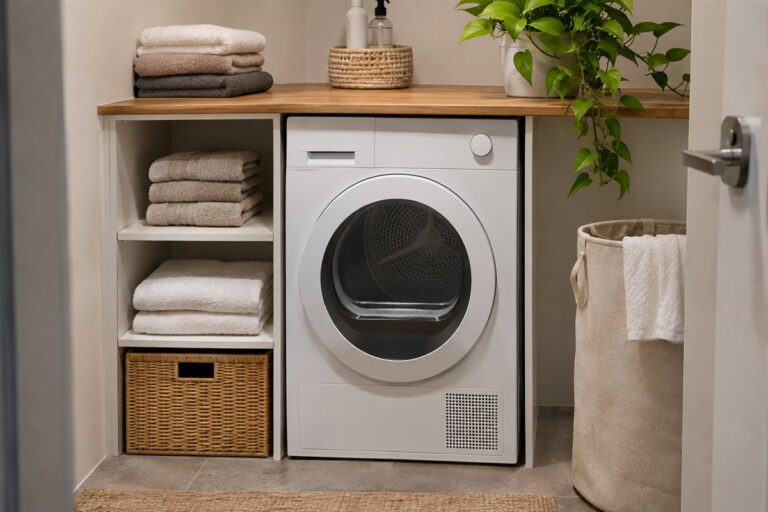
A heat pump dryer dries clothes by recycling warm air inside a closed loop, instead of pushing hot air out through a vent. We have not used these products ourselves, so this page does not rank anything from personal experience. It lays out the features that set one dryer apart from another, so you can read a listing with a clear checklist.
The main choices are the drum capacity, the installation needs, the cycle options, the sensors and the physical size. Your laundry habits, your space and your home’s electrical setup shape each of these, so use this guide to compare features and not as a promise about any single dryer. Always follow the maker’s installation directions. Read the full product details and the maker’s own notes before you decide, and compare at least a few listings side by side so that the differences in construction and included parts become easy to spot.
As an Amazon Associate we earn from qualifying purchases. Links on this site are affiliate links, and they do not change the information we give.
In this guide
Quick Picks
| Pick | Product | Best For |
|---|---|---|
| 1 | LG DLHC1455W 4.2 Cu. Ft. Heat Pump Dryer | Best overall compact heat pump dryer |
| 2 | Samsung DV25B6900HW/A2 4.0 Cu. Ft. Heat Pump Dryer | Best smart controls in a compact dryer |
| 3 | BLACK+DECKER BDFH44M 4.4 Cu. Ft. Heat Pump Dryer | Best cycle selection |
| 4 | Midea MLE25H7BWW 4.4 Cu. Ft. Heat Pump Dryer | Best capacity in a 24-inch frame |
| 5 | LG WashCombo WM6998HVA All-in-One Washer Dryer | Best all-in-one for tight spaces |
Our Picks
1. LG DLHC1455W 4.2 Cu. Ft. Heat Pump Dryer — Best overall compact heat pump dryer
The DLHC1455W is LG’s compact ventless dryer built around a Dual Inverter HeatPump, and it covers the guide’s checklist closely. Capacity is 4.2 cubic feet in a 24-inch-wide cabinet, so it fits closets and laundry corners and can stack over a matching compact washer. LG lists Sensor Dry, which reads moisture and adjusts the cycle instead of running a fixed timer, plus 14 cycles and 12 options for matching heat and time to the fabric. The condenser cleans itself automatically, which speaks to the upkeep point in the guide, and the drum is NeveRust stainless steel. Built-in Wi-Fi works with LG’s ThinQ app for cycle downloads and alerts. It runs on 240V power, so check your outlet before ordering, and like every heat pump dryer here it collects water in a tank unless you connect the drain hose.
View LG DLHC1455W 4.2 Cu. Ft. Heat Pump Dryer on Amazon

2. Samsung DV25B6900HW/A2 4.0 Cu. Ft. Heat Pump Dryer — Best smart controls in a compact dryer
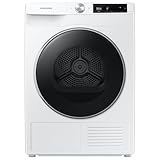
The Samsung DV25B6900HW/A2 is a 4.0 cubic foot ventless heat pump dryer in a 24-inch frame, sized for apartments and stacked laundry closets. Samsung fits it with Sensor Dry, which tracks moisture in the load and ends the cycle when clothes reach the set dryness, and an AI Smart Dial that learns the cycles you use most and surfaces them first. A 40-minute Express cycle handles small loads when time matters, which answers the guide’s point about checking the cycle list against your fabrics. The door is reversible, so it can swing either way in a tight room, and the model carries ENERGY STAR certification. As a closed-loop heat pump design it needs no vent; water collects in a tank or leaves through a drain hose. Confirm the 240V electrical requirement and the stacking kit for your washer before you buy.
View Samsung DV25B6900HW/A2 4.0 Cu. Ft. Heat Pump Dryer on Amazon
3. BLACK+DECKER BDFH44M 4.4 Cu. Ft. Heat Pump Dryer — Best cycle selection
BLACK+DECKER’s BDFH44M is a ventless heat pump dryer with a 4.4 cubic foot drum, rated by the maker for loads up to 22 pounds, which puts it at the roomy end of the compact class in this list. Its strongest checklist item is the cycle menu: 16 cycles, including a Sanitize option for loads you want dried at higher heat, alongside everyday programs for cotton, delicates and sportswear. Because it dries in a closed loop, there is no vent run to plan; condensate collects for emptying or drains away if you connect a hose, matching the drainage choices the guide describes. The unit runs on 240V, so verify the receptacle in your laundry space first. If you wash varied fabrics and want the program choice of a full-size machine in a smaller footprint, this is the model here built around that trade-off.
View BLACK+DECKER BDFH44M 4.4 Cu. Ft. Heat Pump Dryer on Amazon
4. Midea MLE25H7BWW 4.4 Cu. Ft. Heat Pump Dryer — Best capacity in a 24-inch frame
The Midea MLE25H7BWW pairs a 4.4 cubic foot drum with a 24-inch width, so it holds family-size loads while still fitting the narrow closets and stacked setups the guide warns you to measure for. Midea lists dimensions of about 25.7 by 23.4 by 33.5 inches, which makes the tape-measure check straightforward. A humidity sensor monitors the load and adjusts drying, addressing the sensor row in the guide’s table, and the heat pump design dries at lower temperatures than a conventional vented dryer, which is gentler on fabrics. It is a ventless model, so installation centers on leveling, power and the condensate plan rather than ductwork. Power is 240V. Choose this one if capacity per inch of width is your priority and you want sensor-based drying without stepping up to a full-width machine.
View Midea MLE25H7BWW 4.4 Cu. Ft. Heat Pump Dryer on Amazon
5. LG WashCombo WM6998HVA All-in-One Washer Dryer — Best all-in-one for tight spaces
The LG WashCombo WM6998HVA takes a different approach to the same problem: it washes and dries in a single 5.0 cubic foot drum, so there is no load to transfer and no separate dryer footprint at all. Drying uses an Inverter HeatPump in a closed loop, which means no vent and no exhaust duct, and the machine runs on a standard 120V outlet rather than the 240V supply the standalone dryers here need. That makes it worth a close look for apartments, condos and laundry closets where venting and wiring are the limiting factors. The trade-offs follow from the format: one drum does both jobs, so total laundry throughput is lower than a separate pair, and cycle times reflect heat pump drying. In Graphite Steel, it is the pick here when space and installation limits matter more than doing two loads at once.
View LG WashCombo WM6998HVA All-in-One Washer Dryer on Amazon
What to Look For
| Factor | Why it matters | What to check |
|---|---|---|
| Drum capacity | Sets how much laundry fits in one load | Capacity listed in cubic feet or kilograms, matched to your washer |
| Venting and drainage | These dryers collect water instead of venting moist air outside | Condensate tank, drain hose option and whether a vent is required at all |
| Cycle options | Different fabrics need different drying programs | Delicate, towels, sportswear, steam or low-heat cycles named in the listing |
| Sensors | Help stop the cycle when clothes are dry | Moisture sensing, auto-dry settings and the maker’s description of how they work |
| Dimensions and doors | Decides whether it fits your closet or stacks with your washer | Width, depth, height, door swing and any stacking kit |
| Filters and upkeep | Lint management affects how easy the machine is to live with | Lint filter location, a self-cleaning feature if listed and heat exchanger access |
Setup and Care Tips
- Read the install guide first, and measure the space, doorway and any stairs before delivery.
- Level the dryer on a flat floor and leave the clearance the maker requires around it.
- Empty the water tank after cycles unless you have connected a drain hose.
- Clean the lint filter after every load, and clean the heat exchanger as the manual describes.
- Match loads to the suggested capacity so air can move through the drum.
Mistakes to Avoid
- Assuming the dryer fits without measuring the room.
- Forgetting the condensate tank or drain plan.
- Overloading the drum.
- Skipping lint and filter cleaning.
- Ignoring the cycle list and using one setting for everything.
How the Closed Loop Actually Works
A heat pump dryer moves heat around instead of making it from scratch each time. Warm, dry air passes through the drum and picks up moisture from the clothes. That damp air then flows across a cold part of a sealed system, where water condenses out. The now dry air is warmed again by the heat the system has captured, and the loop repeats.
Understanding this helps you read a listing. Because air is recycled, the dryer does not need an outside vent, but it does need somewhere for the collected water to go. Some units hold it in a tank you empty by hand, while others can drain through a hose to a suitable outlet. The maker’s manual explains which options your model supports.
The lower working temperature is why the cycles often run longer and why fabrics are treated gently. It also means the machine behaves differently from a vented dryer in a few everyday ways, which the next sections cover. Keep in mind that the exact process details and specifications vary between models, so rely on the product listing and manual for specifics.
Where Does the Water Go: Tank, Drain and Combo Options
Every drying cycle removes water from the laundry, and that water needs a destination. This is one of the most practical differences between models.
Removable tank
The simplest approach. You lift out the tank after a cycle and empty it into a sink. It suits spaces without a nearby drain, but you must remember to do it.
Drain hose
Some dryers allow a hose to carry the water to a standpipe, sink or other drain. Choose this if you want a hands-off routine, but check height and routing limits in the manual.
Combined washer and dryer
All-in-one units reuse the washer plumbing, so the water leaves through the machine’s drain. This can suit tight spaces, though capacity and speed differ from separate machines.
- Pick a tank if the laundry area has no drain nearby.
- Pick a hose if you dry large loads often.
- Think about your daily routine and the effort involved.
Understanding Cycle Length and Drying Times
People new to this type of dryer often notice that cycles take longer. The gentle heat is part of the trade-off. It protects fabrics and reduces energy use compared with many vented models, yet it asks for more patience.
Several things influence the time a load takes. The size of the load, the type of fabric, how much water remains after spinning in the washer, and the room temperature around the machine all play a role. A high spin speed in your washer can shorten drying noticeably, because less water remains in the clothes.
| Factor | Effect on drying |
|---|---|
| Washer spin speed | Higher spin usually leaves less water to remove |
| Load size | Very full drums may dry unevenly |
| Fabric type | Thick towels and denim take longer than light synthetics |
| Room conditions | Very cold or damp rooms may slow the process |
| Filter condition | Clogged filters reduce airflow |
Check cycle durations on the listing or manual and consider them in light of your own laundry rhythm.
Space, Ventilation and Room Conditions
Because there is no exhaust duct, a heat pump dryer can sit in many places that cannot host a vented machine, such as a closet, a hallway or an apartment utility area. It still needs room to breathe. The machine takes in air, so blocking its vents or pushing it tight against a wall can hurt performance.
Check the following before you decide where it goes:
- Width, depth and height, including the door swing.
- Clearance at the back and sides recommended by the maker.
- A level floor that can hold the weight of the machine.
- A power outlet that matches the electrical needs shown on the listing.
- Room temperature, since very cold spaces can slow the process.
If you plan to stack the dryer on a washer, look for a compatible stacking kit from the same maker and follow their instructions. Never improvise a stack. For electrical points, follow the manual and ask a licensed electrician if the outlet or circuit is uncertain.
Lint Filters, Condensers and Cleaning Routine
Airflow is the heartbeat of any dryer, and lint is its enemy. Heat pump models typically have a lint filter you clean after every cycle, plus an additional filter or a condenser that needs attention less often.
After each load
Remove the lint screen and clear fluff from it. A quick rinse is sometimes recommended, but make sure the filter is fully dry before it returns, and follow the manual.
Every few weeks
Check any secondary filter and wipe the door seal. Empty and rinse the water tank if the machine has one.
Several times a year
Clean the condenser or heat exchanger as the maker describes. Some units make this easy with a flush-out routine, while others ask you to use a brush or a damp cloth.
A neglected filter or condenser reduces airflow, lengthens cycles and can cause the dryer to stop with an error message. Setting a calendar reminder for the periodic tasks is a small habit that pays off.
Fabric Care and Programme Selection
Lower temperatures can be kind to clothing. Many people choose a heat pump dryer for that reason, though results depend on the fabric and the programme you pick. Always follow the care label sewn into each garment, and sort loads by fabric type.
- Cottons and towels: usually suited to standard cycles, but check the label.
- Synthetics and blends: lighter programmes help avoid creasing.
- Delicates: use a gentle option or air dry as advised.
- Wool and special items: follow the label, since some should not go in a dryer at all.
Sensors in the drum can detect moisture and end the cycle when the load seems dry. These are handy, but results vary with the load, so check a thick seam if you are unsure. Avoid overloading the drum, which restricts tumbling and leads to damp patches.
If the listing includes a smart app or extra modes, treat them as conveniences. Basic features like sensor drying, a reversing drum and a delay timer are often more useful in daily life.
Weighing Capacity, Footprint and Household Size
Dryer capacity is given as a volume figure, and it is easy to misjudge. A larger drum offers more room for air to move through the clothes, which can help bulky items such as bedding. A compact drum suits a couple or a small family, but you may need two loads for a big wash.
Compare the dryer drum with your washer. As a general idea, a dryer should be able to take the contents of one full washer load without crushing them. If your washer is large, a very small dryer will bottleneck the routine.
Also consider how often you do laundry. Frequent small loads are easy to dry in a compact machine. Weekly big batches ask for more capacity.
Thinking About Running Costs and Energy Labels
Heat pump dryers are often chosen for their lower energy use, so the energy information on a listing deserves a close look. Labels and listings may show an energy class, a yearly consumption estimate or a figure per cycle. These numbers come from standard test loads, and your own results will depend on your laundry habits.
To make a fair comparison, check that the figures use the same basis. One listing might quote consumption per cycle, another per year, and the capacity may differ. Look at how many cycles the yearly figure assumes.
- Compare energy figures only between machines of similar capacity.
- Remember that longer cycles use gentle heat, so time alone says little about energy.
- Consider how often you dry clothes, because heavy users gain the most from savings.
The purchase cost of a heat pump model is often higher than that of a simple vented one, while the running cost can be lower. Whether that balance works for you depends on how much you use it, so do the sums with your own routine and local energy rates rather than relying on a rule of thumb.
Noise, Vibration and Living Space
If the laundry corner sits near bedrooms or an open-plan living area, sound becomes a real consideration. Heat pump dryers contain a compressor and a fan, and their noise character is different from a vented dryer. Listings sometimes give a sound figure in decibels, which is useful for comparing, though the way it is measured varies.
Placement affects what you hear. A level, firm floor and properly adjusted feet reduce rattling. Keeping the machine from touching cabinets or walls helps too. If you stack it on a washer, vibration from the washer spin may carry, so make sure the stack is secure and follows the maker’s kit.
Try to run longer cycles at times that suit your household. Since drying can take a while, a delay timer lets you schedule loads when the house is empty or when sound does not matter.
Finally, remember that these machines release a little warmth into the room. That can be pleasant in a cool utility space but noticeable in a small closet, so keep airflow in mind.
Worked Example: Choosing for a Small Apartment
Consider a couple in a flat with no outside wall near the laundry space. A vented dryer is not possible, so a ventless type is attractive.
Step one: list the constraints
They have a narrow closet, a nearby kitchen sink and a standard outlet. Noise matters because the closet shares a wall with the bedroom.
Step two: decide on water handling
The tank is simple, but they dislike the chore, so they look for a model that supports a drain hose to the sink.
Step three: size the drum
They wash modest loads twice a week, so a compact drum suffices.
Step four: check the details
They confirm the door swing, the clearance and the electrical needs in the manual. They also plan to set a delay timer for daytime cycles.
By working through constraints in order, they narrow the field before they read a single feature list.
Troubleshooting Everyday Issues
Clothes still damp at the end
Check the filter, avoid overloading and try a longer programme. Also confirm that the washer spin is working well.
Cycle takes longer than before
This often points to blocked filters or a dirty condenser. Clean them according to the manual.
Water tank warning appears
Empty the tank and make sure it clicks back into place.
Musty smell
Wipe the door seal, clean the drum and leave the door open between uses so the interior can dry.
Machine stops with an error code
Consult the manual, since codes differ by model. If the issue repeats, contact the maker’s support or a qualified technician.
Do not open or repair sealed refrigerant parts yourself. Leave any internal work to qualified service staff.
Glossary and Quick Checklist
Short glossary
- Condenser: the part where moisture is removed from warm air.
- Heat exchanger: a component that transfers heat between air streams.
- Sensor drying: a mode that ends the cycle based on detected moisture.
- Reversing drum: a drum that changes direction to reduce tangling.
- Stacking kit: hardware for mounting a dryer on a compatible washer.
Checklist
- Decide where the water will go.
- Measure the space and plan clearance.
- Match capacity to your washer.
- Confirm the electrical needs.
- Plan for filter and condenser cleaning.
- Check the programmes you will really use.
Choosing a Heat Pump Dryer for How You Actually Live
A heat pump dryer is a long-term appliance decision, so think in years: your weekly laundry volume, the mix of everyday cottons and delicates, and where the machine will live and drain. These dryers work at gentler temperatures and recycle heat, which changes both the feel of a cycle and the rhythm of laundry day. Space, ventilation around the machine and how filters and condensers are maintained decide real-world satisfaction.
Start with the space it has to fit
Before comparing any models, measure the laundry room or utility space where this heat pump dryer will live and be used. Note the obvious limits first: the footprint available, the height and width it has to pass through on the way in, and how much room you need around it to use it comfortably rather than at arm’s length. Then note the quiet limits people forget — where it will be stored between uses, how far it sits from the power, water or mounting point it depends on, and whether anyone else in the household has to move it, reach it or work around it. A heat pump dryer that fits the space on paper but blocks a door, a drawer or a walkway will annoy you every day, and daily annoyance is what turns a good purchase into a returned one. Write the measurements down and keep them beside you while you shop; memory is optimistic, tape measures are not.
Match it to your routine, not your best week
Most buying mistakes in this category come from shopping for an idealised version of life: the biggest project, the heaviest use, the most ambitious plan. Be honest about the routine the heat pump dryer will actually meet. How often will it come out each week or each season? Who else will use it, and will they follow a fiddly setup or quietly avoid it? How long does a typical session last, and what has to happen before and after — filling, emptying, charging, assembling, cleaning, storing? The right heat pump dryer is the one whose whole routine, not just its main job, fits the time and patience you really have. Features that serve the routine earn their place; features that serve an imaginary routine just add cost, size and things to clean.
The details you will feel every day
Specifications get the attention, but daily satisfaction lives in smaller details: how the controls feel with cold, wet, gloved or tired hands; how much noise or vibration works its way into the room and the household; how heavy or awkward the heat pump dryer feels at the end of a session rather than the start; and how easy it is to see what needs cleaning, emptying, adjusting or replacing. When you read the reviews above, translate every feature into a moment in your own routine. If a detail will touch your hands, your ears or your schedule every single time you use the heat pump dryer, it deserves more weight in the decision than a headline capability you may use twice a year.
Heat Pump Dryers in Real Life: Three Common Scenarios
The same heat pump dryer can be perfect for one household and wrong for the next, and the difference is almost always the scenario, not the product. Find the description below that sounds most like your life, and let it tell you which of the picks above deserves your closest look.
A busy family laundry routine
Families run load after load, so drum size matched to the washing machine, programmes that handle school uniforms and sports kit, and a filter routine quick enough to happen every time matter most. A dryer that is easy for several people to use correctly — clear controls, obvious filter — produces better results than one only one person understands.
Apartments and homes without venting
Heat pump dryers suit homes where venting a dryer outside is impractical, because the moisture is collected rather than blown out. This group should plan the water: a tank to empty or a drain connection, and a spot where the machine’s gentle warmth will not make a small room uncomfortable during long cycles.
Caring for better clothes
If the dryer exists mainly for knitwear, delicates and clothes you want to keep looking new, the gentler drying approach is the attraction. Programme choice matters more than capacity here, and so does the discipline of sorting loads: a dryer treats everything in the drum the same way, so what you put in together should dry well together.
How the Picks Above Compare, Head to Head
With the full reviews above in mind, it helps to line the picks up against each other by the job each one is positioned to do best. Nothing here adds new claims about these products — it simply organises what the reviews already say so the trade-offs are easier to see side by side.
LG DLHC1455W 4.2 Cu. Ft. Heat Pump Dryer is the pick this guide positions as best overall compact heat pump dryer. Choose it if that description matches your scenario above more closely than any other, and read its full review again for the honest limitation noted there — every pick in this guide has one, and the limitation that matters least to you is often the clearest sign you have found the right match. If the limitation is exactly the thing your routine depends on, move to the next pick rather than hoping it will not bother you.
Samsung DV25B6900HW/A2 4.0 Cu. Ft. Heat Pump Dryer is the pick this guide positions as best smart controls in a compact dryer. Choose it if that description matches your scenario above more closely than any other, and read its full review again for the honest limitation noted there — every pick in this guide has one, and the limitation that matters least to you is often the clearest sign you have found the right match. If the limitation is exactly the thing your routine depends on, move to the next pick rather than hoping it will not bother you.
BLACK+DECKER BDFH44M 4.4 Cu. Ft. Heat Pump Dryer is the pick this guide positions as best cycle selection. Choose it if that description matches your scenario above more closely than any other, and read its full review again for the honest limitation noted there — every pick in this guide has one, and the limitation that matters least to you is often the clearest sign you have found the right match. If the limitation is exactly the thing your routine depends on, move to the next pick rather than hoping it will not bother you.
Midea MLE25H7BWW 4.4 Cu. Ft. Heat Pump Dryer is the pick this guide positions as best capacity in a 24-inch frame. Choose it if that description matches your scenario above more closely than any other, and read its full review again for the honest limitation noted there — every pick in this guide has one, and the limitation that matters least to you is often the clearest sign you have found the right match. If the limitation is exactly the thing your routine depends on, move to the next pick rather than hoping it will not bother you.
LG WashCombo WM6998HVA All-in-One Washer Dryer is the pick this guide positions as best all-in-one for tight spaces. Choose it if that description matches your scenario above more closely than any other, and read its full review again for the honest limitation noted there — every pick in this guide has one, and the limitation that matters least to you is often the clearest sign you have found the right match. If the limitation is exactly the thing your routine depends on, move to the next pick rather than hoping it will not bother you.
If you are torn between two finalists, decide with three questions. Which one’s noted limitation would I notice least in my routine? Which one fits my space and storage without any workaround? And which one would I still choose if both were in front of me today and I had to carry, set up or live with it immediately? The heat pump dryer that wins those questions is almost always the right buy, even when the other one looks stronger on a feature list.
Ownership Questions Worth Asking Before You Buy
Think about the second user
Many purchases in this category are shared, and the second user is usually the one who decides whether the thing becomes household infrastructure or one person’s gadget. If a partner, parent, teenager or housemate will use the heat pump dryer too, their height, strength, patience and habits belong in the decision from the start. A model that adjusts quickly, explains itself through clear controls and forgives being used slightly wrong will serve a household far better than a specialist model only its buyer understands. If two people want genuinely different things from it, that is useful information too: it may point to the most adjustable pick in the guide rather than the most focused one.
Plan for the season, not just the day
Demand on a heat pump dryer is rarely flat across the year. There is a peak season when it works hardest, a shoulder season when it comes out occasionally, and a quiet season when storage and maintenance decide whether it survives to work again. Before you buy, picture all three. Where will it live at its busiest, and is that spot realistic when the household is also at its busiest? What will you do in the quiet months — and does the model you favour ask for anything specific then, like charged batteries, dry storage or a service? Buyers who plan the whole year rarely regret the purchase; buyers who plan one perfect day often do.
Keep a simple record from day one
It sounds dull and it works: keep the receipt, the model details and a note of when you bought the heat pump dryer, together with any registration or warranty steps the maker asks for. Photograph the label or serial plate if it has one. If anything goes wrong, this small file turns a frustrating search through emails and cupboards into a two-minute job. The same record helps at replacement time years later, when you want to know exactly which version you owned and what you liked or disliked about it — the most useful shopping notes you will ever read are the ones you wrote about your own last purchase.
Know when simpler is the smarter buy
There is a point in every category where extra features stop buying happiness and start buying upkeep. With a heat pump dryer, ask what each step up actually changes in your routine: does it save time every session, make a hard job possible, or just make an easy job slightly nicer twice a year? The middle of a range is usually where design, parts availability and value meet, and the picks in this guide reflect that. Choosing the simpler model that fits your life, and using the saving for the accessories, storage or consumables that make it pleasant, is a decision experienced buyers make deliberately — not a compromise.
Check the returns and support picture
Before ordering, spend two minutes on the unglamorous details: the seller’s returns terms, how support is reached if something arrives damaged or develops a fault, and whether spare parts and consumables for this kind of heat pump dryer are easy to get. None of this predicts a problem; it simply means that if one happens, you already know the route to fixing it. Keep the packaging until you have used the purchase a few times and are sure it suits you, because returning anything large or awkward without its box is a miserable job you can avoid for free.
Measure twice, using the space as it really is
Measurements go wrong in predictable ways with a heat pump dryer: doorways measured without the door’s swing, cupboards measured without the things already in them, and rooms measured empty that will be full when the product is in use. Measure the space in its working state, with the people, furniture and clutter that will be there on a normal day, and measure the route in as well as the final spot. If the numbers are close, choose the option that leaves breathing room. Tight fits look clever in a plan and feel cramped every day afterwards, and they are the single most common reason good products in this category get sent back.
Getting the Most From Your Heat Pump Dryer: Use, Care and Storage
A calm first-use routine
Whatever model you choose, give the first use a little ceremony. Unpack somewhere with room to lay everything out, check the contents against the list in the manual, and read the safety and setup sections fully before the heat pump dryer is switched on, filled, mounted or loaded for the first time. Do a gentle first run or a small-scale test where the design allows it, so you learn the controls, sounds and feel of the thing when nothing important is at stake. Keep the manual somewhere you can find it — a photo of the key pages on your phone works well — because the question you will have in three months is always answered on the page you cannot locate.
Everyday care that actually happens
Clean the lint filter after every load — it takes seconds and is the single biggest factor in drying performance — and clean the condenser or secondary filter on the schedule the manual sets out. Empty the water tank or check the drain connection regularly, wipe the door seal, and leave the door ajar between uses so the drum stays fresh. Most ‘my dryer takes forever’ complaints end at a clogged filter.
Beyond that specific routine, the universal rules apply: little and often beats a rare deep rescue, and cleaning is always easier before dirt, moisture or residue has had days to set. Build the two-minute version of care into the end of every use — empty what needs emptying, wipe what needs wiping, check what needs checking — and the heat pump dryer will keep performing the way it did in its first week. Most products in this category do not wear out from use; they fade from small neglects repeated for a year.
Storage, and the problems it prevents
Store the heat pump dryer the way the maker describes, in a place that is dry, reasonably steady in temperature and easy to reach. Storage that requires dragging other things out of the way is storage that quietly ends routines, so give this purchase a real home rather than a leftover gap. Before a long break in use — a season change, a holiday, a quiet month — clean it properly, make sure it is fully dry or fully charged as its design requires, and note anything that needs replacing or repairing so the next season starts with a working tool, not a small project.
When something seems wrong
Work through the basics before assuming the worst. Check the obvious inputs first: power, connections, settings, levels, fit and whether anything needs emptying, cleaning or re-seating. Then repeat a small, controlled test and watch what actually happens rather than what you expected to happen. A surprising share of problems in this category trace back to one blocked, loose, full or incorrectly set part, and the manual’s troubleshooting section is written for exactly those cases. If the problem survives the basics, stop and contact the maker or seller with a clear description — what you did, what happened and what you have already tried — because that information gets you a useful answer far faster than a general complaint.
FAQ
Do heat pump dryers need a vent?
Most do not, because they work in a closed loop and collect water in a tank or send it to a drain. Always confirm the venting needs listed by the maker for that model.
Are they slower than vented dryers?
Cycle times differ by model and by load. Heat pump dryers often use lower temperatures, so cycles may run longer. Check the cycle details in the listing and think about how you do laundry.
Why do heat pump dryers take longer than vented ones?
They dry at lower temperatures and recycle heat rather than blasting it out, which is gentler on clothes and uses less energy but takes more time. Most owners adapt by running laundry earlier in the day and sorting loads so similar fabrics dry together. Clean filters keep cycle times at their best, so maintenance and patience work together.
Can a heat pump dryer go anywhere in the house?
It needs a suitable electrical supply, a reasonably level floor and the clearances the maker specifies, plus a plan for the collected water. Rooms that are very cold can slow drying, and enclosed cupboards need the ventilation the manual describes. Check the installation section of the manual before choosing the spot, not after delivery.
What should I check before ordering?
Confirm the dimensions including door swing, the drum size against your washing loads, how the water is handled and what the installation requirements are. Those four checks prevent nearly every heat pump dryer disappointment, because they decide whether the machine fits your space, your laundry volume and your daily routine.
How long should a heat pump dryer last?
That depends far more on use and care than on the calendar. A heat pump dryer that is used as the maker intends, cleaned on the simple routine described above and stored properly will serve for years of regular use, while the same product neglected, overloaded or stored damp can disappoint within a season. Judge lifespan claims cautiously, keep the receipt and registration details, and treat the first sign of wear — a loose fitting, a tired seal, a change in sound or feel — as a prompt for maintenance rather than a reason to replace the whole thing.
Is it worth paying more for a heat pump dryer?
Paying more is worth it when the extra buys something your routine touches constantly: better fit, smoother adjustment, sturdier parts in the places that wear, or support and spares you can actually reach. It is not worth it when the extra buys capacity or features your life never uses. Work out which of the picks above matches your scenario first, then decide whether stepping up within that type improves your everyday experience or just lengthens the feature list.
What is the most common mistake buyers make in this category?
Buying for the wrong scenario: the biggest load, the rarest project or the most impressive feature, instead of the ordinary week the heat pump dryer will actually live in. The close second is skipping the measurements and the manual — most disappointment in this category is a fit problem or a setup problem, not a product problem. The reviews above note an honest limitation for every pick; matching those limitations to a life that barely notices them is the whole art of choosing well here.
The Short Version
Match drum capacity and size to your space, plan for water collection, and check the cycles and sensors against the fabrics you wash. Follow the maker’s installation and upkeep steps.
Related Guides
- How to Choose the Best Gas Dryers: Buyer's Guide (2026)
- How to Choose the Best Ventless Dryers: Buyer's Guide (2026)
- How to Choose the Best Pet Grooming Dryers: Buyer's Guide (2026)
- 6 Best Electric Dryers: Compact 110V and 120V Models (2026)
- How to Choose the Best Heat Press Machines: Buyer's Guide (2026)