Disclosure: airfryerkitchensupply.com is reader-supported. When you buy through links on our site, we may earn an affiliate commission at no extra cost to you.
Where to buy
The fastest way to buy any of the best vacuums for pet hair bagless homes need is through Amazon, where every pick below was matched against the Amazon catalogue before it earned a link. Model variants and tool bundles change, so confirm the exact configuration on the listing before you order:
- Bissell CleanView Swivel Pet Upright Vacuum, 2252 — Best Overall. Check the current price on Amazon.
- Hoover WindTunnel Swivel Pet Bagless Upright Vacuum — Best for Mixed Floors. Check the current price on Amazon.
- Eureka PowerSpeed Lightweight Upright Vacuum, NEU181A — Best Budget Pick. Check the current price on Amazon.
- Shark Navigator Lift-Away Vacuum, NV360 — Best Lift-Away Versatility. Check the current price on Amazon.
- Shark AV2501AE AI Robot Vacuum with XL Self-Empty Base, Bagless — Best Robot. Check the current price on Amazon.
- Dyson V11 Origin Cordless Vacuum — Best Cordless. Check the current price on Amazon.
Pet hair changes the vacuum equation in two ways. First, volume: a shedding dog or cat produces a continuous supply of hair that fills bags quickly, which is exactly why so many pet households go bagless — the best vacuums for pet hair bagless designs offer empty the cup, rinse the filter, and cost nothing per fill. Second, behaviour: pet hair does not behave like ordinary dirt. It weaves into carpet, felts onto upholstery, wraps around brush rolls, and hides along skirting boards in quantities that seem to violate physics. A vacuum that is merely powerful will still lose to pet hair if its brush roll tangles, its tools are wrong, or its bin is so small and fiddly to empty that you start avoiding the job.
Every pick in this guide was verified in the Amazon catalogue and chosen for the pet-hair job specifically: brush rolls designed for hair, dirt tanks and dust cups instead of bags, pet tools where the listing confirms them, and formats spanning the ways pet homes actually clean — full-size uprights for the weekly deep clean, a lift-away for stairs and furniture, a robot for daily maintenance, and a cordless for the daily tumbleweed patrol. Filtration language is quoted at the listing’s own strength; where a listing says HEPA we say HEPA, and where it does not, we do not upgrade it. This is a cleaning guide, not a health one — a vacuum manages hair and dander in the home, and that is the claim made here.
In this guide
Quick Picks
Best Overall: Bissell CleanView Swivel Pet Upright Vacuum, 2252. A pet-specialist upright with swivel steering, a triple action brush roll and a large capacity dirt tank — the complete weekly-clean answer for most pet homes.
Best for Mixed Floors: Hoover WindTunnel Swivel Pet Bagless Upright Vacuum. A bagless WindTunnel upright built for pet hair across carpet and hard floors, with swivel steering and a lightweight design.
Best Budget Pick: Eureka PowerSpeed Lightweight Upright Vacuum, NEU181A. A lightweight bagless upright with a 2.6L dust cup and a pet turbo brush — serious pet capacity at a budget tier.
Best Lift-Away Versatility: Shark Navigator Lift-Away Vacuum, NV360. A lift-away pod design with HEPA filtration per the listing, swivel steering and upholstery and crevice tools for furniture and stairs.
Best Robot: Shark AV2501AE AI Robot Vacuum with XL Self-Empty Base, Bagless. A bagless self-empty robot with a 60-day capacity base and LIDAR navigation — daily pet hair maintenance on autopilot.
Best Cordless: Dyson V11 Origin Cordless Vacuum. A cordless vacuum the listing credits with 185AW suction, up to 60 minutes of run time and pet hair detangling — the grab-and-go patrol machine.
How These Picks Were Chosen
The shortlist came from pet-hair vacuum listings verified, with two hard filters applied before anything else. First, every pick had to be genuinely bagless — a dirt tank, dust cup, bin or bagless self-empty base confirmed by the listing — because that is the search’s entire premise. Bagged pet vacuums, however good, belong in a different guide. Second, every pick had to be a complete vacuum for whole-home cleaning; handheld-only spot cleaners were excluded from the main list because pet hair is a whole-house problem, though the uprights’ tools cover the spot work.
Within those filters we scored the pet-specific evidence in each listing: brush rolls described for hair pickup or detangling, pet-named tools like turbo brushes, bin capacities stated in the listing, and formats that solve real pet-home patterns. Filtration claims were recorded at face value — HEPA where stated (the Shark Navigator and the robot’s XL HEPA base), nothing where not stated — and suction figures are quoted only where the listing prints them, like the Dyson’s 185AW. No pick’s performance is described with numbers its listing does not provide.
The 6 Best Vacuums for Pet Hair, Bagless
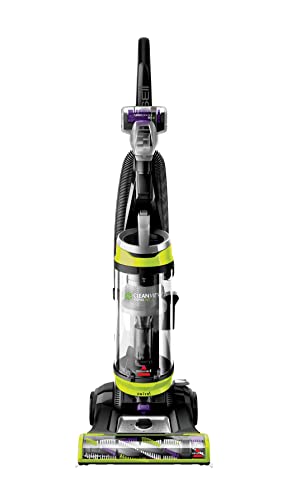
Bissell CleanView Swivel Pet Upright Vacuum, 2252 — Best Overall
Bissell builds its reputation in pet homes, and the CleanView Swivel Pet shows why: its verified listing describes swivel steering for manoeuvrability, a triple action brush roll, a large capacity dirt tank and pet hair pickup as the machine’s core brief. The swivel matters more than it sounds — pet hair accumulates around chair legs, crate edges and furniture bases, and a vacuum that steers like a mop rather than a wardrobe gets into those zones without a wrestling match.
Strengths
- Triple action brush roll and pet hair pickup as the stated design brief.
- Large capacity dirt tank — fewer emptying stops in high-shed homes.
- Swivel steering for the furniture-dense rooms where pet hair collects.
Trade-offs
- A full-size corded upright is a weekly-clean tool, not a grab-and-go one — pair it with a cordless or robot for daily hair.
- The listing does not state a filtration class, so we do not claim one; check the listing if filtration is decisive for you.
- Bagless ownership means filter washing on schedule — the cost of the format, covered in the care section.
Specifications (from the verified listing)
- Type: corded upright vacuum, bagless dirt tank
- Brush roll: triple action (listing wording)
- Steering: swivel
- Model: 2252
- Filtration class: not stated in the verified listing
The CleanView is the pick for the classic pet household: mostly carpet or mixed floors, one or two shedding animals, and a weekly deep clean that has to actually finish the job. Bissell’s pet focus also means the machine’s details — the tank size, the brush design, the steering — were specified by people who measure success in hair removed per pass. If your home is mostly hard floors with rugs, the Hoover below makes a similar case; if stairs and upholstery dominate, the Shark lift-away is the sharper tool. But as the single upright at the centre of a pet home’s cleaning system, this is the benchmark.
Best for: carpet-heavy pet homes wanting one proven weekly upright. / Not suited for: buyers needing daily cordless convenience or a stated HEPA specification.
Check the current price on Amazon

Hoover WindTunnel Swivel Pet Bagless Upright Vacuum — Best for Mixed Floors
Hoover’s entry states its brief in its name: a WindTunnel Swivel Pet bagless upright for home use on carpet and hard floors, corded, with a lightweight design and swivel steering. The WindTunnel name refers to Hoover’s long-running suction-channel design, and the pet variant aims it at the mixed-floor reality of most homes — carpet in the bedrooms, hard floors where the dog actually lives, rugs in between, hair on all of it.
Strengths
- Explicitly bagless and explicitly for carpet and hard floors, per the listing.
- Lightweight design with swivel steering — easier weekly handling than traditional uprights.
- A pet-focused WindTunnel model from a mainstream maker with deep parts availability.
Trade-offs
- The listing is brief on tool and filtration detail, so verify the current configuration on the product page if specific tools matter to you.
- Corded format — full power, but the cord management is part of the deal.
- Like every bagless upright, filters need scheduled washing to hold performance.
Specifications (from the verified listing)
- Type: corded upright vacuum, bagless
- Floors: carpet and hard floors (listing wording)
- Steering: swivel
- Design: lightweight (listing wording)
A sourcing note, in this guide’s spirit: the catalogue record for this Hoover comes via an earlier batch’s cache with the listing’s own concise title, and we describe the machine only in the terms that title confirms — bagless, swivel, pet, carpet and hard floors, lightweight, corded. That is enough to place it honestly: it is the straightforward, mainstream alternative to the Bissell for mixed-floor homes, from the other great American vacuum name. Households choosing between the two should weigh the Bissell’s larger stated dirt tank and brush-roll detail against the Hoover’s lightweight mixed-floor brief.
Best for: mixed carpet and hard-floor homes wanting a light, mainstream bagless upright. / Not suited for: buyers who need detailed tool bundles confirmed before purchase.
Check the current price on Amazon
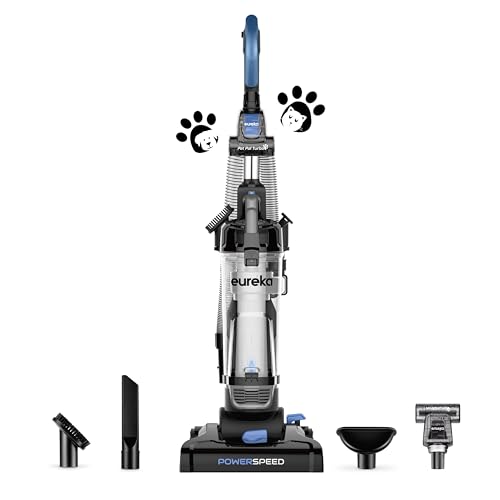
Eureka PowerSpeed Lightweight Upright Vacuum, NEU181A — Best Budget Pick
The Eureka PowerSpeed makes the budget case with specifications, not apologies: its verified listing describes a lightweight upright for pet hair, carpet and hard floor, with a 2.6L dust cup, a pet turbo brush, crevice and upholstery tools, and an explicitly bagless design. A 2.6L cup is genuinely large — the number that decides how often a high-shed home stops mid-clean to empty — and a pet turbo brush is the tool that makes stairs and upholstery realistic targets rather than afterthoughts.
Strengths
- 2.6L dust cup stated in the listing — standout capacity at this tier.
- Pet turbo brush plus crevice and upholstery tools included per the listing.
- Lightweight build suits smaller homes, flats and multi-storey carrying.
Trade-offs
- Budget-tier construction and finish — expect function over refinement.
- The listing does not state a filtration class; we do not claim one.
- Lightweight uprights can feel less planted on deep carpet than heavier machines.
Specifications (from the verified listing)
- Type: lightweight upright vacuum, bagless
- Dust cup: 2.6L (stated in the listing)
- Tools: pet turbo brush, crevice and upholstery tools
- Model: NEU181A
This is the pick for the first pet, the first flat, the rental, the spare machine upstairs — every situation where the budget is real but the hair is also real. Its specification reads like a checklist written by someone who understood the assignment: capacity, pet tool, light weight, bagless. Eureka’s PowerSpeed line has been the value benchmark in this category for years for exactly this reason. Spend the savings on the thing bagless ownership actually consumes — replacement filters on schedule — and the machine will hold its performance far longer than its price suggests.
Best for: budget-conscious pet owners and smaller homes. / Not suited for: buyers wanting premium build or a stated HEPA specification.
Check the current price on Amazon

Shark Navigator Lift-Away Vacuum, NV360 — Best Lift-Away Versatility
The Navigator’s lift-away design answers the pet home’s geometry problem: hair lives on floors, but also on stairs, sofas, car seats and the tops of skirting boards. Its verified listing describes a lift-away pod, HEPA filtration, carpet and hard floor cleaning, swivel steering, brushroll shutoff, a 0.9-quart dust cup and upholstery and crevice tools. The detachable pod turns the upright into a carryable canister for stairs and furniture — the two places upright-only households quietly give up on.
Strengths
- Lift-away pod for stairs, upholstery and above-floor cleaning.
- HEPA filtration stated in the listing, with brushroll shutoff for hard floors.
- Upholstery and crevice tools included — the pet-furniture kit, in the box.
Trade-offs
- The 0.9-quart dust cup is smaller than the Eureka’s — heavy shedders will empty more often.
- Lift-away versatility adds weight and complexity versus a simple upright.
- Corded, like all the full-power uprights here.
Specifications (from the verified listing)
- Type: upright vacuum with lift-away pod, bagless dust cup
- Dust cup: 0.9 qt (stated in the listing)
- Filtration: HEPA (listing wording)
- Features: swivel steering, brushroll shutoff, upholstery/crevice tools
- Model: NV360
Choose the Navigator if your pet’s territory is three-dimensional — beds, sofas, stairs, the car — and one machine has to cover all of it. The HEPA filtration is stated in the listing itself, which distinguishes it from several picks here, and the brushroll shutoff makes the hard-floor work tidy rather than scatter-prone. Its trade-off is honest: versatility costs cup capacity, so in a large, carpeted, multi-dog home the Bissell or Eureka will interrupt you less. In a townhouse with stairs and a sofa-sleeping cat, the interruption maths reverses completely.
Best for: stairs, upholstery and mixed-level pet homes. / Not suited for: very large carpeted homes where cup capacity rules.
Check the current price on Amazon

Shark AV2501AE AI Robot Vacuum with XL Self-Empty Base, Bagless — Best Robot
Pet hair is a daily production, and the robot is the daily answer. The AV2501AE’s verified listing describes an AI robot vacuum with an XL HEPA self-empty base that is itself bagless, with a 60-day capacity, LIDAR navigation, carpet and hard floor cleaning, Wi-Fi and Alexa compatibility, and suitability for pet hair stated outright. The bagless base is the detail that matters for this guide: many self-empty robots empty into disposable bags, quietly reintroducing the running cost bagless buyers left behind — this one does not.
Strengths
- Bagless self-empty base with a stated 60-day capacity — weeks between interventions.
- LIDAR navigation for methodical, whole-home coverage rather than random bouncing.
- Daily scheduled cleaning is the only real cure for continuous shedding.
Trade-offs
- A robot maintains; it does not deep-clean like a full-size upright — most pet homes still need one of those weekly.
- The base needs a permanent home with clearance, and its XL size is a real footprint.
- Pets and robots must be introduced thoughtfully — and accidents on the floor are the robot’s nemesis, so run it when the house is in a fit state.
Specifications (from the verified listing)
- Type: robot vacuum with self-empty base, bagless
- Base capacity: 60-day (stated in the listing); XL HEPA base
- Navigation: LIDAR; Wi-Fi connected, Alexa compatible
- Floors: carpet and hard floor
The robot changes the emotional equation of pet ownership more than any other pick: the baseline state of the floors stops being “due a vacuum” and becomes “basically fine”, with the upright reserved for the weekly deep pass. For households with heavy shedders, shift workers, or anyone whose floors embarrass them when guests arrive unannounced, that baseline shift is the product. Buy it as part of a system — robot daily, upright weekly, tools for the furniture — rather than as a replacement for the system.
Best for: daily maintenance in shedding households. / Not suited for: homes wanting one machine to do deep cleans, stairs and furniture too.
Check the current price on Amazon
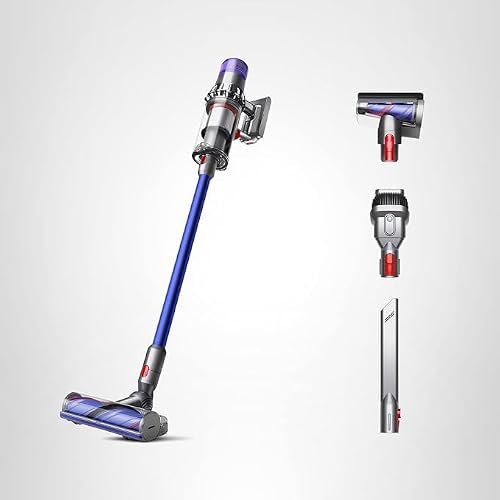
Dyson V11 Origin Cordless Vacuum — Best Cordless
The cordless pick handles the other daily pattern: the visible tumbleweed, the litter scatter, the pre-guest emergency. The V11 Origin’s verified listing states 185AW of suction, 3 power modes, up to 60 minutes of run time, deep cleaning for hard floors and carpets, pet hair detangling, and conversion to a handheld. Dyson’s cordless format is bagless by design — a bin you empty with a lever — and the detangling brief speaks directly to the brush-bar reality of pet homes.
Strengths
- Stated 185AW suction and up to 60 minutes run time — whole-home cordless capability.
- Pet hair detangling per the listing, addressing the cordless category’s classic weakness.
- Converts to handheld for furniture, cars and stairs between full cleans.
Trade-offs
- Premium tier pricing — the cordless convenience and brand carry a real cost.
- Bin capacity is smaller than the uprights’; heavy-shed homes will empty mid-clean.
- Run time varies by mode — the stated 60 minutes is the maximum, with higher modes drawing it down faster.
Specifications (from the verified listing)
- Type: cordless stick vacuum, bagless bin; converts to handheld
- Suction: 185AW (stated in the listing)
- Run time: up to 60 minutes (stated maximum)
- Modes: 3 power modes
- Pet feature: detangles pet hair (listing wording)
The V11 is the pick for homes where the upright lives in a cupboard and therefore, in practice, gets used less than the hair requires. A cordless that hangs on the wall gets used daily in ninety-second bursts, and ninety seconds daily beats an hour monthly in the war against visible hair. It is also the most capable car and stairs tool here via its handheld mode. Buy it knowing its honest limits — bin size and battery physics — and it will be the most-used vacuum in the house within a month.
Best for: daily patrol cleaning and multi-format homes. / Not suited for: budget buyers or very large homes needing maximum bin capacity.
Check the current price on Amazon
Comparison Table
| Pick | Badge | Key spec (verified listing) | Best for |
|---|---|---|---|
| Bissell CleanView Swivel Pet, 2252 | Best Overall | Triple action brush roll; large dirt tank; swivel | Weekly deep cleans, carpet homes |
| Hoover WindTunnel Swivel Pet Bagless | Best for Mixed Floors | Bagless; carpet and hard floors; lightweight | Mixed-floor homes |
| Eureka PowerSpeed NEU181A | Best Budget Pick | Bagless; 2.6L cup; pet turbo brush | Budget and smaller homes |
| Shark Navigator Lift-Away NV360 | Best Lift-Away Versatility | Lift-away pod; HEPA; 0.9-qt cup; pet tools | Stairs and upholstery |
| Shark AV2501AE AI Robot Vacuum | Best Robot | Bagless self-empty base; 60-day capacity; LIDAR | Daily maintenance |
| Dyson V11 Origin Cordless | Best Cordless | 185AW; up to 60 min; detangles pet hair | Grab-and-go patrol |
How to Choose a Bagless Vacuum for Pet Hair
Start with the brush roll, not the suction figure. Pet hair defeats vacuums at the brush first: long hair wraps, forms ropes, and eventually stalls the roll or gets dragged rather than lifted. Listings that speak to hair specifically — a triple action brush roll, a detangling design, a pet turbo tool for upholstery — are telling you the maker engineered for your actual problem. Suction numbers matter, but they are quoted under different conditions by different brands (the Dyson’s 185AW is its listing’s figure, in air watts), so treat them as within-brand comparisons rather than league tables.
Bin size is a lifestyle spec. In a shedding home, the bin fills with a bulky, low-density material that packs loosely — hair takes more volume per gram than dust. The Eureka’s stated 2.6L cup and the Bissell’s large capacity tank exist for this reason; the Shark Navigator’s 0.9-quart cup is the honest trade for its lift-away versatility. Match capacity to your animals: one short-haired cat forgives a small cup; two double-coated dogs do not. And check how the bin empties — a bottom-release bin that drops hair into the bucket without your hand going in is worth real money over a season.
Filtration, quoted honestly. Bagless machines rely on cyclones and filters rather than the bag’s material, so filter design and maintenance decide what the machine returns to the room. Where a listing states HEPA — the Shark Navigator, the robot’s XL HEPA base — that is a confirmed specification. Where it does not, this guide does not pretend otherwise. Either way, a clogged filter strangles any bagless vacuum: the format’s true running cost is not bags, it is your attention to the filter schedule in the care section below.
Format follows routine. The deepest truth in this category is that the best vacuum is the one that runs. Daily shedders justify the robot’s automation; busy households justify the cordless’s zero-setup bursts; the weekly deep clean still belongs to the corded uprights, whose power and capacity no battery matches yet. Most well-run pet homes end up with a system of two — one from the daily family (robot or cordless) and one from the weekly family (uprights) — and this guide’s picks are chosen to combine without overlap.
Bagless Ownership: The Filter and Bin Routine That Keeps Suction Honest
- Empty the bin at the fill line, not above it. An overfilled bin blocks the cyclone’s airflow and coats everything in fine dust on opening. In shedding season, that may mean emptying mid-clean — the price of the format, and cheaper than bags.
- Tap and wash filters on the maker’s schedule. Most bagless pet vacuums use washable foam or felt filters plus a final filter. Wash the washable ones, let them dry fully — a full day — before refitting, and never run the machine with a damp filter.
- Keep a spare filter set. The drying day is the trap; a spare set means the vacuum never waits on laundry physics, and spares are the format’s real consumable cost.
- De-hair the brush roll weekly. Even detangling designs accumulate a felt of hair at the roll’s ends. A weekly two-minute cut-and-clear keeps the roll spinning freely and the bearings alive.
- Check the hose and tools monthly. Pet hair forms plugs at hose bends and inside turbo tools. A monthly check prevents the mysterious suction loss that owners blame on the motor.
- Empty robot bases before they demand it. The Shark robot’s base states a 60-day capacity, but hair volume varies by animal and season — check monthly so the base never becomes the bottleneck.
Pet Hair by Surface: Carpet, Hard Floor and Upholstery Behave Differently
On carpet, hair is a fibre problem: it works down between the pile fibres and felts under traffic, which is why agitation — a driven brush roll — matters more on carpet than raw suction. The uprights in this guide earn their keep here, and the technique matters too: slow passes, in two directions, lift dramatically more hair than a brisk single pass. In shedding season, a carpet pass before the vacuum — even a quick rake with a rubber brush — can double what the machine collects, because it loosens the felted layer the brush roll cannot reach.
On hard floors, hair is a logistics problem: it drifts, collects at edges and under furniture, and scatters ahead of a fast-moving brush roll. Brushroll shutoff, as the Navigator listing states, or a soft roller approach keeps hair moving toward the suction instead of away from it. The daily formats — robot and cordless — do their best work here, because hard floors show hair immediately and reward frequency over power.
On upholstery and stairs, hair is a tool problem. A turbo brush — the Eureka’s stated pet turbo brush is the example — uses airflow to spin a small brush that lifts hair from fabric in a way a plain nozzle never will. Stairs reward the lift-away pod and the handheld conversion; car interiors reward the same tools plus patience. When you compare listings, read the tool list as carefully as the motor claims: in a pet home, the tools are half the product.
The Heavy-Shedder Playbook: Multi-Pet Homes and Shedding Season
Households with multiple animals, double-coated breeds, or the spring and autumn coat blows live in a different regime, and the system should be specified for it honestly. Capacity becomes the first filter: the largest bins in this guide (the Eureka’s 2.6L cup, the Bissell’s large tank, the robot base’s stated 60-day volume) stop being nice-to-haves. Frequency becomes non-negotiable: the robot’s daily schedule or a cordless patrol stops being a luxury and becomes the only thing standing between the household and visible hair on every surface. And the filter routine tightens: what a one-cat home does monthly, a three-dog home does fortnightly, with spare filters treated as essential kit rather than accessories.
Shedding season also rewards a staging habit: groom the animal, then vacuum the room, in that order, on the same day. Brushing removes the loose coat at the source — the cheapest vacuum is the hair that never reaches the floor — and the vacuum then collects what the session shook loose. None of this requires premium machinery. It requires the system this guide describes, run at the tempo your animals set.
Budget Tiers, Honestly Explained
Bagless pet vacuums divide cleanly. The budget tier — the Eureka PowerSpeed is its exemplar here — buys a full-size upright with real capacity and the right pet tool, trading finish and refinement for specification. The mid tier buys design depth: the Bissell’s pet-specialist brush system, the Hoover’s mainstream polish, the Navigator’s lift-away versatility and stated HEPA filtration. The premium tier buys either automation (the Shark robot’s bagless self-empty system) or cordless capability at full power (the Dyson’s stated 185AW and hour of run time) — both are labour purchases, not cleaning-power purchases, and they should be justified in hours saved rather than in hair removed.
The allocation that works for most pet homes: mid or budget money on the weekly upright, chosen by surface and capacity; then, when the household is ready, premium money on ONE daily layer — robot or cordless, not both. Running costs across all tiers are the same story told at different volumes: filters on schedule, an occasional belt or brush roll, and no bags, ever. That flat running-cost profile is the bagless format’s deepest advantage, and it compounds with every animal you add.
Common Buying Mistakes
- Buying a bagged model for a bagless brief. It sounds obvious, but pet ranges mix both formats under similar names. Every pick here is confirmed bagless in its listing — check yours the same way.
- Chasing suction numbers across brands. Air watts, amps and pascals are not interchangeable, and listings quote them under different conditions. Brush design and bin practicality predict pet performance better.
- Ignoring bin size with a heavy shedder. A small cup in a two-dog home means emptying three times a clean — and a vacuum that annoys you is a vacuum that stays in the cupboard.
- Neglecting filters, then blaming the machine. Most “my bagless vacuum lost suction” stories are filter stories. The routine above is the ownership contract.
- Expecting a robot to replace the deep clean. Robots maintain beautifully and deep-clean modestly. Pair the robot with a weekly upright rather than asking either to be the whole system.
- Forgetting the furniture. Half the pet hair in a home lives on sofas, beds and stairs. A pick with pet tools — the Eureka’s turbo brush, the Navigator’s upholstery kit — is worth more than a slightly stronger floor-only machine.
Final Recommendation
For most pet homes, build the system around the Bissell CleanView Swivel Pet for the weekly deep clean — or the Eureka PowerSpeed if the budget leads — then add the daily layer: the Shark AV2501AE robot if you want the floors maintained without touching a vacuum, or the Dyson V11 Origin if you prefer patrol cleaning on your own schedule. Homes with stairs and sofa-sleeping pets should centre the Shark Navigator instead, and mixed-floor households will find the Hoover the straightforward mainstream fit. Bagless done this way — right brush, right bin, filters on schedule — is the cheapest cost-per-clean system a pet home can run.
More from the pet hair cluster: Best Vacuums For Pet Hair And Allergies · Best Canister Vacuums For Pet Hair · Best Vacuums For Pet Hair And Dirt · Best Vacuums For Bare Floors And Pet Hair · Best Lightweight Vacuums For Pet Hair · Best Vacuums Under $100 For Pet Hair
Corded, Cordless or Robot: Choosing Your Daily Layer
The three formats in this guide are not rivals so much as shifts in a rota. The corded uprights work the weekly deep-clean shift: unlimited run time, the largest bins, the strongest sustained agitation on carpet. Their cost is setup — a corded upright comes out for a session, not a moment. The cordless works the patrol shift: ninety-second responses to visible hair, stairs and car duty via handheld conversion, at the price of bin size and a battery’s physics. The robot works the night shift nobody sees: scheduled, methodical, keeping the baseline at “fine” so the other two shifts start from clean rather than from behind.
Households choosing only one daily layer should pick by their actual failure mode. If the floors are fine after the weekly clean but embarrassing by Thursday, the robot’s consistency is the fix. If the mess is localised and sudden — litter by the tray, hair by the door, crumbs under the high chair — the cordless’s responsiveness is the fix. And if the honest problem is that the weekly clean itself is not finishing the job, skip the daily layer entirely and put the whole budget into the upright the house actually needs. Diagnosis before machinery is the cheapest rule in this entire guide.
Frequently Asked Questions
Is bagless really better than bagged for pet hair?
For most pet homes, yes — for economics and convenience rather than raw cleaning power. Shedding fills bags fast, and bagless machines empty for free, show you when they are full, and never run out of bags mid-clean. The trade is maintenance: bagless filters need washing on schedule, while a bag is itself a filter you throw away. Both formats clean well; bagless suits the volume and frequency of pet hair better.
How do I stop hair wrapping around the brush roll?
Choose designs that address it — detangling features like the Dyson listing describes, or brush rolls built for pet hair like the Bissell’s triple action design — and still do the weekly two-minute clear. No design is fully wrap-proof against long hair, human or animal; the winners are the machines whose rolls are easy to access and clear, with end caps that lift out rather than requiring tools.
Can one bagless vacuum handle a whole pet home?
One good upright can handle the floors, stairs and — with the right tools — the furniture: the Shark Navigator is this guide’s one-machine answer. What one machine cannot do is be in two rhythms at once. The homes that stay ahead of shedding pair a weekly deep-clean machine with a daily layer, robot or cordless, because pet hair is produced daily and a weekly-only rhythm always looks behind.
What size dust cup do I need for a shedding dog?
Bigger than you think. Hair is bulky and packs loosely, so a cup that looks generous fills fast in shedding season. The Eureka’s stated 2.6L and the Bissell’s large capacity tank are the comfortable end; the Navigator’s 0.9-quart cup suits smaller homes or lighter shedders. If you are between formats, let the dog decide: heavy double coats argue for capacity first.
Do bagless vacuums lose suction over time?
They lose suction when their filters clog — which is maintenance, not ageing. A bagless machine with washed, fully dried filters and a clear brush roll performs at its specification for years. The classic failure story is a filter that has never been washed slowly strangling the airflow. Keep the care routine in this guide and the format’s reputation for suction loss mostly evaporates.
What is the difference between a dirt tank, a dust cup and a self-empty base?
Only the container and where emptying happens. A dirt tank or dust cup is the machine’s own bin — you carry it to the bucket yourself, at capacities like the Navigator’s 0.9 quarts or the Eureka’s 2.6 litres. A self-empty base, like the Shark robot’s bagless XL base with its stated 60-day capacity, is a second, much larger bin the robot empties into automatically, stretching the interval between your interventions from days to weeks. All three are bagless; the difference is how often the hair asks for your attention.
Is a cordless vacuum powerful enough as the only vacuum in a pet home?
For smaller homes and mostly hard floors, the Dyson V11 class of cordless — with the listing’s stated 185AW and hour of maximum run time — can genuinely serve as the only machine, especially in handheld-friendly layouts. For larger, carpeted, multi-pet homes, the honest answer is that bin capacity and sustained deep-carpet agitation still favour a corded upright as the anchor. Most households that try cordless-only in a big shedding home end up buying the upright within the year; the guide’s system approach simply starts there.
Can a bagless vacuum handle litter, kibble and other pet debris?
Yes — the uprights and the cordless in this guide treat tracked litter and scattered kibble as ordinary debris, and the larger bins (the Eureka’s 2.6L cup especially) swallow it without complaint. Two cautions: litter is abrasive, so the filter routine matters even more in litter-tracking homes, and wet messes are not vacuum work at all — no pick here is a wet-dry machine, and using one on damp litter or accidents will coat the bin and filters in a way that takes real cleaning to undo. Keep a dustpan for the wet jobs and let the vacuums do the dry ones they were built for.
How long do bagless pet vacuums last?
Years, if the consumables are honoured. The motor and cyclone in a mainstream upright are not the weak points; filters, brush rolls and belts are, and all are replaceable at modest cost on the brands in this guide. The realistic lifespan story is that a maintained Bissell, Hoover, Eureka or Shark outlasts several unmaintained premium machines. Budget for a filter set a year and a brush roll when the bristles tire, and the bagless system’s lifetime cost stays far below the bag habit it replaced.
What should I do about pet hair on furniture and beds?
Use the tools the listings actually include: a turbo brush for upholstery (the Eureka’s stated pet turbo brush), an upholstery nozzle for cushions and car seats (in the Navigator’s kit), and the cordless in handheld mode for the quick daily pass over the sofa. Work fabric in one direction, empty the bin more often than feels necessary — upholstery hair is dense — and accept that fabric surfaces need the tool pass, not the floor head. A washable throw on the animal’s favourite seat remains the cheapest upholstery protection ever sold, and it works with every pick in this guide.
Do I need HEPA filtration in a pet vacuum?
It depends on what you are asking the machine to do. HEPA filtration — stated on the Shark Navigator and the robot’s self-empty base in this guide — captures finer particles as air leaves the machine, which matters to households managing dust sensitivity as part of daily cleaning. What it does not do is change how much hair the brush lifts; hair removal is a brush and airflow story. Buy HEPA where the listing states it and your household values it, but do not pay a filtration premium at the expense of the brush, bin and tools that decide the visible result. This guide treats filtration as a cleaning specification, not a health treatment.
How often should I vacuum with a shedding pet?
More often than feels reasonable, in shorter sessions. The pattern that works in shedding homes is a daily light pass — robot schedule or cordless patrol — plus one weekly deep clean with the upright, slowed down and done in two directions on carpet. That rhythm keeps hair from felting into carpet and upholstery, which is the point of no return where removal becomes genuinely hard. Households that vacuum “when it looks bad” are always working at the felted stage; frequency is what keeps the job easy.
What is the best vacuum here for mostly hard floors?
The Hoover WindTunnel Swivel Pet, whose listing is explicit about carpet and hard floors in a lightweight bagless format, is the direct answer — paired, for daily drift, with the Dyson cordless or the Shark robot. On hard floors, favour brushroll shutoff or gentler agitation so hair is drawn in rather than scattered, and expect edges and skirting lines to need the crevice tool weekly; that is where hard-floor hair actually lives.
Are robot vacuums worth it for pet hair?
For daily maintenance, emphatically yes — they are the only format that cleans when nobody decides to clean. The Shark AV2501AE adds the detail this guide cares about: a bagless self-empty base with a stated 60-day capacity, so the automation does not quietly become a bag subscription. Keep the upright for the weekly deep clean and the robot for everything between, and pet hair stops being the house’s background condition.


