Disclosure: airfryerkitchensupply.com is reader-supported. When you buy through links on our site, we may earn an affiliate commission at no extra cost to you.
Where to buy
Every linked product in this guide was verified against Amazon’s own product data connection before it earned a link. The verified picks for best vacuums for multi surface floors are the Shark Navigator Lift-Away Upright Vacuum, NV356E (best overall), the Bissell CrossWave Pet Pro Wet Dry Vacuum Mop, 2306A (best wet-and-dry), the Dyson V11 Origin Cordless Vacuum (best cordless), the Eureka PowerSpeed Bagless Upright Vacuum, NEU182B (best budget), the Kenmore 200 Series Bagged Canister Vacuum, 81214 (best canister), the iRobot Roomba 105 Vac Robot Vacuum with AutoEmpty Dock (best robot). Check the current price on Amazon from these links — we print no fixed prices, because prices move and a printed number would mislead you within weeks.
Multi-surface homes — hardwood or tile in the kitchen, carpet in the bedrooms, area rugs in between — punish single-purpose machines. A carpet-only upright scratches and scatters on hard floors, and a hard-floor-only stick leaves grit deep in pile. Every pick below was chosen because its verified listing explicitly covers more than one floor type, and the six split across the formats that handle transitions differently: a lift-away upright, a wet-and-dry mop vacuum, a cordless stick, a budget upright, a bagged canister and a robot.
If your home mixes hardwood, tile, carpet and rugs, the best vacuums for multi surface floors are the ones that cross those transitions without a head swap, a scratch risk or a second machine. That sounds simple, but it is exactly where most vacuums fail: brushrolls tuned for carpet fling crumbs across hard floors instead of picking them up, hard-floor heads glide over carpet without agitating it, and wheels and soleplates that are safe on oak can drag grit across it. This guide verifies six machines against Amazon’s own listing data, then matches each one to the mix of floors it genuinely suits.
One honest note before the picks: no single vacuum is best at everything. Wet-and-dry machines wash hard floors beautifully but only freshen rugs. Robots maintain everything daily but deep-clean nothing. Cordless sticks are effortless for daily passes but ask you to empty them often. The right question is not which vacuum wins, but which combination of strengths matches your floor plan — and the sections after the reviews walk through that decision properly.
A final framing point: this guide treats the listing as the contract. If a floor type, a filtration claim or a figure is not in the verified listing data, the review does not invent it — it says not stated, and the pick earns its place on what is documented.
In this guide
Quick Picks
| Pick | Badge | Why it is here |
|---|---|---|
| Shark Navigator Lift-Away Upright Vacuum, NV356E | Best Overall | A corded lift-away upright whose listing names carpet, area rugs and hard floors in one breath — the complete mixed-home brief. |
| Bissell CrossWave Pet Pro Wet Dry Vacuum Mop, 2306A | Best Wet-and-Dry | Vacuums and washes at the same time — sealed hard floors get a real wash, area rugs get a surface refresh. |
| Dyson V11 Origin Cordless Vacuum | Best Cordless | 185AW of listing-stated suction, three power modes and up to 60 minutes of runtime across hard floors and carpets. |
| Eureka PowerSpeed Bagless Upright Vacuum, NEU182B | Best Budget | A 10 lb upright with a 2.6L cup and 5-height brushroll adjustment — the budget route to carpet-plus-hard-floor coverage. |
| Kenmore 200 Series Bagged Canister Vacuum, 81214 | Best Canister | A bagged canister with HEPA filtration and a 2-motor system — the low-effort head follows you from rug to hard floor. |
| iRobot Roomba 105 Vac Robot Vacuum with AutoEmpty Dock | Best Robot | LiDAR-mapped daily cleaning across surfaces that self-empties for up to 75 days per the listing — maintenance cleaning, automated. |
How These Picks Were Chosen
Each candidate had to pass three gates. First, verification: the listing had to be confirmed connection, with the model, format and floor coverage in the returned title matching the machine described here. Anything that could not be confirmed — including replacement heads, filters and spare batteries, which surface constantly in vacuum searches — was excluded; only complete machines qualify. Second, genuine multi-surface evidence: the listing itself had to name at least two floor types, or describe a mechanism (a lift-away pod, a wet-and-dry system, an auto-adjusting head) that credibly crosses surfaces. Third, transition sense: we favoured machines whose design answers the real failure points of mixed homes — brushroll shutoff or soft rollers for hard floors, height adjustment for pile, sealed or filtered exhaust so dust picked up on one surface is not blown onto another.
We also deliberately spread the six across price tiers and formats, because a mixed-floor apartment and a two-storey mixed-floor house need different answers. Where a listing states a measurable figure — suction in air watts or pascals, dust-cup size, runtime — we report it as a listing-stated figure. Where it does not, we say so rather than filling the gap with a plausible number.
The 6 Best Vacuums for Multi-Surface Floors, Verified Pick by Pick

Shark Navigator Lift-Away Upright Vacuum, NV356E — Best Overall
The Navigator Lift-Away format has survived for years because it answers the mixed-floor problem directly: a full-size upright for carpet and rugs, a detachable pod for stairs and upholstery, and swivel steering for the hard-floor rooms in between. The NV356E listing states carpet, area rug and hard floor cleaning outright, adds HEPA filtration and an XL dust cup, and includes the two tools mixed homes actually use — a crevice tool for edges and a dusting brush for hard surfaces and shelves.
Strengths
- Listing explicitly covers carpet, area rugs and hard floors — the full multi-surface brief in one machine
- Lift-away pod turns the upright into a portable cleaner for stairs, upholstery and car interiors
- HEPA filtration and an XL dust cup suit whole-home sessions without constant emptying
Trade-offs
- Corded — you will move the plug between rooms on larger floor plans
- An upright is heavier to carry upstairs than a stick, even with the pod detached
- Bagless design means the filter needs regular washing to keep suction honest
| Spec (verified from listing data) | Detail |
|---|---|
| Format | Corded upright with detachable lift-away pod |
| Filtration | HEPA (as stated in listing title) |
| Dust cup | XL dust cup (capacity figure not stated in listing title) |
| Tools included | 8-in crevice tool and dusting brush (as stated in listing title) |
| Floor coverage stated | Carpet, area rug and hard floor |
In daily mixed-floor use, the details that matter are the ones this design gets right. Swivel steering lets the head track along baseboards and around table legs on hard floors instead of bulldozing crumbs ahead of it. The brushroll does the deep work on carpet and rugs, and the transition between surfaces is a walk, not a reconfiguration — there is no second head to fetch from a cupboard, which is precisely why lift-away uprights get used more consistently than two-machine setups. Consistency, in real homes, cleans more than peak specifications do.
The lift-away pod deserves its own mention because stairs are where mixed-floor homes quietly fail in practice. A full upright on a staircase is awkward and slightly unsafe; the detached pod with the crevice tool is neither. The same pod handles sofa cushions, curtains at reach and the car, which stretches the value of a single purchase considerably. The XL dust cup matters more than it sounds, too: mixed homes generate mixed debris — grit from hard floors, fibre and hair from carpet — and a small cup that needs emptying mid-clean is a cup that teaches you to clean less often.
Honest limits: this is a corded machine, and no amount of design polish changes plug management in a big home. It is also an upright’s weight, so anyone with limited lifting strength should try the format in a store or choose the cordless pick below. But as the single-machine answer to a mixed floor plan, verified against its own listing, it is the most complete package in this guide.
Best for: Most mixed-floor homes wanting one corded machine that does everything well / Not suited for: Anyone who hates cords, or very large homes where a canister’s reach wins
Check on Amazon — check price on Amazon.

Bissell CrossWave Pet Pro Wet Dry Vacuum Mop, 2306A — Best Wet-and-Dry
The CrossWave idea rewrites the mixed-floor routine: instead of vacuuming hard floors and then mopping them, one pass does both, because the machine lays down clean solution, scrubs with its brushroll and vacuums the dirty water back up in the same motion. The Pet Pro listing states hard floors and area rugs, and that wording is precise — on rugs this is a surface refresh that lifts tracked-in grime from the top of the pile, not a deep carpet clean.
Strengths
- One pass replaces vacuum-then-mop on tile, sealed wood, laminate and vinyl
- Dirty water is recovered into a separate tank, so floors are not wiped with grey water
- Genuinely useful on area rugs for spills and tracked-in dirt between deep cleans
Trade-offs
- Not a carpet deep cleaner — wall-to-wall carpet still needs a conventional vacuum or extractor
- The brushroll and filter need rinsing after wet sessions, a small but real chore
- You are buying into cleaning formula as an ongoing consumable
| Spec (verified from listing data) | Detail |
|---|---|
| Format | Corded wet-and-dry vacuum mop |
| Function | Vacuums and mops simultaneously (as stated in listing) |
| Floor coverage stated | Hard floors and area rugs |
Where this machine earns its place is the kitchen-and-hallway reality of mixed homes: the hard-floor zones are where spills, cooking splashes and muddy paw prints actually happen, and they are the zones a dry vacuum only half-cleans. A dry pass removes crumbs; it does nothing for the dried splash under the stove. The CrossWave’s wash pass handles both in the time a dry pass used to take, and for households with pets the Pet Pro variant is the one Bissell aims at exactly that tracked-in mess.
Set expectations correctly on rugs. Running it over an area rug freshens the surface and picks up loose debris, and for a low-pile rug by a door that is often enough. It will not extract grit from deep pile, and treating it as your only carpet machine would leave carpets slowly dulling. Pair it with any competent dry vacuum for the carpeted rooms — or choose the Shark above as the dry partner — and the combination covers a mixed home better than either machine alone.
Practical notes: empty and rinse the dirty-water tank the same day, because recovered water left sitting is unpleasant within a day or two, and let the brushroll dry standing up. The machine is corded, which suits wash sessions fine — you are working room by room anyway. As the wet half of a multi-surface strategy, nothing else in this guide does its job.
Best for: Homes dominated by hard floors with a few area rugs, especially with pets or kids / Not suited for: Wall-to-wall carpet homes — this refreshes rugs, it does not deep-clean pile
Check on Amazon — check price on Amazon.
Dyson V11 Origin Cordless Vacuum — Best Cordless
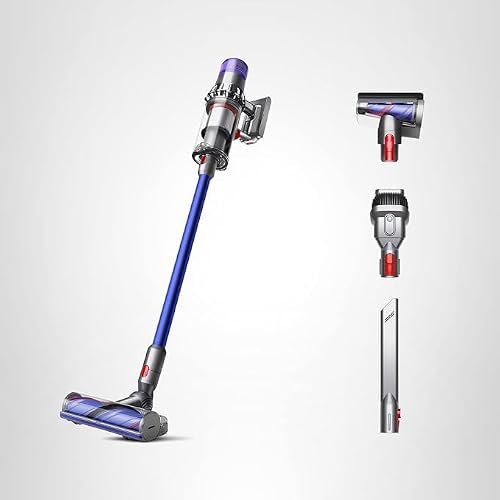
The V11 Origin is the pick for people whose multi-surface problem is really a motivation problem: the floors would get cleaned if grabbing the vacuum were effortless. Its listing states 185AW of suction, three power modes and up to 60 minutes of runtime, and names hard floors and carpets together. In practice the middle mode handles daily mixed debris, the boost mode is for the rug that traps grit, and the eco mode stretches runtime across a whole apartment.
Strengths
- Cordless grab-and-go format gets used daily, which beats a stronger machine used weekly
- Three modes let you trade suction against runtime floor by floor
- Converts to a handheld for stairs, upholstery and the car
Trade-offs
- Runtime is mode-dependent — boost drains the battery far faster than the headline figure
- The bin is small beside a full-size upright and needs frequent emptying in pet homes
- Premium tier pricing for the format
| Spec (verified from listing data) | Detail |
|---|---|
| Format | Cordless stick, converts to handheld |
| Suction | 185AW (as stated in listing title) |
| Runtime | Up to 60 minutes (as stated in listing title; mode-dependent) |
| Power modes | 3 (as stated in listing title) |
| Floor coverage stated | Hard floors and carpets |
Cordless sticks changed mixed-floor cleaning because transitions became free. With a corded machine, moving from the carpeted bedroom to the tiled bathroom involves a plug, a cord trail and a small decision about whether it is worth it. With the V11 you simply keep walking, and that frictionlessness is why stick owners vacuum more often and why their hard floors — the surfaces that show every crumb — look better day to day.
The honest constraints are capacity and stamina. The dust bin is a daily-debris bin, not a whole-house deep-clean bin, and in a shedding-pet home you will empty it mid-session. Runtime claims deserve the usual translation: the up-to-60-minutes figure belongs to the gentlest mode, and real mixed-mode cleaning lands well below it, though still enough for most apartments and smaller houses in one charge. Plan the deep carpet work for when the battery is full.
It also converts to a handheld, which quietly covers the above-floor jobs — shelves, window tracks, car footwells — that mixed homes generate. If your floor plan is large, treat this as the daily driver beside a corded deep cleaner rather than a replacement for one. If your home is small to medium, it can genuinely be the only vacuum you own.
Best for: Daily whole-home passes in small-to-medium mixed-floor homes / Not suited for: Very large homes cleaned in one session, or anyone who forgets to charge things
Check on Amazon — check price on Amazon.
Eureka PowerSpeed Bagless Upright Vacuum, NEU182B — Best Budget
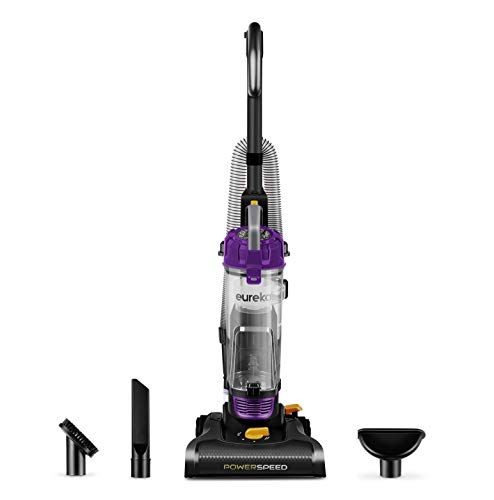
Budget multi-surface vacuums usually cheat — they clean carpet adequately and treat hard floors as an afterthought. The PowerSpeed NEU182B listing is more honest: it names carpet and hard floor cleaning, states a 5-height brushroll adjustment for moving between pile depths and bare floors, a generous 2.6L dust cup, and a 10 lb weight that makes it the easiest full-size upright here to carry between floors of a house.
Strengths
- 5-height adjustment is the correct mechanism for crossing pile depths and hard floors
- 2.6L cup is large for the class — fewer mid-clean emptying trips
- At 10 lbs it suits stairs, smaller users and multi-storey homes
Trade-offs
- Filtration is basic beside the HEPA picks — allergy-focused homes should look up this list
- Budget build materials feel less substantial than the premium picks
- Corded, with the usual plug management on large floor plans
| Spec (verified from listing data) | Detail |
|---|---|
| Format | Corded bagless upright |
| Weight | 10 lbs (as stated in listing title) |
| Dust cup | 2.6L (as stated in listing title) |
| Height adjustment | 5-height brushroll adjust (as stated in listing title) |
| Floor coverage stated | Carpet and hard floor |
Height adjustment is the unglamorous feature that decides whether an upright genuinely works across surfaces. Set the brushroll too low on hard floors and it scatters debris and risks scratching; too high on carpet and it skims the surface while grit stays buried. Five settings give you a real range to work with, and the discipline is simple: raise for hard floors and deep pile, lower for short pile, and let the machine’s suction — not the brush — do the work on delicate surfaces.
The weight deserves emphasis. At 10 lbs this is an upright a teenager, a smaller adult or an older user can carry upstairs without thinking twice, and that usability quietly determines whether the upstairs carpets get cleaned at all. The 2.6L cup supports the same point: budget vacuums often pair a light body with a tiny cup, and the combination teaches owners to dread the chore. This one does not.
Where the budget shows is filtration and finish. There is no sealed HEPA claim in the listing, so households managing serious dust sensitivity should treat the HEPA picks above as the real shortlist. Plastics and fit feel utilitarian. But as a verified, complete, genuinely two-surface machine at the budget tier, it does the job its listing promises — which is more than many cheap vacuums manage.
Best for: First homes, rentals and anyone covering mixed floors on a tight budget / Not suited for: Homes wanting sealed HEPA filtration or premium build feel
Check on Amazon — check price on Amazon.

Kenmore 200 Series Bagged Canister Vacuum, 81214 — Best Canister
Canisters are the traditional answer to mixed floors, and the Kenmore 200 Series shows why: the heavy motor unit stays on the floor while the lightweight wand and head do the travelling, gliding from rug to hard floor to stairs without the wrestling an upright demands. The listing states HEPA filtration, a 2-motor system — separate motors for suction and the powered brush — and three cleaning tools, in a pet-friendly bagged format.
Strengths
- Wand-and-head format is the easiest on stairs and under furniture of any format here
- Bagged HEPA system seals dust away — emptying is the cleanest experience in this guide
- Powered head plus bare-floor reach covers the full surface mix in one session
Trade-offs
- Bags are an ongoing purchase, and suction falls as a bag fills
- The trailing canister body takes a session or two to steer without catching door frames
- Storage is two pieces rather than one self-standing machine
| Spec (verified from listing data) | Detail |
|---|---|
| Format | Bagged canister with powered head |
| Filtration | HEPA (as stated in listing title) |
| Motor system | 2-motor system (as stated in listing title) |
| Tools included | 3 cleaning tools (as stated in listing title) |
The bagged-versus-bagless argument matters most to exactly the households canisters suit. A bag is a sealed container: when it fills, you lift it out and the dust, dander and grit leave with it, without the dust-cloud moment that bagless emptying involves. Combined with HEPA filtration, that makes this the considerate choice for homes where the person emptying the vacuum would rather not re-inhale what the vacuum collected. The trade is real but modest — a standing bag budget, and the discipline to swap bags before they are overfull.
The 2-motor layout is the other substantive point. Decoupling the brush motor from the suction motor means the powered head can be switched for bare floors while suction continues — the correct behaviour on hard surfaces, where a spinning brush mostly scatters. It also means above-floor work with the tools runs at full suction without the head spinning pointlessly below. These are small engineering courtesies that add up across a whole-home clean.
Choose this format if your mixed home has stairs, lots of furniture to clean under, or upholstery and curtains in the weekly routine. Choose an upright instead if you mostly push in straight lines across open rooms and want the machine to stand in a cupboard as one piece. Both answers are right; they are right for different houses.
Best for: Homes with lots of above-floor cleaning, stairs and mixed surfaces in one session / Not suited for: Anyone who dislikes buying bags, or wants a self-standing upright
Check on Amazon — check price on Amazon.

iRobot Roomba 105 Vac Robot Vacuum with AutoEmpty Dock — Best Robot
A robot is the only format that treats multi-surface cleaning as a daily habit instead of a weekly event. The Roomba 105 Vac listing states 7,000 Pa of power-lifting suction, LiDAR navigation, multi-surface cleaning and an AutoEmpty dock that holds up to 75 days of debris. It will cross from hard floor onto rugs and low carpet on its own schedule, keeping the visible layer of grit, crumbs and hair from ever building up.
Strengths
- Daily automated passes keep every surface at a baseline no weekly clean matches
- LiDAR mapping cleans in organised rows rather than random bouncing
- AutoEmpty dock stretches hands-off running to weeks at a time
Trade-offs
- Maintenance depth only — edges, stairs and deep pile still need a conventional vacuum
- Floors must be reasonably clear of cables, socks and small obstacles
- Dock bags or bins are an ongoing consumable, and the dock needs floor space
| Spec (verified from listing data) | Detail |
|---|---|
| Format | Robot vacuum with AutoEmpty dock |
| Suction | 7,000 Pa power-lifting suction (as stated in listing title) |
| Navigation | LiDAR navigation (as stated in listing title) |
| Self-empty | Self-empties for 75 days (as stated in listing title) |
The right mental model for a robot in a mixed home is a tide, not a storm. It will not extract the grit a powered upright pulls from deep pile, and it cannot do stairs at all. What it does — relentlessly, on schedule, while you are out — is prevent accumulation. Hard floors never reach the crunchy stage, rug surfaces never reach the visibly hairy stage, and the weekly deep clean becomes shorter because it starts from a higher baseline. Households that understand this love robots; households that expected a maid are disappointed.
LiDAR navigation is the feature that separates current robots from the random-bounce generation. Mapped cleaning is faster, more complete and less likely to miss a room, and it handles the mixed-floor layout — rugs here, tile there — methodically rather than by luck. The AutoEmpty dock then removes the robot format’s oldest annoyance, the tiny onboard bin that needed emptying every other day.
Preparation is the price: a quick floor-clearing habit, cables lifted, small items up. In exchange, this is the only pick in the guide that cleans while nobody is home. Pair it with any full-size pick above for the weekly deep work and the combination is the most complete multi-surface system this guide can offer.
Best for: Keeping every floor type presentable between weekly deep cleans / Not suited for: Replacing a full-size vacuum — robots maintain, they do not deep-clean
Check on Amazon — check price on Amazon.
Comparison Table
| Pick | Badge | Key spec | Best for |
|---|---|---|---|
| Shark Navigator Lift-Away Upright Vacuum, NV356E | Best Overall | Lift-away pod; HEPA; XL dust cup; carpet, rug and hard floor coverage stated in listing | Most mixed-floor homes wanting one corded machine that does everything well |
| Bissell CrossWave Pet Pro Wet Dry Vacuum Mop, 2306A | Best Wet-and-Dry | Simultaneous vacuum and mop; hard floors and area rugs stated in listing | Homes dominated by hard floors with a few area rugs, especially with pets or kids |
| Dyson V11 Origin Cordless Vacuum | Best Cordless | 185AW (listing-stated); up to 60 minutes runtime; 3 power modes | Daily whole-home passes in small-to-medium mixed-floor homes |
| Eureka PowerSpeed Bagless Upright Vacuum, NEU182B | Best Budget | 10 lbs; 2.6L dust cup; 5-height brushroll adjustment (all listing-stated) | First homes, rentals and anyone covering mixed floors on a tight budget |
| Kenmore 200 Series Bagged Canister Vacuum, 81214 | Best Canister | Bagged canister; HEPA filtration; 2-motor system; 3 cleaning tools (listing-stated) | Homes with lots of above-floor cleaning, stairs and mixed surfaces in one session |
| iRobot Roomba 105 Vac Robot Vacuum with AutoEmpty Dock | Best Robot | 7,000 Pa (listing-stated); LiDAR navigation; self-empties for 75 days (listing-stated) | Keeping every floor type presentable between weekly deep cleans |
How to Choose a Vacuum for Multi-Surface Floors
Start with your floor ratio, because it decides the format. Homes that are mostly hard floor with rugs should weight wet-and-dry or soft-head machines heavily; homes that are mostly carpet with hard-floor kitchens should start from a height-adjustable upright or canister; genuinely even mixes are where lift-away uprights earn their reputation. Write the ratio down honestly — people routinely overestimate their carpet share because carpet is where vacuuming feels like work, while the hard floors that show every crumb are the larger area.
Next, understand the transition mechanisms. On hard floors you want the brushroll off, slowed, or replaced by a soft roller, because a stiff spinning brush flings debris and can dull delicate finishes. On carpet you want the opposite: agitation plus enough height range to sit correctly on your pile depth. Machines solve this with brushroll shutoff, interchangeable heads, height dials or sensor-driven adjustment. Any of these can work; what does not work is a fixed carpet head dragged across every surface in the house.
Filtration is the third decision, and it is about where the dust goes. Everything a vacuum picks up passes through its exhaust path. Sealed systems with HEPA filtration return the least to the room, which matters most in bedrooms and in homes with dust sensitivity. Bagged systems add a second benefit — sealed disposal. If filtration matters to you, look for the claim in the listing itself, as the HEPA picks in this guide carry it, and treat vague fresh-air language as no claim at all.
Finally, match capacity and format to your session style. Whole-home single sessions want corded power, large cups or bags, and reach. Daily maintenance wants cordless lightness or a robot. Many mixed homes honestly need two machines — a daily driver and a deep cleaner — and buying one of each at sensible tiers usually beats one flagship trying to be both.
Ownership cost deserves a line in the decision too. Bagged formats ask for bags, wet-and-dry formats ask for formula and filter rinses, cordless formats eventually ask for a battery, and robots ask for dock bags and periodic brush and filter swaps. None of these costs is large, but they differ in rhythm: predictable small purchases suit some households, while others prefer bagless formats whose only ask is washing a filter and letting it dry fully before refitting it. Pick the rhythm you will actually keep, because a vacuum whose consumable you resent is a vacuum whose performance quietly decays.
Matching the Machine to Your Floor Plan, Room by Room
Walk your home mentally before you buy, because each room argues for something different. Kitchens and bathrooms are hard-floor rooms with wet-adjacent debris — crumbs, splashes, hair that sticks — and they reward the wet-and-dry format or at least a head that will not scatter. Living rooms are the transition rooms: rugs over hard floors, thresholds, furniture legs, and they reward swivel steering and height range more than raw suction. Bedrooms are the filtration rooms, where what the exhaust returns to the air matters most because you breathe it for eight hours, which is why the HEPA and bagged picks deserve extra weight there even if they are not the strongest carpet cleaners in the guide.
Stairs and hallways are the rooms people forget to plan for, and they eliminate formats. A full upright with no lift-away or wand solution makes stairs a wrestling match; a canister wand, a lift-away pod or a handheld conversion makes them routine. If your home has two storeys of mixed floors, weigh the stair solution as heavily as the carpet specification, because the best carpet vacuum in the world cleans nothing on a floor it never reaches.
Storage is the last quiet factor. Corded uprights and canisters need a cupboard; sticks hang on a wall dock; robots need a dock footprint plus clearance, and their owners must accept a machine permanently resident in a room corner. None of these is a problem until it is — measure the cupboard, choose the dock wall, and picture the robot’s corner before ordering, not after. The machine that fits your storage gets used; the machine that lives in an awkward pile gets used less, and in cleaning, frequency beats specification every single week of the year.
One more room-by-room truth: entryways decide first impressions and collect the worst debris in the house — grit that then migrates everywhere else on shoes and socks. Whatever format you choose, plan for the entryway explicitly: a machine that reaches it easily, a mat that traps the coarse fraction before it spreads, and a routine that hits that small area more often than any other. Homes that defend the entryway find every other room stays cleaner with less effort, which is the closest thing cleaning has to a free lunch.
Budget allocation follows the same room logic. Spend first on the format that covers your dominant surface, then on filtration if bedrooms demand it, then on the second machine — robot or wet-and-dry — that covers your dominant frustration. That order keeps money pointed at daily pain rather than at specification-sheet trophies, and it is how the six picks in this guide are tiered: a complete generalist first, specialists after, with the budget pick held to exactly the same verification standard as the flagship — cheap is a tier, not an excuse for an unverified listing.
Hard Floors, Carpet and Rugs Are Three Different Problems
It helps to see why one machine struggles. Hard floors present debris on a surface: the job is to capture it without scattering, scratching or blowing it ahead of the head, and suction with a soft or stationary brush does that best. Carpet hides debris inside a structure: the job is to vibrate and lift fibres so suction can extract what is buried, which demands agitation and the right head height. Area rugs sit between the two but add an edge problem — lightweight rugs get sucked into heads, fringes tangle in brushrolls, and a machine set for wall-to-wall carpet will chew a thin rug’s border.
Practical technique compensates for a lot. Slow down on carpet — extraction happens on the slow pull back, not the push forward. On hard floors, approach debris rather than chasing it, and empty or change the cup or bag before it is packed, because airflow, not motor power, is what a full vacuum loses first. On rugs, raise the height setting a notch and disable the brushroll for fringe ends. None of this requires a new machine; all of it makes the machine you have visibly better.
Also respect delicate finishes. Real hardwood with a worn finish, soft pine, and older linoleum all mark more easily than modern sealed surfaces. Hard plastic wheels and aggressive brushrolls are the usual culprits. If your hard floors are valuable, the wet-and-dry and canister formats — with their gentler heads — deserve extra weight in your decision, and a quick test in an inconspicuous corner is worth more than any specification.
How to Run One Cleaning Session Across Every Surface
Work top-down and dry-to-wet, and give yourself a fixed route through the house so no room depends on memory: the same order every week turns a chore into a routine, and routines are what keep mixed floors consistently clean rather than occasionally rescued. Start with above-floor dusting using your vacuum’s tools where it has them — shelves, window sills and upholstery drop debris onto floors you are about to clean, so floors come last in each room. Then vacuum room by room, beginning with carpeted rooms while the cup or bag is emptiest and airflow strongest, moving to rugs with the height raised, and finishing on hard floors with the brushroll off or the machine in its hard-floor mode.
If you own a wet-and-dry machine, its pass comes after the dry pass on hard floors, not instead of it — washing a floor that still carries grit just moves the grit around. Work the wet pass in sections, let each section dry before walking it back into service, and empty the dirty tank the same day. Robot owners should run the robot first on its schedule and treat the manual session as the deep layer: edges, stairs, under furniture the robot cannot reach.
Finish with the machine itself. Empty the cup or check the bag, tap or wash filters on the schedule the manual sets, and clear the brushroll of hair — a brushroll wrapped in hair is the single most common cause of a vacuum quietly losing its carpet performance. Two minutes of this simple maintenance after each session keeps every single format included in this guide performing the way its listing originally promised on the day it arrived at your home.
Common Buying Mistakes
Buying for one floor and hoping. A carpet specialist dragged across hardwood, or a hard-floor stick asked to deep-clean bedrooms, disappoints daily. Buy for the mix you actually have, verified against listings that name your surfaces.
Ignoring the brushroll question. Whether the brush stops, softens or adjusts on hard floors decides scratch risk and scatter. If a listing does not address it, that silence is information.
Letting cups and bags overfill. Airflow dies long before a cup looks full. Empty at the fill line, not at the brim, and wash or replace filters on schedule.
Expecting a robot to deep-clean. Robots maintain beautifully and extract poorly. Pair one with a real vacuum or accept slowly dulling carpets.
Skipping the fringe and threshold details. Rug fringes, high thresholds and delicate finishes are where mixed homes damage things. Raise the head, slow down, and test in a corner first.
Chasing headline suction numbers. Figures are stated in different units and test conditions across brands. Format fit, filtration and transition design predict real results better than any single number.
Final Recommendation
For most mixed-floor homes, start with the Shark Navigator Lift-Away NV356E — it is the most complete single-machine answer here, verified across carpet, rugs and hard floors. Add the Bissell CrossWave Pet Pro if your hard floors carry kitchen and pet mess that dry vacuuming only half-solves. Choose the Dyson V11 Origin if daily effortless passes matter more than session capacity, the Eureka PowerSpeed if budget rules, the Kenmore 200 Series if stairs and above-floor work dominate, and the Roomba 105 Vac to keep every surface at a daily baseline between deep cleans. Whichever you choose, check price on Amazon from the links in this guide, and read the sister guides below for narrower floor problems.
Best Bagged Vacuums For Carpet And Hardwood
Best Vacuums For Pet Hair And Allergies
Best Affordable Upright Bagless Vacuums
Related guides
Frequently Asked Questions
What type of vacuum is best for mixed hardwood and carpet?
A height-adjustable upright, a lift-away, or a canister with a powered head — formats that agitate carpet properly and can calm the brush down for hard floors. The Shark Navigator Lift-Away in this guide is built exactly for that crossing, and its listing names carpet, area rugs and hard floors together.
Can one vacuum really clean every surface well?
One vacuum can clean every surface competently, and for most homes that is enough. Specialists beat generalists at extremes — a wet-and-dry machine washes hard floors better, a robot maintains daily better — so demanding homes often pair a generalist with one specialist.
Do I need HEPA filtration for multi-surface cleaning?
Only if dust sensitivity is a factor in your home. HEPA filtration, especially in a sealed or bagged system, returns less fine dust to the room. Three picks in this guide state HEPA filtration in their listings; the others are fine for homes without that concern.
Why does my vacuum scatter crumbs on hard floors?
A spinning carpet brushroll flings debris faster than suction can capture it. Use brushroll shutoff, a hard-floor mode or a higher height setting on bare floors, approach debris slowly, and make sure the cup or bag is not overfull, which strangles airflow.
Are robot vacuums enough for a multi-surface home?
As maintenance, yes; as the only machine, no. A robot keeps every surface presentable daily but cannot do stairs, edges or deep pile extraction. Pair it with a full-size vacuum for weekly deep work.
How often should I empty the dust cup or change the bag?
Empty bagless cups at the marked fill line — airflow falls well before a cup looks full — and change bags when they feel about two-thirds full or suction noticeably drops. Filters need washing or replacement on the maker’s schedule to keep performance honest.


