Disclosure: airfryerkitchensupply.com is reader-supported. When you buy through links on our site, we may earn an affiliate commission at no extra cost to you.
Where to buy
The safest place to buy best air purifiers with air quality sensors is Amazon, where the exact size, print, pack count and material wording can be checked on the live product page before you pay. Use the links below to check price on Amazon for each verified pick; prices are never printed in this guide because they change too often to stay honest.
- WINIX 5520 Air Purifier (Air Quality Monitor, Auto Mode) (Best Overall): Check on Amazon
- COWAY Mighty AP-1512HH(W) Air Purifier (Air Quality Monitor, Auto & Eco) (Best Proven Design): Check on Amazon
- LEVOIT Vital 200S-P Smart Air Purifier (Air Quality Monitor) (Best for Bedrooms and Pets): Check on Amazon
- LEVOIT Core 400S-P Smart Air Purifier (Air Quality Monitor, Auto Mode) (Best Mid-Size Smart): Check on Amazon
- WINIX A230 Air Purifier (Air Quality Monitor, Auto Mode) (Best Compact Sensor Model): Check on Amazon
- Levoit Eleva 300X Air Purifier (PM1.0/2.5/10 Sensors) (Best Sensor Detail): Check on Amazon
The best air purifiers with air quality sensors share one defining behaviour: they can see the air they are cleaning. A sensor-equipped purifier measures particles in the room, shows the result on a display or indicator, and — in auto mode — speeds up when the air worsens and settles down when it clears. That feedback loop is the entire point of the keyword, and every pick in this guide has an air quality monitor or sensor stated in its verified listing title. Purifiers without one, however strong their filters, were excluded.
A health framing belongs at the front, plainly: an air purifier is a comfort and household appliance, not a medical device. This guide describes what these machines do to room air — filtering particles such as dust, pollen, smoke and pet dander, in their makers’ terms — and makes no claims about treating or preventing any condition. Sensor readings are estimates from consumer sensors, useful for trends and for driving auto mode, not laboratory measurements.
Every pick was confirmed through the airfry site’s Amazon listing data cache of verified listings, and coverage figures, noise figures and verification claims are quoted only where the titles state them. Coverage numbers in purifier titles describe room sizes under each maker’s stated conditions, so they are compared cautiously and flagged as manufacturer figures wherever they appear.
In this guide
Quick Picks
WINIX 5520 Air Purifier (Air Quality Monitor, Auto Mode) — Best Overall. The complete sensor brief: air quality monitor driving auto mode, True HEPA filtration and a high deodorization carbon stage for large rooms. Check on Amazon
COWAY Mighty AP-1512HH(W) Air Purifier (Air Quality Monitor, Auto & Eco) — Best Proven Design. The category’s long-running benchmark: monitor-driven auto mode plus an eco mode, a filter indicator and a stated 3-year warranty. Check on Amazon
LEVOIT Vital 200S-P Smart Air Purifier (Air Quality Monitor) — Best for Bedrooms and Pets. A smart purifier whose title states its monitor, an AHAM verification claim and a 27dB quiet-bedroom figure, with a HEPA sleep mode for pet households. Check on Amazon
LEVOIT Core 400S-P Smart Air Purifier (Air Quality Monitor, Auto Mode) — Best Mid-Size Smart. The black smart option: monitor-driven auto mode, a 3-in-1 filter, AHAM verification claimed in the title and a child lock for family rooms. Check on Amazon
WINIX A230 Air Purifier (Air Quality Monitor, Auto Mode) — Best Compact Sensor Model. The smaller WINIX: the same monitor-and-auto formula in a bedroom-sized unit with True HEPA and carbon filtration. Check on Amazon
Levoit Eleva 300X Air Purifier (PM1.0/2.5/10 Sensors) — Best Sensor Detail. The sensor showcase: three particle-size sensors named in the title — PM1.0, PM2.5 and PM10 — with fully sealed HEPA filtration and dual filters. Check on Amazon
How These Picks Were Chosen
A pick had to state an air quality monitor, air quality sensor or equivalent sensing in its Amazon title — that was the search’s non-negotiable test — and had to pair the sensor with a real filtration system, typically True HEPA and carbon per the titles. Sensor-free purifiers and sensor gadgets that do not purify were both excluded.
The six survivors span the sensor category’s real range: two WINIX models built around their air quality monitor and auto mode, the long-running Coway Mighty with monitor and eco mode, two Levoit smart models with monitors at different room scales, and one sealed next-generation Levoit design whose title states PM1.0, PM2.5 and PM10 sensors explicitly — the most detailed sensor specification in the roundup.
The 6 Best Air Purifiers with Air Quality Sensors
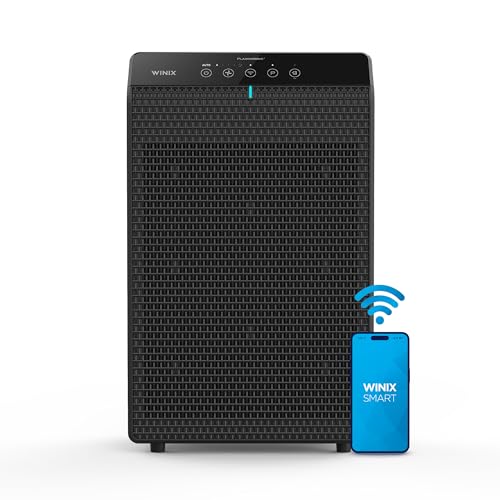
WINIX 5520 Air Purifier (Air Quality Monitor, Auto Mode) — Best Overall
The WINIX 5520 is the default recommendation because its title states the whole sensor-purifier formula in one breath: an air quality monitor, auto mode that answers it, True HEPA filtration and a high deodorization carbon filter aimed at odours as well as particles, sized by the maker for large rooms up to 1882 square feet in an hour under its stated conditions.
Strengths
- Monitor-plus-auto pairing stated in the title, the core behaviour this search promises
- High deodorization carbon stage addresses cooking and household odours beyond particle filtering
- Large-room sizing per the maker’s figure suits open-plan living spaces
Trade-offs
- Coverage is a manufacturer figure under stated conditions; real rooms with high ceilings or open doors differ
- Large-room capacity means a substantial unit and substantial replacement filters
- Sensor readings are consumer-grade estimates, best used for trends and auto control
| Coverage | Up to 1882 sq ft in 1 hr (manufacturer figure in Amazon title) |
| Sensor | Air quality monitor (per Amazon title) |
| Filtration | True HEPA + high deodorization carbon filter (per Amazon title) |
| Mode | Auto mode (per Amazon title) |
The monitor and the auto mode are one feature, not two, and this model is built around their marriage. When cooking smoke drifts in or a dog shakes off a dusty coat, the monitor registers the change and the fan answers without anyone walking over to press a button; when the room clears, the machine settles back instead of roaring on habit. That responsiveness is what sensor money buys, and it is why sensor purifiers earn their tier over equally strong filter boxes that run blind.
The carbon stage deserves its billing. Particle filtration is table stakes in this guide; odour handling is where large-room purifiers separate, and a high deodorization carbon filter is the maker’s stated answer for kitchens-adjacent living rooms and pet households. It will not perfume a room, but it works on the smells that make guests wrinkle their noses.
Place any sensor purifier where its sensor breathes the room’s real air — not tucked behind a curtain or hard against a wall — because the monitor can only react to the air that actually reaches it.
Best for: large living spaces wanting set-and-forget sensor-driven purification / Not suited for: small bedrooms where a large unit and its filter costs are overkill
Check on Amazon — check the current price on Amazon before you buy, because sizes, prints and pack options change the total.

COWAY Mighty AP-1512HH(W) Air Purifier (Air Quality Monitor, Auto & Eco) — Best Proven Design
The Coway Mighty has been the recommendation-shaped purifier for years, and its verified title shows why: HEPA filtration for smoke, dander and odour, an air quality monitor, auto and eco modes, a timer, a filter indicator and a 3-year warranty, in a white unit sized by the maker up to 1,748 square feet. It is the pick for buyers who value a proven design with its ownership details stated up front.
Strengths
- Auto and eco modes both stated; eco mode lets the machine rest when the air stays clean
- Filter indicator removes the guesswork from replacement timing
- 3-year warranty stated in the Amazon title, the clearest ownership promise in this roundup
Trade-offs
- Coverage figure is the maker’s, under its stated conditions
- A long-running design means a plainer interface than the newest smart models
- White finish only in this verified listing
| Coverage | Up to 1,748 sq ft (manufacturer figure in Amazon title) |
| Sensor | Air quality monitor (per Amazon title) |
| Modes | Auto & eco, timer (per Amazon title) |
| Warranty | 3 years (per Amazon title) |
| Extras | Filter indicator (per Amazon title) |
Eco mode is the underappreciated half of sensor intelligence. Auto mode answers dirty air; eco mode answers clean air by standing the fan down when the monitor sees no work to do, saving energy and filter life and sparing the room the machine’s presence. Over years of always-on ownership, that restraint is worth as much as responsiveness, and it flows directly from having a trustworthy monitor in the loop.
The filter indicator and stated warranty complete an ownership-first picture. Purifiers fail their owners quietly when filters expire unnoticed; an indicator makes the machine responsible for saying so. Combined with the warranty term printed in the title itself, the Mighty reads as a product designed to be owned for years rather than unboxed impressively.
If you run the Mighty in a bedroom, let eco and auto share the night: the monitor keeps watch, and the machine only works as hard as the room’s air asks it to.
Best for: buyers wanting a proven sensor purifier with eco mode and a stated warranty / Not suited for: buyers who want the newest app-driven smart features first
Check on Amazon — check the current price on Amazon before you buy, because sizes, prints and pack options change the total.

LEVOIT Vital 200S-P Smart Air Purifier (Air Quality Monitor) — Best for Bedrooms and Pets
The Vital 200S-P is aimed at the bedroom-with-pets reality its title describes: an air quality monitor, smart controls, a HEPA sleep mode and a stated 27dB quiet figure, with AHAM VERIFIDE status claimed in the title and sizing up to 1875 square feet under the maker’s conditions. For light sleepers whose purifier must be felt in the air but not heard across the pillow, that stated noise figure is the headline.
Strengths
- 27dB quiet figure stated in the title, the roundup’s clearest bedroom credential
- Air quality monitor plus smart control covers both automatic and app-driven households
- AHAM VERIFIDE claimed in the title, a third-party verification programme for purifier performance claims
Trade-offs
- Decibel figures are measured under maker conditions and vary with fan speed; sleep mode is the relevant setting, not turbo
- Large stated coverage does not change that bedroom use is about the low speeds
- Smart features need the app ecosystem to shine; non-app households use only part of the product
| Coverage | Up to 1875 sq ft (manufacturer figure in Amazon title) |
| Noise | 27dB (maker figure in Amazon title, bedroom context) |
| Sensor | Air quality monitor (per Amazon title) |
| Verification | AHAM VERIFIDE (claimed in Amazon title) |
| Mode | HEPA sleep mode (per Amazon title) |
Bedroom purifiers live or die at their lowest speed, because that is the speed they run at for eight hours beside a sleeping person. A maker willing to state 27dB in its title is making a checkable promise about exactly that setting, and pairing it with a dedicated sleep mode shows the product was designed around the night rather than merely tolerated through it. The monitor completes the night story: the machine can react to a dust event without waking the room to do it.
The pet positioning is equally practical. Hair and dander are the bedroom loads that matter in pet households, and they are particle problems squarely inside a HEPA purifier’s competence. This guide repeats its standing caution — filtration is household comfort, not medicine — and within that honest frame, cleaner-feeling bedroom air is a legitimate and achievable goal.
Run a new bedroom purifier on auto for the first week and watch when it speeds up; the pattern teaches you your room’s real pollution rhythm — cooking hours, door-open hours, pet hours — better than any manual.
Best for: light sleepers and pet households wanting a monitored, quiet bedroom purifier / Not suited for: buyers who avoid apps entirely and want purely manual controls
Check on Amazon — check the current price on Amazon before you buy, because sizes, prints and pack options change the total.

LEVOIT Core 400S-P Smart Air Purifier (Air Quality Monitor, Auto Mode) — Best Mid-Size Smart
The Core 400S-P is the family-room variant of the Levoit sensor story: an air quality monitor with auto mode, a 3-in-1 filter for the household particle mix its title lists, AHAM VERIFIDE claimed in the title, a HEPA sleep mode and a child lock, finished in black and sized by the maker up to 1718 square feet. The child lock is the tell — this one is designed for rooms where small hands explore buttons.
Strengths
- Monitor and auto mode stated together in the title
- Child lock addresses the real family-room failure mode of purifiers being reprogrammed by toddlers
- Black finish suits media rooms and modern interiors where white appliances glare
Trade-offs
- 3-in-1 combined filters are replaced as a unit, which simplifies maintenance but removes stage-by-stage economy
- Coverage and verification are maker-stated figures and claims
- Smart functionality assumes comfort with app control in the household
| Coverage | Up to 1718 sq ft (manufacturer figure in Amazon title) |
| Sensor | Air quality monitor (per Amazon title) |
| Filter | 3-in-1 filter (per Amazon title) |
| Verification | AHAM VERIFIDE (claimed in Amazon title) |
| Extras | Child lock, HEPA sleep mode (per Amazon title) |
Two Levoit models in one guide is not repetition; it is the shape of the market, and the differences are instructive. Where the Vital leads on a stated quiet figure for bedrooms, the Core leads on family practicality — the child lock, the combined filter, the black finish. Choosing between them is choosing which room’s problems you actually have, and this guide would rather show that fork clearly than hide it behind one brand pick.
The 3-in-1 filter deserves its honest trade-off. Combining stages into one replaceable unit makes maintenance a single, foolproof swap — genuinely valuable in busy households — at the cost of replacing every stage whenever the unit is spent, even if one stage had life left. Busy families usually accept that trade gladly; meticulous owners may not.
If the purifier will live where a toddler can reach it, enable the child lock on day one and put filter replacement on the family calendar; a locked, maintained purifier beats a smarter one that gets switched to a mystery mode in week two.
Best for: family living rooms wanting monitored auto purification with child-proofing / Not suited for: meticulous owners who prefer separate, individually replaced filter stages
Check on Amazon — check the current price on Amazon before you buy, because sizes, prints and pack options change the total.
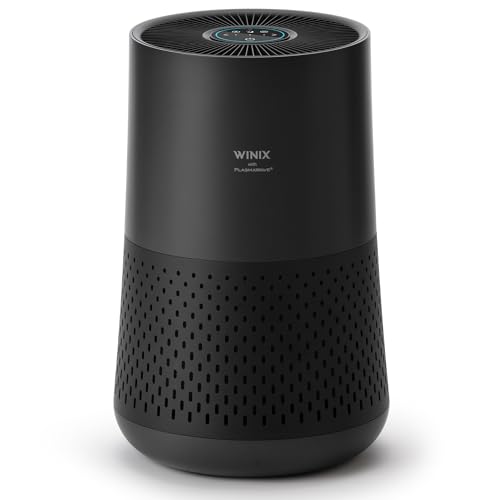
WINIX A230 Air Purifier (Air Quality Monitor, Auto Mode) — Best Compact Sensor Model
Not every room needs a large-room flagship. The A230 brings the WINIX sensor formula — air quality monitor, auto mode, True HEPA and a carbon filter — down to a bedroom format sized by the maker up to 1110 square feet in an hour under its stated conditions. For a single bedroom, nursery-adjacent room or home office, it is the proportionate buy.
Strengths
- Full monitor-plus-auto behaviour in a compact bedroom format
- True HEPA and carbon stages both stated in the title
- Right-sized capacity avoids paying flagship prices and filter costs for a small room
Trade-offs
- Bedroom sizing means it will labour if asked to serve an open-plan living area
- No noise figure is stated in the title, so light sleepers should check the product page
- Carbon stage is a standard filter, not the high deodorization build of the 5520
| Coverage | Up to 1110 sq ft in 1 hr (manufacturer figure in Amazon title) |
| Sensor | Air quality monitor (per Amazon title) |
| Filtration | True HEPA + carbon filter (per Amazon title) |
| Mode | Auto mode (per Amazon title) |
Right-sizing is the most underrated purifier skill. An oversized unit in a bedroom costs more to buy and to re-filter, and its lowest speed may still move more air than the room needs; an undersized unit runs at maximum forever and wears itself out. The A230 exists for the honest middle: one real room, monitored properly, with filtration stages identical in kind to its bigger sibling’s.
For offices and spare rooms that double as guest bedrooms, the monitor’s value compounds. These are rooms whose air changes with use — a guest arrives, a printer runs, a door stays shut for a week — and an auto-mode machine adapts without being remembered, which is precisely the appliance behaviour part-time rooms need.
Compact sensor purifiers also make the best second purifier: once a living room flagship is in place, an A230-class unit in the main bedroom covers the hours you spend breathing most, asleep.
Best for: bedrooms and home offices wanting the full sensor formula at room scale / Not suited for: open-plan living areas that need flagship capacity
Check on Amazon — check the current price on Amazon before you buy, because sizes, prints and pack options change the total.

Levoit Eleva 300X Air Purifier (PM1.0/2.5/10 Sensors) — Best Sensor Detail
This pick is for the data-minded buyer. Most sensor purifiers say ‘air quality monitor’ and stop; the Eleva 300X’s title names its sensing outright — PM1.0, PM2.5 and PM10 sensors, covering ultrafine, fine and coarse particle ranges — alongside fully sealed HEPA filtration, a dual-filter design and AHAM VERIFIDE claimed in the title, sized up to 1200 square feet under maker conditions.
Strengths
- Three named particle sensors give the most detailed air picture in this roundup
- Fully sealed filtration stated in the title, addressing the bypass leaks that undermine lesser designs
- Dual-filter construction and a sleep-focused smart positioning suit bedroom deployment
Trade-offs
- Sensor richness serves buyers who will actually look at readings; set-and-forget households may never use the detail
- Coverage is mid-sized; this is a bedroom and study machine, not an open-plan flagship
- Smart AI wording in the title is maker language for its app features, not a specification
| Sensors | PM1.0 / PM2.5 / PM10 (per Amazon title) |
| Coverage | Up to 1200 sq ft (manufacturer figure in Amazon title) |
| Filtration | Fully sealed HEPA, dual-filter (per Amazon title) |
| Verification | AHAM VERIFIDE (claimed in Amazon title) |
Particle sizes are not trivia. PM10 is the coarse dust you can see in sunlight; PM2.5 is the fine fraction from smoke and cooking that behaves almost like a gas; PM1.0 is finer still. A sensor suite that separates them tells you what kind of event your room is having — a dust disturbance reads differently from a smoke intrusion — and lets an owner respond intelligently instead of merely watching one number turn red.
The fully sealed claim matters as much. A HEPA filter only cleans the air that passes through it, and unsealed housings let air bypass around the filter edges. A maker stating a sealed system in its title is answering the most legitimate engineering criticism of consumer purifiers, and pairing that with dual filters makes this the technically densest proposition in the guide.
Give a detailed sensor a week of observation before drawing conclusions about your home; single readings spike and settle, and it is the daily pattern — cooking peaks, evening dust, overnight calm — that should drive where and when you run the machine hardest.
Best for: data-minded buyers and bedrooms wanting the richest sensor picture / Not suited for: set-and-forget buyers who will never open the readings
Check on Amazon — check the current price on Amazon before you buy, because sizes, prints and pack options change the total.
Comparison Table
| Pick | Badge | Key spec | Best for |
|---|---|---|---|
| WINIX 5520 Air Purifier (Air Quality Monitor, Auto Mode) | Best Overall | Air quality monitor + auto mode, True HEPA, high deodorization carbon, up to 1882 sq ft per title | large living spaces wanting set-and-forget sensor-driven purification |
| COWAY Mighty AP-1512HH(W) Air Purifier (Air Quality Monitor, Auto & Eco) | Best Proven Design | Monitor, auto & eco modes, timer, filter indicator, 3yr warranty per title | buyers wanting a proven sensor purifier with eco mode and a stated warranty |
| LEVOIT Vital 200S-P Smart Air Purifier (Air Quality Monitor) | Best for Bedrooms and Pets | Monitor, AHAM VERIFIDE per title, 27dB bedroom figure, HEPA sleep mode | light sleepers and pet households wanting a monitored, quiet bedroom purifier |
| LEVOIT Core 400S-P Smart Air Purifier (Air Quality Monitor, Auto Mode) | Best Mid-Size Smart | Monitor + auto, AHAM VERIFIDE per title, 3-in-1 filter, child lock, black | family living rooms wanting monitored auto purification with child-proofing |
| WINIX A230 Air Purifier (Air Quality Monitor, Auto Mode) | Best Compact Sensor Model | Monitor + auto, True HEPA + carbon, bedroom sizing up to 1110 sq ft per title | bedrooms and home offices wanting the full sensor formula at room scale |
| Levoit Eleva 300X Air Purifier (PM1.0/2.5/10 Sensors) | Best Sensor Detail | PM1.0/2.5/10 sensors stated, fully sealed HEPA, dual-filter, AHAM VERIFIDE per title | data-minded buyers and bedrooms wanting the richest sensor picture |
What Air Quality Sensors Actually Measure — and What They Cannot
Consumer purifier sensors are almost always optical particle counters: a small laser or LED watches air pass and estimates how many particles of which sizes are present. They are genuinely useful for detecting change — a cooking event, a dust disturbance, an open window on a smoky day — and for driving auto mode, which needs trends, not truth. They do not identify what a particle is, they drift as their optics dust over, and their numbers should never be read as laboratory or medical measurements.
Most particle sensors also cannot see gases. Odours, VOCs and carbon dioxide need different sensing entirely, and a purifier whose title says air quality monitor is usually describing particle sensing unless it names more. That is why this guide treats carbon filtration as a separate, stated feature where titles claim it: the sensor watches particles, the carbon works on odours, and neither substitutes for the other. Ventilation — opening windows when outdoor air is good — remains the only appliance-free answer to stale indoor air, and a sensor purifier complements it rather than replacing it.
Living With a Sensor: What the First Month Teaches
A sensor purifier is quietly educational. Within a week, most owners can read their home’s air like weather: the spike when the frying starts, the slow rise on a closed-window evening, the clean flat line of a rainy night with the machine on auto. That literacy changes behaviour in useful ways — a window opened at the right hour, a candle reconsidered, the discovery that one particular room hoards dust — and it is a benefit no specification table captures, though it is the one owners mention most.
The second lesson is trust calibration. The sensor will occasionally react to things you cannot see and ignore things you can smell, because it counts particles and your nose reads gases. Neither instrument is broken; they measure different worlds. Owners who learn that distinction stop fighting their purifier’s display and start using it for what it is: an honest particle gauge driving an automatic fan.
By the end of the first month the machine usually disappears into the household’s background, which is the technology succeeding. What remains is the pattern it taught you and the air it keeps while you think about other things — the exact outcome auto mode and a good monitor were bought to produce.
Filters, Costs and the Three-Year View
Every purifier in this guide is two purchases: the machine, and the stream of filters that keeps it a purifier rather than a fan with memories. Over three years of daily use, filter costs commonly rival the machine’s price, and the models differ more in that stream than in their showroom features. Before choosing, price the replacement filter for each finalist, note its stated interval, and do the three-year arithmetic honestly — a cheaper machine with expensive, short-lived filters is often the dearer appliance.
Combined 3-in-1 filters, like the Core 400S-P’s, simplify the stream into one part number and one date; staged systems let you replace the cheap pre-filter and carbon at their own pace and the HEPA at its longer one. Neither philosophy is wrong, but they suit different owners, and the time to discover your preference is before the first replacement, not at it.
Protect the investment with the cheap habits: vacuum or wash pre-filters as directed, keep the sensor’s optics clean so auto mode stays honest, and never run a purifier long past its filter’s life to save money — a spent filter converts the machine into furniture while it consumes electricity, which is the most expensive outcome of all.
Sensors, Seasons and the Rooms That Need Them Most
A sensor purifier’s value is seasonal in a way its box never mentions. Wildfire smoke weeks, high-pollen springs, winter’s sealed-window months and cooking-heavy holidays are when a monitor earns its premium, reacting to events a blind purifier would meet at whatever speed it happened to be left on. Households in smoke-prone regions should read this guide as preparedness, not appliance shopping: the time to own a sensor purifier is before the sky turns, when shelves are full and filters are in stock.
Room priority follows breathing hours. The bedroom hosts a third of your life at close range, which is why this guide’s bedroom-capable picks — the quiet-stated Vital, the right-sized A230, the sensor-rich Eleva — deserve first placement in most homes. The living room is second, the kitchen a special case where source control and the cooker hood outrank any purifier, and spare rooms last, served by auto mode’s ability to be forgotten productively.
Nurseries and children’s rooms add the child-lock and noise questions the Core 400S-P’s title anticipates. In every room, the principle is the same: the purifier should be sized generously, placed openly and left on auto, so the sensor — the feature you paid for — is always the thing driving the machine.
What Sensor Purifiers Cannot Do
Honesty about limits protects both buyers and machines. A purifier does not ventilate: it cannot remove carbon dioxide or bring in oxygen, and a sealed, stuffy room needs an open window or mechanical ventilation no filter can substitute. It does not clean surfaces: the dust on the shelf is already down, and the machine’s job is the dust still travelling. It does not address sources: a mouldy wall, a smoking habit indoors or a gas appliance fault are problems to fix at origin, with the purifier as a complement, never as the remediation.
It also does not measure everything its display implies. A particle sensor is blind to gases, to carbon monoxide — a separate, essential alarm’s job — and to the identity of what it counts. Treating its number as a complete verdict on a room’s air is the one misuse this guide warns against most, because the number is genuinely useful within its limits and quietly meaningless beyond them.
Held inside those limits, the technology is excellent: tireless, automatic, and honest about the one thing it watches. The buyers who love their sensor purifiers longest are the ones who bought them for particle control in real rooms, and asked nothing else of them.
Buying the Second Purifier, and When One Is Enough
Most homes should start with one purifier, placed where breathing hours concentrate, and live with it for a season before multiplying machines. The first unit teaches the household its air — which events matter, which rooms hoard dust, whether auto mode’s judgement matches your own — and that education should direct the second purchase if one is needed. Buying two on day one usually means one of them is in the wrong room by month two.
The case for a second unit is arithmetic: two real rooms with simultaneous occupancy, far apart, cannot share one machine, and moving a purifier nightly is a habit that dies within a fortnight. The classic pairing in this guide’s terms is a large-room flagship — the WINIX 5520 or the Coway — in the living space, and a bedroom specialist like the A230 or the Eleva where you sleep. Each runs on auto, each watches its own room, and the household stops thinking about air entirely.
And one purifier honestly is enough for studios, small flats and single-room living, where a generously sized sensor model covers the whole breathing world of the home. In those spaces, spend the second unit’s budget on the filter stream instead — the unglamorous purchase that keeps the one machine a purifier for years.
Purifiers in the Background of a Healthy-Rhythm Home
Strip away every claim this guide has carefully refused to make, and a sensor purifier still earns its place in a well-run home the way good lighting does: not by treating anything, but by making the environment quietly more pleasant to inhabit — less dust settling on surfaces, fewer lingering cooking smells where carbon is fitted, bedrooms that feel fresher in the morning. Those are household goods, honestly described, and they are enough to justify the category without borrowing medicine’s authority.
The sensor is what keeps those goods effortless. A machine that watches the room and answers it removes air care from the household’s mental list entirely, which is why owners describe these appliances with unusual affection for a box with a fan. Buy the sensor, size it generously, feed it filters on schedule, and then — the highest compliment any appliance can earn — forget it exists while it works.
How to Choose an Air Purifier with an Air Quality Sensor
Start with the room, honestly measured, and compare it with coverage figures as the manufacturers’ best-case statements they are. A purifier sized generously for the room can run slower and quieter while still turning the air over, which is why bedroom buyers in particular should not fear a model whose stated coverage exceeds their room: the surplus is spent as quietness, not waste. Then check the sensor’s job description in the title — monitor, sensor suite, auto mode — because a sensor without auto mode is a display, while a sensor driving auto mode is a system.
Next, the filtration behind the sensor. True HEPA for particles and a carbon stage for odours is the complete household pairing; sealed housings protect the HEPA’s integrity; and filter replacement cost and interval, checked on the product page, decide the real price of ownership over three years. A purifier is a subscription you choose once — choose it with the refills in view.
Finally, match the intelligence to the household. App-driven smart models reward engaged owners with schedules, insights and remote control, and quietly waste their premium on households that will never open the app. Eco and auto modes reward everyone, because they ask nothing. Buy the intelligence you will use, and let the sensor — the feature this search is actually about — be present and driving the fan in whichever model you choose.
How to Set Up and Use a Sensor Air Purifier
A sensor purifier rewards correct placement and a short observation period. These steps get both right from the first day.
- Place the purifier where air circulates freely around it, with clearance from walls and curtains, and where its sensor samples the room’s lived air rather than a corner’s still air.
- Run the machine on auto mode for the first week without intervening, watching when it speeds up and settles, to learn your room’s pollution rhythm.
- Keep doors and windows habits consistent during that week; opening a window on a high-pollen or smoky day will show up on the monitor and teach you more than the manual does.
- Note the filter indicator or calendar date for replacement from day one, and price the replacement filter now so ownership costs hold no surprises.
- Clean the sensor lens and the pre-filter on the maker’s schedule; a dusted sensor under-reports, and the machine quietly stops reacting to real events.
- For bedrooms, confirm the sleep or lowest mode is genuinely quiet in your room at night before the return window closes, since night noise is the one flaw no specification fully predicts.
Revisit placement seasonally. Heating season, open-window season and wildfire or pollen season change a room’s air completely, and the best corner in January may not be the best corner in June.
Common Buying Mistakes
Buying filtration without the sensor this search asks for. A strong blind purifier runs at one guess forever. The sensor and auto mode are the product here; confirm both in the listing before paying.
Reading consumer sensor numbers as medical measurements. Purifier sensors estimate particle trends for control purposes. They are useful, honest tools within that limit and misleading beyond it.
Undersizing to save money. A small purifier at maximum speed in a large room is loud, worn and ineffective. Size generously and let the machine loaf.
Hiding the purifier behind furniture. Blocked airflow starves both the filter and the sensor. A purifier needs to breathe the room it cleans.
Forgetting filter costs. The machine is bought once; filters are bought forever. Price them before choosing between two otherwise equal models.
Final Recommendation
For most homes, the WINIX 5520 is the sensor purifier to buy first — monitor, auto mode, True HEPA and serious carbon in a large-room format — with the Coway Mighty as the proven, eco-minded alternative carrying a stated warranty. Bedroom buyers should choose between the quiet-stated Levoit Vital 200S-P and the technically rich Eleva 300X, families between the Core 400S-P’s child-locked practicality and, for smaller rooms, the right-sized WINIX A230.
Check price on Amazon on the live listing, price the replacement filter at the same time, and place the machine where its sensor can actually smell your room’s life. Related air and home topics from this programme are linked below.
Best Air Purifiers For Dust Best Air Purifiers For Dog Owners Best Air Purifiers For Smells Best Air Purifiers For Fire Smoke Removal Best Air Purifiers Germ Guardian
Frequently Asked Questions
How does an air purifier’s air quality sensor work?
Most use an optical particle sensor that estimates particle levels as air passes through it. The purifier displays the result or shows it as a colour indicator, and in auto mode uses it to raise or lower fan speed. The readings are estimates suited to trends and automatic control, not laboratory measurements.
Is auto mode worth having?
For most households, yes — it is the feature that makes the sensor useful. Auto mode lets the purifier respond to real events like cooking smoke or a dust disturbance and then settle down when the air clears, balancing clean air, noise and filter life without daily attention.
Do air purifiers help with allergies or asthma?
This guide makes no medical claims. Air purifiers filter airborne particles such as dust, pollen and pet dander from room air, which many households experience as a comfort improvement, but they are household appliances, not medical devices, and they do not treat or prevent any condition. Follow your clinician’s advice for health decisions.
What room size purifier do I need?
Measure your room and choose a model whose manufacturer-stated coverage comfortably exceeds it, remembering those figures are best-case claims under stated conditions. A generously sized purifier can run slower and quieter, which matters most in bedrooms.
Can a purifier’s sensor detect odours or gases?
Particle sensors cannot see gases or odours. Models handle smells through carbon filtration, which some titles in this guide state explicitly. If odour is your main concern, check for a substantial carbon stage rather than relying on the sensor, and ventilate when outdoor air allows.
How often do purifier filters need replacing?
It depends on the model, the room and hours of use, which is why filter indicators — like the one stated in the Coway Mighty’s title — are valuable. Check the replacement interval and filter price on the product page before buying, and treat filter cost as part of the purifier’s real price.

