Disclosure: airfryerkitchensupply.com is reader-supported. When you buy through links on our site, we may earn an affiliate commission at no extra cost to you.
Where to buy
All six picks in this guide are sold through Amazon, where you can compare coverage ratings, filter types, and replacement-filter availability on one page. Most readers should start with the Rabbit Air MinusA2 Odor Remover edition, our Best Overall, because it was built specifically around odor adsorption rather than having it added as an afterthought. If your problem is cigarette smoke, a wood stove, or a heavy cooking household, look at the Austin Air HealthMate Plus next. Pet households should shortlist the WINIX 5510. Every linked model was confirmed against Amazon’s catalog data before publication; check price on Amazon on the listing page, and read the filter discussion below before you buy, because odor removal is the one air-purifier job where the filter media matters more than the fan.
Introduction: odor removal is a chemistry problem, not a dust problem
Shopping for the best odor removing air purifiers starts with a fact most listings blur: smells are gases, and gases sail straight through the HEPA filters that stop dust and pollen. A purifier can have a superb particle rating and still do almost nothing for last night’s fried fish, a litter box in a small apartment, or the stale smell that settles into a closed-up house. Odor control comes from adsorption media — activated carbon, and in stronger machines, blends of carbon with zeolite or other gas-phase media — and from how much of that media the machine carries. A thin carbon sheet that weighs a few ounces perfumes the spec sheet; a deep bed of granular carbon weighing several pounds actually changes how a room smells, and keeps doing it for months instead of weeks.
That is why this guide ranks machines by their odor hardware first and everything else second. We looked for thick granular carbon beds or purpose-built odor filters, honest coverage ratings so the machine can cycle a room’s air often enough to keep up with a continuous odor source, and filter replacement costs you can live with, because an odor purifier with an exhausted carbon bed is just a fan in a nice box. We also kept the framing honest throughout: these machines improve everyday air-quality comfort — fresher-smelling rooms, less lingering cooking smell, a home that does not announce the cat before guests see her. They are comfort appliances, not medical devices, and nothing in this guide should be read as a health claim.
There is also a difference between a room that smells because something happened in it and a room that smells because something lives in it. Event odors — a burnt dinner, a painting weekend, a visiting dog — fade on their own over a few days, and almost any carbon machine speeds that up noticeably. Resident odors — the litter corner, the smoker’s chair, the musty spare room — are continuously renewed, and they are the true test of this category: they demand capacity, air changes, and filters replaced on evidence rather than optimism. As you read the picks, judge each machine against your type of problem. The best odor removing air purifier for an event household is a mid-size, quiet all-rounder; for a resident-odor household it is the biggest carbon bed your room and budget can accommodate, and the reviews below are frank about which is which.
One more expectation to set before the picks. No purifier removes an odor source. A full litter box, a damp rug, or a trash can that needs emptying will defeat any machine on this page if the source stays. The right mental model is that the purifier handles the background load — the smell that lingers in air and soft furnishings after the source is dealt with — and it does that job well enough that most households notice the difference within the first day.
In this guide
Quick Picks
- Best Overall — Rabbit Air MinusA2 SPA-780A Odor Remover: a purpose-built odor edition with a dedicated Odor Remover filter in the stack, ultra-quiet running, and a slim wall-mountable body that suits living rooms and bedrooms.
- Best for Smoke and Heavy Odors — Austin Air HealthMate Plus: a deep bed of activated carbon blended with zeolite, four-stage filtration, and coverage up to 1,500 sq ft — the heavy artillery of this guide.
- Best for Pet Odors — WINIX 5510: a high-deodorization carbon filter paired with True HEPA and an auto mode that reacts when the air changes, sized for large rooms up to 1,881 ft² in one hour.
- Best for Large Rooms — Medify MA-40: covers 1,793 ft² in one hour, with a substantial filter stack aimed at smoke and odor loads in open-plan spaces.
- Best Premium — IQAir HealthPro Plus XE: a Swiss-made, multi-stage machine with a dedicated gas-phase filtration stage and WiFi control, for buyers who want the deepest filter stack in a home unit.
- Best Compact — COWAY Airmega 100: HEPA plus carbon filtration with an air-quality monitor and auto mode in a small footprint rated up to 810 ft², right-sized for bedrooms and nurseries.
How These Picks Were Chosen
We started from the odor problem and worked backwards. Every candidate had to offer real gas-phase media — granular activated carbon, a carbon/zeolite blend, or a manufacturer-designed odor filter — not just a HEPA element with a carbon-dusted pre-filter. We then checked coverage ratings against realistic room sizes, because odor control needs repeated air changes: a machine that cycles a room once an hour will lose to a continuous source like a litter box or a smoker’s den, while three to five changes an hour keeps the background smell down. Filter life and replacement availability mattered too; a purifier whose carbon saturates in six weeks becomes an expensive ornament, so we favoured models with widely stocked replacement filters and filter-life indicators where possible.
Every product named in this guide was verified on this site’s own Amazon integration: we searched by brand and model, matched the returned catalog title to the product we intended to write about, and only then used its ASIN for links. Models we could not confirm that way would have been written up without links; in the event, all six picks confirmed cleanly. Prices and ratings are deliberately absent — both change constantly — so each pick tells you to check price on Amazon instead. Finally, we deliberately mixed formats: a wall-mountable slim unit, two large-room towers, a heavy steel-box machine, a premium multi-stage unit, and a compact bedroom model, because odor problems show up in very different rooms.
The 6 Best Odor Removing Air Purifiers
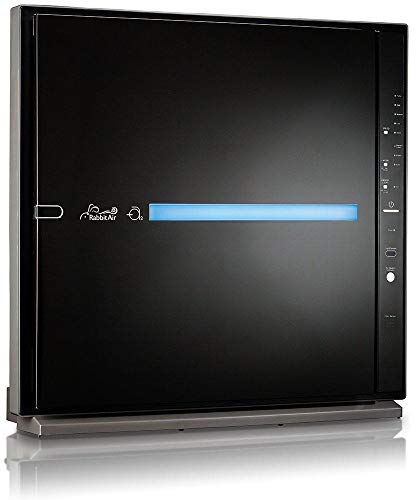
Rabbit Air MinusA2 SPA-780A (Odor Remover Edition) — Best Overall
The MinusA2 earns the top spot because Rabbit Air sells it in editions, and the Odor Remover edition swaps the standard filter set for one built around odor adsorption — a small thing on paper that is exactly the right thing in practice. Instead of asking a general-purpose filter to dabble in smells, you get a stack whose middle stage exists for one job. The machine itself is a slim, quiet panel that can sit on the floor or hang on a wall like a picture frame, which makes it the easiest serious purifier to live with in a finished living room or a bedroom where a big tower would dominate. It suits households whose odor problem is real but ordinary: cooking smells that drift and linger, a dog bed corner, a home office that shares air with the kitchen. It is not the pick for a heavy smoker’s room — that is the Austin Air’s job, below.
Strengths
- Dedicated Odor Remover filter configuration rather than a token carbon sheet
- Ultra-quiet operation that stays usable in bedrooms and during television hours
- Slim, wall-mountable body that frees floor space and looks deliberate, not appliance-like
Trade-offs
- Carbon capacity is smaller than the big-bed machines, so strong continuous sources saturate it sooner
- Wall mounting is optional but the best placement takes a little planning
- Replacement filter sets are a recurring cost to budget for
Key specs (verified listing): HEPA air purifier, Odor Remover edition, black; ultra quiet; wall mountable.
In daily use the MinusA2’s virtue is that you forget it. Odor machines earn their keep in the background, cycling air hour after hour, and a unit quiet enough to run through dinner and a film does more for a room’s smell than a louder, stronger machine that gets switched off. The light-sensing dimming and gentle fan behaviour suit bedrooms particularly well. Treat the filter schedule seriously: the odor stage works until its carbon saturates, and saturation is gradual — the room simply starts smelling like it used to, which is your cue. Owners who swap the odor filter on schedule report the machine keeps its edge; owners who stretch filters are the ones who conclude purifiers do not work.
Best for: everyday household odors in living rooms and bedrooms / Not suited for: heavy smoke or industrial-strength odor loads.
Check the current price on Amazon

Austin Air HealthMate Plus — Best for Smoke and Heavy Odors
When the odor problem is serious — cigarettes, a wood-burning stove, a workshop attached to the house, a recently renovated room off-gassing paint and varnish smells — the HealthMate Plus is the machine built for it. Its filter is a deep cylindrical bed of activated carbon blended with zeolite, measured in pounds rather than ounces, wrapped in a steel case on casters. That mass of media is the whole story: more carbon means more adsorption capacity, which means the filter keeps working for years on normal duty instead of months, and can absorb the heavy, complex odor load of smoke that saturates thin filters in weeks. The trade is size and subtlety; this is a cube of painted steel that looks like equipment, because it is.
Strengths
- Deep activated-carbon and zeolite bed — the largest odor capacity in this guide
- Four-stage filtration with coverage up to 1,500 sq ft
- Long filter life under normal use spreads the replacement cost over years
Trade-offs
- Big, heavy, and visually industrial next to the slim towers
- Premium-tier purchase, though the long filter life softens the running cost
- Three fan speeds with no smart features, app, or air-quality display
Key specs (verified listing): HealthMate Plus, model B450, white; 4-stage filtration; activated carbon and zeolite; covers up to 1,500 sq ft; 5-year filter life under normal use per listing.
The honest way to judge the Austin Air is cost per year of odor control. A cheap purifier with a thin carbon pad might need that pad replaced every couple of months in a smoker’s home and still never quite win; the HealthMate Plus costs more up front and then mostly disappears from your budget and your attention. It is also the pick we would put in a room that has absorbed years of smoke smell into its air — not the furnishings, which need cleaning regardless — because its capacity suits a long campaign rather than a weekend freshen-up. If your odor problem is mild, it is overkill, and the Rabbit Air or WINIX will make you happier. If your problem is the kind guests comment on, this is the one.
Best for: smoke, renovation smells, and heavy persistent odors in large spaces / Not suited for: small bedrooms or buyers who want app control and a sleek look.
Check the current price on Amazon

WINIX 5510 — Best for Pet Odors
Pet odor is a two-part problem: the smell itself, and the constant supply of hair and dander that carries it around the room. The WINIX 5510 attacks both halves. Its filter stack pairs True HEPA with what Winix calls a high-deodorization carbon filter — a proper washable-pre-filter, particle stage, and carbon stage arrangement — and its auto mode uses an air-quality sensor to ramp the fan up when the air changes, which in a pet home means when the dog comes in from the yard or the litter box gets used. Coverage is generous, rated for large rooms up to 1,881 ft² in one hour, so in a normal living room it achieves the multiple air changes an hour that continuous odor sources demand. App support on this new generation of the long-running 5500 series adds scheduling and filter-life tracking.
Strengths
- High-deodorization carbon stage sized for pet households
- Auto mode reacts to odor events instead of running flat-out all day
- Large-room coverage delivers the air-change rate pet odors require
Trade-offs
- Tower footprint needs a corner with clearance on all sides
- Carbon stage still saturates faster in multi-pet homes; keep a spare filter budget
- App features are nice-to-have rather than essential, and setup takes a few minutes
Key specs (verified listing): WINIX 5510, new generation of the 5500-2 with app support; large room up to 1,881 ft² in 1 hr; True HEPA; high deodorization carbon filter; auto mode.
Placement is the difference between a pet purifier that works and one that merely runs. Put the 5510 in the room where the animals actually live, near — not on top of — the litter area or dog beds, with its intake unobstructed. Run it on auto and let the sensor do the work; owners who lock pet purifiers to the lowest silent speed and then complain are starving the machine of the airflow odor control needs. The washable pre-filter is a genuinely useful cost-saver in pet homes, catching the hair load before it mats the main filter. For a one-cat apartment it is more machine than you need; for a two-dog household it is the sweet spot of this guide.
Best for: dog and cat households fighting litter and pet smells in living areas / Not suited for: tiny bedrooms where its tower size crowds the room.
Check the current price on Amazon

Medify MA-40 — Best for Large Rooms
Open-plan living changes the odor equation: the kitchen, dining area, and lounge are one air mass, and a small purifier placed hopefully in a corner will only ever clean its own neighbourhood. The MA-40 is Medify’s answer for that floor plan, rated to cover 1,793 ft² in one hour, which translates to several air changes an hour in a typical open-plan ground floor. Its filter stack is built around a substantial HEPA element with carbon treatment aimed at smoke and odor loads, and the tower format moves a lot of air without the industrial look of the Austin Air. It suits big suburban living spaces, finished basements that double as entertainment rooms, and homes where cooking smells currently tour the entire floor before dissiping.
Strengths
- High coverage rating that makes open-plan odor control realistic
- Filter stack explicitly aimed at smoke, wildfire, and odor loads
- Tower design blends into living spaces better than box-style machines
Trade-offs
- Overkill — and oversized — for a single small bedroom
- Large filters cost more at replacement time than compact models’ do
- At high fan speeds it is audible, as every high-airflow machine is
Key specs (verified listing): Medify MA-40 with HEPA filter; 1,793 ft² coverage in 1 hr; positioned for smoke, wildfires, odors, pollen, pets; white.
The placement rule for large-room machines is centrality. Odor-laden air has to reach the intake, so the MA-40 belongs in the middle of the open space’s traffic pattern rather than exiled behind a sofa, and doors to side rooms left open when you want it to help there too. Expect it to tame the background level — the house stops smelling of yesterday’s dinner by breakfast — rather than erase a smell at the moment it is produced; even big machines need a few air changes to catch up with a curry night. Paired with a range hood actually vented outdoors, it completes a sensible kitchen-odor strategy for open-plan homes.
Best for: open-plan floors, large living rooms, and finished basements / Not suited for: small single rooms or noise-sensitive light sleepers at high speed.
Check the current price on Amazon

IQAir HealthPro Plus XE — Best Premium
The HealthPro Plus XE is what happens when a manufacturer treats home air cleaning like laboratory equipment. Built in Switzerland, it stacks its filtration in separate, individually replaceable stages — pre-filter, a dedicated gas-phase stage for odors and chemical smells, and a HyperHEPA particle stage — inside a solid tower on wheels, with WiFi control on this XE generation. The staged design matters for odor work specifically: when the gas-phase media is spent, you replace that stage rather than a combined cartridge, and the stage itself is substantially sized. Coverage is rated for large rooms of 1,125 sq ft. It is the most expensive machine in this guide by a clear margin, and it does not pretend otherwise.
Strengths
- Separate, deep gas-phase filtration stage designed for odors and chemical smells
- Each stage replaced on its own schedule, reducing waste and fine-tuning running costs
- WiFi control and a build quality that feels a class above typical home units
Trade-offs
- Premium pricing on both the unit and its replacement stages
- Large and heavy; the wheels help, but it is a fixture, not a portable
- More machine than a mild, single-room odor issue justifies
Key specs (verified listing): IQAir HealthPro Plus XE; HyperHEPA; WiFi; large rooms 1,125 sq ft; Swiss made; 3-stage filtration; with wheels.
Who should pay the premium? Households fighting a mixed problem — cooking and pet odors plus a sensitivity to chemical smells from traffic, a nearby road, or new furnishings — and buyers who keep appliances for a decade and prefer staged, serviceable design to sealed disposable cartridges. The XE’s app control and scheduling suit set-and-forget ownership: run it harder during cooking hours and overnight at low speed in the bedroom wing. For a single-issue odor problem on a budget, the Rabbit Air and WINIX deliver most of the benefit for much less; the IQAir is for people who want the deepest filter stack in a home machine and are happy to pay for it once.
Best for: mixed odor and chemical-smell problems, long-term owners, large rooms / Not suited for: budget buyers or anyone needing a small, light unit.
Check the current price on Amazon

COWAY Airmega 100 — Best Compact
Not every odor problem needs a tower. A bedroom that holds onto cooking smells from a small apartment’s kitchen, a nursery that shares air with a diaper pail, a home office in a flat with a cat — these are one-room, background-level jobs, and the Airmega 100 is sized exactly for them. Coway rates it up to 810 ft², and inside is a combined HEPA and carbon filtration set with a deodorization function aimed at smoke and odor, plus an air-quality monitor with auto mode and a timer. It is the smallest, simplest machine here, and for a single room that is a feature: it fits on a dresser or a quiet corner of floor, runs its sensor-driven routine, and asks only for filter changes on schedule.
Strengths
- Compact footprint that fits bedrooms, nurseries, and small apartments
- Air-quality monitor and auto mode handle day-to-day running without input
- HEPA plus carbon with a deodorization focus at a modest tier
Trade-offs
- Carbon capacity is the smallest here; strong sources will overwhelm it
- One-room machine — it will not rescue an open-plan floor
- No app control on this model
Key specs (verified listing): COWAY Airmega 100; rooms up to 810 ft²; HEPA and carbon filter for smoke, allergies, pet dander, odor; AQI monitor; auto mode; timer; filter indicator.
A note on framing, since this pick often lands in nurseries and bedrooms: treat it as an air-quality comfort appliance that keeps a room smelling fresh, not as a health device, and keep up the ordinary source control — sealed diaper pail, regular laundry — that does the heavy lifting. Within that honest scope, the Airmega 100 is the easiest recommendation in the guide for renters and small-space households: no wall mounting, no app account, no corner surrendered to a tower. If you later move to a bigger home, it retires gracefully to bedroom duty while a larger machine takes the living area.
Best for: single-room odor control in bedrooms, nurseries, and small flats / Not suited for: large spaces or heavy smoke loads.
Check the current price on Amazon
Comparison Table
| Pick | Badge | Key spec | Best for |
|---|---|---|---|
| Rabbit Air MinusA2 SPA-780A | Best Overall | Dedicated Odor Remover filter edition; wall mountable | Everyday odors in living rooms and bedrooms |
| Austin Air HealthMate Plus | Best for Smoke and Heavy Odors | Carbon + zeolite bed; up to 1,500 sq ft | Smoke, renovation and persistent heavy odors |
| WINIX 5510 | Best for Pet Odors | High-deodorization carbon; 1,881 ft² in 1 hr; auto mode | Pet households and litter-box rooms |
| Medify MA-40 | Best for Large Rooms | 1,793 ft² coverage in 1 hr | Open-plan floors and big living spaces |
| IQAir HealthPro Plus XE | Best Premium | Separate gas-phase stage; 1,125 sq ft; WiFi | Mixed odor and chemical-smell problems |
| COWAY Airmega 100 | Best Compact | HEPA + carbon; up to 810 ft²; AQI monitor | Bedrooms, nurseries, small apartments |
How to Choose an Odor Removing Air Purifier
Start with the media, not the marketing. Odor removal happens in activated carbon. When comparing listings, look for how much carbon and in what form: a deep bed of granular carbon (the Austin Air approach) holds the most and lasts longest; a pleated carbon filter (WINIX, Medify) is the middle path; a replaceable dedicated odor cartridge (Rabbit Air) suits moderate loads; a thin carbon sheet in a combined filter (most compact units, including the Coway) handles light background smells only. If a listing will not tell you anything about its carbon beyond the word itself, assume the light-duty end of that scale.
Match coverage to air changes, not room size alone. Manufacturers quote the room size a machine can clean at a given rate; for odor work you want the machine to cycle your room’s air roughly three to five times an hour, because the odor source is usually continuous. Practical translation: pick a machine whose one-hour coverage rating is two to three times your room’s actual floor area. A 200 sq ft bedroom does well with a unit rated around 800 ft² in one hour; a 600 sq ft open-plan space wants a rating in the 1,500–1,900 ft² range — which is exactly where the Austin Air, WINIX 5510, and Medify MA-40 sit.
Identify your odor type. Smoke and cooking odors are complex mixtures that reward big carbon beds and zeolite blends. Pet odor is moderate but continuous, rewarding auto sensors and washable pre-filters that keep hair off the main media. Musty, stale-room smell often signals a moisture source — fix damp first, then let a mid-size machine maintain freshness. Chemical smells from paint, varnish, or new furniture reward a dedicated gas-phase stage like the IQAir’s. Buying for the odor you actually have, rather than the strongest machine on the page, is how this category’s money gets spent well.
Budget for filters, honestly. The purchase price is the smaller half of ownership. Before buying, price the replacement odor filter for your finalist and note its rated life in a home like yours — heavy smoke or multi-pet homes shorten carbon life well below the brochure figure. Machines with filter-life indicators or app tracking (WINIX, Coway) remove the guesswork; with the Austin Air, the long bed life is the economy. A purifier you cannot afford to re-filter is a bad purchase at any discount.
Noise decides whether it runs. Odor control is a hours-per-day job, so a machine that is too loud for its room will live switched off. Slim panel and compact designs (Rabbit Air, Coway) are the quietest citizens; big towers move more air and make more noise at full speed but are usually fine at the medium settings that steady-state odor control uses. If the machine is for a bedroom, prioritise a genuinely low low-speed and a display that dims or switches off.
How to Set Up and Maintain an Odor Purifier for Best Results
Setup is simple, but the details decide whether the machine earns its place:
- Remove the source first. Empty and wash bins, launder soft furnishings that hold smell, clean the litter area, and deal with any damp patch. The purifier maintains freshness; it cannot create it against an active source.
- Unbag the filters. Most purifiers ship with filters sealed in plastic inside the unit. Open the panel, remove every bag, and refit the filters in the order the manual shows — running a machine with bagged filters is the most common setup failure in this category.
- Place for airflow. Give the intake and outlet clear space on all sides, keep the unit in the room where the odor lives, and position it near the source’s neighbourhood rather than across the room — a few feet from the litter area or the kitchen doorway, not touching either.
- Run it continuously at first. For the first week, run the machine around the clock on auto or medium. Established odor load in a room’s air and fabrics takes days of cycling to draw down; after that, auto mode can maintain it.
- Keep doors working for you. A purifier treats the air in its own room. Closed doors concentrate its effect where you want it; open-plan spaces need the big-coverage machines for the same reason.
- Maintain the front of the stack. Vacuum or wash the pre-filter monthly in pet homes — a hair-matted pre-filter starves the carbon behind it. Wipe intakes with a dry cloth when you dust the room.
- Replace carbon on evidence, not just schedule. When a cleaned room starts holding smells again despite the machine running, the carbon is saturated. Replace the odor stage then, and note the date — that interval is your home’s real filter life for next time.
Carbon, Zeolite, and Gas-Phase Media: What Actually Traps a Smell
Because odor removal is the whole point of this guide, it is worth understanding the three media you will meet in listings, and why they are not interchangeable. Activated carbon is the workhorse. It is charcoal treated to develop an enormous internal surface area — a gram of it can hold more surface than a room’s floor — and odor molecules stick to that surface as air passes, a process called adsorption. Carbon is broad-spectrum: it handles most household odor families, from cooking to pets, and its only real weakness is capacity. Once the surface is covered, it is covered, which is why the amount of carbon in a machine predicts its odor lifespan better than any other number.
Zeolite is a mineral with a crystalline, cage-like structure that adsorbs certain gas families particularly well, including some that carbon handles only moderately. That is why heavy-duty machines like the Austin Air blend the two: carbon for breadth, zeolite to strengthen the blend against stubborn loads such as smoke. You will not find zeolite in budget machines, and its presence in a listing is a reliable sign the manufacturer is serious about gas-phase work rather than decorating a particle filter.
Impregnated and specialty media are the third family: carbon treated with additional compounds to target specific gases, and proprietary odor cartridges like the one in the Rabbit Air’s Odor Remover edition, which package the media in a form factor designed for a particular machine. These can be very effective for their intended load. Their weakness is lock-in — you are buying that brand’s refills for the life of the machine — so check refill availability and price before committing, exactly as you would with printer ink.
Two practical conclusions follow. First, when a listing emphasises a famous particle standard and says little about its gas media, it is a dust machine with odor ambitions; the six picks here were chosen because their listings lead with the odor hardware. Second, saturation is silent. A HEPA filter announces its end by loading visibly and straining airflow; carbon simply stops adsorbing while air flows through it as freely as ever. That is why the maintenance section above tells you to judge by results — a cleaned room that starts holding smells again — and why filter-life indicators and apps, where fitted, are worth having.
A Room-by-Room Odor Strategy
Kitchen and open-plan living. The enemy is the lingering meal — frying, spices, fish — that outstays the cooking by hours. Strategy: vent at the source with a real range hood while cooking, then let a large-coverage machine (Medify MA-40, WINIX 5510) run on auto through the evening. In open-plan homes, one central machine beats two small ones marooned at opposite ends.
The litter-box or pet room. The enemy is continuity: the source renews itself daily. Strategy: source discipline first (scooping, litter choice, sealed waste), then a sensor-driven machine a few feet away — the WINIX 5510’s auto mode exists for exactly this pattern of sudden odor events against a low background. Wash the pre-filter monthly; pet hair is the silent killer of odor performance.
Bedrooms. The enemy is staleness — closed doors, soft furnishings, and eight hours of occupancy. Strategy: a quiet machine with a dimmable display (Rabbit Air, COWAY Airmega 100) run overnight on low or auto. Bedroom odor loads are light, so compact carbon capacity is genuinely sufficient here, and silence matters more than power.
The smoker’s room or stove room. The enemy is load: complex, continuous, and absorbed into everything porous. Strategy: the biggest carbon bed you can place (Austin Air HealthMate Plus), run continuously, paired with honest expectations — the machine will transform the air, while curtains, upholstery, and rugs need washing or deep cleaning before the room can truly reset. Purifier first or cleaning first both work; expecting either alone to do both jobs does not.
Nursery and children’s rooms. The enemy is the diaper pail and general small-room stuffiness. Strategy: a sealed pail as the primary defence and a compact machine like the Airmega 100 as background support, treated strictly as a freshness appliance. Keep cords and intakes out of toddler reach, as with any appliance in a child’s room.
Common Buying Mistakes
- Buying a HEPA-only machine for a gas problem. Particle filtration does not adsorb smells. If the listing’s odor claim rests on a carbon-dusted sheet, expect days of effect, not months.
- Undersizing for continuous sources. A compact unit in a smoker’s living room will run forever and lose. Match air changes to the source’s strength.
- Ignoring replacement-filter prices. The cheapest machine to buy is often the most expensive to keep in carbon. Price the consumables first.
- Expecting the machine to fix the source. Damp, bins, litter, and drains need dealing with directly; purifiers handle what lingers afterward.
- Placing it in a corner behind furniture. Blocked intakes can halve real-world performance. Airflow clearance is free performance.
- Running it only when guests are coming. Odor control is cumulative. An hour before visitors helps the air; a week of running changes the room.
Final Recommendation
For most households, buy the Rabbit Air MinusA2 Odor Remover edition: it is the rare purifier actually configured around odor work, and it is quiet and unobtrusive enough to run all day in the rooms where you live. If smoke or another heavy, persistent odor is the problem, step up to the Austin Air HealthMate Plus and let its carbon-and-zeolite bed do what thin filters cannot. Pet homes should take the WINIX 5510, open-plan homes the Medify MA-40, buyers wanting the deepest staged filtration the IQAir HealthPro Plus XE, and single-room or small-flat buyers the COWAY Airmega 100. Whichever you choose, remove the source, size for air changes, and keep the carbon fresh — those three habits matter more than any single model decision.
Related guides in this series: Best Ionic Air Purifiers · Best Air Purifiers For Smokers · Best Air Purifiers For Pets · Best Air Purifiers For Bedrooms · Best Air Purifiers For Large Rooms
Frequently Asked Questions
Do air purifiers really remove odors, or just cover them up?
Carbon-based purifiers genuinely remove odor molecules from the air by adsorption — the molecules stick to the carbon’s internal surface as air passes through. Nothing is sprayed or masked. The limits are capacity and contact: the carbon must be substantial enough, and the air must pass through it often enough, which is why this guide weights media mass and coverage so heavily.
How long does an odor filter last before it stops working?
It depends on the load. In a mild household a dedicated odor filter can stay effective for many months; in a smoker’s or multi-pet home, weeks to a few months is realistic for smaller filters, while a deep-bed machine like the Austin Air stretches that to years. The practical test is your nose: when a clean room starts holding smells again with the machine running, the carbon is saturated.
Can one purifier handle a whole house?
Realistically, no — a purifier treats the air that reaches it, which means its own room, or an open-plan area if it is sized for it. Whole-house freshness usually means one larger machine in the main living space plus a compact unit in the worst bedroom, with doors managed to suit. That two-machine pattern costs less than one oversized unit expected to do everything through doorways.
Will an odor purifier help with cooking smells in a small apartment?
Yes, that is one of its best uses, because apartment cooking smell is mostly a lingering background load once the cooking stops. A compact carbon machine like the COWAY Airmega 100 or the Rabbit Air, run during and after cooking with the kitchen door managed, clears the hang-over smell far faster than ventilation alone in a flat with few windows. Use the range hood while cooking; let the purifier finish the job.
Is it safe to run an odor purifier all day and night?
These are ordinary household appliances designed for continuous running, and auto modes exist precisely so they can be left on. Keep filters maintained, keep intakes clear, and follow the manufacturer’s guidance for your model. This guide treats purifiers strictly as air-quality comfort appliances; for any health-related concern about your indoor air, a qualified professional is the right source of advice.
What can an odor purifier not do?
Three honest limits. It cannot remove an active source — a full bin or damp patch will win against any machine until it is dealt with. It cannot pull smell out of fabrics, carpets, and upholstery; those hold odor independently of the air and need laundering or deep cleaning, after which the purifier stops them re-loading the room. And it does not ventilate: it recirculates and treats a room’s existing air, so a space that needs fresh air exchange still needs a window or a vent. Within those limits, a well-chosen carbon machine is the most effective freshness tool a household can buy; outside them, no model at any price will perform miracles.
Should I buy one large purifier or two smaller ones?
Match the layout. In an open-plan home, one large machine placed centrally outperforms two small ones because the air is one shared volume. In a home of separate rooms, two right-sized machines — one where the odor is made, one where you sleep — beat a single large unit, because closed doors defeat airflow. The common pattern we recommend is a large-coverage machine for the living level and a compact unit for the main bedroom, which is why this guide includes both ends of the size range.
Why does my room still smell even though the purifier is running?
The usual causes, in order: the source is still present and stronger than the machine; the carbon is saturated and due for replacement; the machine is undersized for the room’s air-change needs; or the intake is blocked by furniture or a hair-loaded pre-filter. Work through that list before concluding the technology does not work — in our experience one of the four is almost always the answer.


