Disclosure: airfryerkitchensupply.com is reader-supported. When you buy through links on our site, we may earn an affiliate commission at no extra cost to you.
Where to buy
Every linked pick in this guide to the best chairs for back pain tall men was verified against Amazon’s catalog on 2026-11-22, so the model names below are the models you will actually land on. Start with Herman Miller Classic Aeron Chair, Size B (Aluminum), Secretlab Titan Evo XL Gaming Chair (Black, Leatherette), Steelcase Leap Office Chair. Any pick described in prose without a link could not be pinned to a single verified listing, and it is flagged honestly rather than dressed up with a guessed link. Check the current price on Amazon from any pick’s link, because colors, sizes and bundle contents rotate often.
Finding the best chairs for back pain tall men is really a search for chairs that fit a long body, because most office chairs are built around an average frame that tall men simply are not. When the seat is too shallow, the thighs lose support and the pelvis rolls; when the backrest is too short, the support lands in the wrong place; when the seat will not rise high enough, the knees sit above the hips and the lower back pays for it all day. This guide judges every chair first on tall fit — seat depth, backrest height, seat height range and capacity — and only then on everything else. Comfort and ergonomic support are the frame throughout: these chairs are about sitting comfortably through a workday, not about treating any condition, and persistent pain deserves a professional’s input, not a product page.
The six verified picks span the real range: a premium mesh flagship with a tall-frame pedigree, a big-and-tall gaming-derived chair built explicitly in an XL size, a long-running ergonomic design known for its adaptive back, and three adjustable mesh chairs at accessible tiers that still respect tall dimensions. Every model was verified, and the dimensions quoted come from the verified listings — check the current listing for the exact configuration, since chairs ship in variants.
One honesty note before the picks: no chair fixes a workday spent motionless. The buying guide and how-to sections cover the setup measurements and the movement habits that decide whether any of these chairs delivers its comfort. The chair is the foundation; posture variety is the house built on it.
In this guide
Quick Picks
Six models made the cut for this guide to the best chairs for back pain tall men. Each carries its own badge, and the same badge follows it into the full review below so you can track a recommendation from summary to verdict.
- Best Overall — Herman Miller Classic Aeron Chair, Size B (Aluminum): The mesh flagship: a suspended pellicle seat that removes pressure points, in the size most tall men start their Aeron search with. Key spec: Classic Aeron in aluminum, size B configuration per listing.
- Best for Big and Tall — Secretlab Titan Evo XL Gaming Chair (Black, Leatherette): The explicit big-and-tall pick: an XL frame, a tall high back, and integrated lumbar support, from the gaming side of the industry. Key spec: XL size, ergonomic lumbar support, high back, reclining, magnetic head pillow per listing.
- Best Adaptive Back — Steelcase Leap Office Chair: The flexible-back classic: a backrest designed to move and reshape with the sitter, in a chair tall men have trusted for years. Key spec: Ergonomic back support with Natural Glide system, onyx, for carpet per listing.
- Best Adjustable Value — SIHOO M18 Ergonomic Office Chair: The accessible full-feature pick: adjustable lumbar, headrest, a wide cushion and a stated 330 lb capacity for tall frames. Key spec: Mesh back with headrest, adjustable lumbar support, holds 330 lbs, 2D armrests, wide cushion per listing.
- Best Office Standard — HON Ignition 2.0 Ergonomic Office Chair: The corporate-grade all-rounder: a sensibly adjustable task chair from an office-furniture maker, with lumbar support and adjustable arms. Key spec: Ergonomic chair with lumbar support, adjustable arms, black per listing.
- Best Mesh on a Budget — Marsail Ergonomic Office Chair: High-back mesh with adjustable lumbar and 3D arms at a budget-friendly tier — the tall checklist, trimmed but present. Key spec: High back mesh, adjustable lumbar support, 3D armrests, rolling swivel task chair per listing.
How These Picks Were Chosen
Picks were chosen on tall-fit criteria taken from the verified listings: seat height range that lets a long-legged sitter plant feet flat with knees at a comfortable angle, seat depth that supports the thigh without pressing behind the knee, backrest height that reaches the shoulder blades, and stated capacity with margin. Adjustable lumbar support was required in some form — a pad, a flexible back or an integrated system — because fixed curves fit the designer’s spine, not yours.
Excluded: chairs whose dimensions plainly cap out below tall requirements, novelty racing shells with fixed bucket bolsters that squeeze broad shoulders, and any model whose listing could not confirm its adjustments. Two famous tall-specific designs could not be pinned to a single verified listing at review time, so the six below are all orderable as described; the guide explains the measurements to demand if you shop beyond them.
The 6 Best Chairs for Back Pain — Tall Men
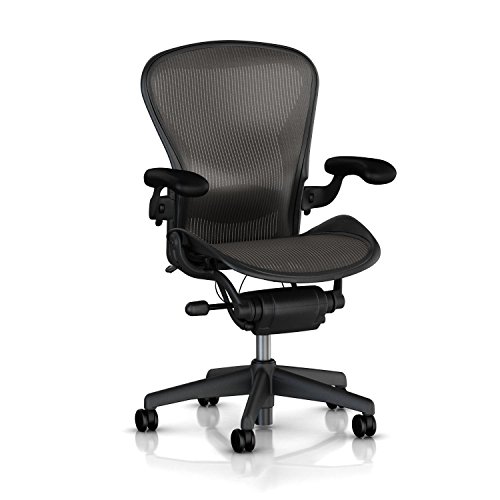
Herman Miller Classic Aeron Chair, Size B (Aluminum) — Best Overall
This suits tall men who run warm, sit long hours, and want the chair the category is benchmarked against. A sizing note in honesty: the Aeron line is sized, and the largest frames should confirm the size variant on the listing — the verified listing here is the Size B aluminum configuration, and very tall or broad sitters may prefer the larger size where available.
Strengths
- Mesh suspension eliminates seat pressure hotspots
- Proven tall-hours comfort across decades of use
- Aluminum build suits a permanent home office
Trade-offs
- Sizing matters — confirm the variant before ordering
- Premium tier, the highest positioning here
- Mesh feel is firm, not cushioned
| Spec | Detail |
|---|---|
| Model | Classic Aeron, Size B |
| Frame | Aluminum per listing |
| Seat | Suspended mesh |
The Aeron’s case for tall men is its sizing system itself: rather than one chair stretched, the line was designed in sizes, and a correctly sized Aeron puts its lumbar support and waterfall seat edge where a long body needs them. The mesh seat is the other half of the argument — no foam to compress into a hammock by year two, and airflow that ends the warm-seat problem of long sessions. The discipline this pick demands is variant discipline: read the listing’s size carefully, because an Aeron in the wrong size is an expensive way to own the wrong chair. Matched correctly, it is the benchmark the rest of this list is measured against, and its resale and parts ecosystem reflects thirty years of being exactly that.
Best for: Long hours, warm sitters, benchmark ergonomic support / Not suited for: Buyers who want a soft cushioned seat or the lowest tier
Check on Amazon — check price on Amazon for the current configuration.

Secretlab Titan Evo XL Gaming Chair (Black, Leatherette) — Best for Big and Tall
This suits the tallest and broadest men in this guide’s audience — the frames ordinary chairs visibly fail. If you have ever sat in a chair and felt the backrest end at your shoulder blades like a suggestion, this XL is the pick written for you.
Strengths
- XL sizing built for big and tall frames
- Tall high back supports the full spine length
- Integrated lumbar support adjusts in place
Trade-offs
- Gaming styling will not suit every office
- Large footprint needs a large desk area
- Leatherette runs warmer than mesh
| Spec | Detail |
|---|---|
| Size | XL, big and tall per listing |
| Back | High back, reclining |
| Support | Integrated lumbar, magnetic head pillow |
Gaming chairs earned their way into ergonomic conversations by doing one thing office chairs neglected: sizing up honestly. The Titan Evo XL’s tall back reaches where a tall man’s shoulders actually are, its seat is cut for long thighs, and its lumbar support is built into the backrest rather than strapped on as an afterthought cushion that migrates by lunch. The recline is a genuine comfort feature for long days — shifting angle shifts load, and load-shifting is half of sitting comfortably. Accept the trade-offs plainly: it looks like a gaming chair, it occupies floor like one, and its upholstery breathes less than mesh. For the man whom standard chairs have failed on dimensions alone, those are easy trades. Comfort framing only: it supports a long day at a desk; it is furniture, not treatment.
Best for: The tallest and broadest sitters; long gaming and work days / Not suited for: Small rooms or mesh-cooling seekers
Check on Amazon — check price on Amazon for the current configuration.

Steelcase Leap Office Chair — Best Adaptive Back
This suits tall men whose sitting style changes through the day — upright for focus work, reclined for calls and reading — and who want the back support to follow rather than fight those changes.
Strengths
- Back flexes and adapts as you shift position
- Natural Glide keeps support aligned while reclining
- Understated office styling suits any room
Trade-offs
- Cushioned seat feel differs from mesh rivals
- Adjustment set has a learning curve
- Premium tier positioning
| Spec | Detail |
|---|---|
| Model | Leap, onyx |
| System | Natural Glide per listing |
| Support | Adaptive ergonomic back |
The Leap’s insight is that a spine is not a statue: it changes shape between upright work and reclined thinking, and a rigid backrest supports at most one of those postures. Steelcase’s flexible back and glide system keep the lumbar region supported as the sitter moves, which is precisely the tall man’s complaint about lesser chairs — support that lands correctly at 9 a.m. and nowhere by the 3 p.m. slouch. Its seat is cushioned rather than mesh, a genuine preference split with the Aeron: choose by whether your body likes suspension or padding. Either way, the Leap rewards the twenty minutes of adjustment setup in the how-to section more than any chair here; its range is wide, and wide ranges need dialing in.
Best for: Position-changers wanting support that follows / Not suited for: Set-and-forget buyers unwilling to dial in adjustments
Check on Amazon — check price on Amazon for the current configuration.

SIHOO M18 Ergonomic Office Chair — Best Adjustable Value
This suits tall men who need the adjustment checklist — lumbar, headrest, arms, height — without the flagship tiers, including heavier sitters who need the stated capacity with margin.
Strengths
- Adjustable lumbar support and headrest included
- Stated 330 lb capacity suits bigger frames
- Wide cushion fits broad sitters
Trade-offs
- Mesh and build are a class below the flagships
- Assembly and adjustment take patience
- Armrests are 2D, not the fullest range
| Spec | Detail |
|---|---|
| Capacity | 330 lbs per listing |
| Back | Mesh with headrest |
| Lumbar | Adjustable |
| Arms | 2D adjustable |
The M18 is where the tall-fit checklist stops costing flagship money. Its adjustable lumbar pad can be placed at the belt line of a long torso — the single adjustment that decides comfort for tall men — and the headrest actually reaches a tall sitter’s head, which is rarer than it should be. The wide cushion acknowledges that tall usually travels with broad. Set expectations at its tier: the mesh is serviceable rather than luxurious, and the chair rewards careful assembly and a week of small adjustments rather than announcing its quality in the first sit. As the value route to a genuinely tall-adjusted setup, it is the pick most readers of this guide will rationally choose.
Best for: Tall and heavier sitters wanting full adjustment at an accessible tier / Not suited for: Buyers expecting flagship materials
Check on Amazon — check price on Amazon for the current configuration.

HON Ignition 2.0 Ergonomic Office Chair — Best Office Standard
This suits tall men furnishing a home office to a professional standard — or matching a chair their workplace already uses — who value a proven task-chair design over gaming or flagship statements.
Strengths
- Office-furniture pedigree and parts support
- Lumbar support with adjustable arms
- Neutral design suits shared and professional spaces
Trade-offs
- Adjustment range is sensible, not maximal
- Cushion style is firm and businesslike
- Tall extremes should verify seat depth on the listing
| Spec | Detail |
|---|---|
| Maker | HON office furniture |
| Support | Lumbar support per listing |
| Arms | Adjustable |
| Finish | Black |
There is a quiet argument for buying the chair that facilities managers buy by the hundred: it was designed to keep a workforce sitting comfortably for years, to be adjusted by strangers, and to have parts available when something wears. The Ignition 2.0 is that chair. For tall men it covers the fundamentals — real lumbar support, arms that move out of the way of broad shoulders, a seat height range that respects long legs — without the gaming look or the flagship ceremony. Verify seat depth against your thigh measurement using the guide’s method, as with any chair; within its range, it is the professional default, and defaults chosen by professionals are usually defaults for a reason.
Best for: Home offices wanting a proven professional task chair / Not suited for: The very tallest frames needing XL-specific sizing
Check on Amazon — check price on Amazon for the current configuration.

Marsail Ergonomic Office Chair — Best Mesh on a Budget
This suits tall men setting up a first serious home office, or a second workstation, who need height, a high back and adjustable lumbar without flagship spending.
Strengths
- High mesh back suits long torsos
- Adjustable lumbar support included
- 3D armrests adjust more ways than budget norms
Trade-offs
- Materials and casters reflect the tier
- Capacity and sizing need listing verification for the biggest frames
- Assembly quality varies — check every bolt twice
| Spec | Detail |
|---|---|
| Back | High back mesh |
| Lumbar | Adjustable per listing |
| Arms | 3D adjustable |
| Form | Swivel task chair |
Budget ergonomic chairs usually cut the lumbar adjustment first, because it is invisible in photographs. The Marsail keeps it, and adds a high back and 3D arms, which is why it makes a tall man’s list at all: the features that decide tall comfort survived the cost engineering. What the tier does show is in the details — caster smoothness, mesh tension over years, the precision of the tilt mechanism — and in assembly, where careful, patient building earns a noticeably better chair. Treat it as the honest floor of this category: everything a tall sitter needs, nothing they do not, at the tier where trying ergonomic sitting properly stops being a major purchase.
Best for: First ergonomic setups and second workstations / Not suited for: The heaviest frames or decade-long single-chair plans
Check on Amazon — check price on Amazon for the current configuration.
Comparison Table
The table below compresses the six picks into the four facts that decide most purchases of best chairs for back pain tall men: the badge, the verified headline spec, and the job each model does best. Read it alongside the full reviews, because the spec column never tells the whole story — ownership effort, sizing and fit live in the review text.
| Pick | Badge | Key spec | Best for |
|---|---|---|---|
| Herman Miller Classic Aeron Chair, Size B (Aluminum) | Best Overall | Classic Aeron in aluminum, size B configuration per listing | Long hours, warm sitters, benchmark ergonomic support |
| Secretlab Titan Evo XL Gaming Chair (Black, Leatherette) | Best for Big and Tall | XL size, ergonomic lumbar support, high back, reclining, magnetic head pillow per listing | The tallest and broadest sitters; long gaming and work days |
| Steelcase Leap Office Chair | Best Adaptive Back | Ergonomic back support with Natural Glide system, onyx, for carpet per listing | Position-changers wanting support that follows |
| SIHOO M18 Ergonomic Office Chair | Best Adjustable Value | Mesh back with headrest, adjustable lumbar support, holds 330 lbs, 2D armrests, wide cushion per listing | Tall and heavier sitters wanting full adjustment at an accessible tier |
| HON Ignition 2.0 Ergonomic Office Chair | Best Office Standard | Ergonomic chair with lumbar support, adjustable arms, black per listing | Home offices wanting a proven professional task chair |
| Marsail Ergonomic Office Chair | Best Mesh on a Budget | High back mesh, adjustable lumbar support, 3D armrests, rolling swivel task chair per listing | First ergonomic setups and second workstations |
How to Choose Chairs for Back Pain — Tall Men
The tall-fit measurements that actually decide comfort
Forget marketing dimensions and take four of your own. Seat height: sit with feet flat and measure floor to the back of the knee — the chair’s seat must adjust to roughly that height so feet rest flat and knees sit level or slightly below hips. Seat depth: measure the back of the knee to your back while seated; the chair’s depth should leave two to three fingers of clearance behind the knee while the back touches the backrest. Backrest height: for a tall man, the back should reach at least the shoulder blades, and a headrest should meet the head, not the neck. Capacity: choose a stated rating with comfortable margin over your weight, because margin is also structural confidence.
Apply these to every listing, including the picks here — chairs ship in variants, and the variant in the box is the chair you own. A chair that fails any one measurement will be compensated for by your body, hourly, in the currency of discomfort.
Lumbar support: placement beats padding
For tall men the lumbar question is rarely how much support but where it lands. A long torso puts the belt line higher than a standard chair’s fixed curve expects, so support designed for an average back presses a tall back in the wrong county. That is why adjustable-height lumbar — a movable pad, an integrated dial system, a flexible back — dominates this pick list. Set it at the belt line, firm enough to feel like a hand resting there, never so aggressive it pushes you forward off the seat.
Reassess after a week. New owners over-tighten lumbar support on day one, chasing the sensation of being supported, and end up perched. The correct setting is the one you stop noticing by the second week — support that disappears into the background of a comfortable day is support correctly placed.
Mesh versus cushion versus upholstery for long days
Mesh suspends and breathes: no foam compression over the years, no warm seat in summer, a firmer and more deliberate sit. Cushions pad and insulate: softer first impression, and foam quality decides whether year three feels like year one. Upholstered gaming designs split the difference with thick padding and the least airflow, repaid in recline range and sheer room. None is the ergonomic answer in itself — fit and adjustment decide comfort; material decides feel and climate.
Tall men who run warm and sit long usually land on mesh, which is why two flagships here use it. Men who shift positions constantly often prefer the Leap’s cushioned adaptability. The honest method is to decide your material by your room temperature and sitting style, then enforce the fit measurements within that material class.
The workday around the chair
Ergonomic comfort is a chair plus a rhythm. Even a perfectly fitted chair should not hold a body motionless for eight hours: stand or walk briefly every half hour or so, change the chair’s angle between focus work and calls, and keep the monitor and keyboard arranged so the chair’s support is not undone by a hunched reach — screen at arm’s length, top near eye level, feet flat. These are comfort habits, not medical advice, and they are the difference between a good chair helping and a good chair being blamed.
If discomfort persists despite a fitted chair and sane habits, that is information a professional should hear. Chairs are furniture chosen for comfort and support; they are not treatment, and this guide deliberately makes no claim beyond helping a tall man sit comfortably through his day.
Dialing in a tall setup: desk, monitor and chair as one system
A tall man’s chair cannot be fitted in isolation, because the desk completes the geometry. With the chair at correct height — feet flat, knees comfortable — the desk surface should meet the forearms at roughly a right angle with shoulders relaxed. Tall men often discover their desk is the wrong height, not their chair: if the seat must rise for leg room until the desk digs into the thighs or the shoulders shrug to reach the keyboard, a height-adjustable desk or a keyboard tray is the missing piece, and no chair purchase will substitute for it.
Monitor position follows: the screen top near eye level, at arm’s length, so the tall back is not pulled into a forward curl by a low laptop screen — the single most common tall-desk failure. A laptop on a stand with a separate keyboard transforms any of these chairs’ support from theoretical to actual. Fit the system in order — chair height from the floor, desk height from the chair, screen height from the eyes — and the comfort the picks promise becomes the comfort you get.
How to Set Up Your Chair for a Tall Frame
Twenty minutes with a tape measure and the chair’s levers, in this order, before the first workday.
- Set seat height from the floor. Sit with feet flat on the floor, knees level or slightly below your hips. Adjust the seat until that is true — this is the foundation every other setting assumes.
- Set seat depth if adjustable. Sit fully back. You should fit two to three fingers between the seat edge and the back of your knee. Too deep presses the knee; too shallow abandons the thigh.
- Place the lumbar support at your belt line. Find the support adjustment and position it at the small of your back, then set its firmness to a resting-hand pressure. Mark the setting; you will fine-tune it over the first week.
- Set the backrest and recline tension. The back should contact your back from lumbar to shoulder blades without pushing. Set recline tension so you can lean back with gentle effort and be held, not launched or locked.
- Position armrests to unload the shoulders. Arms should rest with shoulders relaxed and elbows near a right angle. If the rests force a shrug, lower or widen them — or remove them if your desk work prefers it.
- Check the desk and screen against the chair. Forearms level at the keyboard, screen top near eye level at arm’s length. Fix mismatches with the desk or a stand, not by compromising the chair settings above.
Common Buying Mistakes
Buying the average chair and enduring it
A chair sized for an average frame does not become tall-friendly through willpower. The measurements in the guide take five minutes; a misfit chair charges interest on them every working hour for years.
Chasing lumbar padding instead of lumbar placement
A thick fixed pad in the wrong place is worse than a slim adjustable one in the right place. For a long torso, where the support lands decides everything — adjustability is the feature, foam is the detail.
Setting the chair once and never again
Bodies and tasks change across a week, let alone a year. Revisit height, lumbar and tension monthly, and after any desk or monitor change. The best-adjusted chair in this guide is the one its owner still adjusts.
Ignoring the desk and blaming the chair
A low desk and a laptop screen will fold a tall man over the finest chair made. Fit the system — floor, chair, desk, screen — before concluding that a chair has failed you.
Expecting a chair to substitute for movement or professional advice
Chairs provide comfort and support for sitting; they do not treat pain, and they do not repeal the need to stand and move through the day. Persistent discomfort deserves a professional evaluation, not a more expensive chair.
Final Recommendation
Start with fit, then choose your flagship: the Aeron for mesh suspension and benchmark support (confirming your size variant), the Steelcase Leap for a back that adapts as you move, or the Secretlab Titan Evo XL if your frame is the one standard chairs visibly fail. At accessible tiers, the SIHOO M18 brings the full tall checklist with stated capacity, the HON Ignition 2.0 is the professional standard, and the Marsail keeps the essential adjustments at a budget tier.
Whichever arrives, spend the twenty minutes on the setup sequence before judging it, and give your body a week at correct settings before fine-tuning. Tall men have usually spent years adapting to chairs; a chair that finally adapts back takes a few days to feel like home.
Keep exploring the cluster: Best Ergonomic Office Chairs Best Blankets For Queen Bed Best Sheet Sets For Icomfort Queen Best Certified Organic Pillows Best Alarm Clocks For College
Standing, Walking and the Chair’s Day Off
The best-fitted chair in this guide still benefits from not being sat in continuously, and the tall man’s workday should be designed with exits. The practical rhythm most desk workers can actually keep is simple: a brief stand or walk roughly every half hour, a longer movement break mid-morning and mid-afternoon, and position changes — upright, reclined, perched forward — in between. None of this requires equipment beyond a timer or a water glass that needs refilling at a distant tap, which is the oldest standing-desk hack in existence: hydration as a scheduling system.
A sit-stand desk, where the workspace allows one, multiplies the chair’s value rather than replacing it: the chair serves the sitting hours properly fitted, and the standing hours take the load entirely off the seat. Men who adopt the alternation usually report that their chair comfort improves too, because the body returns to it un-fatigued. The transition discipline matters more than the ratio — stand before discomfort forces it, not after, so that movement stays a habit rather than becoming a rescue.
Keep the framing of this whole guide in view: these are comfort practices around furniture, offered to help a tall man sit and work comfortably. They are not a program for treating anything. The chair, the desk, the rhythm — together they make a workday that a long body can inhabit without complaint, which is the legitimate and sufficient ambition of every product and paragraph on this page.
Buying a Chair You Cannot Sit In First
Most readers will buy these chairs from a listing, not a showroom, which makes the purchase an exercise in structured trust. The structure is the measurements: yours, taken by the guide’s method, against the listing’s stated dimensions and capacity, variant by variant. Where a listing is vague about a dimension that decides your fit — seat depth is the usual omission — treat the vagueness itself as information, and favor the maker who publishes numbers over the maker who publishes adjectives. Every pick in this guide earned its place partly by having its key facts confirmable in its verified listing.
Assembly is the second act of an online chair purchase, and it deserves the same seriousness as the selection. Build on a clear floor, lay the parts out against the instructions, tighten in the maker’s sequence, and then — the step everyone skips — re-check the fasteners after the first week of sitting, when the chair has settled and told you which bolts wanted a second turn. A chair assembled carelessly feels like a badly designed chair, and many returned chairs are innocent of everything except their owner’s Allen key technique.
Finally, give the chair its fair trial: a week at correct settings before judgment, with the setup sequence revisited at day three. Bodies adapted to years of misfit chairs need time to trust a correct one, and the first sit is the least reliable data point in the entire purchase. Judged at day seven, with measurements honored and bolts tight, the chairs in this guide make their case the way furniture should — by disappearing under a comfortable workday.
Try Before You Commit: Showrooms, Offices and Borrowed Chairs
For all this guide’s faith in measurements, a tall man with access to a showroom or a chair-rich office should sit in the candidates — briefly, and with a method. The method is not the thirty-second showroom perch, which tells you about the first impression and nothing else. It is the adjusted sit: set the chair’s height to your measurement, place its lumbar at your belt line, sit back fully, and only then judge. Most chairs in most showrooms are set for the previous sitter, who was not your height, and an unadjusted Aeron has ended more good matches than any design flaw.
Borrowed evidence counts too. If your workplace, a friend’s studio or a coworking space runs any model on this list, an hour of real work in it — adjusted — is worth a hundred listing photographs. Notice the things listings cannot say: how the armrests meet your elbows at a real desk, whether the seat edge and your thighs agree at minute forty, whether you stop noticing the chair, which is the highest praise furniture earns. A chair you forget is a chair that fits.
Where no sit is possible, the measurements and the stated dimensions remain a sound basis — they are how the picks here were chosen — and the first-week protocol in this guide is the trial: adjust, work, re-adjust, judge at day seven. Between the tape measure and the week, a tall man buying online is not gambling. He is running the same evaluation as the showroom, on a longer clock, in the room where the chair will actually live.
Chairs for Tall Men Who Game, Create and Work Nights
The tall man’s chair often serves two shifts: the workday and the evening’s gaming, music, editing or writing that follows it, and the shifts ask slightly different things. Work wants upright support and a back that follows posture changes; play wants recline, a headrest that meets a tall head, and arms that get out of the way of a controller, a guitar or a drawing tablet. The picks that span both shifts best are the ones with genuine recline range and adjustable everything — the Titan Evo XL was designed for the second shift and reports for the first, while the Leap’s adaptability runs the same double duty from the office direction.
Lighting and screen habits matter more on the night shift, when a tall frame curls toward a glowing rectangle in a dark room. The setup sequence in this guide applies unchanged, with one addition: raise the screen and bring the light up, because the night posture fails at the eyes first. A monitor arm is the tall night worker’s best accessory, floating the screen at the height a long torso actually needs, which no fixed stand at a standard desk reliably does.
The chair that serves both shifts will be sat in for ten or more hours across a day, which raises the ownership stakes on everything this guide has covered — fit, materials, movement rhythm. Split the sitting with the standing breaks, let the recline do its load-shifting work between tasks, and the double-shift chair becomes what its owner actually bought: not furniture for a job, but the base of operations for a waking life spent largely, and comfortably, in one well-fitted place.
A last word on proportion: a chair is a tool for the hours you must sit, chosen by measurement, and this guide has deliberately kept it in that frame — comfort, fit, support, durability — because that is the frame in which chairs can honestly be judged and in which these six earn their places. Fit yours by the numbers, set it up by the sequence, move through the day around it, and let a professional hear about anything that persists beyond furniture’s jurisdiction. Do those things and the likely outcome is the unremarkable one every tall man is actually shopping for: a workday that ends with the chair forgotten, the work remembered, and a back that was never the story. Furniture that disappears is furniture that worked.
One more buying situation deserves direct advice: the employer stipend. Many tall men now furnish the home office with a company allowance and a deadline, and the temptation is to spend it on the most famous chair rather than the best-fitting one. Spend it by the measurements instead, and spend the remainder where this guide says systems fail — the monitor arm, the keyboard tray, the desk height correction — because a stipend spent across the system outperforms a stipend spent on a single famous object. If the allowance covers a flagship and your measurements point at the Aeron’s size or the Leap’s adaptability, buy with confidence and keep the receipt discipline your finance team would want. If it points at the SIHOO or the HON, bank the difference for the desk. Fit first, fame later, system always.
Finally, remember that the first chair you buy by measurement teaches you your own numbers, and those numbers are permanent assets. Seat height, seat depth, belt-line height, the capacity margin you prefer — write them in the notes app where the next furniture decision will find them, because dining chairs, car seats and the next office chair all ask the same questions in different accents. A tall man who knows his measurements stops shopping by hope. He shops the way this guide shopped: by fit, verified, and then — only then — by everything else.
Final Word on the Best Chairs for Back Pain Tall Men
Everything in this guide reduces to four numbers and one habit: seat height from the floor, seat depth against your thigh, lumbar support at your belt line, capacity with margin — and the habit of moving through the day instead of asking any chair to be a posture by itself. A chair that honors the four numbers will serve a tall man for years; a chair that ignores them will charge him hourly for the oversight, whatever its badge or price tier. The six picks above honor them in six different ways, from the sized Aeron to the XL Secretlab to the accessible SIHOO, and the setup sequence turns whichever you choose from a delivery into a fitted tool. Measure first, buy once, adjust patiently — that is the whole method, and it generalizes to every chair you will ever buy.
Related guides
Frequently Asked Questions
What seat height does a tall man need in an office chair?
Enough that, seated with feet flat on the floor, the knees sit level or slightly below the hips — for most tall men that means a chair whose range extends higher than standard. Measure from the floor to the back of your knee while seated and match the chair’s range to it, rather than trusting a tall label.
How do I know if a chair’s seat is deep enough?
Sit fully back against the backrest: you want the thigh supported along most of its length with two to three fingers of clearance behind the knee. Less clearance presses the knee; a large gap means the seat is abandoning your thighs and your pelvis will roll backward to compensate.
Is a gaming chair or an office chair better for a tall man?
Whichever fits the measurements. Gaming designs like the Titan Evo XL size up honestly and recline generously; office flagships like the Aeron and Leap refine support and materials. Judge both by seat depth, back height, lumbar placement and capacity — the category on the box matters less than the numbers on the listing.
Where should lumbar support sit?
At the belt line, in the natural inward curve of the lower back, with a firmness like a resting hand. Tall men should insist on height-adjustable support, because a long torso places that curve higher than a fixed chair expects. If you stop noticing the support after a week, it is placed correctly.
Can the right chair resolve back discomfort from sitting?
The right chair can substantially improve sitting comfort by fitting your frame and supporting your posture, and setup and movement habits multiply the benefit. It is furniture, not treatment: discomfort that persists despite a fitted chair and regular breaks deserves assessment by a qualified professional.
What capacity rating should a tall man look for?
A stated rating comfortably above your body weight. Margin matters twice: it covers the dynamic load of sitting down and shifting, and it correlates with the frame and cylinder strength that long-term comfort depends on. The SIHOO M18’s stated 330 lb rating is the kind of explicit figure to look for on any listing.


