Disclosure: airfryerkitchensupply.com is reader-supported. When you buy through links on our site, we may earn an affiliate commission at no extra cost to you.
Where to buy
Every linked pick in this guide to the best air purifiers for wildfire smoke was verified against Amazon’s catalog on 2026-11-22, so the model names below are the models you will actually land on. Start with LEVOIT Core 600S-P Smart Air Purifier, Medify MA-40 Air Purifier, Medify MA-50 Air Purifier V3.0. Any pick described in prose without a link could not be pinned to a single verified listing, and it is flagged honestly rather than dressed up with a guessed link. Check the current price on Amazon from any pick’s link, because colors, sizes and bundle contents rotate often.
Shopping for the best air purifiers for wildfire smoke is different from shopping for everyday dust and pet hair, and the difference is chemistry. Wildfire smoke is a mix of very fine particles and a heavy load of gases and odors from burning wood and vegetation. A purifier that only traps particles will clear the haze you can see while leaving the campfire smell — and the gases that carry it — circulating. That is why this guide weighs activated carbon capacity almost as heavily as particle filtration, and why two of the six picks are built around unusually large carbon beds.
The honest market picture: almost every purifier sold today claims smoke performance, but the designs split into three real tiers. Light-duty bedroom units pair a true HEPA filter with a thin carbon sheet; they help in a small sealed room during a short smoke event. Mid-tier towers carry pounds of carbon in a canister and handle a living room through a multi-day episode. Heavy gas-phase units use deep beds of carbon and zeolite and are the slow, deliberate tools for homes that sit under smoke for weeks each season. All three tiers appear below, labeled clearly, so you can match the machine to the smoke you actually get.
Every pick here was verified, and the coverage figures quoted are the manufacturers’ own room-size ratings from the verified listings. Treat those ratings as ceiling numbers for a single air change pace, not guarantees: during a real smoke event, sizing up one class from your room’s square footage is the single most reliable way to keep indoor air feeling clean without running the fan at its loudest setting all day.
In this guide
Quick Picks
Six models made the cut for this guide to the best air purifiers for wildfire smoke. Each carries its own badge, and the same badge follows it into the full review below so you can track a recommendation from summary to verdict.
- Best Overall — LEVOIT Core 600S-P Smart Air Purifier: The balanced default for most homes: big-room airflow, app and voice control, and a quiet sleep mode for smoke nights. Key spec: Large-room coverage up to 2,933 sq ft per listing; HEPA filtration with sleep mode.
- Best for Smoke Odor — Medify MA-40 Air Purifier: A smoke-first design whose listing names wildfires directly, with strong single-room coverage and a straightforward control layout. Key spec: 1,793 sq ft coverage in 1 hr per listing; HEPA filter listed for smoke and wildfires.
- Best for Large Rooms — Medify MA-50 Air Purifier V3.0: The step-up Medify for great rooms and open floors, with the same smoke-first filter philosophy and more air behind it. Key spec: 2,640 sq ft coverage in 1 hr per listing; HEPA filter for smoke and wildfires.
- Best Deep Carbon Bed — Austin Air HealthMate Plus: The heavy gas-phase specialist: a deep bed of activated carbon and zeolite in a steel case, built for smoke that lasts weeks. Key spec: 4-stage filtration with activated carbon and zeolite; up to 1,500 sq ft per listing.
- Best Smart Mid-Size — WINIX 5510 Air Purifier: A current-generation Winix with true HEPA filtration, an air-quality monitor and app support, sized for a main bedroom or mid-size living room. Key spec: Up to 1,881 sq ft in 1 hr per listing; true HEPA with app support.
- Best Proven All-Rounder — COWAY Air Purifier with Washable Pre-Filter: A long-running Coway design with a quality monitor, auto and eco modes, and a filter system built for smoke among its listed targets. Key spec: Up to 3,120 sq ft per listing; washable pre-filter and HEPA filter for smoke.
How These Picks Were Chosen
Picks were chosen on four criteria, in this order. First, particle capture: a true HEPA-grade filter or an equivalent sealed filtration system, because wildfire particles are dominated by the fine PM2.5 fraction. Second, gas-phase capacity: the weight and type of activated carbon, since a carbon-impregnated foam pad saturates in days under heavy smoke while a multi-pound canister lasts a season. Third, usable airflow at a tolerable noise level, judged from the verified listings’ room coverage and mode descriptions. Fourth, ownership reality: replacement filter availability and whether the design lets you vacuum or replace a pre-filter instead of discarding the whole cartridge.
Models were excluded when the listing showed only a token carbon sheet with no meaningful gas-phase stage, when replacement filters could not be confirmed, or when the product was a filter or accessory rather than a complete purifier. One well-known heavy-duty design is covered in prose in the buying guide rather than the pick list because its listing configuration varies; the six linked picks below are complete machines you can order as listed.
The 6 Best Air Purifiers for Wildfire Smoke

LEVOIT Core 600S-P Smart Air Purifier — Best Overall
This suits households that want one machine to anchor an open-plan living space during smoke season and then idle quietly the rest of the year. It is the pick for buyers who value automation — schedules, app control and an air-quality readout — over maximum carbon weight.
Strengths
- Verified large-room coverage rating suits open-plan spaces
- Smart controls and auto mode react when smoke drifts in
- Sleep mode keeps it usable in a bedroom overnight
Trade-offs
- Carbon stage is a combined cartridge, not a deep standalone bed
- Large footprint for a tower-style unit
- App features are wasted if you prefer purely manual controls
| Spec | Detail |
|---|---|
| Coverage (listing) | Up to 2,933 sq ft |
| Filtration | HEPA-type cartridge with carbon stage |
| Controls | App, voice, auto and sleep modes |
In a smoke event, the Core 600S-P earns its place through airflow discipline: it can move a lot of air on its higher settings when the room first fills, then settle into auto mode and respond as outdoor conditions change through the day. The combined cartridge design is its honest compromise — particle capture is strong, and the carbon woven into the cartridge handles everyday odor, but a week of dense smoke will exhaust that carbon faster than the canister designs lower in this list. Plan on treating the cartridge as a seasonal consumable if you live where smoke lingers, and keep a spare on hand before fire season rather than during it, when smoke-season stock disappears first.
Best for: Open-plan homes wanting smart, set-and-forget smoke coverage / Not suited for: Weeks-long heavy smoke where deep carbon beds matter most
Check on Amazon — check price on Amazon for the current configuration.

Medify MA-40 Air Purifier — Best for Smoke Odor
This suits buyers whose main complaint during smoke events is the smell soaking into a living room or primary bedroom. The MA-40 is sized for one large room done properly rather than a whole floor done thinly.
Strengths
- Listing explicitly rates it for smoke and wildfire use
- Strong one-hour coverage for a single large room
- Simple controls suit set-and-run ownership
Trade-offs
- One room at a time — whole-home coverage needs multiples
- Replacement filter is a proprietary cartridge
- Fewer smart features than app-driven rivals
| Spec | Detail |
|---|---|
| Coverage (listing) | 1,793 sq ft in 1 hr |
| Filtration | HEPA filter with odor stage |
| Use case | Smoke, wildfires, odors, pollen, pets per listing |
The MA-40 is the pick that treats smoke as the main job rather than a side benefit. Its filter stack is built around trapping fine particles and then working on the odor load, which is exactly the order smoke demands. In practice it is at its best in a closed room with the door shut — a bedroom you seal and run all night, or a living room you treat as the clean-air refuge during the worst afternoons. Buyers in multi-room homes should budget for the reality that one unit conditions one space; the honest comparison is not MA-40 versus a bigger machine, it is MA-40 in the room you sleep in versus thin coverage everywhere.
Best for: Sealing one large room as a clean-air refuge during smoke events / Not suited for: Buyers wanting app control and whole-floor coverage from one unit
Check on Amazon — check price on Amazon for the current configuration.

Medify MA-50 Air Purifier V3.0 — Best for Large Rooms
This suits homes where the smoke-season refuge is a big open space — a combined kitchen, dining and living area — rather than a bedroom. If your household gathers in one large room during smoky days, this is the Medify sized for it.
Strengths
- Highest one-hour coverage of the smoke-first picks
- Same wildfire-rated filter approach as the MA-40
- Handles open-plan layouts a bedroom unit cannot
Trade-offs
- Bigger and heavier to move between rooms
- Overkill for a single small bedroom
- Filter replacements are a recurring seasonal cost
| Spec | Detail |
|---|---|
| Coverage (listing) | 2,640 sq ft in 1 hr |
| Filtration | HEPA filter, smoke and wildfire rated per listing |
| Layout fit | Open-plan and great rooms |
Coverage ratings reward honesty about air changes: a purifier rated for a large room in one hour is really promising a certain number of full room volumes per hour, and smoke is the scenario where that pace matters most, because infiltration keeps adding particles as fast as you remove them. The MA-50 gives you headroom, which buys quiet — you can run it a setting lower than a smaller machine working flat out, and lower settings are what make a purifier livable next to a sofa or desk. Pair it with the door-and-window discipline in the how-to section and it holds a big room comfortably through a multi-day episode.
Best for: Open-plan living spaces that become the household smoke refuge / Not suited for: Small bedrooms, where its output and size are wasted
Check on Amazon — check price on Amazon for the current configuration.

Austin Air HealthMate Plus — Best Deep Carbon Bed
This suits homes in fire-prone regions where smoke is a season, not an event, and where the lingering smell is as much the problem as the haze. It is a buy-it-once, run-it-for-years machine for a fixed spot in a main room.
Strengths
- Deep carbon and zeolite bed targets smoke gases and odor
- Long-life filter design reduces change frequency
- Steel housing suits permanent placement
Trade-offs
- Heavy and plainly styled — it lives where you put it
- Premium-tier positioning among these picks
- Less raw airflow per hour than big tower designs
| Spec | Detail |
|---|---|
| Coverage (listing) | Up to 1,500 sq ft |
| Filtration | 4-stage, activated carbon and zeolite bed |
| Housing | Steel, floor-standing |
The HealthMate Plus plays a different game from cartridge towers. Its carbon and zeolite bed is measured in pounds, and gas-phase capacity scales with that mass: where a thin carbon sheet saturates in days of heavy smoke, a deep bed keeps adsorbing for a long season. The trade is speed — deep beds move air more slowly, so this is not the machine to clear a room that just filled with smoke when a door opened; it is the machine that keeps a sealed room from ever smelling like a campfire in week three. Buyers who understand that distinction tend to be the happiest owners of this design.
Best for: Fire-season homes battling lingering smoke odor for weeks / Not suited for: Buyers wanting fast clear-down and smart-home features
Check on Amazon — check price on Amazon for the current configuration.

WINIX 5510 Air Purifier — Best Smart Mid-Size
This suits buyers who want a monitored, automatic response in the room they sleep in: the sensor watches air quality, the machine reacts, and the app shows what it is doing. It is a strong fit for apartments and smaller homes.
Strengths
- True HEPA filtration with quality monitoring
- App support and auto mode for hands-off running
- Right-sized for bedrooms and modest living rooms
Trade-offs
- Carbon capacity is mid-tier, not a deep bed
- Coverage ceiling is below the biggest towers here
- Sensor-driven auto modes still need manual boosts in heavy smoke
| Spec | Detail |
|---|---|
| Coverage (listing) | Up to 1,881 sq ft in 1 hr |
| Filtration | True HEPA with carbon stage |
| Controls | App support, auto mode, air quality monitor |
The WINIX 5510 represents the modern mid-tier done well: sealed true HEPA filtration for the particle load, a carbon stage for everyday odor, and monitoring that makes the invisible visible. During smoke events that readout is genuinely useful — it tells you whether your room sealing is working and when to raise the fan speed. Its limit is the same as every mid-tier design: the carbon stage is a supporting player. For a few smoky days a year it is entirely adequate; for a long season, pair it with the expectation of a mid-season filter change, or step to the deep-bed pick above for the main room and keep the Winix for the bedroom.
Best for: Bedrooms and apartments wanting monitored, automatic smoke response / Not suited for: Long-season odor control as the only purifier in the house
Check on Amazon — check price on Amazon for the current configuration.
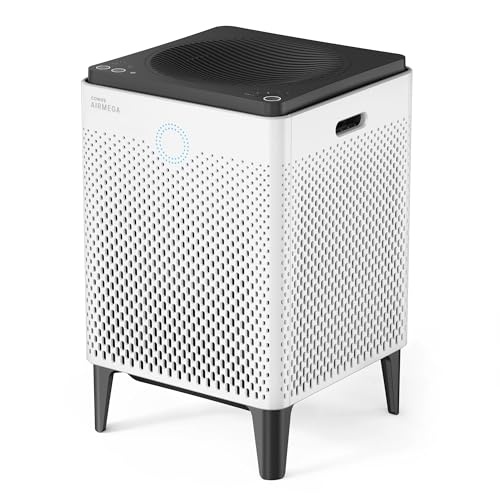
COWAY Air Purifier with Washable Pre-Filter — Best Proven All-Rounder
This suits buyers who prefer a design with a long track record over the newest app features. The Mighty has been a default recommendation in this class for years because its controls, filter layout and auto behavior are all sensibly judged.
Strengths
- Air quality monitor with auto and eco modes
- Listing rates the filter for smoke duty
- Compact footprint for its coverage class
Trade-offs
- Design is older than the smart picks here
- Carbon stage is moderate, like most mid-tier units
- Display lights may bother light sleepers
| Spec | Detail |
|---|---|
| Coverage (listing) | Up to 3,120 sq ft |
| Filtration | Washable pre-filter and HEPA stages |
| Modes | Auto, eco, turbo |
There is a reason Coway keeps appearing in smoke guides: its air quality monitoring and auto mode do the one job smoke asks for constantly — reacting without being asked. When a door opens or the wind shifts and indoor particle levels climb, this Coway notices before you do. Its deodorization stage gives it more odor appetite than the thinnest mid-tier designs, though it remains a cartridge system with a cartridge lifespan. Treat it as the dependable middle of this list: not the deepest carbon, not the biggest airflow, but a machine with no weak answer to any ordinary smoke-season question.
Best for: Buyers wanting a proven, automatic all-rounder for a main room / Not suited for: Maximum gas-phase capacity or the largest open floors
Check on Amazon — check price on Amazon for the current configuration.
Comparison Table
The table below compresses the six picks into the four facts that decide most purchases of best air purifiers for wildfire smoke: the badge, the verified headline spec, and the job each model does best. Read it alongside the full reviews, because the spec column never tells the whole story — ownership effort, sizing and fit live in the review text.
| Pick | Badge | Key spec | Best for |
|---|---|---|---|
| LEVOIT Core 600S-P Smart Air Purifier | Best Overall | Large-room coverage up to 2,933 sq ft per listing; HEPA filtration with sleep mode | Open-plan homes wanting smart, set-and-forget smoke coverage |
| Medify MA-40 Air Purifier | Best for Smoke Odor | 1,793 sq ft coverage in 1 hr per listing; HEPA filter listed for smoke and wildfires | Sealing one large room as a clean-air refuge during smoke events |
| Medify MA-50 Air Purifier V3.0 | Best for Large Rooms | 2,640 sq ft coverage in 1 hr per listing; HEPA filter for smoke and wildfires | Open-plan living spaces that become the household smoke refuge |
| Austin Air HealthMate Plus | Best Deep Carbon Bed | 4-stage filtration with activated carbon and zeolite; up to 1,500 sq ft per listing | Fire-season homes battling lingering smoke odor for weeks |
| WINIX 5510 Air Purifier | Best Smart Mid-Size | Up to 1,881 sq ft in 1 hr per listing; true HEPA with app support | Bedrooms and apartments wanting monitored, automatic smoke response |
| COWAY Air Purifier with Washable Pre-Filter | Best Proven All-Rounder | Up to 3,120 sq ft per listing; washable pre-filter and HEPA filter for smoke | Buyers wanting a proven, automatic all-rounder for a main room |
How to Choose Air Purifiers for Wildfire Smoke
Particle filtration versus gas filtration: the two halves of smoke
Wildfire smoke defeats single-stage purifiers because it attacks on two fronts at once. The visible haze is particulate — mostly PM2.5, fine enough to stay suspended for hours. The smell, and much of what makes a smoky room feel oppressive, is gaseous: volatile compounds released by burning wood that pass straight through a particle filter. A HEPA-grade stage handles the first front. Only activated carbon, in meaningful quantity, handles the second. When you read any smoke purifier listing, split your judgment exactly this way: what traps the particles, and how much carbon is working on the gases?
This split explains the shape of the pick list. Cartridge towers combine both stages in one replaceable unit and are the right answer for days of smoke. Deep-bed designs like the Austin Air separate the problem and throw mass at the gas side, which is the right answer for weeks of smoke. Neither is universally better; they are answers to different smoke calendars.
How to size a purifier for a smoke refuge room
Choose the room first, then the machine. The most effective household strategy is a smoke refuge: one room — usually the primary bedroom or main living room — that you seal and purify properly, rather than several rooms purified thinly. Measure that room, then pick a purifier whose listed coverage is comfortably above the room size, because coverage ratings assume a pace of air changes that smoke infiltration constantly works against. Oversizing by one class also buys quiet, since a larger machine at medium speed moves the air of a smaller machine at full speed with far less noise.
Doors and windows decide more than wattage. A refuge room with a towel-gap door leak and an old window frame will defeat an oversized purifier, while a well-sealed modest room flatters a mid-size one. Budget ten minutes for sealing — door sweep, closed vents where safe, window latches snug — before you spend anything on a bigger machine.
Carbon capacity, filter life and the real cost of a smoke season
No static prices appear in this guide, and filter economics are the reason the rule matters: the purchase is the beginning, not the cost. Under heavy smoke, a combined cartridge that might last a year of normal use can exhaust its carbon in a single bad month, because carbon capacity is consumed by concentration, not by calendar. Ask three questions of any pick: is the carbon a separate, replaceable stage or part of a combined cartridge; is a spare available to buy before the season; and does the design let you vacuum a washable pre-filter so the expensive stages last longer?
Practical rule: enter fire season with one spare filter set in the closet. Smoke events spike demand, shipping slows exactly when everyone needs cartridges, and running a saturated carbon stage gives you particle cleaning with the smell left in — the outcome this guide exists to prevent.
Noise, placement and living with the machine
A purifier only works when it is running, and it only runs when the household tolerates it. Place the unit in the refuge room away from corners, with clearance around the intake, and not directly beside a bed head or a television where its fan competes at ear level. Turbo settings are for clear-down — when you first close the room or after a door has stood open — while the overnight setting is the highest speed you can sleep through, not the highest speed the machine has.
Also plan the air path: the purifier should draw from the room, not from a hallway. Keep its door closed, run it continuously during an event rather than in bursts, and resist moving one machine room to room all day; a purifier that tours the house conditions no room fully. Two smaller fixed units beat one large unit on tour in almost every two-room household.
What to do on the worst smoke days
On the worst days, sequence matters more than settings. Close and latch every window before the smoke front arrives if you have warning, set the refuge-room purifier to its highest tolerable speed an hour early, and move the day’s living into that room: work, rest and especially sleep. Cook with lids on and prefer the microwave or a lidded electric cooker, since frying and gas burners add their own indoor particle load on top of the smoke leaking in. Keep the bathroom exhaust fan off during the worst hours where your home allows it, because exhaust fans pull replacement air — and smoke — in through every gap.
After the event breaks, do not retire the machine immediately. Run it a further day at a moderate setting while you air the rest of the house selectively, then vacuum soft furnishings with a sealed HEPA vacuum if you have one, since settled smoke particles re-suspend from carpets and upholstery for days. Wash the pre-filter or check it against the maker’s guidance, and note the date the main cartridge went in: smoke seasons are when filter logs stop being fussy and start being the difference between a machine that works in week six and one that only moves air.
How to Set Up a Smoke Refuge Room
You can build an effective refuge in under an hour with the purifier you already own or have just bought, and the setup matters as much as the machine.
- Pick the room. Choose the room where the household sleeps or spends the most hours, ideally with one door and few windows. Bedrooms win for most households because a third of the day is spent there.
- Seal the obvious gaps. Close and latch windows, shut the door, and block the under-door gap with a draft stopper or rolled towel. Cover or close room vents only where your heating and cooling guidance allows it.
- Position the purifier. Place it on the floor or a low stand with clear space around the intake and outlet, away from the wall and not hidden behind furniture. Keep it inside the refuge room, not in the hallway outside.
- Pre-run before smoke peaks. Start the purifier on a high setting an hour before the worst conditions are expected, so the room begins the event already clean rather than catching up.
- Settle to a livable speed. Once the air feels clear, drop to the highest speed the room can tolerate continuously — the setting you can sleep and talk over — and leave it there.
- Manage entries and exits. Open the door briefly and decisively rather than standing in it. Every long door opening trades a roomful of cleaned air for hallway air.
- Log the filter. Write the install date on a note kept with the machine. Smoke loads consume filters by exposure, and the log tells you when performance, not the calendar, says replace.
Common Buying Mistakes
Buying for the whole house instead of one refuge room
A single purifier asked to cover an entire floor through open doorways delivers thin cleaning everywhere and real cleaning nowhere. Smoke strategy is concentration: seal one room, size the machine generously for it, and live in the clean air you actually made.
Judging by HEPA alone and ignoring carbon
A purifier can clear visible haze while the room still smells like a campfire, because odor is gaseous and HEPA does not touch gases. If smoke smell is your complaint — and for most people it is — carbon quantity is the spec that decides satisfaction.
Running the purifier only when the room smells smoky
By the time your nose reports smoke, infiltration has been running ahead of the machine. Continuous running at a tolerable speed during an event keeps the room ahead; bursts of turbo after the fact spend the day catching up.
Placing the unit in a corner or behind furniture
Starved intakes slash real airflow whatever the box claims. A purifier needs breathing room on its intake side; the prettiest hidden placement is usually the least effective one.
Entering fire season without a spare filter
Smoke consumes carbon by exposure, and demand spikes exactly when your cartridge fades. The households that stay comfortable through week three are the ones with a spare set bought in spring, not the ones refreshing a sold-out listing in August.
Final Recommendation
For most households, start with the LEVOIT Core 600S-P as the anchor machine: it covers a big room, reacts automatically, and stays quiet enough to live with. If your defining problem is odor through a long season, the Austin Air HealthMate Plus and its deep carbon bed is the specialist to build the refuge around, while the Medify pair are the smoke-first choices for one large room (MA-40) or an open floor (MA-50). The WINIX 5510 suits bedrooms and apartments, and the COWAY with the washable pre-filter remains the proven all-rounder.
Whichever you choose, spend the setup hour: seal the room, pre-run the machine, and log the filter date. In smoke season, discipline beats hardware by a wider margin than any two models on this page differ.
Keep exploring the cluster: Best Air Purifiers For Smokers Best Air Purifiers For Pets Best Blankets For Queen Bed Best Certified Organic Pillows Best Alarm Clocks For College
Smoke Season Calendar: Preparing Before the First Fire
The households that cope best with wildfire smoke treat it as a season with a start date, not a surprise with a smoke alarm. Preparation happens in spring, when filters are in stock and nobody is competing for them. The checklist is short. Service the purifier you own: vacuum or wash the pre-filter, check the main cartridge’s remaining life honestly — if last season ended with the smell returning, that cartridge is done, whatever its calendar age — and order the replacement while the ordering is easy. Test the machine on its highest setting and listen; a purifier that rattles in April will not be repaired in August, it will be endured, loudly, or switched off, which is worse.
Prepare the refuge room next, while there is nothing to react to. Walk it with a critical eye: which window latches loosely, which door has a visible light gap at the floor, where does the purifier sit so its intake breathes and its outlet does not blow directly across the bed. Decide the room’s smoke configuration in advance — furniture moved an inch, the purifier’s spot marked by habit — so that the evening the sky turns orange is an execution, not a project. Families with children or older relatives should rehearse the plan once, briefly, the way you would a fire drill: where we gather, what we close, what stays running.
Finally, stock the small things that smoke weeks consume: a spare filter set, as this guide has already urged; the batteries or supplies any sensor or remote needs; and a simple log sheet for the filter dates and the bad days. None of this is expensive or dramatic, which is precisely the point. Smoke season rewards the boring households — the ones whose preparation happened months before it was needed, whose purifier starts the season new-filtered and whose refuge room closes like a practiced routine. The difference between a miserable smoke week and a manageable one is rarely the machine. It is the calendar.
Reading a Purifier Listing Like an Engineer
Listings for air purifiers are written to be skimmed, and the skimming reader takes home three numbers — coverage, a percentage, and a noise figure — none of which means what it appears to mean. Coverage is the easiest to misread: a rating for a large area in one hour describes a pace of air changes under test conditions, in an empty room, with the machine at full speed. Your room has furniture, infiltration and a fan speed you chose for your ears, so treat the printed coverage as a class marker — small, medium, large — and size up within it, exactly as the sizing section of this guide advises.
The percentage claims — the familiar near-total capture figures — describe the filter media’s efficiency on the particles it is tested with, not the air in your room. A sealed system matters here: air takes the easiest path, and a high-efficiency filter in a leaky housing lets smoke stroll around the edges. This is why the picks in this guide favor established designs with sealed filter paths over anonymous boxes quoting laboratory percentages. The honest question is never the percentage; it is whether the whole machine was engineered as a system, and established makers’ listings tend to answer it with construction details rather than exclamation marks.
Noise figures deserve the same translation. The quiet number on the box is the lowest setting, which moves the least air; the number that matters is the sound at the speed you will actually run during a smoke event, which listings rarely headline. Judge instead by the design’s reputation for its middle settings and by your own tolerance: a purifier you can hold a conversation over at its working speed will be run, and a purifier that must be shouted over will be switched off at the exact moment the smoke is worst. In this category, livability is a specification, and it outranks the laboratory every time.
One Room or Two Machines: The Whole-Home Question
Sooner or later every smoke-season household asks whether one large purifier in the refuge room is enough, or whether the home needs a second machine. The honest answer depends on where the household actually lives during an event. If everyone sleeps in one bedroom corridor and spends the day in one living space, a strong refuge-room machine plus a closed door covers the reality. If the household is genuinely split — a home office in one wing, bedrooms in another, a family member whose room is their world — a single machine becomes a shuttle, and a shuttle purifier, as this guide has argued, conditions no room fully.
The two-machine pattern that works is asymmetric: a serious unit where the deepest need is — the deep-carbon or large-coverage pick in the main refuge — and a competent mid-size unit, like the WINIX or the COWAY in this guide, permanently stationed in the second room. Permanent is the operative word. The second machine is not the first machine’s understudy, carried in when things get bad; it lives in its room, runs through the event, and keeps that room’s air from ever falling behind. Households that adopt the pattern report that the second machine, though smaller, changes the experience disproportionately, because it removes the last uncovered hours — the night, the workday — from the smoke’s territory.
There is also a seasonal rotation worth knowing: outside smoke season, the second machine earns its keep on the ordinary loads — spring pollen in the bedroom, dust in the workshop, the guest room before visitors. A purifier bought for August that also serves April is a much easier household decision than a machine that hibernates ten months a year. Judge the two-machine question by your floor plan and your calendar, not by the worst day alone, and the answer usually settles itself: one refuge for compact households, two stations for spread-out ones, and no shuttles for anyone.
Costs of Ownership, Counted Honestly
Since this guide prints no prices, it owes you the structure of the costs instead, because the structure is where purifier budgets are won and lost. There are three: the machine, the filters, and the electricity. The machine is the loudest number and the least important over five years. Filters are the recurring truth — a combined cartridge replaced on a smoke-season rhythm costs real money annually, while a deep-bed design spreads a larger filter cost across several years. Neither structure is wrong; they are different shapes of the same total, and the buyer’s job is to choose the shape that fits their smoke calendar rather than to hunt for a machine with no running costs, which does not exist.
Electricity is the cost nobody models and everybody pays. A purifier running continuously through a long season consumes like a small appliance left on for months, and the fan speed is the throttle: the difference between a medium setting and turbo, compounded over a season, is the difference between a footnote and a line item. This is another argument for oversizing the machine to the room — a larger unit loafing at medium moves the air of a smaller unit straining at full speed, on less power and at less noise, for the entire season. The cheapest purifier to run is the one that does not have to try hard.
Put together, the honest five-year picture usually inverts the shelf order: the mid-tier machine with cheap, available cartridges and an easy medium setting can cost less to own than the bargain machine with scarce filters run at full tilt, while the premium deep-bed justifies itself in any home where smoke is measured in months. Run your own version of that arithmetic with current prices on Amazon — the listings are one click from every pick in this guide — and let the structure, not the sticker, make the decision.
Final Word on the Best Air Purifiers for Wildfire Smoke
Everything in this guide reduces to two stages and one room: a HEPA-grade stage for the particles you can see, a serious carbon stage for the gases you can smell, and one sealed refuge room where the machine can actually win. The six picks above combine those elements at six different balances of airflow, carbon depth, smart control and tier, and the setup discipline multiplies whichever you choose. Prepare in spring, seal the room, run the machine continuously, keep the spare filter ready — and the next smoke season becomes a managed inconvenience instead of an invasion of your home.
Frequently Asked Questions
Do air purifiers really help with wildfire smoke?
Yes, within the limits of physics: a sealed HEPA-grade stage removes the fine particles that make up the haze, and activated carbon reduces the gases that carry the smell. The benefit is largest in a closed, reasonably sealed room where the machine can complete many air changes — which is why this guide is built around a refuge room rather than open-plan promises.
What is the difference between HEPA and activated carbon for smoke?
They handle different halves of the problem. HEPA filtration traps particles, including the fine PM2.5 fraction that dominates wildfire smoke. Activated carbon adsorbs gases and odors, which HEPA cannot touch. A smoke purifier needs both; the models differ mainly in how much carbon they carry and therefore how long the odor control lasts under heavy smoke.
How big a purifier do I need for a bedroom?
Pick by the listed coverage rating and aim comfortably above the room size, so the machine can run at a moderate, quiet speed and still complete frequent air changes. A mid-size unit like the WINIX 5510 or the COWAY is the right class for most bedrooms; very large primary suites benefit from stepping up a class.
How often do filters need replacing during smoke season?
Faster than the calendar on the box suggests. Filter life ratings assume ordinary household air; weeks of heavy smoke load both the particle stage and the carbon much faster. Watch for the smell returning while the machine runs — that is the carbon telling you it is spent — and keep a spare set ready before the season starts.
Should I run the purifier all day during a smoke event?
Yes, continuously, at the highest speed the room can tolerate. Infiltration adds smoke around the clock, so intermittent running lets the room refill between bursts. Use high settings for clear-down when you first seal the room, then settle to a sustainable speed and leave it there.
Can one purifier handle an open-plan living area?
It can if it is sized for it — that is exactly the job of the largest-coverage picks here, like the Medify MA-50 and the LEVOIT Core 600S-P. Keep interior doors to the rest of the home closed where possible, accept that corners far from the machine clean up last, and do not expect the same result as a small sealed bedroom.


