Disclosure: airfryerkitchensupply.com is reader-supported. When you buy through links on our site, we may earn an affiliate commission at no extra cost to you.
Where to buy
Every heater below was confirmed on Amazon before it earned a link, and Amazon is the practical place to check the current price on Amazon for each model. The shortlist: the Cadet Com-Pak CSC202TW for the best all-round 208-volt wall heater, the KING W2020-BW W Series Wall Heater for a true 208V-only unit, the Cadet Com-Pak CSC152TW for smaller rooms, the Cadet Com-Pak CSC102W for the lowest-cost entry when you already have a wall thermostat, the Cadet F Series 36-inch Electric Baseboard Heater (3F750W) for silent, fan-free heat, and the KING W2020-I-BW Wall Heater Interior & Grill for completing or refreshing a W-series installation.
Shopping for the best wall heaters 208 volt starts with a question most buyers never think to ask: what voltage is actually in your walls? North American homes are usually wired 240 volts for electric heat, but a large share of apartments, condos, and commercial buildings run on 208-volt service — typically three-phase buildings where individual units tap two legs of the supply. Install a heater rated only for 240 volts on a 208-volt circuit and it will still work, but it will produce roughly a quarter less heat than its nameplate promises, which is how a “2,000-watt” heater ends up blamed for a cold room it was never fed properly. The heaters in this guide are either true 208-volt models or dual-rated 240/208 models whose 208-volt output is printed right in the listing, so you can size the room by the wattage you will actually get. This guide explains the 208-volt math in plain language, compares six verified heaters across fan-forced wall units and a silent baseboard, and covers the thermostat, circuit, and placement decisions that matter more than brand.
There is a final, practical reason this category rewards care: a wall heater is one of the few appliances you buy that your electrician, your landlord, your building manager, and your future buyer will all have opinions about. A verifiable, correctly voltaged, correctly sized unit from a known line reads as competence to every one of them, and it is the version of the purchase that never needs explaining. That is the standard the six picks below were held to.
In this guide
Quick Picks
- Best Overall — Cadet Com-Pak CSC202TW: A complete fan-forced wall heater with built-in thermostat, rated 2000W at 240V and a full 1500W at 208V, the strongest honest 208-volt output in a standard wall can. Check the current price on Amazon
- Best True 208V — KING W2020-BW W Series: A 2000W heater built specifically for 208-volt service, bright white finish, from a manufacturer that specializes in electric heat. Check the current price on Amazon
- Best for Small Rooms — Cadet Com-Pak CSC152TW: The same complete Com-Pak format at 1500/1125W (240/208V), sized for bedrooms, bathrooms, and offices. Check the current price on Amazon
- Best Budget — Cadet Com-Pak CSC102W: A 1000/750W (240/208V) heater without a built-in thermostat, for rooms already wired to a wall thermostat. Check the current price on Amazon
- Best Silent Heat — Cadet F Series 3F750W Baseboard: A 36-inch baseboard heater, 750/563W at 240/208V, with no fan and no moving parts for bedrooms and nurseries. Check the current price on Amazon
- Best for Completing a KING Install — KING W2020-I-BW Interior & Grill: The 2000-1000W 208V heater interior and grill package for W-series replacements and completions. Check the current price on Amazon
How These Picks Were Chosen
Every heater in this guide was verified: we searched by brand and model, matched the returned title — including its voltage and wattage ratings — to the heater described, and only then assigned a link. For a voltage-specific guide this verification step is not bureaucratic; it is the entire point. Listings for wall heaters are full of near-identical model numbers that differ only in voltage or thermostat configuration, and the Amazon title is the most reliable place to confirm that a CSC202TW really is the 240/208-volt, 2000/1500-watt unit with thermostat, and not its 120-volt sibling.
The selection criteria started with honest 208-volt output. A dual-rated heater always produces less heat at 208 volts than at 240 — that is physics, not a defect — so we ranked picks by their 208-volt wattage, the number that will actually heat your room. Second came completeness: most picks are complete units with thermostat included, because a heater that arrives without a thermostat or wall can is a project, not a purchase; the one deliberate exception is flagged clearly in its review. Third, form factor: fan-forced wall heaters heat a room quickly and suit living spaces and offices, while the baseboard pick trades speed for silence. Fourth, manufacturer depth — Cadet and KING are established electric-heat specialists with long model histories, which matters for a hardwired appliance you expect to keep for decades. Price was excluded from scoring; positions are given by tier in words, and you can check price on Amazon when you are ready.
A safety note that applies to every pick: these are hardwired heaters for installation in a wall can or on a dedicated circuit, and they belong on the correct breaker with the correct wire gauge for their amperage. If your building’s voltage is unknown to you, that is the first thing to establish — with a multimeter if you are qualified, or an electrician if you are not — before any heater on this page is ordered. Nothing in this guide replaces local electrical code or a licensed install where code requires one.
The 6 Best Wall Heaters 208 Volt
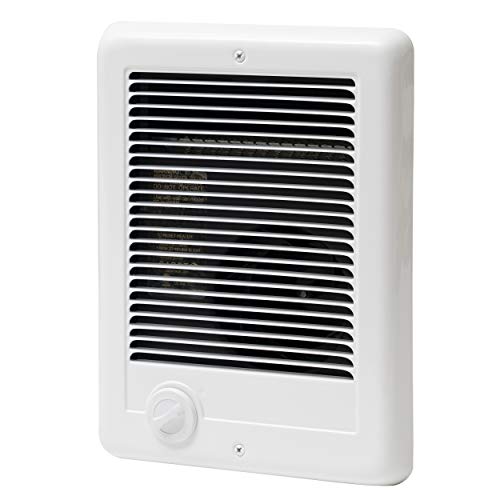
Cadet Com-Pak CSC202TW — Best Overall
The Com-Pak line is the default answer in North American wall heat for a reason, and the CSC202TW is its most useful configuration for 208-volt buildings. It is a complete unit — heater, built-in thermostat, and grill in one package — rated 2000 watts at 240 volts and 1500 watts at 208 volts, which translates to 6825/5120 BTU in the verified listing. That 1500-watt 208-volt figure is the headline: it is enough for a primary heat source in a small-to-medium room or strong supplemental heat in a larger one, delivered by a fan that moves warm air into the room instead of letting it pool at the ceiling. The built-in thermostat keeps the installation simple, with no separate wall control to wire.
Strengths
- Full 1500W output at 208V — the strongest honest rating in a standard Com-Pak can.
- Complete unit with built-in thermostat: nothing else to buy for a standard install.
- Cadet’s deep parts and model ecosystem makes future maintenance realistic.
Trade-offs
- Fan-forced heat is audible; light sleepers should consider the baseboard pick for bedrooms.
- At 208V it is a 1500W heater, not 2000W — size your room by the lower number.
- Built-in thermostats sense temperature at the heater, which can short-cycle in drafty spots compared with a wall thermostat across the room.
Key specs (from verified listing): 2000/1500 Watt, 240/208 Volt, 6825/5120 BTU, built-in thermostat, white, complete unit (Part: 67507).
The CSC202TW is the heater we would hand to the widest range of 208-volt shoppers: apartment dwellers replacing a failed unit, condo owners adding heat to a den, landlords standardizing on one maintainable model across units. Its fan-forced design heats a cold room noticeably faster than convection alone, and the Com-Pak’s decades-long presence means electricians know it on sight. If your room’s heat-loss calculation lands anywhere near its 208-volt output, this is the default buy.
Best for: primary or strong supplemental heat in 208V apartments, condos, and offices up to a medium room. / Not suited for: very large rooms needing more than 1500W at 208V, or silence-critical bedrooms. Check the current price on Amazon
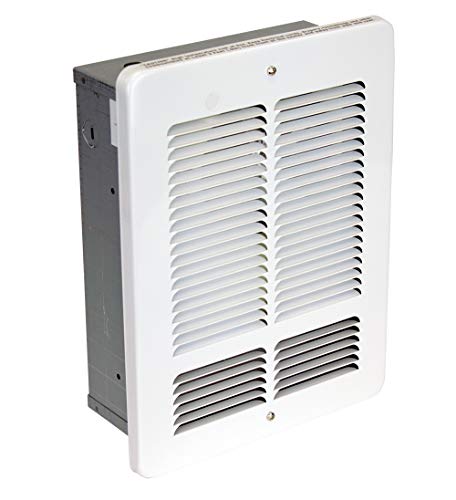
KING W2020-BW W Series Wall Heater — Best True 208V
KING Electric builds heaters and little else, and the W2020-BW shows that focus: a wall heater rated a full 2000 watts at 208 volts, designed for the voltage rather than derated to it. That distinction matters. A dual-rated 2000W heater gives you about 1500W on 208V service; the W2020-BW gives you the whole 2000W, which is the difference between heating a medium room comfortably and heating it almost. The bright white finish and W-series format suit residential and light commercial spaces, and KING’s Pic-A-Watt heritage shows in the line’s configurable wattage philosophy across the family.
Strengths
- True 208V design delivering the full 2000W on 208-volt service.
- Specialist manufacturer with a long track record in electric heat.
- Clean bright-white residential finish.
Trade-offs
- 208V-only focus means it is the wrong buy for a standard 240V house — confirm your service first.
- Check the thermostat configuration of the exact configuration you order; W-series units are sold in several control setups.
- Higher output at 208V draws more current, so circuit capacity must be verified.
Key specs (from verified listing): 2000W / 208V, W Series wall heater, bright white (Model: W2020-BW).
Choose the KING when your building is genuinely 208 volts and the room needs real output — a living room in a high-rise condo, a basement suite, a commercial office. It is the specialist’s answer to the derating problem, and pairing it with a good thermostat gives you a heating setup that behaves exactly as its nameplate says. For mixed-voltage buildings or uncertain service, the dual-rated Cadets are the safer pick; for confirmed 208V and a room that needs the watts, this is the strongest choice in the guide.
Best for: confirmed 208V buildings needing full 2000W output in a medium room. / Not suited for: 240V homes, or buyers who have not confirmed their building voltage. Check the current price on Amazon
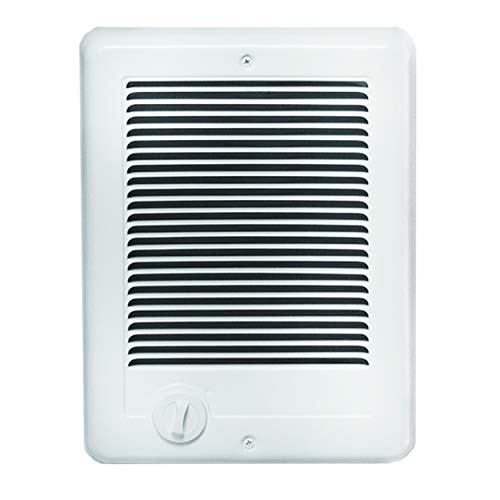
Cadet Com-Pak CSC152TW — Best for Small Rooms
The CSC152TW is the CSC202TW’s smaller sibling: the same complete Com-Pak unit with built-in thermostat, at 1500 watts on 240 volts and 1125 watts on 208 volts (5120/3840 BTU). That output is correctly sized for the rooms that actually get cold in apartments — the bedroom over the garage, the bathroom with an exterior wall, the small office that the building’s central system forgets. Oversizing a wall heater wastes money and causes short, uneven heating cycles; the 152 exists so small rooms get a heater matched to their heat loss rather than a bigger unit throttled by its own thermostat.
Strengths
- Right-sized 1125W at 208V for bedrooms, bathrooms, and small offices.
- Complete unit with built-in thermostat, same simple install as its bigger sibling.
- Shares the Com-Pak ecosystem, so parts and familiarity carry across a whole building.
Trade-offs
- Undersized for living rooms or open-plan spaces; know your room’s needs before choosing it.
- Fan noise, while modest, is present like all fan-forced units.
- Built-in thermostat placement caveats apply as with the CSC202TW.
Key specs (from verified listing): 1500/1125 Watt, 240/208 Volt, 5120/3840 BTU, built-in thermostat, white, complete unit (Part: 67506).
The CSC152TW is the pick we would standardize on for a multi-unit building’s bedrooms: one model, one install pattern, output matched to the rooms. In a single home, it is the right answer for the one cold room that makes winter miserable, and its modest draw is kind to older circuits that would balk at a 2000-watt load. Pair it with the CSC202TW in the main living space and you have a coherent, maintainable two-model heating plan for an entire 208-volt unit.
Best for: bedrooms, bathrooms, and small offices on 208V service. / Not suited for: large or open-plan rooms, where the CSC202TW or KING W2020-BW fits better. Check the current price on Amazon

Cadet Com-Pak CSC102W — Best Budget
The CSC102W strips the Com-Pak to its essentials: 1000 watts at 240 volts, 750 watts at 208 volts (3415/2560 BTU), and no built-in thermostat. That last point is not a defect but a configuration — this unit is made for rooms controlled by a separate wall thermostat, which is common in buildings where one thermostat governs a zone or where a previous heater’s wall control is already in place. If that describes your installation, the CSC102W is the least expensive legitimate way into Com-Pak quality. If it does not, buy one of the thermostat-equipped models above instead, because a heater without any thermostat is not a complete heating system.
Strengths
- Lowest-cost genuine Com-Pak for 208V use at 750W.
- Ideal replacement where a functioning wall thermostat already exists.
- Same build family and install pattern as the rest of the line.
Trade-offs
- No built-in thermostat — requires a line-voltage wall thermostat, sold separately.
- 750W at 208V suits only small rooms or mild supplemental duty.
- Buying it by mistake for a thermostat-less room means a second purchase; read the configuration carefully.
Key specs (from verified listing): 1000/750 Watt, 240/208 Volt, 3415/2560 BTU, without thermostat, white, complete unit (Part: 67541).
Treat the CSC102W as the informed buyer’s budget pick. Landlords replacing a failed heater in a unit with a working wall thermostat, or homeowners adding gentle background heat to a small bathroom on an existing zone, get exactly what they need and nothing they do not. Everyone else should read its badge literally — Best Budget comes with an asterisk shaped like a thermostat — and choose accordingly.
Best for: replacements and small-room installs where a wall thermostat already exists. / Not suited for: any room without a thermostat plan, or rooms needing more than gentle heat. Check the current price on Amazon
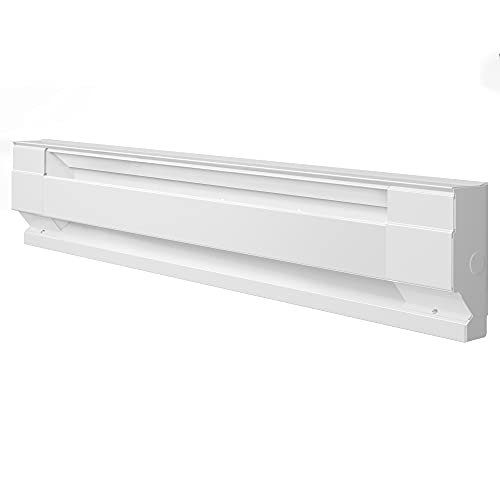
Cadet F Series 3F750W Electric Baseboard Heater — Best Silent Heat
Not every 208-volt heater needs a fan. The Cadet F Series 36-inch baseboard (model 3F750W) produces 750 watts at 240 volts and 563 watts at 208 volts (2560/1925 BTU) by pure convection: air enters low, warms across the element, and rises silently along the wall. There is no fan to hear, no moving part to wear, and no blast of air to stir dust — which is why baseboards remain the default for bedrooms, nurseries, and anywhere heat should be felt rather than noticed. Output per unit is modest, so baseboards are planned in runs: one under each window or along the coldest wall, sharing the room’s load.
Strengths
- Completely silent, fan-free convection heat.
- Dual-rated 240/208V with the 208V output printed in the listing: 563W.
- No moving parts means a very long, low-maintenance service life.
Trade-offs
- 563W at 208V is gentle; most rooms need multiple units or a supplemental source.
- Slower to raise a cold room’s temperature than fan-forced heat.
- Needs clear wall space along the baseboard; furniture placement must respect it.
- Requires a thermostat (wall or unit-mounted, sold separately) to complete the system.
Key specs (from verified listing): 36-inch F Series baseboard, 750/563 Watt, 240/208 Volt, 2560/1925 BTU, white (Model: 3F750W, Part: 09952).
The baseboard pick is the connoisseur’s answer for one specific job: silent, steady background heat in a room where people sleep. It will not rescue a freezing room quickly, and it asks for wall space and a thermostat plan, but in return it disappears — acoustically and visually — in a way no fan-forced unit can. In 208-volt condos where bedrooms sit on exterior walls, a properly planned baseboard run is often the most comfortable solution in this entire guide.
Best for: bedrooms, nurseries, and quiet rooms planned with multiple units or gentle loads. / Not suited for: fast warm-ups, single-unit heating of large rooms, or walls crowded with furniture. Check the current price on Amazon

KING W2020-I-BW Wall Heater Interior & Grill — Best for Completing a KING Install
The W2020-I-BW is the interior-and-grill package of KING’s W series: the 2000-1000W, 208-volt heating interior with its grill, sold for completing new W-series installations where the wall can is already roughed in, or for refreshing an existing W-series heater whose element and fan have aged while the can and wiring remain sound. This is a real and common scenario in 208-volt buildings, where the expensive part of the job — the in-wall can and the circuit — outlives the heater’s working parts. Buying the interior rather than a complete unit saves money and labor in exactly that situation.
Strengths
- Full W-series 208V performance (2000-1000W configurable range) for existing cans.
- Cheaper and less invasive than replacing a complete unit when the can is sound.
- KING specialist build quality, bright white grill included.
Trade-offs
- Not a complete heater by itself: it assumes a compatible W-series wall can is installed.
- Thermostat arrangements depend on your existing setup.
- Compatibility must be confirmed against your exact existing can before ordering.
Key specs (from verified listing): 2000-1000W, 208V, wall heater interior & grill, white (Model: W2020-I-BW).
We include this pick because 208-volt heating is disproportionately a replacement market: buildings wired decades ago, heaters aging out one by one, cans still good. If that is your situation and your cans are KING W-series, the interior-and-grill route is the professional move. If you are starting from bare studs, buy a complete unit — the CSC202TW or the W2020-BW — instead.
Best for: refreshing or completing existing KING W-series installations on 208V. / Not suited for: new installations without a wall can, or non-KING cans. Check the current price on Amazon
Comparison Table
| Pick | Badge | Key spec | Best for |
|---|---|---|---|
| Cadet Com-Pak CSC202TW | Best Overall | 2000/1500W, 240/208V, built-in thermostat | Medium rooms on 208V |
| KING W2020-BW | Best True 208V | 2000W at 208V, W Series | Full output on 208V service |
| Cadet Com-Pak CSC152TW | Best for Small Rooms | 1500/1125W, 240/208V, built-in thermostat | Bedrooms, baths, offices |
| Cadet Com-Pak CSC102W | Best Budget | 1000/750W, 240/208V, no thermostat | Rooms with wall thermostats |
| Cadet F Series 3F750W | Best Silent Heat | 36-inch baseboard, 750/563W, 240/208V | Silent bedroom heat |
| KING W2020-I-BW | Best for Completing a KING Install | 2000-1000W, 208V, interior & grill | Existing W-series cans |
How to Choose a 208-Volt Wall Heater
Step one is confirming your voltage, because everything else follows from it. Buildings with three-phase service — most larger apartment and condo buildings and nearly all commercial spaces — commonly deliver 208 volts to heating circuits, while detached houses and small buildings typically deliver 240. If you are replacing an existing heater, the old unit’s label is the fastest evidence: photograph it before removal and match the new heater to its voltage and roughly to its wattage. If there is no old unit, a qualified person measuring the circuit, or the building’s electrical documentation, settles the question. Guessing is how a 240V-only heater ends up underperforming on 208V for a decade.
Step two is sizing by the 208-volt number, never the 240-volt headline. The physics are unforgiving: a resistive heater’s output falls with the square of the voltage ratio, so a heater rated 2000W at 240V delivers about 1500W at 208V, and a 1500W unit delivers about 1125W. Use the common planning rule of roughly 10 watts per square foot for a reasonably insulated room with standard ceilings — applied to the 208-volt wattage. A 150-square-foot bedroom therefore wants about 1500W at 208V: the CSC202TW exactly, or two smaller units, or the KING’s full 2000W if the room has big windows, high ceilings, or a cold climate working against it. Poorly insulated rooms, rooms over unheated garages, and rooms with two exterior walls all argue for the next size up.
Step three is the thermostat decision. Built-in thermostats, like those on the CSC202TW and CSC152TW, simplify wiring and suit single-room installs. A wall thermostat across the room senses the temperature where people actually sit, cycles less, and suits living spaces and multi-heater zones — but it must be a line-voltage thermostat rated for the load, and it is a separate purchase that the CSC102W and the baseboard require. Programmable and smart line-voltage thermostats exist for these heaters and can cut running costs meaningfully in rooms with predictable schedules; whichever route you choose, decide it before ordering, because it determines which heater configuration is correct.
Step four is placement and circuit reality. Fan-forced wall heaters want an interior or exterior wall position where air can circulate freely — not behind a sofa, not inside a closet nook — and baseboards belong under windows or along the coldest wall, with furniture kept clear. Electrically, each heater needs a circuit sized to its draw with headroom to spare; a 2000W heater at 208V pulls roughly 9.6 amps, and continuous-load rules mean the circuit should be rated well above the heater’s draw. When in doubt, an electrician’s one-hour consult is the cheapest line item in the whole project.
208 Volts vs. 240 Volts: The Derating Math, Plainly
Because this single concept decides whether your room is warm, it deserves its own explanation. Electric resistance heaters are simple devices: a fixed-resistance element converts current to heat. When voltage drops, current drops proportionally, and power — voltage times current — drops twice over. Run a 240-volt heater on 208 volts and you get (208/240) squared, about 0.75, of its rated output. That is why dual-rated heaters print two wattages, and why the honest way to shop this category is to read the second number. It is also why a true 208-volt heater like the KING W2020-BW exists: its element is wound for 208 volts, so it delivers its full 2000W on the service it was built for. The reverse mistake also exists — a 208V heater on a 240V circuit would overproduce and overheat — which is why voltage matching is a safety issue and not merely a comfort one. Check the label, match the service, size by the number that matches your building.
How to Install and Set Up a Wall Heater Safely
Wall heater installation is electrical work inside a wall, so treat this as an orientation, not a license: follow the manufacturer’s instructions for your exact model, obey local code, and hire a licensed electrician wherever code or your own comfort requires one — which for most people is the right call. The general sequence professionals follow is: kill power at the breaker and verify it is dead at the work site; confirm the circuit’s voltage and capacity match the heater; mount the wall can between studs at the height the manufacturer specifies, with required clearances from floor, corners, and obstructions; run and connect the supply wiring to the heater’s leads with the grounding done properly; set the heater’s wattage configuration if the model offers one; install the thermostat — built-in units arrive configured, wall thermostats mount where they sense representative room air, away from the heater’s own discharge and from drafts; fit the grill; restore power; and test through a full heating cycle, listening for normal fan operation and checking that the thermostat cycles the heater off at setpoint. After installation, the setup that saves money is scheduling: set back temperatures when rooms are empty or occupants are asleep, and let each room’s heater serve its own zone rather than heating the whole unit to one temperature. Keep the grill and intake free of dust with a vacuum and soft brush a few times each heating season — a dust-choked fan-forced heater is louder, weaker, and shorter-lived.
Common Buying Mistakes
The defining mistake in this category is buying by the 240-volt wattage while living on 208-volt service, then blaming the heater for a cold room. Second is the reverse error: installing a 208V-only heater on a 240V circuit, which is a genuine safety problem. Third is forgetting the thermostat — ordering a heater-only configuration like the CSC102W for a room with no wall thermostat and no plan to add one. Fourth is undersizing by optimism: using the per-square-foot rule for a well-insulated room when yours has single-pane windows and an unheated space below. Fifth is placing a fan-forced heater where furniture blocks its airflow, which both weakens heating and stresses the unit. Sixth is treating a wall heater like a plug-in appliance and attempting installation without confirming breaker, wire gauge, and code requirements. Every one of these mistakes is avoidable with a label photograph, a tape measure, and ten minutes of arithmetic before ordering.
Final Recommendation
For most 208-volt homes, the Cadet Com-Pak CSC202TW is the right default: complete, thermostat included, and honestly rated at 1500W on your service. If your building is confirmed 208V and the room needs full output, step up to the KING W2020-BW. Small rooms belong to the Cadet Com-Pak CSC152TW, thermostat-equipped replacements on a budget to the Cadet Com-Pak CSC102W, silent bedrooms to the Cadet F Series 3F750W baseboard, and existing KING cans to the KING W2020-I-BW interior. Related guidance lives in our companion roundup of Best Wall Mounted 240 Volt Fan Forced Heater for 240V fan-forced options, the appliance-side look at Best Washer Dryer Combo 110 Volt for other voltage-specific buying, and Best Washable Furnace Filter For Smokers if your heating is furnace-based instead.
Running Costs and the Case for Zone Heating
Electric resistance heat converts electricity to warmth at effectively perfect efficiency at the point of use, which means the running-cost question is never about the heater’s efficiency — every pick in this guide turns a watt into the same amount of heat — but about how many watts you run, for how long, and in which rooms. That is why wall heaters are economically interesting despite electricity’s price per unit of heat: they heat zones. A household that keeps bedrooms at sleeping temperature, the living room at living temperature, and the spare room barely above frost protection spends dramatically less than one heating an entire unit uniformly with a central system, and it is more comfortable in each room while doing it. The practical playbook is simple: one heater per real zone, a thermostat per zone, setbacks whenever a room is predictably empty, and doors closed between zones so the zoning is real rather than theoretical.
Two habits waste more money than any equipment choice. The first is cranking the thermostat far above the target temperature in the belief that the room will heat faster; a resistance heater outputs its full wattage whenever it is on, so an overshoot setting only overheats the room and then pays to cool it back down by doing nothing. Set the temperature you actually want and let the thermostat work. The second is heating against an open window or a chronically drafty door — air sealing around the room’s worst leaks routinely outperforms a heater upgrade, at a fraction of the cost. If a room will not hold temperature, fix the envelope before you buy more watts; if it holds temperature but reaches it slowly, then more watts, or fan-forced delivery, is the right purchase.
Thermostat Options, Explained
The thermostat is the heater’s brain, and the three arrangements in this guide behave differently enough to matter. A built-in thermostat, as on the CSC202TW and CSC152TW, senses air temperature at the heater itself. It is simple, inexpensive, and perfectly adequate for small rooms where the heater’s location represents the room — but in a large or drafty room it can satisfy itself with the warm air near the unit while the far corner stays cool, a pattern called short-cycling. A mechanical wall thermostat across the room fixes the sensing location and costs little, at the price of a wider temperature swing between on and off. An electronic or programmable line-voltage thermostat senses accurately, holds a tighter band, and adds scheduling — setbacks for work hours and sleep — which is where the real savings live for predictable households. Smart line-voltage thermostats go one step further with remote control and usage reporting, genuinely useful for landlords and second homes where a frozen-pipe scare or a tenant’s maxed thermostat shows up in data before it shows up in damage. Whichever you choose, confirm it is a line-voltage thermostat rated for your heater’s amperage; a low-voltage thermostat from a furnace system cannot switch these loads, and confusing the two is a classic and avoidable ordering mistake.
Maintenance and Service Life
Wall heaters are among the longest-lived appliances in a home, and the maintenance that earns that lifespan is minimal. A few times each heating season, with power off, vacuum the grill and the visible interior with a brush attachment; dust accumulation is the main cause of fan noise, weak airflow, and the faint burnt smell at first startup each autumn, which is usually just the season’s dust burning off a clean element. Listen to fan-forced units occasionally: a new rattle or grinding is a bearing asking for attention early, when it is cheap. Check that furniture, drapes, and stored items have not migrated against the heater over the year — clearance is a safety requirement, not a suggestion. Baseboards ask even less: keep the fins dust-free and the wall run unobstructed. With that minimal care, a quality wall heater from a specialist maker is a decades-long appliance, which is precisely why buying a verifiable model from an established line, rather than the cheapest anonymous equivalent, pays off in this category more than in almost any other.
Fan-Forced Wall Heaters vs. Baseboards on 208 Volts
Since this guide contains both architectures, the comparison deserves to be explicit. A fan-forced wall heater concentrates its output in one wall can, pushes warm air across the room, and raises temperature quickly; it is the right tool for living rooms, offices, bathrooms that need a fast warm-up before a shower, and any space used intermittently, where heat on demand beats heat maintained. Its costs are fan noise, a single point of heat that can leave far corners cooler, and a fan motor as a wear item across decades. A baseboard spreads gentler heat along a wall, ideally under the windows where cold air originates, and maintains temperature with unmatched evenness and silence; it is the right tool for bedrooms and continuously occupied spaces. Its costs are slow recovery from a cold start, the wall length it occupies, and the discipline of keeping furniture clear of it. Many 208-volt homes sensibly run both: fan-forced units where speed matters, baseboards where silence matters, each on its own thermostat. When you plan that way, the derating math from earlier applies per unit — total the 208-volt wattage across the room’s heaters and compare it honestly against the room’s heat loss, rather than assuming any single nameplate anywhere in the system is delivering its 240-volt number.
One more architectural note for apartment and condo readers: in multi-unit buildings, your heater choice affects neighbors less than your thermostat habits do, but your building’s electrical service affects you more than you might expect. Simultaneous demand on cold mornings can sag voltage slightly in older buildings, trimming resistive output a little further — another argument for sizing with headroom rather than exactly at the calculated line, and for choosing heaters whose 208-volt rating already assumes the real world.
Replacement Scenarios: Matching the Pick to the Job
Most 208-volt purchases are replacements, and the scenario determines the pick more than preference does. Scenario one: a fan-forced wall heater has died in an apartment bedroom. Photograph its label; if it was a 1500W-class dual-rated unit, the CSC152TW is the like-for-like complete replacement, thermostat included. Scenario two: the living room was always cold and the dead heater turns out to have been a 240V-rated unit quietly derating for years. This is the upgrade moment — the KING W2020-BW’s true 208V output fixes the root cause rather than repeating it. Scenario three: a heater works but the bedroom fan noise has become intolerable. Do not replace like with like; convert the room to the F Series baseboard and accept the slower warm-up as the price of silence, keeping the fan-forced unit’s circuit and thermostat plan in mind as the electrician maps the change. Scenario four: a landlord standardizing across a building. Choose one complete unit for bedrooms (CSC152TW), one for living rooms (CSC202TW), stock a spare of each, and every future failure becomes a thirty-minute swap instead of a research project. Scenario five: the can and wiring are fine but a KING heater’s working parts have aged out — that is the W2020-I-BW interior’s entire reason to exist. Naming your scenario before you shop collapses this guide to one or two candidates immediately, which is what a good replacement purchase should feel like.
Frequently Asked Questions
Can I use a 240-volt heater on a 208-volt circuit?
Yes, if the heater is dual-rated for 240/208 volts, as most picks in this guide are — but it will produce about 25 percent less heat than its 240-volt rating, every hour it runs, for its entire service life. Size the room using the 208-volt wattage printed in the listing, and that derating becomes a planned-for fact instead of a cold surprise. Never run a 208V-only heater on 240V service, because the same physics run in reverse and overpower the element.
How do I know if my building is 208 or 240 volts?
Check the label on the heater you are replacing, your building’s electrical documentation, or have a qualified person measure the circuit with a meter before ordering anything at all. Larger apartment, condo, and commercial buildings with three-phase service are commonly 208V; detached houses are usually 240V. When the evidence conflicts — a label that disagrees with the building’s reputation — trust the measurement at your circuit, because your heater lives on your circuit, not on the building’s average.
What size 208-volt wall heater do I need?
Plan on roughly 10 watts per square foot using the heater’s 208-volt output for an average insulated room — about 1500W at 208V for 150 square feet. Add capacity for poor insulation, high ceilings, large windows, rooms above unheated spaces, or very cold climates; in a genuinely cold-climate room with two exterior walls, planning closer to 12–15 watts per square foot at 208V is the honest number, and it is better to land there with two smaller heaters sharing the load than with one oversized unit cycling hard.
Do these heaters need a separate thermostat?
Some do. The CSC202TW and CSC152TW include built-in thermostats, so they are complete out of the box. The CSC102W and the F Series baseboard require a line-voltage wall thermostat, sold separately — budget for it when you compare their lower unit prices, because the honest comparison is system price, not heater price. The KING models are offered in several control configurations, so confirm the exact setup of the unit you order rather than assuming a thermostat is in the box.
Are fan-forced wall heaters loud?
They are audible — a fan moving air makes sound — though modern units are designed for living spaces, and in a living room or office the sound typically disappears under normal activity within a day of installation. If the room is a bedroom for a light sleeper, the fan-free baseboard pick or placing the fan-forced unit farther from the bed is the safer route. Note that a heater that grows louder over the years is usually asking for a dust cleaning or fan attention, not replacement.
Can I install a wall heater myself?
These are hardwired appliances installed inside a wall on a dedicated circuit. Follow the manufacturer’s instructions and local code; in many jurisdictions the work requires a permit or a licensed electrician. If you are not fully confident with line-voltage wiring, hiring an electrician is the correct and safest choice. Even experienced DIYers should treat the verification steps — power confirmed off, voltage confirmed at the circuit, breaker and wire gauge confirmed against the heater’s draw — as non-negotiable parts of the job rather than preliminaries to rush through.
Can two wall heaters share one thermostat?
Yes, provided the thermostat is a line-voltage model properly rated for the combined amperage of both heaters and the circuit arrangement is done to code by someone qualified to do it. This is common with baseboard runs and with paired fan-forced units in one large room. The trade-off is that both heaters always run together, so the arrangement suits one genuine zone; rooms with different schedules deserve separate thermostats so each can follow its own setback pattern.