Disclosure: airfryerkitchensupply.com is reader-supported. When you buy through links on our site, we may earn an affiliate commission at no extra cost to you.
Where to buy
The verified picks below are sold through Amazon and cross-checked — the Waring spindle drink mixers that define the malt category, the classic Waring glass jar bar blender, and the high-power jar blenders that home malt makers actually use. Check price on Amazon on the exact model, and note the format as you read: for malts, the type of machine matters more than the brand, which is why this guide is organised by type first.
Waring WDM360TX Heavy-Duty Triple Spindle Drink Mixer (Best Overall for Malts): Check the current price on Amazon.
Waring WDM20 Single Spindle Drink Mixer + Stainless Malt Cup Bundle (Best Spindle Mixer for Home and Small Counters): Check the current price on Amazon.
Waring Commercial Glass Bar Blender BB900G (Best Jar Blender for Malts): Check the current price on Amazon.
Oster Pro 1200 Blender with Glass Jar and 24 oz Smoothie Cup (Best Versatile Home Pick): Check the current price on Amazon.
Hamilton Beach Blender and Food Processor Combo 58163 (Best Budget Malt-Capable Blender): Check the current price on Amazon.
Ninja Professional Blender BL610, 1000W, 72 oz (Best for Big-Batch Family Malts): Check the current price on Amazon.
Best Type of Blender and Mixers for Malts: Spindle vs Jar, Settled
The search asks a type question — what kind of blender or mixer makes a proper malt — and it deserves a type answer. A malted milkshake is not a smoothie. It is ice cream, milk, malt powder and syrup blended to a specific, spoon-coating silkiness with fine, even aeration and no ice shards. Two machine families make it well, for different reasons. The spindle drink mixer — the soda-fountain original, a vertical spindle with a small agitator working in a steel cup — is the machine malts were invented on, and it still produces the reference texture. The high-power jar blender is the home substitute: more versatile, more violent, and entirely capable in the right hands.
This guide ranks both families honestly. Waring’s spindle machines take the top spots because they are the correct type — including the triple-spindle commercial unit and the single-spindle bundle with its malt cup — followed by the jar blenders that serve home malt makers best, from Waring’s own glass jar classic to Oster and Hamilton Beach all-rounders. The buying guide explains the texture science — agitator aeration versus blade shear, cup size versus jar volume, why malt powder goes in when it does — so whether you are fitting out a diner counter or a home kitchen, you buy the type your malts deserve.
In this guide
Quick Picks
Waring WDM360TX Heavy-Duty Triple Spindle Drink Mixer — Best Overall for Malts. The professional answer: three independent 1-horsepower spindle stations, each working its own cup — the machine an ice-cream shop buys to make malts all day, at volume, identically.
Waring WDM20 Single Spindle Drink Mixer + Stainless Malt Cup Bundle — Best Spindle Mixer for Home and Small Counters. The correct type, at human scale: one commercial-grade spindle station bundled with the 28-ounce stainless malt cup — the authentic malt setup for a home counter or a small café.
Waring Commercial Glass Bar Blender BB900G — Best Jar Blender for Malts. The classic bar blender in glass: a 40-ounce glass jar and a two-speed commercial motor — the jar-format machine whose lineage is closest to the soda fountain, and the home malt maker’s traditional choice.
Oster Pro 1200 Blender with Glass Jar and 24 oz Smoothie Cup — Best Versatile Home Pick. The household all-rounder that also makes a fine malt: a glass jar, seven speeds with dual-direction blade motion to keep a thick mixture moving, and a smoothie cup for single servings.
Hamilton Beach Blender and Food Processor Combo 58163 — Best Budget Malt-Capable Blender. The budget route: a 40-ounce glass jar blender with a food-processor attachment in the same box — malts, shakes and general kitchen duty at the lowest tier in this guide.
Ninja Professional Blender BL610, 1000W, 72 oz — Best for Big-Batch Family Malts. The volume pick: a 72-ounce pitcher and stacked-blade power for the family malt night — four to six servings at once, with the force to move a full, thick pitcher evenly.
How These Picks Were Chosen
Selection started from the type question: spindle drink mixers were sought first, as the category’s correct answer, and verified live — Waring’s triple-spindle WDM360TX and the WDM20 single-spindle bundle with its stainless malt cup both confirmed. Jar blenders were then drawn from this site’s verified Blenders cache, favouring models whose design suits malts: glass jars in the classic bar-blender tradition, enough power to move a thick ice-cream mixture without cavitation, and controls simple enough to stop at silk instead of soup.
Every pick was checked against the malt brief specifically — not smoothies, not crushing ice for cocktails, though several picks do those too. A malt punishes two failures: under-aeration, which leaves it heavy and flat, and over-blending, which melts it thin. Machines were ranked on how their type manages that window. Prices are not printed anywhere in this article; commercial spindle machines occupy a different tier from home jar blenders, and the check-price links carry the current figures for both.
The 6 Best Blenders and Mixers for Malts

Waring WDM360TX Heavy-Duty Triple Spindle Drink Mixer — Best Overall for Malts
If malts are a business, this is the machine the business runs on. Three independent spindle stations, each with its own motor, mean three malts at three stages — or three flavours — moving simultaneously, each in its own cup, each aerated by the spindle action that defines the drink. The spindle’s agitator works the mixture against the cup in a controlled vortex, incorporating air evenly and dissolving malt powder completely, producing the dense, silky, spoon-standing texture that jar blenders approximate and spindle machines simply do.
The heavy-duty build assumes a counter that never rests: commercial duty cycles, cups cycling through service, staff who will not baby it. For a diner, parlour or serious food truck, the economics are straightforward — throughput and consistency are the product, and this machine is throughput and consistency in steel. For a home buyer it is glorious overkill, and this guide says so with respect: the single-spindle bundle below is your format. But the type question in the search has a pinnacle, and for malts the pinnacle is a Waring triple spindle with three cups spinning. Everything else in this article is measured against it.
Strengths
- Three independent stations for true service volume
- Spindle action gives the reference malt texture
- Heavy-duty commercial build for all-day duty
Trade-offs
- Commercial tier and footprint — a business purchase
- Total overkill for home malt making
- One drink type’s perfection; not a general blender
| Detail | What to know |
|---|---|
| Type | Spindle drink mixer, triple |
| Motors | 3 independent, 1 HP class (Amazon title) |
| Duty | Commercial / ice-cream shop |
Best for: Ice-cream shops, diners and malt bars / Not suited for: Home kitchens — see the single-spindle pick
Check on Amazon — check price on Amazon.

Waring WDM20 Single Spindle Drink Mixer + Stainless Malt Cup Bundle — Best Spindle Mixer for Home and Small Counters
The WDM20 bundle is the pick this guide most wants home malt lovers to read carefully, because it delivers the authentic format without the triple station’s commercial commitment. One spindle, one 28-ounce stainless cup — the exact vessel the drink was designed around — and the same agitator physics as its big brother: the mixture climbs the cup, folds, aerates, and the malt powder disappears into silk rather than floating in specks or sinking in sludge. Light-duty commercial construction means it is built to a standard home appliances rarely meet, while remaining a single-cup, counter-friendly machine.
Technique on a spindle is quickly learned: cup filled to the working line, spindle started before the cup is fully raised into the agitator, a gentle up-and-down motion to fold the top of the mixture through the vortex, and a stop at gloss — malts continue to look ‘almost’ right for several seconds before they are right, and the spindle’s visibility makes judging that moment easy, because the drink is in an open cup in front of you rather than hidden in a jar. For the buyer who asked the type question seriously, this bundle is the answer with a bow on it: right machine, right cup, right size.
Strengths
- Authentic spindle format sized for home and small counters
- 28 oz stainless malt cup included in the bundle
- Commercial-grade build in a light-duty footprint
Trade-offs
- One cup at a time — service for a crowd is sequential
- A specialist: it makes drinks, not dinner
- Cup technique takes one or two malts to learn
| Detail | What to know |
|---|---|
| Type | Spindle drink mixer, single |
| Cup | 28 oz stainless malt cup (bundle) |
| Duty | Light-duty commercial |
Best for: Home malt purists and small cafés / Not suited for: High-volume service or all-purpose blending
Check on Amazon — check price on Amazon.

Waring Commercial Glass Bar Blender BB900G — Best Jar Blender for Malts
Among jar blenders, the BB900G has the strongest claim on malt duty. Waring invented the blender in the bar world, and this commercial glass model keeps the format’s virtues in their purest form: a 40-ounce glass jar — the right size for two generous malts without the mixture getting lost — a two-speed motor with nothing to overthink, and a blade and jar geometry designed around drinks rather than around soup, dough or marketing features. Glass matters for malts specifically: it chills well, it shows the mixture’s consistency against the jar wall, and it does not hold yesterday’s flavours.
Malt technique in a jar blender is about restraint, and this machine’s simplicity teaches it: two speeds, start low to fold the powder in without dusting the lid, finish with a short high burst to aerate, and stop the moment the vortex smooths — ten extra seconds is the difference between silk and soup, because blade friction is quietly melting your ice cream the whole time. Commercial construction gives it a service life home blenders envy. If the spindle format does not fit your kitchen’s life — if the machine must also crush ice, blend soups and earn general rent — this is the jar blender a malt lover should buy, and it will not apologise for its speciality.
Strengths
- 40 oz glass jar is the ideal two-malt size
- Two-speed simplicity suits malt timing perfectly
- Commercial Waring build and bar-blender lineage
Trade-offs
- Jar format aerates less evenly than a spindle
- Two speeds only — no programs or presets
- Glass jar needs the usual care around hard counters
| Detail | What to know |
|---|---|
| Type | Jar blender, glass |
| Jar | 40 oz glass (Amazon title) |
| Motor | 1/2 HP, 2-speed (Amazon title) |
Best for: Home malt makers wanting a classic jar machine / Not suited for: Anyone wanting one-button programs
Check on Amazon — check price on Amazon.
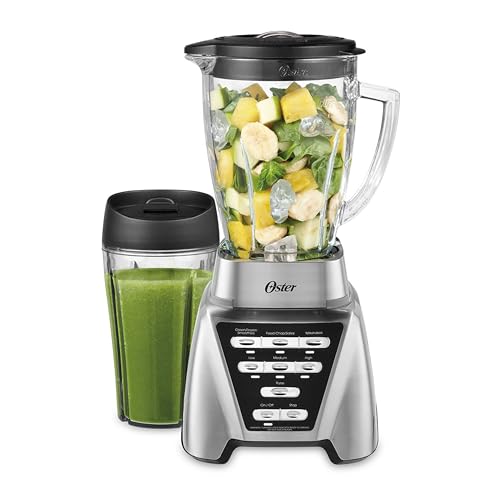
Oster Pro 1200 Blender with Glass Jar and 24 oz Smoothie Cup — Best Versatile Home Pick
Most home malt makers do not buy a malt machine; they buy a blender and make malts in it. The Oster Pro 1200 is the all-rounder this guide recommends for that reality. Its dual-direction blade technology — the blade reverses to pull ingredients back down — directly addresses the jar blender’s malt problem: a thick ice-cream mixture cavitating, spinning a hole around the blade while the jar’s edges sit unmixed. Reversal keeps the whole jar in motion, which is what even aeration and complete powder incorporation require.
Seven speeds give the control the malt window demands — fold low, aerate briefly, stop — and the glass jar keeps the consistency visible and the flavours clean. The included smoothie cup handles the single-serving case that a full jar over-serves. Against the Waring BB900G it trades commercial purity for household versatility and program convenience; against the spindle machines it trades the reference texture for a machine that also makes soup, salsa and smoothies all week. For the majority of kitchens, that is the correct trade — and its malts, made with the restraint the guide below teaches, will beat most cafés’.
Strengths
- Dual-direction blade keeps thick malt mixtures moving
- Glass jar plus single-serve cup covers both batch sizes
- Seven speeds give real control over the malt window
Trade-offs
- Still a jar: texture approximates, not equals, a spindle
- More settings to learn than the two-speed classic
- Thick mixtures still need a spatula pause on big batches
| Detail | What to know |
|---|---|
| Type | Jar blender, glass |
| Speeds | 7 with dual-direction blade |
| Extras | 24 oz smoothie cup included |
Best for: Households wanting one blender that excels at malts too / Not suited for: Texture purists — the spindle picks are yours
Check on Amazon — check price on Amazon.
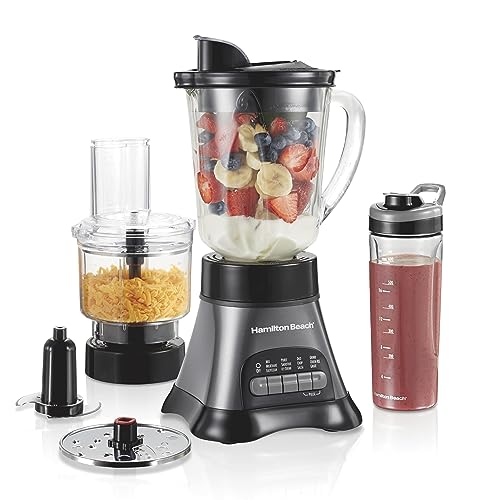
Hamilton Beach Blender and Food Processor Combo 58163 — Best Budget Malt-Capable Blender
The 58163 is for the buyer whose malt ambitions are real but whose budget is the first fact. Its 40-ounce glass jar is the right malt size, its motor class handles ice-cream mixtures competently when they are built in the right order — liquids and powder first, ice cream in scoops, short bursts — and the included food-processor attachment means the one purchase covers chopping duty too, which at this tier is a legitimate deciding factor.
Expectations should be set by the tier: the mixture will need a spatula stop on thick malts, the aeration will be good rather than soda-fountain, and the machine rewards the technique section below more than any other pick here. What it will not do is embarrass itself — a malt from this blender, made patiently, is a genuinely good drink, and the gap between it and the premium picks is smaller than the gap between any of them and a badly made malt. Budget buyers who learn the order-of-addition and the stop-at-gloss discipline will drink better malts than careless owners of machines three times the price. That is the honest case for this pick, and it is a strong one.
Strengths
- 40 oz glass jar at the guide’s lowest tier
- Food processor attachment included in the box
- Competent malt performance with correct technique
Trade-offs
- Thick mixtures need a spatula stop
- Aeration is good, not reference-grade
- Build and controls are budget-tier throughout
| Detail | What to know |
|---|---|
| Type | Jar blender + processor combo |
| Jar | 40 oz glass |
| Extras | 3-cup food chopper attachment |
Best for: First malt setups and tight budgets / Not suited for: Daily heavy use or texture purists
Check on Amazon — check price on Amazon.
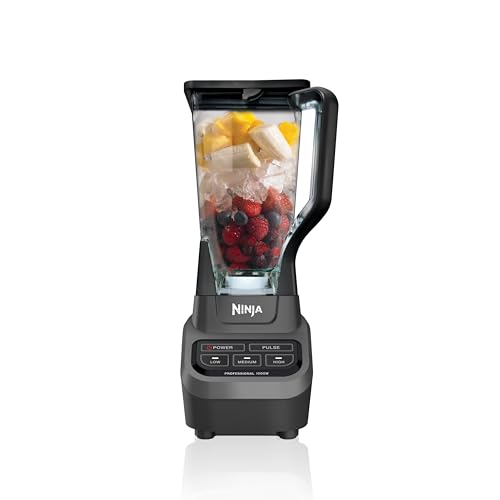
Ninja Professional Blender BL610, 1000W, 72 oz — Best for Big-Batch Family Malts
Family malt night breaks small blenders: six servings of ice-cream mixture is a heavy, cold, resistant load, and underpowered jars cavitate or strain. The BL610’s proposition is capacity with force — a 72-ounce pitcher and the stacked-blade Total Crushing design that processes the full column of mixture rather than only the layer at the base. For big-batch malts, that full-column action is the difference between a pitcher that blends as one and a pitcher with a blended bottom and an untouched top.
The malt-specific cautions are real and manageable. The pitcher is plastic, not glass — it will not chill like glass and can hold flavours if not washed promptly — and the machine’s power makes the over-blending window arrive fast: at this force, silk-to-soup is a few seconds, so pulse discipline replaces continuous running. Batch size is also a floor as well as a ceiling; a single malt in a 72-ounce pitcher is a puddle under the blades, and solo malt makers should look at the Oster’s cup or the Waring’s jar instead. For the household whose malt brief is ‘everyone, at once, on Friday’, this is the pick — sized to the occasion like the triple spindle is sized to the shop.
Strengths
- 72 oz pitcher makes family-size batches in one run
- Stacked blades process the full mixture column
- Power handles full, thick, cold loads without strain
Trade-offs
- Plastic pitcher — no glass chill or flavour neutrality
- Over-blending window arrives in seconds at this power
- Too much machine for single servings
| Detail | What to know |
|---|---|
| Type | Jar blender, high-power |
| Pitcher | 72 oz (Amazon title) |
| Motor | 1000W class (Amazon title) |
Best for: Families and gatherings — malts for everyone at once / Not suited for: Solo servings or glass-jar purists
Check on Amazon — check price on Amazon.
Comparison Table
| Pick | Badge | Key spec | Best for |
|---|---|---|---|
| Waring WDM360TX Heavy-Duty Triple Spindle Drink Mixer | Best Overall for Malts | Triple spindle, commercial duty | Ice-cream shops, diners and malt bars |
| Waring WDM20 Single Spindle Drink Mixer + Stainless Malt Cup Bundle | Best Spindle Mixer for Home and Small Counters | Single spindle + 28 oz malt cup | Home malt purists and small cafés |
| Waring Commercial Glass Bar Blender BB900G | Best Jar Blender for Malts | 40 oz glass jar, 2-speed commercial | Home malt makers wanting a classic jar machine |
| Oster Pro 1200 Blender with Glass Jar and 24 oz Smoothie Cup | Best Versatile Home Pick | Glass jar, dual-direction, 7 speeds | Households wanting one blender that excels at malts too |
| Hamilton Beach Blender and Food Processor Combo 58163 | Best Budget Malt-Capable Blender | 40 oz glass, combo attachments, budget | First malt setups and tight budgets |
| Ninja Professional Blender BL610, 1000W, 72 oz | Best for Big-Batch Family Malts | 72 oz, stacked blade, family batch | Families and gatherings — malts for everyone at once |
The Type Question, Answered: Spindle vs Jar for Malts
A spindle mixer aerates; a jar blender shears. The spindle’s agitator, working in an open cup, folds the mixture over itself in a vortex, incorporating air as fine, even foam while dissolving malt powder completely — the texture is dense and silky, the drink coats a spoon, and the process is visible and stoppable at the exact glossy moment. This is why soda fountains made malts on spindles for a century, and why the two Waring spindle picks lead this guide: for the drink itself, it is the correct machine type, full stop.
A jar blender cuts the mixture with blades at high speed. Done briefly and in the right order, it produces a very good malt — the differences are a slightly coarser aeration and a narrower timing window, because blade friction melts ice cream continuously while you blend. Done carelessly — too long, wrong order, powder dumped on top — it produces a thin, icy, speckled drink that gives jar-blender malts their mixed reputation. The machine is rarely the failure; the window management is.
So the type answer is practical, not snobbish. If malts are the mission — a shop, a parlour counter, a home ritual that matters — buy the spindle, at the single-station scale for homes. If malts are one pleasure among many in a working kitchen, buy a good glass-jar blender, learn the window, and drink excellently. What you should not do is buy a spindle’s price in a jar blender’s features and expect the spindle’s texture: the physics does not transfer with the budget.
How to Choose Your Malt Machine
Volume decides the station count and jar size. A shop’s answer is throughput — the triple spindle. A couple’s answer is the 40-ounce class: the Waring glass jar or a single spindle cup. A family’s answer is the big pitcher or sequential spindle cups. Match the machine to the batch you actually make; an oversized jar underfilled blends badly, and an undersized one turns malt night into a queue.
Versatility is the second filter, and it cuts honestly. A spindle machine makes drinks — malts, shakes, sodas, frappes — and nothing else; its counter space must be justified by drinks alone. A jar blender justifies itself across the whole kitchen week. Neither answer is wrong, but buyers should make the call with eyes open: the household that blends soup four times a week and malts twice a month should buy the jar and master the window, not the shrine.
Finally, judge the details that decide daily use: glass versus plastic for chill and flavour neutrality, cup and jar sizes against your servings, cleaning (a spindle cup rinses in seconds; a jar’s blade assembly wants respect), and the noise a high-power jar makes versus a spindle’s hum in an open-plan kitchen at milkshake hour. The best type is the one whose daily reality fits your kitchen — the texture gap between the families is real but smaller than the gap between a machine that is used and one that is stored.
Malt Powder, Ice Cream and the Order of Addition
Ingredients decide more than machines do. Malt powder — the barley-and-wheat malted milk powder that makes a malt a malt rather than a milkshake — must hydrate and dissolve completely; undissolved, it reads as grit and speckle. In a spindle cup it goes in with the milk before the ice cream peaks the mixture, so the agitator’s vortex can take it apart in liquid. In a jar, the same rule applies with more force: powder into liquid first, at low speed, or it will dust the lid and haunt the drink.
Ice cream quality and temperature are the texture’s foundation. A dense, premium ice cream at a just-scoopable temperature — out of the freezer for a few minutes, not melted at the edges — blends into silk. Rock-hard scoops force long blending that melts as it works; soupy ice cream can never be aerated back. Syrup or flavourings ride with the milk. The finished malt should pour in a ribbon, hold a spoon’s mark briefly, and taste of malt through the whole glass, not in pockets.
Ratios are a house style, but a starting frame helps: generous ice cream, modest milk — the beginner’s error is always too much milk, producing a drink no machine can thicken — and malt powder measured in heaped spoonfuls rather than dustings. Adjust one variable at a time across your first few malts and write down what worked; the machine you bought will reproduce a recipe faithfully, which is precisely why the recipe deserves the notebook page.
Troubleshooting Malts: Thin, Icy, Gritty, Flat
Thin is over-blending or over-milking: the friction melted the structure, or there was never enough ice cream to build it. Fix forward — less milk, colder and denser ice cream, shorter blending, and in a jar, pulse rather than run. Icy is undissolved or under-processed frozen material: scoops too hard, blending too short at the start, or a jar whose mixture cavitated and never circulated — the dual-direction and stacked-blade picks exist for this failure. Give the first stage time at low speed before any aeration burst.
Gritty is malt powder that never dissolved — added late, added dry on top, or rushed. The cure is order: powder into liquid, early, with a full vortex before the mixture thickens. Flat — the flavour is fine but the texture is heavy and airless — is under-aeration: on a spindle, work the cup’s motion to fold the top through; in a jar, a final short high burst at the very end, then stop. Each fault has a mechanical cause and a mechanical fix, which is the good news: malts are a learnable system, not a talent.
Keep a one-line log for your first dozen malts — machine, order, seconds, result — and the faults will stop repeating. Soda fountains trained their operators exactly this way, on exactly these machines. The drink has not changed in a hundred years; only the counters have.
How to Make a Perfect Malt, Step by Step
This sequence works on a spindle or in a jar, with the machine-specific notes marked. The principles — cold, order, restraint — are the same on both.
- Chill the vessel. Glass jar, steel cup or pitcher: cold equipment buys you blending time before melt. A room-temperature jar spends your window before you start.
- Liquid and powder first. Milk and any syrup into the vessel, malt powder onto the liquid. On a spindle, start the agitator as you raise the cup; in a jar, five seconds at the lowest speed wets the powder without dusting the lid.
- Add ice cream in scoops. Just-softened, dense ice cream, in pieces the machine can take progressively. Dumping one frozen brick forces the long, melting blend you are trying to avoid.
- Build the vortex. Spindle: work the cup in a gentle rise-and-fall so the top folds through. Jar: medium speed until the mixture moves as one column; use the tamper, spatula pause or blade reversal your machine offers if it cavitates.
- Aerate briefly at the end. A short final burst — seconds, counted — puts the fine foam in. This is the malt window: watch for gloss and a ribbon pour, and stop there, not after it.
- Rest thirty seconds, then pour. The texture settles and tightens almost immediately. Pour into a chilled glass, serve with a spoon as well as a straw — a proper malt needs both.
- Rinse the machine now. Spindle cups and agitators rinse in seconds before anything dries; jar blades get a warm-water blend pulse. Malt residue left to dry is tomorrow’s flavour in tomorrow’s drink.
Make three malts this way, adjusting one variable at a time, and you will own the drink. The machine types in this guide differ in how they forgive — none of them differ in what they reward: cold ingredients, correct order, and the discipline to stop at gloss.
Setting Up a Home Malt Station
The home malt maker who takes the drink seriously ends up with a station, whether or not they call it that: the machine in its place, the malt powder in a sealed jar beside it (malt powder absorbs moisture and odours enthusiastically — an open bag in a spice cupboard is a slow flavour accident), the cups or the jar stored with the machine rather than across the kitchen, and the glasses in the freezer, because a frosted glass is half the soda-fountain theatre and a third of the temperature discipline. Ice cream lives at the front of the freezer, scoop in a jug of warm water at service time. None of this costs anything but arrangement, and it converts malt-making from a production into a ritual of about four minutes.
The station idea scales down as gracefully as up. The jar-blender household’s version is a shelf: blender, malt jar, the good scoop, the long spoons. The spindle owner’s version is a counter corner with the cup rack. What both share is the removal of friction — the drink that requires a hunt for its powder is a drink made monthly; the drink whose station stands ready is made on a Tuesday, for no reason, which is the entire point of learning it.
A Short History the Malt Maker Should Know
The malted milkshake was born at the soda fountain, and the fountain’s equipment explains the drink’s standards. Malted milk powder arrived in the 1920s as a health-food-turned-flavouring; fountain operators discovered that a spindle mixer — originally built for single sodas — could aerate ice cream, milk and the powder into something richer than either a shake or a soda, and the malt became the fountain’s premium drink. The spindle’s open cup was not an accident of the era: it let the operator watch the mixture, judge its gloss, and hand a consistent drink across a counter a hundred times a day.
The jar blender, arriving in the same decades for bars and then homes, could make the drink — and did, in diners that ran one machine for everything — but it changed the operator’s relationship to it: sealed, timed by ear, judged after the fact. Modern home malt making inherits both traditions, and this guide’s structure honours them in order. Knowing the history is not nostalgia; it is the explanation for why the type question in the search has a real answer, and why the spindle’s texture remains the standard the jar is measured against nearly a century later.
It also explains the malt’s serving grammar, unchanged since the fountain: a tall glass, a long spoon, a straw, and the steel cup’s remainder served alongside in the classic presentation. The home maker with a spindle and a spare cup can reproduce even that. Some drinks are recipes; the malt is a small ceremony, and its machines are the ceremony’s instruments.
Cleaning and Care for Spindles and Jars
Malt residue is dairy, sugar and fat — a mixture that rewards immediate cleaning and punishes delay out of all proportion. The spindle machine’s care is its secret daily virtue: the cup rinses, the agitator wipes, and a nightly run of the spindle in a cup of clean warm water with a drop of detergent, followed by a plain-water rinse, keeps the works soda-fountain clean in under a minute. Commercial counters add a sanitiser step; homes need only the discipline of now rather than later, because dried malt on an agitator is tomorrow’s off-flavour ground into tomorrow’s drink.
Jar blenders ask for respect at the blade assembly: a warm-water blend pulse immediately after pouring, a careful hand wash of the jar with attention under the blades, and a full dry before storage so seals do not sour. Glass jars forgive almost everything except thermal shock and the drop onto tile; plastic pitchers forgive the drop and remember the flavours, which is why a baking-soda soak belongs in the plastic pitcher’s monthly routine. Malt powder storage completes the care picture — sealed, dry, away from the spice shelf’s perfumes — because the finest machine in this guide cannot rescue a powder that spent a humid month absorbing the kitchen. Care, in this category, is not maintenance of equipment. It is maintenance of the drink.
Malts Beyond Vanilla: Flavour Building on a Sound Base
Once the base technique is owned — cold, ordered, stopped at gloss — flavour becomes the playground, and the malt format rewards restraint here too. Chocolate malts want the syrup or cocoa folded with the milk stage so the powder hydrates; coffee malts take a concentrated shot at the same stage, never a cup of hot coffee that would melt the structure. Fruit malts are the spindle’s showcase, because fresh fruit folded through at the end keeps its identity in a way a jar’s blades erase — one more entry in the type ledger this guide has kept throughout.
The garnish grammar is the fountain’s and has not improved with age: a tall chilled glass, the drink poured to a dome, a long spoon and a straw, and — in the classic presentation — the mixing cup’s remainder served alongside for the second pour. Home makers who adopt even half of this grammar find the drink’s reputation in their house changes: it stops being a milkshake variant and becomes the house malt, requested by name. That is the destination all of this guide’s machinery, history and technique exists to reach.
Common Buying Mistakes
Buying features instead of type
The malt buyer who spends a spindle’s budget on a jar blender’s programs, presets and app has bought everything except malt texture. Type is the first specification for this drink: spindle for the reference result, glass jar for the versatile one. Decide the type from the drink’s physics, then shop features inside it — never the reverse.
Too much milk
The universal home malt failure, unfixable by any machine in this guide. Milk is the thinning agent; ice cream is the structure. A malt that pours like milk was lost at the recipe, not the blending. Start with less milk than instinct suggests — you can always add a splash; you cannot un-add one.
Blending until it looks smooth, then blending more
In a jar, every extra second is friction melting the drink thinner while the eye sees ‘smoother’. The stop point is gloss and ribbon, which arrive before maximum smoothness. Spindle owners watch an open cup and stop naturally; jar owners must build the habit of stopping early and checking — the drink tightens on standing, never the reverse.
Dumping malt powder in last
Powder added onto a thick, nearly finished mixture cannot dissolve — it speckles, sinks or coats the lid. Powder meets liquid early, at low energy, every time, on every machine type. This single ordering rule eliminates the most common home malt fault entirely.
Judging a spindle machine by blender jobs
A spindle mixer will not make soup, crush a pitcher of ice or knead anything, and marking it down for that is judging a violin by its drumming. It is a single-purpose instrument that performs its purpose at the reference standard. Buy it for drinks, or buy the jar for everything — but score each against its own brief.
Final Recommendation
The type answer, plainly: malts are a spindle drink. Shops should buy the Waring triple spindle; homes and small counters that take malts seriously should buy the WDM20 single-spindle bundle with its malt cup — the authentic setup at a human scale. Kitchens that need one machine for everything should take the Waring BB900G glass classic for purity, the Oster Pro 1200 for versatility, the Hamilton Beach combo on a budget, or the Ninja BL610 when the batch is the whole family.
Whichever type you choose, the drink is made by the discipline around it: cold vessel, powder into liquid, ice cream in scoops, and a stop at gloss. Do that, and the century-old soda-fountain standard is reproducible on your counter — which is all this search ever asked.
Related reading: Best Tiny Mixers Best Travel Mixers.
Frequently Asked Questions
What type of blender is best for malts?
A spindle drink mixer is the best type for malts — it is the machine the drink was invented on, and its agitator-in-cup action aerates evenly and dissolves malt powder completely, giving the reference dense, silky texture. A good glass-jar blender is the best versatile alternative, producing an excellent malt when the blending window is managed with restraint.
Can a regular blender make a good malted milkshake?
Yes — most home malts are made exactly that way. Use a glass jar if you have the choice, add malt powder to the liquid first at low speed, use dense, just-softened ice cream with modest milk, and stop blending at the glossy, ribbon stage rather than running for maximum smoothness. The technique closes most of the gap to a spindle machine.
What is the difference between a malt and a milkshake?
Malt powder. A malted milkshake adds malted milk powder — malted barley and wheat with milk solids — which brings the drink’s distinctive toasty, rich flavour and contributes to its dense body. Everything else (machine, order, temperature discipline) is shared, which is why malt technique and milkshake technique are taught together.
Why is my homemade malt thin and icy?
Thin usually means too much milk or over-blending — friction melts the ice cream while you watch it get ‘smoother’. Icy means the frozen material never fully processed: scoops too hard, or the mixture cavitated in the jar without circulating. Colder, denser ice cream in smaller pieces, less milk, full circulation at medium speed, and a stop at gloss fix both faults.
Is a spindle mixer worth it for home use?
If malts and shakes are a genuine ritual in your house, the single-spindle WDM20 bundle is worth it: authentic texture, a cup that rinses in seconds, and commercial-grade build. If drinks are occasional and the counter must earn its keep across all cooking, a good jar blender is the rational buy — the guide’s Oster and Waring jar picks exist for exactly that household.
How much malt powder should I use?
Enough to taste through the whole drink — think heaped spoonfuls rather than a dusting, adjusted to your powder and your preference. Add it to the liquid before the ice cream so it dissolves completely. Keep notes across your first few malts; the right amount for your house is a discoverable number, and your machine will reproduce it faithfully once found.


