Disclosure: airfryerkitchensupply.com is reader-supported. When you buy through links on our site, we may earn an affiliate commission at no extra cost to you.
Where to buy
The best insta pot cookers — genuine Instant Pot models — are sold everywhere, which makes model discipline essential: the brand sells near-identical-looking cookers under Duo, Rio, Pro and Duo Crisp names at several sizes. Every pick below links to a confirmed listing for the exact model named — check the size in the listing title before ordering, because 3, 6 and 8 quart versions share product photos.
- Instant Pot Duo 6 Qt 7-in-1 — check the current price on Amazon.
- Instant Pot Pro 6 Qt 10-in-1 — check the current price on Amazon.
- Instant Pot Duo Plus 6 Qt 9-in-1 — check the current price on Amazon.
- Instant Pot Rio 6 Qt 7-in-1 — check the current price on Amazon.
- Instant Pot Rio Mini 4 Qt 7-in-1 — check the current price on Amazon.
- Instant Pot Duo Crisp Ultimate 6.5 Qt 13-in-1 — check the current price on Amazon.
Search for the best insta pot cookers and you are really asking a narrower question than it looks: which Instant Pot, in which size, with which lid? ‘Insta pot’ is the nickname the whole category travels under, but the name on the box is Instant Pot, and the current range is a family of electric pressure cookers that also slow cook, make rice, steam, sauté, make yogurt and keep food warm. The differences that matter are quart size, whether the lid can air fry, how quiet the steam release is, and how much automation stands between you and dinner.
This guide compares the six Instant Pot models worth buying now, all with confirmed Amazon listings verified by model against our product database. Prices in this category swing hard with sales events, so no prices are printed — check the current price on Amazon for the model you choose, and be aware that during big sale weeks the step-up model often lands close to the base model, which changes the value maths entirely.
In this guide
Quick Picks
Six Instant Pots, from the 4-quart Mini to the air-frying Duo Crisp Ultimate. The short version first.
- Best Overall: Instant Pot Duo 6 Qt 7-in-1 — the original bestseller — the default Instant Pot for most households.
- Best Premium: Instant Pot Pro 6 Qt 10-in-1 — the enthusiast’s Instant Pot — sous vide, better controls and a gentler steam release.
- Best for Families: Instant Pot Duo Plus 6 Qt 9-in-1 — the Duo with more programs and an easier display — the family-batch favourite.
- Best Value: Instant Pot Rio 6 Qt 7-in-1 — the modern value line — same core cooking in a slimmer, simpler package.
- Best Small: Instant Pot Rio Mini 4 Qt 7-in-1 — the four-quart Mini — full Instant Pot cooking sized for one to three people.
- Best with Air Fryer: Instant Pot Duo Crisp Ultimate 6.5 Qt 13-in-1 — pressure cook, then crisp with the same lid — the two-appliance household in one pot.
How These Picks Were Chosen
We limited this guide to genuine Instant Pot models — the search asks for the brand, and the alternatives get their own guide elsewhere in this batch — and verified every model by name and size against our product database before linking it. Ranking weighted the daily experience: how the steam release behaves, whether the inner pot is stainless or coated, how legible the controls are at arm’s length, and whether the much-advertised extra functions (sous vide, sterilise, cake) are features you will touch or brochure decoration.
Size guidance runs through every review, because it is the decision owners regret most. Six quarts is the family standard and the size most recipes assume; four quarts serves one to three people and stores far more easily; anything with an air fryer lid needs headroom in the cupboard as well as the pot. Where a model is simply the wrong tool for a common job, we say so in its review rather than in a footnote.
The 6 Best Insta Pot Cookers

Instant Pot Duo 6 Qt 7-in-1 — Best Overall
The Duo is the model that turned pressure cooking from a stovetop skill into a countertop routine, and it remains the sensible centre of the range. Six quarts, seven core functions, a stainless steel inner pot and controls that a first-time user can decode without the manual: that combination is why it is the Instant Pot most recipes, accessories and spare parts are designed around. If you want one cooker that simply does the job for a family, this is still it.
Strengths
- Stainless inner pot — no coating to baby, and it can take metal utensils
- The reference size and model for recipes, accessories and spare parts
- Simple, legible controls that suit first-time pressure cooks
Trade-offs
- Manual steam release is the old, louder, hands-on style
- No sous vide, no air fry, no smart features — the range has moved on
- The sealing ring absorbs strong food smells and needs occasional replacing
| Capacity | 6 Qt |
| Functions | 7-in-1: pressure cook, slow cook, rice, steam, sauté, yogurt, warm |
| Inner pot | Stainless steel |
| Extras | Sterilize function, recipe app |
Daily life with the Duo is defined by how little it asks. Beans without soaking, a stew in under an hour, rice that does not need watching, a whole chicken on a weeknight — the greatest-hits list of pressure cooking is all here, executed without drama. The stainless pot deserves emphasis: it sears properly on sauté mode before the lid goes on, it does not carry a coating that limits its lifespan, and it goes in the dishwasher without negotiation. For households planning to keep a cooker for a decade, that pot is the argument.
The compromises are generational. The steam release is a manual valve you flick and step back from — effective, but the newer models’ diffused, quieter releases are genuinely pleasanter, especially with children or pets nearby. And the function list stops at the essentials, which is either a relief or a limitation depending on whether sous vide and air frying were on your wishlist. As a first pressure cooker or a family workhorse, the Duo’s simplicity is the feature.
Best for: first-time buyers and families who want the classic Instant Pot experience / Not suited for: cooks who specifically want sous vide, air frying or app control
Check on Amazon — check the current price on Amazon before you decide, because trim, finish and bundle options change between listings.

Instant Pot Pro 6 Qt 10-in-1 — Best Premium
The Pro is Instant Pot’s answer to the cook who outgrew the Duo. It keeps the six-quart stainless format and adds what the base model lacks: sous vide for steaks and eggs, a more informative display with a progress bar, favourite-program buttons you can customise, and a steam release designed to be quieter and more diffused. It is the model for people who cook with their pressure cooker several times a week and feel the base model’s limits as friction.
Strengths
- Sous vide adds a genuinely different technique to the same pot
- Customisable favourites and a clearer display speed up repeat cooks
- Gentler, diffused steam release is kinder to ears and kitchens
Trade-offs
- Premium pricing within the brand, closest to rivals with smart features
- More controls means a slightly longer first-week learning curve
- Still no air frying — that requires the Duo Crisp line
| Capacity | 6 Qt |
| Functions | 10-in-1 including sous vide |
| Inner pot | Stainless steel, stovetop-friendly base |
| Controls | Digital display with favourites |
Two Pro details repay the premium in daily use. The inner pot has a flat, induction-and-stovetop-friendly base with handles, so it can start a sear on the hob or finish a sauce there, and it lifts out without the spin-and-grip dance of the base pot. And the control panel’s memory — favourite settings that recall your exact bean or broth program — removes the small daily tax of re-entering times. Sous vide in a sealed, insulated pot is also quietly excellent: temperature-stable, silent, and already on your counter.
Who should skip it? Anyone whose pressure cooking is occasional, because the Duo does the same stews for less; and anyone whose wishlist starts with crisping, because no amount of Pro polish fries anything. The Pro is a refinement purchase — the right one for enthusiasts, an unnecessary one for the twice-a-month user.
Best for: enthusiasts who pressure cook several times a week and want sous vide / Not suited for: occasional users, or anyone whose priority is air frying
Check on Amazon — check the current price on Amazon before you decide, because trim, finish and bundle options change between listings.

Instant Pot Duo Plus 6 Qt 9-in-1 — Best for Families
The Duo Plus takes the Duo’s proven base and adds the things family cooks actually asked for: more one-touch programs (including cake, egg and sterilise presets that earn their keep with babies and bakers in the house), a clearer display showing cooking progress, and an easier steam release than the original. Same six quarts, same stainless pot, less guesswork on a school night — which is why it takes the family badge here.
Strengths
- Extra presets for eggs, cake and sterilising suit family life
- Progress display ends the “is it nearly done?” guessing
- Same stainless pot and accessory ecosystem as the Duo
Trade-offs
- Sits between Duo and Pro — sale pricing sometimes makes the Pro the smarter buy
- Preset buttons still need a manual the first time
- No sous vide or air fry at this tier either
| Capacity | 6 Qt |
| Functions | 9-in-1 with cake, egg and sterilize presets |
| Inner pot | Stainless steel |
| Display | Cooking progress display |
The Duo Plus’s improvements sound small on paper and compound in practice. A display that shows where the cook is — preheating, cooking, releasing — changes how a family plans around the pot: you stop opening the schedule-guessing game and start timing the vegetables to the progress bar. The egg preset, trivial as it sounds, produces the peel-easy boiled eggs that make packed lunches painless, and sterilise is the preset new parents use daily without ever having shopped for it.
Positioning honesty: the Duo Plus lives in the range’s squeezed middle. When the Pro is on promotion the gap narrows to the point where the Pro’s sous vide and better pot argue for themselves; when the Duo is discounted hard, the Plus’s extras must justify the difference. At its normal tier, though, it is the most family-shaped Instant Pot sold — and family-shaped is what most buyers actually need.
Best for: families, new parents and batch cooks who value presets and progress info / Not suited for: sous vide seekers or bargain hunters waiting on a Duo sale
Check on Amazon — check the current price on Amazon before you decide, because trim, finish and bundle options change between listings.
Instant Pot Rio 6 Qt 7-in-1 — Best Value
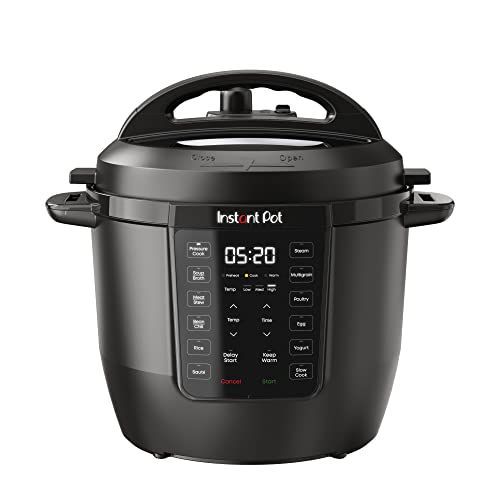
The Rio is Instant Pot’s newer value line, built to bring the six-quart, seven-function core experience to a lower tier with a slimmer, more modern body. It pressure cooks, slow cooks, makes rice and yogurt, steams, sautés and keeps warm — the essential seven — in a design that takes slightly less counter and looks at home in a current kitchen. For buyers whose list is ‘an Instant Pot, the normal size, without paying for features I will not use’, the Rio is the current answer.
Strengths
- The core seven functions at the range’s value tier
- Slimmer, more modern design than the Duo generation
- Anti-spin pot design keeps the inner pot steady while stirring
Trade-offs
- Fewer presets and extras than Duo Plus and Pro
- Newer line means a smaller pool of model-specific advice online
- Check the inner pot finish on the listing — trims vary
| Capacity | 6 Qt |
| Functions | 7-in-1: pressure cook, slow cook, rice, steam, sauté, yogurt, warm |
| Design | Slim-profile Rio series |
The Rio’s design brief was clearly ‘remove everything that is not the point’, and the point survives intact: pressure cooking that turns cheap cuts tender, rice without supervision, yogurt if you want it. The anti-spin inner pot is the detail owners mention — the pot stays put while you stir a sauté instead of rotating with the spoon, a small daily mercy the Duo generation never offered. Controls are simplified to match, which first-time users experience as confidence rather than limitation.
Value-tier honesty applies: compare the Rio’s listing against a discounted Duo on the day you buy, because this category’s prices cross over constantly, and the Duo’s stainless pot and deeper accessory pool sometimes win the day at the same money. When the Rio is priced as intended — clearly below the Duo — it is the easiest recommendation in the line for budget-first buyers.
Best for: budget-first buyers who want the standard size and the essential functions / Not suited for: preset collectors or cooks who want sous vide and smart features
Check on Amazon — check the current price on Amazon before you decide, because trim, finish and bundle options change between listings.

Instant Pot Rio Mini 4 Qt 7-in-1 — Best Small
Big pressure cookers cook small meals badly — too much empty volume, too much washing-up, too much cupboard. The Rio Mini fixes the proportions: four quarts, the same seven functions, in a compact body that suits one to three people and the kitchens they live in. It is the Instant Pot for small households, students, caravan kitchens and as a second cooker for side dishes when the main event occupies a six-quart sibling.
Strengths
- Right-sized batches for one to three people — no sad half-empty pot
- Compact footprint stores where a 6 Qt cannot
- Full function set, not a stripped-down toy version
Trade-offs
- A whole chicken or a double batch of stew exceeds its comfort zone
- Most published recipes assume 6 Qt — some scaling judgement required
- Same price neighbourhood as discounted full-size models on sale weeks
| Capacity | 4 Qt |
| Functions | 7-in-1: pressure cook, slow cook, rice, steam, sauté, yogurt, warm |
| Series | Rio Mini |
The Mini’s virtue is proportion. Rice for two cooks in the right volume of water; a two-portion curry pressurises quickly because there is less pot to bring up to pressure; leftovers are a portion, not a project. It also shines as the household’s second cooker — the one that makes the rice, the eggs or the steamed vegetables while the big pot handles the stew — a role owners of two cookers describe as the real luxury of the format.
The cautions are capacity physics. Pressure cookers should not be filled beyond two-thirds (half for foaming foods like beans and grains), so the Mini’s working volume is modest; batch cookers and big-bird households should size up without regret. And when a full-size Rio or Duo is discounted to Mini money, the larger pot is the better buy for anyone with the cupboard space — the Mini’s case rests on genuinely small kitchens and small appetites, where it is not a compromise at all.
Best for: singles, couples, students and second-cooker duty / Not suited for: batch cookers or families of four and up
Check on Amazon — check the current price on Amazon before you decide, because trim, finish and bundle options change between listings.

Instant Pot Duo Crisp Ultimate 6.5 Qt 13-in-1 — Best with Air Fryer
The Duo Crisp Ultimate solves the Duo Crisp idea’s original annoyance — two lids to store — by building one lid that pressure cooks and then air fries. The sequence is the magic: pressure cook a whole chicken until tender, then crisp the skin with the same machine, no oven, no second appliance. At 6.5 quarts and thirteen functions including dehydrating, baking and dough proofing, it is the most capable Instant Pot in this guide and the one that replaces the most other kit.
Strengths
- Pressure cook then crisp in one pot with one lid — no lid swap to store
- 13 functions including dehydrate and dough proofing
- 6.5 Qt capacity handles family roasts and whole chickens
Trade-offs
- The most expensive Instant Pot here, and the bulkiest to store
- Air fry capacity is a single layer — batch frying is slower than a big drawer fryer
- More lid technology means more to clean around the crisping element
| Capacity | 6.5 Qt |
| Functions | 13-in-1: pressure cook, air fry, roast, dehydrate, bake, proof, steam, slow cook, sauté and more |
| Lid | Single convertible pressure/air fry lid |
The dishes that justify this machine are the two-stage ones: ribs pressure-tender then crisped, chicken with shattered skin over juicy meat, a stew finished with a dumpling top browned in place. A standard Instant Pot simply cannot do the second stage, and moving food to an oven or a separate fryer costs the juices and the moment. The Ultimate’s single-lid design removes the storage objection that sank earlier two-lid models for small kitchens — though ‘smaller than two appliances’ is not the same as small, and the cupboard measurement still matters.
Air frying honesty: the crisping happens in the pot, in one layer, so fries for four arrive in batches rather than all at once, and a dedicated large drawer fryer remains the better pure fryer. Buy the Ultimate as a pressure cooker that can crisp — its true identity — and it is superb. Buy it as an air fryer that can pressure cook and the batch sizes will frustrate you.
Best for: households wanting pressure cooking and crisping in a single appliance / Not suited for: big-batch air fryers or the tightest cupboards and budgets
Check on Amazon — check the current price on Amazon before you decide, because trim, finish and bundle options change between listings.
Comparison Table
The Instant Pot family compared. Size and the crisping lid are the two forks in the road; everything else is refinement.
| Pick | Badge | Key spec | Best for |
|---|---|---|---|
| Instant Pot Duo 6 Qt 7-in-1 | Best Overall | 6 Qt, 7-in-1, stainless steel inner pot | first-time buyers and families who want the classic Instant Pot experience |
| Instant Pot Pro 6 Qt 10-in-1 | Best Premium | 6 Qt, 10-in-1 with sous vide, upgraded controls | enthusiasts who pressure cook several times a week and want sous vide |
| Instant Pot Duo Plus 6 Qt 9-in-1 | Best for Families | 6 Qt, 9-in-1, family-focused programs | families, new parents and batch cooks who value presets and progress info |
| Instant Pot Rio 6 Qt 7-in-1 | Best Value | 6 Qt, 7-in-1, modern slim design | budget-first buyers who want the standard size and the essential functions |
| Instant Pot Rio Mini 4 Qt 7-in-1 | Best Small | 4 Qt, 7-in-1, compact footprint | singles, couples, students and second-cooker duty |
| Instant Pot Duo Crisp Ultimate 6.5 Qt 13-in-1 | Best with Air Fryer | 6.5 Qt, 13-in-1, single lid that pressure cooks and air fries | households wanting pressure cooking and crisping in a single appliance |
How to Choose an Insta Pot Cooker (Instant Pot)
Size is the first decision and the one with no wrong answer except the one you did not think about. Four quarts serves one to three; six quarts is the standard that recipes assume and families need; the 6.5-quart Duo Crisp earns its bulk only if you will use the crisping lid. Remember the fill rules while choosing: two-thirds full maximum under pressure, half for beans, grains and anything that foams — so a six-quart pot’s real working volume is about four quarts of stew.
Then choose your tier by technique, not by function count. The core seven functions cover most households for a decade. Step up to the Duo Plus for family presets and a progress display; to the Pro for sous vide, favourites and the better pot; to the Duo Crisp Ultimate only if pressure-then-crisp dishes are genuinely your cooking style. Every tier cooks the same stew at the same pressure — the money buys workflow, not tenderness.
- Count your eaters, then size: 4 Qt for 1–3, 6 Qt for families
- Stainless inner pot outlasts coated pots and sears better
- A quieter, diffused steam release matters in open-plan homes
- Air fryer lids need storage headroom as well as counter space
- Buy the tier for techniques you already cook, not aspirational ones
Pressure Cooking Basics Every Insta Pot Owner Should Know
Three principles explain ninety percent of pressure cooking success. First, liquid is the fuel: the cooker needs enough thin liquid — roughly a cup in a six-quart pot — to generate steam, and thick sauces alone will trigger burn warnings because they cannot circulate. Layer thick ingredients on top of thin ones and stir after cooking. Second, time starts at pressure, not at switch-on: a full, cold pot can take ten to twenty minutes to pressurise, and honest recipe planning adds that to the headline time. Third, release is a cooking stage, not an afterthought: natural release suits meats and foams (beans, grains) because a sudden release toughens fibres and sprays foam; quick release suits vegetables and eggs where carryover cooking is the enemy.
The burn notice deserves its own sentence, because it panics every new owner once. It almost always means something starchy or sugary is stuck to the pot’s base and the cooker is protecting your food, not failing: release pressure, scrape the base thoroughly, add a splash of liquid, and restart with a shorter time. Deglazing after sautéing — scraping the browned bits up with liquid before the lid goes on — prevents nearly every occurrence.
Accessories Worth Buying (and the Ones That Are Not)
The accessory ecosystem is half the fun of owning the category’s default brand, but three items do most of the work. A spare sealing ring — one for savoury, one for sweet — ends the cumin-scented cheesecake problem, because silicone rings absorb strong aromas. A glass lid turns the pot into a normal slow cooker and serving vessel for a few dollars. And a steamer basket with a handle makes eggs, vegetables and dumplings a lift-out operation instead of a fishing expedition. A second inner pot is the honourable mention for batch cooks: one pot in the dishwasher stops being a schedule problem.
The skip list is longer: most novelty moulds, stacking racks and specialty pans solve problems you do not have yet. The rule that keeps cupboards sane is to buy accessories in response to a dish you already cook and struggle with — never in anticipation of a dish a listing makes you imagine cooking.
Natural Release vs Quick Release: the Only Chart You Need
Natural release — letting the pressure fall on its own — takes ten to twenty-five minutes and keeps cooking gently as it falls. Use it for meats (a fast release can toughen fibres as moisture boils violently out of them), for beans and grains (whose foam sprays through a quick release), and for full pots of soup where a sudden release can bubble liquid into the valve. Quick release — venting the steam immediately — stops cooking fast and suits vegetables, eggs, seafood and anything where two extra minutes means mush. The hybrid most experienced cooks actually use is ten minutes of natural release, then vent the rest: the foam settles, the meat relaxes, and dinner is not held hostage to the full wait.
One safety habit underlies all of it: keep hands and face clear of the steam path, vent away from cupboards (steam is unkind to wood finishes over months), and never force a lid that resists — resistance means pressure remains, and the float valve, not your impatience, decides when opening is safe.
A Week of Dinners From One Insta Pot
The appliance earns its counter space through rhythm, so here is the pattern owners settle into. Monday: a stew or curry from cheap cuts, doubled deliberately. Tuesday: the leftovers, reheated gently, over rice the pot makes while you set the table. Wednesday: dried beans from scratch — no soak, an hour — becoming Thursday’s soup base and Friday’s burrito filling. The weekend is for the projects the machine makes plausible: a whole chicken, a batch of stock from its bones, yogurt overnight. Notice what is absent — nothing on that list requires a recipe written for the appliance. Pressure cooking is a technique applied to ordinary food, and the households that treat it that way, rather than as a cuisine of its own, are the ones still using it daily in year three.
Insta Pot Myths, Retired One by One
Myth one: pressure cooking destroys nutrients. The evidence points the other way — because pressure cooking is fast and uses little water, it typically preserves heat-sensitive nutrients at least as well as boiling, and better than long boiling in abundant water that gets poured away. Myth two: modern electric pressure cookers are dangerous. The stovetop reputation belongs to another era; an electric Instant Pot stacks a locking lid, pressure regulation, over-temperature cut-offs and a controlled release into one appliance, and its incident record is that of a normal kitchen device used with normal care. Myth three: everything cooks in minutes. The pressure time in recipes excludes the ten to twenty minutes of pressurising and the release you choose — honest total times are still fast, just not magical.
Myth four: an Instant Pot replaces cooking skill. It replaces watching, stirring and hob space; it does not season, it does not brown at the end, and it cannot rescue a dish built on no liquid and too much tomato paste. Myth five — the most expensive one — is that the biggest, most featured model is the best first purchase. First cookers get used in proportion to how little friction they create, and the plain Duo has started more pressure-cooking habits than every flagship combined. Buy the model whose complexity matches your patience, and the myths take care of themselves.
Cleaning, Rings and the Famous Smell: an Owner’s Routine
The sealing ring is the Instant Pot’s one consumable and its one odour trap. Silicone absorbs the personality of everything it cooks, so a ring that has done a month of curries will perfume a cheesecake — the reason experienced owners keep two rings and swap by cuisine. Wash the ring after strong dishes, dry it fully, and store the lid upside down on the pot so air circulates instead of sealing yesterday’s dinner in. When the ring stays slack, stains beyond washing or no longer seals without fiddling, replace it; it is the cheapest part on the machine and the one doing the most work.
The rest of the routine is five minutes after a cook: pot and lid in the wash, the anti-block shield under the lid popped off and rinsed (starchy foam hides there), the condensation cup emptied, the rim channel wiped where boil-overs leave their tide mark. Do that and the cooker stays the appliance you trust on a tired Tuesday. Skip it for a month of bean cookery and you will meet the smell everyone warns about — which is not a product flaw but a diary of skipped five-minute routines, entirely reversible with one thorough clean.
What an Insta Pot Cannot Do (So You Buy With Eyes Open)
Pressure cooking is one technique, and a brilliant one, but the marketing photographs imply a universality no single pot possesses. An Instant Pot does not roast: nothing browns or crisps in a sealed, steamy pot, which is why the Duo Crisp exists and why oven finishes remain in so many pressure recipes. It does not bake like an oven — the cake preset produces a steamed cake, pleasant and moist, but a different food from an oven cake. It slow cooks competently but heats from below rather than all around, so very delicate slow-cooker recipes occasionally need adjusting. And it does not reduce: sauces emerge as liquid as they went in, needing a sauté-mode simmer at the end that recipe writers call ‘finishing’ and honest cooks call ‘the extra ten minutes’.
None of this diminishes the machine; all of it calibrates it. Households that buy an Instant Pot as a pressure cooker — the world’s best tool for beans, braises, stocks, grains and tough cuts — use it constantly. Households that buy it as a replacement for their oven, hob and slow cooker simultaneously spend a month discovering the boundaries above. The models in this guide were ranked as pressure cookers first, because that is what they are; the badges make sense only inside that honest frame.
Gifting an Insta Pot Without Getting It Wrong
Instant Pots are among the most gifted — and most re-gifted — kitchen appliances, and the difference between the two outcomes is sizing and timing. Gift the six-quart Duo or Duo Plus to a family that cooks; gift the Rio Mini to a student, a new solo renter or a caravan owner; never gift the Duo Crisp Ultimate to someone who did not ask for it, because its size makes your generosity their storage problem. Include the two accessories that turn a gift into a working kitchen — a spare sealing ring and a steamer basket — and, if you know the household, a short list of three dishes matched to how they actually eat rather than how cookbooks imagine they might. A pressure cooker given with its first three cooks planned gets used in the first week; a pressure cooker given bare joins the January listings. The appliance is the same in both stories — the onboarding is the gift.
One final gifting rule, learned from many January resale listings: never gift a pressure cooker to a household that has told you, in so many words, that they are afraid of pressure cookers. The modern electric machines are safe, supervised and gentle, but a gift that makes its recipient anxious is a burden wearing a bow. Buy them the excellent rice cooker from our inexpensive rice cooker guide instead, and let them arrive at pressure cooking in their own time, by their own curiosity, on their own terms, when the idea starts to feel like an opportunity rather than an obligation imposed by somebody else’s well-meaning but misplaced enthusiasm for a gadget they never asked for.
How to Use an Insta Pot Cooker: Your First Three Cooks
Pressure cooking has a learning curve of exactly three dishes. Cook them in this order and the machine becomes obvious.
- Cook 1 — The water test. A cup of water, five minutes at pressure, quick release. You learn the sounds, the float valve, the release — with nothing at stake but water.
- Cook 2 — Hard-boiled eggs. A cup of water, eggs on the trivet, a few minutes at pressure, a short natural release, then an ice bath. The famous easy-peel result teaches you timing and release in one forgiving dish.
- Cook 3 — A forgiving stew or dried beans. Sauté aromatics, deglaze properly, add liquid and ingredients, pressure cook, natural release. Beans teach liquid ratios and foaming; stew teaches layering. Either teaches the burn-notice prevention habits.
- Always — Check the ring and valve. Before every cook: sealing ring seated evenly, steam valve set to sealing, float valve moving freely. Ninety percent of “it never pressurised” stories end at one of these three.
- Always — Respect the fill lines. Two-thirds maximum, half for beans, grains and foaming foods. Pressure cooking leaves no room for optimistic filling.
- After cooking — Wash the ring, dry the lid. The ring absorbs aromas; wash it promptly and store the lid upside down so the ring airs instead of sealing smells in.
By the third cook the vocabulary — pressurise, natural release, quick release, sauté, deglaze — stops being jargon and becomes your weeknight grammar. That is the moment the appliance starts paying rent.
Common Buying Mistakes
Buying the biggest size by default. An 8-quart pot cooks small meals poorly and stores badly. Six quarts is the standard for a reason; four is right for small households. Size to your dinners, not your imagination.
Forgetting that pressurising takes time. A “20-minute” recipe in a full cold pot is a 40-minute dinner. Plan for the come-up time, especially on weeknights, or the appliance gets blamed for physics.
Quick-releasing foaming foods. Beans, grains and porridge spray starchy foam through a fast release. Natural release for ten minutes first is not caution — it is the difference between dinner and a ceiling clean.
Stirring thick sauces in before cooking. Tomato and cream sauces scorch on the base and trigger burn warnings. Layer them on top, stir after — the single most useful technique in pressure cooking.
Storing the lid sealed. A closed lid traps moisture and odours in the ring. Store it upside down or ajar and the famous “Instant Pot smell” mostly never develops.
Final Recommendation
The Duo remains the insta pot cooker to recommend first: the standard size, the stainless pot, the ecosystem, the price tier that makes sense for a first cooker. Step up deliberately — the Duo Plus for family presets and the progress display, the Pro for sous vide and the refined pot and controls, the Duo Crisp Ultimate if pressure-then-crisp is your signature move. The Rio is the value play when it is priced as one, and the Rio Mini is the right answer for small households that the six-quart world keeps overserving.
Whichever model lands on your counter, run the three first cooks in order — water, eggs, stew — and the machine will make sense faster than any manual can teach it. Pressure cooking rewards the households that learn its few rules; it forgives nearly everything else.
The shortlist one more time: Instant Pot Duo 6 Qt 7-in-1 (best overall); Instant Pot Pro 6 Qt 10-in-1 (best premium); Instant Pot Duo Crisp Ultimate 6.5 Qt 13-in-1 (best with air fryer) — check the current price on Amazon for each before you order.
Related reading on this site: Best Instant Pot Type Cookers; Best Inexpensive Rice Cookers; Best Inexpensive Egg Cookers; Best Japanese Pressure Cookers.
Frequently Asked Questions
Is “Insta Pot” the same as Instant Pot?
Yes — “Insta Pot” is the universal nickname, but the brand and the box say Instant Pot. When shopping, search the full brand name plus the model (Duo, Rio, Pro, Duo Crisp) and the quart size, because lookalike listings and older generations share photos freely.
What size Instant Pot do most people need?
Six quarts. It is the size recipes assume, it handles a whole chicken or a family stew, and its two-thirds working volume is about four quarts of food. One to three people who rarely batch cook are better served by the 4-quart Mini.
Can an Instant Pot replace a slow cooker and rice cooker?
For most households, yes — that consolidation is its main appeal. The slow cook function works well (a glass lid helps), and rice comes out reliably. Dedicated rice cooker devotees cooking rice daily may still prefer a specialist machine’s texture and keep-warm, but the Instant Pot’s rice satisfies the large majority.
Why did I get a burn notice?
Something starchy or thick stuck to the pot base — usually a sauce stirred in before cooking, or fond left unscraped after sautéing. Release pressure, scrape the base clean, add a splash of thin liquid, and restart for a shorter time. Deglazing after every sauté prevents almost all repeats.
Is pressure cooking safe in a modern electric cooker?
Yes — modern electric pressure cookers carry multiple independent safety systems: lid locks that prevent opening under pressure, pressure regulators, and temperature cut-offs. Follow the fill lines, keep the valves clean, and replace the sealing ring when it slackens, and the appliance is among the most supervised in the kitchen.
How often should I replace the sealing ring?
When it stays stretched, cracked or permanently odorous — typically after a year or two of regular use. A spare ring is cheap insurance, and keeping one for sweet and one for savoury dishes is the trick experienced owners swear by.


