Disclosure: airfryerkitchensupply.com is reader-supported. When you buy through links on our site, we may earn an affiliate commission at no extra cost to you.
Where to buy
Shoppers comparing the best blenders for pureeing food will find every pick in this guide on Amazon. Pureeing food in general — soups, sauces, vegetables, fruits, dips — rewards versatile machines that handle both cooked and fresh loads at household scale. This guide mixes right-sized countertop blenders with the hand blenders that puree where the food already is, and all are sold on Amazon, where you can confirm jars, attachments and included cups before buying.
The six machines in this guide are: Vitamix Propel Series 510, Vitamix Ascent X5, Oster Pro 1200 Blender, Cuisinart Smart Stick CSB-179 Hand Blender, Braun MultiQuick 5 Hand Blender MQ515 class, KitchenAid Variable Speed Corded Hand Blender KHBV53. Check the current price on Amazon for the model you choose, and check price on Amazon again before ordering if you are comparing configurations, because jar sizes, included cups and colors vary by listing.
Introduction: One Skill, Every Meal: Pureeing as a Kitchen Foundation
The best blenders for pureeing food are the generalists of the blending world. Where the sibling puree guide chases ultimate silk in soups, this one covers the whole everyday map: tonight’s tomato sauce, a hummus-adjacent bean dip, cooked carrots for a side dish, a pan sauce finished smooth, fruit purees for desserts and breakfasts. The winning machines are versatile, right-sized and quick to deploy — because everyday pureeing is usually a step inside a larger meal, not the meal itself.
Format is the first fork in the road. Countertop blenders puree bigger batches to finer textures; hand blenders puree in the pot, the pan or the measuring jug, in amounts from a cup upward, with almost no washing. Most real kitchens eventually want both; this guide’s six picks let you start with the format your cooking uses most and understand exactly what the other format would add. Every pick was verified by brand and model.
A second theme runs through the list: honest sizing. A 48 oz countertop container purees a family soup without the storage bulk of a 72 oz pitcher; a hand blender lives in a drawer and appears in seconds. For a task performed several times a week in passing, convenience is not a soft metric — it is the difference between pureeing and not bothering.
This guide’s picks also share a deliberate omission: none of them is a giant. The cluster’s other guides cover the 64 to 80 oz production machines; here, the largest countertop vessel is a right-sized 48 oz class and the hand blenders fit in a drawer. Everyday pureeing rewards the tool you can reach, rinse and put away in the middle of cooking — a truth every working cook recognizes and many buying guides ignore.
In this guide
Quick Picks
Three countertop machines for batch versatility and three hand blenders for in-the-moment pureeing — matched to how food actually gets pureed on weeknights.
- Vitamix Propel Series 510 — Best Overall: A 48 oz premium container with three programs and variable speed — the right-sized countertop puree station for most households. Check the current price on Amazon.
- Vitamix Ascent X5 — Best Premium Pick: Ten programs and SELF-DETECT container recognition in a 48 oz premium machine — the most automated countertop pureeing here. Check the current price on Amazon.
- Oster Pro 1200 Blender — Best Glass-Jar Pick: A glass jar, seven speeds and a dual-direction blade, plus a 24 oz smoothie cup — the traditional countertop route with a small-batch bonus. Check the current price on Amazon.
- Cuisinart Smart Stick CSB-179 Hand Blender — Best Immersion System: A variable-speed hand blender system with chopper, whisk and measuring cup — puree in the pot, prep in the chopper, finish with the whisk. Check the current price on Amazon.
- Braun MultiQuick 5 Hand Blender MQ515 class — Best Immersion Value: A 350W dual-speed hand blender with beaker and whisk — the simple, proven in-pot pureeing tool at a gentle commitment. Check the current price on Amazon.
- KitchenAid Variable Speed Corded Hand Blender KHBV53 — Best Corded Hand Blender: A variable-speed corded hand blender with a removable 8-inch arm and its own blending jar — the tidy, grippy weeknight puree pick. Check the current price on Amazon.
How These Picks Were Chosen
Selection balanced the two pureeing formats deliberately: three countertop machines sized for real households rather than maximum volume, and three hand blenders spanning system, value and single-tool philosophies. Each had to demonstrate genuine puree competence — circulation at household batch sizes, control at small ones, and designs that clean quickly at the busiest moment of cooking.
All six products were verified by brand-and-model search with title matching before any ASIN was used here. Spec boxes quote only the verified listings, including attachments and jar details exactly as listed.
We excluded the very large commercial-style machines covered elsewhere in this cluster: pureeing food at home is a frequency-and-convenience game, and oversized equipment loses it. Every pick here can live within reach of a normal kitchen’s daily routine.
Blade and vessel geometry for small loads received special weight in this selection, because everyday pureeing is so often a cup or two: a sauce finished smooth, vegetables for two, a dip for tonight. Countertop picks were chosen for containers that still vortex at partial fill, and hand blenders for heads that stay effective in measuring jugs and pans, not only in deep pots.
The 6 Best Blenders for Pureeing Food — Reviewed in Detail

Vitamix Propel Series 510 — Best Overall
The Vitamix Propel 510 is the best overall pureeing-food machine here because its 48 oz container is the size everyday pureeing actually happens at: a soup for four, a double batch of sauce, a bowl of cooked vegetables — all processed in a vortex strong enough to finish them properly smooth.
Strengths
- 48 oz container is honestly sized for everyday batches
- Three programs plus pulse and variable speed cover automatic and manual pureeing
- Self-cleaning keeps a mid-cooking tool from becoming a washing project
Trade-offs
- Premium tier for a compact machine
- No hand-blender convenience for a single cup of sauce
- Larger freezer-stock batches may need two runs
| Specification | Detail (as listed) |
|---|---|
| Container | 48 oz |
| Programs | 3 blending programs plus pulse |
| Controls | Variable speed |
| Cleaning | Self-cleaning |
Right-sizing is an underrated performance feature: a half-full 72 oz pitcher purees worse than a properly filled 48 oz container, because the vortex needs the load to reach the blades’ working zone. Most household pureeing lives exactly in the Propel’s zone, which is why its real-world texture beats bigger machines used at partial loads.
The programs cover the repetitive jobs — set the cycle for the soup while you finish the main course — while the variable dial handles the improvisations. It is a grown-up, complete answer to everyday pureeing.
Propel 510 small-load note: the 48 oz container’s vortex holds together at the modest fills everyday pureeing uses — a soup for two, a sauce batch — where oversized pitchers would leave the load stranded below the blades’ best working zone. That partial-fill competence, more than its programs, is why it anchors this guide: it is sized to the work as the work actually arrives.
Best for: Households pureeing soups, sauces and vegetables several times a week / Not suited for: Users who mostly puree single cups in the pot
Check on Amazon — check the current price on Amazon at the listing.

Vitamix Ascent X5 — Best Premium Pick
The Vitamix Ascent X5 is the premium automation pick: ten programs, variable speed and SELF-DETECT container recognition in a 48 oz format. For the cook who purees constantly and values the machine managing the cycle, it is the most advanced countertop option in this guide.
Strengths
- Ten programs — the widest automated range here
- SELF-DETECT container recognition as listed
- 48 oz premium container with self-cleaning program
Trade-offs
- The premium commitment of this guide
- Program richness exceeds what simple pureeing strictly needs
- Same countertop format limits as its sibling — no in-pot work
| Specification | Detail (as listed) |
|---|---|
| Container | 48 oz |
| Programs | 10 programs plus pulse |
| Controls | Variable speed |
| Features | SELF-DETECT container recognition, self-cleaning program |
Program breadth pays off across a varied pureeing repertoire: thin soups, thick vegetable purees, sauces and the rest of a blender’s life — smoothies, frozen desserts, dips — each get a designed cycle rather than your guess at a dial. The X5’s automation is consistency machinery: the same soup, the same texture, whoever presses the button.
Buy it as a long-term kitchen cornerstone. Judged purely on Tuesday’s tomato sauce it is more machine than the job requires; judged on five years of everything, the arithmetic changes.
Ascent X5 program practice: assign your household’s three most-made purees to their best-matching programs and note the pairing inside a cupboard door. The machine’s breadth becomes an asset only when it is memorized; until then it is a menu. After that small investment, any household member produces the standard texture, which is the quiet definition of a family appliance.
Best for: Frequent puree makers who value programs and long-term versatility / Not suited for: Budget buyers with a single simple pureeing job
Check on Amazon — check the current price on Amazon at the listing.
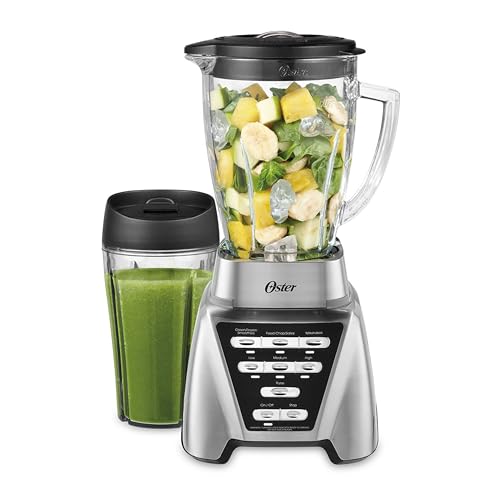
Oster Pro 1200 Blender — Best Glass-Jar Pick
The Oster Pro 1200 is the traditional countertop route done well: a glass jar, seven speeds, a dual-direction blade that works the load forward and back, and a 24 oz smoothie cup that doubles as the small-batch pureeing vessel.
Strengths
- Glass jar suits cooks who prefer glass for sauces and hot-adjacent work
- Dual-direction blade technology helps circulate purees evenly
- Included 24 oz cup covers small batches without the big jar
Trade-offs
- Glass jar care and weight versus plastic rivals
- Seven speeds are manual — no puree program to run itself
- Countertop format still means transferring pot soups in batches
| Specification | Detail (as listed) |
|---|---|
| Jar | Glass jar |
| Speeds | 7 speeds |
| Blade | Dual-direction blade technology |
| Extras | 24 oz smoothie cup included |
The dual-direction action is a real pureeing asset: reversing the blade’s sweep interrupts the ride-along effect where a load spins with the blades instead of through them, which is the common cause of uneven purees in mid-range machines. Combined with sensible liquid ratios, it produces reliably even sauces and soups.
The smoothie cup deserves its mention as a puree tool: a cup of pan sauce, a single portion of fruit puree, a small dip — jobs the big jar handles wastefully — fit the cup exactly. Two vessels, one base, most of the everyday map covered.
Oster small-cup pureeing deserves a technique note: the 24 oz cup’s narrow profile keeps a cup of sauce in constant blade contact, producing smoother small purees than the big jar can at the same volume. Use the jar for the pot of soup and the cup for everything under two cups, and the Pro 1200 effectively becomes two of this guide’s tools in one purchase.
Best for: Glass-preferring cooks wanting countertop versatility plus a small-batch cup / Not suited for: In-pot puree fans and automation seekers
Check on Amazon — check the current price on Amazon at the listing.
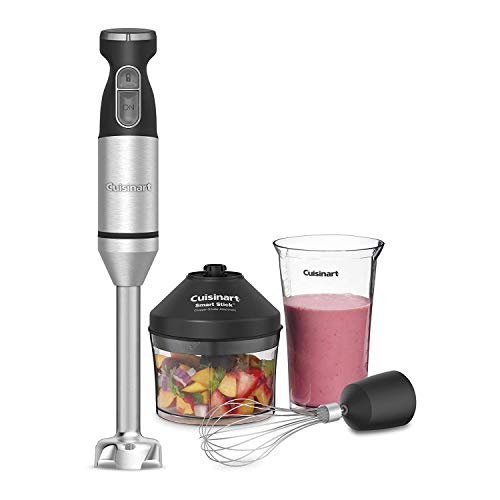
Cuisinart Smart Stick CSB-179 Hand Blender — Best Immersion System
The Cuisinart Smart Stick CSB-179 is the immersion system pick: a 300W variable-speed hand blender with an 8-inch shaft, a chopper, a whisk and a measuring cup. Puree the soup in the pot, chop the aromatics in the chopper, whisk the cream finish — one tool, three acts of the same meal.
Strengths
- Variable speed control for texture judged in the pot
- Chopper, whisk and measuring cup included as a true system
- 8-inch shaft reaches into deep stockpots comfortably
Trade-offs
- 300W is moderate — dense fibrous loads take patience
- Hand blending a big batch is arm work compared to a countertop run
- Ultimate silk on skins and fibers belongs to the countertop picks
| Specification | Detail (as listed) |
|---|---|
| Motor | 300 watts |
| Shaft | 8 in shaft |
| Extras | Chopper, whisk and measuring cup |
| Controls | Variable speed control |
The measuring cup is an underrated pureeing vessel: its tall, narrow shape is ideal for a cup of sauce or dip, keeping the load in the blade path where a wide bowl would scatter it. Paired with the whisk for finishing and the chopper for prep, the CSB-179 covers the small end of pureeing more completely than any countertop machine can.
Choose it if your pureeing is woven through cooking — sauces in pans, soups in pots, dips in cups — rather than produced in standalone batches. It is the working cook’s format.
CSB-179 chopper synergy: the chopper is not a bonus attachment for puree cooks — it is the first act of the same dish. Aromatics chopped evenly cook evenly, and evenly cooked aromatics puree smoothly; the whisk then finishes the sauce the stick blended. Owning the trio collapses three tools’ work into one drawer slot, which in a small kitchen is a decisive argument.
Best for: Cooks who puree in pots and pans as part of making meals / Not suited for: Batch producers needing countertop volume and silk
Check on Amazon — check the current price on Amazon at the listing.
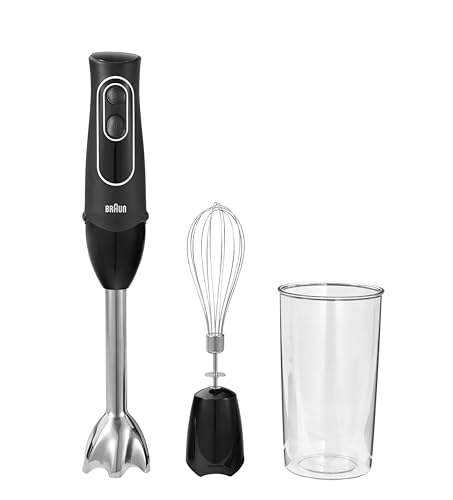
Braun MultiQuick 5 Hand Blender MQ515 class — Best Immersion Value
The Braun MultiQuick 5 is the value immersion pick: a 350W dual-speed hand blender with stainless blades, a beaker and a whisk, from the brand its listing calls the number one hand blender brand. Simple controls, proven format, gentle commitment.
Strengths
- 350W dual-speed motor covers everyday in-pot pureeing
- Beaker and whisk included for small batches and finishing
- Ergonomic, slip-proof handle design as listed
Trade-offs
- Dual speed is coarser control than the variable-speed rivals
- No chopper attachment in this configuration
- Heavy fibrous purees will take longer than with the stronger sticks
| Specification | Detail (as listed) |
|---|---|
| Motor | 350 watts |
| Speeds | Dual speed |
| Extras | Beaker and whisk |
| Blades | Stainless steel blades |
Two speeds sound limiting until you notice how pureeing actually works: a low speed to start and contain splashes, a high speed to finish. For soups, sauces and cooked vegetables — the center of the everyday map — that pairing covers the job, and the beaker handles the single-portion work neatly.
This is the drawer-friendly pick: it appears in seconds, purees the pan sauce, rinses under the tap and disappears. For households whose pureeing is frequent but light, that rhythm beats a countertop machine’s ceremony.
MultiQuick 5 beaker discipline: puree in the beaker for any amount under two cups, because its tall shape keeps the load around the head where a wide bowl would let it escape. The whisk handles the finishing jobs — a cream swirl, a vinaigrette for the salad beside the soup — making this budget stick a two-tool answer to weeknight pureeing and finishing together.
Best for: Everyday light pureeing — soups, sauces, cooked vegetables — on a budget / Not suited for: Thick, fibrous or large-batch pureeing
Check on Amazon — check the current price on Amazon at the listing.

KitchenAid Variable Speed Corded Hand Blender KHBV53 — Best Corded Hand Blender
The KitchenAid KHBV53 is the tidy single-tool pick: a corded hand blender with variable speed on a trigger, a removable 8-inch blending arm for washing, and a blending jar with lid included for small batches and storage in one vessel.
Strengths
- Variable speed trigger gives one-hand texture control
- Removable 8-inch arm detaches for easy washing
- Included blending jar with lid doubles as storage
Trade-offs
- Single tool only — no whisk or chopper in this configuration
- Corded design ties you to an outlet, as with all picks here except none
- Jar size suits small batches; big soups are pot work by design
| Specification | Detail (as listed) |
|---|---|
| Arm | Removable 8 in blending arm |
| Extras | Blending jar with lid |
| Controls | Variable speed trigger |
Trigger-controlled variable speed is the most intuitive interface in hand blending: squeeze harder, blend faster, with the texture changing under your hand in the pot. For pureeing — where the difference between rustic and smooth is seconds — that immediacy is worth more than a dial’s numbers.
The jar-with-lid detail closes the small-batch loop: puree a sauce in the jar, lid it, refrigerate it. Choose the KHBV53 if your pureeing skews small, frequent and storage-conscious.
KHBV53 storage loop: the lidded jar turns pureeing into a one-vessel errand — blend the sauce, lid it, refrigerate it, and tomorrow warm and serve from the same jar. Trigger control also makes it the gentlest starter for delicate work: feather the trigger for a rustic texture, squeeze fully for smooth, all without changing a dial or stopping the machine.
Best for: Small-batch puree makers who value trigger control and tidy storage / Not suited for: Users wanting a multi-attachment hand blender system
Check on Amazon — check the current price on Amazon at the listing.
Comparison Table
Countertop picks win on batch texture; hand blenders win on immediacy and small amounts. The honest question is where your pureeing happens — in production batches or inside the cooking itself.
| Pick | Badge | Key spec | Best for |
|---|---|---|---|
| Vitamix Propel Series 510 | Best Overall | 48 oz | Households pureeing soups, sauces and vegetables several times a week |
| Vitamix Ascent X5 | Best Premium Pick | 48 oz | Frequent puree makers who value programs and long-term versatility |
| Oster Pro 1200 Blender | Best Glass-Jar Pick | Glass jar | Glass-preferring cooks wanting countertop versatility plus a small-batch cup |
| Cuisinart Smart Stick CSB-179 Hand Blender | Best Immersion System | 300 watts | Cooks who puree in pots and pans as part of making meals |
| Braun MultiQuick 5 Hand Blender MQ515 class | Best Immersion Value | 350 watts | Everyday light pureeing — soups, sauces, cooked vegetables — on a budget |
| KitchenAid Variable Speed Corded Hand Blender KHBV53 | Best Corded Hand Blender | Removable 8 in blending arm | Small-batch puree makers who value trigger control and tidy storage |
How to Choose the Best Blenders for Pureeing Food
Map your pureeing week honestly. Count the batch jobs — soups by the pot, sauces by the jar — against the in-the-moment jobs — a pan sauce smoothed, a cup of dip, vegetables pureed in their pot. The majority format should get your main investment; the minority format can be served later by the other tool class, and many households end up owning one of each from this guide’s two halves.
Within countertop machines, size to your typical batch, not your largest: a right-sized container purees everyday loads better than an oversized one. Within hand blenders, decide between a system with chopper and whisk or a focused single tool, based on whether your prep work would actually use the attachments weekly.
Pureeing Different Foods: A Field Guide
Cooked vegetables puree best with some of their cooking liquid and a patient ramp to high speed. Soups want the immersion treatment or careful hot-batch countertop work with venting. Sauces often want the opposite of soup logic — less liquid, more body — and benefit from the small vessels in this guide. Fruit purees are the easiest load of all, needing only ripeness and a short blend, and they freeze beautifully for later use.
Fibrous foods — celery, leeks, asparagus ends, pepper skins — are the examination every puree machine sits: cook them fully, give them liquid and time, and accept that the countertop premium picks will finish them finer than any hand blender. Match the tool to the fiber and the map is covered.
Budget Tiers for Pureeing-Food Blenders, in Plain Terms
The value tier lives in the hand blenders: a dual-speed stick covers the everyday center of pureeing for the least commitment and the least storage. The mid tier buys systems and glass-jar countertop versatility — attachments, cups, broader range. The premium tier buys the countertop vortex: programs, self-cleaning, and the finest textures at household batch sizes.
Because pureeing is frequent and woven into cooking, convenience compounds: the machine that lives within reach gets used, and the one that must be fetched from a cupboard gets skipped. Count accessibility as a feature when you choose your tier.
Make-Ahead Purees: Sauces, Bases and Freezer Logic
Purees are among the most freezer-friendly foods in the kitchen: tomato sauce, pepper coulis, cooked vegetable purees and fruit purees all freeze in portions and return as instant meal components. A monthly pureeing session with a countertop pick from this guide can stock a freezer with the bases of a dozen future dinners — which reframes the machine’s cost entirely.
Label with food and date, freeze flat in bags or in portion cups, and thaw in the refrigerator or gently in a pan. A hand blender then finishes the thawed puree in its serving vessel, which is why the two formats in this guide cooperate so well across a make-ahead system.
Matching Vessel to Batch: The Two-Cup Rule
A practical rule governs most pureeing disappointment: amounts under roughly two cups belong in a narrow vessel — a hand blender’s beaker or jug, or a countertop machine’s personal cup — while amounts above belong in a pot with an immersion blender or in a countertop jar. In the wrong vessel, small loads scatter and large loads stagnate, and cooks blame the machine for a geometry problem.
Every pick in this guide was chosen partly for how honestly it covers its side of that rule. The two-format household — one countertop, one hand blender — covers both sides permanently, which is why so many experienced kitchens end up owning one of each rather than a single flagship.
Pureeing Herbs, Pestos and Green Sauces
Herb purees — pestos, chimichurris, green sauces — are pureeing’s fresh, raw branch, and they reward specific technique: dry the leaves well so the emulsion holds, add oil gradually at low speed rather than all at once, and stop while the texture still has life rather than blending to baby-food smoothness. Hand blenders in a tall jug excel at small herb batches; countertop machines need enough volume to keep the leaves in the oil’s circulation.
Freeze leftover herb purees flat in bags or in small cups with a thin oil cap, and they keep their color and punch for future pastas and soups. It is one of the highest-value uses of the machines in this guide, turning a wilting bunch of herbs into a stored ingredient instead of compost.
Dips and Spreads: Pureeing’s Social Life
Hummus-style bean dips, white-bean spreads, roasted vegetable dips and fruit purees for cheese boards all live in pureeing’s thick register, where circulation is hardest and patience matters most. Work with warm ingredients where the recipe allows — warm beans blend dramatically smoother than cold — add liquid by the spoonful, and scrape or tamp the load toward the blades between stages.
Texture is a choice in dips, not a race to smoothness: many spreads are better with a little body left in them. The variable controls on this guide’s picks — dials, triggers and speed ranges — exist for exactly this judgment call, letting you stop at rustic, smooth or anywhere between, on purpose.
Pureeing Grains and Breakfast Foods
Cooked grains puree into porridges, grain bowls’ sauce bases and baby-adjacent family foods, and they teach a texture lesson: starch thickens as it blends and again as it stands, so grain purees should be blended thinner than the target and given a minute to declare their final consistency. Oat and rice purees are the forgiving end; whole-grain and seed-heavy mixtures want the countertop picks’ sustained power rather than a hand blender’s patience.
Breakfast is the natural home of this work — overnight oats blended smooth, grain porridges for the household’s youngest and oldest members alike — and the drawer-speed of the hand blenders in this guide suits the hour. Keep the load warm, the liquid generous, and the blend shorter than instinct suggests.
Sauces from the Pan: Pureeing Where the Flavor Is
Pan sauces are pureeing’s highest-value small job: the browned bits, aromatics and juices of a roast or sauté, blended smooth with stock or wine into a sauce that tastes like the dish itself. Hand blenders were practically invented for this — the sauce never leaves the pan, no vessel is dirtied, and the texture is judged in place. The variable-speed picks here let you stop at glossy-rustic or continue to smooth, matching the sauce to the dish.
Gravies follow the same logic with a thickener’s caution: blend briefly, check, and remember that a gravy continues to set as it cools. A puree that looks perfect in the pan will be a slice too thick on the plate; stop one shade thinner than the target and let the table temperature finish the work.
Pureeing for Special Textures at the Family Table
Many households puree for a member who needs soft textures — a grandparent, a recovering patient, a toddler between stages — and the everyday machines in this guide serve that need with dignity: the family meal, portioned and pureed to the required consistency, rather than a separate ‘special’ food. Countertop picks handle the portion batch; hand blenders adjust an individual serving at the table’s edge.
Texture targets in this context should follow the guidance of the relevant health professional; the equipment’s role is control and repeatability — the ability to hit the same consistency every time, which the dials, triggers and programs in this guide provide. Note the setting that works, and the meal becomes routine rather than improvisation.
Cleaning Speed as a Feature: A Realistic Ranking
Since everyday pureeing happens mid-cooking, the honest cleaning ranking of this guide’s formats is: hand blender rinsed under the tap first, self-cleaning countertop program second, full jar wash third. That ranking explains real kitchens’ behavior — the hand blender gets used three times a week, the big jar once — and it should inform which format you buy first, whatever the texture charts say.
The countertop picks here fight back with self-cleaning programs and dishwasher-friendly designs, narrowing the gap considerably. But if your pureeing is ninety percent small and immediate, let the cleaning ranking lead your decision; texture differences at that scale are smaller than the friction difference, and friction is what actually decides usage.
Building a Two-Tool Puree Kitchen Over Time
The end-state many cooks arrive at is one countertop machine and one hand blender, bought in the order their cooking demands. Batch-first cooks start with the countertop pick and add the hand blender for pan sauces and small jobs; cooking-integrated cooks start with the hand blender and add the countertop machine when freezer sessions and silk textures call. This guide’s two halves are designed as those two purchases, in either order.
Buy the first tool for the pureeing you did last month, not the pureeing you imagine for next year. The second purchase, when it comes, will be obvious — the jobs the first tool handles awkwardly will have listed themselves, and the other half of this guide will be waiting with the answer already reviewed.
Pureeing Meat, Fish and Other Proteins
Cooked proteins puree into pâtés, terrines, fish mousses and soft-texture servings, and they obey their own rules: keep them moist with their cooking liquid or an added sauce, blend in shorter stages than vegetables because protein sets as it works, and chill mixtures that will be served cold so the texture firms cleanly. The countertop picks handle batch pâté work; hand blenders manage a single portion of fish or chicken for a soft-texture serving at the family table.
Temperature is the protein variable: warm proteins blend smoother than refrigerator-cold ones, which resist and grain. A brief warming of the portion before blending is the difference between a silky result and a stubborn one, in any machine in this guide.
Final Verdict by Kitchen Type
If your kitchen is a batch kitchen — soups on Sunday, sauces in quantity, a freezer that behaves like a pantry — the countertop half of this guide is your home, and the choice between the Propel’s right-sized excellence, the X5’s automation and the Oster’s glass versatility is a matter of taste and tier. If your kitchen cooks in the moment — pans, portions, sauces finished at the stove — the hand-blender half is your home, split between system, value and single-tool philosophies.
And if your kitchen, like most real kitchens, is both depending on the day, you now know the two purchases that cover it, in whichever order your next month of cooking demands. Pureeing food is a foundational skill; these six machines, between them, leave no household in this guide’s audience without a proper tool for it.
One Last Thing: Start With Tonight’s Dinner
The fastest way to validate any purchase in this guide is embarrassingly simple: make tonight’s dinner with it in mind. The soup that wants smoothing, the sauce that wants body, the vegetables that want mashing into silk — your next three meals already contain the pureeing jobs your kitchen actually performs, at the volumes it actually needs. Read the reviews above against those three meals rather than against an imagined future cuisine, and the right pick will identify itself. Equipment bought for the cooking you do is equipment that gets used, and used equipment is the only kind worth owning.
A Final Word on the Everyday Craft
Pureeing food is not a specialty skill; it is one of cooking’s basic moves, repeated across soups, sauces, sides and spreads in every cuisine this guide’s readers cook. The six machines reviewed here were chosen to make that move effortless at every scale a home kitchen actually uses — from a cup of pan sauce finished in its own pan to a freezer session of soup bases in a right-sized premium jar. Own the format your cooking reaches for, learn its one or two techniques, and pureeing stops being a step you plan around and becomes simply how your food turns out.
Before You Buy: A Ten-Second Checklist
Run this checklist against last month’s cooking rather than next year’s ambitions: Where did your pureeing actually happen — in batches, or inside the cooking itself? What was the largest amount, and the smallest? Did you ever need silk, or was honest smoothness enough? Does the tool you are eyeing live within reach of the stove, or in a cupboard you will resent opening? The answers select between this guide’s countertop and hand-blender halves more decisively than any specification — and a machine chosen against real meals is a machine that earns its place from the first week.
How to Puree Food Evenly, Whatever You Are Pureeing
A universal method for cooked foods, soups and sauces, with the countertop and hand-blender variations noted where they differ.
- Cook fibrous ingredients fully first — pureeing finishes texture, it does not create tenderness.
- Decide the target: rustic, smooth or silk, because the target sets blending time and whether you strain.
- Load the food with a portion of its cooking liquid or sauce — enough to move, not enough to drown.
- Countertop: fill no more than half for hot foods, vent the lid, and start at the lowest speed. Hand blender: submerge the head fully before switching on.
- Ramp speed gradually, letting the load begin circulating before asking for full power.
- Work the whole volume: tilt and move a hand blender through pockets; let a countertop vortex cycle the load repeatedly.
- Hold the finishing stage until a spoon check shows the target texture — sheen for silk, body for rustic.
- Adjust consistency at the end: liquid to thin, longer blending or a brief rest to thicken perception.
- Taste and season after pureeing, when the texture lets you judge accurately.
- Serve, store or freeze promptly, in portions matched to how you will use them.
The most common pureeing failure is stopping one stage early. When a texture is nearly right, give it one more short stage and check again — the last increment is where evenness lives, in almost every food on the map.
Common Buying Mistakes
Pureeing in a vessel that is too wide or too full. Hand blenders need the load concentrated around the head; countertop jars need headroom to circulate. Wrong volume in either direction means uneven texture.
Adding all the liquid up front. You can thin a puree in seconds and thicken it almost never. Start with less liquid and adjust at the end.
Switching a hand blender on above the liquid. An exposed spinning head sprays the kitchen and the cook. Submerge first, switch on second, switch off before lifting out.
Expecting raw fibrous vegetables to puree fine. Celery strings and pepper skins need cooking first. Raw purees are for tender ingredients and specific sauces, not a universal method.
Skipping the spoon check. A puree can look smooth in motion and show flecks at rest. Check on a spoon against the light before you call it done.
Final Recommendation
The picks resolve by kitchen geography: the Vitamix Propel 510 as the right-sized countertop standard, the Ascent X5 for premium automation, the Oster Pro 1200 for glass-jar versatility with a small-batch cup, and on the hand side the Cuisinart CSB-179 system, the Braun MultiQuick 5 value stick, and the KitchenAid KHBV53 for trigger control and tidy small batches. Together they cover the best blenders for pureeing food in every format the job actually takes.
The sibling guides go deeper on the specialties: Best Blenders For Puree, Best Blenders For Pureeing Baby Food, Best Blenders For Baby Food, Best Blenders For Soups, Best Blenders For Smoothies.
Start here: Vitamix Propel Series 510, Vitamix Ascent X5, Oster Pro 1200 Blender. Check the current price on Amazon for each before you decide.
Best Blenders For Puree Best Blenders For Pureeing Baby Food Best Blenders For Baby Food Best Blenders For Soups Best Blenders For Smoothies
Frequently Asked Questions
What is the difference between this guide and the puree guide?
This guide covers pureeing food in general — the everyday range of soups, sauces, vegetables and dips, with an emphasis on versatile, right-sized machines including hand blenders. The sibling puree guide concentrates on maximum silk texture in batches. If your pureeing is varied and frequent, start here; if it is specifically about perfect soup texture, start there.
Can a hand blender really puree as well as a countertop blender?
For soups, sauces and cooked vegetables at household scale, a good hand blender comes close enough that most cooks cannot justify transferring to a countertop machine. For ultimate silk, fibrous skins and large batches, the countertop vortex still wins. The difference shows at the extremes, not at Tuesday’s tomato soup.
How much liquid does pureeing need?
Enough for the load to circulate — the food should move as a mass rather than sit as a pack. Start with the food’s own cooking liquid at a modest level and add splashes as needed. Thick purees like hummus-style dips need patience and scraping more than they need extra liquid.
Can I puree food for freezing with these machines?
Yes — purees freeze exceptionally well. The countertop picks here handle the production batches, and portioning into cups or flat bags makes thawing practical. Fruit, vegetable, tomato and pepper purees are the most reliable freezers; dairy-based sauces are better added fresh after thawing.
Why does my puree come out gluey, especially potato?
Gluey texture comes from overworking starchy foods: potato starch turns to paste under prolonged blending. For potatoes, blend briefly at low speed or mash instead, and never hold them at high speed. Most other vegetables forgive long blending; potatoes are the famous exception.
Are glass jars better for pureeing hot foods?
Glass handles temperature changes well and does not retain odors or stains from sauces, which many cooks value for puree work. Follow the manufacturer’s guidance for hot liquids in any jar, vent countertop lids, and prefer the immersion route for very hot, thin soups regardless of jar material.


