Disclosure: airfryerkitchensupply.com is reader-supported. When you buy through links on our site, we may earn an affiliate commission at no extra cost to you.
Where to buy
‘For home use’ is a promise about effort: the best espresso coffee machines for home use are the ones a non-specialist can run half-awake, clean without a manual in hand, and maintain with prompts instead of knowledge. Every pick below was confirmed through the site’s Amazon verification step, and the two easiest ownership stories in the category are the Philips 2300 Series with LatteGo for true beginners, and the De’Longhi Magnifica Evo with manual frother for households ready to learn one small skill.
Check the current price on Amazon through the links in this guide. If you are buying for someone else — a parent, a partner, a new household — weight the cleaning and descaling sections of each review heavily; gifts fail on maintenance, not on taste.
Introduction
The best espresso coffee machines for home use are judged by a different scoreboard than café equipment: not the best possible shot, but the best shot you will actually get on a tired Tuesday, from a machine that a partner, parent or teenager can also operate, that cleans up in minutes, and that reminds you — clearly and kindly — when it needs descaling. Home use means the operator is not a barista and the service department is you.
This guide therefore ranks by forgiveness: how hard each machine works to make a decent drink from imperfect input, how obvious its controls are, how its milk system behaves in real hands, and how gracefully it handles the two home realities of variable beans and irregular cleaning.
The six verified picks run from a three-preset automatic designed for absolute beginners, through guided semi-automatics that teach one skill at a time, to a simple budget pump machine. If your priority is a machine that slots into home life instead of reorganising it, start here.
There is also a fairness point built into this list: home use includes the second year, not just the first week. Several machines that dazzle in a showroom become tiresome when their clever milk carafe needs its fourth deep clean of the month, or their settings menu hides the descale routine three layers deep. The picks below were interrogated for month thirteen as much as for day one — how they prompt, how their parts age, and how a non-technical owner gets help when something finally wears.
In this guide
Quick Picks
Six machines ranked by how forgiving they are in everyday home hands:
- Best for Beginners: Philips 2300 Series Fully Automatic Espresso Machine with LatteGo (EP2330/14) — three presets, a ceramic grinder and LatteGo milk — the simplest start in home espresso.
- Best Easy Milk Learning: De’Longhi Magnifica Evo with Manual Milk Frother — seven one-touch recipes plus a manual wand, with a MyLatte personalised drink.
- Best Guided Manual: Breville Barista Pro Espresso Machine (BES878) — a faster-heating Barista with an intuitive display to guide each shot.
- Best Simple Budget: De’Longhi ECP3420 Espresso Machine — a compact 15-bar pump machine with frother — home espresso at its simplest.
- Best Low-Maintenance Upgrade: Philips 4400 Series Fully Automatic Espresso Machine with LatteGo (EP4444/90) — twelve hot and iced presets with LatteGo — the step-up that stays easy.
- Best for Learning the Craft: De’Longhi La Specialista Arte Espresso Machine (EC9155M) — a guided semi-automatic in stainless steel, built around assisted tamping and milk.
How These Picks Were Chosen
Verification came first, as in every guide in this programme: model and listing matched, specs quoted only from the verified listing, links only where a listing was confirmed.
Home-use scoring then applied the tests that predict whether a machine is still in service after a year. Can a first-time user make a good drink within ten minutes of unboxing? Is the milk routine one step or five? Does the machine prompt for descaling and rinsing, or rely on the owner’s memory? Can the parts that touch milk go under a tap or in a dishwasher? Machines that demanded enthusiast knowledge for basic success were ranked down or left out, however good their ceiling.
Two picks are deliberately semi-automatic: some home users want to learn, and a guided manual machine — with a forgiving basket and a clear gauge or a tamping aid — is a legitimate home-use choice. They are labelled as the learning options so nobody buys one by accident.
The scoring also considered the ‘second user’ problem explicitly: in most homes, one person researches and buys the machine, and everyone else just uses it. Picks earned credit when a second user — who never read the manual and never will — could still produce the household’s standard drink. That test, more than any extraction metric, is what ‘for home use’ means, and it is why the top of this ranking looks the way it does.
A final selection value deserves stating: repairability by ordinary means. Picks earned their places partly because their everyday consumables — filters, seals, descaler, milk parts — are obtainable without drama and their routine tasks need no tools beyond a cloth and a jug. A home machine whose small parts are unobtainable is a machine with a countdown attached, and no pick here carries one.
The 6 Best Espresso Coffee Machines for Home Use

Philips 2300 Series Fully Automatic Espresso Machine with LatteGo (EP2330/14) — Best for Beginners
Philips 2300 Series Fully Automatic Espresso Machine with LatteGo (EP2330/14) — check price on Amazon.
If one machine in this guide deserves the words ‘home use’ on its box, it is the Philips 2300. Three coffee presets cover what beginners actually drink, strength and milk settings adjust without a settings manual, and the LatteGo container — two parts, no tubes — rinses clean under a tap in seconds, which removes the single biggest reason home milk systems get neglected.
The ceramic grinder is set-and-forget for normal beans, and the machine’s prompts handle rinsing and maintenance with a clarity designed for non-technical owners. This is the machine to give someone who loves lattes and has never made one.
Gift-buyers should note the 2300’s unboxing experience: it is a machine a recipient can realistically set up alone in under an hour, with the first good drink arriving the same afternoon. Many espresso gifts quietly become projects; this one becomes coffee, which is why it is recommended here without the usual caveats about the recipient’s technical confidence.
Strengths
- Simplest control scheme in the guide — three presets
- LatteGo milk parts rinse in seconds, no tubes to flush
- Ceramic grinder and clear maintenance prompts
Trade-offs
- Three presets means no exotic drinks menu
- Advanced users will want more adjustment within a year
- Fully automatic size is larger than the manual picks
| Specification | Detail |
|---|---|
| Style | Fully automatic bean-to-cup |
| Menu | 3 coffee pre-sets per listing |
| Grinder | Ceramic grinder |
| Milk | LatteGo milk system |
Beginner machines fail in two ways: too many options, which paralyses, and milk cleanup, which festers. The 2300 avoids both by design, and that is worth more to a new home user than any spec-sheet advantage elsewhere in this guide.
It also suits households where the machine’s users vary — the confident owner, the cautious partner, the visiting grandparent all get the same good drink from the same three buttons. Consistency across users is a home-use feature no café metric captures.
A small thing that matters in homes: the 2300’s drinks are consistent enough that the household stops ‘fixing’ them with sugar and syrups to mask variation. Consistency is a health-adjacent, budget-friendly feature nobody advertises — when every cup tastes like the last good one, people drink the coffee they bought the machine for, at home, instead of drifting back to cafés.
Best for: absolute beginners and mixed-confidence households / Not suited for: enthusiasts wanting a wide menu or manual control
Check on Amazon — check the current price on Amazon before you decide.

De’Longhi Magnifica Evo with Manual Milk Frother — Best Easy Milk Learning
De’Longhi Magnifica Evo with Manual Milk Frother — check price on Amazon.
This Magnifica Evo variant is the thoughtful middle path for home use: the machine grinds, doses and brews seven one-touch recipes for you, but the milk is frothed on a manual wand — so a household that wants to learn one café skill learns the satisfying one, while the error-prone espresso side stays automated. The MyLatte feature saves your personalised drink once you find it.
Against its automatic-frother sibling, this version trades a little convenience for better milk texture and a simpler milk path to clean: a wand wipe and purge, nothing to refrigerate or dismantle.
One routine makes this Evo foolproof at home: froth the milk first while the machine warms its cup tray logic, then brew the shot into the warm milk — the order café purists reverse, but the one that forgives a home user’s timing, because milk waits more patiently than espresso does. Small workflow mercies like that are what ‘designed for home use’ should mean.
Strengths
- Automation where errors happen, manual where learning is fun
- Seven recipes plus a saved personal drink
- Wand milk path is the easiest of all to keep clean
Trade-offs
- Milk drinks are not fully one-touch
- Wand technique takes a few drinks to learn
- No automatic milk for guests to self-serve
| Specification | Detail |
|---|---|
| Style | Fully automatic bean-to-cup |
| Menu | 7 one-touch recipes per listing |
| Grinder | Built-in grinder |
| Milk | Manual milk frother |
| Personalisation | MyLatte signature drink per listing |
For a home user who suspects they might catch the espresso bug, this is the safest machine in the guide: it cannot be outgrown in a month, because the milk side grows with you, yet it never demands the full manual ritual on a workday morning.
The Evo platform’s maintenance prompts and front-access design suit under-cabinet home life, and De’Longhi’s service network is the deepest in this category — a real consideration for a machine a household will lean on daily.
Home-use buyers comparing the two Evo variants should decide by a single question: who makes the milk drinks? If the answer is ‘mostly one person, who would enjoy learning the wand’, this manual version is better value and better milk. If the answer is ‘whoever is passing the kitchen’, the automatic-frother sibling is the right Evo. Same platform, same espresso — the household’s sociology chooses.
Best for: home users who want automation plus one skill to grow into / Not suited for: households wanting guests to make milk drinks unaided
Check on Amazon — check the current price on Amazon before you decide.
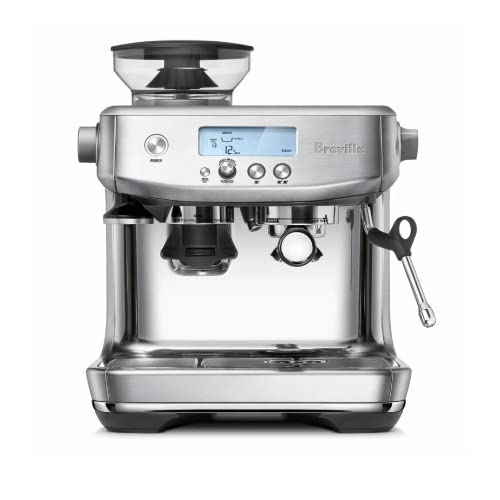
Breville Barista Pro Espresso Machine (BES878) — Best Guided Manual
Breville Barista Pro Espresso Machine (BES878) — check price on Amazon.
The Barista Pro is the home-use pick for people who want the manual ritual with training wheels that actually help: a clear display that walks through grind, dose and shot timing, fast heat-up so the ritual fits a morning, and a powerful steam wand that shortens the milk learning curve compared with entry machines.
It asks more than any automatic — you are the tamping, timing barista — but it organises that learning better than any other manual machine here, which is why it is the guided pick rather than the flagship Express: the interface turns guesswork into a routine a home user can repeat.
Home learners should use the Pro’s programmability deliberately: once a drink is dialled in, save the shot volume so weekday drinks repeat without thought, and reserve experimentation for weekends. That split — autopilot on workdays, laboratory on Saturdays — is how manual machines survive in real homes instead of becoming weekend-only ornaments.
Strengths
- Guided display makes the learning curve structured
- Fast heat-up suits real home mornings
- Strong steam performance for lattes at home
Trade-offs
- Still a manual ritual — not for one-touch households
- Built-in grinder is the eventual upgrade bottleneck
- Premium tier among the manual picks
| Specification | Detail |
|---|---|
| Style | Semi-automatic with built-in grinder |
| Finish | Brushed stainless steel |
| Model | BES878 (Barista Pro) |
Home users who choose the Pro usually share a trait: they enjoy a small daily craft. For them the machine’s guidance is not a crutch but a coach, and within a few weeks the drinks reach a level no automatic in this guide can match.
If that description does not sound like your household, buy the Philips above without a second thought. If it does, the Pro is the most livable way to learn espresso at home.
The Pro’s display guidance has a second home benefit: it makes the machine teachable. An owner can show a partner the routine in one session because the screen narrates the steps, turning a solo hobby machine into a two-operator household appliance. Many manual machines fail exactly there — the knowledge lives in one person’s hands — and the Pro is designed against that failure.
Best for: home learners who want manual espresso with guidance / Not suited for: anyone who wants drinks at one touch
Check on Amazon — check the current price on Amazon before you decide.

De’Longhi ECP3420 Espresso Machine — Best Simple Budget
De’Longhi ECP3420 Espresso Machine — check price on Amazon.
The ECP3420-style machine is the home-use classic at the budget end: a compact pump espresso maker with a milk frother, a small footprint, and controls a new user understands in one reading. It takes ground coffee in pressurised baskets — the forgiving kind that produce a decent, crema-topped shot without grind precision — which is exactly why it works in real homes.
Temperature control at this tier is a welcome extra for coaxing flavour from different coffees. What you do not get is automation or refinement; what you do get is a machine that a student, a first flat or a spare room can run happily for years.
A word on coffee for this machine, since it decides everything: buy the freshest pre-ground espresso you can, in the smallest bags sold, and finish each bag within two weeks of opening. That single habit lifts the ECP3420’s drinks more than any accessory, and it costs nothing but shopping discipline — the purest form of home-use optimisation.
Strengths
- Pressurised baskets forgive pre-ground coffee and rough dosing
- Compact and simple — ideal first home machine
- Frother covers cappuccino-style drinks
Trade-offs
- Ceiling is set by pressurised extraction
- Frother foam is airy rather than silky
- No grinder and minimal automation
| Specification | Detail |
|---|---|
| Style | Compact pump espresso machine |
| Pump | 15-bar pump per listing |
| Milk | Milk frother per listing |
| Extras | Temperature control per listing |
The home-use case for this machine is honesty about input: many households will use pre-ground coffee from the supermarket, whatever guides recommend. A machine designed to make that taste decent serves those homes better than a precision instrument that punishes them.
Pair it with the freshest ground coffee you can buy in small bags, keep the frother clean, and it delivers exactly the uncomplicated service its buyers want.
Longevity expectations, stated fairly: budget pump machines like this one commonly serve for years of light home use, and their simple construction means the usual failures — a worn seal, a tired pump — are the cheap kind. What shortens their life fastest is scale in hard-water homes, so a jug filter is the highest-value accessory this machine can be paired with.
Best for: budget home users and pre-ground coffee households / Not suited for: fresh-bean enthusiasts chasing nuance
Check on Amazon — check the current price on Amazon before you decide.
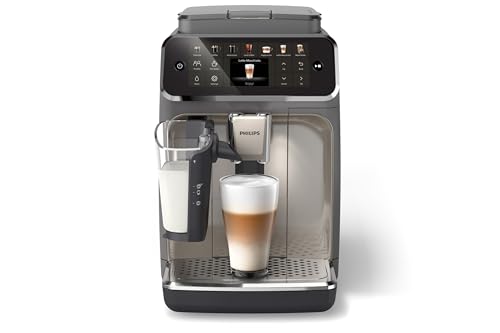
Philips 4400 Series Fully Automatic Espresso Machine with LatteGo (EP4444/90) — Best Low-Maintenance Upgrade
Philips 4400 Series Fully Automatic Espresso Machine with LatteGo (EP4444/90) — check price on Amazon.
The Philips 4400 is for the home user who started simple and wants more menu without more work: twelve hot and iced presets, the same rinse-in-seconds LatteGo milk system as the beginner pick, and an integrated grinder doing the invisible work. It is the upgrade that does not punish the household with new chores.
Iced presets are its signature addition for home use — summer drinks are where home machines most often disappoint, and having the machine manage the recipe keeps the results consistent when the weather turns.
The 4400 also handles the ‘different milk’ household gracefully: oat and other plant milks froth differently, and having per-drink saved settings means the oat flat white and the dairy cappuccino can both be one-touch defaults rather than a daily negotiation with the machine. Mixed-milk homes are now the norm, and this is the pick that treats them as one.
Strengths
- Twelve presets including iced drinks
- Same easy LatteGo cleaning as the 2300
- A genuine upgrade that adds no maintenance burden
Trade-offs
- Higher tier than the 2300 for menu breadth mainly
- Still a sealed automatic — no manual experiments
- Menu depth is wasted on espresso-only homes
| Specification | Detail |
|---|---|
| Style | Fully automatic bean-to-cup |
| Menu | 12 hot & iced coffee pre-sets per listing |
| Grinder | Integrated grinder per listing |
| Milk | LatteGo milk system |
Positioned between the beginner 2300 and the maximalist 5500, the 4400 is the balanced household choice: enough menu for varied tastes and seasons, the easiest milk care in the business, and no feature that exists only to fill a brochure.
Homes upgrading from pods will feel the jump most: fresh beans, real milk, iced options, and cleaning that is somehow less work than rinsing a pod bin. That combination is why this class of machine converts pod households permanently.
The 4400’s iced presets deserve a practical footnote: they assume good ice and a glass that fits, and they shine most with a slightly stronger default setting than the hot drinks, since melting ice dilutes. Spend one summer evening setting the iced recipes to your taste and saving them, and the machine repays that evening every hot afternoon afterwards.
Best for: households upgrading from pods or a basic automatic / Not suited for: minimalists who drink only espresso
Check on Amazon — check the current price on Amazon before you decide.

De’Longhi La Specialista Arte Espresso Machine (EC9155M) — Best for Learning the Craft
De’Longhi La Specialista Arte Espresso Machine (EC9155M) — check price on Amazon.
The La Specialista Arte is De’Longhi’s answer for home users who want the craft without the chaos: a stainless semi-automatic designed around assisted steps — guided grinding and tamping aids and a milk wand shaped for learners — so the variables that ruin beginner shots are steadied by the machine while your hands still do the satisfying parts.
It sits between the Barista Pro and the automatics in spirit: more ceremony than one-touch, less guesswork than a traditional machine. For a home user who wants weekend projects and weekday competence, that is a well-judged place to stand.
The Arte’s learning aids have a lifespan worth understanding: they help most in the first fifty drinks, after which your hands know the routine and the aids simply stop being noticeable. That is the correct design for a teaching machine — scaffolding that fades rather than a cage — and it is why Arte owners tend to keep the machine long after they stop needing its help.
Strengths
- Assisted tamping and dosing reduce beginner errors
- Stainless build feels like a long-term appliance
- Milk wand designed for learning texture
Trade-offs
- Still a manual workflow on busy mornings
- Guidance aids add parts to clean
- Premium tier over the automatics for some buyers
| Specification | Detail |
|---|---|
| Style | Semi-automatic espresso machine |
| Body | Stainless steel |
| Model | EC9155M (La Specialista Arte) |
The Arte’s real home-use virtue is confidence: new owners succeed early because the machine constrains the two hardest variables — dose and tamp — and early success is what turns a purchase into a habit rather than a regret.
If your household contains one budding barista and several impatient drinkers, this machine serves both: the barista gets a craft to practise, and the drinkers get consistent results while the practice continues.
The Arte’s assisted tamping has a household consequence worth noting: drinks stay consistent even when the less practised partner makes them, because the machine constrains the step where beginners vary most. In mixed-skill homes, that consistency across operators is worth as much as the headline features — it is the difference between a machine and a shared appliance.
Best for: home users who want to learn espresso with a safety net / Not suited for: pure one-touch households
Check on Amazon — check the current price on Amazon before you decide.
Comparison Table
| Pick | Badge | Key spec | Best for |
|---|---|---|---|
| Philips 2300 Series Fully Automatic Espresso Machine with LatteGo (EP2330/14) | Best for Beginners | Fully automatic, 3 presets, LatteGo, ceramic grinder | absolute beginners and mixed-confidence households |
| De’Longhi Magnifica Evo with Manual Milk Frother | Best Easy Milk Learning | Fully automatic, 7 one-touch recipes, manual frother | home users who want automation plus one skill to grow into |
| Breville Barista Pro Espresso Machine (BES878) | Best Guided Manual | Semi-automatic with built-in grinder and display guidance | home learners who want manual espresso with guidance |
| De’Longhi ECP3420 Espresso Machine | Best Simple Budget | Compact pump machine, milk frother, temperature control | budget home users and pre-ground coffee households |
| Philips 4400 Series Fully Automatic Espresso Machine with LatteGo (EP4444/90) | Best Low-Maintenance Upgrade | Fully automatic, 12 hot & iced presets, LatteGo | households upgrading from pods or a basic automatic |
| De’Longhi La Specialista Arte Espresso Machine (EC9155M) | Best for Learning the Craft | Guided semi-automatic, stainless steel | home users who want to learn espresso with a safety net |
Read the table by effort: the three Philips and De’Longhi automatics ask almost nothing of you, the two guided semi-automatics ask for a learnable ritual, and the budget pump machine asks only for ground coffee and a rinse. Home use is an effort budget — spend yours where your household actually enjoys spending it.
How to Choose the Best Espresso Coffee Machines for Home Use
Start with the operator, not the drink. List everyone who will use the machine and rate the least confident user: home machines are shared appliances, and the right choice is the one that person can run. That single test eliminates most mis-purchases in this category — enthusiasts buy for themselves and households inherit a machine only one person dares touch.
Next, audit the cleaning you are honestly signing up for. Milk systems range from a two-part container rinsed in seconds, to a wand that needs a wipe and purge, to carafes that live in the fridge and need weekly dismantling. All work; the question is which routine survives your household’s busiest week, because the week it gets skipped is when flavours and smells start.
- Least confident user is a beginner: Philips 2300
- Automation plus one learnable skill: Magnifica Evo (manual frother)
- Guided manual learning: Barista Pro or La Specialista Arte
- Pre-ground coffee household: De’Longhi ECP3420
- Upgrade without new chores: Philips 4400
Finally, prefer machines that prompt. Descale lights, rinse cycles and filter reminders sound like small print; in home use they are the difference between a machine that runs for years and one that quietly scales up and fails. Every automatic in this guide manages its owner kindly in this respect — it is a deliberate selection criterion, not a coincidence.
The Three Home-Use Skills (and How These Machines Teach Them)
Home espresso really only involves three skills: dosing coffee consistently, texturing milk without scalding it, and keeping the machine clean. Automatics remove the first entirely. Guided semi-automatics steady it with aids and gauges. The second skill is the one worth learning manually if any — a wand and a jug teach it in a week of breakfasts, and the Magnifica Evo and La Specialista Arte are picked partly because their wands are learner-shaped.
The third skill is not a skill at all but a routine: wipe, rinse, empty, descale when prompted. Choose the machine whose routine is shortest for the drinks you make, and home use stays pleasant. This is why milk-system design gets so much space in the reviews above — at home, cleaning is a feature of the drink.
Beans and Water for People Who Are Not Baristas
Two inputs decide most of what a home user tastes. Beans: buy medium-roast, in bags small enough to finish within a few weeks, and keep the hopper or canister only part-filled. Water: if your tap water is very hard, use the machine’s filter and replace it on schedule; if it tastes strongly of chlorine, a simple filter jug improves every drink in this guide.
Skip the exotic upgrades until these two are right. Home users routinely blame machines for what stale beans and scale were doing, and the fix costs a fraction of a new machine.
Descaling and Water Care Without the Drama
Descaling frightens new owners out of proportion to the task: on the automatics in this guide it is a prompted, twenty-minute routine of filling a tank with solution, pressing a button and rinsing — closer to running a dishwasher cycle than to servicing a boiler. The machines ask at the right interval for your water hardness setting, and the only way to get it wrong is to ignore the request for months, at which point scale genuinely does become a service problem.
Reduce the frequency and the stakes with two habits: use filtered water (a jug filter is enough for most homes), and if your machine offers a water filter cartridge, fit it and replace it on schedule. In soft-water homes the descale prompt may be a rare event; in hard-water homes it is the machine protecting a boiler you paid for. Either way, treat the prompt as a calendar appointment, not a warning light to negotiate with.
Home Use for Guests: Serving People Who Do Not Know Your Machine
A home machine’s hardest test is the guest who wants coffee while you are cooking. Automatics pass it: a visitor can be pointed at three labelled buttons and produce a good drink unaided, which is a real social feature of the Philips and De’Longhi automatics here. Guided semi-automatics fail it gracefully — the guest waits two minutes while you make them something better. Pure manual machines turn it into a performance, which is charming exactly once.
If your home entertains often, weight that scenario in your choice. A small, underrated setup helps every style: keep a ‘guest default’ — the house drink, its button or its settings — that anyone can reproduce, and keep cups, sugar and the milk jug where a stranger would look for them. Home use is hospitality engineering as much as espresso.
When to Upgrade: Signs Your Home Machine Has Been Outgrown
Outgrowing a home machine looks specific: the beginner automatic’s three presets no longer cover what the household asks for; the budget pump machine’s ceiling shows because your technique stopped being the limiting factor; the guided semi-automatic’s built-in grinder is the only part of the station you complain about. Each of those is a healthy sign — the machine taught you what you actually want, which is information no guide can give a first-time buyer.
Upgrade in the direction of the complaint, not the direction of the marketing. Menu complaints point to a broader automatic (the Philips 4400 exists precisely for the 2300 owner who outgrew three presets). Ceiling complaints point to a grinder first, a machine second. And if the complaint is only boredom, buy better beans for a month before buying anything with a plug — beans are the upgrade that most often turns out to have been the point.
Teaching the Household: A Fifteen-Minute Onboarding That Works
Whatever machine you choose from this guide, run one fifteen-minute household session in the first week: make the standard drink together once, write the steps on a card that lives with the beans, and agree the two house rules — milk is dealt with immediately, and the drip tray is emptied by whoever fills it. That tiny investment converts a personal appliance into household infrastructure and prevents the slow resentment of the one person who ‘knows how it works’ becoming the permanent barista.
Include the failure drill in the same session: what the descale prompt looks like, where the manual lives, and what ‘grind one step finer’ means on your machine. Households that have seen a prompt before it matters treat it as information; households meeting it for the first time at 7 a.m. treat it as a breakdown. Home use is mostly expectation management, and fifteen minutes buys most of it.
Accessibility and Ease: Machines for Every Hand in the House
Home use includes hands that grip weakly, eyes that dislike small screens and users who cannot memorise sequences — and machine choice should honour that reality without embarrassment. Large labelled buttons and short drink paths (the Philips automatics) serve low-vision and low-confidence users best; lever-style portafilters and fine grind adjustments serve them worst. Tank handles, drip trays that lift out without tilting, and lids that open with a palm rather than fingertips are the unglamorous features that decide whether a machine is usable by everyone it was bought for. If you are choosing for a parent or for a household member with limited dexterity, weight those details above every extraction nuance in this guide — a drink made independently is worth more than a marginally better drink that requires asking for help.
How to Use a Home Espresso Machine: The Daily and Weekly Routine
Home use succeeds on routine, not talent. This is the daily and weekly pattern that keeps every machine in this guide tasting fresh, sized for people with jobs and families rather than café shifts.
- Morning start: check the water level, empty yesterday’s drip tray water if it is sitting full, and let the machine run its automatic rinse rather than skipping it.
- Make drinks with the freshest beans you have; if the taste has gone flat this week, suspect the beans before touching any setting.
- After every milk drink, deal with the milk immediately — rinse the LatteGo container, wipe and purge a wand, or return a carafe to the fridge. This ten-second rule prevents every stale-milk problem.
- Knock out or empty grounds daily; a grounds container left for days grows odour that flavours the whole station.
- Weekly: wash the drip tray and any removable milk parts in warm soapy water, rinse the water tank, and wipe the machine’s exterior and the counter beneath it.
- When the descale or filter prompt appears, act within the week, not the month — prompts are timed to protect the boiler, and deferring them is how home machines die young.
- Monthly: check the grinder setting against a fresh bag of beans and adjust one step if shots taste sour (finer) or bitter (coarser), adjusting only while the grinder runs.
- Label the bean canister with the date the bag was opened; when drinks start tasting flat, the date usually explains why before any setting needs touching.
- Keep the machine’s quick-start card — not the full manual — in the drawer beneath it; the one page that covers descaling and error lights is the page a household actually reaches for.
Total effort: about a minute a day and five minutes a week. Any machine in this guide kept on that routine will serve a home faithfully for years — and any machine, however expensive, neglected off it will not.
Common Buying Mistakes
Buying for the most skilled user in the house. The least confident regular user sets the machine’s real difficulty. Choose for them and everyone is happy.
Leaving milk in the system overnight. The fastest route to bad taste and worse smells. Same-day milk cleanup is the one non-negotiable home habit.
Ignoring descale prompts. Prompts are the machine protecting itself. Deferring them converts a cheap descale into a repair.
Storing beans in the hopper for weeks. Warm hoppers stale beans quickly. Fill little and often from a sealed bag.
Expecting café results from supermarket pre-ground in a precision machine. Match input to machine: pressurised-basket models forgive pre-ground; precision models demand fresh grinding.
Hiding the manual and the descaler. Keep both where the machine lives. A prompt that sends the household hunting through drawers is a prompt that gets postponed, and postponed maintenance is this category’s main cause of death.
Final Recommendation
For a true home-use brief, the Philips 2300 is this guide’s answer: three presets, the easiest milk cleanup in the category, and prompts that manage maintenance for you. It is the machine least likely to be abandoned, and in home use that is the highest praise there is.
If your household wants to grow one skill, choose the Magnifica Evo with manual frother; if it wants the full craft with guidance, the Barista Pro or La Specialista Arte; if it runs on pre-ground coffee and a budget, the ECP3420; and if it is upgrading from pods and wants more menu without more chores, the Philips 4400. Every one of the six respects the realities of a home — which is the entire point of this list.
Home use is a promise that the machine will fit the life around it. Keep that promise in view — the least confident user, the busiest morning, the laziest Sunday cleanup — and the right choice from this list becomes obvious. Then enjoy the quiet luxury of a home where good coffee simply happens.
If this guide leaves you with one habit rather than one product, let it be this: whatever you buy, spend its first week setting it up properly — settings agreed, beans fresh, routines written down, the household shown once. That week is the difference between a machine that serves a home for years and one that merely occupies it, and it costs nothing but a little of the attention you were happy to spend choosing.
Keep researching with these related guides from the same program: Best Espresso Machines Best Espresso Coffee Machines Best Espresso Coffee Machines For Home Best Espresso Drip Combo Machines Best Espresso Machines 1000 Best Coffee Makers
Frequently Asked Questions
What is the easiest espresso machine to use at home?
A bean-to-cup automatic with a simple milk system — in this guide, the Philips 2300 with LatteGo. Three presets, fresh grinding inside, and milk parts that rinse in seconds make it the lowest-effort route to good drinks.
How much maintenance does a home espresso machine need?
About a minute a day (grounds, drip tray, milk cleanup), five minutes weekly (wash removable parts, rinse the tank), and a descale when the machine prompts. Automatics that prompt clearly are the easiest to keep healthy.
Can beginners make good espresso without training?
Yes, with the right machine design: automatics dose and extract for you, and pressurised-basket manual machines forgive rough technique. What beginners cannot do is rescue stale beans — freshness matters more than skill at home level.
Is a manual or automatic machine better for home use?
For most homes, automatic: everyone can use it and cleaning is prompted. Manual machines suit homes where one person enjoys the ritual and is happy to make drinks for others.
Why does my home espresso taste sour or bitter?
Sour usually means under-extraction — grind a step finer or use fresher beans. Bitter usually means over-extraction or stale, dark beans. Change one thing at a time and taste again.
How long should a home espresso machine last?
Years, with routine care: same-day milk cleanup, weekly washing of removable parts, and descaling on prompt. The machines here were chosen partly for established parts and service support.
What is the best espresso machine for someone who has never made coffee?
A simple bean-to-cup automatic — the Philips 2300 in this guide. Fresh beans go in, three labelled drinks come out, the milk container rinses in seconds, and the machine prompts for its own maintenance. There is nothing to tamp, time or learn before the first good cup.
How do I stop my home espresso machine tasting stale?
Work through the cheap causes in order: beans older than a few weeks, a milk system not cleaned the same day, a drip tray left full, and a missed descale. In home use, staleness is almost always one of those four, and all four are routine, not repairs.


