Disclosure: airfryerkitchensupply.com is reader-supported. When you buy through links on our site, we may earn an affiliate commission at no extra cost to you.
Where to Buy
The fastest way to buy any pick in this guide to the best environmental toilets is through Amazon, where each verified model below is listed with its current specification details. Use the links in this box to check the current configuration before you order — toilet listings sometimes bundle different seats or rough-ins under one page, and the variant you select is the toilet you get.
- TOTO Promenade II One-Piece Elongated Toilet, 1.28 GPF — Best Overall. Check the current price on Amazon.
- American Standard Champion PRO Two-Piece Elongated Toilet, 1.28 GPF — Best for Busy Family Bathrooms. Check the current price on Amazon.
- HOROW HR-ST076W One-Piece Compact Skirted Toilet, 1.28 GPF — Best Compact Pick. Check the current price on Amazon.
- Swiss Madison Concorde One-Piece Square Toilet, Dual Flush 1.1/1.6 GPF (10-Inch Rough-In) — Best for 10-Inch Rough-Ins. Check the current price on Amazon.
- DeerValley Elongated One-Piece Toilet, Dual Flush 1.1/1.6 GPF — Best Dual Flush Value. Check the current price on Amazon.
- OGO Origin Compact Composting Toilet — Best Waterless for Vehicles. Check the current price on Amazon.
If a pick shows as unavailable in your region, choose the next pick in the same badge family rather than substituting an unverified model — every recommendation in this guide was checked against its listing before inclusion.
Environmental toilets come in two families, and the best environmental toilets guide should not pretend otherwise. Family one is the high-efficiency flush toilet: verified at 1.28 gallons per flush or below, engineered to clear in a single attempt, and built to stay in service for decades. Family two is the waterless toilet — composting and urine-separating designs that use no water at all. This guide ranks five of the strongest flush models we verified and one waterless specialist, and it is explicit about the trade-offs of each, because the greenest toilet is the one that fits your property and gets used properly for twenty years.
What makes a flush toilet ‘environmental’ in 2026? Start with the WaterSense benchmark — 1.28 GPF — which every flush pick here meets. Then look for the evidence behind the number: a MaP bulk-removal score printed in the listing (the HOROW HR-ST076W cites MaP 800g), a flushing platform with a clog-resistant reputation (American Standard’s Champion line), or a glaze that cuts chemical cleaning (TOTO’s CeFiONtect). A low GPF figure without clearing evidence is a promise; with evidence, it is a result.
We also weighted repairability. Porcelain is energy-intensive to make and miserable to ship; a toilet that can be kept efficient with universal seals and valves — the Champion PRO and Promenade II pattern — has a smaller lifetime footprint than a sealed bargain replaced at the first failure. Read the picks with your property in mind: plumbed homes start at the top; vehicle and off-grid readers should jump to the OGO Origin and then to our dedicated European composting guide.
In this guide
Quick Picks: The Best environmental toilets
If you only read one section, make it this one. Each pick below carries a badge naming the job it does best, and the same badge appears at its full review further down so you can jump straight to the detail.
Best Overall — TOTO Promenade II One-Piece Elongated Toilet, 1.28 GPF: CeFiONtect glaze keeps the bowl cleaner with less scrubbing. Universal Height elongated bowl is the most broadly comfortable format. Check the current price on Amazon.
Best for Busy Family Bathrooms — American Standard Champion PRO Two-Piece Elongated Toilet, 1.28 GPF: Champion platform is engineered around clog resistance. Chair-height elongated bowl suits most adults. Check the current price on Amazon.
Best Compact Pick — HOROW HR-ST076W One-Piece Compact Skirted Toilet, 1.28 GPF: MaP 800g in the title — strong verified bulk removal at 1.28 GPF. Compact skirted elongated format fits tight bathrooms. Check the current price on Amazon.
Best for 10-Inch Rough-Ins — Swiss Madison Concorde One-Piece Square Toilet, Dual Flush 1.1/1.6 GPF (10-Inch Rough-In): Rare 10-inch rough-in fit for older or remodeled bathrooms. Dual flush brings light-flush savings to an unusual format. Check the current price on Amazon.
Best Dual Flush Value — DeerValley Elongated One-Piece Toilet, Dual Flush 1.1/1.6 GPF: Elongated comfort with dual-flush savings. Slow-close seat included. Check the current price on Amazon.
Best Waterless for Vehicles — OGO Origin Compact Composting Toilet: 15-inch footprint fits vans, RVs, and boats where little else does. Waterless composting design with urine separation. Check the current price on Amazon.
How These Picks Were Chosen
We built the shortlist for the best environmental toilets from models whose listings we could verify, then ranked them on the criteria this category actually turns on: verified flush volume or waterless design, evidence of clearing performance (a MaP score, a certification, a named flushing platform, or a flush-valve specification printed in the listing), fit (rough-in, bowl shape, seat height), and the completeness of what ships in the box.
Two rules governed inclusion. First, no specification appears in this guide unless the product’s own verified listing states it — where a listing is silent on a figure, the review says so instead of estimating. Second, no static prices and no fixed ratings appear anywhere in the article: prices move, ratings move, and a buying guide should send you to the live listing for both. Picks are ordered by overall fit for the keyword, with badges flagging the specialist choices.
The 6 Best environmental toilets — Full Reviews

TOTO Promenade II One-Piece Elongated Toilet, 1.28 GPF — Best Overall
The Promenade II is TOTO’s traditional-styled one-piece: elongated bowl, Universal Height, 1.28 GPF, and the CeFiONtect glaze that helps the bowl rinse clean. In an ‘environmental toilets’ conversation it makes the longevity argument — a well-made toilet that stays in service for decades, needs fewer chemical cleaners thanks to its glaze, and flushes efficiently the whole time is a genuinely green purchase, not just a low-GPF one.
Strengths
- CeFiONtect glaze keeps the bowl cleaner with less scrubbing
- Universal Height elongated bowl is the most broadly comfortable format
- TOTO engineering and resale-value reputation
Trade-offs
- This listing is Sedona Beige, not white
- Single flush only
- Premium tier price
| Specification | Verified detail |
|---|---|
| Flush | Single flush |
| Flush volume | 1.28 GPF (from listing title) |
| Bowl | Elongated, Universal Height, one-piece |
| Glaze | CeFiONtect (from listing title) |
| Color | Sedona Beige (this listing) |
Check the color on this verified listing: Sedona Beige. In a bathroom with warm tones it blends beautifully; against bright white tile it will look cream. TOTO’s Universal Height hits the middle of the comfort range — tall enough for most adults, low enough for kids with a step stool. If you want dual flush from TOTO at this quality level you will step up in price; the Promenade II instead perfects the single 1.28-gallon flush.
The Promenade II’s environmental profile is the complete one: benchmark GPF, a glaze that cuts lifetime chemical use, Universal Height that suits a whole household (so it will not be ripped out for comfort), and TOTO’s parts pipeline keeping it efficient for decades. Longevity is doing heavy lifting in this ranking.
Best for: buyers who want a pick where cefiontect glaze keeps the bowl cleaner with less scrubbing. / Not suited for: anyone who would be put off because this listing is sedona beige, not white.
Check on Amazon — check the current price on Amazon and confirm the exact variant, seat inclusion, and rough-in on the listing before ordering.

American Standard Champion PRO Two-Piece Elongated Toilet, 1.28 GPF — Best for Busy Family Bathrooms
The Champion PRO brings American Standard’s clog-resistant Champion flushing platform down to 1.28 GPF. The Champion line built its name on moving bulk that chokes ordinary toilets, and that matters environmentally in a way spec sheets miss: every avoided clog is an avoided plunger session, an avoided second or third flush, and an avoided call-out. Chair height and an elongated front cover the comfort brief for most adults.
Strengths
- Champion platform is engineered around clog resistance
- Chair-height elongated bowl suits most adults
- Two-piece format is DIY-friendly and parts are everywhere
Trade-offs
- Single flush — no lighter option
- Utilitarian pro styling
- Tank and bowl ship as separate pieces to assemble
| Specification | Verified detail |
|---|---|
| Flush | Single flush, Champion platform |
| Flush volume | 1.28 GPF (from listing title) |
| Bowl | Elongated front, chair height |
| Construction | Two-piece |
As a two-piece toilet it is easier to get up stairs and into place than a one-piece, and its internals are standard American Standard fare — any hardware store stocks the wear parts. It will not win a design contest, and there is no light-flush button, but as a durable, efficient, fix-it-forever toilet for a busy family bathroom, the Champion PRO is hard to argue with.
The Champion PRO protects the planet the blue-collar way: it does not clog, so it does not get double-flushed, plungered with chemical drain openers, or replaced early out of frustration. In a busy family bathroom, avoided failures are a larger environmental term than a tenth of a gallon.
Best for: buyers who want a pick where champion platform is engineered around clog resistance. / Not suited for: anyone who would be put off because single flush — no lighter option.
Check on Amazon — check the current price on Amazon and confirm the exact variant, seat inclusion, and rough-in on the listing before ordering.

HOROW HR-ST076W One-Piece Compact Skirted Toilet, 1.28 GPF — Best Compact Pick
The HR-ST076W is HOROW’s single-flush efficiency play: 1.28 GPF, a MaP 800g bulk-removal figure printed in the listing, and a compact skirted elongated body with a soft-close seat included. MaP 800g is comfortably above the threshold plumbers consider clog-resistant, which is what makes a 1.28 GPF toilet trustworthy — the rating is the difference between saving water and spending it on second flushes.
Strengths
- MaP 800g in the title — strong verified bulk removal at 1.28 GPF
- Compact skirted elongated format fits tight bathrooms
- Soft-close seat included
Trade-offs
- Single flush, no light option
- Compact bowl is shorter than full elongated models
- Skirted sides tighten bolt access
| Specification | Verified detail |
|---|---|
| Flush | Single flush |
| Flush volume | 1.28 GPF (from listing title) |
| Bulk removal | MaP 800g (from listing title) |
| Bowl | Compact skirted elongated |
| Seat | Soft-close seat included |
| Rough-in | 12 in |
Compact elongated is the sweet spot for small bathrooms that refuse the round-bowl compromise. You give up an inch or so of bowl length versus a full-size elongated model and gain the floor space and door clearance that make the room work. For an eco-minded remodel of a small bath, this is one of the most complete packages in the guide.
MaP 800g at 1.28 GPF in a compact skirted body: the HR-ST076W is the small-bathroom proof that efficiency and clearing power fit in tight spaces. Its single flush is the idiot-proof strategy — no button discipline required, the saving is automatic.
Best for: buyers who want a pick where map 800g in the title — strong verified bulk removal at 1.28 gpf. / Not suited for: anyone who would be put off because single flush, no light option.
Check on Amazon — check the current price on Amazon and confirm the exact variant, seat inclusion, and rough-in on the listing before ordering.

Swiss Madison Concorde One-Piece Square Toilet, Dual Flush 1.1/1.6 GPF (10-Inch Rough-In) — Best for 10-Inch Rough-Ins
The Concorde exists for a specific problem: the 10-inch rough-in. Many older homes and tight remodels place the flange 10 inches from the wall instead of the standard 12, and most modern efficient toilets simply will not fit. The Concorde fits, and brings dual flush (1.1/1.6 GPF) and a striking square one-piece design with it — proof that an odd rough-in does not sentence you to a thirsty, ugly toilet.
Strengths
- Rare 10-inch rough-in fit for older or remodeled bathrooms
- Dual flush brings light-flush savings to an unusual format
- Square bowl is a genuine design statement
Trade-offs
- Square seat shape limits replacement seat choices
- Full flush is 1.6 GPF
- 10-inch rough-in is a niche — measure before ordering
| Specification | Verified detail |
|---|---|
| Flush | Dual flush |
| Flush volume | 1.1 / 1.6 GPF (from listing title) |
| Bowl | Square, one-piece |
| Rough-in | 10 in (from listing title) |
Measure before anything: confirm your rough-in from the finished wall to the flange bolts, because ordering a 12-inch toilet for a 10-inch rough-in is the classic remodel heartbreak. The square bowl’s seat is model-specific, so keep the seat model noted for future replacement. For the right bathroom, this is not a compromise pick — it is the only pick, and a good one.
The Concorde’s environmental contribution is rescue: bathrooms with 10-inch rough-ins are where ancient 3.5 GPF toilets go to live forever, because standard efficient models do not fit. A dual-flush toilet that fits the flange you actually have beats a perfect toilet that does not.
Best for: buyers who want a pick where rare 10-inch rough-in fit for older or remodeled bathrooms. / Not suited for: anyone who would be put off because square seat shape limits replacement seat choices.
Check on Amazon — check the current price on Amazon and confirm the exact variant, seat inclusion, and rough-in on the listing before ordering.
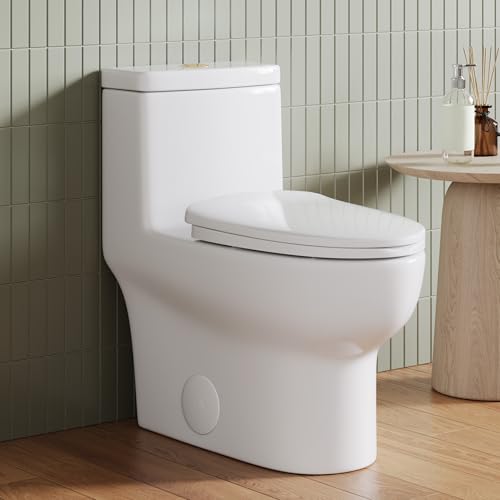
DeerValley Elongated One-Piece Toilet, Dual Flush 1.1/1.6 GPF — Best Dual Flush Value
This DeerValley pairs the two most-requested features in reader mail: an elongated bowl and a dual flush. The 1.1 GPF light flush handles the majority of daily use, the elongated skirted body delivers full-size comfort and easy cleaning, and the slow-close seat is included rather than sold separately. Standard height keeps it accessible for a wide range of users, including kids.
Strengths
- Elongated comfort with dual-flush savings
- Slow-close seat included
- Skirted design wipes clean quickly
Trade-offs
- Full flush is 1.6 GPF
- Standard height, not chair height
- Newer brand’s long-term parts support is still developing
| Specification | Verified detail |
|---|---|
| Flush | Dual flush |
| Flush volume | 1.1 / 1.6 GPF (from listing title) |
| Bowl | Elongated, standard height, skirted |
| Seat | Slow-close seat (from listing title) |
| Rough-in | 12 in |
Like its siblings, the full flush runs 1.6 GPF — the recurring trade in the 1.1/1.6 family — so heavy solid-flush households should compare against the 1.1/1.28 DeerValley DV-1F0437 elsewhere in our guides. For a mixed household in a standard bathroom, though, the math still favors dual flush: most flushes are liquid, and those are the flushes this toilet makes cheap.
The DeerValley Elongated is the mainstream dual-flush proposition — elongated comfort, skirted easy-clean body, 1.1 GPF light flush — at a value tier. Its 1.6 full flush is the known trade; households that use the light button faithfully will still average well below 1.28.
Best for: buyers who want a pick where elongated comfort with dual-flush savings. / Not suited for: anyone who would be put off because full flush is 1.6 gpf.
Check on Amazon — check the current price on Amazon and confirm the exact variant, seat inclusion, and rough-in on the listing before ordering.
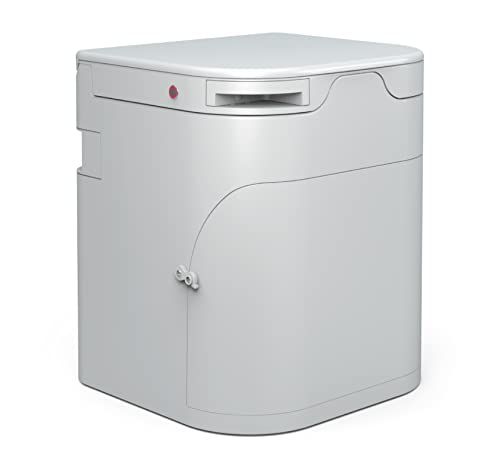
OGO Origin Compact Composting Toilet — Best Waterless for Vehicles
The OGO Origin is the mobile composting specialist: a 15-inch footprint designed for vans, RVs, and boats, where every inch is negotiated. It composts solids with an agitator and diverts urine, using no water and no chemicals, and its compact shell is shaped for vehicle installations rather than adapted from a household product.
Strengths
- 15-inch footprint fits vans, RVs, and boats where little else does
- Waterless composting design with urine separation
- Purpose-built for mobile off-grid use
Trade-offs
- Compact capacity means more frequent emptying on full-time use
- Requires composting medium and a venting plan
- US brand — an alternative benchmark, not a European design
| Specification | Verified detail |
|---|---|
| Type | Compact composting toilet |
| Water use | None — waterless |
| Footprint | 15 in (from listing title) |
| Use cases | Van, RV, boat (from listing title) |
Capacity is the honest limit — a footprint this small means the solids chamber and urine bottle need attention more often than a cottage-size unit, especially with two full-time travelers. Within its brief, though, it is one of the most thoughtfully packaged options on the US market, and a useful benchmark when judging the European mobile units in this guide.
The OGO Origin is this guide’s waterless representative: zero gallons, zero chemicals, composting in a 15-inch footprint for vehicles and off-grid spaces. It is included so readers whose ‘bathroom’ has wheels or no drain can see the category’s benchmark next to the flush models.
Best for: buyers who want a pick where 15-inch footprint fits vans, rvs, and boats where little else does. / Not suited for: anyone who would be put off because compact capacity means more frequent emptying on full-time use.
Check on Amazon — check the current price on Amazon and confirm the exact variant, seat inclusion, and rough-in on the listing before ordering.
Comparison Table
| Pick | Badge | Key spec (verified) | Best for |
|---|---|---|---|
| TOTO Promenade II One-Piece Elongated Toilet, 1.28 GPF | Best Overall | 1.28 GPF (from listing title) | Overall |
| American Standard Champion PRO Two-Piece Elongated Toilet, 1.28 GPF | Best for Busy Family Bathrooms | 1.28 GPF (from listing title) | for Busy Family Bathrooms |
| HOROW HR-ST076W One-Piece Compact Skirted Toilet, 1.28 GPF | Best Compact Pick | 1.28 GPF (from listing title) | Compact Pick |
| Swiss Madison Concorde One-Piece Square Toilet, Dual Flush 1.1/1.6 GPF (10-Inch Rough-In) | Best for 10-Inch Rough-Ins | 1.1 / 1.6 GPF (from listing title) | for 10-Inch Rough-Ins |
| DeerValley Elongated One-Piece Toilet, Dual Flush 1.1/1.6 GPF | Best Dual Flush Value | 1.1 / 1.6 GPF (from listing title) | Dual Flush Value |
| OGO Origin Compact Composting Toilet | Best Waterless for Vehicles | None — waterless | Waterless for Vehicles |
Key specs are quoted from each product’s verified listing. Where two picks share a headline figure, the deciding factors are usually the ones in the full reviews: bowl shape, seat height, what is included in the box, and how the flush achieves its result.
How to Choose an Environmental Toilet
Match the technology to the infrastructure. Plumbed bathroom with a standard 12-inch rough-in? Any flush pick here works, and the choice becomes about bowl shape, height, and flush strategy. A 10-inch rough-in (common in older homes) narrows the field sharply — the Swiss Madison Concorde in this guide exists precisely for that flange position. No drain at all, or a vehicle, boat, or off-grid cabin? Skip to waterless designs and judge venting, capacity, and emptying routine instead of GPF.
Within flush toilets, the environmental checklist runs: verified flush volume at or under 1.28 GPF; clearing evidence (MaP score, certification, or a proven platform); a bowl finish that reduces chemical cleaning; and parts availability measured in decades. Then the human factors: seat height your household can use, a bowl shape that fits the room, and a flush control your household will operate correctly. An environmental toilet that annoys its users gets replaced early — the least green outcome of all.
Certifications and Scores, Translated
WaterSense is the EPA label: it requires 1.28 GPF or less plus minimum performance testing, so the label bundles the volume claim with a clearing check. MaP testing is the independent bulk-removal protocol — toilets are fed measured loads of test media and scored up to 1000 grams; scores printed in a listing, like the HOROW’s MaP 800g, are verifiable claims rather than adjectives. Dual-flush models complicate the label picture because they carry two volumes; judge them by the pair (for example 1.1/1.6) and your household’s likely mix.
Treat any environmental claim without a number as decoration. ‘Eco’, ‘green’, and ‘water-saving’ appear on listings with no GPF in sight; in this guide, when a listing does not state a figure we either exclude the model or flag the omission in plain sight. Apply the same rule in your own shopping and the category becomes much easier to navigate.
Septic, Well, and Sewer: System-Level Thinking
On a septic system, every gallon you do not flush is a gallon your tank and drain field do not process — high-efficiency toilets genuinely extend septic life and pumping intervals, and waterless toilets remove the bathroom from the septic equation entirely. On a well, low-flush models reduce pump cycles and the energy and wear that come with them, a meaningful benefit during drought or on marginal wells. On municipal sewer, the saving is simpler: water and sewer are billed together in most cities, so efficiency pays twice per gallon.
One caution for septic owners: extremely low water volumes can, in rare long and flat drain runs, leave solids behind in the line. If your home has a history of drain-line issues, favor a MaP-rated strong performer or a pressure-assist model over the absolute lowest GPF, and mention the change to your septic service at the next pumping. System-level thinking means the toilet, the drain, and the treatment all working together.
The Environmental Hierarchy: Avoid, Reduce, Endure
Environmental thinking about toilets sorts into three tiers, and the order matters. First, avoid: can the waste stream avoid water entirely? That is the waterless tier — the OGO Origin in this guide and the Separett family in our European composting roundup — appropriate where plumbing is absent, unwanted, or overloaded. Second, reduce: where flushing is right, use the least verified volume that clears decisively — the 1.28 GPF class that fills most of this guide, with MaP or certification evidence behind the number. Third, endure: whatever you install should serve for decades with replaceable wear parts, because replacement is the footprint nobody advertises.
Most buying guides collapse these tiers into a single ‘greenest toilet’ ranking, which produces nonsense — a composting toilet crowned champion for a downtown apartment, or a 1.28 flush model recommended for a cabin with no well. The hierarchy keeps the decision sane: settle the tier by your property’s infrastructure, then optimize within it. A plumbed home optimizing within ‘reduce’ and ‘endure’ — a durable, repairable, certified 1.28 model — is making a genuinely environmental choice, not settling for second best.
It is also worth saying what does not move tiers: styling, smart features, and seat materials are decoration on the ledger. A heated seat draws real electricity for comfort — buy it knowingly if you want it, but do not let a ‘smart eco’ label blur the fact that the environmental story of a toilet is written in gallons, chemicals, and years of service, in that order.
Hard Water, Old Houses, and Other Real-World Conditions
Environmental performance degrades in predictable environments, and planning for yours keeps a good toilet good. Hard water is the first: mineral scale narrows rim jets, roughens trapways, and slowly strangles the rinse pattern the efficiency engineering depends on. Rimless bowls and slick glazes — both represented in this guide — resist scale’s effects longest, and a descale routine (vinegar soaks for jets, non-abrasive cleaning for glazes) restores the rest. If your home has a water softener, your toilets will hold their rated performance noticeably longer.
Old houses add their own conditions: galvanized or cast-iron drains with rough interiors, long flat runs to the street, and rough-ins that predate the 12-inch standard. The Concorde pick exists for the 10-inch rough-in; for rough drains, favor the strongest verified clearing profile rather than the absolute lowest volume, and consider that a drain in poor condition is an environmental problem in itself — leaks underground waste water and invite root intrusion that ends in excavation. Sometimes the greenest plumbing purchase is the drain repair that lets every fixture work as designed.
Finally, climate: in freeze-prone buildings that sit unheated, waterless toilets eliminate the burst-pipe and cracked-bowl risks of stored water entirely, while flush toilets need draining and antifreeze routines for winterization. An environmental toilet is one that survives your conditions without incident — choose for the building you have, in the climate you have, and the rated performance will still be there in year ten.
Installation Day: Setting Up an Environmental Toilet to Perform as Rated
An environmental toilet’s rated performance assumes a correct installation, and three installation details decide whether the rating survives. The flange must sit at the right height — roughly flush with the finished floor. A flange buried below floor level tempts installers into doubled wax rings and eventual leaks; a flange too high rocks the bowl. Either failure ends with water where it should not be, and a leaking toilet is an environmental problem before it is a plumbing one. Use a flange repair ring or spacer to get the height right rather than improvising with wax.
The seal choice matters to longevity: traditional wax is proven and forgiving; modern silicone and foam seals are reusable across a reset and kinder to future repairs — the toilet can be lifted and reseated without a new ring, which makes the inevitable future maintenance (a floor repair, a subfloor check) less wasteful. Whichever you choose, the test is the same: no rocking, no seepage at the base after repeated flushes, and bolts snug without porcelain-cracking force. A toilet that rocks will destroy any seal, so shim first and tighten second.
Finally, commission the toilet like the system it is: set the tank level to the marked line, verify both flush volumes on dual-flush models, run the dye test before the tools are put away, and photograph the tank’s interior and the model’s label for your records. Ten extra minutes on installation day is what separates a toilet that performs at its verified rating for twenty years from one that quietly underperforms from the first week. The environment notices the difference even if the bathroom never does.
What Happens After You Buy: The First Year With an Environmental Toilet
Month one is about verification. Confirm the flush volumes behave as rated — on dual-flush models, that the light flush is genuinely light and genuinely sufficient; on all models, that the tank level sits at its line and the dye test is clean. This is also when installation sins announce themselves: a rocking bowl, a weeping base, a supply connection that sweats. Every one of them is an installer callback now and a water-damage claim later, so the first month’s attention is the highest-value maintenance the toilet will ever receive.
Months two through twelve are about rhythm. The bowl’s cleaning interval will teach you what your glaze and water actually require — most owners of the glazed and rimless picks find the interval stretches compared with their old toilet, which is the chemical saving made tangible. Hard-water homes will see the first mineral film at the waterline and on jets; the descale routine in this guide, started early and kept gentle, prevents the slow performance fade that owners misread as the toilet aging. Keep a simple note — install date, model numbers, parts used — in the house file; future you, standing in a plumbing aisle, will be grateful.
By the end of year one, the environmental toilet should have disappeared into the background of the house, which is precisely success: verified low volumes doing their work invisibly, a bowl that stays cleaner with less chemistry, and a fixture with decades of service ahead. The owners who report disappointment with efficient toilets almost always trace it to a skipped step — an unmeasured rough-in, an unverified claim, a leak nobody tested for. This guide’s procedures exist so that your first year is the boring kind. Boring is the sound of a system working.
Quick Checklist Before You Order
Settle the tier first — waterless for unplumbed or off-grid spaces, verified 1.28 GPF flush for plumbed rooms — then run the physical checks. Rough-in: 12 inches for most picks here, 10 inches for the Concorde specialist, measured from the finished wall to the flange bolts. Bowl shape against projection and door swing. Height against the household’s actual knees. Evidence on the listing: a GPF figure, a MaP score, or a certification — at least one, in print. Box contents confirmed, especially seat inclusion. Drain history considered: a problem line argues for the strongest clearing profile, not the lowest volume. And for septic homes, a note to the service provider at the next pumping that the house has gone high-efficiency. Six checks, one tape measure, and the environmental performance you read about in this guide is the performance that shows up in your bathroom.
One Last Distinction: Certified, Verified, and Merely Claimed
Three levels of environmental claim appear in this category, and telling them apart is a durable shopping skill. Certified means an outside program — WaterSense is the toilet example — tested the product against a published standard that bundles efficiency with performance. Verified means a checkable fact exists: a MaP score from independent testing, a GPF figure in a listing that a regulator’s database can confirm, a model number whose specifications can be cross-read. Merely claimed means an adjective — eco, green, planet-saving — with nothing underneath it. This guide’s picks live at the first two levels, and where a claim could not be verified (a listing that prints no figure), the review says so in plain language.
Apply the ladder beyond toilets and it keeps working: appliances, fixtures, and building products all sort the same way. Prefer certified where a program exists, accept verified where the data is checkable, and discount claimed to zero until evidence arrives. Manufacturers respond to exactly this pressure — the reason MaP scores and WaterSense labels appear in listings at all is that buyers learned to ask. Every purchase made on evidence is a small vote for a market where the environmental toilet is the one that can prove it.
A Note on Reading This Guide’s Numbers
Every figure in this guide — each GPF, each MaP score, each rough-in and height — is quoted from the pick’s verified listing, and the reviews flag the rare listing that stays silent on a number rather than filling the silence with an estimate. If a figure matters to your decision, confirm it on the live listing before ordering: manufacturers revise specifications, and listings are occasionally corrected. That thirty-second check is the reader’s half of the verification discipline this guide applied when building the shortlist, and it keeps the environmental claim you are buying exactly the claim that was tested.
How to Use an Environmental Toilet for Maximum Benefit
For dual-flush models, the routine is the technology: small flush for liquids, full flush for solids, every time, by everyone. Spend the first month making it automatic — a small note in the guest bath, a quick word with the kids — because a dual-flush toilet operated as a single-flush toilet saves nothing over the 1.28 GPF models and may use more on its full setting. If the light flush ever underperforms, adjust its volume at the valve before abandoning it; most valves allow independent adjustment.
For all efficient flush toilets, keep the tank honest. Set the water level to the marked line, listen for phantom refills (a worn seal announcing itself), and run an annual dye test. Clean with the mildest cleaner that works — efficient bowls with modern glazes rarely need aggressive chemistry, and septic systems in particular prefer gentle inputs. Descale rim jets or rimless ledges on hard-water homes so the designed rinse pattern — part of the efficiency engineering — keeps working.
For the waterless pick, the routine is vent, medium, and schedule: confirm the fan or vent path is clear monthly, keep composting medium stocked if your model uses it, and empty on the maker’s interval rather than waiting for a symptom. Waterless toilets reward rhythm and punish neglect more honestly than flush toilets do — build the rhythm into a monthly home checklist and they are close to effortless.
Common Buying Mistakes
Assuming ‘environmental’ on the box means efficient in the wall. Demand the number: GPF, a MaP score, or a WaterSense label. Claims without figures are marketing, and this guide flags them wherever they appear.
Installing a low-flush toilet on a problem drain without thinking. Long, flat, or damaged drain runs may need a stronger flush profile. Match the toilet to the drain, not just the brochure.
Choosing a 10-inch rough-in toilet for a 12-inch bathroom (or the reverse). Rough-in is destiny. Measure from finished wall to flange bolts and buy the toilet that fits your measurement — the Concorde pick exists because this mistake is so common.
Neglecting the vent on a waterless toilet. Venting is the odor-control system. A blocked or badly routed vent is behind most waterless-toilet complaints.
Using harsh chemical cleaners in efficient bowls and septic systems. Modern glazes need less chemistry, and septic biology prefers it that way. Mild cleaners preserve both the glaze and the system.
Replacing instead of repairing. A worn seal or fill valve is a small part, not a new toilet. The environmental choice is usually the repair — check parts availability before any replacement.
Final Recommendation
For a plumbed bathroom, the TOTO Promenade II is the balanced environmental buy — 1.28 GPF, a low-chemical glaze, and decades of parts support — while the American Standard Champion PRO is the family-proof option whose clog resistance protects the savings. Small bathrooms should take the HOROW HR-ST076W with its MaP 800g listing claim, 10-inch rough-ins the Swiss Madison Concorde, and value-focused dual-flush shoppers the DeerValley Elongated. Off-grid and vehicle readers: the OGO Origin is your waterless starting point.
The cluster continues at Best Environmental Friendly Toilets, Best Energy Efficient Toilets, Best Energy Saving Toilets, and Best European Composting Toilets — each ranks a different slice of the same problem.
The shortlist, for a final check of current price and configuration on Amazon: TOTO Promenade II One-Piece Elongated Toilet, 1.28 GPF (Best Overall); American Standard Champion PRO Two-Piece Elongated Toilet, 1.28 GPF (Best for Busy Family Bathrooms); HOROW HR-ST076W One-Piece Compact Skirted Toilet, 1.28 GPF (Best Compact Pick); Swiss Madison Concorde One-Piece Square Toilet, Dual Flush 1.1/1.6 GPF (10-Inch Rough-In) (Best for 10-Inch Rough-Ins); DeerValley Elongated One-Piece Toilet, Dual Flush 1.1/1.6 GPF (Best Dual Flush Value); OGO Origin Compact Composting Toilet (Best Waterless for Vehicles).
Frequently Asked Questions
What GPF should an environmental toilet have?
1.28 GPF or less is the current high-efficiency benchmark (the WaterSense ceiling). Dual-flush models pair a light flush around 1.0–1.1 GPF with a full flush of 1.28–1.6 GPF; judge them by your household’s likely average. Waterless toilets, of course, use zero.
Are environmental toilets weaker than regular toilets?
The good ones are not. Modern efficient toilets use larger flush valves, engineered trapways, and in some cases pressure assist to clear decisively at low volumes, and independent MaP testing verifies bulk removal up to 1000 grams. The weak low-flow toilets of the 1990s are not what is on sale in this guide.
Is a composting toilet more environmental than a high-efficiency flush toilet?
On water, unambiguously yes — zero beats 1.28 GPF. On the whole ledger it depends on your situation: a composting toilet needs venting, routine, and legal waste handling, and suits off-grid or unplumbed spaces best. In a plumbed home, a durable high-efficiency flush toilet is usually the greener practical choice.
Do efficient toilets work on septic systems?
Yes, and they help: less water through the tank means longer settling time and a happier drain field. Just avoid harsh chemical cleaners, keep the toilet leak-free (a leaking toilet can hydraulically overload a septic system), and mention the change at your next scheduled pumping.
What is CeFiONtect and does it matter environmentally?
CeFiONtect is TOTO’s ultra-smooth bowl glaze. Waste and minerals grip it less, so the bowl stays cleaner with less scrubbing and milder cleaners. It does not change GPF, but over a toilet’s life it reduces chemical use — a real, if secondary, environmental benefit, and one reason TOTO models anchor this guide.
How long should an environmental toilet last?
A quality porcelain toilet should serve 15 to 25 years with only seals, valves, and seats replaced. Longevity is an environmental feature: manufacturing and shipping porcelain is resource-intensive, so the repairable models in this guide are chosen partly for the parts networks behind them.


