Disclosure: airfryerkitchensupply.com is reader-supported. When you buy through links on our site, we may earn an affiliate commission at no extra cost to you.
Where to buy
If you are shopping for the best entry infrared grills, start here: every linked pick in this guide was matched against the retailer listing for this site before publication, and the fastest way to confirm current availability is Amazon:
- Char-Broil Patio Bistro TRU-Infrared Electric Grill — check price on Amazon
- Charbroil Pro Series Amplifire 2-Burner Gas Grill and Griddle Cabinet — check price on Amazon
- Charbroil Pro Series Amplifire Infrared 4-Burner Propane Gas Grill Cabinet — check price on Amazon
- Magma Catalina Infrared Gas Boat Grill A10-1218-2GS — check price on Amazon
- Monument Grills 4+2 Burner Clearview Infrared Sear Gas Grill — check price on Amazon
Prices move with seasons and promotions, so this guide never prints a fixed figure — use the links above to check price on Amazon on the day you buy. Five of the six picks below carry verified listings with genuine infrared cooking systems; the sixth is covered without a link, clearly marked, because its listing could not be re-confirmed for this guide — we would rather show you the gap than hide it.
Shopping for the best entry infrared grills means first learning to spot the real thing. True infrared grilling puts a special emitter — a plate, panel or burner that converts the flame’s energy into radiant heat — between the fire and the food. That emitter does three things conventional burners cannot: it evens out hot and cold spots, it pushes surface temperatures high enough for aggressive searing, and it vaporises drippings on contact, which is why infrared grills flare up less and keep food juicier. A grill with a small infrared side burner bolted onto a conventional grill is a hybrid, and this guide labels it as one.
Entry-level infrared used to be a contradiction — the technology launched at premium prices. It has since filtered down through Char-Broil’s TRU-Infrared and Amplifire lines, which put genuine emitter systems into accessible freestanding and portable grills, and through compact electric infrared models that bring the same physics to balconies. The six picks below are the honest entry points: five verified listings with real infrared systems, spanning electric, gas and portable formats, plus one discussion of the freestanding gas model many shoppers look for first.
Set the right expectation and infrared is the easiest upgrade in grilling to taste: steaks sear harder, chicken stays juicier, and beginners get forgiving, even heat. The costs are maintenance — emitters must be kept clean to work — and a learning curve around preheating and high-heat timing. For most new grillers, that trade is emphatically worth it.
In this guide
Quick Picks
Six entry routes into real infrared cooking, with the one hybrid and the one unlinked pick labelled honestly:
- Char-Broil Patio Bistro TRU-Infrared Electric Grill — Best Overall Entry: genuine TRU-Infrared cooking in a compact electric bistro format — the lowest-friction way to own real infrared, with no fuel and a balcony-friendly footprint. — check price on Amazon
- Charbroil Pro Series Amplifire 2-Burner Gas Grill and Griddle Cabinet — Best Entry Gas Infrared: Amplifire infrared technology across a 2-burner cabinet grill with a griddle side — the entry point to gas infrared with weeknight versatility built in. — check price on Amazon
- Charbroil Pro Series Amplifire Infrared 4-Burner Propane Gas Grill Cabinet — Best Step-Up: the same Amplifire infrared system stretched across four burners with a side burner — for entry shoppers who already know they cook for a crowd. — check price on Amazon
- Magma Catalina Infrared Gas Boat Grill A10-1218-2GS — Best Portable Infrared: a stainless marine-grade infrared grill in a 12 x 18 inch portable format — real radiant heat for boats, RVs and tailgates. — check price on Amazon
- Monument Grills 4+2 Burner Clearview Infrared Sear Gas Grill — Best Hybrid: Infrared Sear Zone: a large conventional cabinet grill with a dedicated infrared sear burner and a clear-view lid — infrared where it matters most, labelled honestly as a hybrid. — check price on Amazon
- Char-Broil Freestanding TRU-Infrared 2-Burner Gas Grill (line overview) — Best Classic Format: the traditional 2-burner cart format that made TRU-Infrared famous — discussed in prose because its listing could not be verified for this guide. — unlinked pick, covered in the review section below
How These Picks Were Chosen
The infrared filter was strict and applied to the verified listings themselves: the product had to cook through a genuine infrared system — Char-Broil TRU-Infrared, Char-Broil’s Amplifire infrared technology, or a full infrared burner design — across its main cooking surface. Conventional grills with an infrared side burner only were admitted once, explicitly badged as a hybrid, because many entry shoppers meet infrared first in that form and deserve to see the difference explained rather than hidden.
Every linked pick was matched against its retailer listing for this site. One widely shopped freestanding TRU-Infrared gas model could not be matched with confidence in this site’s verified data at writing time, so it appears as a clearly marked pick with no purchase link — the honest treatment this guide applies to anything unverified. Prices were used only internally to sanity-check that picks sit at the entry tier of their lines; no prices are printed, per this site’s standing policy.
The 6 Best Entry Infrared Grills
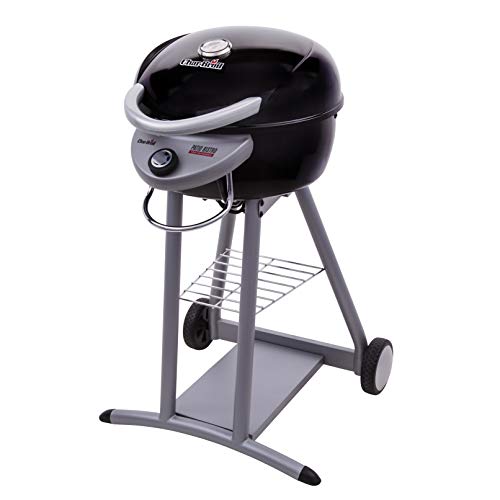
1. Char-Broil Patio Bistro TRU-Infrared Electric Grill — Best Overall Entry
The Patio Bistro is the easiest entry into true infrared: Char-Broil’s TRU-Infrared emitter over an electric element, in a compact lidded grill that plugs into a balcony outlet and asks almost nothing of its owner. You can check the current price on Amazon before the detail below.
Strengths
- Real TRU-Infrared emitter — even heat, fewer flare-ups, juicier food
- Electric power means no fuel, no tanks and balcony legality in many buildings
- Compact footprint suits small patios and apartments
Trade-offs
- Capacity is sized for two to four servings
- Emitter plate needs regular cleaning to stay effective
- Electric heat-up is gentler than a gas infrared system
Key specs
- Cooking system: TRU-Infrared electric emitter
- Format: Compact bistro grill with lid
- Model: 20602107
As a first infrared grill, the Bistro teaches the technology’s core lesson without the gas-grill overhead: food cooks by radiant heat, drippings vaporise instead of flaring, and the margin for error widens noticeably — chicken and pork, the cuts beginners dry out, are where it shines. Its limits are scale and spectacle; it will not sear for eight or roar like a big gas infrared. But as an owned, used, loved first infrared grill, it is the most complete package at the entry tier.
A season with the Bistro clarifies who infrared-electric suits: the cook who grills twice a week for two or three people and values the absence of fuss as much as the food. There is no tank to refill, no charcoal to light, no flare-up management — just an emitter, a lid and consistently juicy results. Its balcony manners are the best in this guide, and its small appetite for space means it can live outside permanently. Owners who later graduate to a big gas infrared almost always keep the Bistro for weeknights, which says everything about its everyday usefulness.
Care notes: beyond the emitter routine, keep the Bistro’s compact grease path clear and the cord inspected — balcony appliances live hard lives in small spaces. Its electric simplicity means no igniters, burners or valves to service, which is a genuine long-term advantage at the entry tier. Covered and cleaned, it is the pick here most likely to deliver a decade of uneventful, juicy service.
Best for: first-time infrared buyers, apartment and balcony grillers / Not suited for: hosts needing family-scale capacity
Check on Amazon — check price on Amazon.

2. Charbroil Pro Series Amplifire 2-Burner Gas Grill and Griddle Cabinet — Best Entry Gas Infrared
Amplifire is Char-Broil’s current name for its infrared cooking system, and this 2-burner Pro Series cabinet is its most accessible gas expression: real infrared heat under the grates, a griddle for the foods infrared grates handle worst, and a cabinet cart underneath. You can check the current price on Amazon before the detail below.
Strengths
- Genuine Amplifire infrared system across the main grates
- Griddle side covers breakfast, smash burgers and delicate items
- Cabinet format stores the tank and tools tidily
Trade-offs
- 2-burner capacity suits small-to-medium households
- Infrared grates and emitter surfaces demand scheduled cleaning
- Griddle and grill share one firebox’s attention when cooking mixed loads
Key specs
- Cooking system: Amplifire infrared technology
- Burners: 2-burner propane, with griddle
- Model: 463676724
This is the pick for the gas loyalist entering infrared: the sear and juiciness benefits arrive in a familiar cart format, and the griddle quietly solves infrared’s one awkwardness — small or delicate foods that fight with grates. Cooking for two to five, it covers the full week: steaks on the infrared side, vegetables and eggs on the flat side. Keep the emitter system clean and the performance gap over a conventional 2-burner is something you can taste, especially on chicken and chops.
The Amplifire 2-burner’s second virtue is how it handles the mixed load — the real weeknight test. Infrared under the chops, flat griddle under the onions and peppers, everything finishing together without the usual migration of food around cold spots. The cabinet keeps the patio honest, hiding the tank and the tools. Maintenance scales with the format: more emitter area than the Bistro, far less than the 4-burner, and a cleaning rhythm that fits a Sunday wipe-down. For a household entering infrared with gas intentions, this is the balanced centre of the guide.
Care notes: the Amplifire emitter surfaces and the griddle both want attention after cooks — the griddle scraped and lightly oiled, the emitter brushed on schedule. Cabinet storage keeps the tank area cleaner if tools live elsewhere. Ignition and burner checks each season keep the gas side honest. The maintenance is proportional to the versatility, and owners who split it into small after-cook habits never face a big job.
Best for: gas grillers stepping into infrared for the first time / Not suited for: large families who need a 4-burner surface
Check on Amazon — check price on Amazon.

3. Charbroil Pro Series Amplifire Infrared 4-Burner Propane Gas Grill Cabinet — Best Step-Up
Some entry buyers are not beginners — they are experienced grillers entering infrared with a household to feed. The 4-burner Amplifire cabinet is that pick: the full infrared system at family scale, plus a conventional side burner. You can check the current price on Amazon before the detail below.
Strengths
- Amplifire infrared across a full 4-burner surface
- Side burner for sauces, sides and searing small pans
- Cabinet storage and family-scale capacity
Trade-offs
- Largest cleaning commitment in this guide — more emitter area to maintain
- Bigger footprint and assembly effort than the 2-burner
- More grill than a couple will ever light fully
Key specs
- Cooking system: Amplifire infrared technology
- Burners: 4-burner propane plus side burner
- Model: 463281024
Scale changes infrared’s value rather than diluting it: four burners of even radiant heat means a dozen chicken thighs cook at the same rate, which is precisely where conventional grills embarrass themselves with hot corners and raw middles. The side burner handles the conventional tasks while the infrared box does the main event. Buy it if your regular cook is six-plus people; the 2-burner is the smarter entry for everyone else. Either way, budget the cleaning time — infrared at this size is a system you maintain, and it repays the maintenance in consistency.
Owning the big Amplifire is about feeding people without the conventional grill’s compromises. The evenness of a full infrared box shows most on the foods that fill a family cookout — chicken pieces, sausages, chops — where a conventional grill produces a gradient from burnt to raw across one load. Here the load cooks as one. The ownership contract is proportional: the largest emitter system in the guide wants the most cleaning attention, and the side burner and cabinet add their own upkeep. Households cooking at this scale weekly will call it a bargain; occasional grillers should buy smaller.
Care notes: scale the routine to the grill — a full emitter inspection each season, grease management after big cooks, and burner checks across all four zones plus the side burner. A quality cover is close to mandatory at this size, since the grill will live outside permanently. The reward for the discipline is a family infrared system that performs like the day it was assembled, years in — the difference between infrared as a feature and infrared as a habit.
Best for: larger households entering infrared at full scale / Not suited for: small households or minimal-maintenance buyers
Check on Amazon — check price on Amazon.

4. Magma Catalina Infrared Gas Boat Grill A10-1218-2GS — Best Portable Infrared
The Catalina brings genuine infrared cooking to the portable world: a marine-grade stainless grill whose infrared burner delivers even, high heat in a compact 12 by 18 inch footprint built for boats, RVs and travel. You can check the current price on Amazon before the detail below.
Strengths
- True infrared burner in a portable format
- Marine-grade stainless construction for harsh environments
- Even, high-heat cooking that suits small spaces and wind
Trade-offs
- Portable capacity — this is a two-to-four-person grill
- Marine positioning means a premium for its size class
- Mounting and travel accessories are a separate ecosystem
Key specs
- Cooking system: Infrared propane burner
- Cooking area: 12 x 18 in. (manufacturer listing)
- Build: Stainless steel, marine grade
Infrared and portability suit each other: radiant heat is less disturbed by wind than an open conventional burner, which is exactly the condition boat and RV cooking happens in. The Catalina’s marine build also makes it the durability outlier of this guide — stainless construction meant for salt air shrugs off ordinary patio life. On land it doubles as a superb small-space or tailgate infrared grill. Buy it for the travel and marine brief and it has no real rival here; buy it as a family patio grill and the capacity will frustrate you weekly.
The Catalina’s second life is worth noting: marine gear is built for the harshest consumer environment there is, so as a land-based portable it is effectively over-engineered in your favour. RV owners value its wind resistance — radiant heat does not blow sideways — and tailgaters value a grill that sears properly instead of warming bravely. Its ecosystem of mounts is a consideration for boat buyers specifically; land buyers can treat it as a superbly built tabletop infrared grill. Either way, it is the durability and portability outlier of this guide, in the best sense.
Care notes: marine stainless wants rinsing after salt exposure and a dry store; the infrared burner should be kept clear of sand and debris, the travelling grill’s natural enemies. Its construction tolerates more neglect than anything else here, but the burner is still a precision part. Kept clean, the Catalina will outlast several ordinary portable grills — the marine premium made visible over time.
Best for: boaters, RVers and portable infrared seekers / Not suited for: stationary family grilling at home
Check on Amazon — check price on Amazon.

5. Monument Grills 4+2 Burner Clearview Infrared Sear Gas Grill — Best Hybrid: Infrared Sear Zone
Honesty first: this Monument is a hybrid. Its main box cooks conventionally; the infrared lives in a dedicated sear burner. For many entry shoppers that is actually the right first step — conventional flexibility for everyday food, true infrared heat for the steak finish. You can check the current price on Amazon before the detail below.
Strengths
- Dedicated infrared sear zone delivers the hardest crust in this guide
- Large conventional main box handles every ordinary grilling task
- Clear-view lid and built-in thermometer aid monitoring
Trade-offs
- Main cooking surface is conventional, not infrared — know what you are buying
- Big cabinet footprint for a first grill
- Sear zone capacity is a few steaks at a time
Key specs
- Layout: 4+2 burner cabinet, Clearview lid
- Infrared element: Dedicated infrared sear burner
- Main box: Conventional propane burners
The hybrid case deserves respect: most weeknight grilling does not need infrared, and the foods that benefit most — steaks, chops, burgers — are exactly what a sear zone handles. You reverse-sear or finish on the infrared burner and get the technology’s signature result without committing the whole grill to emitter maintenance. The cost is conceptual: if you want infrared’s evenness and juiciness across the whole surface, choose a TRU-Infrared or Amplifire model instead. As a bridge product for conventional grillers, though, this is a genuinely sensible design.
Living with the Monument hybrid teaches a useful lesson about how people actually grill: most food does not need infrared, and the food that does — the steak finish, the chop crust — is cooked in small quantities at the end. The sear-zone layout matches that reality, and the big conventional box handles everything else with familiar flexibility. The Clearview lid reduces the lid-lifting that costs heat during long cooks. Buyers should simply be clear-eyed at purchase: this is a conventional grill with an infrared weapon, not an infrared grill — and for many households that is the smarter weapon arrangement.
Care notes: the conventional box wants standard gas-grill care — burner tubes checked, grease managed — plus one infrared-specific job: keep the sear burner’s surface clear so its heat stays fierce and even. The Clearview lid’s window cleans best warm. Because the infrared element is a small part of a big grill, its maintenance is the lightest in this guide — a fair summary of the hybrid bargain in both directions.
Best for: conventional grillers who want infrared searing power added / Not suited for: buyers wanting full-surface infrared cooking
Check on Amazon — check price on Amazon.
6. Char-Broil Freestanding TRU-Infrared 2-Burner Gas Grill (line overview) — Best Classic Format
The freestanding 2-burner TRU-Infrared cart is the format that introduced most grillers to infrared: emitter plates over two gas burners in a compact cabinet-free cart. It belongs in any entry infrared discussion — but it is covered here without a purchase link, because its current listing could not be matched in this site’s verified product data when this guide was prepared. This pick is covered without a link in this guide — see the sourcing note at the end of the article for why no purchase link is attached.
Strengths
- The classic TRU-Infrared layout: even radiant heat, minimal flare-ups
- Compact 2-burner cart format fits ordinary patios
- A long production history means deep owner knowledge and parts familiarity
Trade-offs
- Covered without a link here — verify the exact current model and listing before buying anywhere
- Emitter plates are a wear item that needs periodic replacement on any TRU-Infrared grill
- Entry gas infrared now competes with the newer Amplifire line above
Why include an unverified pick at all? Because shoppers searching entry infrared will meet this format everywhere, and a guide that pretended it did not exist would be less useful than one that discusses it honestly. The advice is simple: the format is proven and the technology is the genuine article, but model years and listings change — confirm the exact current version, its emitter design and its parts availability at purchase time. When this site’s verified data covers it confidently, this section will carry a link like the others.
A final practical note on this classic format: because TRU-Infrared carts have been sold for years, the secondhand and parts ecosystem around them is deep — emitter plates, grates and igniters are familiar items to any grill-parts supplier. That cuts both ways for a buyer: a well-kept used example can be excellent value, and a neglected one can hide a worn emitter that undermines the whole technology. If you buy this format anywhere, inspect the emitter surface first; it is the grill’s heart, and its condition is the truest description of the appliance you are getting.
Care notes (for any example you inspect): the emitter plates tell the story — even colour and intact surfaces mean a healthy grill; heavy scaling, warping or blocked sections mean budget for replacements immediately. Check igniter function, grate condition and the regulator’s age. A classic-format TRU-Infrared grill with a sound emitter is a genuinely good buy; one without is a conventional grill wearing infrared badges, and should be priced as such.
Best for: shoppers who find a current, well-supported listing and verify it carefully / Not suited for: anyone wanting a one-click verified recommendation
Comparison Table
Infrared credentials first: this table shows each pick’s badge, its infrared system at a glance and the buyer it suits — including the hybrid and the unlinked entry, labelled as such.
| Pick | Badge | Key spec | Best for |
|---|---|---|---|
| Char-Broil Patio Bistro TRU-Infrared Electric Grill | Best Overall Entry | TRU-Infrared electric, compact lidded | first-time infrared buyers, apartment and balcony grillers |
| Charbroil Pro Series Amplifire 2-Burner Gas Grill and Griddle Cabinet | Best Entry Gas Infrared | Amplifire infrared, 2-burner + griddle | gas grillers stepping into infrared for the first time |
| Charbroil Pro Series Amplifire Infrared 4-Burner Propane Gas Grill Cabinet | Best Step-Up | Amplifire infrared, 4-burner + side burner | larger households entering infrared at full scale |
| Magma Catalina Infrared Gas Boat Grill A10-1218-2GS | Best Portable Infrared | Infrared burner, 12×18 in., marine stainless | boaters, RVers and portable infrared seekers |
| Monument Grills 4+2 Burner Clearview Infrared Sear Gas Grill | Best Hybrid: Infrared Sear Zone | Conventional box + infrared sear burner | conventional grillers who want infrared searing power added |
| Char-Broil Freestanding TRU-Infrared 2-Burner Gas Grill (line overview) | Best Classic Format | TRU-Infrared 2-burner cart format | shoppers who find a current, well-supported listing and verify it carefully |
How to Choose the Best Entry Infrared Grills: Real Infrared vs Marketing
The test is one question: does the food cook over an infrared emitter or burner across the surface you will actually use? Char-Broil’s TRU-Infrared and Amplifire systems qualify — an emitter sits between burner and food everywhere. Full infrared burner designs like the Magma qualify. A conventional grill with an infrared side burner is a hybrid: useful, honest when labelled, but the main box cooks conventionally. ‘Infrared-ready’, ‘infrared-style’ and similar phrasing without an emitter described should be treated as marketing until proven otherwise.
Once the technology is genuine, choose by format. Electric infrared suits balconies and flame-restricted homes. Two-burner gas infrared suits most households entering the technology. Four-burner infrared suits proven crowd-cooking. Portable infrared suits travel and marine use. The technology is consistent across formats; the ownership experience is not, so buy the format that matches your life and let the emitter do its work inside it.
Infrared Cooking Technique for Beginners
Infrared forgives a lot, but three habits unlock it. First, preheat properly: emitters need time to become radiant surfaces, and a rushed preheat is the main reason first infrared cooks disappoint. Second, respect the heat: infrared surfaces run fierce, so foods that took ten minutes conventionally may take seven — check earlier than instinct suggests for the first few cooks. Third, use the evenness: arrange food across the whole surface confidently, since the cold corners of conventional grilling largely disappear.
Food choice matters too. Infrared’s juiciness advantage is largest on lean, flare-prone foods — chicken breast, pork chops, fish and vegetables — while very fatty items still deserve a watchful eye in the first minutes. Delicate items that fall through grates belong on the griddle side of a combo model or in a grill basket. Master those basics and infrared quickly stops feeling like a technology and starts feeling like simply how grilling should work.
Emitter Care: The One Maintenance Job Infrared Asks For
Every infrared system’s performance lives in its emitter, and every emitter slowly collects carbonised residue. The maintenance is simple and non-negotiable: brush or scrape the emitter surface on the maker’s schedule, run a high-heat burn-off after fatty cooks, and inspect for blocked or damaged sections each season. A clean emitter radiates evenly and vaporises drippings; a neglected one smokes, streaks and quietly becomes a bad conventional grill.
Treat emitter plates as the wear items they are. On long-running TRU-Infrared grills they eventually need replacement, and checking that replacements exist for your model is a legitimate pre-purchase question — one more reason the established infrared lines dominate this guide. Budget the small effort and infrared ownership is otherwise as easy as conventional grilling, with better food at the end of it.
Infrared Heat Explained: Why Food Cooks Differently
A conventional burner heats mostly by convection — hot air rising around the food — which is why conventional grills have hot spots directly over flames and cool zones between them, and why dripping fat falls into flames and flares. An infrared system interposes an emitter that absorbs the burner’s energy and re-radiates it as intense, even radiant heat across the whole surface. The food is cooked by that radiation directly, the way sunlight warms skin more than the air does.
Three practical consequences follow. Evenness: the emitter radiates uniformly, so the map of hot and cold zones largely disappears. Intensity: radiant surfaces reach searing temperatures that brown food fast, shortening cooks. And moisture: because drippings vaporise on the hot emitter instead of burning in open flame, flare-ups shrink and the vapour bastes the food — the mechanical reason infrared-cooked chicken and chops taste juicier. Understanding the physics makes the maintenance obvious too: the emitter is the cooking surface in every way that matters, so its cleanliness is the grill’s performance.
Infrared vs Conventional vs Hybrid: Choosing Your Commitment Level
Full infrared, as in the TRU-Infrared and Amplifire picks, commits the whole cooking surface to the technology: maximum benefit, maximum emitter maintenance. It suits cooks whose menu is heavy on the foods infrared flatters — poultry, chops, steaks, fish and vegetables — and who will keep the system clean. The learning curve is a week of adjusted timing; after that, most owners do not go back.
The hybrid route — a conventional box plus an infrared sear zone, as in the Monument pick — commits only the finishing step. It suits households whose grilling is varied and conventional at heart, with steaks as the infrared use case. And plain conventional remains the right answer for cooks who prize simplicity and low maintenance above searing performance; the entry gas guide in this series covers that choice properly. None of these is the ‘correct’ technology — the correct choice is the commitment level your cooking and cleaning habits will actually sustain.
Infrared Grill Safety: The Entry Owner’s Checklist
Infrared surfaces reach temperatures that demand the standard grill respects, plus one extra: awareness. Keep the usual clearances from structures and combustibles, and remember that an emitter at full heat looks deceptively calm compared with open flame — brief everyone who will use the grill, especially teenagers, that the surface is fiercer than it appears. Long tools and proper mitts are not optional accessories at infrared temperatures; they are part of the system.
The gas models add the standard propane disciplines — leak checks at tank changes, lid-open lighting, tank-first shutdown — covered in this series’ gas guides. Electric infrared removes the fuel half of the list, which is part of its balcony appeal. Finally, let the emitter cool fully before covering or cleaning beyond a brush: infrared components hold heat longer than intuition suggests. Respect the physics and infrared is as safe as any grilling — the technology’s dangers are all in the category of touched-it-too-soon, and they are all preventable.
Which Entry Infrared Route Fits You?
The balcony beginner. The Char-Broil Patio Bistro: genuine infrared, electric simplicity, no fuel politics, and a forgiving learning curve. It is the lowest-risk first infrared grill in this guide by a wide margin.
The gas household upgrading its weeknight game. The Amplifire 2-Burner with griddle: full infrared where it matters, a flat top for the rest, and a cabinet that keeps a small patio tidy. The 4-Burner is the same answer for households of six or more.
The steak specialist on a conventional budget. The Monument hybrid: keep the familiar big box for everything, finish on the infrared sear burner, and get the crust that made you curious about infrared in the first place.
The traveller. The Magma Catalina: marine-built, wind-resistant, genuinely infrared, and sized for the boat, the RV or the tailgate. No other pick in this guide was designed for a moving home.
Infrared Myths, Examined: What New Owners Get Wrong
Myth one: infrared grills are only for steaks. The technology’s searing fame hides its gentler virtues — the evenness that cooks a tray of chicken thighs uniformly and the moisture retention that rescues lean fish and vegetables. Owners who buy infrared for steak night and discover it transforms their chicken have the common experience; the sear is the headline, but the everyday juiciness is the story. Myth two: infrared is fragile high technology. An emitter system is mechanically simple — a hot surface doing physics — and its failures are overwhelmingly failures of cleaning, not of engineering.
Myth three: all infrared is the same. As this guide’s hybrid discussion shows, an infrared sear burner and a full infrared cooking system are different instruments sharing a word, and the entry shopper who learns the distinction before buying is immune to the category’s only real disappointment — expecting full-surface infrared behaviour from a side burner. Myth four: infrared uses exotic fuel or power. It does not; the gas models burn ordinary propane and the electric model uses an ordinary outlet. The technology is in the emitter, not the energy source.
Myth five, the subtlest: that infrared makes technique irrelevant. It forgives timing and hot spots, but it punishes a skipped preheat and rewards dry surfaces and proper thickness exactly like every other serious cooking method. The owners who thrive with entry infrared are the ones who treat it as a better tool rather than a magic one. Do that — and keep the emitter clean, the refrain of this entire guide — and the myths resolve into a simple reality: infrared is the most forgiving high-performance cooking most households will ever own.
How to Cook Your First Steak on an Entry Infrared Grill
A steak is the infrared audition piece. This sequence works across the electric, Amplifire, TRU-Infrared and sear-zone picks in this guide.
- Choose a steak at least an inch thick; infrared’s high radiant heat rewards thickness and punishes thin cuts with speed.
- Season simply and let the steak lose its fridge chill briefly while the grill preheats — and preheat fully, until the emitter is thoroughly heat-soaked.
- Pat the surface dry immediately before cooking. Moisture is the enemy of the infrared sear.
- Lay the steak down and leave it alone for the first minutes. Infrared crust forms best undisturbed.
- Flip once, then start checking earlier than your conventional timing — infrared commonly shortens the cook.
- Use a thermometer for doneness rather than the clock while you learn your grill’s pace; every infrared system has its own tempo.
- Rest the steak off the heat for several minutes. Infrared-cooked meat holds abundant juice; resting keeps it in the steak.
- While the grill is still hot, brush the emitter or grate clean — thirty seconds now prevents the next cook’s smoke and streaks.
Cook three steaks this way and you will have calibrated your grill’s timing, which is the only real learning infrared demands. After that, the technology’s evenness and juiciness become the most ordinary thing in your cooking week.
Common Buying Mistakes
Buying a hybrid while believing it is full infrared. An infrared sear burner is a feature, not a cooking system. Read where the emitter actually is and buy with your eyes open — this guide labels the difference on purpose.
Skipping emitter cleaning until performance collapses. Infrared decline is gradual and then obvious. Clean on schedule and the grill cooks in year three like it did in week one.
Using conventional cooking times. Infrared commonly cooks faster. New owners burn more food through old habits than through any equipment fault — check early while you learn.
Judging infrared by thin, cheap cuts. Thin steaks and chops overcook before any technology can help them. Infrared shines on proper thickness; give it food it can work with.
Ignoring parts availability on obscure infrared brands. Emitters wear. Established lines stock replacements; unknown brands may not. At the entry tier, the support network is part of the product.
Final Recommendation
For most first-time infrared buyers, start with the Char-Broil Patio Bistro if your life is balconies and outlets, or the Amplifire 2-Burner if you want gas and a griddle in the bargain. Households already cooking for a crowd should step straight to the Amplifire 4-Burner; travellers and boaters, to the Magma Catalina. The Monument hybrid earns its place for conventional grillers who mainly want an infrared sear, and the classic TRU-Infrared cart remains worth considering wherever you can verify a current listing carefully.
Infrared is the rare grill technology whose benefit you can taste in the first week. Choose a genuine system, keep its emitter clean, and entry-level will stop feeling like a compromise very quickly.
A closing note on timing, because entry infrared is a moving target in the best way: the technology continues to filter down, and today’s step-up model is next year’s entry pick. That is an argument for buying the genuine system that fits you now rather than waiting for a theoretically better deal — a season of infrared cooking is worth more than a marginal future saving, and the established lines in this guide hold their usefulness regardless of what launches next year. The emitter does not care about product cycles; it cares about being clean and hot.
Choose the genuine article, in the format your life requires, and give it three cooks to teach you its tempo. After that, entry infrared stops being a category you researched and becomes simply how your household grills — which is the outcome this guide was written to produce.
Best Entry Level Gas Grills Best 2-burner Infrared Grills Best Infrared Grills
Frequently Asked Questions
What is the difference between TRU-Infrared and Amplifire?
Both are Char-Broil infrared cooking systems that place an emitter between the burner and the food. Amplifire is the newer branding used on the current Pro Series lines; TRU-Infrared is the long-running name on earlier and electric models. The cooking physics — even radiant heat, vaporised drippings, fewer flare-ups — is the same idea across both.
Do infrared grills really cook faster?
Generally yes, especially at searing temperatures, because radiant heat transfers energy to the food surface very efficiently. The practical advice is to check food earlier than conventional timing suggests during your first cooks, then calibrate. Juiciness gains come from that same efficiency plus reduced flare-up drying.
Are infrared grills harder to clean?
They ask for one specific job — keeping the emitter surface clear — in exchange for less flare-up mess elsewhere. Brush or scrape on schedule and run burn-offs after fatty cooks. Neglected emitters are the main cause of disappointing infrared performance, and the fix is maintenance, not replacement.
Can beginners start on an infrared grill?
Infrared is arguably the most beginner-friendly serious technology: even heat removes hot-spot management, and the juiciness margin forgives small timing errors. The two beginner traps are skipping the full preheat and using conventional cooking times. Avoid those and a first infrared grill is an easy start.
Is an infrared sear burner the same as an infrared grill?
No. A sear burner gives you infrared heat on one small zone — excellent for finishing steaks — while the main box cooks conventionally. A true infrared grill cooks across its main surface through an emitter system. Both are legitimate; this guide badges the hybrid clearly so you can choose knowingly.
Do infrared grills use more gas?
Not inherently. Infrared systems often cook faster, which can offset their high surface temperatures, and electric infrared models use standard household power. Fuel use depends more on preheat habits and cook duration than on the infrared system itself.
Best Electrical Grills Indoor Outdoor Best Everyday Grills Under $1000 Best Entry Level Pellet Grills


