Disclosure: airfryerkitchensupply.com is reader-supported. When you buy through links on our site, we may earn an affiliate commission at no extra cost to you.
Where to buy
The best digital grill smokers are the two-chamber-hearted machines of modern barbecue: one box that holds a low smoking temperature for twelve hours and also sears a steak at full heat, with a digital controller conducting both. The field splits by fuel — gravity-fed charcoal for the charcoal faithful, pellets for the set-and-forget majority — and the six verified picks below cover both, from the benchmark Gravity 800 to a dual-chamber recteq that grills and smokes at the same time.
- Masterbuilt Gravity Series 800 Digital Charcoal Grill and Smoker — check price on Amazon; choose the listing sold or shipped by Amazon or the brand’s own store, and confirm the exact model name before you order.
- Traeger Woodridge Pro Pellet Grill and Smoker — check price on Amazon; choose the listing sold or shipped by Amazon or the brand’s own store, and confirm the exact model name before you order.
- Masterbuilt Gravity Series 1050 Digital Charcoal Grill and Smoker — check price on Amazon; choose the listing sold or shipped by Amazon or the brand’s own store, and confirm the exact model name before you order.
- recteq DualFire 1200 Pellet Smoker Grill — check price on Amazon; choose the listing sold or shipped by Amazon or the brand’s own store, and confirm the exact model name before you order.
- Pit Boss 1600 Navigator Series Pellet Grill and Smoker — check price on Amazon; choose the listing sold or shipped by Amazon or the brand’s own store, and confirm the exact model name before you order.
- Green Mountain Grills Ledge Prime 2.0 Wi-Fi Pellet Grill — check price on Amazon; choose the listing sold or shipped by Amazon or the brand’s own store, and confirm the exact model name before you order.
The best digital grill smokers answer a question that used to require two patios: why own a smoker that cannot grill and a grill that cannot smoke, when a digital controller can run one firebox across the whole temperature range? Set 225 degrees and the machine meters fuel like a smoker; set 600 and it feeds the fire like a grill. The digital layer is what makes the combination honest — no human can tend a fire at both tempos across a week of cooking, but a controller with a fan, an auger or a gravity feed can, and does.
Two fuel philosophies divide the category, and this guide keeps both in view rather than crowning one. Gravity charcoal machines burn real charcoal under digital fan control, delivering charcoal flavour with pellet-like convenience. Pellet grill smokers burn compressed wood through an auger, delivering the mildest management burden and a clean wood smoke. The right choice is a flavour and lifestyle decision, and the buying guide below treats it that way — with the costs, ash and appetites of each system stated plainly.
Every pick here was verified against its maker’s Amazon listing data before inclusion, and every specification in the spec boxes — cooking areas, hopper sizes, temperature ranges — comes from those listings. Where a brand’s listing is sparing with numbers, the review says what is confirmed and declines to invent the rest. That discipline matters in this category more than most, because grill smoker marketing inflates grate areas and temperature claims with unusual enthusiasm.
In this guide
Quick Picks
Six verified digital grill smokers — two gravity-charcoal Masterbuilts, three pellet flagships from Traeger, Pit Boss and Green Mountain, and recteq’s dual-chamber specialist.
- Best Overall: Masterbuilt Gravity Series 800 Digital Charcoal Grill and Smoker — gravity-fed charcoal under digital fan control — 800 sq in, app connectivity, and a griddle insert that turns the same fire into breakfast.
- Best Pellet Pick: Traeger Woodridge Pro Pellet Grill and Smoker — Traeger’s connected mainstream flagship — 970 sq in, WiFIRE app control, Super Smoke mode and a 500°F ceiling across six cooking modes.
- Best Large Charcoal Digital: Masterbuilt Gravity Series 1050 Digital Charcoal Grill and Smoker — the gravity concept at full scale — 1,050 sq in of digitally controlled charcoal cooking with app monitoring, for crowds and whole-animal ambitions.
- Best Dual-Chamber Design: recteq DualFire 1200 Pellet Smoker Grill — two chambers, two tempos — a direct-heat side for searing and an indirect side for smoking, running simultaneously under Wi-Fi control.
- Best Capacity per Patio: Pit Boss 1600 Navigator Series Pellet Grill and Smoker — the volume play — 1,593 sq in, a 30 lb hopper, touchscreen control, WiFi and Bluetooth, and a flame broiler for direct-fire finishing.
- Best Pellet All-Rounder: Green Mountain Grills Ledge Prime 2.0 Wi-Fi Pellet Grill — GMG’s mainstream Prime 2.0 platform — Wi-Fi control and the brand’s peaked-lid, window-friendly design language in a mid-size pellet grill smoker.
How These Picks Were Chosen
Machines whose listings could not be confirmed — however loud their followings — were left out.
Two further filters shaped the final six. Weather manners: a digital machine must hold its set point when the evening cools, not merely at noon in June, and models with reputations for wandering in wind were marked down. And end-of-cook behaviour: shutdown cycles, cool-down logic and how a machine treats its own fire when the programme ends are part of digital design, and the picks here all handle the landing as deliberately as the flight.
Judging weighted the grill-smoker duality honestly: a pick had to smoke with genuine low-temperature steadiness and grill with genuine high-heat authority, not merely claim both on the box. Fuel system character — charcoal gravity versus pellet auger — was treated as a legitimate axis of choice rather than a defect on either side, and capacity claims were read against hopper size and chamber design, because a big grate with a small hopper is a promise with an asterisk.
No prices or ratings are printed, per standing policy. Grill smokers span wide price bands that shift with seasons and sales; check price on Amazon for the exact model, and decide with the fuel and size logic in the buying guide rather than by the size of a discount badge.
The 6 Best Digital Grill Smokers

Masterbuilt Gravity Series 800 Digital Charcoal Grill and Smoker — Best Overall
The Gravity Series 800 is the machine that made digital charcoal mainstream, and its idea remains the category’s most elegant: a vertical charcoal hopper feeds briquettes or lump into the fire by gravity, while a digital fan controller breathes on the coals to hold whatever temperature you set — low and slow for brisket, or roaring for steaks, reached faster than most gas grills manage. The 800’s party trick is the included griddle insert, which swaps over the fire to make the same box a flat-top. Across 800 square inches and with app connectivity for monitoring, it is the most complete single answer to the grill-smoker question this guide can give.
Strengths
- Real charcoal flavour with digital set-and-hold convenience
- Heats to searing temperatures quickly; genuinely grills, not just smokes
- Griddle insert included: a third cooking mode in the same footprint
Trade-offs
- Charcoal appetite and ash are real — this is not pellet-level tidiness
- The hopper and fan system has more to learn than a pellet auger’s single dial
- Grease management demands discipline when switching between smoking and searing modes
| Cooking area | 800 sq in (from listing) |
| Fuel | Gravity-fed charcoal |
| Control | Digital control with app connectivity (from listing) |
| Included | Griddle insert (from listing) |
The gravity feed deserves its reputation. Charcoal’s historic bargain — best flavour, worst management — is renegotiated by letting gravity do the feeding and a fan do the tending: you load the hopper, set the temperature, and the system meters fuel and air together. Long smokes run with pellet-like calm; the difference arrives at the table, where the smoke profile is unmistakably charcoal. Owners consistently describe the same conversion experience: the machine they bought for convenience is the one whose flavour they end up defending.
As a grill, the 800 is not a smoker doing impressions. The fire sits close under the grates, the fan can push it hard, and sear marks and crusts are the real article — with the griddle extending the repertoire to smash burgers, vegetables and breakfast. The management note in the trade-offs is sincere: a box that both renders brisket fat for twelve hours and then sears at maximum heat must be kept clean between ambitions, or it will remind you, with flare-ups, why commercial kitchens separate the two stations.
Best for: buyers who want charcoal flavour, digital calm and true grilling in one box / Not suited for: buyers who want the absolute tidiest fuel system — that is pellets, below

Traeger Woodridge Pro Pellet Grill and Smoker — Best Pellet Pick
The Woodridge Pro is the pellet establishment’s current answer to the grill-smoker question: 970 square inches, WiFIRE connectivity with app control, a Super Smoke mode for the low-temperature hours when pellets need help flavouring, and a 500°F maximum that covers honest grilling. Traeger’s design language here is maturity — a digital sensor-driven controller, a side shelf where a cook actually works, and the deepest accessory and recipe ecosystem in pellet cooking behind it. If the Gravity is the insurgent, this is the well-governed state: everything considered, everything supported.
Strengths
- WiFIRE app control with the category’s most developed recipe ecosystem
- Super Smoke mode addresses pellet flavour at low temperatures directly
- 970 sq in with a 500°F ceiling covers smoking and grilling without strain
Trade-offs
- Pellet smoke flavour, even helped, stays milder than charcoal’s
- 500°F sears respectably rather than spectacularly; crust purists will notice
- Pellets are a consumable ecosystem: storage, moisture discipline and brand choice all matter
| Cooking area | 970 sq in (from listing) |
| Max temperature | 500°F (from listing) |
| Connectivity | WiFi with WiFIRE app control (from listing) |
| Modes | 6-in-1 outdoor cooking (from listing) |
Traeger’s advantage is cumulative rather than dramatic. The controller’s sensor logic holds temperatures with the steadiness long cooks reward; the app is the one rival ecosystems measure themselves against; and when you need a part, a cover, a drip tray or an answer at 9pm before a holiday cook, the infrastructure exists. In a category of appliances that live outdoors and cook unattended, that boring completeness is a genuine feature, and it is why the Woodridge Pro — not a louder rival — anchors the pellet side of this guide.
Super Smoke mode deserves its honest sentence: at low temperatures, pellet fires burn clean and mild, and the mode’s cycling deepens smoke output during the hours meat absorbs it best. It narrows the flavour gap to charcoal; it does not close it, and this guide will not pretend otherwise. What the Traeger offers instead is the highest probability that a busy household actually smokes every week — and frequency, in the end, flavours more dinners than fuel chemistry does.
Best for: households wanting the most supported, connected pellet grill smoker / Not suited for: charcoal-flavour maximalists, who should start with the Gravity picks

Masterbuilt Gravity Series 1050 Digital Charcoal Grill and Smoker — Best Large Charcoal Digital
The Gravity 1050 takes the 800’s formula — gravity-fed charcoal, digital fan control, app connectivity — and stretches it to 1,050 square inches, the size at which a grill smoker stops portioning a party and starts hosting it. Multiple briskets, a rib programme above a shoulder programme, or a grill load of chicken for a genuine crowd all fit in one fire’s work. Everything learned on the smaller machine transfers: same hopper logic, same controller behaviour, same charcoal character. It is the scale-up pick for Gravity believers, and the large-format charcoal-digital benchmark in this guide.
Strengths
- 1,050 sq in: true crowd capacity without a second cooker
- Same gravity-charcoal system and app control as the benchmark 800
- Sears and smokes at scale — one fire for the whole event
Trade-offs
- Feeds its size in charcoal; big cooks are big fuel bills in briquette form
- Footprint and weight commit a serious patio territory
- All the Gravity grease discipline, amplified by volume
| Cooking area | 1,050 sq in (from listing) |
| Fuel | Gravity-fed charcoal |
| Control | Digital with app (from listing) |
| Format | Digital charcoal combo grill and smoker |
Scale changes what a grill smoker is for. At 800 square inches the Gravity is a family’s daily driver; at 1,050 it becomes event infrastructure — the cooker around which a neighbourhood barbecue, a team celebration or a very serious holiday organises itself. The digital layer matters more at this size, not less: nobody can hand-tend a fire of this appetite across a twelve-hour, three-protein programme, and the fan controller’s steadiness is what makes the capacity usable rather than theoretical.
The honest costs scale too. Charcoal consumption, ash volume, grease management and sheer warm-up mass all grow with the box, and a 1050 bought for a twice-a-year party will spend its life as an expensive monument. Buy it for a demonstrated rhythm of big cooks — the same sizing honesty this programme preaches everywhere — and it is the most capable charcoal-digital machine in the guide.
Best for: regular large-gathering cooks who want charcoal flavour under digital control / Not suited for: small households, for whom the 800 is the same idea at the right size

recteq DualFire 1200 Pellet Smoker Grill — Best Dual-Chamber Design
Every other pick in this guide asks one chamber to be two machines across time; the DualFire 1200 simply builds both chambers. One side cooks hot and fast over direct heat; the other holds low and slow indirect smoke — and they run at once, so the brisket rests in smoke while the steaks sear, or the chicken crisps while the beans bubble beneath the ribs. For cooks whose menus routinely collide — a smoked main with grilled sides, reverse-seared steaks that need both zones in one session — this is not excess; it is the correct floor plan, executed in recteq’s heavy, Wi-Fi-controlled pellet hardware.
Strengths
- Simultaneous hot-and-fast and low-and-slow: two cooks, one machine, one moment
- Solves reverse-sear and mixed-menu timing structurally, not by juggling
- Wi-Fi control across both chambers from the app
Trade-offs
- The largest commitment in footprint and budget logic in this guide
- Two chambers mean two grease and ash stories to maintain
- Cooks who never run mixed menus are paying for a second chamber to admire
| Format | Dual-chamber wood pellet smoker grill |
| Chambers | Direct hot-and-fast + indirect low-and-slow (from listing) |
| Connectivity | Wi-Fi (from listing) |
| Fuel | Wood pellets |
The dual-chamber idea sounds like luxury until you cook the meals that need it. Reverse-seared thick steaks — smoked gently to temperature, then seared hard — are a two-zone procedure that single-chamber owners perform with timing tricks and a screaming-hot cast iron pan indoors. The DualFire makes it a walk across the patio. The same logic serves the holiday pattern: turkey smoking on the indirect side while every side dish that wants direct heat gets it, on schedule, without a second cooker or a kitchen oven conscripted into service.
recteq’s following is built on build weight and controller steadiness, and both matter more in a flagship of this size: a dual-chamber machine is a decade-scale purchase, judged by whether its hinges, seals and electronics age as well as its concept. Buyers for whom the concept fits will find the execution the point; buyers still discovering whether they even smoke monthly should let the Traeger or Gravity teach them first, and meet the DualFire when their menus demand it.
Best for: experienced cooks whose menus regularly need both heat zones at once / Not suited for: new smokers still learning whether the hobby itself sticks
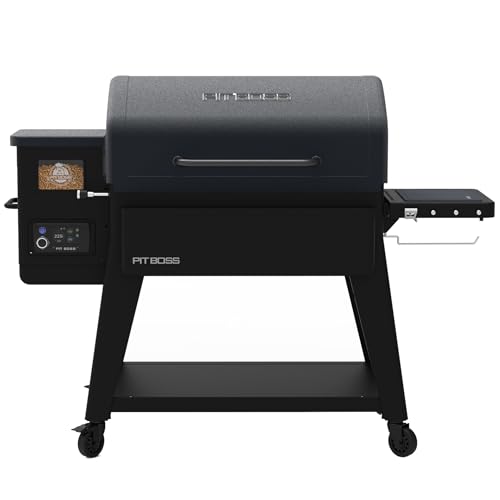
Pit Boss 1600 Navigator Series Pellet Grill and Smoker — Best Capacity per Patio
The Navigator 1600 is the biggest verified cooking space in this guide — 1,593 square inches — wrapped around the features high-volume pellet cooks actually ask for: a 30-pound hopper that outlasts overnight cooks, a touchscreen controller with WiFi and Bluetooth, a meat probe in the box, and Pit Boss’s flame broiler, which slides open to give pellet cooking the direct-flame finish it usually lacks. The 180°F to 500°F range spans the full smoking-to-grilling brief. For the cook who measures weekends in dozens of guests, this is the capacity pick with the fewest compromises attached.
Strengths
- 1,593 sq in — the largest verified cook space here
- 30 lb hopper: overnight cooks without a 3am refill
- Flame broiler adds genuine direct-heat searing to a pellet platform
Trade-offs
- A very large machine: patio, cover and pellet storage all scale with it
- Big chambers take time and pellets to preheat for small cooks
- Touchscreens outdoors demand the same weather respect as any electronics
| Cooking area | 1,593 sq in (from listing) |
| Temperature range | 180°F to 500°F (from listing) |
| Hopper | 30 lb (from listing) |
| Control | Touchscreen with WiFi and Bluetooth (from listing) |
Capacity headlines are cheap; the Navigator’s supporting specifications are what make its size usable. The 30-pound hopper is the difference between a 1,593-square-inch smoker that can actually run a full overnight programme and one that starves at dawn. The flame broiler answers the oldest pellet criticism — no real sear — with a mechanical solution rather than a temperature claim. And the touchscreen-plus-app control stack means a chamber this size can be run by one person with a phone rather than a pit crew.
Pit Boss built its name on giving more square inches per unit of money than the establishment, and the Navigator is that philosophy with flagship manners. The discipline this guide applies everywhere applies here in full: capacity is a servant of your actual guest list. If that list is honestly large and regular, no other pick in this guide feeds it as easily; if it is not, the same money buys a smaller machine and a great deal of meat.
Best for: hosts and big-family cooks whose standard load is genuinely large / Not suited for: couples and small patios, where its scale becomes the story of every cook

Green Mountain Grills Ledge Prime 2.0 Wi-Fi Pellet Grill — Best Pellet All-Rounder
Green Mountain Grills has spent years as the thoughtful alternative in pellet cooking, and the Ledge Prime 2.0 is its mainstream statement: a mid-size Wi-Fi-controlled pellet grill smoker in the brand’s current Prime 2.0 generation. GMG’s design signatures — a peaked lid that fits chickens and turkeys standing up, sensible rack geometry, and a control app owners consistently describe as straightforward — suit the cook who wants pellet convenience without joining the largest brand’s ecosystem or the largest machine’s footprint. The listing is sparing with headline numbers, so this review claims the platform and the control, and leaves unverified figures unprinted.
Strengths
- Peaked-lid chamber geometry fits upright poultry that flat lids squeeze
- Wi-Fi control in a mid-size, patio-friendly footprint
- Prime 2.0 generation: the brand’s current, supported platform
Trade-offs
- Listing confirms fewer headline specifications than rivals — verify size details on the page before ordering
- Dealer-and-brand ecosystem is smaller than Traeger’s or Pit Boss’s
- Pellet flavour profile, as with all pellet picks, runs milder than charcoal
| Format | Mid-size pellet grill smoker |
| Control | Wi-Fi controlled (from listing) |
| Generation | Prime 2.0 (from listing) |
| Lid | Peaked chamber profile (brand design) |
The Ledge’s case is proportion. Between the Traeger’s ecosystem gravity and the Navigator’s sheer acreage sits the household reality of most pellet buyers: a family grill smoker, used weekly, sized for a patio rather than an event. GMG has always designed for that household — the peaked lid is the emblem, a small architectural decision that makes the weekly chicken fit better — and the Prime 2.0 platform keeps the machine current without inflating it.
The transparency note in the trade-offs is deliberate and general: in a category addicted to headline numbers, a brand that lists plainly deserves a plain listing in return. Confirm the Ledge’s cooking area and hopper figures on its Amazon page when you check price; what the verified record supports — platform, generation, Wi-Fi control, and a long owner history with the brand’s mid-size grills — is already enough to place it here for buyers whose needs it matches.
Best for: mid-size households wanting pellet convenience outside the biggest ecosystems / Not suited for: spec-sheet shoppers who need every figure confirmed before considering a machine
Comparison Table
Two fuels, six machines. Read the key-spec column as each maker’s thesis: gravity charcoal, connected pellets, dual chambers, or sheer acreage.
| Pick | Badge | Key spec | Best for |
|---|---|---|---|
| Masterbuilt Gravity Series 800 Digital Charcoal Grill and Smoker | Best Overall | 800 sq in, gravity charcoal, app control, griddle | Most buyers wanting one digital grill smoker |
| Traeger Woodridge Pro Pellet Grill and Smoker | Best Pellet Pick | 970 sq in, WiFIRE, Super Smoke, 500°F max | Pellet buyers wanting the supported mainstream flagship |
| Masterbuilt Gravity Series 1050 Digital Charcoal Grill and Smoker | Best Large Charcoal Digital | 1,050 sq in, gravity charcoal, app control | Crowd cooks committed to charcoal flavour |
| recteq DualFire 1200 Pellet Smoker Grill | Best Dual-Chamber Design | Dual chambers, direct + indirect, Wi-Fi pellets | Mixed-menu cooks who grill and smoke in the same session |
| Pit Boss 1600 Navigator Series Pellet Grill and Smoker | Best Capacity per Patio | 1,593 sq in, 30 lb hopper, flame broiler, touchscreen | High-volume cooks wanting maximum pellet capacity |
| Green Mountain Grills Ledge Prime 2.0 Wi-Fi Pellet Grill | Best Pellet All-Rounder | Wi-Fi pellet, Prime 2.0, peaked lid | Pellet buyers wanting a mid-size alternative flagship |
How to Choose a Digital Grill Smoker
Choose the fuel first, because it decides flavour, running cost and temperament. Gravity charcoal burns briquettes or lump under fan control: the smoke tastes like charcoal barbecue because it is, the machine reaches true searing heat eagerly, and you accept ash, charcoal storage and a hungrier fuel appetite. Pellets burn food-grade wood through an auger: management drops to near zero, smoke runs milder and cleaner, top temperatures are lower, and you accept pellet storage, moisture discipline and an auger that must stay clear. Neither is the correct answer; your palate and your patience are the specification.
The temperature range test
Read every candidate’s range as two separate promises. The low end — how steadily it holds smoking temperatures across a windy night — decides your brisket. The high end decides your steaks: pellet machines commonly cap near 500°F, which sears respectably, while gravity charcoal runs considerably hotter and sears with authority. A machine that will mostly smoke should be bought on its low-end manners; a true daily grill replacement must be bought on its top end. The picks above declare their verified ceilings where the listings state them, and the comparison table keeps them visible for exactly this reason.
Hopper and appetite
Fuel capacity is the unattended-cooking specification. Pellet hoppers in this guide reach 30 pounds on the Navigator — an overnight guarantee — while smaller hoppers ask for a refill rhythm on long cooks. Gravity hoppers are measured in charcoal loads and burn faster per hour than pellets by nature. Match the hopper to your longest realistic cook, and remember that both fuels store like food: dry, sealed, and off the garage floor.
Grilling on a Smoker, Smoking on a Grill: Where the Compromises Live
Preheat patience is part of the physics too. A chamber built to cruise low for half a day carries thermal mass that takes ten to twenty minutes to reach smoking temperature and longer to heat-soak grates for a serious sear; gravity charcoal, its fan driving the fire, is usually the quickest of the category to grilling heat. None of the picks here is slow for its class, but none is a gas grill’s ninety seconds either, and the cook who plans the preheat into the schedule stops experiencing it as a flaw at all.
The honest physics: a chamber optimised to hold 225°F for twelve hours and a firebox optimised to sear at maximum heat are different shapes, and every grill smoker is a negotiation between them. The best designs in this guide negotiate well — gravity charcoal by moving the fire’s air supply under digital command, dual-chamber design by refusing to negotiate at all, flame broilers by opening a direct path to the pellet fire. Where the compromise still shows is recovery and headroom: a pellet grill asked for steak-night heat after a day of smoking needs minutes and patience a dedicated grill does not, and a charcoal machine asked to idle low all night burns more fuel than a dedicated smoker sips.
Weather is the compromise nobody lists. Wind strips heat from any chamber, but a digital system fights back visibly — fans run harder, augers feed faster — and fuel consumption on a cold, windy smoke can surprise owners calibrated on calm days. The mature habit is to site the machine out of the prevailing wind, keep extra fuel on hand in winter, and read the controller’s behaviour as information rather than failure. All six picks here manage weather competently; none repeals physics, and a buyer in a genuinely cold climate should weight insulation and fuel appetite accordingly when choosing among them.
None of this argues against the category — for most households the negotiated machine cooks ninety-five percent of their outdoor life superbly, in one footprint, under one cover. It argues for buying the negotiation that matches your menu: dual chambers if both tempos appear in the same meal, gravity charcoal if searing authority matters weekly, mainstream pellets if smoking frequency matters most. The five-percent meals — the competition brisket, the steakhouse crust — will keep their dedicated tools in serious cooks’ arsenals, and that is a fine and honest arrangement.
Sizing a Grill Smoker: Chamber, Grates and the Party Test
Size a grill smoker by your largest regular cook, then check the shape, not just the area. Pellet and charcoal chambers quote total square inches across multiple racks, but grilling happens on the main grate alone — a machine can offer a festival of smoking area and a modest weeknight grill. Read listings for the main-grate reality behind the headline, picture your standard grill load (a dozen burgers, four chickens, a tray of vegetables) on it, and picture your standard smoke (a brisket’s length, ribs uncut) in it. The picks in this guide were chosen partly because their chambers are honest in both postures.
Then apply the party test with restraint: the cook you host twice a year should not dictate a machine you wrestle weekly. A mid-size chamber plus a second batch, or a borrowed grill for the annual crowd, beats a flagship that makes every Tuesday cook feel like heating a hall. The DualFire and the Navigator earn their scale only in households whose normal is genuinely large — a distinction their reviews state plainly, and the single most valuable sizing judgement a buyer can make in this category.
Running Costs and Ownership, in Plain Terms
Without printing prices, the ownership economics still rank clearly. Pellets are a branded consumable with a steady per-cook cost and zero waste; charcoal costs less per bag and more per cook, with ash to dispose of and partial loads to manage. Electronics — fans, augers, controllers, touchscreens — are the shared wear layer across every pick here, which is why covers, dry storage and brand parts support weigh so heavily in these reviews. A grill smoker is a five-to-ten-year appliance; buy the one whose maker will still sell you its igniter in year six, and whose community will still answer your error-code question at midnight.
How to Run a Digital Grill Smoker: First Smoke, First Sear
Learn the machine in the order that teaches fastest: a low, forgiving smoke first — pork shoulder — then a high-heat grilling session, then, if your machine allows, the reverse-sear that combines both. Three cooks, and the controller’s personality is yours.
- Start clean and dry. Empty old ash, vacuum the firepot on pellet models, confirm the hopper holds fresh dry fuel, and check that grease paths are clear before any fire is lit.
- Ignite and stabilise low. Start the machine by its maker’s sequence, set a smoking temperature, and let it settle for twenty minutes past the display’s first arrival — steel and grates must catch up with the sensor.
- Smoke the shoulder. Meat on, probe in, lid closed. Monitor from the app or panel; add nothing, open nothing, and let the digital system demonstrate what you paid for.
- Manage fuel on schedule. Glance at hopper level at the cook’s natural checkpoints — wrapping time, the stall — rather than discovering an empty hopper from a falling temperature graph.
- Rest and record. Rest the meat properly, then note set points, fuel used and times in a notebook or the app; digital machines reward cooks who keep their data.
- Grill session: preheat with intent. For steaks or burgers, set the high temperature early and let the grates fully heat-soak; a grill smoker’s sear lives or dies on grate temperature, not air temperature.
- Sear, then evaluate honestly. Cook, rest, taste — and judge the crust against your standard. If it falls short, the fixes are dry surfaces, hotter grates and patience, in that order.
- Shut down by the book. Run the maker’s shutdown or burn-off sequence, let the machine cool completely, and cover it cold. Electronics and pellets both reward dry, covered storage.
The reverse-sear graduation exercise ties the category together: smoke a thick steak low until it nears target, rest it while the machine climbs, then sear it hard and serve. On a dual-chamber machine the climb happens in parallel; on the others it is a ten-minute intermission. Either way, the cook who can run that sequence owns the whole grill-smoker idea — and understands why a digital controller, patiently conducting one fire across two tempos, earned its place on the patio.
Apps, Probes and the Connected Layer: What Is Actually Worth Having
Connectivity in this category has matured past novelty into three genuinely useful functions: remote monitoring with alerts that arrive in time to act on, the ability to change set points without crossing the yard in the rain, and cook logging that quietly builds your personal database of what worked. Everything beyond those three — social feeds, recipe marketplaces, firmware gamification — is garnish. Judge a connected pick by the reliability of the core three on your patio’s actual Wi-Fi, and remember that every machine in this guide still cooks beautifully from its own panel when the network has a bad day. A grill smoker that requires the cloud to make dinner is a design flaw wearing a feature’s clothes.
Probes deserve their own sentence in the connected budget. Most of these machines ship with one wired meat probe and ports for more; the probe is the instrument that turns the app from a remote display into a cooking tool, because internal temperature — not chamber temperature — is the number dinner depends on. If a package offers a second probe or a bundled probe set at a modest step up, experienced owners take it: two proteins, or a protein and a grate-level ambient check, is the normal working configuration of a serious cook, not an enthusiast’s excess.
Common Buying Mistakes
Choosing fuel by fashion instead of palate. Pellet smoke and charcoal smoke are different flavours, not different qualities. Eat both before you buy, or buy the one whose food you already love at restaurants and friends’ houses.
Believing the grate-area headline without the hopper. A huge chamber with a modest hopper is a short-cook machine wearing a big-cook costume. The comparison table in this guide pairs the two numbers deliberately.
Searing on a dirty smoker. Yesterday’s brisket fat plus today’s maximum heat equals flare-ups and off flavours. The grill-smoker lifestyle includes a cleaning rhythm; budget the ten minutes, not just the money.
Running pellets that got damp. Swollen, dusty pellets jam augers and smoulder badly. Store fuel sealed and dry, and treat a hopper left full through a humid month as a maintenance task, not a head start.
Judging the machine in week one. Every digital grill smoker has a learning curve measured in cooks, not days. The notebook habit in the how-to section is how owners cross it fastest.
Final Recommendation
Start the decision with fuel: charcoal lovers should buy the Masterbuilt Gravity Series 800 — the category’s best all-round answer — or its 1050 sibling when the guest list demands it. Pellet households should default to the Traeger Woodridge Pro for ecosystem and polish, the Pit Boss Navigator 1600 for acreage, the Green Mountain Ledge Prime 2.0 for mid-size proportion, and the recteq DualFire 1200 when the menu itself is dual-tempo. Every one of them will smoke on Saturday and grill on Tuesday without apology.
Check price on Amazon for the exact model — capacities repeat across line-ups under similar names — and keep reading within the cluster: Best Digital Smokers widens the field to every digital fuel, Best Digital Electric Smokers covers the chip-fed cabinet branch, and Best Automated Smokers examines the set-and-forget philosophy across categories. If charcoal is your direction, Best Charcoal Grills Smokers explores the non-digital charcoal tradition these machines descend from, while Best Barbecue Smokers Grills takes the broadest view of the combined category.
To act on this guide: start with Masterbuilt Gravity Series 800 Digital Charcoal Grill and Smoker, then compare Traeger Woodridge Pro Pellet Grill and Smoker, and finally Masterbuilt Gravity Series 1050 Digital Charcoal Grill and Smoker — check price on Amazon on each listing, confirm the exact model name and size, and choose by the design logic above rather than by the headline discount.
Frequently Asked Questions
What is the difference between a digital grill smoker and a pellet grill?
A pellet grill is one kind of digital grill smoker — the pellet kind. The wider category includes gravity-fed charcoal machines and dual-chamber designs, united by digital temperature control across both smoking and grilling ranges. Choose by fuel first, then by model.
Can a digital grill smoker really replace my gas grill?
For most households, yes: burgers, chicken, vegetables and steaks all cook well on the picks here, with better flavour than gas. What you give up is gas’s instant-on convenience for a two-burger Tuesday; what you gain is an entire smoking capability. Many owners keep a small gas or flat-top for weeknight speed and let the grill smoker own the weekends.
Which fuel tastes better, pellets or gravity charcoal?
They taste different. Charcoal gives the deeper, traditional barbecue profile; pellets give a cleaner, milder wood smoke. Preference is personal and strong on both sides — this guide stocks both rather than settling the argument, and the buying guide explains the ownership differences that should break a flavour tie.
How hot do digital grill smokers get?
It varies by design and is verified per pick where listings state it: the Traeger Woodridge Pro and Pit Boss Navigator both declare 500°F ceilings, while gravity charcoal models run hotter by nature. Read the comparison table’s key specs, and match the ceiling to how seriously you sear.
Are the apps necessary to use these machines?
No. Every pick cooks fully from its own controller; the apps add remote monitoring, alerts and logging. They are worth having — particularly for overnight smokes — but a machine that cannot cook without a phone would not appear in this guide.
What maintenance does a digital grill smoker need?
Ash and grease management on a rhythm, dry covered storage, fuel kept sealed and dry, and an occasional vacuum of the firepot on pellet models. The electronics ask mainly to be kept dry; the fire parts ask to be kept clean. Budget ten minutes per cook and the machines in this guide repay it for years.


