Disclosure: airfryerkitchensupply.com is reader-supported. When you buy through links on our site, we may earn an affiliate commission at no extra cost to you.
Where to buy
Shopping for the best 12 volt thermoelectric cooler? Start here. Every linked pick below is a true thermoelectric (Peltier) cooler verified through the Creators API — compressor models are discussed honestly in this guide but never disguised as thermoelectric picks: Koolatron 18 quart: check price on Amazon. Igloo IE24: check price on Amazon. Wagan EL6214: check price on Amazon. Wagan EL6206: check price on Amazon. Igloo IE42 Roller: check price on Amazon. AooDen 26 quart: check price on Amazon. If a linked model is unavailable, substitute within the thermoelectric class by capacity and power options, and keep the temperature expectations in the buying guide firmly in mind.
The best 12 volt thermoelectric cooler is a study in honest limits. A thermoelectric (Peltier) cooler has no compressor, no refrigerant, and almost no moving parts beyond a small fan — which makes it light, quiet, inexpensive, and durable. In exchange, it can only cool to a set margin below the surrounding air temperature, typically in the region of 30 to 40 degrees Fahrenheit below ambient, and it cannot freeze. On a mild day that margin keeps drinks and food properly cold; in a hot vehicle in summer, the same margin may only reach cool. This guide states that limit in the first paragraph because every satisfied owner understood it before buying.
Thermoelectric is also not the same technology as the compressor 12 volt refrigerators that dominate the overland market, and the difference matters more than any brand choice. A compressor fridge holds a set temperature in any weather and can freeze; a thermoelectric cooler holds a temperature difference and cannot. Neither is better in the abstract — they answer different budgets, weights, and trips. The six picks below are all genuinely thermoelectric and API-verified, badged from personal 6-quart size to a 42-quart roller, with the warming mode most of them include treated as the useful bonus it is.
In this guide
Quick Picks
Six verified thermoelectric coolers span the class from a personal lunch-size box to a family roller. Badges match the review headings, and every badge respects what Peltier cooling can actually promise.
- Koolatron 12V Iceless Thermoelectric Cooler & Warmer 18 Quart — Best Overall. The heritage pick: an 18-quart hard-sided iceless cooler and warmer from the brand that defined the thermoelectric category. Check the current price on Amazon.
- Igloo IE24 Thermoelectric Cooler & Warmer 24L — Best Family Mid-Size. A 24-litre Igloo with its cooling margin printed on the tin: cools 36°F below ambient, heats to 136°F, on AC or DC power. Check the current price on Amazon.
- Wagan EL6214 Personal Thermoelectric Cooler/Warmer 14L — Best Personal Cooler. A 14-litre personal cooler and warmer with 12/24V flexibility and UL listing — the commuter and solo-traveller size. Check the current price on Amazon.
- Wagan EL6206 12V 6 Quart Personal Thermoelectric Cooler Warmer — Best Compact and Budget. The smallest verified pick: a 6-quart personal cooler-warmer for a few drinks and a lunch, at the gentlest capacity and commitment in the guide. Check the current price on Amazon.
- Igloo IE42 Roller Thermoelectric Cooler & Warmer — Best Large Capacity. The big roller: 59-can capacity with a telescoping handle and wheels, for events and basecamps where the load is the point. Check the current price on Amazon.
- AooDen Electric Car Cooler and Warmer 26 Quart — Best Dual-Power Road Trip Pick. A 26-quart thermoelectric cooler and warmer that runs on 12V DC in the vehicle and 120V AC at home or the motel — the road-trip format. Check the current price on Amazon.
Notice the absence of any freezer language in this list. That restraint is the guide working as intended: these picks cool and warm admirably within their physics, and the buying guide below explains exactly when to choose a compressor model instead.
How These Picks Were Chosen
Verification through the Creators API applied a strict technology filter: the listing had to describe a thermoelectric or iceless Peltier cooler running on 12 volt DC. Compressor refrigerators — however excellent — were excluded from the picks, because a buyer searching this keyword deserves a guide about the technology they named, with the compressor alternative handled openly in the guide sections rather than smuggled into the table.
Within the thermoelectric class, selection spread across capacity: personal 6-quart, mid-size 14-litre and 18-quart, family 24-litre and 26-quart, and the 42-quart roller. Dual-power AC/DC models were favoured where available, because pre-chilling at home and warming modes are the two features real owners use most after capacity itself.
Stated cooling margins were read carefully. Where a listing states its below-ambient figure or its warming temperature, that figure appears in the spec box attributed to the listing; where it does not, no figure was invented. Prices and ratings were not consulted at any stage.
The 6 Best 12 Volt Thermoelectric Coolers
Each review states the capacity class, the honest temperature expectation, strengths, trade-offs, verified specifications, and a verdict. Read the trade-offs column with care — in this category it carries the physics.
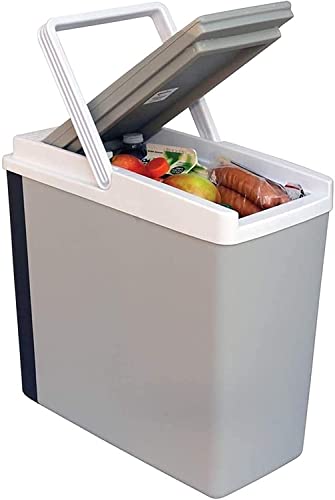
Koolatron 12V Iceless Thermoelectric Cooler & Warmer 18 Quart — Best Overall
This is the balanced default for couples and small families: enough capacity for a day trip or a weekend of drinks and food, hard-sided protection, and both cooling and warming in one box. It suits car, truck, camper, and boat use. It does not suit anyone needing freezer performance or week-long off-grid food storage in summer heat.
Strengths
- Koolatron category heritage — thermoelectric coolers are this brand home ground
- 18-quart capacity hits the day-trip and weekend sweet spot
- Cooler and warmer modes cover picnic cooling and meal warming in one unit
Trade-offs
- Cooling is a margin below ambient, so a hot parked car limits the result
- Cannot freeze or hold ice-cream-class temperatures
- Thermoelectric draw is continuous while plugged in — manage parked time
| Specification | Detail |
|---|---|
| Capacity | 18 quart (per API listing title) |
| Power | 12 volt DC |
| Modes | Cooler and warmer |
| Build | Hard sided |
Koolatron longevity in this niche is not an accident. The thermoelectric cooler is a simple device, and the difference between a good one and a poor one is execution: a well-sealed lid, a fan that keeps the hot side breathing, and a case that survives years of being lifted by its handle into boots and boats. This 18-quart model is the size most households actually fill — a day of drinks and food for a small group, without the bulk of the family rollers.
Use it the way the technology wants: pre-chill the contents at home, load cold, and let the unit hold the margin rather than fight from warm. Driven that way, drinks arrive cold, food stays fresh, and the warmer mode earns surprise gratitude at winter events. Asked to freeze, or to rescue warm groceries in a heatwave car, it will disappoint — as will every thermoelectric cooler ever made.
Best for: day trips and weekends for couples and small families / Not suited for: freezing or long hot-weather storage
Check on Amazon to see the current listing for the Koolatron 18 quart.

Igloo IE24 Thermoelectric Cooler & Warmer 24L — Best Family Mid-Size
Families and groups are the audience: 32-can capacity, the trusted Igloo name, and dual AC/DC power for home pre-chilling and vehicle running. The stated 36-degree margin is the honest centre of this class. It suits picnics, team days, and road-trip food. It does not suit freezer needs or multi-day summer storage without support.
Strengths
- Stated performance figures: 36°F below ambient cooling, warming to 136°F (per API listing title)
- AC/DC dual power enables home pre-chill, the technique that makes thermoelectric shine
- 32-can family capacity from a mainstream cooler brand
Trade-offs
- The stated margin confirms the class limit: in a 100°F vehicle, expect cool, not cold-storage
- Family size means family weight when loaded
- Continuous draw while running requires the usual parked-vehicle discipline
| Specification | Detail |
|---|---|
| Capacity | 24L, holds 32 cans (per API listing title) |
| Cooling | 36°F below ambient (per API listing title) |
| Warming | Heats to 136°F (per API listing title) |
| Power | AC/DC |
The most valuable feature of the IE24 is a number: 36 degrees below ambient, printed in its own listing. That figure lets a buyer do real planning. At a 75-degree picnic, the interior sits near 40 — proper cold. In a 95-degree car, it sits near 60 — a cool box, not a fridge. A manufacturer willing to publish the margin is a manufacturer whose product can be bought with open eyes, and this guide rewards that honesty with a badge.
The warming figure deserves equal attention. Heating to the stated temperature turns the same box into a meal keeper for winter sports days, site work, and the drive home with takeaway food. Combined with AC pre-chilling at home, the IE24 covers the widest honest range of family uses in this guide.
Best for: families wanting stated performance and dual power / Not suited for: freezing or heatwave food storage
Check on Amazon to see the current listing for the Igloo IE24.
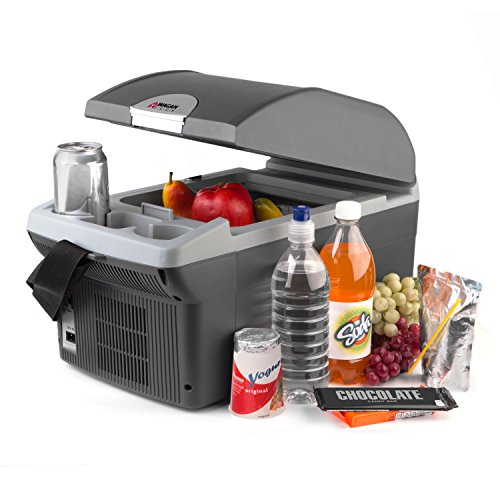
Wagan EL6214 Personal Thermoelectric Cooler/Warmer 14L — Best Personal Cooler
One person, one day: lunch, drinks, medication-adjacent cool storage (never freeze-dependent), and a warm meal on the return. The 14-litre Wagan sits on a seat or footwell, runs on 12 or 24 volts for car or truck, and carries a UL listing that matters in a category full of anonymous boxes. It suits commuters, reps, and solo campers. Groups need a bigger pick.
Strengths
- Personal capacity matched to a seat or footwell footprint
- 12/24V DC flexibility covers cars and trucks alike
- UL listed, a meaningful safety mark in this category
Trade-offs
- 14 litres fills fast — a group day outgrows it by noon
- Same below-ambient physics as the whole class
- Warmer and cooler modes share one chamber, so loads are one temperature at a time
| Specification | Detail |
|---|---|
| Capacity | 14 litre (per API listing title) |
| Power | 12/24V DC (per API listing title) |
| Certification | UL Listed (per API listing title) |
| Modes | Cooler and warmer |
The personal cooler is the thermoelectric format at its most sensible. The load is small, the margin needed is modest, and the alternative — a passive box with melting ice — is beaten on convenience every single day. For the driver who eats lunch in the vehicle five days a week, this class of unit quietly becomes the most-used accessory they own, and the Wagan combination of size, dual voltage, and a recognised safety listing is the considered version of it.
Treat the warmer mode as the second half of the value: the morning commute keeps drinks cold; the evening site visit keeps a meal warm. One chamber, two seasons of usefulness, and a footprint that asks nothing of the vehicle. Solo users should start their shortlist here.
Best for: commuters and solo travellers / Not suited for: group outings or large loads
Check on Amazon to see the current listing for the Wagan EL6214.

Wagan EL6206 12V 6 Quart Personal Thermoelectric Cooler Warmer — Best Compact and Budget
Minimalists and second-car users are the fit: a handful of cans, a sandwich, and a small footprint that lives in the vehicle permanently. It suits keeping a few items cold on errands and short trips. It does not suit a picnic, a family, or any day whose catering exceeds a personal lunch.
Strengths
- Smallest footprint in the guide — lives in the car full-time
- 12/24V DC and UL listing match its bigger sibling standards
- Cooler and warmer modes at the lowest capacity commitment
Trade-offs
- Six quarts is a lunch, not a load
- Small chamber means the below-ambient margin is spent on very little
- Easy to outgrow within one season of family use
| Specification | Detail |
|---|---|
| Capacity | 6 quart / 6 litre (per API listing title) |
| Power | 12/24V DC (per API listing title) |
| Certification | UL Listed (per API listing title) |
There is a real philosophy in the smallest pick: the cooler you have with you beats the cooler in the garage. At six quarts this unit asks for almost no space, sips its continuous draw across a small chamber, and covers the errands-and-commute pattern that makes up most vehicle days. Cold drinks after the gym, a lunch kept fresh through a work morning, a warm snack on the way home — small jobs, done daily.
Buy it with the capacity ceiling in plain view and it will never disappoint. The buyers who regret this size are the ones who secretly needed the 18 or 24-litre class; the buyers who love it are the ones whose need really was personal. The guide badges it budget and compact because, used as intended, it is the best value per day in the entire list.
Best for: personal lunches, drinks, and daily errands / Not suited for: picnics or family loads
Check on Amazon to see the current listing for the Wagan EL6206.

Igloo IE42 Roller Thermoelectric Cooler & Warmer — Best Large Capacity
Events, team days, family basecamps, and market traders are the audience. The roller format moves a 59-can load without carrying it, and the thermoelectric system keeps it cool for the day without an ice budget. It suits venues near the vehicle or a power point. It does not suit backpacking, obviously, or multi-day remote storage in heat.
Strengths
- Largest verified thermoelectric capacity in the guide at 59 cans
- Wheels and telescoping handle make the loaded weight manageable
- Cooler and warmer range covers event catering in both seasons
Trade-offs
- Biggest continuous draw context: a large chamber in hot weather works the system hardest
- Size demands boot or truck-bed space even empty
- Still no freezing — event ice cream needs another solution
| Specification | Detail |
|---|---|
| Capacity | Holds 59 cans (per API listing title) |
| Mobility | Roller with telescoping handle (per API listing title) |
| Power | 12 volt |
| Modes | Cooler and warmer |
At event scale the thermoelectric proposition changes shape: the rival is not a compressor fridge but bags of ice, bought daily, melting into the food by afternoon. A roller that holds a large load at a steady cool-to-cold margin, all day, with no ice run and no meltwater, wins that comparison for the huge middle of event catering — drinks, salads, sandwiches, and supplies that need freshness rather than frost.
The wheels are not a detail. A loaded 59-can cooler is a two-person lift or an injury; on a telescoping handle it is a one-person walk from car park to pitch. For traders, coaches, and the family member who always runs the basecamp, this is the thermoelectric format grown to its natural maximum — beyond this size, the guide honest advice is to step up to compressor technology.
Best for: events, teams, and family basecamps / Not suited for: remote multi-day storage or freezing
Check on Amazon to see the current listing for the Igloo IE42 Roller.

AooDen Electric Car Cooler and Warmer 26 Quart — Best Dual-Power Road Trip Pick
Road-trippers who move between vehicle and accommodation are the fit. Pre-chill on AC at home, run on DC all day, plug into AC again at the motel, and the chain never breaks. The 26-quart size serves a couple or small family across a touring day. It suits travel and camping breadth. Freezer expectations remain out of scope, as everywhere in this class.
Strengths
- True dual power: 12V DC and 120V AC in one unit
- 26-quart touring capacity for couples and small families
- Cooler and warmer modes for year-round travel use
Trade-offs
- Dual-power convenience does not change the below-ambient ceiling
- Mid-large size is more than a solo traveller needs
- AC use at stops depends on access to an outlet, as with any dual-power model
| Specification | Detail |
|---|---|
| Capacity | 26 quart (per API listing title) |
| Power | 12V DC and 120V AC (per API listing title) |
| Modes | Cooler and warmer |
| Type | Thermoelectric iceless (per API listing title) |
The broken cold chain is the quiet failure of most road-trip food: cold at home, warm by the second afternoon. Dual power is the direct answer, and this 26-quart unit is built around it. The cooler works the home fridge shift before departure, the driving shift all day, and the motel shift overnight, so day three food is as fresh as day one — within the thermoelectric margin, honestly applied.
That last clause remains the discipline: load cold, keep the lid closed, and respect hot-vehicle limits by parking in shade where you can. Road-trippers who run that routine find this class of cooler transforms trip catering from ice logistics into a non-event, which is the highest praise travel equipment can earn.
Best for: road trips moving between vehicle and accommodation / Not suited for: freezing or solo minimal loads
Check on Amazon to see the current listing for the AooDen 26 quart.
Comparison Table
The table compares the thermoelectric six by capacity and role. Every row shares the class physics — cooling as a margin below ambient, no freezing — so choose by load size, power options, and how the box will travel.
| Pick | Badge | Key spec | Best for |
|---|---|---|---|
| Koolatron 12V Iceless Thermoelectric Cooler & Warmer 18 Quart | Best Overall | 18 qt thermoelectric, cooler + warmer | day trips and weekends for couples and small families |
| Igloo IE24 Thermoelectric Cooler & Warmer 24L | Best Family Mid-Size | 24L, 36°F below ambient, AC/DC | families wanting stated performance and dual power |
| Wagan EL6214 Personal Thermoelectric Cooler/Warmer 14L | Best Personal Cooler | 14L personal, 12/24V, UL listed | commuters and solo travellers |
| Wagan EL6206 12V 6 Quart Personal Thermoelectric Cooler Warmer | Best Compact and Budget | 6 qt personal, 12/24V | personal lunches, drinks, and daily errands |
| Igloo IE42 Roller Thermoelectric Cooler & Warmer | Best Large Capacity | 59-can roller, telescoping handle | events, teams, and family basecamps |
| AooDen Electric Car Cooler and Warmer 26 Quart | Best Dual-Power Road Trip Pick | 26 qt, 12V DC + 120V AC | road trips moving between vehicle and accommodation |
A capacity shortcut: one person lives at 6 to 14 litres, a couple at 18 to 26 quarts, a family or event at the 24-litre Igloo or the 59-can roller. If your load regularly exceeds the roller, or your trips demand freezing, the next section explains why your real pick is a compressor model — and that is a conclusion this guide is happy to reach.
Thermoelectric vs Compressor: The Difference That Decides Everything
A thermoelectric cooler moves heat with a solid-state Peltier element. It is light, simple, quiet, and inexpensive, and its cooling is expressed as a difference: so many degrees below the surrounding air. A compressor refrigerator works like your home fridge in miniature: it holds an absolute set temperature, in any ambient heat, and can run a freezer compartment. The verified compressor class — models from makers such as Dometic, Alpicool, and ICECO, widely sold as 12 volt refrigerators — costs more, weighs more, and performs in a different league on a hot day.
Choose thermoelectric when the trip is short, the load is drinks and fresh food, the budget matters, and the climate or the pre-chill routine keeps ambient temperatures reasonable. Choose compressor when the trip is long, the weather is hot, the food is valuable or frozen, or the vehicle is a home. Many experienced travellers own both across a lifetime and reach for each on different weekends; the mistake is only ever expecting one technology to do the other job.
How to Choose a Thermoelectric Cooler: Capacity, Power, and the Margin
Capacity first, by the real load: count cans and meals for your typical trip, then buy the size that load fills comfortably — a full cooler holds its margin better than a half-empty one, because the cold contents themselves become thermal mass. Personal, couple, and family bands in the comparison table exist to make this a one-minute decision.
Power options second. DC-only models are vehicle tools; AC/DC models add the home pre-chill and the motel overnight, which in practice doubles the usefulness of the box. If your trips start at home and sleep in accommodation, dual power is worth prioritising over a small capacity gain. Warmer mode third: genuinely useful for winter food, irrelevant for summer-only users, and never a reason to buy capacity you do not need.
The margin last, and honestly: find the stated below-ambient figure where the maker publishes one — the Igloo IE24 in this guide states 36°F — and plan your hottest expected day against it. If the arithmetic fails for your climate, believe the arithmetic, and buy compressor instead.
Budget Tiers in the Thermoelectric Class
Thermoelectric is the budget technology of powered cooling, and its tiers are gentle. The personal end — the Wagan pair in this guide — costs the least and serves daily single-user duty. The mid tier buys family capacity and dual power, where most households should land. The top of the class is the big roller format, bought for events rather than for better cooling, because cooling physics does not improve with price inside this technology.
That last point is the tier lesson: within thermoelectric, extra money buys size, power flexibility, and build — never a colder absolute temperature. The buyer who wants colder must change technology, not tier, and the guide comparison above exists to make that jump at the right moment rather than after a disappointing summer.
Thermoelectric Coolers at Work: The Weekday Life of the Class
The brochure life of a cooler is the picnic; the real life is the weekday. Thermoelectric boxes earn their keep as the permanent resident of a work vehicle: the rep cooler that holds lunch and drinks across a territory, the site box that keeps a crew in cold water, the delivery-day box that brings groceries home cold through three other errands. In that weekday role the class virtues — light, simple, no ice, no fuss — compound daily, and the class limit matters least, because the loads are modest and the trips are short.
Work use also explains the warmer mode quiet popularity. A box that cools the morning drinks and warms the afternoon meal is doing two shifts, and owners in cold climates describe the warmer as the feature they bought as a joke and now use weekly. The personal Wagan picks in this guide are sized exactly for this life, and their dual-voltage ratings follow the box from the family car to the work truck without a thought.
If your cooler will live this weekday life, buy for the handle, the lid, and the cord as much as for the litres: it will be lifted daily, opened hourly, and plugged in half-asleep. The class is forgiving of almost everything except being asked to be a freezer — and the weekday never asks that.
When the Answer Is Compressor: A Fair Hearing for the Other Technology
This guide sells thermoelectric coolers and still insists on giving the alternative its due, because the worst outcome for any buyer is the wrong technology bought confidently. Compressor 12 volt refrigerators — the Dometic, Alpicool, ICECO class of portable fridges — hold an absolute temperature in any weather, run freezer compartments, and sip power once cold because the compressor cycles rather than running constantly. For overlanding, long off-grid stays, medication or food that must stay at a set temperature, and any trip measured in weeks, they are not the premium option; they are the correct one.
The costs are equally real: several times the purchase price of a thermoelectric box, more weight, more bulk, and a machine with a compressor to treat with reasonable care. The decision rule from the buying guide bears repeating in plain form: days and drinks, thermoelectric; weeks and freezing, compressor. Buyers who apply that rule honestly almost never return either product, and buyers who ignore it return the thermoelectric one in July, having asked it to be something it clearly said it was not.
A hybrid household pattern is common and sensible: the compressor fridge lives in the expedition vehicle, the thermoelectric box lives in the everyday car. Each technology where its physics shine is not indecision — it is the mature end-state of powered cooling, and this guide is content to point at it even though only half of it is linked above.
Packing a Thermoelectric Cooler: Load Order and Airflow
How a cooler is packed decides how cold it feels, and thermoelectric boxes reward technique more than most. Load cold items in the order of the day: tonight food at the bottom, where it stays coldest and is disturbed least; tomorrow drinks above; the frequent-access items — water, fruit, the driver snacks — at the top, so each opening spends the least cold. Keep the interior fan and vents unblocked by soft packaging, because a Peltier cooler cools its air, and air that cannot circulate leaves warm pockets beside cold ones.
Group items the way the trip eats them, in small bags or boxes, so one opening retrieves a whole meal rather than starting a search with the lid wide. Freeze nothing in expectation — the box cannot — but do include one or two frozen bottles on the hottest days as ballast, placed against the cooling wall where they help most. Packed this way, the same cooler that disappointed a careless loader on its first trip routinely impresses on its second, with no change of hardware at all. Technique is the cheapest upgrade in this entire category, and it is available before the box even arrives.
Pre-Purchase Checklist for a Thermoelectric Cooler
One: run the technology question first — days and drinks, or weeks and freezing? If the honest answer is weeks or freezing, close this guide kindly and buy a compressor refrigerator; if it is days and drinks, continue. Two: do the margin sum for your hottest expected day, using a stated below-ambient figure where the maker publishes one, and confirm the resulting interior temperature is the one your food actually needs. Three: count the real load — cans, meals, people — and pick the capacity band that load fills, remembering that a comfortably full box holds its temperature better than a cavernous one.
Four: decide the power pattern — vehicle-only DC, or AC/DC for the home pre-chill and the overnight plug — and let your trip shape, not a small price gap, make the call. Five: confirm the carrying plan: who lifts it, where it rides, whether the roller format earns its size in your venues. Six: adopt the technique rules from the how-to section as part of the purchase — pre-chill, ventilate, shade, load in order — because in this category the owner is half the specification. A thermoelectric cooler bought through this checklist is the right technology, at the right size, used the right way; that combination has never produced a disappointed owner.
Thermoelectric Coolers and Food Safety: Holding the Line Honestly
Because this guide recommends these boxes for real food, it owes the reader a plain food-safety paragraph. A thermoelectric cooler holds a margin, and on a mild day that margin is a fridge temperature; on a hot day it may not be. Perishable food — meat, dairy, cooked dishes — should be judged against the actual interior, not the hope: if the day is extreme, the trip is long, or the food is precious, the responsible tools are a compressor fridge, a passive box packed with serious ice for that single day, or a shorter plan. This is not a warning against the category; it is the operating manual the category deserves.
The habits that keep thermoelectric food safe are the same ones the how-to section teaches for performance: pre-chill everything, load cold, open rarely, shade the box, and eat the most perishable items earliest in the trip. Add one more — when a trip ends, empty the box the same day and leave the lid ajar in storage, so the next load starts with a clean, dry, odour-free interior. Owners who run those rules eat from these coolers for years without incident, and owners who treat the margin as a guarantee eventually meet the day it is not. The guide has stated the physics from its first paragraph so that its readers are always in the first group.
A Season with a Thermoelectric Cooler: What Owners Learn
The first month teaches the margin. Owners stop asking how cold the box is and start asking how cold the day is, because the second question predicts the first — the mental shift this whole guide is built around. The second month teaches loading: cold-in, cold-held becomes a reflex, the frozen bottle appears on the hottest weekends, and the lid opens with a purpose instead of curiosity. By the third month the box has a place — in the vehicle, in the routine, in the household division of labour — and equipment that has a place gets used for years.
The seasonal turn teaches the warmer. Owners who bought for summer picnics discover, at the first winter fixture, that the same box keeping drinks cold in July keeps the team lunch warm in January, and the purchase retroactively doubles in their estimation. It is the most commonly reported delight in the category, and the reason this guide badges cooler-and-warmer models throughout rather than treating the second mode as a footnote. A technology understood seasonally, loaded skilfully, and asked only for what its physics offers: that is the whole ownership story, and it is a good one.
How to Use a Thermoelectric Cooler So It Actually Feels Cold
Pre-chill everything. Run the cooler empty on AC or DC for an hour before loading, and load only food and drink that is already fridge-cold. A thermoelectric unit asked to pull a warm load down spends its whole margin on the load instead of the air, and the first day feels like failure. Loaded cold, the same unit holds a satisfying temperature from the first hour.
Manage the environment like it matters, because it does. Keep the cooler out of direct sun, leave space around its fan and vents, and park in shade when the unit must run in a stopped vehicle. Open the lid briefly and rarely — every opening spends the margin you built. A small frozen bottle or two, added as thermal ballast on the hottest days, is a legitimate hybrid trick that many owners use without any shame.
Respect the battery and the mode switch. These coolers draw continuously, so long parked running needs an engine-running pattern or a house battery, exactly as with the heaters elsewhere in this series. And when switching between cooling and warming, let the unit rest briefly and confirm the mode before loading — the classic thermoelectric mishap is a day of warming the drinks you meant to chill.
Common Buying Mistakes
Expecting a freezer is the category-defining mistake. Thermoelectric coolers cannot freeze, cannot hold ice cream, and cannot guarantee fridge temperatures in a hot car. Buyers who absorb the below-ambient idea before purchase are happy; buyers who discover it at a heatwave picnic blame a product that never promised otherwise.
Loading warm is the second mistake, and the most fixable. Warm cans and room-temperature food consume the entire cooling margin for hours. Pre-chill the box and the contents, and the same cooler feels like a different, better product.
The third mistake is blocking the fan or cooking the unit in a sealed, sun-baked boot. The hot side of a Peltier element must shed heat to work; starve it of airflow and the cold side warms in sympathy. Ventilation is not a suggestion in this technology — it is half the machine.
Finally, do not run any cooler flat-out on a starter battery through a long parked day and expect a certain start. Cool while driving, use a house battery or shore power for long stops, and the technology will serve for years.
Final Recommendation
Most buyers should take the Koolatron 18 Quart: the heritage build at the most useful size. Families should choose between the Igloo IE24, with its honestly stated margin and dual power, and the IE42 roller where the load is the point. Solo users are best served by the Wagan EL6214, or the EL6206 where compact value leads, and road-trippers by the dual-power AooDen 26 Quart.
And keep the guide larger verdict in view: thermoelectric is a brilliant technology inside its physics and a disappointment outside them. If your trips need absolute cold or freezing, buy a compressor refrigerator with this guide blessing — and if they need light, simple, affordable cooling and warming for days out, you are already looking at the right six boxes.
Shop the verified picks: Koolatron 18 quart. Igloo IE24. Wagan EL6214. Wagan EL6206. Igloo IE42 Roller. AooDen 26 quart. Each link goes to the current Amazon listing, where you can check price on Amazon before you buy.
Related guides in this series: Best 12 Volt Television Best 12 Volt Space Heater Best 12 Volt Stove Best 12 Volt Travel Heated Mug Best 12 Volt Television For Rv.
Frequently Asked Questions
How cold does a thermoelectric cooler actually get?
It cools to a margin below the surrounding temperature rather than to a fixed temperature — commonly around 30 to 40°F below ambient, with the Igloo IE24 in this guide stating 36°F below ambient. On a 75°F day that means genuinely cold contents; in a 100°F vehicle it means cool, not fridge-cold. It cannot freeze.
What is the difference between thermoelectric and compressor 12V coolers?
Thermoelectric (Peltier) cooling is solid-state: light, quiet, inexpensive, and limited to a below-ambient margin. Compressor cooling works like a home fridge: it holds a set temperature in any heat and can freeze, at higher cost and weight. Choose by trip length, climate, and whether freezing matters.
Can a thermoelectric cooler keep food safe on a long trip?
For a day of travel with pre-chilled food, yes — that is its home ground. For multi-day trips in hot weather, its margin may not hold fridge-safe temperatures, and a compressor refrigerator is the responsible choice. When in doubt on a long, hot trip, upgrade the technology rather than hoping.
Why does my thermoelectric cooler feel warm on a hot day?
Usually one of three causes: the load went in warm, the fan vents are blocked or the box sits in sun, or the ambient temperature is simply too high for the margin to reach cold. Pre-chill, ventilate, shade the unit, and the same cooler performs noticeably better.
Do thermoelectric coolers drain the car battery?
They draw continuously while running, so hours of parked use on a starter battery carry the usual risk. Run while driving, or power from a house battery or AC adapter at long stops. The dual-power picks in this guide make that pattern easy.
Is the warming mode actually useful?
More than most buyers expect: keeping takeaway food, site lunches, or winter-event meals warm on the drive is a weekly convenience for many owners. It will not cook food — it holds serving warmth, which is exactly the job it is good at.
Can I run a thermoelectric cooler from a power station or solar setup?
Yes — it is a straightforward 12 volt load, and a power station with a DC output runs it directly. Budget honestly: the draw is continuous, so a day of cooling consumes a meaningful share of a mid-size station. Solar households usually run the cooler while the sun carries the system and rest it overnight, or keep it on the vehicle alternator while driving.
Why is ice sometimes better than a thermoelectric cooler?
For a single long, hot, power-free day — a beach trip with no vehicle access, for instance — a quality passive cooler full of ice can hold colder temperatures than a thermoelectric box working at its margin in the heat. The thermoelectric advantage is convenience across repeated days: no ice to buy, no meltwater, and warming in winter. Choose per trip, not per ideology.


