Disclosure: airfryerkitchensupply.com is reader-supported. When you buy through links on our site, we may earn an affiliate commission at no extra cost to you.
Where to buy
The best FoodSaver vacuum sealers — and the genuine bags and rolls they use — are sold on Amazon, and the five linked models below were cross-checked against Amazon catalog data before they earned a link, so the model name you see is the machine you land on. One further FoodSaver format is covered honestly as a pick without a link because we could not confirm a single confident listing match for it at review time — we would rather describe them accurately than link you to the wrong machine. We never print fixed prices; use the links to check price on Amazon.
- FoodSaver FM2100 Vacuum Sealer Machine — view on Amazon
- FoodSaver V4400 2-in-1 Vacuum Sealer Machine — view on Amazon
- FoodSaver PowerVac Compact VS0150 — view on Amazon
- FoodSaver Compact Vacuum Sealer Machine, White — view on Amazon
- FoodSaver Mini Handheld Vacuum Sealer Machine, Cordless — view on Amazon
Shoppers looking for the best foodsaver vacuum sealers have usually already decided the brand — and for defensible reasons. FoodSaver built the countertop vacuum sealing category, its bags and rolls are everywhere, and its machines span from compact vertical-storage models for small kitchens to automatic two-in-one systems that detect the bag and do the thinking for you. The real question inside the brand is which FoodSaver format fits your food habits: bulk meat buys, sous vide projects, pantry sealing, or the occasional freezer save.
This guide compares the FoodSaver line against itself. Five machines anchor it with verified listings: the FM2100 as the all-round standard with roll storage and a built-in cutter, the V4400 2-in-1 as the automatic flagship format, the PowerVac Compact VS0150 for vertical storage in small kitchens, and the white Compact as the simplest budget entry. One further format — the large premium roll-storage class — is covered in prose, with an honest explanation, because no single listing could be confirmed for it at review time; the cordless handheld sealer was confirmed in a follow-up verification pass and is linked in this guide. Bags, rolls, and sealing technique get their own sections, because with vacuum sealing the consumables and the method matter nearly as much as the machine.
In this guide
Quick Picks
Five verified FoodSaver machines and one unlinked format, badged by job. If you seal weekly, start at the FM2100; if you seal occasionally in a small kitchen, start at the compacts.

FoodSaver FM2100 Vacuum Sealer Machine — Best Overall FoodSaver
Roll storage, a built-in cutter, dry and moist modes, an accessory hose, and a starter kit in the box — the complete FoodSaver standard for weekly sealing.
Check on Amazon — check price on Amazon.
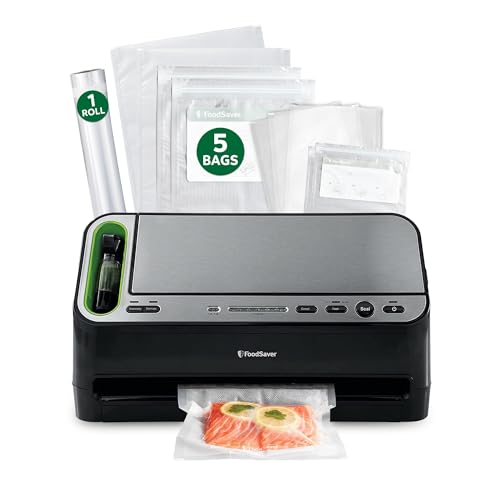
FoodSaver V4400 2-in-1 Vacuum Sealer Machine — Best Automatic FoodSaver
Automatic bag detection and two-in-one versatility — the FoodSaver that removes the steps, for households that seal often and value speed.
Check on Amazon — check price on Amazon.
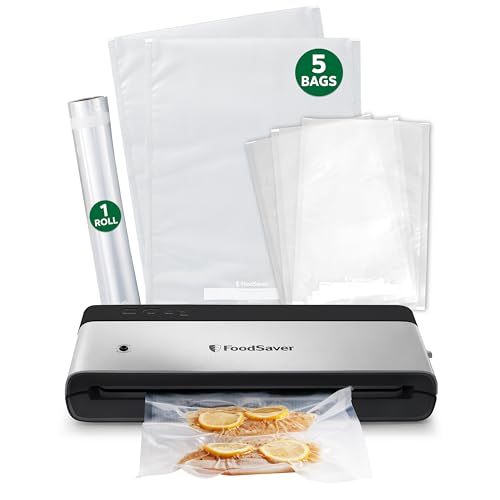
FoodSaver PowerVac Compact VS0150 — Best Compact FoodSaver for Small Kitchens
Vertical storage in stainless and black — the FoodSaver designed to live in a small kitchen without claiming a drawer or a counter stretch.
Check on Amazon — check price on Amazon.
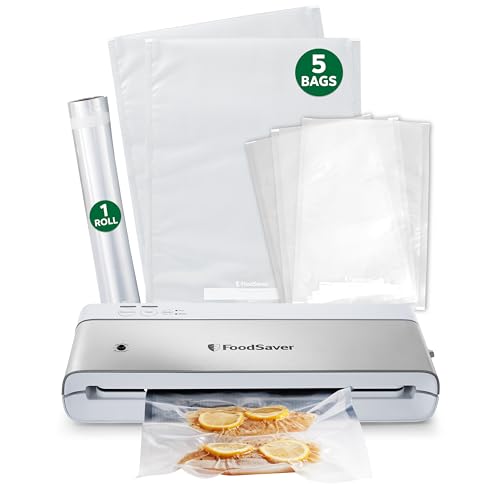
FoodSaver Compact Vacuum Sealer Machine, White — Best Budget FoodSaver
The simplest genuine FoodSaver: compact, white, bundled with bags and a roll — the entry point for households sealing their way into the habit.
Check on Amazon — check price on Amazon.
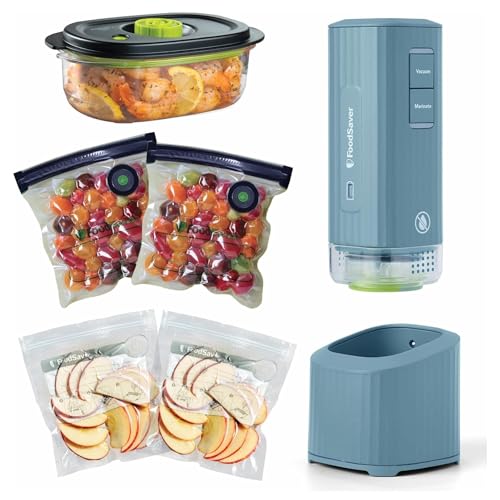
FoodSaver Mini Handheld Vacuum Sealer Machine, Cordless — Best Handheld Format
FoodSaver’s cordless handheld format seals zipper bags and containers at the pantry shelf — the Mini Handheld listing, with marinate setting and charging dock, was confirmed in a follow-up verification pass.
Check on Amazon — check price on Amazon.
FoodSaver Premium Roll-Storage Machines (Large-Capacity Format) — Best for Heavy Batch Days — no link
FoodSaver’s larger premium machines add wider sealing and bigger roll capacity for hunters, gardeners, and whole-animal buyers — covered in prose pending a confirmed listing.
How These Picks Were Chosen
We limited this guide to genuine FoodSaver machines and formats, verified each linked model against Amazon catalog data, and confirmed the features that define each format: roll storage and cutter on the FM2100, automatic bag detection on the V4400, vertical storage on the VS0150. Machines earn badges by format fit — sealing volume, kitchen size, and how much automation the household wants — rather than by a single spec, because vacuum sealers are bought for a routine, not a number.
An honesty note on the remaining unlinked pick: FoodSaver’s larger premium machines are a real part of the line, but we could not confirm one confident catalog match for a specific listing of that class, so it is described without a link or invented specifications. The handheld cordless sealer was confirmed in a follow-up pass — the FoodSaver Mini Handheld listing below — and now carries a link. If you shop the premium format, verify the exact model name on the listing against FoodSaver’s own model naming before ordering — third-party sellers blur FoodSaver model names more than most brands.
The Best FoodSaver Vacuum Sealers and Formats
FoodSaver FM2100 Vacuum Sealer Machine — Best Overall FoodSaver
The FM2100 is the FoodSaver most households should buy, because it contains the whole routine in one machine: a roll stored inside, a cutter that makes custom bags to size, one-touch sealing, dry and moist food settings, and an accessory port with hose for jars and containers. A starter set of bags and a roll is included, so the machine earns its counter space the day it arrives. For sous vide cooks, hunters processing a season, and bulk-buy families, this is the format the brand is famous for.
Strengths
- Built-in roll storage and cutter make custom-size bags in seconds
- Dry and moist modes handle everything from crackers to marinated meat
- Accessory port and hose extend it to jars, canisters, and marinating
Trade-offs
- Counter footprint is the largest of the compact-friendly picks here
- Moist mode still asks for technique — very wet foods need a paper towel trick or pre-freeze
- Roll storage fits FoodSaver roll sizes; oversized third-party rolls may not
| Storage | Built-in roll storage with cutter |
| Modes | Dry and moist food settings |
| Included | Accessory hose, starter bags and roll |
Daily sealing with the FM2100 becomes a rhythm: pull the roll, cut the bag, seal one end, fill, vacuum and seal. The moist setting slows the vacuum at the right moment to avoid sucking juices into the seal — the failure that ruins more home sealing than any other. The accessory hose quietly doubles the machine’s value, resealing coffee, flour, and deli items in their containers instead of transferring them to bags.
If your sealing is weekly or your freezer is a strategy, this is the pick. Occasional sealers in small kitchens can step down to the compacts below without regret; the FM2100’s talents are wasted on a machine used monthly.
Best for: weekly sealers, sous vide, and bulk buyers / Not suited for: tiny kitchens and rare sealers
Check on Amazon — check price on Amazon.
FoodSaver V4400 2-in-1 Vacuum Sealer Machine — Best Automatic FoodSaver
The V4400 is FoodSaver’s automation play: it detects the bag when you insert it and starts the vacuum and seal cycle without a button hunt, and its 2-in-1 design pairs the full countertop sealer with handheld-style accessory sealing in one unit. For households that seal in batches — a market haul divided into a dozen bags — removing two steps per bag is a genuine time saving, and the consistent automatic cycle seals more uniformly than tired hands do at bag nine.
Strengths
- Automatic bag detection starts the cycle on insertion — fastest batch workflow
- 2-in-1 design covers bags, rolls, and accessory sealing in one machine
- Starter kit included so batch sealing can start immediately
Trade-offs
- Automation means more systems than a manual machine — more to learn, more to maintain
- Premium positioning within the FoodSaver line
- Batch speed tempts overfilling bags, which no automation can seal well
| Automation | Automatic bag detection |
| Design | 2-in-1 vacuum sealing system |
| Included | Starter kit |
The V4400’s real gift is consistency under repetition. Manual sealers depend on the user aligning every bag identically; the automatic system removes that variable, and long batch sessions end with uniformly sealed bags. The 2-in-1 versatility means the same machine handles the freezer bags and the pantry containers, keeping one appliance at the center of the kitchen’s preservation routine.
Choose it if sealing is a weekly production rather than an occasional save, and the premium reads as time bought back. Single-bag households will never feel the automation difference and can save with the models below.
Best for: batch sealers and busy family kitchens / Not suited for: occasional single-bag sealers
Check on Amazon — check price on Amazon.
FoodSaver PowerVac Compact VS0150 — Best Compact FoodSaver for Small Kitchens
Most vacuum sealers store horizontally and therefore badly. The VS0150 PowerVac Compact stores vertically, sliding into the slim space beside a fridge or inside a cabinet door zone, and its stainless and black finish looks deliberate when it does live on the counter. The sealing itself is full FoodSaver: strong vacuum for freezer bags and sous vide, in a machine sized for the kitchens that need sealing most — small ones, where freezer space is precious and wasted food hurts.
Strengths
- Vertical storage solves the sealer storage problem in small kitchens
- Compact footprint with full FoodSaver sealing for bags and sous vide
- Stainless and black finish suits a visible counter position
Trade-offs
- Compact format means a smaller roll and bag workflow than the FM2100
- No built-in roll storage theater — it is a focused sealing tool
- Heavy batch sessions run slower than with the automatic V4400
| Storage | Vertical storage design |
| Finish | Stainless steel and black |
| Format | Compact vacuum sealing machine |
Apartment and small-home cooks will recognize the VS0150’s insight: the best sealer is the one that is present. A machine exiled to a high shelf does not save the half onion or the two chicken breasts; a machine that lives within reach does, weekly, for years. Its sealing quality on standard bags is everything the routine requires — the compromises are in storage frills, not in the vacuum.
Pick it when kitchen space, not sealing volume, is your constraint. If you have the counter and the batch habit, the FM2100’s roll storage will serve you better; if space rules, this is your FoodSaver.
Best for: apartments and small kitchens / Not suited for: bulk batch processors
Check on Amazon — check price on Amazon.
FoodSaver Compact Vacuum Sealer Machine, White — Best Budget FoodSaver
Every category needs an honest entry point, and this white Compact is FoodSaver’s: a compact machine bundled with airtight bags and a roll, ready for sous vide and freezer storage without accessories homework. It suits the household that seals a few times a month — leftovers protected properly, cheese kept from drying, the occasional bulk buy divided — and wants the brand’s bag ecosystem and sealing reliability without paying for automation or roll-storage engineering.
Strengths
- Genuine FoodSaver ecosystem at the line’s most accessible tier
- Bags and a roll included — sealing starts out of the box
- Compact size stores easily between uses
Trade-offs
- No automatic detection or built-in cutter refinements of the models above
- Compact format suits light duty, not marathon batch days
- White finish shows kitchen splashes more than stainless
| Format | Compact vacuum sealer |
| Included | Airtight bags and roll |
| Use | Sous vide and airtight food storage |
Judged as an entry point, it succeeds completely: seals are airtight, the machine is unintimidating, and the included consumables teach the routine before any further spending. Many households discover their true sealing volume with a machine like this — some graduate to the FM2100 within a year, and many more find this compact was the right size all along.
Buy it to start, or to keep sealing simple. It is also a sensible second machine for a cabin, RV, or a college graduate’s first kitchen, where the full-size formats would be furniture without a job.
Best for: new sealers and light-duty households / Not suited for: weekly batch processors
Check on Amazon — check price on Amazon.
FoodSaver Mini Handheld Vacuum Sealer Machine, Cordless — Best Handheld Format
The handheld format is FoodSaver’s answer to a different problem: not freezer production, but the daily reseal — the opened cheese, the coffee, the deli meat, the half bag of salad. A small cordless handheld unit works with compatible zipper vacuum bags and containers, pulling air out at the shelf or fridge door in seconds. It is the format most likely to be used daily precisely because it asks for no counter, no setup, and no commitment.
Strengths
- Lives in a drawer and works at the fridge door — zero setup friction
- Ideal for deli, cheese, coffee, and pantry resealing in zipper bags
- The format most households actually use every day
Trade-offs
- Not a freezer-production tool — no roll bags or heavy batch sealing
- Depends on compatible zipper bags and containers, a separate consumable family
- Handheld vacuum strength suits fresh storage, not long freezer archives
Judge the handheld on its own job: short-term freshness. Foods you reopen repeatedly live longer and taste better with the air removed each time, and the handheld’s convenience is what makes that habit survive contact with real life. It complements rather than replaces a countertop machine — the freezer still wants sealed roll bags — and households that own both tend to use the handheld more often and the countertop machine more heavily.
The linked listing is FoodSaver’s own Mini Handheld machine — cordless, with a marinate setting and charging dock, confirmed through the retailer’s catalogue data in a follow-up pass. Shop it the FoodSaver way: confirm which zipper bags and containers it pairs with, and buy the consumables in the same order so the format works on day one.
Best for: daily resealing of opened fresh foods / Not suited for: freezer batch sealing or sous vide production
Check on Amazon — check price on Amazon.
FoodSaver Premium Roll-Storage Machines (Large-Capacity Format) — Best for Heavy Batch Days — no link
At the top of the FoodSaver idea sits the large premium format: wider sealing bars for gallon-class bags, generous roll capacity, and controls built for the days when a garden harvest, a wholesale club run, or a hunting season lands on the kitchen counter all at once. These machines are production tools. Their value appears on the biggest sealing days of your year, and their cost — in money and counter — is justified only if those days genuinely come.
Strengths
- Wide sealing handles gallon-class bags and large cuts
- Built for marathon sessions without the compact machines’ compromises
- The format that turns a harvest or a hunt into a stocked freezer in one day
Trade-offs
- Counter and budget commitment far beyond household sealing needs
- Oversized for the weekly few-bags routine most homes actually have
- Exact model names vary — listings must be checked carefully before ordering
Be honest about your biggest day before buying this format. If it involves dozens of bags, large cuts, or a garden’s worth of produce, the premium format’s width and stamina are real advantages over the FM2100. If your biggest day is a dozen family bags, the FM2100 already covers it, and the premium machine becomes expensive furniture for eleven months of the year.
As with the handheld, we describe this format without a link because no single listing could be confirmed at review time. When you shop it, match the full model name and sealing width on the listing to your bag sizes, and confirm roll compatibility — premium width is only useful if your consumables match it.
Best for: hunters, gardeners, and whole-animal buyers / Not suited for: ordinary weekly household sealing
Comparison Table
| Pick | Badge | Key spec | Best for | Shop |
|---|---|---|---|---|
| FoodSaver FM2100 Vacuum Sealer Machine | Best Overall FoodSaver | Roll storage + cutter, dry/moist | weekly sealers, sous vide, and bulk buyers | Check on Amazon |
| FoodSaver V4400 2-in-1 Vacuum Sealer Machine | Best Automatic FoodSaver | Automatic bag detection, 2-in-1 | batch sealers and busy family kitchens | Check on Amazon |
| FoodSaver PowerVac Compact VS0150 | Best Compact FoodSaver for Small Kitchens | Vertical-storage compact | apartments and small kitchens | Check on Amazon |
| FoodSaver Compact Vacuum Sealer Machine, White | Best Budget FoodSaver | Compact, bags + roll included | new sealers and light-duty households | Check on Amazon |
| FoodSaver Mini Handheld Vacuum Sealer Machine, Cordless | Best Handheld Format | Cordless handheld, zipper-bag format, marinate setting, charging dock | daily resealing of opened fresh foods | Check on Amazon |
| FoodSaver Premium Roll-Storage Machines (Large-Capacity Format) | Best for Heavy Batch Days — no link | Wide-seal premium format | hunters, gardeners, and whole-animal buyers | Unlinked pick |
Within the FoodSaver line, the choice is format, not quality: FM2100 for the complete weekly routine, V4400 for automated batch speed, VS0150 for small-kitchen storage, the white Compact for a simple start, the handheld for daily resealing, and the premium wide format for production days.
How to Choose the Best FoodSaver Vacuum Sealers for Your Routine
Count your bags honestly. A household sealing fewer than ten bags a month belongs with the compacts; the machine will be present, stored well, and sufficient. Ten to forty bags a month is FM2100 territory, where roll storage and the cutter pay for themselves in convenience and in cheaper roll material versus precut bags. Batch producers — the market-haul dividers — should weigh the V4400’s automation, because steps saved per bag multiply across a session.
Then match the format to the food. Sous vide cooks need reliable moist-mode sealing and bags rated for the bath; the FM2100 and V4400 are the natural homes. Freezer archivists should care about seal width and consistency over months of storage. Pantry resealers should look sideways at the handheld format instead of forcing a countertop machine into a job it does slowly. The right FoodSaver is the one whose format matches the food you actually preserve.
Finally, price the ecosystem, not just the machine. Rolls are cheaper per bag than precut bags; genuine FoodSaver bags are the safe default for seal reliability; third-party rolls vary in texture and seal behavior. A machine bought cheaply that seals unreliably is the most expensive outcome of all, because the cost is paid in spoiled food.
Bags, Rolls, and Sealing Technique: Where Results Are Really Decided
Leave headroom: three to four inches between food and the seal line is the difference between a clean seal and a contaminated one. Keep the seal zone dry — a folded paper towel placed just inside the bag catches migrating juices on moist foods, and a brief partial freeze firms up very wet items like marinated meat and berries so the vacuum does not pull liquid into the seal. Flatten bags where you can; flat bags freeze faster, stack better, and thaw more evenly.
Double-seal anything destined for long storage or the sous vide bath, and inspect every seal before the bag goes away: a good seal is uniformly clear and unbroken across its width. Label with date and contents in marker on the bag’s label area — vacuum bags all look alike in month three, and the freezer’s mysteries are always self-inflicted. These habits, more than any machine upgrade, decide whether vacuum sealing delivers its promise in your kitchen.
Sous Vide and FoodSaver: The Pairing That Sells the Machine
Vacuum sealing and sous vide are natural partners: the sealed bag cooks evenly in the bath, stores safely before and after, and lets you cook from frozen with added time rather than a thaw day. Use the moist mode or a gentle manual pulse for marinated items, double-seal for long cooks, and keep bag material rated for cooking temperatures. The FM2100’s accessory hose adds the pre-cook marinating trick — vacuum containers pull marinade into food in minutes rather than hours.
A safety rhythm worth adopting: chill cooked food promptly, keep sealed raw proteins refrigerated or frozen without exception, and treat the seal as preservation, not sterilization. Vacuum sealing extends quality and freezer life dramatically; it does not make perishable food shelf-stable, and no machine feature changes that.
FoodSaver Ownership Costs: Machines, Rolls, and the Real Ledger
Vacuum sealing’s economics confuse buyers because the machine is the visible price and the bags are the real one. Rolls are the cheapest way to seal — you cut exactly the bag each food needs — which is why the FM2100’s built-in roll storage is an economic feature, not a convenience frill: it keeps the cheapest consumable at the point of use. Precut bags cost more per seal and save the cutting step; handheld zipper bags are their own economy, priced for daily fresh storage rather than freezer archives.
Against those costs, set the savings honestly. Vacuum sealing’s return is food not thrown away: the bulk meat divided and frozen without freezer burn, the cheese that survives the month, the garden produce that reaches February. Households that shop bulk and cook in batches recover a machine’s cost in avoided waste within a season or two; households sealing a few bags a month recover it slowly and should buy the compact tier, where the machine’s share of the ledger is smallest. The category rewards an honest census of your own trash can more than any feature comparison.
One more ledger line: time. Batch sealing a wholesale run takes an hour the first time and half that once the rhythm — cut, seal, fill, seal, label, freeze flat — becomes muscle memory. The automatic V4400 exists for households who feel that hour; the compacts exist for households who never face it.
Freezer Strategy With a FoodSaver: From Bags to a System
A vacuum sealer becomes a freezer system when three habits join it. First, freeze flat: bags frozen on a tray become files that stack and sort, thaw quickly in water, and use freezer geometry like books on a shelf rather than boulders in a pit. Second, label with date, contents, and portion — the label is the system’s memory, and month-three you will not remember what month-one you knew. Third, rotate with intent: a simple first-in, first-out order, newest at the back, turns the freezer from an archive of mysteries into a pantry you can plan meals from.
Portioning is where the system pays its daily dividend. Seal proteins in meal-size units for your household — two chicken breasts, a pound of ground meat flattened thin — and weeknight cooking becomes a selection rather than a project. Soups and sauces frozen flat in bags thaw in minutes under water and store in the gaps between the files. The sealer made the bags; the habits make the system; the system is what actually saves the money and the weeknight stress.
A final strategic note: keep a small freezer inventory, even a notebook list on the door. Vacuum bags are opaque to memory if not to light, and the household that knows what it owns shops better, wastes less, and uses the sealer more — the virtuous circle the whole category promises, delivered by a pencil.
Troubleshooting FoodSaver Seals: A Field Guide to Failures
Nearly every sealing failure has one of four causes, and all four are diagnosable at the counter. A bag that loses vacuum slowly was sealed across a wrinkle, a crumb, or a film of moisture — inspect the seal line against the light; a good seal is uniformly translucent, a bad one shows channels and specks. A bag that never draws down has its end misplaced in the vacuum channel or a hole from a bone or a sharp frozen edge — shield sharp points with a folded paper towel inside the bag. A machine that will not start a cycle usually wants its drip tray or gasket cleaned and reseated; a machine that seals weakly on moist foods wants the moist setting and a drier seal zone.
Gaskets deserve their own sentence: the foam seals around the vacuum channel compress and tire over years, and a machine that gradually weakens is usually asking for a gasket check and a thorough cleaning of the seal area, not a replacement. Keep the sealing bar clean, store the machine unlatched so the gaskets rest uncompressed, and the FoodSaver formats in this guide will hold their vacuum for years of weekly service.
When troubleshooting fails, suspect the consumables before the machine: a new roll of bags from a different maker is the most common recent change in a kitchen where seals suddenly fail. Return to a known-good bag for one test seal before condemning the machine — the answer is in that test more often than owners expect.
Marinating and Pantry Sealing: The FoodSaver Beyond the Freezer
The accessory hose on machines like the FM2100 opens the FoodSaver’s second career: vacuum marinating and pantry preservation. Vacuum pulls marinade into the surface of meat and vegetables in minutes rather than hours, because removing the air removes the barrier — a weeknight trick that changes what a Tuesday chicken tastes like. Coffee beans, flour, sugar, and dried goods sealed in canisters with the hose resist the staling and pantry pests that half-open bags invite, and deli items returned to a vacuum container outlast their original packaging by days that add up across a year of lunches.
Cheese deserves its own technique: seal hard cheeses in bags with room to reseal, cutting the bag open along the seal and resealing after each use, shortening the bag across its life. Soft cheeses prefer containers to bags, since vacuum pressure deforms them. Crackers and chips take a gentle pulse rather than a full vacuum — the goal is air removal without demolition — and delicate berries for the freezer do best frozen on a tray first, then sealed once firm.
These uses share a principle: the sealer’s value scales with the number of problems it touches. A machine that only freezes is a seasonal tool; a machine that marinates on Tuesday, reseals coffee on Wednesday, and protects the pantry all year is a kitchen system, and it earns its counter or cupboard space on a completely different ledger.
Sealing for Sous Vide: Bag Discipline From Prep to Bath
Sous vide punishes sloppy sealing more honestly than freezing does, because a failed seal in the bath means water in the food and a dinner re-planned. The discipline is simple and total: dry seal zones, always; double seals on every bag, no exceptions for long cooks; headroom generous enough that the vacuum never pulls marinade or juices toward the seal line; and a gentle approach — moist mode or a watched manual cycle — for anything marinated. Freeze marinated proteins flat in their bags before long baths when the schedule allows, and the cooking day becomes a selection from the freezer rather than a preparation.
Label discipline matters doubly here, because a sealed bag hides its contents and its cook temperature alike: protein, date, and target temperature on every bag, in marker, before it leaves the counter. Chill promptly after cooking, ice-bath what will be stored, and treat the sealed bag as protection rather than preservation magic — refrigeration and freezing rules apply to sealed food exactly as to unsealed, only with better quality at the end.
Get these habits right and the FoodSaver-and-bath pairing delivers the result that sells the category: proteins cooked to a precise doneness edge to edge, seasoned in the bag, portioned for real life, and waiting in the freezer at a quality no other home method matches. It is the strongest single argument in this guide for the FM2100 class of machine, and it is earned entirely by technique the machine makes possible rather than automatic.
FoodSaver vs Chamber Sealers and Other Preservation Methods
The countertop FoodSaver’s honest rivals deserve their paragraph. Chamber vacuum sealers — covered in our sibling guide — seal liquids effortlessly and bags at a fraction of the per-bag cost, and they own the high-volume and liquid-heavy end of home preservation; their taxes are price, size, and a permanent counter claim. At the other end, freezer paper, quality wrap, and good containers preserve adequately for short storage at almost no equipment cost, and for food eaten within weeks they remain rational. The FoodSaver’s empire is the wide middle: months-long freezer quality, sous vide readiness, and pantry versatility, in a machine that stores in a cupboard and a price class most kitchens can justify.
Dehydrating and freezing are complements rather than rivals — dried goods vacuum-sealed afterward keep their quality far longer than either method alone achieves — and canning preserves a different category of food by different rules entirely. The household that understands its own preservation mix buys the FoodSaver for what it is: the freezer’s best friend and the sous vide bath’s gatekeeper, not a universal answer to every harvest.
Teaching the Household: Making the Sealer a Shared System
Vacuum sealers fail socially before they fail mechanically: one household member becomes the sealing department, resents it by the third bulk run, and the machine retreats to the cupboard. The fix is a shared, visible system — the machine stored accessibly, bags and a marker living with it, a one-line instruction card taped inside the cupboard door covering modes, headroom, and the dry-seal rule. Teenagers master the routine in one supervised session; partners convert when they see their own leftovers survive the week. A sealer everyone can run is a sealer that runs.
Labeling is the shared habit that pays longest, and it deserves its own household law: nothing enters the freezer unsealed, unlabeled, or undated — no exceptions for ‘I will remember.’ Nobody remembers. The marker lives with the machine, the law lives on the freezer door, and the FoodSaver system this guide has described becomes, in the end, a household agreement with a motor attached.
FoodSaver Storage and Care: Keeping the Vacuum Strong for Years
Store the machine unlatched. The foam gaskets around the vacuum channel seal by compression, and a latched lid spends its storage life crushing them flat; an unlatched machine’s gaskets recover between sessions and hold their vacuum for years longer. Keep the drip tray washed and fully dry, the sealing bar wiped clean of the protein films that bake onto it during moist sessions, and the accessory hose coiled loosely rather than kinked — a kinked hose is a slow leak with a plastic memory. A machine stored this way, in a cupboard it can be lifted from without a struggle, is a machine that gets used, which remains the first rule of the whole category.
Annually, inspect the gaskets for cracks and flat spots, run a test seal on a known-good bag, and descale nothing — there is nothing to descale — but do check the cutter blade on roll-storage models for the dullness that turns one clean cut into three ragged ones. These ten minutes a year are the entire service schedule of a well-kept FoodSaver, and they are why the format’s owners measure its life in years of weekly service rather than in warranty periods.
How to Vacuum Seal Food Properly with a FoodSaver
Start with the bag: cut roll material four inches longer than the food, seal one end, and check that first seal before filling. Fill without overfilling, keeping food flat and the top interior of the bag clean and dry. Place the open end flat and centered in the vacuum channel — wrinkles across the seal line are the leading cause of slow leaks — then run the vacuum and seal cycle on the right mode: dry for pantry and firm foods, moist for anything with surface liquid.
Inspect the seal, double-seal long-storage items, label the bag, and freeze flat on a tray before stacking. For containers and jars, connect the accessory hose, keep lids and rims clean, and release the vacuum fully before opening. Wipe the machine’s drip tray and seal area after moist sessions; a clean sealing bar is a reliable sealing bar, and two minutes of care prevents the mystery failures that make owners distrust a good machine.
Common Buying Mistakes
The recurring FoodSaver mistakes are technique, not machinery. Overfilling bags so food crowds the seal. Sealing wet foods on the dry setting and sucking liquid through the seal. Skipping the label and playing freezer roulette in month three. Storing sealed raw food at room temperature under the illusion that vacuum equals preservation. And buying the largest machine for a small routine, then sealing less because the machine lives in a cupboard. Match format to routine, master the dry seal zone, and the system works for years.
Final Recommendation
Short on time? Start your comparison with FoodSaver FM2100 Vacuum Sealer Machine, FoodSaver V4400 2-in-1 Vacuum Sealer Machine, FoodSaver PowerVac Compact VS0150 — then check price on Amazon for the one that matches your needs.
Most households should buy the FoodSaver FM2100: it is the complete routine in one machine. Batch producers should step up to the FoodSaver V4400 2-in-1 for automated speed, small kitchens to the FoodSaver PowerVac Compact VS0150 for vertical storage, and new or light sealers to the FoodSaver Compact for a simple, bundled start. Add the handheld format when daily resealing becomes your habit, and reserve the premium wide format for genuine production days.
Round out the preservation shelf with Best Vacuum Sealers for the wider category, compare chamber machines in Best Chamber Vacuum Sealers, and pair the system with storage from Best Food Storage Containers. Freezer cooks may also like Best Freezers for the archive itself.
Frequently Asked Questions
Which FoodSaver is best for most households?
The FM2100 format — roll storage, a cutter, dry and moist modes, and an accessory hose cover the full weekly routine in one machine. It is the model this guide badges Best Overall for exactly that completeness.
Are FoodSaver bags interchangeable between machines?
Countertop FoodSaver machines use the same textured bag and roll material across the line, which is a core reason to stay within the brand. Handheld formats use their own zipper bag system, so confirm which consumable family a format uses before stocking up.
Why did my vacuum seal fail?
Almost always a wet or wrinkled seal zone: liquid drawn into the seal, food residue on the bag interior, or a crease across the seal line. Dry the zone, use the moist setting, leave proper headroom, and double-seal important bags.
Can I vacuum seal liquids and soups?
Yes, with technique: pre-freeze liquids in containers or flat trays until firm, then seal the frozen block. Sealing free liquid directly pulls it into the machine and ruins the seal.
How long does vacuum sealed food last in the freezer?
Substantially longer than wrapped food — commonly two to three times the quality window — because the seal prevents freezer burn and oxidation. It extends quality, not safety: keep perishables frozen and use sensible timelines.
Do I need genuine FoodSaver bags?
They are the reliable default for seal consistency. Quality third-party rolls work for many owners, but texture and channel pattern affect vacuum draw; if seals start failing after a consumable change, the consumables are the first suspect.
Can I reseal a FoodSaver bag?
Yes — cut just below the old seal to open, and reseal the shortened bag when you are done. Bags shrink with each cycle, so start with extra length on items you will open repeatedly, like cheese and coffee, and expect a bag to serve several reseals before it retires.
Why does my FoodSaver pull liquid into the seal area?
The food is too wet for the setting, or the bag is overfilled. Use the moist mode, leave full headroom, place a folded paper towel just inside the bag to intercept migrating juices, and pre-freeze very wet items until firm — the four fixes together solve nearly every case.
How should I seal ground meat for the freezer?
Portion it meal-size, flatten it in the bag before sealing — a flat, even slab freezes fast, thaws in minutes in cool water, and files neatly in the freezer. Score a crosshatch lightly on the frozen slab with a dull edge if you often need to break off half a portion.
Can a FoodSaver seal mason jars?
Yes, with the accessory hose and the appropriate jar attachment: the hose connects, the machine draws the air, and the lid seals as the vacuum releases. It suits dry pantry goods and refrigerator pickles — it is not a substitute for proper canning of shelf-stable foods.

