Disclosure: airfryerkitchensupply.com is reader-supported. When you buy through links on our site, we may earn an affiliate commission at no extra cost to you.
Where to buy
If you are shopping for the best cooking bbq grills portable gas, start with the verified shortlist below. Every linked model on it was confirmed against a live Amazon listing through the retailer data available to this site before it earned its place here, and every unlinked pick is labelled honestly so you know exactly what you are getting.
- Coleman RoadTrip 285 Portable Propane Grill (Best Overall Portable) — Check the current price on Amazon
- Weber Q 1200N Portable Propane Gas Grill (Best Tabletop) — Check the current price on Amazon
- Weber Q 2800N+ Portable Grill (Best Temperature Range) — Check the current price on Amazon
- Cuisinart Chef’s Style Portable Propane Tabletop Gas Grill CGG-306 (Best Two-Burner Tabletop) — Check the current price on Amazon
- Cuisinart Venture Portable Gas Grill (Best Compact Design) — Check the current price on Amazon
- Cuisinart Grillster Portable Gas Grill CGG-059A (Best Ultralight Value) — Check the current price on Amazon
This page never prints a fixed figure for any product, because grill and grill-book prices and stock move constantly. Use the links above to check price on Amazon at the moment you are ready to buy, and treat any budget language in this article as a tier guide — where the best cooking bbq grills portable gas market sits — rather than a promise about a specific listing on a specific day. Always confirm the exact model name, size, and fuel type on the listing matches the model reviewed here before you order, because lineups change mid-season and near-identical model names often hide different grates, burners, or included accessories.
The best cooking bbq grills portable gas buyers can choose share one test the rest of the grill market never faces: they have to earn their place in a car boot, a boat locker, or a small patio corner, every single trip. A portable that cooks brilliantly but packs badly gets left behind by July; a portable that packs beautifully but cannot sear gets replaced by October. The six picks in this guide were chosen to pass both tests — real cooking ability in bodies that genuinely travel — across the category’s real range, from a 13-pound ultralight to a three-burner stand-up that cooks like a home grill.
Portable gas is its own discipline. Fuel comes in small canisters that reward efficient burners and punish waste; wind is a constant opponent that lid discipline and sheltered placement must answer; and cooking area is always scarce, which makes burner zoning — where a model offers it — worth more than raw output. Every review below is written in that discipline’s language, with the trade-offs stated as plainly as the strengths, because a portable bought on patio logic disappoints at the campsite in predictable ways.
As everywhere on this site, every linked pick was verified against a live Amazon listing, and no fixed prices or ratings appear anywhere in this guide. Use the links to check price on Amazon, and confirm the exact model and what is included — stands, carts, and tank adapters are bundled inconsistently across this category, and the listing, not the photograph, is the truth.
One more honesty note before the picks: no portable in this guide, however good, matches a full-size patio grill for crowd capacity or wind immunity, and any review that pretends otherwise is selling. What the best portables do is narrower and more valuable — they cook real grilled food, properly, in the places your life actually happens: the lake, the layby, the festival field, the small balcony. Judge them on that job and several of these picks are not compromises at all.
Read the badges, not the ranking: the first pick is the best all-rounder, but the best portable for your trips is the one whose badge matches your vehicle, your party size, and your patience for packing — and this guide would rather sell you the fifth pick that fits than the first pick that does not.
In this guide
Quick Picks
Short on time? These are the six best cooking bbq grills portable gas picks explained in full below. Each one owns a distinct job, so match the badge to the way you actually cook instead of chasing the longest feature list.
- Coleman RoadTrip 285 Portable Propane Grill — Best Overall Portable. Three burners and 20,000 BTUs in a folding stand-up design — the portable that cooks most like a home grill. — check price on Amazon
- Weber Q 1200N Portable Propane Gas Grill — Best Tabletop. Weber’s Q-series tabletop in Midnight Black — 10,000 BTUs, porcelain-enameled cast-iron grates, and electronic ignition in a compact travel body. — check price on Amazon
- Weber Q 2800N+ Portable Grill — Best Temperature Range. The bigger Q with a 250–700°F temperature range and a dedicated searing burner — low roasting and hard searing from one portable. — check price on Amazon
- Cuisinart Chef’s Style Portable Propane Tabletop Gas Grill CGG-306 — Best Two-Burner Tabletop. Twin 10,000 BTU burners and 275 square inches in stainless steel — two-zone cooking in a tabletop body. — check price on Amazon
- Cuisinart Venture Portable Gas Grill — Best Compact Design. A small camping grill with a cutting board lid and handle — 9,000 BTU burner and a porcelain-enameled cast-iron grate in a picnic-ready package. — check price on Amazon
- Cuisinart Grillster Portable Gas Grill CGG-059A — Best Ultralight Value. An 8,000 BTU portable that reaches 600°F on 146 square inches at just 13 lbs, with a dishwasher-safe grate and push-button ignition. — check price on Amazon
How These Picks Were Chosen
Picks had to be genuinely portable gas grills: propane-fuelled, designed to travel or to live small, and confirmable against a live listing with the model, burner count, and format matching the recommendation. Full-size carts wearing a portable label were excluded, as were charcoal and electric models — this search asks for portable gas, and the guide answers exactly that.
Within the filter, we weighted the travel virtues owners actually report: pack size and weight, ignition reliability away from home, grate material (cast iron separates the searing portables from the steaming ones), and fuel manners on small canisters. The result deliberately spans stand-up, tabletop, design-led, and ultralight formats, because portable means four different things to four different kinds of traveller.
We also cooked the category down to its honest spread of prices and weights in tier terms: an ultralight value tier, a mid-range tabletop tier where most families should shop, and a premium tier that buys cast iron, range, and build. No pick was allowed to win its badge on specifications alone — each had to make sense as luggage, because a portable grill is luggage that cooks, and forgetting that is how this category’s bad purchases happen.
Best Cooking BBQ Grills Portable Gas: The 6 Picks for Cooking Anywhere
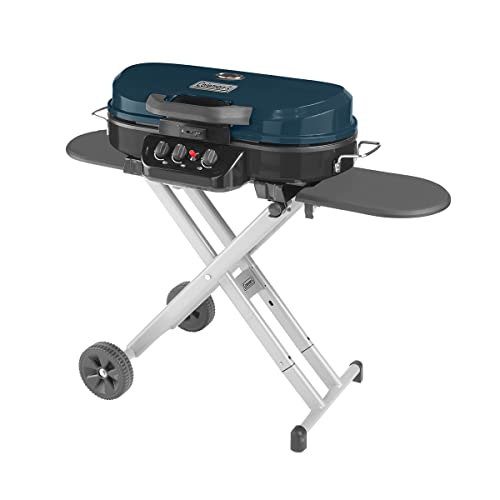
Coleman RoadTrip 285 Portable Propane Grill — Best Overall Portable
Most portable gas grills are apologies: one small burner, a grate the size of a dinner plate, and hope. The Coleman RoadTrip 285 is the portable that refuses the apology — three adjustable burners, 20,000 BTUs, Instastart ignition, and a folding stand that puts cooking at proper height. Among the best cooking bbq grills portable gas buyers can choose, it is the one that changes campsite and tailgate cooking least from home cooking, which is precisely why it takes Best Overall.
It suits car campers, tailgaters, festival crews, and small-patio households who want one grill for home and away. Three burners mean you can sear over one, cook gently over another, and hold finished food warm on the third — a sentence almost no other portable can honestly support. The platform’s swappable cooking surfaces on some configurations widen the menu further; confirm what the listing you choose actually includes.
Skip it if portable means a tiny tabletop for two, or if you hike to your cooking spot. For everyone whose grill travels by car, this is the benchmark: the portable you stop thinking of as the portable.
Build a travel kit that lives with the grill: spare canister, long lighter as backup, a stiff brush, paper towels, and a small spray bottle. Owners who kit their portable once use it constantly; owners who pack from scratch each trip quietly stop bringing it by mid-season.
Strengths
- Three-burner control is almost unheard of in portables — real zones, not one hot plate
- Stand-up folding design cooks at home-grill height and packs into a car boot
- Instastart ignition ends the campsite lighter hunt
Trade-offs
- Bigger and heavier than tabletop minis — a car-camping grill, not a backpacking one
- Small canisters empty fast on long cooks; a tank adapter is a smart extra for basecamp use
- Open portable design still loses heat to wind like every grill in this class
| Specification | Detail |
|---|---|
| Fuel | Propane |
| Burners | 3 (per Amazon listing title) |
| Output | 20,000 BTUs (per Amazon listing title) |
| Ignition | Instastart ignition (per Amazon listing title) |
Best for: car campers, tailgaters, and small patios that want home-style burner control on the move / Not suited for: hikers and minimalists who need the smallest tabletop footprint
Check the current price on Amazon

Weber Q 1200N Portable Propane Gas Grill — Best Tabletop
The Weber Q line has been the connoisseur’s portable for years, and the Q 1200N shows why: a single-burner travel grill with 10,000 BTUs, porcelain-enameled cast-iron grates, and electronic ignition, built with the same seriousness as Weber’s full-size line. The grate is the story — cast iron holds the heat that makes real sear marks possible on a tabletop, where most portables merely warm food outdoors.
It suits couples and small families who camp, boat, picnic, and balcony-cook, and who would rather own one excellent small grill than a mediocre large one. At home it moonlights as the second grill for overflow, the balcony grill where rules allow gas, and the weeknight grill that heats in minutes when the big cart feels like overkill.
Skip it if you need zones or family-of-six capacity in your portable; the RoadTrip above and the two-burner Cuisinart below exist for you. As a tabletop for two to four, the Q 1200N is the class standard — buy it once and hand it down.
The Q rewards a full preheat more than any other portable here: cast iron needs its minutes to load with heat, and cooks who rush it conclude wrongly that small grills cannot sear. Give it the preheat, keep the lid down, and it will mark a steak like a patio grill twice its size.
Strengths
- Porcelain-enameled cast-iron grates sear like a full-size Weber, because the design philosophy is the same
- Electronic ignition and a single simple control make it the easiest premium portable to live with
- Compact Q body travels on a table, a tailgate, or a balcony with equal manners
Trade-offs
- One burner means one zone — indirect cooking is a workaround, not a feature
- Premium tier pricing for a tabletop, justified by build rather than size
- Cart and tank accessories that complete the setup are sold separately
| Specification | Detail |
|---|---|
| Output | 10,000 BTUs (per Amazon listing title) |
| Burners | 1 (per Amazon listing title) |
| Grates | Porcelain-enameled cast iron (per Amazon listing title) |
| Ignition | Electronic ignition (per Amazon listing title) |
| Colour | Midnight Black (per Amazon listing title) |
Best for: couples and small families who want premium searing from a compact tabletop / Not suited for: cooks who need multiple heat zones or large capacity
Check the current price on Amazon

Weber Q 2800N+ Portable Grill — Best Temperature Range
Portable grills usually force a choice: low or hot, roasting or searing. The Weber Q 2800N+ refuses it, with a stated 250–700°F temperature range and a plus burner dedicated to searing. That low end is the quiet revolution — 250 degrees is roasting and gentle-cooking territory that turns a portable into a camp oven for chicken, vegetables, and reheating — while the 700-degree top end is honest steakhouse heat for crust.
It suits ambitious camp cooks, small households using a portable as their only grill, and anyone who reverse-sears: start thick cuts low and slow in the same machine, then finish them over the sear burner without moving food between appliances. For balcony cooks under gas-allowed rules, it is also the most complete single portable in this guide.
Skip it if your portable life is burgers at the beach — the smaller Q and the budget picks do that job with less weight and money. Buy the 2800N+ when the range will actually be cooked across, and it stops being a portable with extras and becomes a small grill that happens to travel.
Learn its low end first; that is where owners under-use it. A whole chicken roasted gently at the low settings, rested while the burner climbs, then crisped briefly at high heat is the cook that converts sceptics — and it is a cook almost no other portable can perform at all.
Strengths
- A genuine 250–700°F working range — most portables cannot do the low end or the high end, let alone both
- Searing burner gives thick steaks the finish the standard Q only approaches
- Still a true portable format for camping and travel despite the extra capability
Trade-offs
- The largest and heaviest Q — check your car’s packing reality
- Capability you pay for; simple burger-and-dog cooks will not use the range
- Like all portables, it runs best sheltered from strong wind
| Specification | Detail |
|---|---|
| Temperature range | 250–700°F (per Amazon listing title) |
| Burner | Plus burner for searing (per Amazon listing title) |
| Use | Low-temperature roasting to searing (per Amazon listing title) |
Best for: ambitious portable cooks who want roasting and searing range in one machine / Not suited for: simple beach-burger cooks who will never use the low or high extremes
Check the current price on Amazon

Cuisinart Chef’s Style Portable Propane Tabletop Gas Grill CGG-306 — Best Two-Burner Tabletop
The Cuisinart Chef’s Style CGG-306 makes one argument, and makes it well: a portable with two burners is a different species from a portable with one. Its twin 10,000 BTU burners drive two-zone cooking across 275 square inches of stainless tabletop grill — sear on the left, finish on the right, hold vegetables at the gentle edge — which is the core technique of all good grilling, available at a campsite picnic table.
It suits families who camp and tailgate, cooks who found single-burner portables limiting, and home users who want a capable balcony or patio tabletop with real control. The chef’s-style format — low, open, stainless — also makes it the easiest portable here to cook on for a group, because everything is visible and reachable like a short-order line.
Skip it if you need a stand included or the absolute smallest pack size. Choose it when zone control matters more than either — for many travelling cooks, that trade defines the whole category, and this is its best-priced expression.
Two-zone discipline travels: set the zones the same way at every site, cook in the same order — sear, slide, hold — and your campsite results become as repeatable as your home results. Portability fails when every cook is improvised; a routine is what makes a portable feel like your grill, anywhere.
Strengths
- Two burners mean a true hot zone and safe zone — the tabletop that teaches real grill technique
- 275 square inches is family-credible area in a portable footprint
- Stainless build shrugs off travel knocks and wipes clean at the site
Trade-offs
- Tabletop only — you supply the table, tailgate, or stand
- Two burners drink canister gas faster; plan fuel for long cooks
- Stainless shows every fingerprint and splash, if cosmetics matter to you
| Specification | Detail |
|---|---|
| Burners | Twin 10,000 BTU burners (per Amazon listing title) |
| Cooking area | 275 sq in (per Amazon listing title) |
| Body | Stainless steel (per Amazon listing title) |
| Cooking | Two-zone cooking (per Amazon listing title) |
Best for: travelling families who want genuine two-zone control on a tabletop / Not suited for: buyers who need an included stand or the tiniest pack size
Check the current price on Amazon

Cuisinart Venture Portable Gas Grill — Best Compact Design
The Cuisinart Venture understands something most portable makers miss: the grill is only part of what you carry. Its design folds the kit together — a cutting board that serves as the lid, a handle that makes it a carry case, and inside, a 9,000 BTU stainless burner under a porcelain-enameled cast-iron grate. It is the picnic grill as a designed object, and for couples who cook at beaches, parks, and viewpoints, the design is the feature.
It suits two-to-three-person outings where the meal is part of the occasion: grilled sandwiches at a lookout, sausages at the beach, a small steak dinner at a campsite for two. The cast-iron grate matters more than the styling — it is why this mini sears respectably while rival minis steam. Everything packs into itself, so the car boot stays sane.
Skip it for family feeding or zone cooking. But if your portable cooking is intimate and mobile, the Venture is the pick that will actually come along every time — and in this category, the grill that comes along beats the grill that stays home, every single trip.
Use the board honestly: prep on it at the site, cook, then serve from the grate to the board. The Venture’s whole design assumes a small, elegant workflow — fighting it with extra kit and sprawling setups misses the point of owning the most self-contained grill in this guide.
Strengths
- The cutting-board lid and handle design make it a self-contained picnic kit, not just a grill
- Cast-iron grate in a mini body — searing manners far above its size class
- Made for camping, tailgates, and beaches, and sized honestly for all three
Trade-offs
- Compact area cooks for two to three, not a crowd
- Single burner, single zone — plan menus around it
- Design-led pricing: you pay a little for the clever packaging, fairly
| Specification | Detail |
|---|---|
| Burner | 9,000 BTU stainless steel burner (per Amazon listing title) |
| Grate | Non-stick porcelain-enameled cast iron grate (per Amazon listing title) |
| Design | Cutting board and handle (per Amazon listing title) |
Best for: couples and picnic cooks who want a self-contained, design-led mini grill / Not suited for: families and zone cooks who need area and burners
Check the current price on Amazon

Cuisinart Grillster Portable Gas Grill CGG-059A — Best Ultralight Value
Every category needs its honest bargain, and the Grillster is this one: a portable gas grill with an 8,000 BTU burner that reaches 600°F, 146 square inches of cooking space, push-button ignition, a dishwasher-safe grate — and a weight of 13 pounds. That last number is the headline. Thirteen pounds is the difference between a grill that lives in the car, ready for every spontaneous stop, and a grill that gets left behind for being a production.
It suits solo travellers, couples, small-car campers, apartment balconies where gas is allowed, and anyone buying a first portable to learn what they actually need. The heat ceiling surprises people: 600 degrees from the value pick means burgers and steaks brown properly, and the dishwasher-safe grate means cleanup never becomes the reason it stays home.
Skip it for groups, zones, or heirloom ambitions. Buy it for freedom: the cheapest, lightest credible way into portable gas grilling, and — for a surprising number of owners — the only portable they ever actually needed.
At this weight and price, the Grillster also makes the best second grill in this guide: the one that lives in the car or the boat while a bigger machine holds the patio. Judge it as mobility equipment, not as a shrunken patio grill, and its compromises all read as design.
Strengths
- 13 pounds is genuinely carry-it-anywhere weight for a gas grill
- Reaches 600°F, so the budget pick does not surrender searing entirely
- Dishwasher-safe grate makes the cheapest pick one of the easiest to clean
Trade-offs
- 146 square inches is two-to-three servings — a hard ceiling
- Single burner simplicity: no zones, no frills, no stand
- Light build asks for sheltered spots and gentle handling in transit
| Specification | Detail |
|---|---|
| Burner | 8,000 BTU burner, reaches 600°F (per Amazon listing title) |
| Cooking area | 146 sq in (per Amazon listing title) |
| Weight | 13 lbs (per Amazon listing title) |
| Ignition | Push-button ignition (per Amazon listing title) |
| Grate | Dishwasher-safe grate (per Amazon listing title) |
Best for: solo and couple travellers who prize the lightest, simplest portable gas cooking / Not suited for: groups, zone cooks, and buyers seeking a decades-long heirloom
Check the current price on Amazon
Comparison Table
| Pick | Badge | Key spec | Best for |
|---|---|---|---|
| Coleman RoadTrip 285 Portable Propane Grill — check price on Amazon | Best Overall Portable | 3 burners, 20,000 BTUs, Instastart ignition | car campers, tailgaters, and small patios that want home-style burner control on the move |
| Weber Q 1200N Portable Propane Gas Grill — check price on Amazon | Best Tabletop | 10,000 BTUs, porcelain-enameled cast-iron grates, electronic ignition | couples and small families who want premium searing from a compact tabletop |
| Weber Q 2800N+ Portable Grill — check price on Amazon | Best Temperature Range | 250–700°F range with searing burner | ambitious portable cooks who want roasting and searing range in one machine |
| Cuisinart Chef’s Style Portable Propane Tabletop Gas Grill CGG-306 — check price on Amazon | Best Two-Burner Tabletop | Twin burners, 275 sq in cooking area, stainless steel | travelling families who want genuine two-zone control on a tabletop |
| Cuisinart Venture Portable Gas Grill — check price on Amazon | Best Compact Design | 9,000 BTU burner, cast-iron grate, cutting board and handle design | couples and picnic cooks who want a self-contained, design-led mini grill |
| Cuisinart Grillster Portable Gas Grill CGG-059A — check price on Amazon | Best Ultralight Value | 8,000 BTU, reaches 600°F, 146 sq in, 13 lbs | solo and couple travellers who prize the lightest, simplest portable gas cooking |
Read the table as a map, not a ranking. The right best cooking bbq grills portable gas choice depends on your space, your fuel, and how often you cook — the sections below walk through each of those decisions in the order that actually matters.
How to Choose a Portable Gas Grill
Format first: stand-up, tabletop, or ultralight
Stand-up portables like the RoadTrip cook at home height and carry home-style capacity, at the cost of boot space — they suit car campers and tailgaters whose vehicle is the basecamp. Tabletops split the difference: real grills that need a surface wherever they land, ideal for picnic tables, tailgates, and balconies. Ultralights and design minis serve two people and spontaneous stops, and their virtue is presence — they are the grills that are actually there. Choose the format by your transport and your table, not by your appetite; appetite adapts, but a grill that does not fit the car does not come.
While choosing, measure the packed size, not the cooking size. Manufacturers headline grate area; your boot cares about folded dimensions and weight. The picks above state their travel character honestly — match it to your vehicle and your carrying distance, especially if the walk from car to cooking spot is long.
Burners and zones beat raw output
In portables, a second burner is worth more than a bigger first one, because zones are how you cook a real meal — protein searing, vegetables gentler, finished food holding — on a small grate. Single-burner models cook beautifully in sequence, which suits couples and simple menus; two- and three-burner models cook in parallel, which suits families and ambitious menus. Output figures matter mainly as a wind-and-winter sanity check: a portable that barely reaches searing heat in a still showroom will not reach it on a breezy headland.
Grate material is the other quiet decider. Porcelain-enameled cast iron — fitted to several picks here — stores heat and restores searing after cold food lands, which is the exact moment thin steel grates give up. If steaks matter to your travelling, buy cast iron and accept its weight; if your menu is sausages, burgers, and vegetables, lighter grates serve perfectly well.
Fuel planning for small canisters
Portable gas grills sip or gulp depending on burner count and lid discipline, and small canisters forgive neither waste nor optimism. Estimate generously, carry a spare canister on any trip where dinner matters, and cook with the lid down — an open portable in wind is a fuel bonfire with food nearby. For basecamp and home-patio use, several models here accept a bulk-tank adapter, which turns the same grill into an economical everyday cooker; check the listing for your model’s adapter path before assuming one exists.
Store and transport canisters upright, capped, and out of a hot closed car. It is the unglamorous rule that keeps portable grilling the relaxed pleasure it is supposed to be, and every experienced camp cook follows it without thinking.
Accessories that earn their space in the boot
Portable kits bloat fast, so every accessory must justify its volume. The ones that do: a spare canister, a fitted cover or carry bag that keeps soot off the car, a compact brush, and — for stand and tabletop models used at home — a bulk-tank adapter that pays for itself in fuel savings. The ones that do not: elaborate tool sets, oversized utensils, and any gadget whose job a pair of tongs already does. Travel cooking rewards a small, complete kit packed the same way every time, because the forgotten item is always discovered at the site, an hour from the shop.
If your portable will live double duty — patio at home, road on weekends — buy the cover before the second trip, not after the first rust. Portables are stored in garages, sheds, and car boots where moisture lingers, and their lighter construction feels neglect sooner than a patio cart does. A cover and a dry shelf are the cheapest longevity in this entire category.
Wind, Lids, and Preheat: Portable Technique That Actually Matters
Wind is the portable grill’s true opponent — it strips heat from the lid, leans flames away from food, and turns a competent grill into a lukewarm box. The countermeasures are technique, not money: pitch the grill in the lee of the car, a wall, or your own windbreak; keep the lid down as a default and open it in short, purposeful intervals; and preheat longer than you would at home, so the grate and body carry a reserve of heat into the cook. Every pick in this guide rewards that discipline, and none can repeal the physics for a cook who grills lid-up on a headland.
Preheat deserves its own emphasis because portable bodies are light: they heat fast and cool fast. Cast-iron grates are the ballast that steadies them, which is why the searing picks above are cast-iron picks. Load the grate with heat, cook in confident batches, and let the grill recover briefly between batches rather than crowding cold food onto a cooling surface. Portable mastery is mostly patience in thirty-second doses — and it is learnable in a single trip.
A note on cooking area honesty, because portable listings stretch it: compare the grate dimensions in inches, not the marketing’s square-inch headline, and picture your actual food on it. Eight burgers is a family portable; four is a couple’s; two is a solo traveller’s, whatever the box claims. The picks above were chosen with their true capacities stated in their reviews — a smaller grill honestly described will make you happier than a larger claim that dissolves at the first cookout.
Portable Gas vs Charcoal vs Electric When Travelling
Charcoal travels light and tastes wonderful, but it brings ember management, ash disposal, lighting time, and the strictest site rules of any fuel — many parks and beaches restrict or ban it in dry seasons. Electric portables are silent and rule-friendly where they are allowed at all, but they chain you to an outlet or a serious battery, which quietly decides your campsite for you. Gas sits in the travelling sweet spot for most people: instant on and off, no embers, broadly permitted, and controllable in wind with lid discipline — which is why this category, and this guide, exists.
The honest exception is flavour purism: if charcoal taste is the point of your trip, no gas portable will talk you out of it, and a small charcoal kettle plus patience is a legitimate travelling choice. Everyone else — which is most travellers, most weekends — is better served by the fuel that lights instantly at a rainy trailhead and shuts off the second dinner is done.
Choose gas for the trips you actually take, and the flavour question mostly answers itself: a grilled dinner at the lake, cooked on gas in ten minutes, beats the charcoal dinner you did not have because the evening, the rules, or the weather said no.
How to Set Up and Cook on a Portable Gas Grill at a Site
A portable cookout succeeds or fails in its first ten minutes. Run this setup sequence at any site, with any pick in this guide.
- Choose the spot first: level, sheltered from the prevailing wind, a safe distance from tents, awnings, and dry grass, with room to work around the grill.
- Set the grill stable — stand locked or tabletop seated firmly — and check it does not rock before any fuel is connected.
- Connect the canister or tank hand-tight, open the valve, and listen and smell for leaks before ignition; a portable that smells of gas does not get lit.
- Ignite with the lid open per the maker’s instructions, confirm the burner has lit across its length, then close the lid and preheat fully — longer in wind or cold.
- Cook in zones where you have them, in sequence where you do not: sear first, rest food at the edge, and keep finished items warm rather than crowding everything at once.
- Shut down in order: burners off, valve closed, grill left to cool completely before folding, packing, or covering.
That sequence becomes invisible with practice, and it is the difference between travellers who grill every trip and travellers who grill once. The grill is the easy part of portable cooking; the routine around it is the product you are really buying into.
Pack-down is part of the ritual, not an afterthought: brush the grate while it is warm, let the body cool while you eat, wipe the exterior before it goes in the car, and store the canister upright and separate. Five unhurried minutes at the site saves a filthy boot, a rusty grate, and a grill that smells like last month’s campsite every time it is opened.
Common Buying Mistakes
Buying grate area and ignoring packed size
The most returned portables are the ones that cooked fine and travelled terribly. Measure your boot, your locker, and your carrying route first; a portable’s first specification is its folded self.
Grilling lid-up in the wind
An open portable in a breeze loses heat faster than any burner here can replace it, and the food steams grey while the canister empties. Shelter the grill, close the lid, and open it briefly and on purpose.
Running out of gas mid-cook
Small canisters end without ceremony, usually during the steaks. Carry a spare on any trip where the meal matters, and start long cooks on a fresh canister rather than a hopeful one.
Packing a warm grill
Folding and stowing a grill that has not fully cooled warps parts, melts nearby gear, and is a genuine hazard in a closed vehicle. Cool-down time is part of the cookout; plan the meal so the grill rests while you eat.
Forgetting the table
Tabletop portables need a stable, heat-safe surface at the site, and not every picnic table, tailgate, or rock qualifies. Scout the surface when you choose the spot — or carry a small folding stand — because a wobbling grill full of hot food is a hazard no recipe survives.
Final Recommendation
For most travellers, the Coleman RoadTrip 285 is the portable to buy: it cooks like a home grill and travels like equipment. Tabletop purists should choose between Weber’s Q 1200N for premium searing, the Q 2800N+ for unmatched temperature range, and Cuisinart’s Chef’s Style for two-zone value. Couples who picnic should take the Venture’s self-contained design, and anyone who prizes lightness above all should take the 13-pound Grillster and never leave it behind again.
Whichever badge fits your trips, buy the spare canister and build the travel kit the same week. Portable grilling rewards the prepared completely and the improvising barely at all — and the prepared traveller eats grilled food in places the rest of the world eats sandwiches.
Then take it somewhere this very weekend, even if only the park at the end of your street. A portable grill’s value compounds with every trip it makes, and the first trip — however simple the menu — teaches you more about your model, your kit, and your routine than any guide, including this one, ever can.
Ready to decide? Start with the three most-chosen picks in this guide — Coleman RoadTrip 285 Portable Propane Grill (check price on Amazon), Weber Q 1200N Portable Propane Gas Grill (check price on Amazon), Weber Q 2800N+ Portable Grill (check price on Amazon) — and confirm the exact configuration on the listing before you order.
Keep exploring the cluster: Best Consumer Grills Best Compact Gas Grills Best Cookout Grills Best Easy Storage Camping Grills Best Cookbook For Gas Grills Best Cooking Grates For Gas Grills
Related guides
Frequently Asked Questions
How long does a small propane canister last on a portable grill?
It depends on burner count, settings, wind, and lid discipline, which is why honest answers come as habits rather than hours: cook lid-down, shelter the grill from the wind, and carry a spare canister whenever the meal genuinely matters. Multi-burner portables on high settings are the thirstiest combination; single-burner tabletops cooking gently are the most frugal, and most couples find a canister covers several relaxed cooks.
Can a portable gas grill really sear a steak?
Yes — the cast-iron-grate picks in this guide sear properly, provided you preheat fully and keep the lid down. Thin steel grates and rushed preheats are what gave portables a steaming reputation; the machine is rarely the limit once technique is right.
Are portable gas grills allowed at campsites and beaches?
Rules vary by site, season, and fire conditions, and gas is usually the most welcome fuel because it has no embers and shuts off instantly — but ‘usually’ is not permission. Check the specific site’s rules before you travel, especially during fire restrictions.
Is a stand-up or tabletop portable better?
Stand-ups cook at home height with more capacity and need more boot space; tabletops need a surface at the site and pack smaller. Tailgaters and basecamp families lean stand-up; picnickers, boaters, and balcony cooks lean tabletop. Your transport and your table decide, not the grill’s cooking, which is strong in both formats here.
Can I use a portable grill as my only home grill?
For small households, yes — the Q 2800N+ and the RoadTrip in particular cover home duties credibly, especially with a bulk-tank adapter for economy. Larger households will feel the area ceiling at gatherings, which is a batching problem, not a quality problem.
What should I check on the Amazon listing before buying?
Confirm the exact model, whether a stand or cart is included or sold separately, the fuel connection it ships with, and the packed dimensions. Portable lines reuse names across generations and bundles, so match the listing contents to the reviewed model before ordering.
How do I stop a portable grill blowing out in wind?
Shelter and lid discipline solve most of it: cook in the lee of a vehicle or wall, keep the lid closed, and avoid the most exposed spot at the site even if the view is worse. If a burner does blow out, turn it off, wait a moment for gas to clear, and relight with the lid open — never reach across a gas-filled grill with a flame. Persistent wind is a reason to move the grill, not to fight it.


