Disclosure: airfryerkitchensupply.com is reader-supported. When you buy through links on our site, we may earn an affiliate commission at no extra cost to you.
Where to buy
Every book below is a real, current title confirmed through this site’s Amazon product data. The same title appears in hardcover, paperback and digital editions, so check price on Amazon for the exact edition linked here and buy the format you actually cook from.
The best cookbook for smokers is the cheapest performance upgrade in all of barbecue. A new cooker costs hundreds; a great book costs less than a brisket — and it is the book, not the cooker, that teaches you why your bark went soft, why the stall lasted four hours, and why the same rub tastes different on oak than on hickory. Equipment holds temperature. Knowledge makes barbecue.
The six books below were chosen to cover the whole craft rather than to repeat each other. There is a science-first masterwork that explains what fire and smoke actually do to meat. There is a manifesto from the most influential brisket cook in America, which is half cookbook and half philosophy of wood and patience. There is a seven-step method book from a television pitmaster that ranges from slam-dunk brisket to smoked cocktails. There is a beginner’s guide written to be cooked from on day one, a value-priced complete guide with a hundred recipes, and a follow-up masterwork for readers who finish the science book and want to go further.
After the reviews you will find a buying guide on matching a book to your cooker and your stage, a practical section on getting real value from a smoking cookbook instead of letting it decorate a shelf, the mistakes cookbook buyers make, and answers to the questions readers ask before choosing.
Shop the verified picks here: Meathead: The Science of Great Barbecue and Grilling, Franklin Barbecue: A Meat-Smoking Manifesto, Project Smoke by Steven Raichlen, Smoking Meat 101: The Ultimate Beginner’s Guide, The Complete Guide to Smoking Meat, Franklin Smoke: Wood. Fire. Food.. Every link in that list was confirmed against live Amazon product data for this guide; check price on Amazon on the exact model named before you order.
In this guide
Quick Picks
Six books, six distinct jobs — science, craft, method, beginner teaching, value and advanced study. Badges here match the review headings exactly.
- Meathead: The Science of Great Barbecue and Grilling — Best Overall: The science masterwork: what smoke, heat, salt and time actually do to meat, with recipes built on the explanations. The one book to buy if you buy one. — Check price on Amazon
- Franklin Barbecue: A Meat-Smoking Manifesto — Best for Brisket and Offset Craft: Aaron Franklin’s manifesto: wood, fire, brisket and patience, from the cook who redefined Texas barbecue. Part cookbook, part craft philosophy. — Check price on Amazon
- Project Smoke by Steven Raichlen — Best for Variety: Raichlen’s seven steps to smoked food, with 100 recipes running from classic brisket to smoked cocktails and desserts — the widest-ranging book here. — Check price on Amazon
- Smoking Meat 101: The Ultimate Beginner’s Guide — Best for Beginners: A true beginner’s guide: cooker basics, woods, temperatures and starter recipes arranged so a first-year smoker can cook from it on day one. — Check price on Amazon
- The Complete Guide to Smoking Meat — Best Value Roundup: A hundred recipes across beef, pork, poultry and more in one sensibly priced volume — the recipe-depth pick for cooks who learn by cooking. — Check price on Amazon
- Franklin Smoke: Wood. Fire. Food. — Best Advanced Follow-Up: Aaron Franklin’s follow-up: a deeper, more personal exploration of cooking with wood fire — the book to graduate to after the Manifesto. — Check price on Amazon
How These Picks Were Chosen
We required three things of every title. First, it had to be a genuine smoking book — centred on cooking with wood smoke — not a general grilling book with a token brisket chapter. Second, it had to be a current, buyable edition, confirmed through Amazon data for this site; several famous older titles were left out simply because we could not verify a clean listing for them. Third, it had to teach something the other five do not, because a shelf of six books that all say the same thing in different fonts helps nobody.
We also weighed how each book treats the reader’s cooker. Some of these titles are fuel-agnostic and work for offset, pellet, kamado and electric owners alike. One is inseparable from the offset tradition it came from. The beginner picks assume a first smoker and a first year. Where a book has a natural companion — a sequel, a same-author follow-up — we say so, because reading order matters more in barbecue than in almost any other cooking genre. If your cooker is electric specifically, the companion guide to Best Cookbooks For Electric Smokers narrows this same library down to titles written for plug-in cabinets.
The 6 Best Cookbooks for Smokers, From Science to Smokehouse Craft
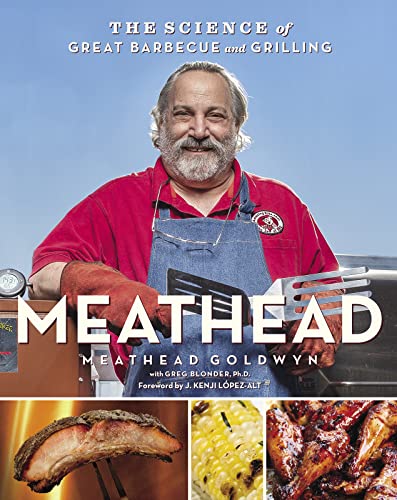
Meathead: The Science of Great Barbecue and Grilling — Best Overall
If this guide could only keep one book, it would keep this one. Meathead Goldwyn’s book is built on a simple conviction: barbecue gets better when you understand it. Rather than handing you a rub and a prayer, it explains how smoke compounds settle on cold meat, why the stall happens and what actually ends it, how salt moves through a brisket, and which beloved barbecue rules are myths that survive on repetition. The recipes then cash the cheques the science writes — each one is a demonstration of a principle you have just learned.
Strengths
- Explains the why behind every major smoking technique
- Myth-busting chapters will fix habits you did not know were wrong
- Techniques transfer to every cooker type you will ever own
Trade-offs
- Dense: it rewards reading, not just flipping to a recipe
- Grilling shares the stage, so it is not a smoking-only text
- Science-first tone will not suit readers who want only recipes
| Approach | Science of barbecue and grilling, myth-tested |
| Author background | Barbecue Hall of Fame inductee (per listing) |
| Best used for | Understanding fire, smoke, salt and temperature |
| Format note | Check the listing for the edition and format you want |
Read it in order the first time — the early chapters on heat and smoke change how you interpret everything after — then keep it by the cooker as a reference. The two-zone fire thinking, the treatment of salt and dry brining, and the honest discussion of wrapping will each pay for the book on a single cook. Owners of every cooker in our Best Consumer Smokers guide will find their machine’s behaviour explained here, which is precisely why it sits at the top of this list: it is the only pick that makes all your other equipment better.
Best for: any smoker owner who wants to understand, not just follow / Not suited for: readers who want a pure recipe collection with no explanation
Check on Amazon — check price on Amazon before you decide, because commercial listings change configuration often.
Franklin Barbecue: A Meat-Smoking Manifesto — Best for Brisket and Offset Craft
Franklin Barbecue is the book that made a generation of backyard cooks take fire seriously. Aaron Franklin writes about wood the way winemakers write about grapes — species, seasoning, moisture, the quality of the coal bed — and about brisket with the humility of a man who has ruined plenty. Roughly half the book is teaching: how a smoker works, how to build and hold a clean fire, how to judge meat. The recipes that follow are almost austere, and that is the point. This is a book about doing simple things perfectly.
Strengths
- The deepest treatment of wood and fire in any mainstream cookbook
- Brisket teaching that has genuinely changed how people cook it
- Beautiful, motivating read that respects the reader’s intelligence
Trade-offs
- Offset-centric: electric and pellet owners must translate the lessons
- Recipe count is modest beside the roundup-style books here
- Its standards are demanding — this is a craft book, not a shortcut book
| Approach | Craft manifesto: wood, fire, meat, patience |
| Signature subject | Brisket and Central Texas barbecue |
| Best used for | Offset technique and fire management thinking |
| Reading style | Narrative — read cover to cover |
Buy it if you cook — or want to cook — on an offset or any live-fire cooker from Best Consumer Smokers Offset, and read the fire chapters twice. The practical harvest is enormous: how to tell good smoke from bad by sight, why a small hot fire beats a big lazy one, how to wrap by bark and feel rather than by temperature alone. Even pellet owners report cooking better after reading it, because Franklin teaches attention itself. It is the soul book of this list, paired best with the science of our Best Overall pick.
Best for: offset and live-fire cooks serious about brisket craft / Not suited for: electric smoker owners wanting plug-and-play recipes only
Check on Amazon — check price on Amazon before you decide, because commercial listings change configuration often.
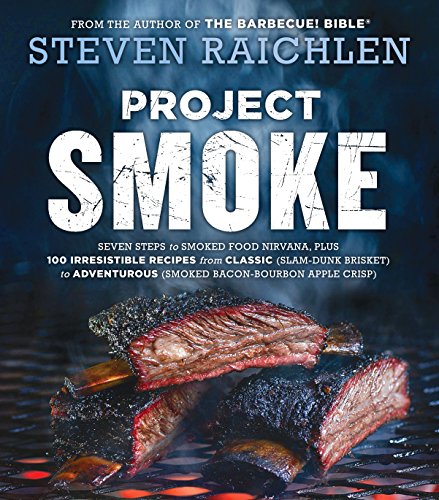
Project Smoke by Steven Raichlen — Best for Variety
Steven Raichlen has written more barbecue books than most people have cooked briskets, and Project Smoke is his smoking book distilled into a method: seven steps that organise everything from choosing fuel to resting meat, followed by a hundred recipes that deliberately wander. Yes, there is a slam-dunk brisket. There are also smoked vegetables, smoked seafood, smoked desserts and smoked cocktails — the full map of what smoke can do, drawn by the genre’s most restless traveller.
Strengths
- Widest range in this guide — meat is only the beginning
- Seven-step structure gives beginners a reliable framework
- Global flavours stop a smoking repertoire going stale
Trade-offs
- Breadth beats depth: specialists will outgrow some chapters
- Some recipes need equipment or setups beyond a basic smoker
- Method overlaps with the author’s other books if you own several
| Approach | Seven-step method plus 100 recipes |
| Range | Classics to smoked drinks and desserts |
| Best used for | Expanding beyond brisket-and-ribs routine |
| Series | Barbecue Bible cookbooks (per listing) |
Project Smoke is the book to hand a smoker owner in their second year, when the brisket-and-ribs loop starts to repeat. Its real value is permission: smoke the cheese, smoke the tomatoes for sauce, smoke the cocktail garnish, and learn how smoke behaves on foods that cook in twenty minutes instead of twelve hours. Those short cooks teach smoke judgement faster than any brisket can. Keep it beside Meathead — one for why, one for what next — and your shelf is functionally complete for most home cooks.
Best for: second-year smokers ready to widen their repertoire / Not suited for: brisket specialists who want one subject treated exhaustively
Check on Amazon — check price on Amazon before you decide, because commercial listings change configuration often.
Smoking Meat 101: The Ultimate Beginner’s Guide — Best for Beginners
Every library needs a book that assumes nothing, and Smoking Meat 101 is this list’s. It starts where a new smoker owner actually starts — what the parts of the cooker do, which woods pair with which meats, what temperatures matter and why — and builds to recipes chosen to succeed early: forgiving cuts, clear timings, no competition arcana. If you have just unboxed a cooker from our Best Convection Smokers guide or any other roundup and want your first month planned, start here.
Strengths
- Genuinely beginner-paced, with no assumed knowledge
- Early-win recipes build confidence in the right order
- Wood-pairing and temperature basics in one place
Trade-offs
- Advanced cooks will finish it quickly
- Less science and less craft depth than the top two picks
- Recipe range is narrower than the big roundup titles
| Approach | Beginner-first teaching and starter recipes |
| Covers | Smoker basics, woods, core techniques |
| Best used for | A first season of smoking |
| Reading style | Practical and direct |
The smart way to use this book is as a first-season curriculum: cook its core recipes in order, take notes in the margins — what wood, what weather, what you would change — and by the last chapter you will know exactly which of the deeper books in this guide deserves your money next. It also makes the best gift on this list for a new smoker owner, because it respects the beginner without boring them. Pair it with a thermometer and a bag of apple wood and you have handed someone a hobby.
Best for: first-year smoker owners and gift-givers / Not suited for: experienced pit cooks looking for advanced technique
Check on Amazon — check price on Amazon before you decide, because commercial listings change configuration often.
The Complete Guide to Smoking Meat — Best Value Roundup
Some cooks learn by reading; others learn by cooking, one recipe at a time, and this is their book. The Complete Guide to Smoking Meat puts a hundred recipes between its covers — the number is in the verified listing — spanning the standard barbecue canon and enough beyond it to keep a season interesting. The teaching is woven into the recipes themselves rather than front-loaded in chapters, which suits households that want to open a book on Saturday morning and be smoking by ten.
Strengths
- Recipe depth: a hundred dishes to cook from immediately
- Accessible writing for mixed-experience households
- Strong value as a single-volume library
Trade-offs
- Less conceptual depth than Meathead or Franklin
- Recipe-led format means theory is scattered, not systematic
- Serious brisket study still belongs to the craft titles
| Approach | Recipe-led complete guide |
| Recipes | 100 (per verified listing) |
| Best used for | Weekend cooking variety |
| Coverage | Beef, pork, poultry, seafood and more |
Use it as your working cookbook: the book that lives in the kitchen, accumulates sauce spots, and answers the question ‘what should we smoke this weekend?’ a hundred different ways. Its breadth across proteins makes it the best single purchase for families whose smoking is about feeding people well and variously, rather than about mastering one cut. Combined with the beginner discipline of Smoking Meat 101 it covers most households entirely; combined with Franklin it covers nearly all of them.
Best for: families who want one recipe-rich volume for the season / Not suited for: theory-driven cooks who read cookbooks like textbooks
Check on Amazon — check price on Amazon before you decide, because commercial listings change configuration often.
Franklin Smoke: Wood. Fire. Food. — Best Advanced Follow-Up
Where the Manifesto taught the Franklin method, Franklin Smoke assumes you have cooked a while and talks about judgement: reading a fire by sound and smell, adjusting to a wet log or a windy day, understanding what wood fire does differently from every other heat source. It ranges beyond the brisket canon into the wider world of live-fire cooking, and it is written with the confidence of a second book that does not need to repeat the first one’s lessons.
Strengths
- Deepens the fire judgement the Manifesto begins
- Extends Franklin thinking beyond brisket to fire cooking generally
- Rewards experienced cooks with nuance, not repetition
Trade-offs
- Not the place to start: it builds on the first book
- Live-fire focus leaves pellet and electric owners translating again
- Fewer hand-holding specifics for a cook in trouble mid-brisket
| Approach | Advanced exploration of wood-fire cooking |
| Relationship | Follow-up to Franklin Barbecue |
| Best used for | Deepening live-fire judgement |
| Reading style | Narrative and technique-led |
Read this after the Manifesto and after a season of your own cooks, when its observations will land on experience instead of theory. It is the book on this list most likely to be re-read in five years, because judgement ages better than recipes. If Franklin Barbecue is this library’s undergraduate degree, Franklin Smoke is the graduate seminar — smaller, deeper, and best appreciated by readers who have stood in front of a fire long enough to have real questions.
Best for: experienced live-fire cooks who finished the Manifesto hungry / Not suited for: new smoker owners — start with the beginner picks above
Check on Amazon — check price on Amazon before you decide, because commercial listings change configuration often.
Comparison Table
All six are verified, current editions. The ‘key spec’ column describes each book’s approach as stated in its verified listing.
| Pick | Badge | Key spec | Best for |
|---|---|---|---|
| Meathead: The Science of Great Barbecue and Grilling | Best Overall | Science-led smoker guide and cookbook (verified listing) | any smoker owner who wants to understand, not just follow |
| Franklin Barbecue: A Meat-Smoking Manifesto | Best for Brisket and Offset Craft | Meat-smoking manifesto and cookbook (verified listing) | offset and live-fire cooks serious about brisket craft |
| Project Smoke by Steven Raichlen | Best for Variety | Seven-step method, 100 recipes (verified listing) | second-year smokers ready to widen their repertoire |
| Smoking Meat 101: The Ultimate Beginner’s Guide | Best for Beginners | Beginner’s guide to smoking meat (verified listing) | first-year smoker owners and gift-givers |
| The Complete Guide to Smoking Meat | Best Value Roundup | 100 recipes, complete guide format (verified listing) | families who want one recipe-rich volume for the season |
| Franklin Smoke: Wood. Fire. Food. | Best Advanced Follow-Up | Advanced wood-fire cookbook (verified listing) | experienced live-fire cooks who finished the Manifesto hungry |
How to Choose the Best Cookbook for Smokers at Your Stage
Match the book to the fire you actually cook on. Offset and live-fire cooks get the most from the Franklin titles, whose entire worldview is wood and draft. Pellet, electric and kamado owners should start with Meathead and the recipe-led guides, whose techniques are written fuel-agnostically and translate cleanly to a dial-controlled cooker. Electric owners specifically should also read Best Cookbooks For Electric Smokers, where the shortlist is written for cabinets that hold temperature for you — a different skill set, centred on smoke generation and timing rather than fire craft.
Then match the book to your stage, honestly. A first-year cook given Franklin Smoke will admire it and cook little from it; a fifth-year cook given only a beginner’s guide will finish it in a weekend. The sequence that works for most readers is: a beginner or recipe-led book for season one, Meathead for the science, Franklin for the craft, and the follow-ups when your own questions outgrow the introductions.
Science Books vs Recipe Books: What Each Actually Does for You
Science-led books change every future cook. When you understand the stall, salt movement and smoke deposition, you can walk up to any cut, any cooker and any weather and improvise correctly. Recipe-led books change this weekend: they give you a dish, a timeline and a shopping list, and your repertoire grows one successful cook at a time. Neither is superior — the pit cooks we respect own both kinds and use them differently, theory in the armchair and recipes in the kitchen.
The failure mode to avoid is buying only one kind. A shelf of pure theory produces cooks who can explain barbecue brilliantly and serve it late; a shelf of pure recipes produces cooks stranded the first time a brisket behaves off-script. Two books — one of each kind — outperform six of either.
Getting Real Value From a Cookbook: A Working Method
Cook from it in pencil. Note the date, the wood, the weather and one thing you would change, directly in the margin of every recipe you try. A smoking cookbook used this way becomes your own logbook within a season, and the notes are worth more than the printed text by year two.
Cook a new book’s core recipes before judging it, and cook them as written the first time — substitutions on a first attempt teach you nothing about the author’s method. Finally, protect the books you cook from: a stand that keeps pages out of the sauce zone and a hardcover or sealed digital copy for outdoor use are small mercies you will thank yourself for at every cook.
Building a Smoking Library Over Time: The Three-Shelf Plan
Do not buy six books at once; buy them in the order your cooking demands. Shelf one, the foundation, is a single teaching book matched to your cooker — a beginner guide if you are new, Meathead if you are not — cooked from until its core recipes are reflexes. Shelf two, the expansion, adds contrast: the craft voice if you started with science, the science if you started with craft, and a recipe-deep roundup when your household’s requests outgrow the foundation’s table of contents. Shelf three, the specialisation, is where the follow-ups and the niche titles live — the second Franklin, the pellet-specific or electric-specific volumes, the charcuterie curiosity you earned the right to enjoy.
This sequencing matters because barbecue books argue with each other productively only when you have the experience to referee. Franklin and the scientists disagree about wrapping, about rest times, about what smoke should look like — and a reader with twenty cooks behind them reads those disagreements as a map of real choices, while a beginner reads them as confusion. Let each shelf be finished, in the kitchen rather than the armchair, before buying the next.
How to Judge a Smoking Book You Have Never Heard Of
Beyond this shortlist, the smoking shelf is vast and uneven, so carry a field test. First, check the fire chapters: a serious book teaches heat and smoke before it teaches a single recipe, and its timings are given as ranges tied to doneness cues rather than as promises. Second, check the meat science: does it discuss salt, resting and carryover with specifics, or with folklore? Third, check the failures: books that admit what can go wrong — the stall, overshooting, bitter smoke — and explain recoveries are written by cooks; books in which nothing ever goes wrong are written by marketers.
Fourth, check the cooker honesty: a book that names the equipment its recipes were developed on, and tells you how to adapt them, respects you. Fifth, check the index against your life: if the cuts your family eats are missing, the book is a souvenir, not a tool. Apply the five checks in a bookshop or a listing preview and you will rarely buy a dud — and you will understand exactly why the six titles in this guide passed.
From Page to Pit: Turning Reading Into Better Barbecue
The gap between owning knowledge and cooking with it closes through one mechanism: the deliberate cook. Choose a single variable from your current book — a new rub balance, a wrapping decision, a rest method — and change only that on your next familiar recipe. Taste the difference in isolation. This is how the science in Meathead becomes your instinct, and how Franklin’s fire philosophy becomes your hand on the damper. Cooks who change five things at once learn nothing except that something worked.
Keep the log the books themselves recommend: date, cut, wood, weather, timeline, result, one change for next time. Within a season, your annotated cookbook is a personalised text no author could write for you, because it is calibrated to your cooker, your climate and your family’s palate. That calibration — not the size of the shelf — is what guests taste when they say your barbecue got better this year.
The Margins Are the Message: Annotating Your Way to Mastery
Every book in this guide improves with handwriting in it, and the habit deserves its own instructions. Annotate in three colours of ink if you are systematic, or one pencil if you are not: what you cooked, what the fire and weather did, and what you will change. Date every note. Correct the book where your cooker disagrees with its timings — ‘mine runs 40 minutes longer in winter’ is worth more than the printed number it amends. Flag the recipes your household requests by name; a cookbook’s true table of contents, after a year, is the set of pages that fall open by themselves.
This is also why format matters less than proximity. The best smoking cookbook is the one within reach of the cooker, spine broken, pages seasoned with smoke. Buy the handsome edition for the shelf if you love books; buy the working copy for the pit without a flicker of guilt, and let it get gloriously dirty in service.
Reading the Classics Critically: Where Great Books Disagree
Put the six books in this guide in one room and they argue — productively. They disagree about wrapping: when, with what, and whether at all. They disagree about resting: how long, in what, and whether sliced brisket forgives a crowd’s impatience. They disagree about smoke itself: how much, how clean, and whether the cook’s eyes or instruments should judge it. A new reader finds these arguments unsettling; an experienced one recognises them as the actual frontier of the craft, where conditions — cooker, wood, weather, cut — decide which authority is right today.
Your job as a reader is not to pick a pope. It is to notice the conditions attached to each claim, test the claim on your own cooker, and keep the version your evidence supports. That is the deepest thing this library teaches, underneath every recipe: barbecue knowledge is conditional, and the cook who understands conditions can read any book — including the next classic not yet written — with profit.
The Cookbook Habits of Pitmasters: What the Books Teach Between Recipes
Read enough serious smoking books and a hidden curriculum emerges, taught not in chapters but in asides. Keep the cooker clean enough to taste the wood. Salt earlier than feels natural. Let the meat, not the clock, declare itself done. Write things down. Taste critically and adjust one variable at a time. Rest the meat as if it were still cooking — because, in every way that matters to the slice, it is. These habits, repeated across authors who agree about little else, are the closest thing barbecue has to settled law, and a reader who collects them owns something no single recipe provides.
There is a second hidden lesson: humility about conditions. The great books specify their wood, their cooker, their weather and their meat source because they know results are conditional. When your results differ from a book’s, the books themselves have taught you where to look — the variable that changed. That is the moment a cookbook library stops being a collection of other people’s answers and becomes the instrument of your own.
Your Bookshelf as a Curriculum: A One-Year Reading Plan
Here is the library in this guide sequenced as a year of deliberate growth. Months one to three belong to your foundation book — the beginner guide if you are new, the Complete Guide if you are not — cooked from weekly, in order, with notes. Months four to six belong to Meathead: read it fully, then re-cook three foundation recipes applying its salt, smoke and resting science, and taste what understanding changes. Months seven to nine belong to your craft book — Franklin for live-fire cooks, Project Smoke for the repertoire-hungry — with one ambitious cook a month attempted exactly as written. Months ten to twelve belong to consolidation: re-cook the year’s five best dishes from memory and margins alone, then open the follow-up shelf — Franklin Smoke, or the electric library if a cabinet joined the household — with a palate educated enough to judge it.
The plan’s secret is its pace. Barbecue knowledge compounds like the cooks themselves: slowly, then all at once, somewhere around the ninth brisket, when the books’ separate voices merge into your own judgement and you stop following recipes in the best possible way — because you finally understand them.
A Note on Trust: Why This List Verifies Before It Recommends
Cookbook roundups are easy to fake — famous covers are public knowledge — so this guide applied the same verification discipline it uses for hardware. Every title here was confirmed as a current, buyable listing in Amazon’s product data at the time of writing, and two once-famous names were dropped from an early draft of this list precisely because we could not verify a clean listing for them. That is why the shelf above contains six books rather than a nostalgic ten: a recommendation you cannot act on is trivia, not guidance. If a title here goes out of print in future, its neighbours on this page remain the standing advice — begin with the science, season with the craft, and cook from the recipes in between.
Cookbooks and Cookers: Buying in the Right Order
A closing piece of sequencing advice, because this site sells the other half of the equation too. If you own no smoker yet, buy the cooker first and the book second — the right book depends on the fire you will actually cook on, and a month of reading about offsets will not help the pellet grill that arrives instead. If you own the cooker, reverse the order of your ambitions: the book before the accessory, the book before the upgrade, the book before the second cooker. Knowledge is the only purchase in barbecue that makes every previous purchase better, and it is the cheapest one on the page. Start with the badge that matches your stage, cook from it this weekend, and let the shelf grow the way this guide’s reading plan lays out — one earned volume at a time.
How to Use a Smoking Cookbook to Plan a Full Cook
Step 1 — Choose the dish by your window, not your ambition. Count your available hours honestly, then pick a recipe whose timeline fits with an hour to spare. Every book in this guide states or implies its timelines; the plan fails at the choosing, not the cooking.
Step 2 — Read the whole recipe before buying anything. Smoking recipes hide their real requirements — a brine the night before, a rub that rests, a wood you do not own — in the middle paragraphs. One full read prevents every version of the Saturday-morning emergency.
Step 3 — Work backwards from serving time. Add the cook time, the rest time and a buffer for the stall, and write down your light-the-fire time. Tape it to the cooker. This single habit, taught by every serious book here, is what separates relaxed hosts from frantic ones.
Step 4 — Prep the night before. Trim, salt and rub according to the recipe, set out wood and tools, and confirm your thermometer works. Morning-you is grateful every time.
Step 5 — Cook to the book’s doneness cues, not its clock. Use the recipe’s times as a map and its tenderness cues — probe feel, bark colour, bone wiggle — as the destination. Note the difference in the margin for next time.
Step 6 — Log it. Two lines in the book: what happened, what changes. Your second cook from any recipe in these six books will beat your first by exactly the quality of these notes.
Common Buying Mistakes
Buying a famous name that does not match your cooker. A live-fire manifesto will not give an electric-cabinet owner timings they can use. Match the book to your fire first, fame second.
Treating recipe times as promises. Times in smoking books are observations from the author’s cooker, wood and weather. The doneness cues are the real instructions; the clock is a rough guide.
Skipping the teaching chapters. In the best books here, the chapters before the recipes are the product. Readers who jump straight to a brisket recipe and struggle have usually skipped the fire chapter that would have saved them.
Owning six books and cooking from none. A cookbook’s value is realised at the cooker. One book cooked cover to cover teaches more than a shelf admired from the sofa.
Ignoring edition and format at purchase. The same title appears in multiple formats and editions. Confirm on the listing which one you are buying, especially when gifting.
Final Recommendation
Buy Meathead first — it is the book that makes every other book, and every cooker you own, make more sense. Add Franklin Barbecue if you cook with live fire, Project Smoke when your repertoire needs widening, and Smoking Meat 101 or the Complete Guide if you are in your first season or feeding a family weekly. Franklin Smoke waits patiently for your second year, and it will be worth the wait. If your smoker plugs in rather than burns down, go straight to the dedicated shortlist in Best Cookbooks For Electric Smokers; if you are still choosing the cooker itself, start with Best Consumer Smokers and come back here with your first brisket.
Start your shortlist here: Meathead: The Science of Great Barbecue and Grilling, Franklin Barbecue: A Meat-Smoking Manifesto, Project Smoke by Steven Raichlen. Check price on Amazon for each, in that order, against the needs described above.
Frequently Asked Questions
What is the single best cookbook for a smoker owner?
Meathead, for most people: its science transfers to every cooker and every cut, and it corrects more bad habits per chapter than any other book here. Live-fire purists may fairly argue for Franklin Barbecue instead.
I have an electric smoker — are these books still useful?
The science and the recipes largely transfer, but timings and smoke-generation advice assume live fire or pellets. The dedicated electric shortlist in our companion guide is the better first purchase for cabinet owners.
Should a beginner start with Franklin Barbecue?
It is a wonderful read for a beginner and a demanding teacher. Pair it with a beginner-paced book like Smoking Meat 101 so you have recipes matched to your first season alongside Franklin’s craft standards.
How many smoking cookbooks do I actually need?
Two, well chosen: one that explains and one that feeds you recipes. Most households are fully served by Meathead plus either the Complete Guide or Project Smoke, adding specialist titles only when a real interest develops.
Do these books cover pellet grills?
Meathead, Project Smoke and the recipe-led guides address pellet cooking directly or in terms that translate cleanly. The Franklin titles are live-fire books; pellet owners read them for fire philosophy and brisket judgement rather than settings.
Are the recipes in these books suitable for a family?
Yes — the recipe-led picks in particular are written for home cooks feeding households, with standard cuts and supermarket ingredients. The craft titles are equally family-friendly at the table, just more demanding at the cooker.
Are e-book versions of smoking cookbooks practical?
For planning and reading, yes — searchable text is genuinely useful. At the cooker, a physical book or a tablet in a sealed stand survives the environment better than a phone in a sauced hand. Many owners keep the science titles digital and the working recipe books physical.
What is a good smoking cookbook to give as a gift?
Match it to the recipient’s stage: Smoking Meat 101 for a new smoker owner, Project Smoke for an enthusiast whose repertoire needs widening, and Franklin Barbecue for the live-fire cook who reads. A book matched to the cooker they own is the difference between a gift used weekly and a gift shelved politely.
I already watch barbecue videos — do I still need a book?
Videos excel at showing motion and moment; books excel at systems, numbers and the reasoning you need at 3 a.m. when a cook misbehaves off-script. Most serious home cooks use both, with the book as the reference of record and video as the demonstration. The titles here are written to be that reference.
How should I store cookbooks I use outdoors?
Keep the working copies in a dry tote that travels with your smoking kit, spines protected and pages away from the sauce zone on a stand or weighted clip. Smoke and weather will mark them over time — accept the patina on working copies and keep any treasured editions indoors for reading.
Do smoking cookbooks go out of date?
Techniques age slowly and recipes barely at all: fire, salt and smoke have not changed their physics in a century, which is why the strongest titles in this guide remain working texts years after publication. Equipment chapters date fastest, one more reason the science and craft books outlast gadget-led ones on the shelf.


