Disclosure: airfryerkitchensupply.com is reader-supported. When you buy through links on our site, we may earn an affiliate commission at no extra cost to you.
Where to buy
All six consumer smokers below are current Amazon listings verified against Amazon’s catalog data before earning a link — cooking areas, fuel types and features in the spec boxes come from that verified information. Smoker pricing swings hard with season (spring and the autumn holidays especially), so check price on Amazon at the moment you buy rather than trusting any figure in any article, including this one. No prices are printed here — they would be stale before the season turned.
- Masterbuilt 30-inch Digital Electric Smoker (MB20071117) — Check the current price on Amazon
- Traeger Pro 22 Pellet Grill & Smoker — Check the current price on Amazon
- Weber Smokey Mountain Cooker 18-inch — Check the current price on Amazon
- Pit Boss 3-Series Electric Vertical Smoker — Check the current price on Amazon
- Masterbuilt MPS 230S Propane Smoker (30-inch) — Check the current price on Amazon
- Cuisinart 18-inch Vertical Charcoal Smoker (COS-118) — Check the current price on Amazon
A consumer smoker is the machine that turns a home cook into the person the street asks about on Saturday: it holds low temperatures for hours, bathes brisket, pork shoulder, ribs and salmon in real wood smoke, and does it at a price and size that fit an ordinary patio. The best consumer smokers are not the biggest or the most expensive — they are the ones matched honestly to how a household actually cooks. The electric cabinet that a beginner can run perfectly the first weekend. The pellet grill that doubles as the family’s everyday cooker. The charcoal bullet that teaches real fire craft for the cost of a nice dinner out.
This guide deliberately spans the fuel types, because fuel is the first and most consequential choice in the category. Electric smokers are the easiest machines in barbecue — set the temperature, add chips, and the element does the rest. Pellet smokers add genuine wood-fire flavor with digital control and double as grills. Propane gives electric-style convenience without a cord, anywhere. Charcoal gives the deepest traditional flavor and the most involvement, in exchange for the lowest prices in the category. Each pick below is the strongest verified answer we found for one of those lives, at consumer scale and consumer commitment.
Every machine was checked against Amazon’s catalog data before being linked, and the reviews stick to verified specifications. If a category you expected is missing — the big offsets and cabinet rigs — that is deliberate: they live in our competition coverage, and a consumer guide serves you better by mastering the home scale.
In this guide
Quick Picks
Six home smokers across every fuel — electric, pellet, propane and charcoal — each the best verified answer for a different kind of cook.
- Best Overall — Masterbuilt 30-inch Digital Electric Smoker (MB20071117): 710 square inches, digital control and a side wood chip loader — the electric cabinet that has introduced more people to smoking than any machine in the category. Check price on Amazon.
- Best Pellet — Traeger Pro 22 Pellet Grill & Smoker: 572 square inches of pellet versatility — smoke low, grill at 450°F, with an 18 lb hopper and a meat probe, from the brand that defined the category. Check price on Amazon.
- Best Charcoal — Weber Smokey Mountain Cooker 18-inch: the 18-inch porcelain-enameled bullet — dual grates, a water pan and damper control; the charcoal smoker that teaches the craft and keeps up with experts. Check price on Amazon.
- Best Vertical Electric — Pit Boss 3-Series Electric Vertical Smoker: 880 square inches on four racks with a 100–300°F analog-controlled range — the big electric cabinet for households that cook in volume. Check price on Amazon.
- Best Propane — Masterbuilt MPS 230S Propane Smoker (30-inch): the cord-free cabinet — a 30-inch propane vertical that smokes anywhere a tank can stand, from patios without outlets to campsites and tailgates. Check price on Amazon.
- Best Budget — Cuisinart 18-inch Vertical Charcoal Smoker (COS-118): an 18-inch charcoal bullet with an integrated thermometer, water bowl and dual vents at the category’s entry price — the budget way into real smoked brisket. Check price on Amazon.
How These Picks Were Chosen
We chose these six by cooking the consumer repertoire in our heads the way households actually do: a pork butt for Saturday, ribs for the game, a brisket when confidence grows, salmon and cheese when the smoker starts feeling like a hobby instead of an appliance. Each pick had to run a long cook without drama, hold its temperature honestly, and clean up in minutes rather than becoming a Sunday punishment — because the smoker that is annoying to clean is the smoker that gets used twice a year.
We weighted the beginner’s first month heavily. A consumer smoker’s real competition is not the next model up; it is the discouragement of a first cook gone wrong. Machines with forgiving temperature control, sensible capacity and a genuine community of owners producing guidance earned their places here. So did versatility where it is real — the pellet pick grills as well as it smokes — because most patios have room for one cooker, and it had better earn the space twelve months a year.
- Temperature honesty: holds low-and-slow set points steadily for 8–14 hours without tending, spikes or surprises.
- Capacity in family terms: a whole butt plus ribs, or a full brisket — measured in meals, not just square inches.
- Fuel convenience and cost: chips, pellets, propane or charcoal — availability, storage and the rhythm of refueling mid-cook.
- Cleanup reality: drip management, ash or grease handling, and whether racks and pans clean in the sink or the dishwasher.
- Learning curve: how good the third cook is for a first-time owner, not just the thirtieth for an expert.
The 6 Best Consumer Smokers

Masterbuilt 30-inch Digital Electric Smoker (MB20071117) — Best Overall
The Masterbuilt 30-inch digital electric is the consumer smoker in its purest form: a vertical insulated cabinet with 710 square inches on chrome racks, a digital control panel that holds the temperature you set, and the feature that defines the design — a side wood chip loader that lets you add smoke wood without opening the door and dumping your heat. For a first smoker, or a household that wants ribs and butts without a fire-management hobby attached, this remains the machine to beat.
Strengths
- Side chip loader adds wood without opening the door — heat and smoke stay in the cabinet
- Digital control makes the first cook feel like the tenth: set it, and the element holds the line
- 710 sq in across the rack stack handles a family program — butt, ribs and sides in one cook
Trade-offs
- Electric heat produces a milder smoke profile than charcoal or pellet fire; manage expectations on bark depth
- Needs an outdoor outlet within cord reach, and weather protection for the control panel over the years
- Maximum temperatures are smoker temperatures — this is not a griller, and searing happens elsewhere
| Type | Digital electric vertical smoker |
| Cook space | 710 sq in |
| Racks | Chrome-coated smoking racks |
| Signature feature | Side wood chip loader |
The chip loader deserves its reputation because it fixes the electric smoker’s original sin. Early cabinets forced a choice every hour: open the door to add chips and lose your heat and smoke, or let the smoke fade. The side loader ends the dilemma — a tube of chips twists in from outside, the door never opens, and the cook proceeds in an unbroken line. Combined with digital temperature holding, it makes the Masterbuilt the most forgiving serious smoker a beginner can buy: the two variables that ruin first cooks, temperature swings and smoke gaps, are engineered away.
Its ceiling is flavor intensity, and honesty requires naming it. An electric element smolders chips rather than burning wood, and the resulting smoke is lighter — wonderful for salmon, chicken, cheese and pork, less commanding on a brisket than a charcoal fire. Many owners treat this as the perfect first smoker and later add a charcoal or pellet machine for the big meats, keeping the Masterbuilt for everything delicate. That is not a failure of the machine; it is the category’s natural graduation, and it starts here for good reason.
Masterbuilt ownership is the electric pattern at its easiest: racks and the water pan to the sink, the interior wiped while warm, the chip loader kept clear of ash buildup so it keeps twisting smoothly. The owner community for this model is enormous, which means every question — a gasket, a heating element in year five, a controller quirk — has been asked and answered publicly. Keep the control panel covered from weather and this cabinet will smoke for many seasons on pennies of electricity.
Best for: beginners and convenience-first households wanting real smoked food with the least possible fuss / Not suited for: bark chasers who want deep charcoal flavor as their first priority
Check on Amazon — check price on Amazon before you buy, since configurations and included accessories change.

Traeger Pro 22 Pellet Grill & Smoker — Best Pellet
The Pro 22 is the pellet grill as most households meet it: 572 square inches, a 450°F ceiling, an 18 lb hopper, a meat probe, and the 6-in-1 versatility — grill, smoke, bake, roast, braise and barbecue — that lets one machine be the patio’s only cooker. As a consumer smoker it brings the pellet proposition in full: real wood fire, digital temperature control, and smoke flavor a clear step deeper than electric, in a machine that also grills Tuesday’s burgers.
Strengths
- True wood-fire flavor with set-and-forget digital control — the pellet category’s whole argument in one machine
- 450°F max and 6-in-1 versatility make it a genuine everyday grill, not a single-purpose smoker
- 18 lb hopper covers long cooks, and the Traeger pellet and parts ecosystem is available everywhere
Trade-offs
- Pellet costs are a real running expense, and the machine needs power and dry pellet storage
- 572 sq in is family-sized, not crowd-sized — big events need staging or a second cooker
- Smoke depth, while ahead of electric, still trails a well-run charcoal fire for traditionalists
| Type | Wood pellet grill & smoker |
| Cook space | 572 sq in |
| Max temp | 450°F |
| Hopper | 18 lb |
| Extras | Meat probe included |
The Pro 22’s consumer genius is that it removes the smoker-versus-grill decision. A household that buys a dedicated smoker uses it on weekends; a household that buys the Traeger uses it constantly, and constant use is what turns owners into good cooks. Brisket on Saturday at 225°F with hickory pellets, chicken on Wednesday at 400°F, a frozen pizza that comes out tasting like a wood oven’s — the machine’s range keeps it at the center of the patio instead of the corner of it.
As a smoker specifically, run it with the same discipline as the big pellet machines: low temperatures for the smoke-receptive early hours, quality pellets matched to the meat, and patience before wrapping. It will not out-smoke a charcoal bullet at its own game, but for the household that wants one cooker, real smoke and no fire-tending, the Pro 22 is the balanced answer the market has ratified for years.
Pro 22 ownership is the pellet rhythm: pellets stored dry in a sealed bin, the firepot vacuumed every few cooks, grease bucket and liners managed before they become a story. Traeger’s dealer network means igniters, fans and controllers are ordinary parts, and the app keeps the firmware current. Owners who grill weekly on it between smokes report the healthiest machines — regular use keeps seals, auger and pellets all in their best condition.
Best for: households wanting one cooker that smokes on weekends and grills all week / Not suited for: maximum-capacity cooks or charcoal purists
Check on Amazon — check price on Amazon before you buy, since configurations and included accessories change.
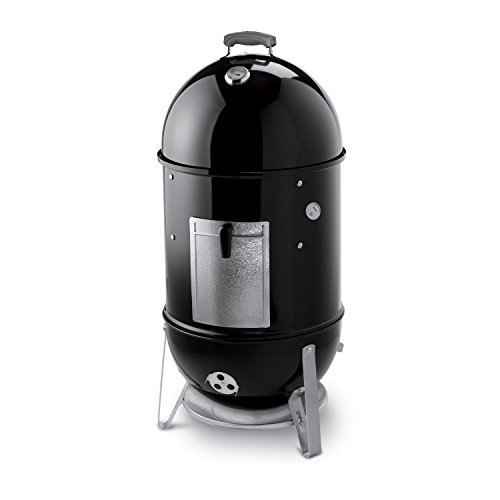
Weber Smokey Mountain Cooker 18-inch — Best Charcoal
The 18-inch Smokey Mountain is the smaller of Weber’s legendary bullets, and for most households it is the right one: two cooking grates in a porcelain-enameled vertical body, a water pan buffering the charcoal fire below, and damper control that — once you learn the simple method — holds low temperatures for hours with almost no intervention. It is the cheapest machine in this guide and, in the hands of a cook who enjoys the craft, arguably the most capable per dollar in the entire category.
Strengths
- Charcoal-and-wood flavor at its traditional best — the reference smoke profile
- The minion method (a lit point in a full charcoal ring) delivers remarkably steady, hours-long cooks
- Porcelain-enameled Weber build, light weight and a price that makes it the easiest serious smoker to justify
Trade-offs
- You are the controller: no electronics, no app — dampers, fuel arrangement and attention
- 18-inch grates fit a brisket with care; truly large packers may argue for the 22-inch sibling
- Accessing the lower grate mid-cook takes practice and heat-proof gloves
| Type | Vertical charcoal bullet smoker |
| Size | 18-inch, dual cooking grates |
| Body | Porcelain-enameled |
| Control | Dampers and water pan |
Everything the Smokey Mountain teaches is transferable: how charcoal burns, how airflow governs temperature, how wood chunks placed in the ring season different hours of the cook. Owners describe the same arc — the first cook is attentive, the third is calm, and by the tenth the bullet is simply running while they do other things, needing a damper nudge twice in twelve hours. That steadiness from such simple hardware is why the design has survived decades of gadgets.
Size it honestly. The 18-inch cooks beautifully for a family — a butt on one grate, ribs on the other — and its efficiency with charcoal is better than the 22’s for small loads. Households regularly cooking for crowds, or wedded to the largest briskets, should step up to the 22-inch model we feature in the competition guide. Everyone else gets the same craft, the same flavor and the same legendary support in the size their patio and their table actually need.
The 18-inch WSM asks for almost nothing: ash emptied, grates brushed, vents kept free-moving, and storage under a cover. There is nothing to plug in, update or descale, and Weber’s parts support for the bullet line stretches back decades — a replacement grate or door is a catalog item, not a quest. It is common to meet these cookers on their third owner and second decade, still holding temperature like the day they were seasoned.
Best for: cooks who want real charcoal flavor and the craft of fire, at the category’s friendliest commitment / Not suited for: set-and-forget cooks who want electronics between them and the fire
Check on Amazon — check price on Amazon before you buy, since configurations and included accessories change.
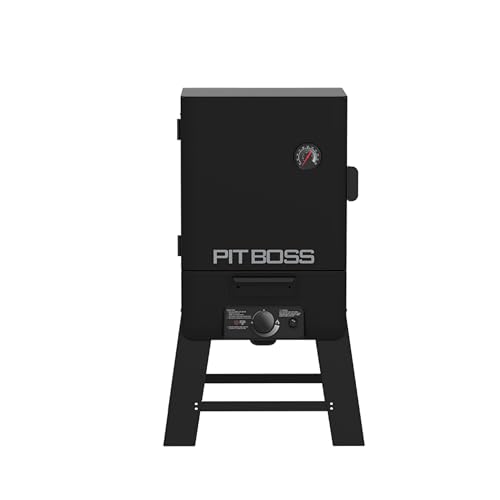
Pit Boss 3-Series Electric Vertical Smoker — Best Vertical Electric
Where the Masterbuilt is the compact electric classic, the Pit Boss 3-Series electric is the size-up: 880 square inches across four racks in a vertical cabinet, an analog controller, a wood chip tray, and a temperature range from 100°F to 300°F whose low end opens the door to jerky, sausage and gentle fish work that hotter-starting smokers cannot do. For households whose smoke program is volume — holiday hams, batches of jerky, ribs for the extended family — this is the electric format at family scale.
Strengths
- 880 sq in on four racks — the most electric capacity in this guide
- 100°F low end suits jerky, sausage and delicate cold-adjacent smoking projects
- Analog control simplicity: fewer electronics to fail, a dial that anyone can run
Trade-offs
- Analog control holds a band rather than a digital line — fine for smoking, less precise than the Masterbuilt’s panel
- Chip tray access follows the classic pattern — adding wood means thinking about door openings, unlike the Masterbuilt’s side loader
- The big cabinet is a presence on the patio; measure its home before it arrives
| Type | Electric vertical smoker |
| Cook space | 880 sq in, 4 racks |
| Range | 100°F to 300°F |
| Control | Analog controller, wood chip tray |
The 100°F floor is this machine’s signature and it changes the project list. Jerky that dries as it smokes, sausages that take smoke before they take heat, cheeses and fish on cool days — the low range turns the smoker from a brisket box into a preserving and charcuterie tool. Households that hunt, fish or garden in quantity tend to discover this machine exactly when the smaller cabinets start feeling like toys.
For mainstream work it is simply a big, calm electric smoker: four racks swallow a party’s worth of ribs, the cabinet’s thermal mass smooths the analog control’s wider band, and the cleanup follows the electric pattern — tray out, racks to the sink, done. Buy it for capacity and range; the Masterbuilt remains the pick for digital precision at the classic size.
Pit Boss electric ownership centers on the chip tray and the cabinet’s grease path: both cleaned on a rhythm, the door seal wiped so the big cabinet keeps its heat honest. The analog controller is the reliability story — there is very little to fail — and Pit Boss’s retail presence keeps racks and trays sourceable. Jerky and sausage makers should add one habit: a full empty heat run after greasy projects, keeping the cabinet’s interior seasoned rather than saturated.
Best for: high-volume home smokers, jerky and sausage makers, and big families / Not suited for: precision-first cooks who want digital temperature holding above all
Check on Amazon — check price on Amazon before you buy, since configurations and included accessories change.

Masterbuilt MPS 230S Propane Smoker (30-inch) — Best Propane
Propane is the forgotten fuel of home smoking, and the MPS 230S is its standard-bearer: a 30-inch vertical cabinet that burns propane instead of plugging in, which frees it from the patio outlet entirely. Cabins, campsites, tailgates, rental patios with no exterior power — anywhere a tank can go, this smoker can cook, with the set-the-dial simplicity electric owners enjoy and a flame’s responsiveness when temperatures need to move.
Strengths
- Total placement freedom — no cord, no outlet, no problem; the smoker for off-grid and portable smoking
- Flame heat responds fast and reaches proper smoking temperatures regardless of cold weather that strains electric elements
- 30-inch vertical format keeps the familiar cabinet layout and rack system of the electric line
Trade-offs
- You manage a fuel tank: spares, refills and the mid-cook empty tank are now your logistics
- Temperature holding is a dial-and-check discipline, a step below digital electric precision
- Wind matters more to a gas burner; site it sheltered and respect the clearances
| Type | Propane vertical smoker |
| Size | 30-inch |
| Fuel | Propane (tank) |
| Format | Vertical cabinet |
The propane case is really a freedom case. The best smoking spot at a cabin, a lease or a tailgate rarely has power, and extension-cord smoking is a compromise that ends at the cord’s length. The MPS 230S erases the question — it has cooked in hunting camps and on beaches, and at home it liberates the smoker from the one outlet-adjacent corner of the patio to the spot with the best wind and the best view.
Its discipline is the tank and the dial. Keep a spare tank the way pellet owners keep spare pellets, check the gauge before a long cook rather than during it, and learn your dial’s personality across two or three cooks — where 225°F actually lives on it, in your climate. Owners who do that find propane quietly excellent: steady, weatherproof heat with wood chips doing the flavor work, anywhere on Earth a tank can stand.
Propane ownership adds the tank to the smoker’s small discipline list: a spare on hand, connections checked with soapy water at each swap, the burner kept clean of the debris that field use invites. The cabinet itself follows the Masterbuilt pattern — racks to the sink, interior wiped warm. Owners who travel with it should treat the regulator and hose as the wear items they are, inspecting them each season; the rest of the machine is as close to carefree as smoking gets.
Best for: cabins, campsites, tailgates and patios without outdoor power / Not suited for: cooks who want digital set-and-forget precision at a fixed patio spot
Check on Amazon — check price on Amazon before you buy, since configurations and included accessories change.

Cuisinart 18-inch Vertical Charcoal Smoker (COS-118) — Best Budget
The COS-118 is the budget door into charcoal smoking: an 18-inch vertical smoker with chrome-plated grates, a water bowl, dual vents for airflow control and an integrated thermometer in the lid, sized for brisket, ribs and the standard repertoire. It follows the proven bullet pattern at the lowest commitment in this guide, which makes it the right first smoker for the curious — the cook who wants to learn whether smoking is their hobby before the hobby gets expensive.
Strengths
- The lowest-cost route in this guide to genuine charcoal-smoked food
- Water bowl and dual vents give the beginner the bullet format’s essential temperature tools
- Integrated thermometer and a size that suits camping and tailgates as well as the patio
Trade-offs
- Lid thermometers are approximate — budget for a decent probe thermometer from day one
- Materials and sealing are a step below the Weber bullet; expect to manage small air leaks as part of the craft
- As with all charcoal, the learning curve is yours: no electronics stand between you and fire management
| Type | Vertical charcoal smoker |
| Size | 18-inch |
| Features | Integrated thermometer, water bowl, dual vents |
| Grates | Chrome plated |
The honest way to frame the COS-118 is as tuition. For the price of a restaurant brisket dinner, it teaches the entire charcoal curriculum — fire building, vent control, the stall, wrapping, resting — on real food that, even when imperfect, is recognizably barbecue. Many owners cook happily on it for years; others graduate to the Weber bullet knowing exactly what the upgrade buys, which is the best reason to start cheap that exists.
Two accessories multiply its value immediately: a dual-probe thermometer (one probe for the grate, one for the meat) replaces guesswork with knowledge, and a chimney starter makes every cook begin cleanly. Add those, run the water bowl as designed, and the Cuisinart delivers the flavor that makes people fall for this hobby — which is the entire job of a budget pick.
COS-118 ownership is the budget pattern done right: keep it covered, empty ash before it cakes, and spend the savings on the two upgrades that matter — a proper probe thermometer and a chimney starter. The chrome grates reward a brush and a light oil after cooks. Owners who accept the machine as the tuition it is tend to keep it even after graduating, as the camping and second-cooker bullet; it is very hard to outgrow a smoker this portable entirely.
Best for: first-time smokers, budget buyers, campers and tailgaters / Not suited for: buyers who want premium sealing and materials from the first purchase
Check on Amazon — check price on Amazon before you buy, since configurations and included accessories change.
Comparison Table
| Pick | Badge | Key spec | Best for |
|---|---|---|---|
| Masterbuilt 30-inch Digital Electric Smoker (MB20071117) | Best Overall | 710 sq in electric cabinet, side chip loader | beginners and convenience-first households wanting real smoked food with the least possible fuss |
| Traeger Pro 22 Pellet Grill & Smoker | Best Pellet | 572 sq in pellet, 450°F max, 18 lb hopper | households wanting one cooker that smokes on weekends and grills all week |
| Weber Smokey Mountain Cooker 18-inch | Best Charcoal | 18-inch bullet, dual grates, water pan | cooks who want real charcoal flavor and the craft of fire, at the category’s friendliest commitment |
| Pit Boss 3-Series Electric Vertical Smoker | Best Vertical Electric | 880 sq in, 4 racks, 100–300°F | high-volume home smokers, jerky and sausage makers, and big families |
| Masterbuilt MPS 230S Propane Smoker (30-inch) | Best Propane | 30-inch propane vertical cabinet | cabins, campsites, tailgates and patios without outdoor power |
| Cuisinart 18-inch Vertical Charcoal Smoker (COS-118) | Best Budget | 18-inch charcoal bullet, water bowl, dual vents | first-time smokers, budget buyers, campers and tailgaters |
How to Choose the Best Consumer Smokers: Fuel First, Size Second
Fuel decides your Saturdays, so decide it first. Electric is the convenience king: the mildest smoke, the least skill, the lowest running cost, and a cabinet that lives where an outlet does. Pellet is the modern middle: real wood flavor, digital ease, a machine that also grills, paid for in pellets and power. Propane is electric’s convenience cut loose from the cord. Charcoal is the craft: the deepest flavor, the lowest prices, and a learning curve measured in cooks rather than minutes. None of these is the ‘right’ answer in the abstract — the right answer is the one whose weekly reality matches yours.
Size second, and size to the household’s real table. A 30-inch electric cabinet or an 18-inch bullet feeds a family with room to spare; the Pit Boss’s 880 square inches and the jump to bigger bullets serve crowds and batch projects like jerky. Oversizing a smoker wastes fuel on air and makes small cooks awkward; undersizing turns every party into a two-cook relay. And hold a thought for the second year: most owners’ ambitions grow from ribs to brisket to ‘could I do the holiday ham’ — a mid-size machine with headroom is the consumer sweet spot this whole guide is built around.
- First smoker, least fuss: Masterbuilt 30-inch digital electric.
- One cooker for everything: Traeger Pro 22 pellet.
- Flavor and craft: Weber Smokey Mountain 18 — or the Cuisinart COS-118 to learn on a budget.
- Volume and jerky: Pit Boss 3-Series electric. No power at the spot: Masterbuilt propane MPS 230S.
Smoke Flavor, Honestly Ranked — and Why It Isn’t Everything
Ranked by smoke depth alone, the order in this guide runs charcoal first, pellet second, propane-with-chips and electric behind — because a burning charcoal bed simply generates more of the compounds that read as ‘smoky’ than a smoldering chip tray does. But depth is one axis. Delicate foods — fish, cheese, vegetables, poultry for slicing — often taste better from the gentler electric and pellet profiles, and the best smoker for a household is the one whose flavor suits its actual menu, not a forum’s hierarchy.
Technique closes much of the gap anyway. Fresh chips or chunks at the right phase, patience before wrapping, and wood species matched to the meat — fruitwoods for pork and poultry, oak and hickory for beef — matter more than the last increment of machine. Cooks who master those on an electric cabinet routinely out-cook careless charcoal owners, which is why this guide ranks honesty of control alongside flavor in every review. When you outgrow the consumer tier, the next rungs are mapped in Best Competition Meat Smokers and Best Consumer Smokers Offset.
The Running Costs Nobody Puts on the Box
A smoker’s purchase price is the down payment; fuel and time are the mortgage. Electric cabinets cost pennies an hour and chips by the handful. Pellet grills burn a steady stream of pellets — a long brisket is a meaningful fraction of a bag — and reward buying quality pellets in quantity. Propane trades in tank refills and the discipline of a spare. Charcoal is cheap per cook and priceless in attention: the fuel is inexpensive, the tending is the cost, and owners who love the craft count it as the entertainment rather than the expense.
Budget the accessories with the machine, because they are part of the real price: a dual-probe thermometer (non-negotiable at every tier), a chimney starter for charcoal, a cover for anything that lives outdoors, heat-proof gloves, and a spray bottle and wrap for the cooks themselves. A household that buys the smoker and the kit together starts cooking well in week one; a household that buys the smoker alone spends month one discovering the list.
Wood Choice: The Flavor Dial Every Smoker Already Owns
Whatever fuel your smoker burns, the wood is where its flavor personality lives — and wood choice is the cheapest, most powerful variable a new smoker owner controls. The working map is simple. Fruitwoods — apple, cherry — are mild and sweet, the default for poultry, pork and fish. Oak is the medium all-rounder, the brisket tradition in Texas and a safe hand with everything. Hickory is stronger, bacon-adjacent, beloved on pork and beef in small doses and punishing in large ones. Mesquite is the strongest of the common woods — excellent in short, hot exposures, bitter in long, heavy ones — and pecan sits between oak and hickory as the diplomat of the set.
Match the wood to the cook’s length as much as to the meat. A fourteen-hour brisket accumulates smoke the whole way until the wrap, so a medium wood at a clean burn beats a strong wood at a heavy one; a two-hour salmon fillet can take a deliberate fruitwood richness that would overwhelm a long cook. In electric and propane cabinets, chips are the medium — fresh, dry and added on the maker’s rhythm. In pellet grills, the pellet blend is the choice. In charcoal, chunks buried in the ring season the cook in sequence. Learn one wood deeply before collecting the set; your second cook with the same wood teaches more than your first cook with a new one.
- Mild: apple and cherry for poultry, pork and fish.
- Medium: oak for brisket and all-round work; pecan as the versatile middle.
- Strong: hickory in measured doses; mesquite briefly and deliberately, never by default.
Your Second Smoker: The Question Every Owner Eventually Faces
Somewhere around the tenth cook, most smoker owners start browsing again — not because the first machine failed, but because it taught them what it cannot do. The electric owner wants bark; the charcoal owner wants a Tuesday-night shortcut; the pellet owner wants a dedicated low-and-slow box that frees the grill. This is the category’s natural history, and it is why the picks in this guide were chosen to complement rather than duplicate each other: the Masterbuilt beside a bullet, the Traeger beside a cabinet, each covering the other’s honest weakness.
Buy the second smoker the way you should have bought the first — by the cook you actually miss. If the missing cook is a flavor, add the fuel that makes it. If it is capacity, add racks, not watts. If it is convenience on weeknights, add the machine that asks the least. Owners who expand by that logic end with two or three cookers that all work weekly; owners who expand by novelty end with a patio museum. The first machine in this guide got you smoking; the second one, chosen honestly, is what makes you a smoker.
How to Run Your First Low-and-Slow Cook
Every machine in this guide can run this cook — a pork butt, the most forgiving and rewarding first project in barbecue. The sequence is written for a beginner and works across electric, pellet, propane and charcoal.
- The night before: trim excess fat from the butt, season generously with your rub, and refrigerate uncovered — the surface dries slightly and takes smoke and bark better for it.
- Morning setup: fill the water pan where fitted, load fuel with the long cook in mind (full hopper, full charcoal ring, fresh chips staged), and preheat the smoker to 225–250°F until it settles and the smoke runs clean and light.
- Meat on, probe in: place the butt fat-side per your machine’s heat direction, insert the probe in the thickest part away from bone, and close the lid. Your work is now mostly done — resist opening it.
- The long middle: maintain temperature with the machine’s own controls; add chips or check fuel only on the schedule your fuel type demands. Expect the stall in the 150s–160s internal — it is normal, and it ends.
- Wrap on color: when the bark is dark and set (often around the stall), wrap in foil or butcher paper with a splash of liquid if that is your method, and return it to the heat.
- Finish by feel: the butt is done around 200–205°F internal when the probe slides in like butter and the bone wiggles loose — tenderness, not the number, is the verdict.
- Rest, then pull: rest wrapped for at least 30–60 minutes, then pull, mixing the bark pieces through. Taste before saucing; a well-run first cook often needs very little.
Clean the smoker while it is still warm enough to make the job easy — racks out, drip pan emptied, ash or grease managed — and write down what you did. The second cook is where the learning compounds, and notes are how it compounds in your favor.
Common Buying Mistakes
- Chasing temperature constantly. Every adjustment and door opening swings the cook. Set the machine, trust the thermometer, and let low-and-slow be low and slow — most ‘problems’ are impatience wearing a costume.
- Cooking by time instead of tenderness. Recipes give hours; meat gives doneness. A probe thermometer and the feel of the probe are the authority — the clock is a planning tool, nothing more.
- Using wet, heavy smoke the whole cook. Thick white smoke for hours makes bitter food. The goal is a clean, light smoke for the receptive early hours; after wrapping, smoke is irrelevant anyway.
- Skipping the rest. Cutting or pulling immediately spills the juices you spent twelve hours keeping. The rest is part of the cook — schedule it like one.
- Buying capacity for a crowd you host twice a year. Rent the difference with a second small cooker or staged cooking. The machine sized for your monthly table will serve you better than the giant that idles.
- Neglecting the drip pan and ash. Grease fires and choked airflow are maintenance failures, not bad luck. Ten minutes of cleanup after each cook is the cheapest insurance in barbecue.
Final Recommendation
For most households, the Masterbuilt 30-inch digital electric is the best consumer smoker to start with: forgiving, capable and honest about its convenience-first brief. If one machine must smoke and grill, buy the Traeger Pro 22. If flavor and craft call, the Smokey Mountain 18 is the teacher the sport itself uses — and the Cuisinart COS-118 is its budget understudy.
Volume cooks should take the Pit Boss 3-Series electric, and anyone whose best smoking spot has no outlet should take the propane MPS 230S and never think about cords again. Check price on Amazon for the machine you choose, kit it out with a probe thermometer from day one, and when the hobby grows, the path continues through Best Consumer Smokers Offset, Best Competition Meat Smokers, Best Competition Vertical Pellet Smokers and Best Convection Smokers.
Shop the shortlist: Masterbuilt 30-inch Digital Electric Smoker (MB20071117), Traeger Pro 22 Pellet Grill & Smoker, Weber Smokey Mountain Cooker 18-inch.
Frequently Asked Questions
What is the easiest smoker for a beginner?
A digital electric cabinet like the Masterbuilt 30-inch: set the temperature, add chips through the side loader, and the machine holds the cook. Pellet grills are a close second in ease, with deeper smoke flavor and a higher running cost.
Electric, pellet, propane or charcoal — which tastes best?
Charcoal produces the deepest traditional smoke flavor, pellet a clear second with far more convenience, and propane and electric the mildest profiles — which suit delicate foods like fish and cheese particularly well. Technique and wood choice matter as much as the fuel ranking.
What size smoker does a family need?
A 30-inch electric cabinet, an 18-inch bullet or a 550–700 sq in pellet grill feeds a family comfortably — a butt plus ribs, or a brisket. Step up to the 880 sq in class or a 22-inch bullet when crowds and batch projects like jerky become routine.
How long does it take to smoke meat?
Plan in hours, not minutes: ribs roughly 4–6 hours, a pork butt 10–14, a brisket 12–16 at low-and-slow temperatures, with wide variation by size and machine. Tenderness, verified by probe, decides doneness — the schedule only plans the day.
Do I need a thermometer, or is the lid gauge enough?
Buy a probe thermometer. Lid gauges read the air where they sit, not the meat, and are often inaccurate besides. A dual-probe unit — one for the cooking grate, one for the meat — is the single highest-value accessory in this entire category.
Can I use a smoker in winter or rain?
Yes, with expectations adjusted: cold and wind increase fuel use and temperature swings, most of all on charcoal and thin-wall cabinets. Sheltered placement, full fuel loads and patience handle most weather; electric control panels deserve cover from direct rain.


