Disclosure: airfryerkitchensupply.com is reader-supported. When you buy through links on our site, we may earn an affiliate commission at no extra cost to you.
Where to buy
Every drill below was confirmed against a live Amazon listing at review time. Check price on Amazon for the exact kit configuration — 12 volt drills are sold bare, with one battery and with two, and the listings look near-identical until you read the includes list. The right buy depends on batteries you already own, so settle that question before comparing prices.
- Milwaukee M12 Subcompact Brushless 3/8 Drill/Driver Kit — check price on Amazon
- Bosch GSB12V-300B22 12V Max Brushless Hammer Drill/Driver Kit — check price on Amazon
- DEWALT XTREME 12V MAX Drill/Driver Kit (DCD701F2) — check price on Amazon
- Makita FD09R1 12V Max CXT Driver-Drill Kit — check price on Amazon
- SKIL 12V Brushless Drill Driver Kit (DL6290A-11) — check price on Amazon
- BLACK+DECKER 12V MAX Drill/Driver (BDCDD12C) — check price on Amazon
The 12 volt mini drill exists because most drilling is not heavy. Hanging cabinets, assembling furniture, drilling pilot holes, running screws all day, working inside carcasses and above ceilings — the daily reality of drilling is light work in awkward places, and a full-size 18 or 20 volt drill is simply the wrong shape for it: heavier, longer, and more powerful than the task in ways that only tire your arm. The best 12 volt mini drill is the one small enough to live in the places the work actually happens.
Modern brushless motors have redrawn what ‘mini’ can do. The best drills in this guide — Milwaukee’s subcompact, Bosch’s brushless hammer drill, DEWALT’s XTREME, Makita’s CXT — drive serious screws, bore respectable holes and still weigh closer to a hand tool than a power tool. The class divides by chuck and ambition: 3/8-inch chucks mark the true minis, built for access; 1/2-inch chucks on drills like the SKIL mark minis that want to be your only drill. Both philosophies are represented below, because both are right for somebody.
Our six picks span the four great 12 volt platforms and the honest budget end. Milwaukee’s subcompact brushless is the access champion. Bosch brings a hammer function in a brushless mini. DEWALT and Makita field their refined XTREME and CXT kits. SKIL delivers brushless and a 1/2-inch chuck at a value tier, and BLACK+DECKER covers the household basics for the least money. Every one was verified against its Amazon listing before earning a link; every platform warning in the buying guide is there because battery ecosystems are where mini-drill money is really spent.
In this guide
Quick Picks
Milwaukee subcompact for the tightest work, Bosch if you need hammer mode, SKIL for brushless value with a 1/2-inch chuck, BLACK+DECKER for household basics on a budget.
- Best Overall: Milwaukee M12 Subcompact Brushless 3/8 Drill/Driver Kit — the smallest serious drill here — brushless, 3/8-inch chuck, built for cabinets, panels and overhead work.
- Best with Hammer Mode: Bosch GSB12V-300B22 12V Max Brushless Hammer Drill/Driver Kit — a brushless mini that also hammers — anchors into brick and block without fetching a bigger drill, with two 2.0Ah batteries in the kit.
- Best Ergonomics: DEWALT XTREME 12V MAX Drill/Driver Kit (DCD701F2) — DEWALT’s brushless XTREME mini — compact 3/8-inch drill with the grip and balance DEWALT loyalists expect.
- Best Build Feel: Makita FD09R1 12V Max CXT Driver-Drill Kit — Makita’s CXT mini — a slide-battery 3/8-inch driver-drill with the refinement Japanese toolmaking is known for.
- Best Value Brushless: SKIL 12V Brushless Drill Driver Kit (DL6290A-11) — brushless power and a 1/2-inch chuck at a value tier, with a USB-C charging 2.0Ah battery in the kit.
- Best Budget: BLACK+DECKER 12V MAX Drill/Driver (BDCDD12C) — the household classic — a simple 12V drill/driver with battery and charger for flat-pack, pictures and light DIY.
How These Picks Were Chosen
Each drill was verified against its manufacturer’s Amazon listing through the Creators API before inclusion, and kit contents in the spec boxes reflect those listings. We excluded the anonymous mini drills that flood the bottom of this category — tools with invented torque figures and batteries that fit nothing else on Earth — because a drill is a platform purchase, and a platform of one disposable tool is a trap.
Criteria led with the class’s reason to exist: size and weight in hand, head length for cabinet work, and balance with the battery fitted. Brushless motors scored heavily — they deliver more work per charge and per gram — as did metal chucks, two-speed gearboxes that separate drilling pace from driving control, and LED work lights positioned to actually illuminate the bit. Torque claims were treated with uniform scepticism across brands, because every maker’s test differs; the analysis instead describes what each drill genuinely does well in the work its size suggests.
Kits were judged on their batteries as much as their drills. A mini drill kit with two 2.0Ah batteries and a real charger is a working system; a kit with one small battery is a drill plus a shopping list. Where a pick has a weakness there, the review says so.
The 6 Best 12 Volt Mini Drills
Chuck size is the fork in this list: 3/8 inch for the true minis that prize access, 1/2 inch for the SKIL that wants to be a household’s only drill. The verdicts make the trade explicit for each.

Milwaukee M12 Subcompact Brushless 3/8 Drill/Driver Kit — Best Overall
This is the drill the mini category exists to produce. Milwaukee’s subcompact brushless shrinks the drill/driver to the smallest body a real brushless motor and 3/8-inch chuck allow, then backs it with the enormous M12 battery platform. Cabinet installers, electricians working in panels, appliance and HVAC techs, and anyone whose drilling happens inside furniture will feel the design brief in the first minute: it goes where drills do not go, and it is light enough to forget on a belt.
Strengths
- Class-leading compactness and weight with a brushless motor’s efficiency
- M12 platform depth: batteries and sibling tools for every trade
- Kit form gives newcomers the complete system in one box
Trade-offs
- 3/8-inch chuck and subcompact gearing set a ceiling: no big hole saws, no heavy boring
- Premium-tier pricing for a specialist tool
- Overlaps a standard drill for owners who do not actually work in tight spaces
| Type | Subcompact drill/driver kit |
| Chuck | 3/8 inch |
| Motor | Brushless |
| Platform | Milwaukee M12 |
Judge this drill by access and it has no rival in the list. Its head length and body let it drill squarely inside a 300mm cabinet, between joists, and in the corners where assembly actually happens, while the brushless motor keeps torque honest for the screws and pilot holes that fill a service day. Runtime surprises owners raised on brushed minis: efficiency is the brushless dividend, and a compact pack lasts through work that used to need a swap by lunch.
Its ceiling is equally honest. This is not the drill for a 65mm hole saw or a pocketful of structural lags, and Milwaukee sells the M12 FUEL hammer drill for exactly those moments. Bought as the access half of a two-drill life — or as the only drill of someone whose work is genuinely all finesse — the subcompact is the finest mini drill in this guide, and the one professionals ask about by name.
Best for: cabinet, panel, appliance and service work where access decides everything / Not suited for: buyers needing one drill for heavy boring, big hole saws or masonry
Check on Amazon — check the current price on Amazon before you buy, because listings and bundle contents change over time.

Bosch GSB12V-300B22 12V Max Brushless Hammer Drill/Driver Kit — Best with Hammer Mode
Most minis surrender at masonry. Bosch’s GSB12V-300 refuses: it is a brushless 12V Max drill/driver with a hammer mode for drilling anchors into brick, block and mortar, in a 3/8-inch-chuck mini body, and the B22 kit includes two 2.0Ah batteries. For installers whose small drill meets masonry weekly — curtain tracks, shelving into brick, fixings in blockwork — it removes the second-drill errand entirely.
Strengths
- Hammer mode in a mini: masonry fixings without a full-size drill
- Brushless motor and a proper two-battery kit with 2.0Ah packs
- Bosch 12V Max ergonomics — slim grip, excellent balance for overhead work
Trade-offs
- Hammer in a mini is for anchors and fixings, not demolition or large masonry holes
- 3/8-inch chuck limits bit size, as with all true minis here
- Bosch’s 12V platform is deep but smaller than Milwaukee’s M12 catalogue
| Type | Hammer drill/driver kit |
| Chuck | 3/8 inch |
| Motor | Brushless |
| Batteries | 2 x 2.0Ah included |
| Platform | Bosch 12V Max |
The hammer function deserves precise praise: it will not core a wall, but the fixings that dominate installation work — 5 and 6mm anchors for brackets, tracks and boxes — are exactly its parish, and it drills them at a pace that makes fetching the big drill feel silly. The rest of the tool is classic Bosch: a slim, well-shaped grip, a smooth trigger, and the fit and finish of a company that sweats ergonomics.
The kit maths are equally grown-up. Two 2.0Ah batteries mean the drill works while one charges, which is the difference between a tool and a system. If your work mixes timber, metal and light masonry in finished spaces — the profile of most interior installation — this Bosch is arguably the most complete single mini drill in the guide, and only the Milwaukee’s smaller body keeps it from the top badge.
Best for: installers whose mini drill regularly meets brick, block and mortar fixings / Not suited for: pure cabinet and assembly work, where hammer mode is weight you never use
Check on Amazon — check the current price on Amazon before you buy, because listings and bundle contents change over time.

DEWALT XTREME 12V MAX Drill/Driver Kit (DCD701F2) — Best Ergonomics
DEWALT’s XTREME 12V line is the yellow answer to the brushless mini question, and the DCD701F2 is its drill/driver: brushless motor, 3/8-inch chuck, a compact head for cabinet and fixture work, and the grip shape that keeps DEWALT owners loyal across generations of tools. The F2 kit configuration includes the batteries and charger to run it as a system.
Strengths
- Excellent in-hand balance and grip; a drill that disappears into the work
- Brushless efficiency with DEWALT’s mature 12V MAX battery support
- Compact head length suits the same cabinet and panel work as its rivals
Trade-offs
- No hammer mode; masonry means another tool
- DEWALT’s 12V catalogue is narrower than Milwaukee’s M12 universe
- The asterisk in ’12V MAX’ is marketing for nominal 10.8V — true of every brand’s 12V line, and worth knowing once
| Type | Drill/driver kit |
| Chuck | 3/8 inch |
| Motor | Brushless |
| Platform | DEWALT 12V MAX (XTREME) |
DEWALT’s case is feel. Spec sheets cannot record that a grip fits a hand or that a drill balances at the trigger rather than nosing down, and the DCD701 wins owners on exactly those unquantifiables within the first hour. Its brushless motor delivers the class-standard performance — pilot holes, flat-pack, light boring, endless screws — with the calm competence of a tool from a company that has made drills for a century.
Choose it if your hands already speak DEWALT, or if you are starting a 12 volt kit and value ergonomics over catalogue size. Its platform is smaller than M12 but covers the core trades’ needs, and its drills and drivers share batteries across the XTREME line. In a category this mature, ‘the one that feels right’ is a legitimate engineering criterion, and this is the feel pick.
Best for: DEWALT loyalists and anyone who prizes grip and balance in a mini drill / Not suited for: buyers wanting hammer mode or the largest possible 12V tool catalogue
Check on Amazon — check the current price on Amazon before you buy, because listings and bundle contents change over time.

Makita FD09R1 12V Max CXT Driver-Drill Kit — Best Build Feel
Makita’s 12V max CXT line takes a different physical approach — a slide-style battery like its big 18V tools, rather than a stem pack — and the FD09R1 shows why devotees prefer it: a slim, balanced driver-drill with a 3/8-inch chuck, a 2.0Ah battery in the kit, and the precise, quiet mechanical feel that is Makita’s signature. It is the connoisseur’s mini, aimed at woodworkers, installers and anyone who notices tool quality with their eyes closed.
Strengths
- Superb fit, finish and mechanical smoothness — the best-feeling drill here
- Slide battery gives a stable base and a grip unthickened by a stem pack
- CXT platform includes the specialist tools (including a fine impact driver) for finish trades
Trade-offs
- CXT batteries do not interchange with Makita’s older 12V stem line — check your existing kit
- Platform depth trails M12 in sheer tool count
- Premium-tier pricing for refinement some buyers will not value
| Type | Driver-drill kit |
| Chuck | 3/8 inch |
| Battery | 12V max CXT slide, 2.0Ah (kit) |
| Platform | Makita CXT |
Makita tools recruit through the hand. The FD09’s trigger metering, chuck runout and gearbox smoothness are the kind of qualities that never appear in a comparison table and dominate a decade of daily use. For finish carpentry, cabinet work and installation — where a drill is judged by the holes it does not spoil — that refinement is a working advantage, not a luxury.
The CXT decision is the only homework. Makita runs two incompatible 12 volt families historically, and CXT is the current one; buy into CXT fresh and the platform serves you well, including its impact driver sibling for a two-tool kit. Owners who value how a tool feels as much as what it does will find this the most satisfying mini in the guide.
Best for: woodworkers, finish trades and Makita loyalists who value refinement / Not suited for: buyers wanting the biggest 12V catalogue or the lowest kit price
Check on Amazon — check the current price on Amazon before you buy, because listings and bundle contents change over time.
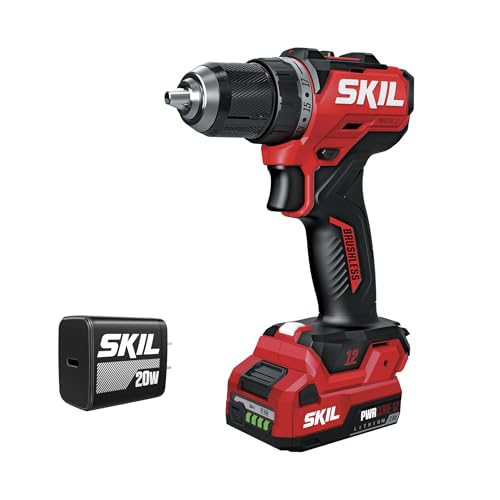
SKIL 12V Brushless Drill Driver Kit (DL6290A-11) — Best Value Brushless
SKIL’s PWR CORE 12 line is the disruptor of this category: brushless motors, modern features and prices a tier below the famous badges. This drill driver adds the specification the true minis omit — a 1/2-inch chuck — in a compact brushless body, with a 2.0Ah battery that charges by USB-C and a 20W charger in the box. For a household or a young tradesperson wanting one drill that does nearly everything, it is the value argument in physical form.
Strengths
- 1/2-inch chuck swallows the bits and hole saws 3/8-inch minis refuse
- Brushless motor at a price the big brands charge for brushed tools
- USB-C battery charging is genuinely convenient for travel and site work
Trade-offs
- Larger and heavier than the true minis; cabinet-interior access suffers accordingly
- SKIL’s 12V platform and dealer support are smaller than the big four’s
- No hammer mode, despite the bigger chuck’s ambitions
| Type | Drill driver kit |
| Chuck | 1/2 inch |
| Motor | Brushless |
| Battery | 2.0Ah, USB-C charging |
| Charger | 20W (included) |
The 1/2-inch chuck changes the ownership equation. Hole saws for locksets, larger spade bits, mixing small batches, the occasional oversized shank — the jobs that send 3/8-inch mini owners to borrow a bigger drill are this SKIL’s home turf, and it handles them in a body still far handier than an 18V tool. Its brushless motor means the value is in capability, not just price; this is not a cheap drill, it is an inexpensive good one.
USB-C charging sounds like a gimmick until a battery charges from the same brick as your phone in a hotel room before a morning install. SKIL is betting the platform on such modern touches, and for buyers not already married to a battery family, the bet is attractive. If you want one mini drill to be your only drill, this is the one in the guide designed for that job.
Best for: households and new tradespeople wanting one brushless drill that covers almost everything / Not suited for: tight-access specialists, for whom the Milwaukee subcompact exists
Check on Amazon — check the current price on Amazon before you buy, because listings and bundle contents change over time.
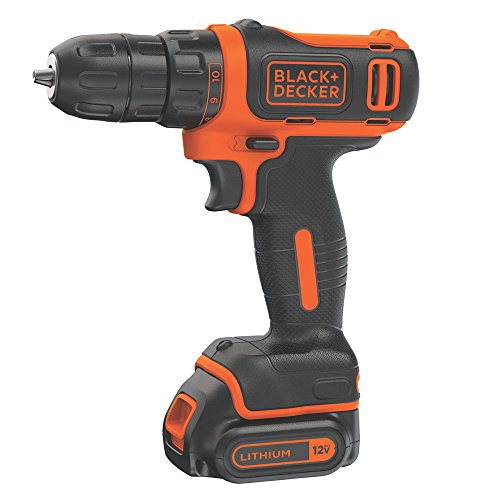
BLACK+DECKER 12V MAX Drill/Driver (BDCDD12C) — Best Budget
Not every drill buyer has a trade, a platform or a plan. The BDCDD12C is for the drawer in the kitchen: flat-pack furniture, curtain rods, picture hooks, the occasional pilot hole, with a battery and charger included and instructions a first-timer can follow. BLACK+DECKER has sold this formula for decades because it matches most households’ actual drilling with embarrassing accuracy.
Strengths
- Complete kit — drill, battery, charger — at the lowest tier in this guide
- Light, simple and unintimidating for occasional users
- Entirely sufficient for the assembly and hanging work households actually do
Trade-offs
- Brushed motor and modest power; sustained or large work is beyond its brief
- Battery platform is a household line, not a trade ecosystem
- Chuck and gearbox precision trail every other pick here
| Type | Drill/driver kit |
| Motor | Brushed |
| Includes | Battery and charger |
| Platform | BLACK+DECKER 12V MAX |
| Use | Household DIY and assembly |
Reviewing this drill against the FUEL-class tools above would be a category error, so judge it against its real rivals: the no-name drills of the marketplaces, with their fictional specifications and orphan batteries. Against those, the BLACK+DECKER is a paragon — a real company, a real warranty, honest modest capability, and a battery you can replace in five years. For a household drill that works a dozen times a year, those virtues outrank brushless motors entirely.
Its limits are cheerfully clear: it will assemble anything flat-packed, hang anything reasonable, and drill pilot holes all day; it will not bore joists or anchor into brick. Households whose ambitions grow past it will upgrade into one of the platforms above with no regret at the price paid. As the budget pick, it is the right tool at the right tier, honestly labelled.
Best for: households wanting a simple, complete, inexpensive drill for assembly and hanging / Not suited for: trades, keen DIYers, or anyone whose drilling is weekly and varied
Check on Amazon — check the current price on Amazon before you buy, because listings and bundle contents change over time.
Comparison Table
| Pick | Badge | Key spec | Best for |
|---|---|---|---|
| Milwaukee M12 Subcompact Brushless 3/8 Drill/Driver Kit | Best Overall | Subcompact brushless, 3/8in chuck | cabinet, panel, appliance and service work where access decides everything |
| Bosch GSB12V-300B22 12V Max Brushless Hammer Drill/Driver Kit | Best with Hammer Mode | Brushless hammer drill, 2x 2.0Ah | installers whose mini drill regularly meets brick, block and mortar fixings |
| DEWALT XTREME 12V MAX Drill/Driver Kit (DCD701F2) | Best Ergonomics | Brushless XTREME, 3/8in chuck | DEWALT loyalists and anyone who prizes grip and balance in a mini drill |
| Makita FD09R1 12V Max CXT Driver-Drill Kit | Best Build Feel | CXT slide battery, 3/8in chuck | woodworkers, finish trades and Makita loyalists who value refinement |
| SKIL 12V Brushless Drill Driver Kit (DL6290A-11) | Best Value Brushless | Brushless, 1/2in chuck, USB-C battery | households and new tradespeople wanting one brushless drill that covers almost everything |
| BLACK+DECKER 12V MAX Drill/Driver (BDCDD12C) | Best Budget | Budget kit, battery + charger included | households wanting a simple, complete, inexpensive drill for assembly and hanging |
The chuck column is the honest divider. The 3/8-inch drills are minis by design, trading bit capacity for access; the SKIL’s 1/2-inch chuck makes it a compact all-rounder instead. Neither is superior — but buying a 3/8-inch mini to run hole saws, or a bigger drill to work inside cabinets, is how money gets wasted in this category.
How to Choose a 12 Volt Mini Drill
Begin with the work’s address. If your drilling lives inside cabinets, carcasses, panels and ceiling voids, head length and weight are your specifications, and the true minis — Milwaukee subcompact, Bosch, DEWALT, Makita, all with 3/8-inch chucks — are your shortlist. If your drilling is general household and site work in open space, the SKIL’s 1/2-inch chuck buys versatility the minis cannot. Most buyers who choose wrong choose by torque numbers, which are the least comparable figures in the industry; choose by geometry and platform instead.
Brushless is worth it, with one exception
Brushless motors give a mini drill more power in less body, longer runtime per battery, and no brushes to wear. For anyone drilling weekly, the premium repays itself in the first year. The exception is the genuinely occasional household drill, where the BLACK+DECKER’s brushed simplicity costs so little that efficiency never gets a chance to matter. Between those poles, brushless is the default answer of this guide — five of our six picks use it.
The platform is the purchase
A 12 volt drill commits you to a battery family: Milwaukee M12, Bosch 12V Max, DEWALT 12V MAX, Makita CXT, SKIL PWR CORE 12, BLACK+DECKER 12V MAX — none interchange. M12 is the deepest catalogue in the class by a wide margin; Bosch, DEWALT and Makita cover the core trades with refinement; SKIL competes on value and modern touches. If a second tool — an impact driver above all — is in your future, price the platform’s version of it before choosing the drill. The cheapest drill can anchor the most expensive ecosystem.
Two speeds and a clutch are not optional
Insist on a two-speed gearbox and an adjustable clutch whatever tier you buy. High gear drills; low gear drives with control; the clutch saves screws, workpieces and your temper in flat-pack and cabinet materials. Every pick in this guide has both, which is not a coincidence — drills lacking them were excluded, because a mini drill’s whole purpose is controlled work in delicate places.
Getting Professional Results from a Mini Drill
Mini drills reward technique that bigger drills forgive. Use sharp bits — a small motor has no spare power to bully a dull bit through, and sharp bits are why one owner’s mini ‘punches above its weight’ while another’s struggles. Drill pilot holes in hardwood and near board edges; the mini’s control makes piloting fast, and split workpiece corners are the signature of skipped pilots. Let the drill’s speed do the cutting: feed pressure should be firm and steady, not your bodyweight, which overheats small motors and snaps small bits.
For driving, set the clutch by testing on scrap of the same material, and finish the last turns by hand on visible hardware in fine work — even the best clutch is a blunt instrument beside a cabinet hinge. Keep a magnetic bit holder and the four bits you actually use in the case with the drill; a mini drill’s portability advantage evaporates if its bits live in another room. Finally, treat runtime complaints as battery complaints until proven otherwise: a mini on a fresh 2.0Ah pack is a different tool from the same drill on a tired 1.3Ah veteran.
Mini Drill Accessories That Actually Earn Their Place
A mini drill’s usefulness is set as much by what spins in its chuck as by the drill itself, and a short, disciplined accessory kit outperforms a drawer’s worth of clutter. Start with bits matched to the mini’s parish: brad-point bits for clean wood holes, a small set of titanium or black-oxide bits for metal and plastic, and a spade bit or two at the sizes your work actually meets. Add a magnetic bit holder and the driver bits your world uses — Phillips, Pozi, Torx and hex in the common sizes — in a case that lives with the drill, because a mini drill separated from its bits is a paperweight with a battery.
Three accessories punch above their cost. A right-angle attachment reaches the fixings that even a subcompact body cannot square up to, inside carcasses and between joists, and converts the mini into the tool for the job nobody else can do. A countersink bit turns drilled holes into finished work, the difference between DIY-looking and made-looking in one spin. And a small drill-and-drive kit with a quick-change holder suits the pilot-then-drive rhythm of cabinet and assembly work, swapping bits at the speed the work changes its mind.
Resist the giant accessory sets whose hundreds of pieces exist to be counted rather than used; their bits are commonly soft, their cases crack, and the five pieces you need hide among ninety you do not. Buy the short list above in honest quality, replace individual bits as they dull — dull bits, remember, are what make good minis feel weak — and your compact drill will perform like the professional tool its makers intended.
Care, Storage and Battery Habits for a Long-Lived Mini
Mini drills die of neglect in predictable ways, all avoidable. Store the drill and its batteries indoors at household temperatures; lithium packs left in freezing vans or roasting boots age in dog years, and a pack stored fully flat for a season may never wake. For storage beyond a month, leave packs part-charged rather than brimmed or empty, and cycle them through the drill occasionally so none becomes the forgotten third battery that quietly expires.
Keep the chuck and gearbox honest with use rather than oil: spin the chuck through its range monthly, blow dust from the motor vents after dusty work, and never use the drill as a hammer, a pry or a mixing paddle beyond a small tin of paint — the mini’s gearbox is built for control, not abuse, and its replacement costs more than the bigger drill you should have fetched. Bits deserve the same respect: a dull bit forces the motor to work at its limit on every hole, so sharpen or replace at the first sign of burning rather than the last.
Finally, keep the kit together — drill, two batteries, charger, the short accessory case — in one bag or box that travels as a unit. The mini drill’s entire promise is that it is there, in the tight place, charged and equipped. Owners who keep the promise in their storage get it kept on the job.
12 Volt, 18 Volt, or Both: Placing the Mini in a Real Tool Kit
The mini drill’s keenest buyers are often owners of full-size drills deciding whether the little tool is an indulgence. The evidence from workshops that run both is that the platforms divide labour so cleanly that each makes the other last longer. The mini takes the volume work — assembly, installation, pilots, screws, everything in furniture and panels — which is most of the holes and nearly all of the fasteners in a typical week. The full-size drill is preserved for the force work it was built for: joists, big saws, masonry, mixing. Owners report the surprise that the mini, bought as a supplement, becomes the drill they describe as ‘mine’, while the big drill becomes shared infrastructure.
For first-time buyers the order matters more than the eventual destination. A mini first covers the broadest range of household and light trade reality, costs less to kit out with two batteries, and teaches the control that makes all later drilling better. The full-size drill added later arrives for identified work, not speculative work, and is bought with the knowledge of exactly which jobs the mini could not do — knowledge that prevents the classic error of buying the biggest drill in the shop for a life of flat-pack.
If your work is genuinely all heavy — construction framing, structural boring, daily masonry — invert the order without guilt; this guide’s minis will still be waiting when the installation and second-fix work calls. But for the mixed reality most drills actually live, the 12 volt mini is not the small option. It is the main option, with a larger understudy — and that is the spirit in which the six picks above were chosen.
The Two-Minute Test That Settles Any Mini Drill Choice
If this guide leaves you torn between two finalists, settle it physically. Both drills’ jobs will be done one-handed, overhead, in awkward light, more often than any brochure admits — so judge them as you will use them: pick each up, feel where the balance sits with a battery fitted, work the trigger slowly and feel whether the speed feathers or jumps, and run the chuck by hand for smoothness. The drill your hand prefers in two minutes is the drill your hand will prefer in year three, because ergonomics do not wear off — they compound. Spec sheets started your shortlist; the verdicts in this guide ranked it; let your own grip cast the deciding vote, and then buy the two-battery kit of the winner with a clear conscience.
How to Set Up a Mini Drill for Clean, Controlled Work
Sixty seconds of setup separates the holes you are proud of from the ones you fill. This routine suits every drill in this guide, on every material they are fit for.
Step 1: Fit the right bit, chucked true
Choose the bit for the material, insert it to a sensible depth, and tighten the keyless chuck firmly by hand. Spin it briefly and watch for wobble; a bit seated on a flute will orbit, oversize the hole and snap. Reseat until it runs true.
Step 2: Set speed gear before power
High gear for drilling small holes in wood and metal; low gear for driving screws and for larger bits that need torque over speed. Changing gears at a standstill, with the chuck stopped, keeps the gearbox healthy.
Step 3: Dial the clutch on scrap
For driving, start with a low clutch number and test-drive a screw into offcut material, raising the setting until the screw seats fully without the clutch slipping. That number, noted once, serves the whole job.
Step 4: Mark depth where it matters
For shelf pins, dowels and any blind hole, wrap a tape flag on the bit at the target depth. Mini drills are used in furniture precisely where a through-hole is a disaster; the flag is cheaper than the filler.
Step 5: Drill with a backer and a pilot
Back up exit faces with scrap to prevent blow-out, pilot hardwoods and edges, and clear chips from deep holes by pecking — in, out, in — rather than forcing one continuous plunge.
Step 6: Drive the last turn like you mean it
Run screws to near-seated under power, then judge the final seating by feel — by hand on fine hardware. Your mini’s control got you there; your hand finishes without cam-out scars on visible screws.
None of this is advanced; it is the accumulated habit of people whose small drills produce furniture-grade results. The mini drill’s promise is control, and control is mostly setup — the tool merely keeps the promise you make in the first minute.
Common Buying Mistakes
Buying on torque numbers
Every brand tests torque differently, and mini drills are bought for access and control anyway. A drill that fits the space with adequate power beats a stronger one that cannot enter it, every single job.
Forgetting the platform lock-in
Your drill’s batteries fit one family. Buying a bargain drill from a family whose impact driver, lights and future tools you do not want is the most expensive saving in the category. Price the ecosystem, not the drill.
Running big bits in a true mini
A 3/8-inch subcompact asked to swing a 65mm hole saw will overheat, stall and age early. That work belongs to a bigger drill; the mini’s dignity — and motor — depend on respecting the division.
Skipping pilot holes in hardwood
Small drills make piloting quick, yet owners skip it and split the very cabinet edges they bought a mini to protect. Thirty seconds of pilot is the cheapest insurance in woodworking.
Leaving the clutch at maximum
A clutch welded at its highest setting is a drill that snaps screws and chews soft flat-pack board. Set it on scrap per material; that is what it is for.
Buying the kit with one small battery
One battery means the drill rests while it charges, and the owner concludes the platform is weak. Two batteries — as the better kits here include — is the minimum viable system for real work.
Final Recommendation
The Milwaukee M12 Subcompact Brushless is the best 12 volt mini drill for the work minis exist to do: it is the smallest serious drill here, on the deepest platform, and it will change what you believe a small drill can reach. The Bosch GSB12V-300 is the pick when masonry fixings join the job — its hammer mode in a brushless mini body is a combination nobody else in this list offers — while DEWALT’s XTREME and Makita’s CXT serve the loyalists of feel and finish respectively, superbly.
Choose the SKIL if one brushless drill must do nearly everything on a budget, its 1/2-inch chuck being the versatility the minis trade away; choose the BLACK+DECKER if your drilling is honestly a dozen household jobs a year. Whichever platform you join, check price on Amazon for the two-battery kit configuration before buying — in this category, the second battery is the difference between a tool and a system.
Shop the top picks: Milwaukee M12 Subcompact Brushless 3/8 Drill/Driver Kit, Bosch GSB12V-300B22 12V Max Brushless Hammer Drill/Driver Kit, DEWALT XTREME 12V MAX Drill/Driver Kit (DCD701F2) — check price on Amazon for each before you buy.
Related guides in this series: Best 12 Volt Milwaukee Best 12 Volt Mini Air Compressor Best 12 Volt Meter Best 12 Volt Mini Fridge Sailboat
Frequently Asked Questions
Is a 12 volt mini drill powerful enough for real work?
For its intended work — assembly, installation, pilot holes, screws, light boring — yes, especially in brushless form. It complements rather than replaces a full-size drill for joist boring, big hole saws and heavy masonry. Most owners find the mini does the majority of their drilling by count.
What is the difference between a 3/8-inch and 1/2-inch chuck?
Capacity and size. A 1/2-inch chuck accepts larger bits and hole-saw arbors, making the drill a better only-drill; a 3/8-inch chuck allows a smaller, lighter head that fits tighter spaces. Choose by your work: access or versatility.
Do I need a hammer mode on a mini drill?
Only if your small-drill work includes masonry fixings — anchors in brick or block for brackets, tracks and shelving. If it does, the Bosch in this guide is the pick. If your minis live in timber and board, hammer mode is unused weight.
Are 12 volt batteries interchangeable between brands?
No. Each brand’s 12 volt line is its own interface — M12, Bosch 12V Max, DEWALT 12V MAX, Makita CXT and SKIL PWR CORE 12 are all mutually incompatible. Your first drill chooses your battery family, so choose the family, not just the drill.
Brushless or brushed for a mini drill?
Brushless for anyone drilling regularly: more power per size, longer runtime, no brush wear. Brushed is defensible only at the true budget end for occasional household use, where the BLACK+DECKER kit’s completeness matters more than efficiency.
How many batteries should a mini drill kit have?
Two, minimum, for anyone working beyond a single task — one in the drill, one charged or charging. Kits in this guide with two 2.0Ah batteries are ready systems; single-battery kits should be priced with a second battery already added in your head.
Can a 12 volt mini drill handle decking and outdoor screws?
For repairs, brackets and modest runs, the brushless picks here drive decking screws without drama, especially on larger battery packs. For building an entire deck — hundreds of long screws in treated timber — a full-size drill or impact driver is the right tool, and the mini becomes the pilot-hole and helper drill, a division of labour it performs happily.
How long do 12 volt mini drill batteries last on a charge?
It depends on the work’s honesty more than the battery’s label. A 2.0Ah pack in a brushless mini will drive screws and drill pilot holes through a long day of assembly or installation work, because those tasks sip. Continuous boring, hole saws and masonry drain the same pack in a fraction of the time, because those tasks gulp. The practical system is the one this guide keeps recommending: two batteries minimum, one working while one charges, so the question stops mattering. Owners who run out of charge mid-job almost always own one battery; owners who never think about charge own three and a rapid charger. Runtime figures in listings assume the manufacturer’s chosen task, not yours — buy the rotation, not the number.


