Disclosure: airfryerkitchensupply.com is reader-supported. When you buy through links on our site, we may earn an affiliate commission at no extra cost to you.
Where to buy
For the best composting toilets for tiny houses, buy from a listing you can verify: every linked pick below was confirmed in Amazon’s catalog, brand and model matched to the returned listing before a link was attached. Amazon suits tiny-house buyers well — the toilet arrives at your build site or storage unit, the listing confirms the exact variant and what is in the box, and returns are painless if your tape measure lied to you. Check price on Amazon on the listing itself, and measure your space twice before ordering any toilet on this page.
- Separett Tiny Self-Contained Urine-Separating Compost Toilet — Best Overall: Check the current price on Amazon
- OGO Origin Compact Composting Toilet — Best Push-Button Convenience: Check the current price on Amazon
- Compo Closet Cuddy Composting Toilet — Best Budget Pick: Check the current price on Amazon
- Nature’s Head Self Contained Composting Toilet with Close Quarters Spider Handle — Best for Full-Time Reliability: Check the current price on Amazon
- TROBOLO WandaGO Composting Toilet — Best Portable and Height-Adjustable: Check the current price on Amazon
- Separett Weekend Prime Urine-Separating Compost Toilet — Best Non-Electric: Check the current price on Amazon
The best composting toilets for tiny houses solve three problems at once: they need no water, no sewer and no septic connection — the three systems a tiny house least wants to build — and they have to do it inside the smallest bathrooms in housing. The current market gives tiny-house owners two mature philosophies. Urine-separating dry toilets, led by Separett, keep solids dry in a lined chamber and ask almost nothing of the owner. Medium-based composters, led by the Nature’s Head and the OGO Origin, break solids down inside the unit with coco coir and an agitator, trading a little routine for finished compost and no bags.
All six picks below are verified, and all six are genuinely tiny-house appropriate — but they are not interchangeable. They differ in footprint, in power appetite, in capacity and in how much of your attention they want each week. In a tiny house the toilet is not hidden away in a distant bathroom; it is part of your living space, so the match matters more here than in any other housing type. Read the trade-offs, count your amp-hours, measure your corner, and choose for the house you actually built.
In this guide
Quick Picks
Separett Tiny Self-Contained Urine-Separating Compost Toilet — Best Overall. A self-contained urine-separating toilet designed from the start for vans, cabins and tiny houses, with a built-in urine container, an emptying sensor, and no medium or mixing to manage. Check the current price on Amazon
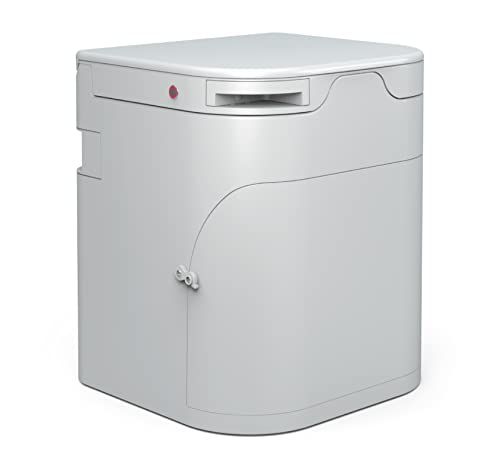
OGO Origin Compact Composting Toilet — Best Push-Button Convenience. A 15-inch-footprint composting toilet with electric push-button mixing — the easiest daily routine in the tiny-house category, provided your power system can feed its fan and motor. Check the current price on Amazon
Compo Closet Cuddy Composting Toilet — Best Budget Pick. A waterless, self-contained unit with a 3.9-gallon chamber, 12V fan and carbon filter that has become a tiny-house staple because it fits the wet-bath and closet corners other toilets cannot. Check the current price on Amazon
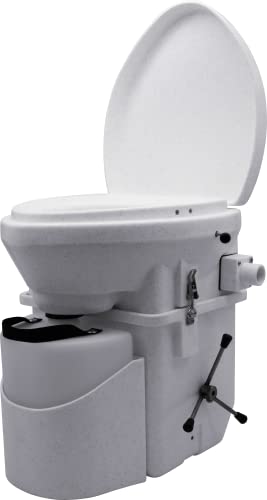
Nature’s Head Self Contained Composting Toilet with Close Quarters Spider Handle — Best for Full-Time Reliability. The proven medium-based composter with a folding spider handle made for close quarters — the choice when a tiny house is a permanent home and the toilet must simply work for years. Check the current price on Amazon
TROBOLO WandaGO Composting Toilet — Best Portable and Height-Adjustable. A urine-diverting dry toilet with height adjustment that stays genuinely portable — right for tiny houses on wheels that move, multi-use spaces, and owners who want to lift the toilet out for cleaning or travel. Check the current price on Amazon
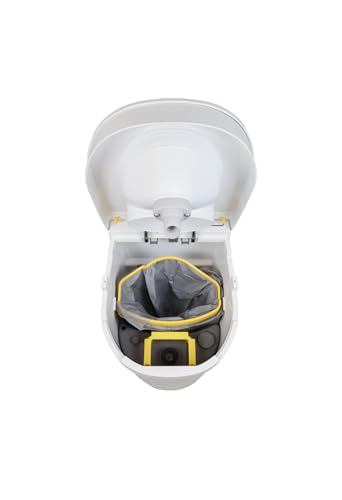
Separett Weekend Prime Urine-Separating Compost Toilet — Best Non-Electric. A non-electric, self-contained urine-separating toilet for the tiny house with no power to spare — nothing to wire, nothing drawing standby current, ready whenever you are. Check the current price on Amazon
How These Picks Were Chosen
We filtered for tiny houses specifically, which eliminated several good house toilets that are simply too big, too power-hungry or too installation-heavy for the format. Every surviving model is self-contained, waterless and workable in a small footprint. Every linked model was then verified: brand and model searched in Amazon’s catalog, the returned title matched to the product described, and only confirmed models received links. Anything we could not confirm stayed out rather than being written up on reputation.
Ranking within the list weighs, in tiny-house order: footprint and fit, power draw (including the honest answer ‘none’), capacity for one- and two-person households, the weekly routine, and tolerance for the tiny-house realities of movement, guests and long empty stretches. No prices and no star ratings are printed, because both change too often to be honest in a static guide — check price on Amazon at the listing when you are ready.
One more filter deserves naming, because it quietly removed several fashionable products: spare-parts and consumables sanity. A tiny house cannot store a season of anything, so the toilet’s ongoing needs — a brick of coir, a roll of liners, a bottle — had to be small, light, shelf-stable and easy to reorder. Every pick here passes that test, and it is part of why the list looks the way it does.
The 6 Best Composting Toilets for Tiny Houses

Separett Tiny Self-Contained Urine-Separating Compost Toilet — Best Overall
Tiny houses punish wasted space and wasted effort, and the Separett Tiny is engineered against both. It is a self-contained urine-separating toilet: urine is diverted at the bowl into a built-in container inside the unit — no external bottle sticking out in your tiny bathroom, no hose to route through a wall you may not have — while solids collect in a lined chamber. An emptying sensor tells you when the urine container needs attention, which sounds like a small thing until you have lived with a bottle-based toilet in 200 square feet and learned that overflows are the one accident you never want twice.
There is no composting medium, no crank and no mixing, because the Tiny follows the Separett philosophy: keep the solids dry by separation, keep the air moving, and let the owner’s routine be nothing more than emptying a container and swapping a bag. For a tiny house, where the bathroom is often a wet room or a corner of the main space, that simplicity is worth more than any single feature.
Check the current price on Amazon
Strengths
- The built-in urine container keeps the whole system inside one compact box — no external bottle, no drain hose — which is exactly what tiny bathrooms and wet rooms need.
- The emptying sensor removes the guesswork and the overflow risk that come with hidden urine containers.
- No additives or mixing means no medium to store in a house where every cupboard is already spoken for.
Trade-offs
- Solids are bagged, not composted in the unit, so the composting or disposal step happens outside and must follow your local rules.
- Self-contained capacity is sized for one or two people; a tiny house hosting frequent guests will cycle the container and bags quickly.
- As a urine-separating design it still depends on everyone sitting, every time — the standing-use problem applies here as everywhere.
| Spec | Detail |
|---|---|
| Type | Self-contained urine-separating compost toilet |
| Urine handling | Built-in container with emptying sensor |
| Additives | None — no mixing needed |
| Intended use | Vans, RVs, cabins, tiny homes (per Amazon listing) |
Living with the Tiny is a study in small routines done on time. The sensor prompts you before the urine container is full; you slide it out, empty it into a drain or dilute it for the garden, and slide it back. Solids accumulate dry in the lined chamber and leave in a tied bag. There is no moisture balance to babysit, no coir brick to rehydrate in your tiny kitchen sink, and no crank arc to plan the bathroom layout around. For solo dwellers and couples — the overwhelming majority of tiny-house households — the capacities line up with real life rather than with brochure optimism.
Choose the Tiny over the composting models below if your tiny house is truly small, your storage is precious, and you value a sealed, simple system over in-unit composting. Choose a medium-based model if producing finished compost matters to you or if bag consumables offend your budget or your principles.
Best for: Tiny houses that want the smallest, simplest full-time dry toilet / Not suited for: Owners who want solids composted inside the unit rather than bagged
OGO Origin Compact Composting Toilet — Best Push-Button Convenience
The OGO Origin makes a specific bet: that in a tiny house, the best composting toilet is the one whose daily interaction is a single button press. Its footprint is just 15 inches, it diverts urine like the other serious designs here, and its electric mixing system churns the composting medium at the touch of a button — no crank to swing in a bathroom where swinging room is the one thing you do not have. For tiny houses built with a decent solar array or regular shore power, that bet pays off every single day.
The Origin also looks and feels like a modern appliance rather than expedition equipment, which matters in a tiny house where the toilet is rarely hidden behind a real door in a real bathroom — it sits in your living space, and its design acknowledges that.
Check the current price on Amazon
Strengths
- Push-button electric mixing is the easiest routine of any medium-based toilet here — no crank arc to plan around, no handle to work by hand or foot.
- The 15-inch footprint is the smallest on this list, opening up wet baths and closet conversions that rule out everything else.
- True in-unit composting with medium, so solids break down in the toilet and no liner bags are consumed.
Trade-offs
- The motor and fan draw power continuously and on demand; a tiny house on a small battery bank must budget for it honestly.
- Compact capacity means one to two users, and the chamber will cycle fast if the house hosts often.
- More components — motor, button, fan — mean more eventual service items than a crank or a bag.
| Spec | Detail |
|---|---|
| Footprint | 15in (per Amazon listing) |
| Mixing | Electric push-button |
| Type | Compact composting toilet with urine diversion |
Power is the whole conversation with the Origin in a tiny house. On a modern build — lithium bank, a few hundred watts of solar, an inverter that is already running the fridge — the toilet’s draw disappears into the noise and the button-press routine is pure gain. On a minimalist build with a small lead-acid bank and a panel or two, the same draw competes with lights and laptops, and a non-electric or hand-cranked model is the honest recommendation. Neither answer is wrong; the mistake is buying before you have done the arithmetic on your own system.
If the arithmetic works, the Origin is arguably the most livable toilet on this page for a small space: smallest footprint, simplest routine, real composting. That is a rare combination, and it is why it sits near the top of this list despite the power caveat.
Best for: Tiny houses on reliable solar or shore power that want a button instead of a crank / Not suited for: Off-grid tiny houses counting every amp-hour

Compo Closet Cuddy Composting Toilet — Best Budget Pick
The Compo Closet Cuddy earned its tiny-house following the practical way: it fits. Wet baths, under-loft corners, the not-quite-a-bathroom nook in a converted bus or a 160-square-foot cabin — the Cuddy’s compact body and 3.9-gallon chamber were designed for exactly these spaces, and it brings the full working kit with it: urine diversion, a 12V fan, a carbon filter, and no chemicals anywhere. It is also the budget pick on this list, which matters in tiny-house builds where the toilet budget competes with solar, insulation and everything else.
The carbon filter deserves emphasis for tiny houses specifically. Venting outside is always best practice, but tiny houses on wheels move, park in new places, and sometimes cannot present a perfect vent route in every location. The filtered fan gives the Cuddy a margin of odor control that purely vent-dependent designs do not have.
Check the current price on Amazon
Strengths
- The value pick that does not feel like a compromise: diversion, fan, filter and a sealed self-contained body at the friendly end of the category’s pricing.
- The 3.9-gallon chamber and small footprint suit the wet baths and closet bathrooms that define tiny-house plumbing reality.
- The carbon filter adds odor-control flexibility for houses on wheels whose venting situation changes with every parking spot.
Trade-offs
- Capacity is the honest limit: one full-time user is comfortable, two will empty on a noticeably short cycle.
- Born for mobile and tiny spaces, its long-term durability record in permanent daily service is shorter than the Nature’s Head’s.
- Compact seat proportions should be checked by larger users before ordering — tiny toilets are, in fact, tiny.
| Spec | Detail |
|---|---|
| Solids capacity | 3.9 Gal (per Amazon listing) |
| Ventilation | 12V fan with carbon filter |
| Chemicals | None — waterless and self-contained |
Our guidance for the Cuddy is about matching, not about quality. Solo tiny-house dweller? It is very hard to beat for the money and the space. A couple in a tiny house who both work away from home all day? Still workable, with a shorter emptying rhythm. A couple with a home-based life and frequent guests? Step up to the Nature’s Head or the Separett Tiny and buy back your weekends. The Cuddy also makes an excellent first composting toilet: if you later upgrade, it retires gracefully to the workshop, the guest shed or the camper, and nothing about its installation is wasted money.
Mount it solidly. In mobile builds it is secured for the road; in a stationary tiny house, firm floor mounting stops the micro-shifts lightweight units develop and makes it feel like furniture, not gear.
Best for: Budget tiny-house builds and one-person households / Not suited for: Two full-time users who will empty a small chamber too often
Nature’s Head Self Contained Composting Toilet with Close Quarters Spider Handle — Best for Full-Time Reliability
Every category has the product owners recommend when reliability matters more than novelty, and in composting toilets it is the Nature’s Head. The Close Quarters Spider Handle version is the tiny-house specification: the folding spider crank sits tight to the body, so the unit fits the narrow bathrooms and close wall clearances that tiny houses specialize in, while the composting system inside — urine diversion, a medium chamber, a hand-turned agitator, a 12V vent fan — is the most field-proven arrangement in the business.
For a tiny house that is a permanent home rather than an adventure, that track record is the argument. This toilet has spent years in cabins, liveaboard boats and off-grid homes; its ownership routine is documented by thousands of users, its failure modes are known and boring, and its parts are obtainable. Novelty is a risk a full-time home should not take with its only toilet.
Check the current price on Amazon
Strengths
- The benchmark for full-time reliability: in-unit composting that turns solids into a soil-like material, with no bags to buy or carry out.
- The close-quarters spider handle folds tight, solving the crank-clearance problem that rules the standard model out of many tiny bathrooms.
- Urine diversion plus continuous fan ventilation is the proven odor-control formula, validated in exactly the small, enclosed spaces tiny houses are.
Trade-offs
- You own the medium: buying, rehydrating and moisture-managing coco coir or peat moss is a permanent part of the routine.
- It needs a vent route to outside air and a 12V supply for the fan — trivial in most builds, a real project in a finished, sealed tiny house.
- The urine bottle empties every day or two; in a tiny house that trip is short, but the rhythm is non-negotiable.
| Spec | Detail |
|---|---|
| Type | Self-contained composting toilet with urine diversion |
| Agitation | Hand-crank spider handle (close-quarters) |
| Ventilation | 12V fan with vent hose |
| Medium | Coco coir or peat moss (owner supplied) |
The Nature’s Head asks more of its owner than the Separett Tiny and gives more back: finished compost instead of bags, and independence from consumables beyond medium. Tiny-house owners who heat with wood, haul their water and split their own firewood tend to find the routine trivially small. Owners who chose a tiny house for minimalism of effort rather than of footprint should look honestly at the button and bag models above before committing.
Installation tip specific to tiny houses: vent through the wall low and short if your layout allows, rather than up through the roof — fewer penetrations in a small roof, an easier run, and the fan handles the short route effortlessly. Seal the penetration properly; a tiny house envelope is too well built to spoil with a leaky hole.
Best for: Full-time tiny-house dwellers who want in-unit composting and a long track record / Not suited for: Tiny houses with no vent route and no 12V supply to spare

TROBOLO WandaGO Composting Toilet — Best Portable and Height-Adjustable
The TROBOLO WandaGO approaches the tiny-house toilet from a different direction: portability. It is a urine-diverting dry toilet with height adjustment, designed to be picked up, moved, emptied and cleaned without tools or plumbing. That sounds like a camping brief, and it is — but it maps onto real tiny-house lives surprisingly well. Tiny houses on wheels move. Layouts change. The bathroom corner becomes a storage corner for a season. A toilet that lifts out for a deep clean, travels to the outdoor shower project, or simply adjusts its seat height for different users solves problems fixed units cannot.
Height adjustment is not a gimmick: tiny-house bathrooms often pair the toilet with improvised platforms, steps or low lofts, and a seat that can be set at a comfortable height for the actual users — including children and older visitors — is a genuine ergonomic advantage in improvised spaces.
Check the current price on Amazon
Strengths
- True portability: no installation, no vent run, no wiring — set it down and it works, which suits moving houses and evolving layouts.
- Height adjustment adapts the seat to users and to the platforms and steps tiny bathrooms often involve.
- Urine diversion keeps solids dry, so the dry-toilet fundamentals — and the odor control that comes with them — hold without any power.
Trade-offs
- A portable unit feels less permanent, and in a finished tiny-house bathroom it can read as gear rather than furniture.
- Without a fan, odor control depends entirely on separation discipline and on emptying and cleaning on schedule.
- Capacity is travel-sized; full-time couples will service it often.
| Spec | Detail |
|---|---|
| Type | Urine-diverting dry toilet, portable |
| Seat | Height adjustable |
| Power | None |
We place the WandaGO on this list for the tiny houses that do not sit still — the THOW that relocates with work, the cabin that hosts a rotating cast, the build that is still evolving. It is also the sensible choice while a tiny house is under construction: use it from day one on site, then decide later whether it stays as the house toilet or retires to the outdoor role. What it is not is the best answer for a settled, full-time, plumbed-and-finished tiny home — the Separett Tiny and Nature’s Head serve that house better, and this guide says so plainly.
If you do run a WandaGO full-time for a stretch, treat cleaning as the system: a thorough wash at every emptying, a dry storage spot for the spare liner or container, and strict sit-down discipline keep a fanless dry toilet pleasant in a small space.
Best for: Tiny houses on wheels and flexible layouts where the toilet must move / Not suited for: Buyers who want a fixed, plumbed-in permanent installation
Separett Weekend Prime Urine-Separating Compost Toilet — Best Non-Electric
Some tiny houses have no electrical system worth the name — a lantern, a phone charger, and that is the list. The Separett Weekend Prime was built for that world: a non-electric, self-contained urine-separating toilet that needs no fan, no motor, no wiring and no standby draw, because there is nothing in it that uses power. Urine separates at the bowl, solids collect in a lined chamber, and the toilet simply works, silently, in a cabin or tiny house that may sit empty for weeks between visits.
That last point is the Prime’s quiet superpower for tiny houses used part-time: nothing degrades while you are away. There is no medium to dry out or drown, no battery to maintain, no fan bearing wearing in an empty house. You arrive, and the toilet is exactly as ready as the day you left.
Check the current price on Amazon
Strengths
- Completely non-electric — the only pick here that asks literally nothing from a power system, ever.
- Self-contained urine separation keeps solids dry and the space odor-free without medium, cranks or additives.
- Tolerates long empty stretches perfectly, which suits seasonal tiny houses and weekend cabins down to the ground.
Trade-offs
- No fan means placement matters: give it a room with some natural air movement, not a sealed, stagnant box.
- Bag-based solids handling, like all Separett designs — the composting or disposal step happens outside the unit.
- Part-time sizing: a full-time couple will find its chamber cycling faster than they would like.
| Spec | Detail |
|---|---|
| Power | None — non-electric |
| Type | Self-contained urine-separating toilet |
| Intended use | Off-grid living and emergency use (per Amazon listing) |
For the full-time tiny-house dweller with a real electrical system, the Prime is the backup singer, not the lead — the Separett Tiny does the same job with a sensor and a container system designed for daily rhythms. But for the off-grid cabin build, the hunting-land tiny house, the emergency-ready spare, or the owner who simply refuses to wire a toilet, the Weekend Prime is the most rational product on this page. It also pairs well as a second unit: many tiny-house owners run a main toilet plus a Prime in the outdoor bathhouse or workshop, where running power would be absurd.
One placement rule decides success with any fanless design: air. A louvered door, a small passive vent in the wall, or simply a room that breathes will keep a urine-separating toilet sweet. Seal it in a plastic box of a wet room with zero airflow and even the best separation cannot save you.
Best for: Off-grid tiny houses with minimal or no electrical system / Not suited for: Full-time couples who need maximum capacity in daily use
Comparison Table
| Pick | Badge | Key spec | Best for |
|---|---|---|---|
| Separett Tiny Self-Contained Urine-Separating Compost Toilet | Best Overall | Self-contained urine container with emptying sensor, no additives or mixing | Tiny houses that want the smallest, simplest full-time dry toilet |
| OGO Origin Compact Composting Toilet | Best Push-Button Convenience | 15in footprint, electric push-button mixing, urine diversion | Tiny houses on reliable solar or shore power that want a button instead of a crank |
| Compo Closet Cuddy Composting Toilet | Best Budget Pick | 3.9 Gal capacity, 12V fan, carbon filter, no chemicals | Budget tiny-house builds and one-person households |
| Nature’s Head Self Contained Composting Toilet with Close Quarters Spider Handle | Best for Full-Time Reliability | Urine-diverting, hand-crank agitator, 12V vent fan | Full-time tiny-house dwellers who want in-unit composting and a long track record |
| TROBOLO WandaGO Composting Toilet | Best Portable and Height-Adjustable | Urine-diverting dry toilet with height adjustment, portable | Tiny houses on wheels and flexible layouts where the toilet must move |
| Separett Weekend Prime Urine-Separating Compost Toilet | Best Non-Electric | Non-electric, self-contained urine-separating design | Off-grid tiny houses with minimal or no electrical system |
How to Choose a Composting Toilet for a Tiny House
Measure first, and measure like a tiny-house owner: not just the floor footprint, but the door swing, the knee room when seated, the headroom under a loft, and — for crank models — the arc the handle needs. A toilet that fits on paper but cannot be sat on comfortably, or whose crank hits the shower wall, does not fit. The models here range from the OGO Origin’s 15-inch footprint to the Nature’s Head’s compact-but-conventional body; tape the outline on your floor and sit in it before you order.
Do the power arithmetic honestly
Fans and electric mixers draw little, but tiny-house power systems are little too. A continuously running fan is a 24-hour load; an electric mixer adds short daily draws. On a lithium bank with a few hundred watts of solar, all of it is noise. On a minimal system, it is the difference between comfort and rationing — and the non-electric Separett Weekend Prime and the purely mechanical designs exist precisely for that house. Count your loads before you fall for a button.
Bottle, bag or medium — pick your routine
Every design here makes you handle something. Bottle designs make you carry urine out every day or two. Bag designs make you tie off and remove solids. Medium designs make you manage coir moisture and turn a crank or press a button. None of these is objectively worse; they are different textures of ownership. The tiny-house mistake is choosing the routine you wish you had rather than the one you will actually keep up in February, in the rain, with a head cold.
Plan for guests and for absence
Tiny houses host bravely out of proportion to their size, and guests stress a composting toilet in two ways: volume, and technique. A spare liner, a spare bottle and a friendly note in the bathroom cover both. Absence stresses the opposite direction — medium dries, fans sit idle — and the designs differ: separators and the non-electric Prime shrug off empty months, while medium-based units want a moisture check on your return. Match the toilet to your calendar as well as your floor plan.
Where Does the Waste Go in a Tiny House?
The question every tiny-house visitor asks, answered plainly. Urine, diluted, is a nitrogen-rich garden input used by many owners on ornamental plantings, or it goes into any ordinary drain where local rules allow. Solids from a bag system are tied off and either composted further in a dedicated outdoor pile — away from food gardens and water sources — or disposed of with household waste where regulations permit. Solids from a medium-based composter come out largely broken down and follow the same ornamental-or-disposal routes.
Rules vary by county and by whether your tiny house is on wheels, on a foundation, or in an RV park, and gray areas are common. The responsible pattern is consistent everywhere: keep everything away from wells and waterways, follow local health guidance, and if your tiny house sits in a park or on rented land, confirm the landowner’s expectations before your first emptying day, not after.
How Do Composting Toilets Compare With the Other Tiny-House Options?
It is worth being honest about the alternatives, because tiny-house owners cross-shop all of them. A cassette toilet is cheap and truly portable, but it is a chemical holding tank with a small capacity: you will carry it to a dump point every few days, and in a full-time tiny house that rhythm wears thin within a month. An incinerating toilet burns waste to ash and asks almost nothing of you, but it demands serious power or propane, serious money, and a vent that handles heat — a poor match for most tiny electrical systems. A plumbed flush toilet is the familiar option, and where a tiny house sits permanently on a foundation with water and sewer at the lot line, it is a perfectly rational one; its cost is the blackwater tank or sewer connection, the water system capacity, and the freeze risk that the waterless designs simply do not have.
Against that field, the composting and urine-separating designs on this list win the tiny-house argument on balance: no water system load, no blackwater tank, no dump-point dependency, no freeze risk, and capacities measured in weeks rather than days. Their price is the routine — a few minutes of attention on a regular cycle. Tiny-house living already runs on that bargain in every other system, from water hauling to wood stoves, which is why these toilets have become the default choice of the movement rather than a niche experiment.
How to Set Up a Composting Toilet in a Tiny House Bathroom
Setup in a tiny house is faster than in a conventional house — no plumbing to tie into — but the small space makes precision matter more.
- Tape the footprint on the floor, sit on a box at seat height inside the tape, and check knees, door swing and headroom before unboxing anything.
- Secure the unit to the floor. In a house on wheels this is non-negotiable for travel; in a stationary tiny house it still stops shifting and makes the seat feel solid.
- Run the vent (fan models) by the shortest honest route to outside air — through the wall beats through the roof in most tiny builds — and seal the penetration against the house’s tight envelope.
- Connect 12V power for fan or mixer models from the house battery system, fused, with the switch or plug reachable for service.
- Load the system: medium rehydrated to a wrung-out-sponge feel for composters, a fresh liner fitted for separators, urine container seated and checked.
- Do a water test on the urine path with a cup of clean water to prove diversion works and nothing leaks — far better today than after a week of use.
- Set up the support kit in arm’s reach: spare medium or liners, a small spray bottle of vinegar water for the bowl, and the guest note explaining the sit-down rule.
For the first fortnight, check medium moisture or bag fill every few days until the rhythm of your household reveals itself. After that, the routine runs itself: urine out on its short cycle, solids on theirs, a wipe-down with vinegar water as needed, and a fan or filter check each season.
Common Buying Mistakes
Buying the toilet before measuring the bathroom. Tiny-house bathrooms forgive nothing. A two-inch surprise means a return, a redesign, or a toilet in the living room. Tape, sit, measure, then order.
Forgetting the power budget. A fan that runs 24 hours is a real load on a small system. Owners who skip the arithmetic end up unplugging the fan — and unplugged fans are how odor stories begin.
Skipping the floor mounting. A lightweight toilet that creeps across the floor breaks its vent seal and its owner’s patience. Four screws prevent both.
No guest plan. One uninstructed standing guest can undo a month of good separation. A note, a spare liner and thirty seconds of welcome-aboard briefing are the whole fix.
Treating emptying as an emergency instead of a rhythm. Every problem story in this category starts with ‘we kept putting it off.’ Put the cycles on the calendar like any other house chore.
Final Recommendation
If you want one recommendation: the Separett Tiny is the best all-round composting toilet for most tiny houses — compact, self-contained, sensor-managed and simple enough that the routine never becomes a topic. Power-rich builds that want the easiest daily interaction should choose the OGO Origin; budget builds, the Compo Closet Cuddy; full-time traditionalists, the Nature’s Head; moving houses, the TROBOLO WandaGO; and power-free cabins, the Separett Weekend Prime.
Buy your consumables with the toilet — liners, medium, a spare container — because in a tiny house there is no garage shelf of spares to fall back on, and the first month sets the habits that make these toilets succeed for years of small-space living.
The verified shortlist, with live listings:
- Separett Tiny Self-Contained Urine-Separating Compost Toilet — Best Overall: Check the current price on Amazon
- OGO Origin Compact Composting Toilet — Best Push-Button Convenience: Check the current price on Amazon
- Compo Closet Cuddy Composting Toilet — Best Budget Pick: Check the current price on Amazon
- Nature’s Head Self Contained Composting Toilet with Close Quarters Spider Handle — Best for Full-Time Reliability: Check the current price on Amazon
- TROBOLO WandaGO Composting Toilet — Best Portable and Height-Adjustable: Check the current price on Amazon
- Separett Weekend Prime Urine-Separating Compost Toilet — Best Non-Electric: Check the current price on Amazon
Keep researching the rest of this toilet cluster here: Best Composting Toilets For Houses Best Compost Toilets Tiny Homes Best Compost Toilets For A House Best Composting Toilets For Camping Best Compost Rv Toilets Best Compact Rv Toilets
Related guides
Frequently Asked Questions
How much space does a composting toilet need in a tiny house?
Less than a flush toilet, but plan honestly. The compact models here start at a 15-inch footprint for the OGO Origin, and most self-contained units fit in a footprint similar to a standard toilet — the real questions are knee room, door swing and, for crank models, handle clearance. Tape the outline on the floor and physically sit in the space before ordering; that two-minute test prevents nearly every fit problem.
Can a composting toilet handle two full-time people in a tiny house?
Yes — that is the design center of most of this list. One to two full-time users is the comfortable capacity of the self-contained models here, with emptying cycles that shorten as use rises. What two people cannot do is ignore the routine: urine containers fill on a day-or-two cycle and solids on a weekly-to-monthly one depending on the design. Couples who keep the rhythm report no capacity stress at all.
Do composting toilets smell inside a small space?
A working urine-diverting toilet does not smell of waste, which is fortunate, because in a tiny house there is nowhere for a smell to hide. Odor almost always traces to a fixable cause: a fan not running, a vent route blocked or kinked, medium gone too wet, or urine reaching the solids through standing use. Fix the cause and the smell goes with it — the designs themselves are proven in spaces far smaller than a tiny house, including boat cabins.
What power does a composting toilet need in an off-grid tiny house?
It ranges from none to modest. The Separett Weekend Prime uses no electricity at all. Fan-vented models draw a small continuous 12V load for the fan. The OGO Origin adds an electric mixer on top of its fan. On a modern lithium-and-solar build all of these are minor loads; on a minimal system, count the fan’s 24-hour draw explicitly before choosing, or pick the non-electric design.
Can you travel with a composting toilet in a tiny house on wheels?
Yes, and this is one of their great advantages over flush systems: no water to slosh, freeze or spill. Secure the unit to the floor, empty the urine container before a long drive, and make sure lids and chambers are latched. Portable designs like the TROBOLO WandaGO are built to be lifted out entirely. Many THOW owners consider the composting toilet the single most travel-friendly plumbing choice they made.
What do you do with the waste when the tiny house is parked on rented land or in a park?
Ask first, and follow the answer. Common accepted routes are bagged solids into the site’s waste stream where permitted, urine diluted onto appropriate ground away from water, or use of a designated dump point. Rules differ by park, county and landowner, and being upfront before you park protects both your stay and the reputation of composting toilets generally. Never empty anything near wells, streams or food gardens.


