Disclosure: airfryerkitchensupply.com is reader-supported. When you buy through links on our site, we may earn an affiliate commission at no extra cost to you.
Finding the best dry toilets tiny houses can actually live with means ignoring camping-toilet marketing and judging waterless systems the way a full-time tiny-house resident has to: by odor control over weeks rather than days, by how the waste is genuinely handled, by footprint and venting in a very small room, and by what emptying day really looks like. A dry toilet in a tiny house is not an occasional-use accessory. It is the household’s only sanitation system, used every day, in a space where the bathroom may sit a few steps from the kitchen and the bed.
That daily-use reality splits this category into three honest families. Composting toilets break waste down with a bulking medium and venting. Urine-separating (diverting) toilets keep liquids and solids apart so neither becomes the far smellier mixture. Sealed-bag dry-flush toilets wrap each use away with no composting at all, trading consumable cartridges for the simplest possible routine. All six picks below were confirmed for the airfryerkitchensupply.com storefront, and each one is assessed below on the routine it actually creates — because in a tiny house, the routine matters more than the brochure.
One more piece of honesty before the picks: a dry toilet changes a tiny house’s infrastructure, not just its bathroom. There is no water supply to run, no black tank to pump and often no septic connection to permit, which is why dry systems are the default in off-grid and mobile tiny homes. In exchange, the household takes over the small, regular tasks a sewer normally hides. The picks below are judged as infrastructure — on whether those tasks stay small, predictable and smell-free across years of daily use.
Where to buy
Every confirmed pick in this guide is sold through Amazon, where you can check the current price on Amazon for each model, confirm dimensions and what is included in the box on the listing, and arrange delivery. Start with these confirmed options:
- Nature’s Head Self-Contained Composting Toilet with Close Quarters Spider Handle — Best Overall: Check the current price on Amazon
- Separett Tiny Self-Contained Urine-Separating Toilet — Best Urine-Separating Design: Check the current price on Amazon
- Laveo Dry Flush Toilet — Best No-Compost Option: Check the current price on Amazon
- OGO Origin Compact Composting Toilet — Best Smallest Footprint: Check the current price on Amazon
- TRELINO Composting Toilet Evo S White — Best Lightweight Separating Option: Check the current price on Amazon
- Compo Closet Cuddy Composting Toilet — Best for Mobile Tiny Houses: Check the current price on Amazon
Always re-check the listing for the exact variant you intend to order. Several of these systems come in handle, size or capacity variants that share a family name, and the consumables each system needs — compost medium, bags or cartridges — are ongoing purchases worth pricing into your decision before the toilet itself arrives.
In this guide
Quick Picks
- Best Overall: Nature’s Head Self-Contained Composting Toilet with Close Quarters Spider Handle — The long-standing benchmark for full-time tiny-house composting, with urine separation, a vented solids bin and a crank handle shaped for tight bathrooms — Check the current price on Amazon
- Best Urine-Separating Design: Separett Tiny Self-Contained Urine-Separating Toilet — A compact separating toilet that needs no compost medium and no mixing, with a built-in urine container that tells you when it needs emptying — Check the current price on Amazon
- Best No-Compost Option: Laveo Dry Flush Toilet — A waterless toilet that seals every use away in a bag — no compost, no vent, no black tank, and a routine closer to taking out the trash — Check the current price on Amazon
- Best Smallest Footprint: OGO Origin Compact Composting Toilet — A composting toilet built around a genuinely tiny 15-inch footprint for the bathrooms where every other unit is simply too big — Check the current price on Amazon
- Best Lightweight Separating Option: TRELINO Composting Toilet Evo S White — A lightweight separating toilet with lift-out containers that suits tiny houses wanting a simple, movable, no-install system — Check the current price on Amazon
- Best for Mobile Tiny Houses: Compo Closet Cuddy Composting Toilet — A self-contained composting toilet designed for moving small spaces, with fan ventilation that suits tiny houses that travel — Check the current price on Amazon
How These Picks Were Chosen
These picks were chosen for full-time tiny-house duty first and occasional use second. The first filter was waste-handling honesty: a pick had to have a credible, documented way of dealing with solids over weeks of daily use, whether that is active composting with a vent fan and bulking medium, urine separation that keeps the solids bin dry, or a sealed-bag system that removes waste from the living space entirely after every use. Systems that are really just a bucket and a seat, with no odor strategy beyond a lid, did not make the cut for a home you sleep in.
The second filter was footprint and installation realism. Tiny-house bathrooms are measured in inches, so seat height, depth, whether a vent hose or urine drain has to be routed, and whether the unit needs 12V power all counted. The third filter was emptying practicality: how often a full-time user has to service the unit, what that service involves, and where the output can legally and sensibly go. No product was given a link on the strength of a third-party listing or a guess.
The 6 Best Options for Best Dry Toilets Tiny Houses
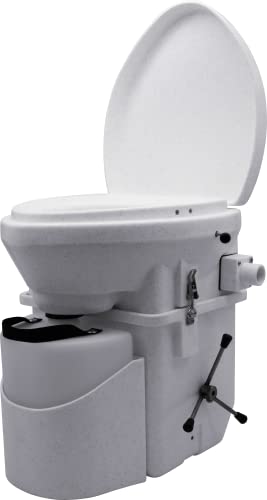
Nature’s Head Self-Contained Composting Toilet with Close Quarters Spider Handle — Best Overall
This is the pick for tiny-house residents who want the most proven composting routine in the category and have a bathroom layout that can accept a vent hose. The Close Quarters Spider Handle variant exists precisely for small rooms: the agitator handle is shaped to work where a full-size crank would foul a wall or cabinet. If your tiny house is a permanent or long-stay dwelling and you want one system you can settle into for years, this is the reference point everything else is compared against.
Strengths
- Urine is diverted away from the solids bin, which is the single biggest factor in keeping a composting toilet low-odor in daily use
- Vented design with a small fan keeps negative pressure in the unit, so smells travel out of the vent rather than into the room
- The spider handle variant is purpose-shaped for close-quarters bathrooms where a standard crank has no swing room
Trade-offs
- Needs a vent run and a 12V supply for the fan, so it is a small installation project rather than a drop-in purchase
- You manage the compost medium and the emptying cycle yourself; the routine is simple but it is a routine
- It is a substantial unit for the very smallest wet-bath layouts, so measure depth and knee room carefully
| Type | Self-contained composting toilet |
| Design | Close Quarters Spider Handle variant |
| Waste handling | Urine separated from solids; solids composted with bulking medium |
| Installation | Floor-mounted; vent hose and 12V fan connection required |
What earns this toilet the top spot is the completeness of its waste logic. Liquids never enter the solids chamber, so the compost stays at the dry, crumbly consistency that breaks down without the anaerobic smell that gives composting toilets a bad name. The agitator mixes fresh deposits into the medium, the fan pulls air across the bin and out of the vent, and the urine bottle is a separate, quick task. Owners living with this system full-time generally report that the learning curve is about the medium — keeping enough on hand and not letting the bin get too wet — rather than about the hardware. For a tiny house on a foundation or a long-term pad, that is exactly the trade you want: a modest amount of owner attention in exchange for no water, no black tank and no pump-out.
Choose the spider-handle variant deliberately. In a tiny bathroom the standard handle can be the difference between a comfortable daily crank and an awkward one you start skipping — and skipping agitation is how compost bins go wrong. Check your wall clearance before ordering, and plan the vent exit point at the same time as the toilet position, not after.
Best for: Full-time tiny-house residents who want the proven composting benchmark and can vent the unit / Not suited for: Buyers who cannot run a vent hose or 12V power, or who want a zero-routine sealed-bag system instead
Check the current price on Amazon

Separett Tiny Self-Contained Urine-Separating Toilet — Best Urine-Separating Design
The Separett Tiny suits tiny-house owners who like the separating principle but do not want to manage compost at all. There is no bulking medium to buy, store or stir: liquids are diverted to a built-in container, solids are collected separately and removed in a bag. For a minimalist tiny house where storage is precious and the bathroom routine needs to stay closer to ’empty and done’ than ‘tend a compost bin’, this is the cleanest expression of the idea.
Strengths
- No compost medium, no agitator and no mixing — the simplest separating routine in this roundup
- Built-in urine container with an emptying sensor removes the guesswork that causes overflows in separating toilets
- Self-contained format is aimed squarely at vans, cabins and tiny spaces, so the footprint thinking is already done
Trade-offs
- Solids are collected rather than composted in the unit, so you need a lawful disposal plan for bagged waste
- The urine container is a frequent task in a full-time household; the sensor helps, but capacity is still small-space capacity
- Without active composting or a fan-driven compost process, discipline about keeping liquids out of the solids side matters even more
| Type | Urine-separating dry toilet |
| Design | Self-contained with built-in urine container |
| Waste handling | Solids collected separately; no additives or mixing required |
| Extras | Emptying sensor for the urine container (per Amazon listing title) |
Urine separation works because the worst toilet odors come from the mixture, not from either stream alone. The Tiny leans fully into that principle and strips away everything else. In a tiny house that moves, or one where the bathroom doubles as a shower space and a bulky compost bin would be in the way, that simplicity is a genuine feature rather than a compromise. The emptying sensor deserves its mention: the most common separating-toilet failure in small spaces is a urine container discovered too late, and a sensor converts that from a mess into a scheduled two-minute job. Judge this pick on whether bagged-solids disposal fits your situation — on land where you can compost or dispose of it properly, the routine is excellent; in a setting with no sensible disposal route, a true composting unit is the better tool.
Living with the Tiny day to day is a study in small numbers: the urine container is the frequent task, the solids bag the occasional one, and neither requires tools, medium or disassembly. That rhythm suits a tiny house used by one or two people far better than it suits a family of five, and the sensor removes the one failure mode — the overfilled urine container — that gives separating toilets their horror stories. Position it where the container can be lifted out without gymnastics, keep spare solids bags in the bathroom itself rather than in storage across the house, and the system all but disappears into the routine of the home.
Best for: Tiny-house owners who want separation without compost management, especially in mobile or minimal builds / Not suited for: Buyers with no lawful disposal route for bagged solids, or households wanting in-unit composting
Check the current price on Amazon

Laveo Dry Flush Toilet — Best No-Compost Option
The Laveo is for the tiny-house owner who has decided, honestly, that they do not want to compost anything. Each flush wraps and seals the waste inside the unit’s cartridge system, so nothing is stored openly, nothing needs venting, and the bathroom never smells like a process is underway. It is the pick for guest tiny houses, part-time cabins, accessory dwellings used a few nights a week, and any small home where the simplest possible user experience matters more than consumable cost.
Strengths
- No venting, no plumbing and no compost management — the lowest-friction install in this roundup
- Sealed-bag waste handling is the most guest-proof system here; visitors need no instruction or courage
- Fully waterless and self-contained, so it works in off-grid tiny houses with no grey or black water system at all
Trade-offs
- The cartridge refills are a permanent consumable cost and a supply you must never run out of
- Bagged waste goes to landfill-style disposal, which some tiny-house owners specifically want to avoid
- Per-use cost makes it the most expensive routine here for a full-time, multi-person household
| Type | Dry flush (sealed-bag) toilet |
| Design | Waterless, portable, self-contained |
| Material | LDPE (per Amazon listing title) |
| Waste handling | Each use sealed away in the cartridge system; no composting or incineration |
Dry flush is best understood as a service model rather than a composting philosophy: you are paying, per cartridge, for the waste problem to disappear into a sealed package. For the right household that is money well spent. A tiny house rented to guests, a backyard studio, a cabin visited on weekends — in all of these, a composting toilet’s routine becomes a liability because nobody present owns the process. The Laveo removes the process. The honest counterweight is arithmetic: a full-time couple using it as their only toilet will cycle cartridges steadily, and the ongoing cost and waste stream are real. Read the listing carefully for what is included, keep a spare cartridge in the house at all times, and this is the easiest dry toilet in the guide to live with.
Ownership arithmetic deserves one more paragraph, because it is the whole decision with this toilet. Price the cartridge refills for your household’s realistic usage before you fall in love with the simplicity: a guest house used forty nights a year and a full-time home used every night are different purchases wearing the same product name. Also plan the physical logistics — cartridges are bulky, so a tiny house needs a genuine storage spot for the spare, and a delivery rhythm that never leaves the house without one. Households that solve those two logistics questions in advance tend to be this toilet’s happiest owners.
Best for: Guest tiny houses, part-time cabins and owners who want zero compost routine / Not suited for: Full-time multi-person households watching consumable costs, or buyers committed to composting over landfill waste
Check the current price on Amazon
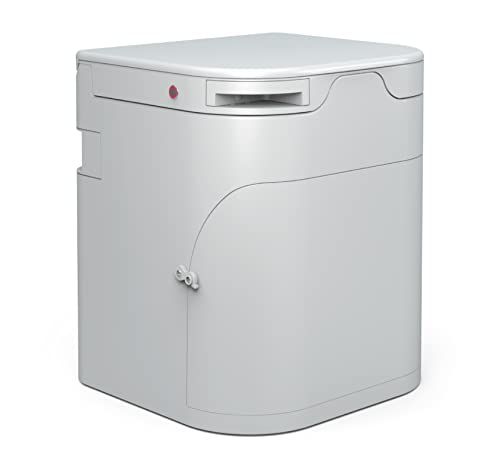
OGO Origin Compact Composting Toilet — Best Smallest Footprint
The OGO Origin is the pick when the tape measure, not preference, is making the decision. Its footprint is the headline: a composting toilet designed from the start for vans, boats and RVs translates directly to the smallest tiny-house bathrooms, including converted wet baths and under-stair closets where a full-size composting unit will not physically sit. If you want real composting with urine separation but your floor plan gives you almost nothing to work with, this is where to start.
Strengths
- The compact footprint opens up bathroom layouts that rule out full-size composting toilets entirely
- Still a true separating composting system, not a bucket compromise, despite the small size
- Designed for mobile small spaces, so vibration, movement and tight servicing clearances were part of the brief
Trade-offs
- Small footprint means small capacities; a full-time household empties more often than with a full-size unit
- Knee room and seat comfort in a very tight install should be mocked up before committing
- Like all composting picks here, it needs its venting and medium routine respected to stay odor-free
| Type | Compact composting toilet |
| Footprint | 15 in (per Amazon listing title) |
| Waste handling | Composting with urine separation |
| Intended spaces | Van, RV, boat and small-space installs (per Amazon listing title) |
Compact composting toilets live or die on whether the small size was engineered or just shrunk. The Origin’s design brief — vans, RVs and boats — is a good sign, because those users are unforgiving about wasted inches and awkward servicing. In a tiny house, the practical win is placement freedom: a unit that fits a narrow bathroom lets you keep a conventional layout instead of redesigning the room around the toilet. The trade is service frequency. Treat the capacity honestly in your planning: a full-time couple will be on a shorter emptying cycle than a weekend user, and the medium supply needs a home in your storage plan. If those two facts are acceptable, the Origin delivers the full composting approach in the least floor space in this guide.
The Origin rewards owners who think in systems. Because the unit is compact, everything around it can be compact too: a small sealed container for medium beside it, a servicing routine measured in minutes, and a bathroom layout that keeps a conventional feel despite the tiny footprint. In wet-bath tiny houses it earns a second look, because a small sealed unit tolerates the shower-side position that bulkier composting toilets make awkward. Just respect the capacity honestly — compact composting works by frequent, easy servicing, and owners who stretch the interval are the ones who meet odors they then blame on the toilet.
Best for: The smallest tiny-house bathrooms, wet baths and conversions where floor space is the binding constraint / Not suited for: Larger households wanting the longest possible interval between emptying cycles
Check the current price on Amazon

TRELINO Composting Toilet Evo S White — Best Lightweight Separating Option
The TRELINO Evo S suits tiny-house owners who want urine separation without a permanent installation. The containers lift out, the unit itself is portable, and there is no vent run or fixed mounting dictating your bathroom layout forever. It is a sensible first dry toilet for a tiny house you are still finishing, a rental you cannot modify, or a small dwelling where the bathroom arrangement may change as you learn how you actually live in the space.
Strengths
- No fixed installation: place it, use it, move it — ideal for unfinished builds and rentals
- Urine separation keeps the solids container dry and low-odor without any compost medium management
- Lift-out containers make emptying a contained, predictable task rather than a project
Trade-offs
- Container capacities are modest, so full-time use means a steady emptying rhythm
- A portable unit lacks the planted, furniture-like feel of a floor-mounted composting toilet
- Odor control depends on separation discipline and regular emptying, since there is no powered vent compost process
| Type | Urine-separating composting toilet |
| Capacities | 1.2 gal and 1.6 gal containers (per Amazon listing title) |
| Design | Portable format in white |
| Waste handling | Separation keeps solids dry; containers lift out for emptying |
There is a real category of tiny-house buyer for whom ‘no installation’ is the entire point: the house is a work in progress, the bathroom is temporary, or the dwelling cannot be drilled and vented. The Evo S serves that buyer properly. Its separating design is the same principle the premium composting toilets rely on, delivered in a format you can carry in and set down. What you give up versus the Nature’s Head is the active composting system and capacity; what you gain is flexibility and a gentler learning curve. Many owners start with a unit like this and upgrade once their layout is final — and because it is portable, the TRELINO then retires gracefully to camping and backup duty instead of becoming waste itself.
The Evo S also makes an unusually good household second toilet: a tiny house with a loft or a split layout can place one where a plumbed toilet could never go, and its portability means the experiment costs nothing in building work. Owners stepping up from camping portables will find the separating design transformative — the solids side stays dry enough that emptying is a container task, not an ordeal. Keep the urine container on a strict rhythm, because in a separating toilet that container, not the solids, sets the servicing tempo for the whole household.
Best for: Unfinished builds, rentals and tiny houses wanting separation with zero installation / Not suited for: Buyers wanting a permanent floor-mounted composting system with the longest service intervals
Check the current price on Amazon

Compo Closet Cuddy Composting Toilet — Best for Mobile Tiny Houses
The Cuddy is aimed at tiny houses that move — towable tiny homes, skoolie-adjacent builds and off-grid cabins where the toilet must tolerate travel and still behave like a home system. It is self-contained and waterless, with fan-assisted ventilation doing the odor work. If your tiny house has wheels, or your off-grid site has no water to spare, this pick was designed for your version of the problem rather than adapted to it.
Strengths
- Designed for mobile small spaces from the outset, so the composting system is built to be transported and serviced in tight quarters
- Fan ventilation actively manages odor, which matters even more in a moving home that sits closed up between trips
- Waterless and self-contained: no black tank, no water supply and no pump-out stops on travel days
Trade-offs
- Needs 12V power for the fan, so your electrical plan has to include it
- Compost medium management is still part of ownership, as with every true composting pick
- Confirm the exact servicing clearances in your bathroom; mobile-designed units assume tight access, but your layout is the final test
| Type | Self-contained composting toilet |
| Design | Waterless; for RVs, vans, boats, tiny homes and off-grid use (per Amazon listing title) |
| Waste handling | Composting solids handling with urine management |
| Power | 12V fan ventilation (per cache record) |
A tiny house on wheels subjects its toilet to a life a foundation home never does: vibration, temperature swings, closed-up storage and servicing in whatever space a campsite or driveway offers. The Cuddy’s value is that it was specced for that life. Fan ventilation is not a luxury in a mobile tiny house — a unit that sits sealed in a warm vehicle between weekends needs active air movement to stay fresh, and a 12V fan ties neatly into the electrical systems these builds already have. Pair it with a disciplined medium routine and a sensible plan for where compost output goes at your home base, and it gives a travelling tiny house a bathroom that behaves like a house, not like camping equipment.
For a travelling tiny house, two ownership details matter more than any specification. First, secure the unit for transit exactly as the manufacturer directs — a composting toilet that shifts on the road is a mess with a long memory. Second, establish your home-base routine for the compost output before the first trip, so returning home never means improvising waste handling in the driveway. Do those two things and the Cuddy’s travel breeding shows: it was designed by people who understood that a tiny house bathroom must survive the journey as well as the destination.
Best for: Tiny houses on wheels, skoolies and off-grid cabins needing a mobile-ready composting system / Not suited for: Stationary tiny houses with room for a full-size unit and no need for travel tolerance
Check the current price on Amazon
Comparison Table
| Pick | Badge | Key spec | Best for |
|---|---|---|---|
| Nature’s Head Self-Contained Composting Toilet with Close Quarters Spider Handle Check the current price on Amazon |
Best Overall | Self-contained composting with urine separation and venting | Full-time tiny-house residents who want the proven composting benchmark and can vent the unit |
| Separett Tiny Self-Contained Urine-Separating Toilet Check the current price on Amazon |
Best Urine-Separating Design | Urine-separating, self-contained, built-in urine container with emptying sensor | Tiny-house owners who want separation without compost management, especially in mobile or minimal builds |
| Laveo Dry Flush Toilet Check the current price on Amazon |
Best No-Compost Option | Waterless sealed-bag dry flush; self-contained; no venting or composting | Guest tiny houses, part-time cabins and owners who want zero compost routine |
| OGO Origin Compact Composting Toilet Check the current price on Amazon |
Best Smallest Footprint | Compact composting toilet with a 15-inch footprint (per Amazon listing title) | The smallest tiny-house bathrooms, wet baths and conversions where floor space is the binding constraint |
| TRELINO Composting Toilet Evo S White Check the current price on Amazon |
Best Lightweight Separating Option | Urine-separating composting toilet; 1.2 gal and 1.6 gal container capacities (per Amazon listing title) | Unfinished builds, rentals and tiny houses wanting separation with zero installation |
| Compo Closet Cuddy Composting Toilet Check the current price on Amazon |
Best for Mobile Tiny Houses | Self-contained composting; 12V fan and carbon filter (per cache record); waterless | Tiny houses on wheels, skoolies and off-grid cabins needing a mobile-ready composting system |
How to Choose the Right Option Among Best Dry Toilets Tiny Houses
Decide your waste philosophy first
Every dry toilet decision in a tiny house flows from one question: what happens to the waste, and who deals with it? Composting systems (the Nature’s Head, OGO Origin and Cuddy in this guide) transform solids on site with a bulking medium and time. Separating systems (the Separett Tiny and TRELINO Evo S) keep streams apart so solids stay dry and are removed in a bag or container. Sealed-bag systems (the Laveo) remove the question entirely at a per-use cost. None of these is objectively best. The right answer is the one whose routine you will still be content doing in month eighteen, in winter, when you are tired. Be honest at this stage and the rest of the choice gets easy.
Measure the room, then measure yourself in it
Tiny-house bathrooms punish optimistic measuring. Record the floor footprint available, the depth from wall to door swing, and — the one everyone forgets — knee room when seated. A toilet that fits on the floor but leaves your knees against a wall is a daily annoyance, not a fit. Check seat height against your household too: very low portable units suit some users poorly for full-time use. If a pick needs a vent hose, measure the vent path as carefully as the toilet itself, including where it exits the building and how it will be screened from the outside.
Plan power, venting and consumables as one system
A composting toilet is a small system, not an appliance. Before ordering, write down its full requirement list:
- Venting: hose route, exit point, and whether a fan is included or needed
- Power: 12V draw for fans, and where that circuit comes from in an off-grid build
- Medium: which bulking material the system uses, how much you store, and where you buy it
- Output: where finished compost or bagged solids legally go in your area
- Spares: the one part or cartridge you must never be without, kept in the house
Match capacity to your real household
Manufacturer capacity language assumes average use; your household is specific. A full-time couple generates roughly double the throughput of a single resident, and guests reset every estimate. If you are between two sizes, the larger-capacity system almost always wins in a primary residence, because emptying frequency — not purchase price — is what owners actually feel month after month. The exception is the genuinely tiny bathroom, where footprint outranks capacity and a compact pick like the OGO Origin or TRELINO Evo S is the honest choice.
Budget the whole system, not the toilet
The purchase figure is the beginning of a dry toilet’s cost, not the total. Composting owners should budget for bulking medium as a standing household supply, like detergent. Separating owners should budget for bags and the occasional replacement container seal. Dry-flush owners should budget cartridges at their household’s real usage rate — the only pick here whose running cost is significant. None of these costs is hidden, and none should be a surprise: write the annual consumable estimate for each system you are considering and compare those figures alongside the purchase figures. The cheapest toilet to buy is not always the cheapest toilet to own, and in this category the difference is a deliberate design trade, not a trap.
How Dry Toilets Actually Stay Odor-Free in a Small Home
The most useful thing a tiny-house buyer can learn is that dry-toilet odor is a moisture and mixture problem, not an inevitability. Human waste smells worst when urine and solids combine and stay wet: that mixture feeds the anaerobic bacteria that produce the classic portable-toilet smell. Every credible system in this guide attacks that chemistry in one of three ways. Separation keeps the streams apart from the start. Composting keeps solids dry and aerobic with medium, agitation and airflow. Sealing removes each deposit from the environment before chemistry gets a vote.
Why venting matters more in a tiny house
In a conventional home, a mediocre bathroom fan forgives a lot. In a tiny house, the bathroom shares air with everything. A vented composting toilet maintains slight negative pressure inside the unit, so air flows into the toilet and out of the building — the opposite of smell escaping into the room. This is why the vent run deserves the same care as the toilet choice: a kinked, sagging or overly long hose undermines the entire system. Route it as directly as the building allows, keep it rising where possible, and screen the exterior exit against insects.
The medium is a consumable, not an accessory
Composting picks depend on bulking medium the way a car depends on oil. Too little medium and the bin turns wet and anaerobic; the fix is almost always ‘add medium and agitate’, not a new toilet. Buy medium in sensible quantity, store it dry, and treat running out as the emergency it is. Separating and sealed-bag systems swap that dependency for their own: containers that must be emptied on schedule, or cartridges that must be in stock. Every dry toilet has a consumable. Choose the one whose supply chain fits your life.
How to Set Up and Start a Dry Toilet in a Tiny House
Exact steps vary by system, and the manufacturer’s instructions for your model always win — but the setup sequence below is the common spine for the composting and separating picks in this guide, in the order that prevents the usual first-week mistakes.
- Position and test-fit first. Set the unit in place uninstalled. Sit on it. Check knee room, door swing and servicing access with the containers or bin removed and replaced. Only mark fixing points when the lived position is right.
- Complete the vent run before first use. Install the vent hose along the planned route, keep it as straight and short as the building allows, seal joints as the manual directs, and fit the exterior screen or cap.
- Connect power if your system has a fan. Wire the 12V fan supply, confirm the fan runs and draws air inward at the seat opening — a tissue held at the vent path tells you the direction instantly.
- Charge the system as directed. For composting units, add the specified starting medium to the stated depth. For separating units, fit the first solids bag or container and confirm the urine path is unobstructed.
- Prime the routine, not just the toilet. Put the medium, spare bags or spare cartridge where they will actually live, and write the emptying schedule where you will see it. Systems fail from forgotten routines far more than from hardware faults.
- Run a two-week check-in. After the first fortnight of real use, inspect moisture in the compost bin, urine container habits and vent performance, and adjust medium quantities or emptying frequency before small issues become smells.
Keep the manual with the toilet for the first season. Most ‘my dry toilet smells’ stories trace back to one skipped setup step — usually venting or medium depth — and both are five-minute fixes when caught early.
Common Buying Mistakes
Buying a camping toilet for a residence.
A basic portable camping toilet is designed for weekends. As a tiny house’s only toilet it means constant emptying, persistent odor management problems and a seat nobody enjoys. The picks in this guide are residential-capable systems; that distinction is the whole ballgame for full-time use.
Ignoring the vent until after the toilet is placed.
Toilet position and vent route are one decision. Placing the unit first and discovering the vent must cross the room, exit through a stud bay that does not exist, or run downhill is how installations stall. Plan both on paper before anything is ordered.
Choosing composting while knowing you will not compost.
If the honest answer is that nobody in the household will manage medium, agitation and output, a composting toilet will punish that honesty gap daily. The sealed-bag Laveo exists precisely for this household. Buy the routine you will actually perform.
Forgetting the output end of the system.
Compost has to finish somewhere and bagged waste has to be disposed of lawfully. Local rules vary, and ‘we will figure it out’ is not a plan. Decide the output route — garden composting where permitted, municipal disposal, or another lawful path — before the toilet arrives.
Under-measuring knee room and service access.
Footprint on a spec sheet is the unit’s smallest rectangle, not the space a human needs around it. Mock up the seated position and the emptying position. Ten minutes with cardboard saves a season of daily irritation.
Skipping the spare-parts and consumables stock.
A dry toilet with no medium, no bags or no cartridge in the house is a toilet out of service. Whatever system you choose, the day it is installed is the day its first spare goes into storage. In a tiny house with one bathroom, that stock is not prudence — it is plumbing.
Final Recommendation
For most full-time tiny houses, the Nature’s Head with the spider handle is the safest single recommendation in this guide: proven composting logic, urine separation and a handle variant made for small bathrooms. If your bathroom is genuinely tiny, the OGO Origin’s compact footprint keeps composting possible where larger units cannot go, and the Compo Closet Cuddy is the mobile-ready alternative for houses that travel. Owners who want separation without compost management should look hard at the Separett Tiny, while the TRELINO Evo S is the flexible, no-install starting point. And if the honest household answer is ‘no compost, ever’, the Laveo Dry Flush is the pick — budget its cartridges and enjoy the simplest routine here.
Round out your research with the neighbouring guides in this series: Best Dry Toilets for the wider waterless category, Best Dry Flush Toilets Tiny Houses for a deeper look at sealed-bag systems in small homes, Best Dry Indoor Toilets for indoor-specific picks, Best Dry Camping Toilets if your tiny house doubles as your travel base, and Best Eco Friendly Toilets For Tiny Homes for the broader low-impact picture.
A closing word on expectations: every system in this guide asks a few minutes of regular attention, and returns a bathroom with no water use, no black tank and no pump-out in exchange. Tiny-house owners who frame that trade honestly at purchase are the ones still satisfied years later. Choose the routine that fits your household’s temperament — composting, separating or sealing — and the toilet will fit your house.
Frequently Asked Questions
Can a dry toilet really be a tiny house’s only toilet?
Yes — that is exactly what the composting and separating systems in this guide are designed for. Full-time use is a matter of capacity and routine rather than principle: choose a residential-capable system, size it for your household, and keep its emptying and medium schedule. What does not work full-time is a basic camping portable, which is built for occasional use.
Do composting toilets smell inside a tiny house?
A correctly installed and maintained composting toilet should not smell in the room. Odor almost always traces to a cause: urine getting into the solids bin, too little bulking medium, a blocked or badly routed vent, or a fan that is not running. Those are maintenance fixes, not reasons to replace the toilet.
What do I do with the compost or bagged waste?
Finished compost from a well-run system is typically handled according to local rules — many owners use it on ornamental plantings where permitted, and some jurisdictions require disposal as waste. Bagged solids from separating and dry-flush systems go out with household waste where local rules allow. Check your local regulations before you buy, because the lawful route shapes which system suits you.
Does a dry toilet need electricity?
Some do and some do not. Fan-vented composting toilets use a small 12V supply for the fan. Separating toilets and sealed-bag dry-flush units can work without any powered venting, depending on the model. Check the listing for your chosen pick and plan the circuit — or the absence of one — into your build.
How often will I empty it?
It depends on household size and system capacity. Urine containers on separating systems are the most frequent task, typically a matter of days in full-time use. Solids bins and compost chambers run on a longer cycle measured in weeks for a small household. Every pick’s review above flags its relative service rhythm so you can match it to your tolerance.
Can I install a dry toilet in a wet bath?
Usually, yes, with care. Choose a compact unit whose footprint leaves the shower usable, keep electrical connections and vents routed as the manufacturer directs for damp environments, and favour systems whose servicing does not require sprawling across a wet floor. The compact picks in this guide — the OGO Origin and TRELINO Evo S in particular — are the natural starting points for wet-bath layouts.


