Disclosure: airfryerkitchensupply.com is reader-supported. When you buy through links on our site, we may earn an affiliate commission at no extra cost to you.
Where to buy
Shopping for best commercial smokers to cook brisket usually starts on Amazon, where the linked models below can be ordered with delivery to a business address. Start with the Oklahoma Joe’s Highland Reverse Flow Offset Smoker if you want the headline recommendation first, and check price on Amazon for each linked pick before you commit, because commercial buying should always be done against a live listing rather than a printed number.
Verified listings in this guide: Oklahoma Joe’s Highland Reverse Flow Offset Smoker; Pit Boss 1600 Navigator Series Pellet Grill & Smoker; recteq Flagship 1600 Pellet Smoker Grill; Weber Smokey Mountain Cooker 22-inch; Masterbuilt Gravity Series 600 Charcoal Smoker Grill.
Choosing the best commercial smokers to cook brisket is choosing a machine for the most demanding cook in barbecue: a whole packer, low and slow for the better part of a day, where temperature stability is tenderness, evenness is yield, and the rest is as important as the cook. This guide ranks commercial-capable smokers by brisket outcomes specifically, not by general grilling charm, and it is blunt about which pits a brisket programme can be built on.
Brisket punishes three weaknesses without mercy: temperature swings that toughen and dry, hot spots that sacrifice the flat’s edge to save the point, and capacity claims that collapse when two real packers need airflow between them. Every pick below was judged on those three tests first.
All linked pits were verified against Amazon listing data cache by title, with capacities taken from the verified titles. The fabricator pick is not linked, as heavy offset pits are sold direct, and it is included because serious brisket programmes eventually meet it.
In this guide
Quick Picks
Best Overall for Brisket: Oklahoma Joe’s Highland Reverse Flow Offset Smoker — Even chamber heat protects full packers; the brisket-first offset pick.
Best Pellet for Brisket Volume: Pit Boss 1600 Navigator Series Pellet Grill & Smoker — 1,593 sq in and a 30 lb hopper for multi-brisket pellet service.
Best Overnight Brisket Pit: recteq Flagship 1600 Pellet Smoker Grill — 40 lb hopper and 1,667 sq in for overnight brisket at scale.
Best Charcoal Brisket Value: Weber Smokey Mountain Cooker 22-inch — Charcoal stability legend; caterer-scale brisket with expert manners.
Best Brisket Without Fire Duty: Masterbuilt Gravity Series 600 Charcoal Smoker Grill — Real charcoal brisket with digital temperature holding.
Best Fabricator Brisket Upgrade: Lang Smoker Cookers Offset (fabricator line) — The heavy-gauge destination pit for daily brisket; direct sale, unlinked.
How These Picks Were Chosen
Brisket picks were scored on chamber evenness, long-cook fuel capacity, usable packer capacity with airflow space, and temperature recovery after door openings, because brisket cooks are long and doors do open. Pellet hopper figures, cooking areas and layouts are quoted from the verified Amazon titles only.
We excluded any pit whose brisket case rested on searing features, app novelty or headline area that whole packers cannot use. Brisket is a horizontal, patient, unforgiving product, and this list respects that.
The 6 Best Options for Commercial Smokers to Cook Brisket

Oklahoma Joe’s Highland Reverse Flow Offset Smoker — Best Overall for Brisket
Reverse flow is the thinking cook’s offset layout. Smoke and heat travel under a baffle plate to the far end of the chamber before returning across the food, which irons out the fierce hot spot beside the firebox that ruins the nearest brisket on a standard offset. For a small commercial load, that evenness is money: fewer burnt edges, fewer rotated trays, more sellable slices per cook.
At 1,093 square inches this is also the roomiest offset here, enough for a genuine small-service brisket and ribs programme. It still burns real wood and still needs a fire manager, so staff it honestly. What it removes is not labour but waste, and waste is where small BBQ margins go to die.
For brisket this is the pit the whole guide leans toward: the baffle protects the flat’s far edge, the chamber fits a small service of whole packers, and the flavour is the reference the menu can be sold on. Staff it with a tender who loves the work and it will make a reputation.
Strengths
- Reverse flow baffle evens out chamber temperatures, reducing hot-spot losses on big loads
- 1,093 square inches is the largest offset capacity in this list
- Traditional wood smoke with more forgiving heat distribution than a standard offset
Trade-offs
- Still a labour-led cooker: reverse flow evens heat, it does not automate it
- Baffle plate needs scraping and care as part of the cleaning rota
- Consumer-gauge steel limits lifespan under daily commercial firing
Key specs: 1,093 sq in cooking area (per Amazon title); reverse flow baffle layout.
Best for: small BBQ restaurants and caterers cooking full offset loads who hate hot spots / Not suited for: operations without a dedicated fire tender.
Check the current price on Amazon for the Oklahoma Joe’s Highland Reverse Flow Offset Smoker.
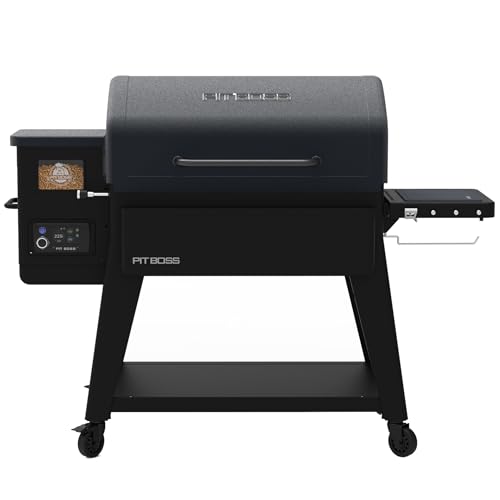
Pit Boss 1600 Navigator Series Pellet Grill & Smoker — Best Pellet for Brisket Volume
The Pit Boss 1600 Navigator is the pellet answer to commercial volume: 1,593 square inches, a 30 lb hopper and app-connected control in a single unit a small restaurant or large caterer can actually buy on Amazon. For brisket service it offers the combination that matters, namely space for multiple packers plus enough pellet capacity to run overnight without a 3 a.m. refill visit.
Run the numbers before you commit. At commercial volume, pellets are a consumable cost per cover, and the auger and fan are wear parts. Operations that log cooks, clean the burn pot on schedule and keep a spare igniter on the shelf get years from these units; operations that treat them like a gas oven do not.
The Navigator fits the brisket programme that must also grill and must not fail: multiple packers, a hopper that covers the cook, and a searing station for the rest of the menu. It is the brisket pit for the taproom and the multi-role yard.
Strengths
- 1,593 square inches is genuine event and restaurant-patio capacity
- 30 lb hopper supports long unattended brisket cooks
- Flame broiler adds a searing station, so one unit covers smoke and grill menus
Trade-offs
- Pellet cost per cook is a real line item at commercial volume
- Large footprint needs a planned home, not a spare corner
- Moving parts (auger, fan, igniter) mean a maintenance schedule, not set-and-forget ownership
Key specs: 1,593 sq in cook space (per Amazon title); 30 lb hopper; 180–500°F range; WiFi and Bluetooth.
Best for: restaurants, taprooms and caterers needing pellet capacity at scale / Not suited for: tiny kitchens where footprint and pellet storage do not fit.
Check the current price on Amazon for the Pit Boss 1600 Navigator Series Pellet Grill & Smoker.
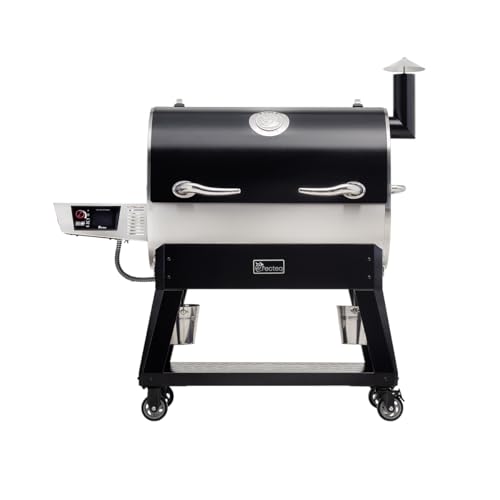
recteq Flagship 1600 Pellet Smoker Grill — Best Overnight Brisket Pit
The recteq Flagship 1600 is what pellet smoking looks like when it is aimed at serious volume: 1,667 square inches of cook space and a 40 lb hopper that treats an overnight brisket cook as a normal shift rather than an endurance event. Expert users rate recteq’s temperature stability highly, and stability is the whole game when the same brisket has to come out right forty weekends a year.
For a restaurant, the Flagship’s argument is labour. One connected pit that holds temperature, reports to a phone and carries a full load replaces hours of fire management. The smoke profile is cleaner than an offset’s, so menu writers should sell tenderness and consistency rather than old-school bark.
The Flagship fits the overnight brisket programme in its purest form: load in the evening, monitor from home, slice at lunch. Its capacity and hopper turn brisket from an endurance event into a schedule, which is what a daily brisket menu actually requires.
Strengths
- 1,667 square inches is the biggest cooking area in this roundup
- 40 lb hopper is built for overnight commercial brisket runs
- Wi-Fi monitoring suits a pitmaster who is also running the rest of the kitchen
Trade-offs
- Premium-tier pellet unit, so the business case must rest on volume
- Pellet flavour is clean and mild compared with offset wood smoke
- Size and weight make it a semi-permanent installation
Key specs: 1,667 sq in cook space (per Amazon title); 40 lb hopper; Wi-Fi control.
Best for: high-volume pellet operations and restaurants standardising on one big pit / Not suited for: buyers chasing deep offset-style bark as the signature flavour.
Check the current price on Amazon for the recteq Flagship 1600 Pellet Smoker Grill.

Weber Smokey Mountain Cooker 22-inch — Best Charcoal Brisket Value
Ask experienced pitmasters which charcoal smoker they recommend to a serious beginner and the 22-inch Smokey Mountain is the name that keeps coming back. Its bullet shape, water pan and dampers hold low temperatures with a steadiness that embarrasses many larger pits, and its dual grates carry more than its tidy footprint suggests.
Commercially it shines as a caterer’s and competition cook’s tool, and as the flavour pit in a small two-unit system. Brisket from a WSM, held and sliced to order, has built more than one small BBQ reputation. What it will not do is feed a full dining room alone, and this guide does not pretend otherwise.
The WSM fits the caterer’s brisket: two packers’ worth of legendary stability, transported in a car, producing slices that shame larger pits. For weddings, markets and pop-ups, its brisket-per-dollar and brisket-per-hour ratios remain the ones to beat.
Strengths
- Legendary temperature stability for a charcoal cooker once the water pan is set
- Dual grates stack a surprising commercial-side load for its footprint
- Porcelain enamel and Weber parts support suit long working life
Trade-offs
- Capacity is caterer-scale, not restaurant-line scale
- Charcoal management is manual; no controller included
- Water pan refills are part of long-cook routine
Key specs: 22-inch bullet format (per Amazon title); dual cooking grates; porcelain-enameled steel; damper control.
Best for: caterers, competition cooks and small operations wanting expert-grade charcoal results / Not suited for: full-scale restaurant volume from a single unit.
Check the current price on Amazon for the Weber Smokey Mountain Cooker 22-inch.

Masterbuilt Gravity Series 600 Charcoal Smoker Grill — Best Brisket Without Fire Duty
The Gravity Series 600 answers the oldest commercial complaint about charcoal: the babysitting. A gravity-fed hopper meters charcoal into the fire while a digital controller and fan hold the set temperature, so you get genuine charcoal smoke with something close to oven discipline. Experts recommend it precisely because it bridges the flavour and labour worlds.
For a small operation it is a superb second pit: the flavour unit for brisket and ribs on days when the electric cabinet is carrying volume. Log your charcoal consumption per cook from week one; gravity pits reward operators who know their fuel numbers.
The Gravity fits the brisket programme with a flavour conscience and a small team: charcoal smoke and bark with a controller standing the night watch. It is the brisket pit for the two-person concept that refuses to serve pellet brisket and cannot roster a tender.
Strengths
- Gravity-fed charcoal gives real charcoal flavour with digital temperature holding
- WiFi monitoring frees the cook for other kitchen work
- Hopper feeding removes the constant refuelling of a kettle or small offset
Trade-offs
- 600 square inches is mid-size for commercial loads
- Charcoal hopper and fan are systems that need cleaning and care
- Needs power for the controller even though the fuel is charcoal
Key specs: 600 sq in (per Amazon title); gravity-fed charcoal hopper; WiFi; digital control.
Best for: small operations wanting charcoal flavour without full-time fire tending / Not suited for: the largest commercial loads, which need a bigger chamber.
Check the current price on Amazon for the Masterbuilt Gravity Series 600 Charcoal Smoker Grill.
Lang Smoker Cookers Offset (fabricator line) — Best Fabricator Brisket Upgrade
When offset cooks talk about stepping up from consumer pits, Lang is one of the first fabricator names spoken. Its heavy-gauge offsets are built for the daily firing a commercial brisket programme demands, with the heat retention thin-steel pits cannot match. A Lang-class pit is where the Highland owners in this guide often graduate to.
There is no verified Amazon listing for Lang cookers, so it appears unlinked, with respect rather than apology. If your brisket volume is real and weekly, spec a fabricator offset directly, and keep a consumer offset or cabinet from this list as your second cooker.
The Lang fits the brisket programme that has outgrown rehearsal: daily packers, a tender on staff, and a dining room that judges the house by its brisket. At that point the heavy steel is not an indulgence but the correct tool, bought direct and installed once.
Strengths
- Thick-steel offset construction holds heat the way commercial brisket demands
- Reverse-flow style evenness is a hallmark of the fabricator’s designs
- Built to be fired daily for years, not seasons
Trade-offs
- Sold direct by the fabricator; no verified Amazon listing for the cookers
- Heavy pits need planned placement and seasoned fire staff
- Freight and lead time belong in the project plan
Key specs: Heavy-gauge offset fabricator pit; sold direct.
Best for: brisket-led restaurants ready for a heavy-gauge fabricator offset / Not suited for: buyers who need Amazon delivery and consumer pricing.
The Lang Smoker Cookers Offset (fabricator line) is sold direct by its maker rather than through Amazon, so there is no Amazon listing to link here; it sits in the premium commercial tier and is quoted per specification.
Comparison Table
| Pick | Badge | Key spec | Best for |
|---|---|---|---|
| Oklahoma Joe’s Highland Reverse Flow Offset Smoker | Best Overall for Brisket | 1,093 sq in cooking area (per Amazon title); reverse flow baffle layout | small BBQ restaurants and caterers cooking full offset loads who hate hot spots |
| Pit Boss 1600 Navigator Series Pellet Grill & Smoker | Best Pellet for Brisket Volume | 1,593 sq in cook space (per Amazon title); 30 lb hopper; 180–500°F range; WiFi and Bluetooth | restaurants, taprooms and caterers needing pellet capacity at scale |
| recteq Flagship 1600 Pellet Smoker Grill | Best Overnight Brisket Pit | 1,667 sq in cook space (per Amazon title); 40 lb hopper; Wi-Fi control | high-volume pellet operations and restaurants standardising on one big pit |
| Weber Smokey Mountain Cooker 22-inch | Best Charcoal Brisket Value | 22-inch bullet format (per Amazon title); dual cooking grates; porcelain-enameled steel; damper control | caterers, competition cooks and small operations wanting expert-grade charcoal results |
| Masterbuilt Gravity Series 600 Charcoal Smoker Grill | Best Brisket Without Fire Duty | 600 sq in (per Amazon title); gravity-fed charcoal hopper; WiFi; digital control | small operations wanting charcoal flavour without full-time fire tending |
| Lang Smoker Cookers Offset (fabricator line) | Best Fabricator Brisket Upgrade | Heavy-gauge offset fabricator pit; sold direct | brisket-led restaurants ready for a heavy-gauge fabricator offset |
How to Choose the Best Commercial Smokers to Cook Brisket for Service?
Count in packers, with space. A commercial brisket load means whole packers laid flat with moving air on all sides. Measure any chamber by that unit, not by square inches alone: a tall cabinet with many racks may post a huge area and still fit fewer packers than a modest horizontal pit, because briskets do not stack.
Then weigh the overnight question. Brisket for lunch service cooks overnight or from the small hours. Who or what tends it? A 40 lb hopper pellet pit answers with machinery; an offset answers with a rostered human. Both are valid, but the business plan must contain the answer before the pit arrives.
Offset, Pellet or Charcoal: Which Makes the Best Commercial Brisket?
Offset brisket is the reference flavour: deep wood smoke, firm bark, the profile BBQ customers describe as real. Its cost is labour and its risk is variability. Pellet brisket is the consistency play: clean smoke, excellent tenderness, bark that needs technique, low-temperature smoke modes and a wrap decision to reach offset depth. Charcoal in a WSM or Gravity pit sits between: genuine fire flavour with more stability than an offset and less machinery than a pellet pit.
Expert brisket programmes often run two: pellet or gravity for the dependable daily supply, offset for the weekend headline. The menu can even say so; customers respect a house that knows its pits.
What Brisket Yield Should a Commercial Buyer Plan On?
Plan on substantial shrink: trimming, rendering and moisture loss mean the sellable slices are a fraction of the raw packer weight, and the fraction moves with pit evenness and holding discipline. Even heat and a proper rest are not culinary niceties; they are the yield line in your costing.
Cost from your own rehearsal cooks, weighed raw and sliced, before the menu price is printed. Brisket is the item where optimistic costing bankrupts enthusiastic restaurants, and the pit that protects yield, through evenness and stability, is worth more than its price difference.
How Do Brisket Programmes Handle the Stall, the Wrap and the Hold?
The stall, where internal temperature plateaus for hours as moisture evaporates, is brisket’s rite of passage. Commercially it is a scheduling fact, not a crisis: programmes start early enough that the stall is absorbed by the plan, and the wrap decision is made on bark, when the crust is set and coloured, not on panic at a stuck thermometer.
Wrapping in paper preserves moisture while keeping some bark; foil pushes through faster at bark’s expense. Houses choose per their product and hold the choice consistently, because customers return for the brisket they remember, and consistency is a decision made once and kept.
The rest is non-negotiable: a brisket rushed to the knife steams its juices onto the board. Rested properly and held at a safe temperature for a defined window, the same brisket slices moist at service. Programmes build the hold into the timeline and the equipment, a holding cabinet or the pit’s own low hold, rather than improvising it.
Slicing is the final pit-adjacent craft: flat against the grain, point as the house style dictates, sliced to order where service allows. A great cook sliced badly reads as an average brisket, and the pit gets the blame or the credit either way.
None of this is equipment, and all of it decides which equipment succeeds. The pits in this guide were chosen to support these habits: stable through the stall, even enough to protect yield, and sized for the hold-and-slice rhythm of real service.
How to Cook a Commercial Brisket: The Rehearsal-to-Service Routine
Trim with the service in mind: even thickness, fat cap to a consistent depth, edges that will not burn sacrificed knowingly rather than accidentally. Log the raw and trimmed weights; your yield education starts here.
Season simply and consistently, on a schedule that lets salt work, and log that too. Commercial brisket is a house product with a specification, not a daily improvisation, however creative the pitmaster feels.
Cook fat side toward your pit’s heat, at a stable low temperature, with clean smoke: thin and pale from seasoned wood or charcoal, or a pellet pit’s low smoke mode for the first hours. Probe the flat’s thickest part and the point, and expect the stall without flinching.
Wrap on bark, rest on time, hold on temperature. Write all three decisions on the cook card after your rehearsal cooks prove them, then defend the card during service, when every instinct says to rush.
Slice to order, weigh the sellable yield, and close the log. A brisket programme that weighs, logs and costs every cook improves monthly; one that cooks on memory repeats its first month forever.
Add the service drill to the routine: a full mock service from the hold, slicing to order against a timer, plating at the pace of a real rush. Brisket programmes rehearse service, not just cooking, because the hold and the knife are where service is won.
Close every brisket day with the yield entry before anything else is cleaned. Weights forgotten by morning are weights invented by morning, and a programme that invents its yields will price itself into trouble within a season.
Add a fuel rehearsal to the programme once: a full cook run purely to measure consumption, hopper or splits or charcoal, from start to sliced. The number belongs on the cook card beside the timings, and it will pay for the rehearsal brisket within the season.
Photograph the perfect slice from your best rehearsal and keep it at the slicing station. Brisket standards drift under pressure; the photograph does not, and the slicer working a rush deserves a standard that can be seen at a glance.
Common Buying Mistakes
Buying capacity in square inches for a product bought in packers is the brisket buyer’s first mistake. The second is an overnight plan made of hope: brisket does not care that nobody wanted the night shift, and it will be ruined or ready on its own schedule.
The third mistake is judging a brisket pit by its first brisket. Every pit needs rehearsal cooks to map its zones and prove its card. The fourth is costing from raw weight, which flatters the menu price and punishes the business every service.
Finally, do not chase bark with dirty smoke. Thick, white, smouldering smoke makes bitter brisket that no sauce rescues; clean fire is a skill and a fuel discipline, and it is free.
How Do Brisket Houses Choose and Prepare Their Packers?
Selection starts at the supplier: whole packers with a thick, even flat, a fat cap that will trim to a consistent depth, and flexibility when bent in the cryovac, which hints at the marbling and age inside. Houses build a supplier relationship around brisket specifically, because consistency of the raw product is half of consistency on the plate.
Trimming is a house specification, not a mood: fat to a set depth, hard deckle fat removed, thin edges squared so they do not burn, and the trim weighed for the yield log. Two cooks trimming to the same spec produce the same brisket; two cooks improvising produce a daily surprise the menu cannot afford.
Seasoning is kept deliberately simple in most respected houses, salt and pepper in a set ratio, sometimes with a restrained house addition, applied on a schedule that lets the salt work before the fire. The pit and the smoke are the flavour; the rub is the frame, and frames should not shout.
Resting the seasoned brisket, the choice of cooking fat-side orientation for the specific pit, and the decision about when the meat meets the fire relative to service are all written into the house card after rehearsal. Brisket houses are boring on paper and thrilling on the plate, which is the correct distribution.
Finally, houses taste their own brisket at service temperature, from the hold, every day, sliced by the person who will slice for customers. The daily taste is the quality system; everything else is paperwork supporting it.
What Does a Brisket Programme Need Beyond the Pit?
A holding solution with discipline: a dedicated holding cabinet or a proven low hold in the pit itself, with a defined window the programme refuses to exceed. More brisket quality is murdered in improvised holding than in any cook, and the houses protect the hold like a second pit.
Knives and boards fit for the work, and a slicing station arranged so brisket is cut to order without leaving the pass in chaos. The slice is the customer’s first fact about the brisket; the station is part of the product.
A trim and leftovers plan: burnt ends, chopped brisket, chilli, beans, the honourable second life of every packer. Brisket economics improve dramatically when the whole animal’s worth of meat has a priced destination, and the plan should exist before the first case is ordered.
A fuel supply as reliable as the meat supply: seasoned splits for the offset, dry pellets under cover for the pellet pits, charcoal stored dry for the gravity and bullet. Brisket cannot wait for a fuel delivery, and programmes treat fuel like flour in a bakery, never out, never damp.
And the log, again: packer weights, trim, cook times, wrap and rest decisions, hold windows, sliced yield and the day’s verdict. A brisket programme’s logbook is its real capital asset, because it is the only part of the operation that cannot be bought back if lost.
How Do Brisket Houses Manage Fuel for a Twelve-Hour Cook?
Offset houses stage fuel like a second ingredient: splits sorted by size, enough for the whole cook plus a margin, stored where the tender’s hand falls without leaving the pit. The middle of a brisket night is no time to discover the woodpile’s bottom layer is damp, so the staging happens in daylight, by checklist.
Pellet houses manage a different risk: the hopper’s quiet consumption across the small hours. The big hoppers in this guide exist because a brisket’s worst hour is the one where the auger runs empty at 4 a.m.; houses fill before the cook, check the level at the last evening round, and keep bags dry and near.
Gravity and bullet charcoal cooks are managed by the load: a full, well-built charcoal charge, lit once and understood from rehearsal, rather than topped up in hope. The rehearsal log tells the house exactly what a charge does in its pit, in hours and degrees, and brisket nights are run from that knowledge.
All three fuels share one rule: the cook’s cost is counted. Brisket houses know their fuel cost per packer the way bakers know flour per loaf, and the number feeds the menu price. A programme that cannot state its fuel cost is guessing at its margin on its most expensive item.
Weather closes the fuel plan: wind and cold raise consumption in every pit, and houses adjust the staged quantity and the start time to the forecast. Brisket is unforgiving of optimism in all its forms, and fuel is simply where optimism is easiest to measure.
What Do Brisket Customers Actually Judge?
Moisture first, usually without the word: the slice that bends without breaking and glistens without dripping is the one that gets photographed and reordered. Moisture is made in the pit’s stability and defended in the rest, which is why this guide’s brisket picks are judged on those unglamorous virtues.
Bark second: dark, set and seasoned, with a texture that contrasts the interior rather than sliding off it. Bark is the visible record of clean smoke and patience, and customers read it before they taste anything, which makes it the programme’s advertisement as well as its crust.
Smoke balance third: present, clean and in proportion, seasoning the beef rather than replacing it. The over-smoked brisket is the beginner’s calling card; the balanced one is the house’s, and the difference is fuel discipline across twelve hours, not a secret ingredient.
Slice craft fourth, and more than cooks expect: thickness, grain direction and the fat cap’s presentation decide how the same brisket is judged by the person paying. Houses train slicing like cooking, because to the customer they are the same event.
Consistency last and above all: the brisket that brings a customer back is next month’s brisket, and it must match the memory. Every system in this guide, the logs, the cards, the defended rest, exists to protect that match, which is the real product a brisket house sells.
How Should a Brisket Programme Choose Its Wood, Pellets or Charcoal?
The fuel decision is a flavour signature and a supply contract at once. Offset programmes build on a regional hardwood, oak for steadiness, hickory for emphasis, fruitwood for gentleness, chosen as much for the supplier who can deliver it seasoned, split and consistent across a year as for the flavour in any single cook. A brisket house is married to its fuel supply, and it should choose the marriage with its eyes open.
Pellet programmes choose by consistency and cleanliness of burn: a pellet that feeds reliably, ashes modestly and tastes the same in December as in June. Houses standardise on one blend for the brisket line, because changing pellets changes the product, and they store the stock dry and rotated so the hopper is never filled from a bag that has taken on the season’s damp.
Charcoal programmes, in gravity and bullet pits, choose by burn time and steadiness proven in rehearsal: the charge that holds the house temperature for the house’s cook length, with the house’s load, in the house’s weather. Lump and briquette partisans argue happily elsewhere; a brisket programme simply logs both, tests both and keeps the one its own numbers prefer.
Across all three, the programme buys fuel like a bakery buys flour: never out, never damp, never a stranger’s emergency substitute on a brisket day. The cost per cook is known, the store is checked on the same rota as the meat order, and the fuel’s consistency is defended as part of the product’s consistency.
And the programme tastes for its fuel: a new supplier, a new blend or a new season’s wood earns a rehearsal brisket before it earns a service. Fuel changes are recipe changes, and brisket houses that treat them casually serve the difference to customers who came back for the original.
What Does a Brisket Programme Do on Its Quiet Days?
It maintains, rehearses and prepares, in that order of value. The pit gets its deep clean and its seal check, the knives get their edge, the holding arrangement gets its temperature verified, and the fuel store gets rotated and counted. Quiet days are when the season’s reliability is actually manufactured, one unglamorous task at a time.
Rehearsal fills the second hour: a new trim hand practices on the day’s production under supervision, a candidate tweak to the card is cooked once and judged blind against the standard, a new supplier’s packer is tested before it is ordered in quantity. Programmes that rehearse on quiet days improve without risking a service, which is the only safe place improvement has ever lived.
Preparation closes the day: tomorrow’s packers trimmed and seasoned on schedule, the fuel staged, the log opened with the plan written in. A brisket programme’s mornings are calm in proportion to its previous evenings, and the calm is a system, not a temperament.
The quiet day also serves the business around the pit: the second-life products are made, the chilli, the beans, the chopped brisket that turns trim into margin, and the retail packs are labelled while the kitchen is unhurried. Whole-animal economics are won on quiet days, in the hours other programmes waste.
Finally, the programme rests its people where it can. Brisket hours are long and antisocial, and a house that spends its quiet days entirely on tasks will spend its busy season short-staffed. The rota that protects the team is, in the long run, a quality system too.
A Final Word Before the First Packer
Brisket forgives almost nothing and rewards almost everything, which is why houses build themselves around it with such care. The pit matters, and this guide has ranked the pits by the virtues brisket actually tests, but the programme matters more: the supplier relationship, the trim specification, the fuel discipline, the defended rest and the weighed yield are the difference between a brisket that makes a reputation and one that makes an apology at the pass.
Begin with rehearsal and humility: three logged cooks before the first paying slice, each tasted at service temperature from the hold, each costed to the gram. Those three briskets are the cheapest education in the entire programme, and the houses that skip them pay the tuition later, at service, in public, at full price.
Then let the programme grow at the speed of its own consistency. A brisket that is the same in month six as in month one will find its customers, its price and eventually its heavier pit, in that order. Cook it clean, rest it properly, slice it with respect, and the brisket will do for the business what it has done for every house that treated it seriously.
Final Recommendation
For a brisket-led small restaurant, the Highland Reverse Flow is the flavour-first start, the Flagship 1600 is the overnight consistency answer, and the Lang line is the graduation when daily volume proves out. Caterers should weigh the WSM’s value seriously; it has built more brisket reputations than pits five times its price. Set these against your operation in Best Commercial Smokers For Small Operation and your kitchen in Best Commercial Restaurant Smokers.
The wider commercial picture sits in Best Commercial Offset Smokers for the fire route and Best Commercial Rotisserie Smokers if your menu also turns birds; small-footprint brisket setups are covered in Best Commercial Small Smokers.
Shortlist for a final check before you order: Oklahoma Joe’s Highland Reverse Flow Offset Smoker; Pit Boss 1600 Navigator Series Pellet Grill & Smoker; recteq Flagship 1600 Pellet Smoker Grill; Weber Smokey Mountain Cooker 22-inch; Masterbuilt Gravity Series 600 Charcoal Smoker Grill. Open each listing, confirm the model name matches the pick above, and check price on Amazon at the moment you buy.
Frequently Asked Questions
How many briskets can a commercial smoker hold?
Count whole packers laid flat with airflow space, not square inches. The big pellet pits here handle multiple packers across 1,500-plus square inches; the reverse flow offset handles a small service load; the WSM handles caterer-scale loads across its two grates.
Is pellet brisket good enough for a restaurant?
Yes, with technique: low-temperature smoke early, a wrap decision based on bark, and an honest menu description. Many restaurants run pellet brisket as their consistent daily supply and an offset for headline days.
How long does a commercial brisket cook take?
Commonly the better part of a day including rest, varying with packer size and pit temperature. Programmes schedule backwards from service, absorb the stall in the plan, and never let the clock overrule the bark and the probe.
Why is my brisket dry even at the right temperature?
Usually one of three causes: temperature swings during the cook, an inadequate rest that steamed the juices out at slicing, or a long, hot hold. A stable pit, a defended rest and a defined holding window fix most dry brisket.
When should a brisket business buy a fabricator offset?
When daily packer volume is steady, the current pit limits yield or lifespan, and fire tending is already staffed. The Lang-class pit then pays in evenness, heat retention and years of service.
What temperature should brisket be held at for service?
At a safe hot-holding temperature required by your local food code, for a defined window planned into the cook. Confirm the exact requirement with your local authority and build your timeline around it.
Should brisket be cooked fat side up or down?
Toward the heat source is the working rule: fat between the meat and the fire’s direct path protects the flat. In a reverse flow or a pellet pit with heat from below, that usually means fat down; in some offset flows, fat up. Your rehearsal cooks, sliced and compared, settle it for your pit.
How do I keep brisket bark from going soft in the hold?
Wrap and hold with ventilation in mind, avoid sealing a hot brisket in an airtight environment for hours, and keep the hold window as short as service allows. Bark is a surface that steams itself in confinement; the programme’s timing is the protection.
How do I fix a brisket that came out tough?
Diagnose before fixing: undercooked brisket is tough and tight, overcooked brisket crumbles and dries, and they feel different at the slice. The usual programme answer is more time at a stable temperature, a probe test for tenderness rather than a number alone, and a proper rest, all written into the card after one honest rehearsal.
Can brisket be cooked a day ahead for service?
Houses do hold and reheat brisket successfully with careful methods, but the quality peak is the same-day cook, rested and held correctly. If a programme cooks ahead, it rehearses the reheat as seriously as the cook and tastes from the reheat, at service temperature, before committing the menu to it.
What rub do brisket houses actually use?
Most respected houses keep it strikingly simple: salt and black pepper in a set ratio, sometimes with a restrained addition the house has tested for a season. The pit, the fuel and the craft supply the complexity; the rub’s job is to season and to help the bark, and simple rubs repeat perfectly across staff and seasons.


