Disclosure: airfryerkitchensupply.com is reader-supported. When you buy through links on our site, we may earn an affiliate commission at no extra cost to you.
Where to buy
Shopping for best commercial smokers recommended by experts usually starts on Amazon, where the linked models below can be ordered with delivery to a business address. Start with the Weber Smokey Mountain Cooker 22-inch if you want the headline recommendation first, and check price on Amazon for each linked pick before you commit, because commercial buying should always be done against a live listing rather than a printed number.
Verified listings in this guide: Weber Smokey Mountain Cooker 22-inch; recteq Flagship 1600 Pellet Smoker Grill; Oklahoma Joe’s Highland Reverse Flow Offset Smoker; Masterbuilt Gravity Series 600 Charcoal Smoker Grill; HAKKA Commercial Electric Smoker DSH-S50B; Pit Boss 1600 Navigator Series Pellet Grill & Smoker.
Asking for the best commercial smokers recommended by experts produces a more interesting list than asking for the biggest or the most expensive, because experts recommend what survives contact with real cooking: pits that hold temperature, repeat results and reward skill without punishing it. This guide gathers the models experienced cooks actually point to when a small commercial buyer asks for advice, and explains the reasoning an expert would give, including the caveats.
Expert opinion here means the consensus patterns of pitmasters, caterers and competition cooks: certain names recur for decades because they keep working. Where an expert pick is a consumer pit used commercially, the review says so and names its limits, because experts are also the people quickest to tell you what a tool is not.
Every linked model was verified against Amazon listing data cache by its returned title. No star ratings or review counts are printed anywhere in this guide, on principle: experts judge pits by cooks, not by scoreboards.
In this guide
Quick Picks
Best Expert Charcoal Pick: Weber Smokey Mountain Cooker 22-inch — The charcoal smoker experts hand to serious beginners and still use themselves.
Best Expert Pellet Pick: recteq Flagship 1600 Pellet Smoker Grill — Expert-rated pellet stability at 1,667 sq in with a 40 lb hopper.
Best Expert Offset Pick: Oklahoma Joe’s Highland Reverse Flow Offset Smoker — The offset layout experts prefer for even heat, at starter scale.
Best Expert Hybrid Pick: Masterbuilt Gravity Series 600 Charcoal Smoker Grill — The hybrid experts cite for charcoal flavour without fire babysitting.
Best Expert Cabinet Pick: HAKKA Commercial Electric Smoker DSH-S50B — The production cabinet experts respect for cured and batch work.
Best Expert Value-at-Scale Pick: Pit Boss 1600 Navigator Series Pellet Grill & Smoker — Scale and connectivity experts recommend when volume is the question.
How These Picks Were Chosen
This list was built by asking what experienced cooks recommend to other cooks, category by category: charcoal, pellet, offset, hybrid, cabinet and scale. Each pick had to have a reason an expert would respect, temperature stability, evenness, build honesty or production discipline, and each had to be verifiable in the listing cache before it could carry a link.
Expert recommendation also means expert warning, so every review carries its trade-offs in full. A pit with no stated downside is a pit nobody experienced has actually used.
The 6 Best Options for Commercial Smokers Recommended by Experts

Weber Smokey Mountain Cooker 22-inch — Best Expert Charcoal Pick
Ask experienced pitmasters which charcoal smoker they recommend to a serious beginner and the 22-inch Smokey Mountain is the name that keeps coming back. Its bullet shape, water pan and dampers hold low temperatures with a steadiness that embarrasses many larger pits, and its dual grates carry more than its tidy footprint suggests.
Commercially it shines as a caterer’s and competition cook’s tool, and as the flavour pit in a small two-unit system. Brisket from a WSM, held and sliced to order, has built more than one small BBQ reputation. What it will not do is feed a full dining room alone, and this guide does not pretend otherwise.
The WSM fits the expert pattern perfectly: a design so stable that skill, not machinery, becomes the variable. In commercial hands it is the caterer’s brisket and rib tool, the competition cook’s companion, and the pit experts lend their reputation to without blinking.
Strengths
- Legendary temperature stability for a charcoal cooker once the water pan is set
- Dual grates stack a surprising commercial-side load for its footprint
- Porcelain enamel and Weber parts support suit long working life
Trade-offs
- Capacity is caterer-scale, not restaurant-line scale
- Charcoal management is manual; no controller included
- Water pan refills are part of long-cook routine
Key specs: 22-inch bullet format (per Amazon title); dual cooking grates; porcelain-enameled steel; damper control.
Best for: caterers, competition cooks and small operations wanting expert-grade charcoal results / Not suited for: full-scale restaurant volume from a single unit.
Check the current price on Amazon for the Weber Smokey Mountain Cooker 22-inch.
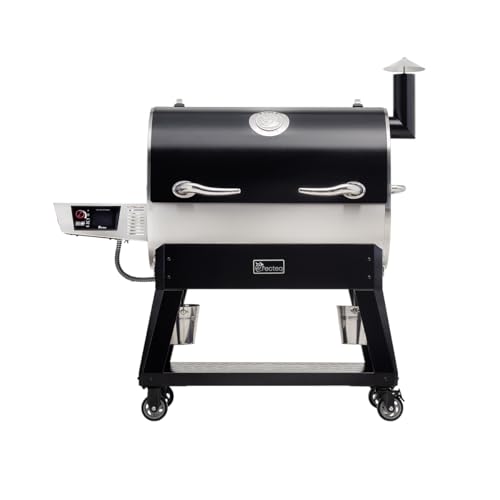
recteq Flagship 1600 Pellet Smoker Grill — Best Expert Pellet Pick
The recteq Flagship 1600 is what pellet smoking looks like when it is aimed at serious volume: 1,667 square inches of cook space and a 40 lb hopper that treats an overnight brisket cook as a normal shift rather than an endurance event. Expert users rate recteq’s temperature stability highly, and stability is the whole game when the same brisket has to come out right forty weekends a year.
For a restaurant, the Flagship’s argument is labour. One connected pit that holds temperature, reports to a phone and carries a full load replaces hours of fire management. The smoke profile is cleaner than an offset’s, so menu writers should sell tenderness and consistency rather than old-school bark.
The Flagship fits the expert pellet judgement: stability at scale, a hopper that respects the cook’s night, and capacity that turns pellet smoking into a production method. Experts recommend it to businesses, not hobbyists, which is the distinction this list is built on.
Strengths
- 1,667 square inches is the biggest cooking area in this roundup
- 40 lb hopper is built for overnight commercial brisket runs
- Wi-Fi monitoring suits a pitmaster who is also running the rest of the kitchen
Trade-offs
- Premium-tier pellet unit, so the business case must rest on volume
- Pellet flavour is clean and mild compared with offset wood smoke
- Size and weight make it a semi-permanent installation
Key specs: 1,667 sq in cook space (per Amazon title); 40 lb hopper; Wi-Fi control.
Best for: high-volume pellet operations and restaurants standardising on one big pit / Not suited for: buyers chasing deep offset-style bark as the signature flavour.
Check the current price on Amazon for the recteq Flagship 1600 Pellet Smoker Grill.

Oklahoma Joe’s Highland Reverse Flow Offset Smoker — Best Expert Offset Pick
Reverse flow is the thinking cook’s offset layout. Smoke and heat travel under a baffle plate to the far end of the chamber before returning across the food, which irons out the fierce hot spot beside the firebox that ruins the nearest brisket on a standard offset. For a small commercial load, that evenness is money: fewer burnt edges, fewer rotated trays, more sellable slices per cook.
At 1,093 square inches this is also the roomiest offset here, enough for a genuine small-service brisket and ribs programme. It still burns real wood and still needs a fire manager, so staff it honestly. What it removes is not labour but waste, and waste is where small BBQ margins go to die.
The reverse flow Highland fits the expert offset advice given to starters: learn fire on a layout that forgives, with evenness built into the design rather than demanded from the tender. Its ceiling is stated in its review; within it, experts approve.
Strengths
- Reverse flow baffle evens out chamber temperatures, reducing hot-spot losses on big loads
- 1,093 square inches is the largest offset capacity in this list
- Traditional wood smoke with more forgiving heat distribution than a standard offset
Trade-offs
- Still a labour-led cooker: reverse flow evens heat, it does not automate it
- Baffle plate needs scraping and care as part of the cleaning rota
- Consumer-gauge steel limits lifespan under daily commercial firing
Key specs: 1,093 sq in cooking area (per Amazon title); reverse flow baffle layout.
Best for: small BBQ restaurants and caterers cooking full offset loads who hate hot spots / Not suited for: operations without a dedicated fire tender.
Check the current price on Amazon for the Oklahoma Joe’s Highland Reverse Flow Offset Smoker.

Masterbuilt Gravity Series 600 Charcoal Smoker Grill — Best Expert Hybrid Pick
The Gravity Series 600 answers the oldest commercial complaint about charcoal: the babysitting. A gravity-fed hopper meters charcoal into the fire while a digital controller and fan hold the set temperature, so you get genuine charcoal smoke with something close to oven discipline. Experts recommend it precisely because it bridges the flavour and labour worlds.
For a small operation it is a superb second pit: the flavour unit for brisket and ribs on days when the electric cabinet is carrying volume. Log your charcoal consumption per cook from week one; gravity pits reward operators who know their fuel numbers.
The Gravity 600 fits the expert hybrid verdict: real charcoal, digitally held, for cooks whose hours are worth more than their fire pride. Experts who run restaurants recommend it precisely because they have priced their own time.
Strengths
- Gravity-fed charcoal gives real charcoal flavour with digital temperature holding
- WiFi monitoring frees the cook for other kitchen work
- Hopper feeding removes the constant refuelling of a kettle or small offset
Trade-offs
- 600 square inches is mid-size for commercial loads
- Charcoal hopper and fan are systems that need cleaning and care
- Needs power for the controller even though the fuel is charcoal
Key specs: 600 sq in (per Amazon title); gravity-fed charcoal hopper; WiFi; digital control.
Best for: small operations wanting charcoal flavour without full-time fire tending / Not suited for: the largest commercial loads, which need a bigger chamber.
Check the current price on Amazon for the Masterbuilt Gravity Series 600 Charcoal Smoker Grill.

HAKKA Commercial Electric Smoker DSH-S50B — Best Expert Cabinet Pick
The HAKKA DSH-S50B is the closest thing on Amazon to a true commercial smoke oven: a vertical cabinet with eight racks built for repeatable batches of sausage, bacon, pastrami and smoked poultry. For a small operation the appeal is workflow, not romance. You load the cabinet, set the heat, and the batch runs without a pitmaster standing over a firebox for ten hours.
Treat it as a production cabinet rather than a brisket pit. It excels where the product is cured, hung or laid in uniform pieces and where consistency across batches matters more than bark theatre. Plan your rack map before the first commercial run, because eight racks reward planning and punish improvisation.
The HAKKA fits expert respect for specialisation: a cabinet that does cured and batch production without pretending to be a pit. Experts distrust equipment that claims everything; the HAKKA’s focused competence is why it is on their list.
Strengths
- Eight racks give genuine batch capacity for sausage, bacon and pastrami runs in a single load
- Cabinet format suits indoor-adjacent and commissary workflows better than an open backyard pit
- Electric heat removes fire-tending labour during long low-temperature cures
Trade-offs
- Electric smoke flavour is milder than a live-fire offset, which purists notice on brisket bark
- Cabinet needs a dedicated circuit and a dry, ventilated home in the kitchen
- Rack spacing limits very tall cuts unless you re-plan the load
Key specs: Vertical cabinet; 8 racks; electric smoke oven format.
Best for: high-volume sausage, bacon, pastrami and poultry batches in a small commercial kitchen / Not suited for: buyers who want live-fire offset bark as the headline flavour.
Check the current price on Amazon for the HAKKA Commercial Electric Smoker DSH-S50B.
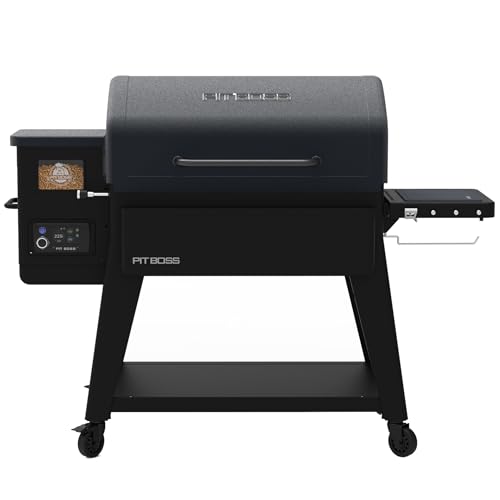
Pit Boss 1600 Navigator Series Pellet Grill & Smoker — Best Expert Value-at-Scale Pick
The Pit Boss 1600 Navigator is the pellet answer to commercial volume: 1,593 square inches, a 30 lb hopper and app-connected control in a single unit a small restaurant or large caterer can actually buy on Amazon. For brisket service it offers the combination that matters, namely space for multiple packers plus enough pellet capacity to run overnight without a 3 a.m. refill visit.
Run the numbers before you commit. At commercial volume, pellets are a consumable cost per cover, and the auger and fan are wear parts. Operations that log cooks, clean the burn pot on schedule and keep a spare igniter on the shelf get years from these units; operations that treat them like a gas oven do not.
The Navigator fits the expert scale recommendation: when the question is volume with connectivity at a sane tier, this is the pit experienced operators point to, with the running-cost caveats its review states as plainly as any expert would.
Strengths
- 1,593 square inches is genuine event and restaurant-patio capacity
- 30 lb hopper supports long unattended brisket cooks
- Flame broiler adds a searing station, so one unit covers smoke and grill menus
Trade-offs
- Pellet cost per cook is a real line item at commercial volume
- Large footprint needs a planned home, not a spare corner
- Moving parts (auger, fan, igniter) mean a maintenance schedule, not set-and-forget ownership
Key specs: 1,593 sq in cook space (per Amazon title); 30 lb hopper; 180–500°F range; WiFi and Bluetooth.
Best for: restaurants, taprooms and caterers needing pellet capacity at scale / Not suited for: tiny kitchens where footprint and pellet storage do not fit.
Check the current price on Amazon for the Pit Boss 1600 Navigator Series Pellet Grill & Smoker.
Comparison Table
| Pick | Badge | Key spec | Best for |
|---|---|---|---|
| Weber Smokey Mountain Cooker 22-inch | Best Expert Charcoal Pick | 22-inch bullet format (per Amazon title); dual cooking grates; porcelain-enameled steel; damper control | caterers, competition cooks and small operations wanting expert-grade charcoal results |
| recteq Flagship 1600 Pellet Smoker Grill | Best Expert Pellet Pick | 1,667 sq in cook space (per Amazon title); 40 lb hopper; Wi-Fi control | high-volume pellet operations and restaurants standardising on one big pit |
| Oklahoma Joe’s Highland Reverse Flow Offset Smoker | Best Expert Offset Pick | 1,093 sq in cooking area (per Amazon title); reverse flow baffle layout | small BBQ restaurants and caterers cooking full offset loads who hate hot spots |
| Masterbuilt Gravity Series 600 Charcoal Smoker Grill | Best Expert Hybrid Pick | 600 sq in (per Amazon title); gravity-fed charcoal hopper; WiFi; digital control | small operations wanting charcoal flavour without full-time fire tending |
| HAKKA Commercial Electric Smoker DSH-S50B | Best Expert Cabinet Pick | Vertical cabinet; 8 racks; electric smoke oven format | high-volume sausage, bacon, pastrami and poultry batches in a small commercial kitchen |
| Pit Boss 1600 Navigator Series Pellet Grill & Smoker | Best Expert Value-at-Scale Pick | 1,593 sq in cook space (per Amazon title); 30 lb hopper; 180–500°F range; WiFi and Bluetooth | restaurants, taprooms and caterers needing pellet capacity at scale |
How to Choose the Best Commercial Smokers Recommended by Experts for Your Kitchen?
Borrow the expert’s first question: what do you cook, how often, and who is cooking it? Experts match pits to programmes, not to aspirations. A brisket-led weekly programme, a cured-products business and a mixed catering menu lead to three different pits in this list, and each is the expert answer to its own question.
Borrow their second question too: what will you still be using in three years? Experts favour pits with parts support, repairable construction and a user community, because a commercial pit is a multi-year relationship, not a season’s experiment.
Why Do Experts Keep Recommending the Same Few Designs?
Because smoker design is a solved problem in a few shapes. The bullet’s water-pan stability, the reverse flow’s even chamber, the gravity feed’s metered charcoal and the cabinet’s stacked racks have each been proven across thousands of cooks. Novelty in smokers usually means a new way to be uneven or unreliable.
That conservatism is information. When experts across regions and styles converge on a design, a commercial buyer can trust the pattern even before trusting any single product, and this guide is organised by those proven designs for exactly that reason.
What Do Experts Check That Beginners Miss?
Temperature at the grate, not at the lid. Experts test a new pit with probes or a biscuit test across the cooking surface and learn its hot and cool zones before cooking for money. They also check how a pit recovers after the door opens, because service involves opening doors.
They check the boring systems: how ash is removed, how grease drains, whether seals are replaceable, whether the fire can be added to without dismantling the cook. Commercial cooking is a hundred small operations; experts judge the operations, beginners judge the silhouette.
What Expert Habits Matter More Than Expert Equipment?
Logging. Every expert cook this guide’s approach draws on keeps records: fuel, times, temperatures, weather, results. The log converts one good brisket into a repeatable brisket, which is the entire commercial difference between a cook and a business.
Fire and fuel discipline. Seasoned wood, consistent charcoal, dry pellets, added in small regular amounts. Experts taste the difference between clean smoke and dirty smoke instantly, and they manage fuel to stay on the clean side of that line all cook long.
Resting and holding as a craft. Experts plan the rest when they plan the cook, and hold at safe temperatures for defined windows. More commercial quality is lost after the pit than in it, a sentence worth taping to the kitchen wall.
Knife and slicing discipline for service: brisket sliced to order, rested properly, cut against the grain with the fat side presented as the pit produced it. The pit’s work deserves a competent pass.
And humility about equipment: experts upgrade when their logs prove a limit, not when a catalogue suggests one. That order of operations is available to every buyer of this guide, free of charge.
How to Run an Expert-Style Test Cook Before You Cook for Customers
Map the pit empty first: probes at grate level in several positions, run at your target temperature for an hour, and record the spread. Every pit has a personality; learn yours with instruments, not impressions.
Run a biscuit or bread test next, a full grate of identical pieces, and read the browning pattern. It shows hot and cool zones more honestly than any gauge and tells you where briskets and trays should sit.
Cook one full rehearsal load of your actual menu, logged end to end, including wrap, rest and holding, and taste it at service temperature after a realistic hold. That last detail, the hold, is where rehearsal earns its cost.
Cost the rehearsal completely: protein, fuel, hours, yield. An expert test cook produces a price as well as a meal, and a commercial menu built on unrehearsed numbers is a guess with a till attached.
Write the cook card from the rehearsal, not from a recipe book: your pit, your product, your timings. Then cook the card twice more. Three identical results is a product; one is an anecdote.
Extend the test-cook method across the first season: re-map the pit’s hot zones quarterly, because seals age, baffles warp slightly and the pit you mapped in spring is not identical by autumn. Experts re-learn their equipment on a schedule rather than trusting an old map.
Keep a small library at the station: the pit manuals, your cook cards and one respected barbecue reference the team actually reads. Expertise in a kitchen is partly a bookshelf that gets used, and the cards you write will join it within a season.
Keep the test-cook habit alive after purchase: one mapped, logged rehearsal cook per quarter, or after any repair, seal change or fuel change. Pits drift and suppliers vary; the quarterly rehearsal is how an expert operation notices before its customers do.
Invite criticism deliberately: have the team taste blind against last month’s standard, kept honestly in notes, and write down the differences without defending them. Expertise in a kitchen is a culture of noticing, and the blind tasting is its simplest ceremony.
Common Buying Mistakes
Copying an expert’s pit without copying their programme is the flattering mistake. A competition cook’s offset is right for competition rhythm; a restaurant’s cabinet is right for service rhythm. Buy for your rhythm.
The second mistake is treating expert recommendation as a substitute for the test cook. Experts recommend designs and models; only your rehearsal validates one in your kitchen, with your product and your water, weather and staff. The third is chasing smoke flavour while neglecting holding, where expert quality is actually defended.
Finally, do not let anyone sell you expertise as accessories. Probes, logs and discipline outperform gadgets at every commercial scale in this guide.
How Do Experts Judge Smoke Quality in a Commercial Pit?
By the fire first: clean smoke is thin, pale and almost blue, carrying the smell of the wood rather than the sting of smoulder. Experts read smoke the way bakers read dough, continuously and without instruments, and they adjust fuel size and airflow to keep it clean across the whole cook, not just the photogenic first hour.
By the product’s surface second: bark that is set, coloured and firm rather than sooty or tacky, a smoke ring that is present without being chased, and fat rendered to silk rather than left in white seams. The surface reports the fire’s whole history, and experts believe it over the thermometer’s summary.
By the slice third: moisture that beads rather than floods or hides, tenderness that pulls cleanly, and a smoke flavour that seasons the meat instead of replacing it. Over-smoked product is the beginner’s signature; experts treat smoke as salt, essential and easy to overdo.
By consistency last and most commercially: the same judgement passed on the fortieth brisket of the season as on the first. A pit, a card and a log that can repeat quality are what experts are actually recommending when they recommend equipment in this guide.
None of these judgements requires a laboratory, and all of them can be learned by any buyer willing to cook rehearsals and keep notes. That learnability is the real content of expert recommendation.
What Do Experts Say About Upgrading, and When?
Upgrade the limit, not the logo. Experts replace a pit when their logs prove it is the constraint: yield lost to hot spots, hours lost to fire tending, services lost to capacity. A pit that is not the proven limit is not the problem, whatever the catalogue suggests, and money spent elsewhere usually earns more.
Upgrade in the direction of your proven product. A business whose logs show brisket carrying the menu upgrades toward brisket capacity and evenness; a cured-products business upgrades toward cabinet precision. The logs decide, because the logs are the business describing itself truthfully.
Keep the old pit when you upgrade, if space allows. The retired pit becomes the second temperature, the backup and the rehearsal unit, and experts’ yards are full of former primaries earning their keep in exactly those roles. Systems beat single machines at every scale in this series.
Time the upgrade to the quiet season, and rehearse on the new pit before it carries a service. Experts change equipment the way pilots change aircraft, with training hours logged before passengers, which in this world means customers, are involved.
Finally, experts sell or pass on equipment honestly when it is truly done, rather than letting it occupy space and sentiment. A pit is a tool with a working life, and treating it as one is part of the professionalism this guide recommends along with the hardware.
How Do Experts Read a Smoker Before They Ever Light It?
They start with the firebox or the heat source, because everything downstream is decided there: how fuel is added mid-cook, how ash leaves, whether the design invites clean burning or smouldering. An expert can forgive a plain exterior; a firebox that fights its tender will be fought by every cook who inherits it.
They run a hand along seals and doors, judging fit the way a carpenter judges a drawer. Air leaks are temperature chaos in slow motion, and the expert’s fingers find in ten seconds what a season of frustrated cooks would eventually report. On cabinets they check the door’s close; on offsets, the firebox door above all.
They look inside the chamber for the grease story: where fat falls, where it travels, where it can be removed. A pit whose grease path ends in a cleanable place will be cleaned; a pit whose fat hides will eventually announce itself, and experts price that announcement into their judgement.
They ask about parts before performance: grates, seals, probes, igniters, the consumables of the next five years, and whether the maker answers. Expert recommendation is partly a judgement about a company’s future behaviour, made from its present shelf.
And they discount theatre: paint, badges and feature lists earn nothing until the first mapped cook. The expert’s respect is given to pits that have cooked, in public, for years, which is why this guide’s names recur across decades rather than launches.
What Separates Expert Consistency From Beginner Luck?
Beginners cook events; experts run processes. The beginner’s great brisket is an anecdote about a day; the expert’s is the fortieth repetition of a card, in weather that varied, with fuel that varied, landing inside a narrow band of quality because every variable was either controlled or compensated.
Compensation is the expert’s quiet skill: a colder day answered with an earlier start, a fattier packer with a longer rest, a damp fuel load with a smaller, hotter fire. None of it is mysterious; all of it is logged experience being spent deliberately, which is why the log is this guide’s most repeated recommendation.
Experts also know what not to fix: the batch that is within standard is left alone, the pit that is performing is not modified mid-season, the card that works is not rewritten for novelty. Consistency is protected by restraint as much as by technique.
When something does drift, experts change one variable and watch. The beginner changes four and learns nothing; the expert’s single change produces knowledge that compounds, cook after cook, into the judgement people later call talent.
For a commercial buyer, the encouraging truth is that consistency is purchasable in exactly one way: not as a feature, but as a system of stable equipment, written cards and kept logs. This guide’s picks supply the first; the rest is the buyer’s, and it is the part that actually deserves the word expert.
How Do Experts Maintain a Pit Across a Commercial Season?
The season opens with an inspection the pit earns after its rest: seals flexed and checked, grates and baffles cleaned to metal where the design allows, dampers and hinges moved and freed, probes calibrated, and a mapped empty run to confirm the pit is still the pit the cards describe. Experts begin from knowledge rather than from last season’s memory, because steel, seals and suppliers have all had months to change their answers.
In season, maintenance is rhythm rather than project: ash and grease on their short cycles, a monthly look at the parts that move and burn, a log note whenever the pit behaves even slightly unlike itself. The note is the maintenance system’s sensor; a drift recorded in May is a gasket replaced in an hour, while the same drift discovered in August is a service lost.
Fuel is maintained too: the wood store rotated so the driest burns first, pellets kept in their dry place with the open bag sealed, charcoal protected from the damp that makes it sulk. Experts treat fuel as part of the machine, because the pit can only be as consistent as what it burns, and they audit the store with the same eyes as the steel.
The season closes with the honesty of a review: what the pit cost in parts, hours and lost product, what it earned, and whether next season’s programme still matches its strengths. Experts retire, demote or promote equipment on that evidence, and the pit that cooked the season is thanked in the only currency that matters, a decision based on its record.
None of this requires a workshop or a mechanic’s gift. It requires the log, the rota and the willingness to look at the machine before it asks for attention in the middle of a service, which is, in the end, most of what the word expert means in a working kitchen.
Why Do Experts Distrust Headline Cooking Area?
Because they have loaded the pits. Headline area counts every grate, rack and warmer a maker can measure, including surfaces too hot, too cool, too small or too awkward for the product being cooked, and a commercial load lives or dies on the usable area: the places where a whole brisket, a full tray or a rack of ribs can sit in moving air at an even temperature for hours.
Experts translate area into product before they compare models: packers with gaps, trays with clearance, birds with headroom. Two pits with identical printed areas routinely differ by a third in honest capacity, and the difference is visible only to a buyer who loads them mentally, product by product, before paying.
Rack spacing is the hidden half of the same lesson: a tall stack of closely spaced racks posts a magnificent area and cooks trays of jerky beautifully while refusing a shoulder. Experts ask for the spacing and the tallest load, because menus are three-dimensional even when brochures are not.
This distrust is why this guide quotes verified areas from the listing titles and then spends its reviews on layout, evenness and role rather than on the number. The number starts the conversation; the load finishes it, and experts buy on the load.
A buyer can borrow the habit in one visit: take the tray, the pan or the brisket box you actually cook in, and place it, mentally or physically, inside every candidate. The pit that swallows your real load with air to spare is bigger than the pit with the bigger number, whatever the brochure says.
A Final Word on Taking Expert Advice
Expert advice is best used the way experts themselves use it: as a way to shorten the list of proven designs, never as a substitute for the rehearsal that proves one of them in your kitchen. The names in this guide recur across decades because their designs forgive, repeat and endure; your test cook, your logs and your costing decide which of them earns your money, and no reputation, however deserved, should be allowed to skip that examination.
Notice what the experts in this guide never recommended: a pit without trade-offs, a shortcut around the fire or the log, a gadget in place of a habit. Their consistency on those points is itself the advice. Commercial smoking rewards the boring virtues, stability, evenness, records, rest, at a rate that surprises every generation of beginners and no generation of experts.
Buy a proven design, rehearse it until it is yours, and keep the records that turn one good cook into a business. Do that, and within a season the most expert recommendation in your kitchen will be the one your own logbook makes, which is exactly where expertise is supposed to end up.
One More Check Before You Decide
Take the shortlist from this guide and subject each candidate to the expert’s final examination: load it, in your mind or in a showroom, with your product; open and close its doors as a tired cook would at hour ten; find its grease path, its ash route, its seal and its spare parts with your own hands and eyes. The pit that survives that examination with your respect intact is the pit the experts were pointing at, whatever its badge.
Then write down, before the purchase, what would make you conclude in a year that you chose wrongly: a yield figure, an hours figure, a failure you will not tolerate twice. Deciding the verdict’s terms in advance protects the future judgement from both stubbornness and fashion, and it turns the purchase into an experiment with a readable result.
Keep that page with the logbook. A year later it will tell you, in your own handwriting, whether the experts were right for your kitchen, and the answer, either way, is the beginning of your own expertise, which is the only recommendation that will still matter in year five.
Final Recommendation
If you take one expert pattern from this guide, take the pairing: a stability-first pit for the headline product and a cabinet for production, each chosen from the proven designs above. The WSM and the HAKKA, or the reverse flow and the Flagship, are combinations working in real businesses today. Compare them against your setting in Best Commercial Restaurant Smokers and your scale in Best Commercial Smokers For Small Operation.
For the fire-led route in full, see Best Commercial Offset Smokers; for brisket specifically, Best Commercial Smokers To Cook Brisket; and for tight footprints, Best Commercial Small Smokers.
Shortlist for a final check before you order: Weber Smokey Mountain Cooker 22-inch; recteq Flagship 1600 Pellet Smoker Grill; Oklahoma Joe’s Highland Reverse Flow Offset Smoker; Masterbuilt Gravity Series 600 Charcoal Smoker Grill; HAKKA Commercial Electric Smoker DSH-S50B; Pit Boss 1600 Navigator Series Pellet Grill & Smoker. Open each listing, confirm the model name matches the pick above, and check price on Amazon at the moment you buy.
Frequently Asked Questions
Which smoker do experts recommend most for beginners going commercial?
The 22-inch Weber Smokey Mountain is the recurring answer for charcoal, because its stability teaches good habits and its results stand up in catering and competition. For pellet, experts point to stable, connected pits like the recteq Flagship.
Do experts use pellet smokers commercially?
Yes, widely, especially where labour is scarce. Experts judge pellet pits on temperature stability and hopper capacity for long cooks, and write menus that suit pellet smoke’s cleaner profile.
Why do experts prefer reverse flow offsets?
Evenness. The baffle removes the fierce hot zone beside the firebox, which protects full commercial loads and improves sellable yield. Waste reduction is an expert obsession because it is where margins live.
Are expert-recommended pits always expensive?
No. The WSM and the Highland-class offsets are starter-tier purchases. Experts recommend designs and discipline first; price follows the programme, not the other way round.
What is the one accessory experts insist on?
Accurate probe thermometers, plural, plus a log. Grate-level truth and written records improve any pit in this guide more than any other purchase.
How do I know an expert recommendation is genuine?
It comes with trade-offs, conditions and a programme it fits. Unconditional praise for a smoker, with no downside and no context, is marketing wearing an expert’s coat.
Do experts prefer charcoal, pellet or electric for commercial work?
Each for its programme: charcoal and offset for flavour-led barbecue, pellet for connected production, electric for cured precision. The expert position is that the question is incomplete without the menu, which is why this guide organises its picks by role.
How important is a smoker’s brand to experts?
Less than its design, its parts support and its user community. Experts buy proven designs from makers who will answer in three years; the badge matters as evidence of that support, not as a fashion statement.
Do experts recommend buying the extended warranty or service plan?
Experts price it like any other input: what fails on this model, what a call-out costs, and how much a lost service is worth to the business. For a single-pit operation whose Saturdays depend on one machine, cover is often rational; for a two-unit system, the second unit is frequently the better policy.
How do experts feel about smart features and apps?
In favour, when they serve stability and logging: remote monitoring that frees a cook and records that prove a process are expert tools. Experts are cooler on features that add failure modes without adding control, and they judge each pit on which side of that line its technology sits.
What is the most underrated expert habit?
Tasting their own product at the customer’s moment, from the hold, at service temperature, every day. Equipment, logs and cards all exist to protect that single taste, and the operations that schedule it catch their drifts while they are still free to fix.


