Disclosure: airfryerkitchensupply.com is reader-supported. When you buy through links on our site, we may earn an affiliate commission at no extra cost to you.
Where to buy
Shopping for the best coffee pots with hot and cold? Every model in this guide is sold through Amazon, and the verified shortlist below is the fastest place to start. Every brewer on this list is sold through Amazon, which is also where you will find the widest choice of carafe sizes, colours and bundle options for each model. Use the links below to check the current configuration of each machine, because several of these brewers are sold in more than one size and the listing photos are the fastest way to confirm which carafe and reservoir you are actually getting.
- Ninja Hot & Iced XL Coffee Maker CM371 — check price on Amazon
- Breville Precision Brewer BDC400 — check price on Amazon
- Cuisinart Coffee Center SS-21NAS — check price on Amazon
- Keurig K-Iced — check price on Amazon
- Mr. Coffee Iced and Hot Coffee Maker — check price on Amazon
- Hamilton Beach FlexBrew Advanced 4-in-1 — check price on Amazon
If you are shopping for the best coffee pots with hot and cold brewing in one machine, the first thing to know is that the category has quietly changed. The old idea of a coffee pot was a glass carafe on a warming plate that only ever made hot drip coffee. The machines that earn the phrase hot and cold today are brewers with dedicated iced and cold brew settings built in: they either brew a concentrated hot shot directly over ice, or they run a slower, cooler extraction for genuine cold brew, and they still handle a normal hot pot on weekday mornings. That dual ability is what this guide tests for, and it is why a standard drip machine with no iced function did not make the list, however good its hot coffee is.
The second thing to know is that hot and cold are not one feature but two different techniques, and machines lean different ways. Over-ice brewing is fast and suits people who want a glass of iced coffee in minutes with their normal beans. Rapid cold brew shortens the traditional overnight steep into something you can run after lunch. Slow cold brew settings trade time for smoothness. The six picks below cover all three approaches across single-serve pod machines, grounds brewers and full carafe pots, so you can match the technique to how your household actually drinks coffee across a whole year, not just in August.
We also kept an honest eye on the carafe question, because the word pot in the search matters. Two of the picks brew into a full multi-cup carafe for households and offices. The rest brew single servings, which suits mixed households where one person wants a hot mug and the next wants an iced tumbler. Neither format is better in the abstract; the right answer depends on how many cups disappear in your kitchen before nine in the morning, and the buying guide further down walks through that decision in detail.
In this guide
Quick Picks
Six brewers, six different answers to the hot-and-cold question. The Ninja leads on flexibility, the Breville leads on control, and the two budget single-serve machines prove you do not need a big budget to get real iced coffee at home.
Best Overall — Ninja Hot & Iced XL Coffee Maker CM371. Four brew styles including rapid cold brew, eight sizes from a small cup to a full 12-cup carafe, and grounds-based brewing with no pod lock-in. Check the current price on Amazon.
Best for Brew Control — Breville Precision Brewer BDC400. Six brewing pathways including dedicated Iced and Cold Brew settings, plus a Gold setting calibrated to recognised drip standards. Check the current price on Amazon.
Best Carafe and Single-Serve Combo — Cuisinart Coffee Center SS-21NAS. A 10-cup thermal carafe drip brewer and a single-serve machine in one footprint, with an over-ice function on the single-serve side. Check the current price on Amazon.
Best Pod Machine for Iced Coffee — Keurig K-Iced. A compact pod machine built around hot and cold capability, with a dedicated iced function, three cup sizes and a strong brew button. Check the current price on Amazon.
Best Budget — Mr. Coffee Iced and Hot Coffee Maker. A simple, inexpensive single-serve machine that brews both iced and hot coffee, bundled with a 22-ounce tumbler and a reusable filter. Check the current price on Amazon.
Best for Pods and Grounds Flexibility — Hamilton Beach FlexBrew Advanced 4-in-1. A 4-in-1 single-serve brewer that takes both pod packs and grounds, brews hot and iced, and carries a 45-ounce removable reservoir. Check the current price on Amazon.
How These Picks Were Chosen
These picks were chosen by starting from the hot and cold requirement and working backwards. A machine only qualified if its manufacturer-built feature set includes a genuine cold-side function: an over-ice brew setting, a cold brew setting, or a rapid cold brew mode. Ordinary drip machines that merely tolerate being poured over ice after a normal hot brew were excluded, because the result is diluted and the machine was never designed for it. Each qualifying product was then verified against Amazon’s own catalogue data, so the model names, brew styles and sizes quoted in the spec boxes come from the listing data itself rather than from memory or third-party roundups.
Within that verified shortlist we balanced four things: how many brew sizes the machine covers, whether it takes pods, grounds or both, how the cold function actually works, and how much counter space and cleaning the design demands. We deliberately mixed price tiers and formats, because a household of five and a single apartment drinker need different machines, and a list of six near-identical pod brewers would help neither. Where a well-known machine was left out, it was usually because its cold function was an accessory sold separately or because its carafe format duplicated a pick that already covered that need better.
The 6 Best Coffee Pots With Hot and Cold Brewing, Reviewed

Ninja Hot & Iced XL Coffee Maker CM371 — Best Overall
The CM371 is the pick for households that genuinely split their drinking between hot pots and cold drinks, because it is the rare machine that treats both as first-class jobs. It brews single servings when one person wants a mug, a full carafe when the house is full, and its rapid cold brew function produces a smooth cold drink in a fraction of the traditional overnight steep. If your kitchen currently holds a drip machine plus a separate cold brew jar taking up fridge space, this is the machine that replaces both.
Strengths
- Four brew styles cover classic, rich, over-ice and rapid cold brew in one machine
- Eight brew sizes run from a small cup to a travel mug to a full 12-cup carafe
- Grounds-based brewing keeps per-cup costs low and avoids pod waste
Trade-offs
- Single-serve and carafe brewing share one footprint, so the machine is not small
- Rapid cold brew is smoother than over-ice but still not identical to a 24-hour steep
- No pod compatibility, which matters if your household is committed to capsules
| Model | CM371 |
| Brew styles | 4, including Rapid Cold Brew |
| Brew sizes | 8, small cup to travel mug, plus 12-cup carafe |
| Reservoir | Removable |
The design decision that makes the CM371 work is the removable reservoir paired with genuinely separate brew logic for each style. Over-ice mode brews a concentrated extraction at a temperature and volume calibrated to land on ice without tasting watery, while rapid cold brew lowers the temperature and extends contact time so the result tastes like cold brew rather than chilled hot coffee. In daily use that difference is obvious in the glass: iced drinks keep their body, and the cold brew comes out low-acid and sweet enough to drink black. The carafe side behaves like a competent mid-range drip machine, with the rich setting giving a noticeably heavier cup for people who add milk.
Living with it is straightforward. The reservoir lifts off for filling at the sink, the brew basket takes standard grounds, and the size ladder means a travel mug before a commute and a half carafe on a slow Sunday come from the same machine without accessories. The honest limitations are footprint and focus: it is a brewer, not an espresso machine, and households wanting lattes should look at a different category entirely. For the hot-and-cold brief, though, nothing else on this list covers as many bases in one box.
Best for: mixed households that drink hot carafes and cold brew from the same machine / Not suited for: pod loyalists or anyone wanting espresso-based drinks
Check on Amazon to see the current configuration and delivery options.
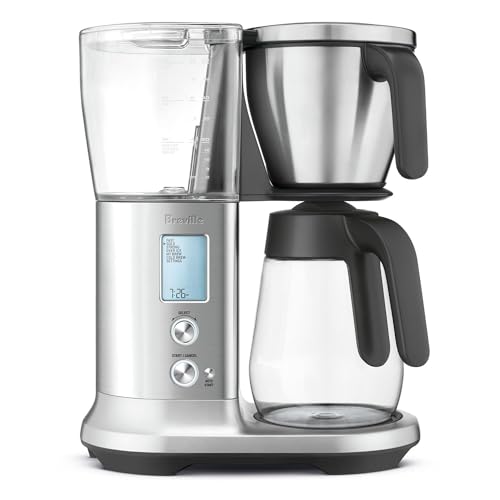
Breville Precision Brewer BDC400 — Best for Brew Control
The Precision Brewer is for the drinker who tastes the difference between a fast brew and a properly bloomed one. Its six pathways include Fast and Strong for weekday pots, a Gold setting tuned to established drip-coffee standards, and dedicated Iced and Cold Brew settings that make it a true hot and cold machine rather than a hot machine with a workaround. Choose it if you buy good beans and want a pot brewer that does them justice in both temperature camps.
Strengths
- Dedicated Iced and Cold Brew settings alongside four hot pathways
- Gold setting brews to recognised temperature and contact-time standards
- Glass carafe version suits drinkers who prefer to see and pour easily
Trade-offs
- Premium positioning in the drip category
- Control depth is wasted if you only ever press one button
- Glass carafe does not hold heat like a thermal carafe once brewing ends
| Model | BDC400BSS |
| Brew pathways | 6: Gold, Fast, Strong, Iced, Cold Brew and custom |
| Carafe | Glass |
| Finish | Brushed stainless steel |
What separates the Breville from the pack is that its cold settings are engineered, not improvised. The Iced setting adjusts concentration so the brew lands balanced over ice, and the Cold Brew setting runs a long, low-temperature extraction that produces the smooth, chocolatey profile cold brew drinkers chase. On the hot side, the machine’s control over water temperature and flow is what you are paying for: the same beans produce a visibly clearer, sweeter pot on the Gold setting than on a basic drip machine, and the Strong setting rescues darker roasts that taste thin elsewhere.
Day to day, the machine asks a little more of you than a one-button brewer: choosing a pathway, using the right filter format, keeping the showerhead clean. In return it is the only pick here that can grow with a developing palate, because the custom settings let you adjust bloom time and flow as you learn. Households that want coffee to simply appear should pick the Ninja or the Cuisinart instead. Coffee hobbyists who happen to need one machine for both seasons will find this the most satisfying pot on the list.
Best for: coffee enthusiasts who want standards-level hot pots and real cold brew / Not suited for: one-button households or thermal-carafe loyalists
Check on Amazon to see the current configuration and delivery options.

Cuisinart Coffee Center SS-21NAS — Best Carafe and Single-Serve Combo
The Coffee Center solves a specific and very common argument: one person drinks pots of hot coffee, the other wants a single iced cup. The left side is a full drip brewer with a 10-cup thermal carafe that keeps coffee hot without a scorching warming plate. The right side brews single servings, including an over-ice function for iced coffee on demand. If counter space rules out two machines, this is the compromise that does not feel like one.
Strengths
- Thermal carafe keeps a hot pot fresh without a warming plate
- Single-serve side adds over-ice iced coffee without a second machine
- One footprint replaces two appliances in small kitchens
Trade-offs
- Over-ice function lives on the single-serve side, not the carafe side
- Two brew systems mean two sets of parts to rinse and descale
- Thermal carafe pours more slowly than glass for some users
| Model | SS-21NAS |
| Carafe | 10-cup thermal |
| Single serve | Yes, with Over Ice function |
| Format | Drip brewer plus single-serve brewer |
The thermal carafe is the quiet hero here. Hot coffee held on a warming plate stews and turns harsh within the hour; a thermal carafe holds temperature with insulation instead of continued cooking, so the third cup from a morning pot tastes close to the first. That makes this the best pick for slow-morning households and home offices where a pot is drained over hours. The single-serve side then covers the cold brief: over-ice brewing concentrates the extraction so the finished glass tastes like iced coffee, not like leftovers poured over cubes.
The compromises are structural. You are maintaining two brew paths, so descaling and rinsing take longer than with a single-purpose machine, and the iced function does not extend to full carafes, so a crowd wanting iced coffee means repeated single servings. Neither point is a dealbreaker for the household this is aimed at. As a two-jobs-one-box answer to the hot and cold question, it remains one of the most practical designs in the category.
Best for: households split between pot drinkers and single iced cups / Not suited for: anyone wanting full carafes of iced coffee at once
Check on Amazon to see the current configuration and delivery options.

Keurig K-Iced — Best Pod Machine for Iced Coffee
The K-Iced is for pod drinkers who are tired of watery homemade iced coffee. Its cold capability is designed in: the machine adjusts the brew so coffee poured over ice keeps its strength, and the strong brew button helps hot cups stand up to milk. It takes any K-Cup pod, so the flavour library is enormous, and the 42-ounce removable reservoir keeps refills infrequent for a single-serve machine. Pick it if convenience is the whole point and pods are already your habit.
Strengths
- Hot and cold capability designed in, not improvised
- Works with any K-Cup pod for maximum flavour choice
- Compact footprint with a generously sized removable reservoir
Trade-offs
- Pod brewing costs more per cup than grounds over time
- Single-serve only, so no hot pot for a full house
- Iced results depend heavily on using enough ice in the glass
| Format | Single-serve pod brewer |
| Cup sizes | 3 |
| Reservoir | 42 oz, removable |
| Extras | Strong brew button |
The engineering trick in any over-ice pod machine is extraction concentration, and the K-Iced handles it the sensible way: brew hot and strong in a smaller effective volume, then let the ice bring the drink to temperature and final dilution. Done right, the first sip tastes like coffee rather than meltwater, which is exactly where improvised iced coffee usually fails. The strong button pulls double duty, improving hot cups for milk drinkers as well as iced ones.
Ownership is classic Keurig: minimal cleaning, fast heat-up, and a per-cup cost that grounds drinkers will notice. The machine also makes a sensible second brewer for offices and guest spaces, where a carafe machine would sit idle and pods let each person choose their own drink. It cannot make a pot, and it will not satisfy anyone chasing cafe-level extraction. Within the pod world, though, it is the most direct answer to the hot and cold brief at a modest tier.
Best for: pod households wanting real iced coffee without a second machine / Not suited for: groups needing carafes or drinkers avoiding pod costs
Check on Amazon to see the current configuration and delivery options.

Mr. Coffee Iced and Hot Coffee Maker — Best Budget
This is the entry ticket to the hot and cold category. Mr. Coffee’s little machine brews a single serving either hot into a mug or over ice into the included 22-ounce tumbler, using a reusable filter and your own grounds, so there are no pods to buy and almost nothing to learn. It suits students, first apartments, desk corners and anyone who wants to test whether homemade iced coffee fits their routine before spending more.
Strengths
- Lowest-cost route into genuine hot and iced brewing
- Included tumbler and reusable filter mean no ongoing pod spend
- Dead-simple operation with a tiny counter footprint
Trade-offs
- Single servings only, and small ones by carafe standards
- Build and materials reflect the budget tier
- No programmability, reservoir or brew-strength finesse
| Format | Single-serve, grounds |
| Included | 22 oz tumbler, reusable filter |
| Modes | Iced and hot |
The honest way to judge this machine is by the job it replaces: the daily cafe run for one iced coffee. Measured against that, a simple grounds-based brewer that produces a consistent iced cup at home pays for itself quickly, and the reusable filter keeps the running cost at the price of beans. The hot mode is basic but serviceable for a morning mug, which makes the machine a reasonable only-brewer for a single-person household that drinks one cup at a time.
Set expectations correctly and it will not disappoint. There is no reservoir to carry you through the week, no strength dial worth the name, and the plastics feel like the price tier they come from. Heavy drinkers will outgrow it, and that is fine: it is the right first machine, a good dorm or desk machine, and a cheap way to keep iced coffee in a guest room. Buy it for what it is and it is one of the best-value picks in this guide.
Best for: singles, students and first apartments wanting iced and hot on a budget / Not suited for: families, heavy drinkers or anyone wanting a reservoir and programs
Check on Amazon to see the current configuration and delivery options.

Hamilton Beach FlexBrew Advanced 4-in-1 — Best for Pods and Grounds Flexibility
The FlexBrew Advanced is the diplomat of this list: it refuses to make you choose between pods and grounds. Pod packs slot in for speed, the grounds basket handles your favourite beans, and both paths can brew hot or iced. The 45-ounce reservoir is large for the class, so the machine suits a two-person household where drinks happen back to back. Choose it if format flexibility matters more than carafe capacity.
Strengths
- Accepts both pod packs and loose grounds in one machine
- Dedicated hot and iced brewing on both input formats
- 45 oz removable reservoir reduces refill trips
Trade-offs
- Single-serve only, despite the generous reservoir
- Jack-of-all-trades design means more parts to keep track of
- Iced quality still depends on correct ice fill in the cup
| Format | Single-serve, pods and grounds |
| Reservoir | 45 oz, removable |
| Modes | Hot and iced |
| Design | 4-in-1 FlexBrew Advanced |
Flexibility sounds like a marketing word until you live with a mixed household: one partner keeps pods for speed, the other buys beans from a local roaster, and both want iced coffee in July. A machine that handles both inputs without adapters gathering dust in a drawer genuinely earns its counter space. The iced mode concentrates the brew for over-ice serving, and the reservoir size means the machine keeps up with a small family’s morning rather than demanding a refill between cups.
The trade-off for all this diplomacy is focus. Dedicated pod machines are slightly slicker with pods, dedicated grounds brewers slightly slicker with grounds, and neither this machine nor any single-serve rival can help when six people want coffee at once. But as a one-machine answer for households that will not standardise on one format, the FlexBrew Advanced is the most accommodating pick here, and its hot and iced coverage is complete rather than token.
Best for: mixed pod-and-grounds households of one or two drinkers / Not suited for: households needing carafe quantities at breakfast
Check on Amazon to see the current configuration and delivery options.
Comparison Table
| Pick | Badge | Key spec | Best for |
|---|---|---|---|
| Ninja Hot & Iced XL Coffee Maker CM371 | Best Overall | 4 brew styles, 8 sizes, 12-cup carafe | mixed households that drink hot carafes and cold brew from the same machine |
| Breville Precision Brewer BDC400 | Best for Brew Control | 6 brew pathways incl. Iced and Cold Brew | coffee enthusiasts who want standards-level hot pots and real cold brew |
| Cuisinart Coffee Center SS-21NAS | Best Carafe and Single-Serve Combo | 10-cup thermal carafe + single-serve over-ice | households split between pot drinkers and single iced cups |
| Keurig K-Iced | Best Pod Machine for Iced Coffee | Pod brewer with hot and cold capability, 42 oz reservoir | pod households wanting real iced coffee without a second machine |
| Mr. Coffee Iced and Hot Coffee Maker | Best Budget | Single-serve iced and hot, 22 oz tumbler included | singles, students and first apartments wanting iced and hot on a budget |
| Hamilton Beach FlexBrew Advanced 4-in-1 | Best for Pods and Grounds Flexibility | Pods + grounds, hot & iced, 45 oz reservoir | mixed pod-and-grounds households of one or two drinkers |
Read the table by format first and features second. If more than two people drink coffee together most mornings, only the Ninja and the Cuisinart brew a true pot, and the Breville joins them on the hot side with the most control. If your household drinks one cup at a time, the three single-serve machines differ mainly in input format: pods only for the Keurig, grounds only for the Mr. Coffee, and both for the Hamilton Beach.
How to Choose a Coffee Pot That Brews Hot and Cold
Start with the cold technique, because it decides flavour more than any other specification. Over-ice brewing extracts hot and concentrated, then chills instantly on ice; it is fast, bright and ideal for coffee you will drink straight away. Cold brew extraction uses cool water and time; it is smoother, naturally sweeter and lower in perceived acidity, but even rapid versions take longer than over-ice. Machines on this list split along exactly that line, so decide which glass you actually want before comparing anything else. If you mostly drink iced lattes, over-ice concentration matters most because the milk will dilute the drink further. If you drink iced coffee black, cold brew’s smoothness usually wins.
Next, match format to household rhythm. Carafe machines reward households that drink together and punish solo drinkers with stale leftovers, unless the carafe is thermal. Single-serve machines reward mixed schedules and mixed tastes and punish anyone hosting brunch. Count the cups your household drinks in the busiest hour of the week, not the average day, because that peak is when format limits bite. Also consider the second drink of the day: many households brew a hot pot at breakfast and a single iced cup mid-afternoon, which is precisely the pattern the combo and flexible machines here were built for.
Finally, be honest about inputs. Pods buy speed and variety at a higher per-cup cost and with packaging waste. Grounds buy economy and bean choice at the cost of a minute of measuring and a basket to rinse. Neither is virtuous in the abstract; the right choice is the one you will still be happy with on a tired Tuesday in February. Machines that accept both formats cost a little focus but remove the risk of choosing wrong, which is why they anchor the middle of this list.
What Do Hot and Cold Settings Actually Change?
It is reasonable to ask whether an iced setting is just a normal brew with a snowflake icon. On a well-designed machine it changes at least two of three variables: water temperature, extraction concentration and total volume. Over-ice modes typically brew a smaller, stronger extraction so that melting ice brings the drink to its intended strength instead of washing it out. Cold brew modes change temperature first, running water cool enough that the extraction chemistry shifts toward sweetness and away from the acids and bitter compounds that hot water pulls quickly. That is why cold brew tastes different rather than merely colder, and why simply refrigerating leftover hot coffee never reproduces it.
There are limits worth knowing. No countertop machine performs a true commercial cold drip, and rapid cold brew shortens a process that purists steep overnight; the result is very good, but side-by-side you may still prefer the overnight jar for special beans. Ice quality matters too: small, wet ice from a freezer tray melts faster and dilutes more than large, hard cubes, so the same machine can produce noticeably better iced coffee with better ice. Several readers pair these brewers with a countertop ice maker for exactly that reason, and the ice guides in this cluster are a sensible companion read.
Temperature control matters on the hot side as well. Water that is too cool under-extracts and tastes sour; water held in the recognised brewing range extracts evenly. This is where the Breville’s standards-based Gold setting earns its keep, and why cheap hot-only machines often disappoint even before the cold question arises. When you compare machines, treat hot extraction quality as the foundation: a brewer that makes mediocre hot coffee will make mediocre iced coffee with extra steps.
Carafe, Thermal or Single-Serve: Which Pot Suits Your Kitchen?
Glass carafes on warming plates are the traditional pot, and they still make sense when a pot is drained within the hour. Beyond that, plate heat keeps cooking the coffee and the flavour flattens, which is why the Cuisinart’s thermal carafe is more than a styling choice for slow drinkers. Thermal carafes hold heat passively, travel to the table without a cord, and keep the second hour of a pot worth drinking. Their costs are slower pouring on some designs and the need to pre-warm the carafe in winter for the best heat retention.
Single-serve brewing removes the stale-pot problem entirely by making every cup fresh, and it is the only format that lets one person have a hot mug while the next has an iced tumbler from the same machine. The price is throughput: a stream of guests means a queue at the machine. Hybrid designs like the Coffee Center exist precisely because many households live in both worlds across a single week. When in doubt, map your week honestly: five solo mornings and one family brunch argues for single-serve with a small carafe option, while daily family breakfasts argue for a true pot brewer with a cold setting, which is the Ninja’s home ground.
Counter space and cleaning belong in this decision too. A combo machine is wide; a pod machine is narrow but tall; a precision brewer wants clearance for its lid and your scale and filters beside it. Every format here needs descaling on the same rough rhythm, and machines with two brew paths need it in both. None of this is difficult, but the machine whose routine fits your habits is the one that will still be used daily a year from now.
Pods, Grounds and Running Costs Over a Year
The purchase price of a hot and cold brewer is the smaller half of its cost; the daily input is the larger half, and the format you choose sets it for years. Pod brewing is the convenience champion and the per-cup cost leader in the wrong direction: a household drinking four pod coffees a day spends several times more on coffee over a year than the same household brewing grounds, and generates a steady stream of used capsules. Grounds brewing inverts the equation: beans or ground coffee cost little per cup, the choice of roasters is unlimited, and the only consumable is a filter, or nothing at all with a permanent basket. The machines on this list map onto that divide cleanly, Keurig for pods, Ninja, Breville and Mr. Coffee for grounds, and the Cuisinart and Hamilton Beach straddling it.
There is a middle consideration that rarely appears in buying guides: freshness and variety. Pod households trade bean freshness for sealed consistency and a flavour library; grounds households get fresher coffee and the ability to buy from local roasters, at the cost of measuring and rinsing. Neither trade is foolish. The honest way to decide is to cost your own pattern: count your household’s weekly cups, multiply by a year, and compare the pod total against the grounds total for the machines you are choosing between. For light drinkers the difference is a rounding error and convenience should win. For heavy households the difference can exceed the price of the machine itself, which is why the grounds-based Ninja and Breville anchor the top of this list.
Cold drinks change the arithmetic slightly in grounds’ favour, because iced coffee and cold brew at cafe prices are the most expensive way to drink coffee, and every glass made at home displaces the priciest purchase. A household that moves a daily iced coffee habit in-house typically recovers a mid-range brewer’s cost within a season, whichever format it chooses. That is the strongest financial argument in this entire category, and it applies to the budget Mr. Coffee almost as well as to the flagships.
Water, Grind and the Small Habits That Decide Flavour
Two households can own the same brewer and drink noticeably different coffee, and the gap is almost never the machine. Water is the first variable: coffee is mostly water, so water that tastes of chlorine or carries heavy mineral notes prints those flavours into every cup, hot or cold. If your tap water tastes good on its own, it will make good coffee; if it does not, a simple filter jug transforms results more cheaply than any machine upgrade. In hard-water areas, filtered water also stretches the interval between descaling sessions, which protects the heating performance that hot extraction depends on.
Grind is the second variable for grounds machines. Drip and cold brew methods want a medium grind, roughly the texture of coarse sand; too fine and the cup turns bitter and muddy as over-extraction and sediment creep in, too coarse and it tastes thin and sour. Cold brew forgives a coarser grind and rewards it, because the long contact time extracts plenty. If you buy pre-ground coffee, store it sealed away from heat and light and buy in quantities your household finishes within a few weeks; ground coffee stales in days once opened, and no brewer can rescue stale grounds.
The third variable is ratio discipline. Pick a measuring habit, a scoop or a scale, and hold it steady for a week before judging a machine; most disappointing first pots are ratio accidents, not machine faults. Change one variable at a time when you adjust. These habits sound like hobbyist fuss, but they are the difference between a hot and cold brewer that delights daily and one that gets blamed unfairly and replaced unnecessarily.
How to Brew Great Iced Coffee and Cold Brew at Home
For over-ice coffee: fill your glass or tumbler completely with ice before brewing, right to the rim, because a half-filled glass guarantees a diluted drink. Select the iced or over-ice setting, not a normal brew, and choose the size that matches your glass rather than the largest option. Let the brew finish fully before stirring, then stir once to equalise temperature, taste, and only then add milk or sweetener. If the drink still tastes thin, the fix is almost always more ice or a stronger setting, not less water in the reservoir.
For cold brew modes: use a slightly coarser grind than your hot setting if your machine allows grounds, because fine grounds over-extract during the longer contact time and turn the cup muddy. Start with your normal coffee dose, run the cold brew or rapid cold brew cycle, and taste before diluting: many people prefer the output straight, others cut it with a little water or milk. Cold brew keeps well refrigerated for several days, so a full carafe run can cover a working week of iced drinks with zero morning effort.
For the hot pot: rinse paper filters to remove papery taste, use fresh water rather than water that has sat in the reservoir all week, and keep the carafe and brew basket clean, because old coffee oils turn rancid and will flavour both hot and cold drinks. Descale on the machine’s indicator or roughly quarterly in hard-water areas. These basics sound dull, but they account for most of the difference between cafe-quality results and disappointing ones from the very same machine.
Common Buying Mistakes
Brewing a normal hot pot and pouring it over ice. This is the mistake the whole category exists to fix. A standard brew is calibrated to be drunk at full strength, so ice melt dilutes it into something thin and sad. Use a machine with a real iced or cold brew setting, or accept that improvised iced coffee will always taste like a compromise.
Under-filling the glass with ice. Half a glass of ice melts completely and waters the drink down; a full glass chills the coffee with ice left over. It feels counterintuitive, but more ice means a stronger-tasting drink, not a weaker one.
Buying a carafe machine for a single-serve life. A pot brewer bought for a household of one produces stale leftovers and wasted coffee. Match the format to your busiest realistic hour, not to an imagined dinner party.
Ignoring the second format’s upkeep. Combo and flexible machines have two brew paths, and the neglected one eventually tastes of neglect. Rinse and descale both sides on the same schedule.
Judging cold brew by hot-coffee rules. Cold brew is supposed to taste smoother and sweeter; chasing hot coffee’s bright acidity in a cold brew setting leads people to over-extract and blame the machine. Adjust grind and dose for the technique you are using.
Final Recommendation
For most households, the Ninja Hot & Iced XL CM371 is the answer: it brews a real pot, real single servings and genuinely good cold drinks from grounds, without locking you into pods. Coffee enthusiasts who want the finest hot pot and proper cold brew should step up to the Breville Precision Brewer. Split households should choose the Cuisinart Coffee Center and end the two-machine argument. Pod loyalists get the Keurig K-Iced, flexible households get the Hamilton Beach FlexBrew, and anyone testing the waters gets the Mr. Coffee, which covers the basics honestly at a budget tier. Whichever you choose, check price on Amazon before ordering, and confirm the carafe or reservoir configuration on the listing matches the version described here.
Shortlist links: Ninja Hot & Iced XL Coffee Maker CM371 — check price on Amazon · Breville Precision Brewer BDC400 — check price on Amazon · Cuisinart Coffee Center SS-21NAS — check price on Amazon.
Keep exploring the cluster: Best Countertop Pellet Ice Makers Best Crushed Ice Makers List Best Crushed Ice Smoothie Makers Best Designer Kitchen Faucets Best Durable Kitchen Faucets
Related guides
Frequently Asked Questions
What makes a coffee pot hot and cold capable?
A hot and cold coffee pot has a built-in cold-side brewing function, such as an over-ice setting that brews concentrated coffee directly onto ice, or a cold brew setting that extracts with cool water over a longer cycle. Simply pouring normal hot coffee over ice does not count, because the drink ends up diluted.
Is rapid cold brew as good as overnight cold brew?
Rapid cold brew is smooth and convincing, and for everyday drinking most people are happy with it. A long overnight steep can still edge it out for depth with special beans. The practical difference is time: rapid modes deliver cold brew the same afternoon instead of tomorrow.
Can these machines replace a separate cold brew maker?
For most households, yes. A brewer with a dedicated cold brew or over-ice function covers daily iced coffee and cold brew without a jar taking fridge space. Dedicated makers still suit people who brew very large batches or want a specific traditional method.
Do pod machines make good iced coffee?
A pod machine with a designed iced function, like the Keurig K-Iced, makes good iced coffee because it brews concentrated to allow for melt. A pod machine without an iced function usually produces a weak drink, because a standard pod brew is already at drinking strength before the ice melts.
Glass or thermal carafe for a hot and cold brewer?
Choose thermal if a pot is drained slowly over hours, because it holds heat without cooking the coffee. Choose glass if pots are finished quickly and you prefer easy pouring and visibility. For iced drinks the carafe material matters less than the brew setting.
How often should I descale a dual-purpose brewer?
Follow the machine’s indicator if it has one; otherwise roughly every three months, or monthly in very hard water areas. Combo machines need both brew paths descaled. Regular descaling protects both hot extraction temperature and cold brew flavour.
Can a hot and cold coffee maker make tea or hot water?
Several can dispense hot water or handle tea through their hot cycles, and the Braun-style multi-serve designs in the wider market make a point of it. Among these picks, treat tea as a bonus rather than a brief: rinse the brew path after coffee, because coffee oils flavour delicate teas noticeably.
Why does my iced coffee taste weak even with an iced setting?
The usual causes are too little ice in the glass, too large a brew size selected for that glass, or stale grounds. Fill the glass completely with ice, match the size setting to the glass, and check your coffee-to-water ratio before blaming the machine.

