Disclosure: airfryerkitchensupply.com is reader-supported. When you buy through links on our site, we may earn an affiliate commission at no extra cost to you.
Where to buy
Every grill in this guide to the best coal grills was verified against Amazon listings before it earned a place here, so the links below lead to the exact models reviewed. Prices move with seasons and promotions, so we never print a fixed price in the article — check price on Amazon on the product page for the current figure. The shortlist:
- Best Overall Coal Grill: Weber Master-Touch Charcoal Grill, 22-Inch (Black) — check price on Amazon
- Best Compact Coal Grill: Weber Original Kettle Charcoal Grill, 18-Inch — check price on Amazon
- Best Portable Kamado Coal Grill: Kamado Joe Joe Jr. Portable Ceramic Charcoal Grill, 13.5-Inch — check price on Amazon
- Best Large Coal Grill for Parties: Royal Gourmet CC1830V Barrel Charcoal Grill, 30-Inch — check price on Amazon
- Best Small Patio Coal Grill: Char-Griller Patio Pro Charcoal Grill and Smoker, 250 Sq. In. — check price on Amazon
- Best Travel Coal Grill: Weber Go-Anywhere Portable Charcoal Grill — check price on Amazon
Coal grills — charcoal grills, in full — are the simplest cooking machines ever sold and the easiest to buy badly. A bowl, a grate and a lid can be the finest grill you ever own or a rusting disappointment, and the difference lies in details that never appear in headline specifications: how the vents move, how the lid seals, how the ash is handled, how the grate is made. The best coal grills get those details right at every size, which is why this guide spans a flagship kettle, a compact kettle, a portable ceramic kamado, a party barrel, a patio cooker and a travel grill — the best coal grill is the one sized and shaped for your life.
Every pick here burns real charcoal and nothing else. That choice brings the flavour, the searing heat and the craft that define coal cooking, and it brings responsibilities the reviews state plainly: fires take time to light, ash must be handled cold and safely, and temperature control is a skill of vents and coal placement rather than a dial. In exchange you get a grill with almost nothing to break, fuel available everywhere, and food that tastes like it was cooked over a fire — because it was.
Size is this guide’s organising question, so be honest about yours before reading on. Count your typical cook, not your biggest: the couple who grills twice a week needs a different grill from the family that hosts twenty twice a summer, and both are poorly served by the other’s choice. The picks are badged by exactly that logic, so you can start from your household and work down to the metal.
In this guide
Quick Picks
If you are short on time, these are the best coal grills worth your money, at a glance. Each pick carries a badge for the job it does best, and the same badge appears again in its full review further down so you can jump straight to the detail.
Weber Master-Touch Charcoal Grill, 22-Inch (Black) — Best Overall Coal Grill
The fully sorted 22-inch kettle in black — two-zone mastery with every refinement included. Check price on Amazon.
Weber Original Kettle Charcoal Grill, 18-Inch — Best Compact Coal Grill
18-inch kettle — full kettle technique in a small-patio footprint, sipping charcoal. Check price on Amazon.
Kamado Joe Joe Jr. Portable Ceramic Charcoal Grill, 13.5-Inch — Best Portable Kamado Coal Grill
13.5-inch ceramic kamado with stand and deflectors — the finest small coal fire you can carry. Check price on Amazon.
Royal Gourmet CC1830V Barrel Charcoal Grill, 30-Inch — Best Large Coal Grill for Parties
627 sq. in. barrel with front and side tables — maximum coal grilling room at a budget tier. Check price on Amazon.
Char-Griller Patio Pro Charcoal Grill and Smoker, 250 Sq. In. — Best Small Patio Coal Grill
250 sq. in. over cast iron grates — a proper little patio cooker with a shelf and damper control. Check price on Amazon.
Weber Go-Anywhere Portable Charcoal Grill — Best Travel Coal Grill
Rectangular folding-leg grill — packs flat, locks shut, cooks real coal food anywhere. Check price on Amazon.
How These Picks Were Chosen
Verification followed the programme standard: brand-and-model searches, exact title matches only, and the ASIN for every link taken from the listing’s own response. Coal grills are sold under many near-identical names and seasonal variants; anything that could not be confirmed as the exact intended model was left unlinked or excluded.
Selection then applied the coal fundamentals. Air control first — dampers that adjust in small steps and a lid that seals well enough for the vents to matter. Grate and firebox practicality second: grate material suited to the tier, a firebox deep enough for a banked two-zone fire where the format allows, and ash removal that a normal person will actually keep up with. Third, fit for the stated job — a travel grill judged on packing, a party grill on throughput, a patio grill on footprint. Longevity signals ran through everything: enamel quality, rust-prone materials, and whether the maker supports the model with parts and covers. The six below each lead their size class outright.
The 6 Best Coal Grills
Badges are assigned by household and use case, so start with the badge that sounds like your life, then read the full six — coal grills have a way of surprising you about which size you actually need.
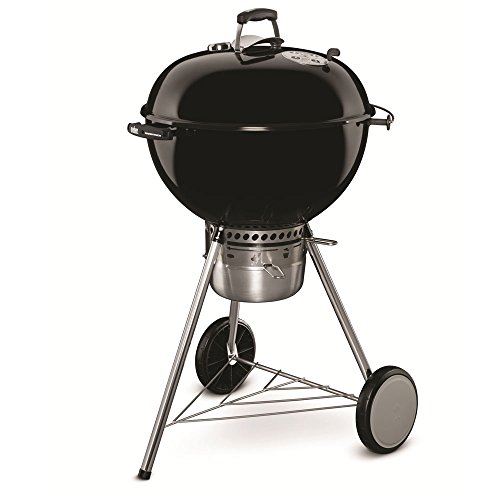
Weber Master-Touch Charcoal Grill, 22-Inch (Black) — Best Overall Coal Grill
Ask a room of coal grill owners what one grill does everything, and the Master-Touch is the answer that keeps coming back. The black 22-inch kettle pairs the category’s most proven cooking geometry with the refinements that matter weekly — a lid that parks itself, ash that stays contained, a thermometer that keeps you honest. It grills, roasts, smokes lightly and travels across every menu a household cooks. That completeness is what ‘best overall’ means here.
In black, the Master-Touch is the fully sorted version of the world’s most copied grill design. The bowl and lid are the familiar 22-inch kettle, but the experience is upgraded where it counts: the lid parks in a Tuck-Away holder instead of dangling from a hook, ash is swept into an enclosed catcher, and a lid thermometer keeps you honest about what the fire is doing. For a household that grills chicken, burgers, steaks and vegetables week after week, those touches add up to a grill that simply feels finished.
Performance needs no qualifiers. With coals banked to one side you get a fierce searing zone and a calm indirect zone on the same grate, which is the single most useful arrangement in all of charcoal cooking. Whole chickens roast evenly with the lid down, thick steaks can be seared then finished gently, and a snake arrangement of briquettes will hold a low fire for ribs or a small brisket flat. If you want one coal grill that behaves like a complete outdoor cooking system rather than a fire bowl with a grate, this is the benchmark.
Strengths
- All the Master-Touch convenience upgrades in the classic black finish
- Confident two-zone cooking for searing, roasting and indirect work
- Strong parts and accessory support, like every mainstream Weber kettle
Trade-offs
- Same 22-inch capacity ceiling as cheaper kettles
- No integrated side table in the standard configuration
- Premium over the basic kettle buys convenience, not extra cooking space
| Format | 22-inch kettle, charcoal fuel only |
| Lid handling | Tuck-Away lid holder (per Amazon listing title) |
| Ash handling | One-Touch cleaning system (per Amazon listing title) |
Best for: Households wanting one premium kettle to handle nearly all charcoal cooking / Not suited for: Buyers whose priority is the lowest possible entry cost into charcoal.
Check on Amazon — check the current price on Amazon before you decide, as grill pricing shifts through the season.
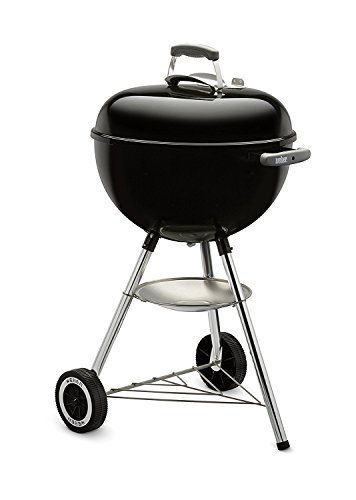
Weber Original Kettle Charcoal Grill, 18-Inch — Best Compact Coal Grill
Not every household needs 22 inches. The 18-inch kettle keeps the shape, the vents and the two-zone method, and gives up only elbow room — which couples and small families rarely miss. It lights on less charcoal, stores in less space and still roasts a spatchcocked chicken beautifully. For small patios and small households that refuse to compromise on real coal cooking, this is the honest fit.
The 18-inch Original Kettle is the small-space answer to a fair question: how much of the classic kettle experience survives when the bowl shrinks? Almost all of it. The proportions, damper layout and One-Touch ash sweep are the same, so burgers, chops, sausages and skewers cook exactly the way kettle owners describe, with real charcoal flavour and a lid that turns the grill into a small oven for finishing. For one to three people it is arguably the smarter size, because it comes up to temperature on a modest amount of charcoal and cools down faster afterwards.
The honest limit is elbow room. A spatchcocked chicken fits, but a whole upright chicken plus a pan of vegetables will crowd the grate, and a two-zone fire leaves a smaller safe zone than on the 22-inch models. Competition-style volume is out of the question. What you get instead is a grill that can live on a small patio without dominating it, travel in a car boot more easily than its bigger siblings, and still teach proper vent control. Buy it for the space you actually have, not the party you host once a year.
Strengths
- Same kettle cooking behaviour in a footprint that suits small patios and balconies
- Uses less charcoal per cook than a 22-inch kettle for small meals
- Easy to carry to a different spot in the garden or store away after cooking
Trade-offs
- Cooking area fills up fast with a whole chicken plus sides
- Two-zone fires are tighter, so indirect space is limited
- Not the right tool for feeding a crowd in a single batch
| Format | 18-inch kettle, charcoal fuel only |
| Ash handling | One-Touch cleaning system (per Amazon listing title) |
Best for: Couples, small households and small patios that still want real kettle cooking / Not suited for: Anyone regularly cooking for five or more people at once.
Check on Amazon — check the current price on Amazon before you decide, as grill pricing shifts through the season.

Kamado Joe Joe Jr. Portable Ceramic Charcoal Grill, 13.5-Inch — Best Portable Kamado Coal Grill
The Joe Jr. is the coal grill for people who take cooking seriously in small places: real ceramic, real deflectors for indirect work, and efficiency that makes a handful of lump charcoal last a whole afternoon. It roasts for two with a refinement no other portable matches, then packs away like the travel grill it is. Expensive for its size, unmatched in its niche.
The Joe Jr. is a true ceramic kamado shrunk to travel size, complete with stand and heat deflectors, and it cooks with the same physics as its full-size relatives: thick ceramic walls, tight seals and efficient airflow that stretches a small load of lump charcoal across a long, steady cook. At 13.5 inches it is made for two-person meals — a halved chicken, thick chops, a small pork shoulder for a day’s pulled pork — and it does them with a refinement no other grill this size matches.
Owners use it three ways: as a travel grill that embarrasses campsite cooking, as a small-patio daily cooker for couples, and as a second kamado beside a big grill for side dishes or a single bird. Respect the ceramic in transit, keep the loads small, and it rewards you with flavour and control out of all proportion to its footprint. It is a specialist purchase and an excellent one.
Strengths
- Real ceramic kamado cooking in a genuinely portable package
- Heat deflectors included for proper indirect roasting at small scale
- Efficient — small lump loads run surprisingly long cooks
Trade-offs
- 13.5-inch grate is for small meals, full stop
- Ceramic still needs careful handling in transport despite its size
- Per-person capacity is the lowest in this guide
| Format | 13.5-inch portable ceramic kamado (per Amazon listing title) |
| Included per listing title | grill stand, stainless steel cooking grate, heat deflectors |
| Fuel | charcoal |
Best for: Couples, campers and kamado fans wanting ceramic quality in portable form / Not suited for: Families or anyone cooking for groups.
Check on Amazon — check the current price on Amazon before you decide, as grill pricing shifts through the season.

Royal Gourmet CC1830V Barrel Charcoal Grill, 30-Inch — Best Large Coal Grill for Parties
Party maths is simple: grate area and work surfaces decide whether the cook enjoys the day. The CC1830V brings 627 square inches and tables on two sides, so trays of chicken, burgers and corn all have somewhere to be. It is a budget barrel and asks a budget barrel’s attention, but for feeding a crowd over coals without feeding them a premium invoice, it is the biggest-hearted pick here.
The CC1830V stretches the Royal Gourmet barrel formula to 627 square inches with both side and front tables, and for party-style coal grilling that combination is persuasive. Burgers for a crowd, trays of chicken pieces, corn and vegetables can all be on the go at once, with the tables holding the next tray and the finished one. The barrel shape spreads a wide bed of coals for even direct heat across the grate.
Like all budget barrels it rewards an attentive cook: bank coals for a cooler end, watch the wind, and expect to add charcoal on long sessions. It grills first and smokes second, handling indirect roasts with a water pan and patience. For a household whose barbecue brief is ‘feed everyone, keep it simple, keep the cost sane’, the V is the big-hearted option in the line.
Strengths
- Largest CC-series barrel area here, at 627 sq. in. per the listing
- Front and side tables give genuine working room
- Strong space-per-cost proposition for party cooking
Trade-offs
- Bigger footprint to store and cover
- Thin-steel barrel behaviour: hands-on fire management
- No offset smoker chamber on this version
| Cooking space | 627 sq. in. (per Amazon listing title) |
| Format | 30-inch barrel charcoal grill (per Amazon listing title) |
| Tables | side and front (per Amazon listing title) |
Best for: Party hosts wanting maximum barrel grilling space at a budget tier / Not suited for: Precision low-and-slow smoking.
Check on Amazon — check the current price on Amazon before you decide, as grill pricing shifts through the season.

Char-Griller Patio Pro Charcoal Grill and Smoker, 250 Sq. In. — Best Small Patio Coal Grill
The Patio Pro is the coal grill designed for the space most people actually have: a modest patio corner. Cast iron grates at this tier are a gift, the shelf keeps tools out of the flowerbed, and damper control means it smokes small loads as willingly as it grills. Couples, small families and first-time coal buyers who want a permanent-feeling grill without a permanent-feeling footprint should start here.
The Patio Pro is Char-Griller’s answer for small outdoor spaces: 250 square inches of cooking area over cast iron grates, a metal shelf for tools, and damper control that lets it smoke small loads as happily as it grills. For a couple or a small family on a patio, that is a well-judged set of compromises — real charcoal flavour and searing manners without a cooker that swallows the whole terrace.
It also works as a cheap way into charcoal for renters and first-time buyers: the investment is modest, the skills are the real ones, and the cast iron grates leave marks that make weeknight chicken and burgers feel like an event. Capacity is the ceiling — think meals for two to four, or a supporting role beside a larger grill — and the small fire needs topping up on longer cooks. Sized honestly, it is a satisfying little cooker.
Strengths
- Compact footprint designed for patios, with a useful shelf
- Cast iron grates at a budget tier is a genuine plus
- Damper control allows basic smoking as well as grilling
Trade-offs
- 250 sq. in. suits small households and side dishes for groups
- Small firebox means shorter cooks between charcoal top-ups
- Not a party grill
| Cooking area | 250 sq. in. (per Amazon listing title) |
| Grates | cast iron (per Amazon listing title) |
| Features in listing title | metal shelf, damper control |
Best for: Patios, couples and first-time charcoal buyers on a budget / Not suited for: Feeding groups in one batch.
Check on Amazon — check the current price on Amazon before you decide, as grill pricing shifts through the season.

Weber Go-Anywhere Portable Charcoal Grill — Best Travel Coal Grill
Travel grills fail in two ways: they cook badly or they pack badly. The Go-Anywhere does neither — its rectangular body folds into a locked, briefcase-flat package, and on site it grills skewers, burgers and chops over real coals with proper vent control. For campers, road-trippers and balcony cooks who store the grill between uses, it is the coal grill that fits the life, not just the boot.
The Go-Anywhere takes a different route to portable charcoal: a rectangular steel box whose legs fold up to lock the lid, forming a briefcase-like package that slides into a packed car far more politely than a round kettle. The two-piece grate and shallow firebox are tuned for direct grilling — skewers, burgers, sausages, chops and small steaks — exactly the food most people actually cook away from home.
Temperature control comes from lid and base vents, and with the lid down you can finish thicker pieces gently after searing. It will not roast a whole chicken with much grace and it is not a smoker, but as a travel grill it is one of the most packable real-charcoal options with a verified listing. Apartment dwellers with a small balcony and a storage cupboard also rate it: it disappears when not in use in a way round grills never do.
Strengths
- Rectangular shape packs flat and travels better than round kettles
- Legs fold to lock the lid for carrying
- Ideal for skewers, sausages, burgers and small steaks on the move
Trade-offs
- Shallow firebox limits large indirect roasts
- Cooking area suits small groups only
- Rectangular grate shape takes a cook or two to learn for zone placement
| Format | rectangular portable grill (per Amazon listing title) |
| Grate | 2-piece design (per Amazon listing title) |
| Fuel | charcoal |
| Use cases in listing title | camping, tailgating, outdoor cooking |
Best for: Road trips, camping and anyone who stores the grill between uses / Not suited for: Whole-bird roasting or smoking projects.
Check on Amazon — check the current price on Amazon before you decide, as grill pricing shifts through the season.
Comparison Table
| Pick | Badge | Key spec | Best for |
|---|---|---|---|
| Weber Master-Touch Charcoal Grill, 22-Inch (Black) | Best Overall Coal Grill | Format: 22-inch kettle, charcoal fuel only | Households wanting one premium kettle to handle nearly all charcoal cooking |
| Weber Original Kettle Charcoal Grill, 18-Inch | Best Compact Coal Grill | Format: 18-inch kettle, charcoal fuel only | Couples, small households and small patios that still want real kettle cooking |
| Kamado Joe Joe Jr. Portable Ceramic Charcoal Grill, 13.5-Inch | Best Portable Kamado Coal Grill | Format: 13.5-inch portable ceramic kamado (per Amazon listing title) | Couples, campers and kamado fans wanting ceramic quality in portable form |
| Royal Gourmet CC1830V Barrel Charcoal Grill, 30-Inch | Best Large Coal Grill for Parties | Cooking space: 627 sq. in. (per Amazon listing title) | Party hosts wanting maximum barrel grilling space at a budget tier |
| Char-Griller Patio Pro Charcoal Grill and Smoker, 250 Sq. In. | Best Small Patio Coal Grill | Cooking area: 250 sq. in. (per Amazon listing title) | Patios, couples and first-time charcoal buyers on a budget |
| Weber Go-Anywhere Portable Charcoal Grill | Best Travel Coal Grill | Format: rectangular portable grill (per Amazon listing title) | Road trips, camping and anyone who stores the grill between uses |
The table is a sizing chart as much as a comparison. Capacity rises from the travel and portable picks at the small end to the party barrel at the large end, with the kettles holding the versatile middle. If you are between two rows, choose the smaller one unless you entertain monthly — small coal grills cook big meals in batches far more happily than big grills cook small meals efficiently.
How to Choose the Right Size Coal Grill
Work in people and pieces, not square inches. A 14- to 18-inch round grill cooks for two to four: a meal of burgers, a spatchcocked chicken, a batch of thighs. The 22-inch class is the family standard — four to six people, a whole chicken plus sides, two-zone cooking with real room on both sides. Barrels in the 585- to 627-square-inch class are party tools: double-digit burgers, trays of pieces, mixed menus in one or two waves. Portable kamados and travel grills trade capacity for movement and storage, and should be bought for that trade deliberately.
Remember that grate size is not the only capacity that matters. Lid height decides whole birds; firebox depth decides how much coal — and therefore how much time and heat — the grill carries; and work surfaces decide whether a big cook feels organised or chaotic. A 22-inch kettle with a side table beside it will out-serve a larger grill standing alone in the middle of a patio, because the cook can stage, rest and rotate food without leaving the fire.
Finally, cost the size in fuel. Big fireboxes eat big coal loads even for small dinners, and over a season that is real money and real ash. The right-sized grill is cheaper to run, faster to light and quicker to clean — three weekly pleasures that compound. Buy the smallest grill that honestly fits your typical cook, and handle the annual crowd with batches, a second small grill, or a borrowed one.
Coal Grill Care: The Four Habits That Decide How Long Yours Lasts
First, ash discipline. Ash left in a grill absorbs moisture and turns corrosive, quietly eating fireboxes from the inside. Empty it cold, into metal, after every few cooks — and never leave a grill sitting full of wet ash over winter. Second, grate care: brush while warm after cooking, and give cast iron an occasional light coat of oil, exactly as you would a skillet. Porcelain-coated grates want non-metal brushes to protect their surface.
Third, weather defence. A cover is the cheapest longevity in grilling; enamelled steel and ceramic both reward it, and budget barrels need it most of all. Store portables indoors where you can. Fourth, an annual once-over: check vent movement, lid fit, leg and handle tightness, and touch up any rust spots on steel before they spread. None of this takes an afternoon in total across a year, and it is the entire difference between a coal grill that lasts three seasons and one that lasts fifteen. The grills in this guide were chosen partly on how well they repay that modest care.
The Two-Grill Household: Why a Second Small Coal Grill Makes Sense
Somewhere in many grillers’ lives, a second small coal grill stops being an indulgence and becomes the smartest purchase in the garden. The logic is thermal, not acquisitive: two fires mean two temperatures at once. The big grill roasts the chicken indirectly while the small one sears steaks; the kettle holds a low smoking fire while the portable grills the lunch skewers; the party runs a hot grill and a holding grill instead of one grill doing both jobs badly. Restaurants call this station work. Households call it the end of barbecue traffic jams.
The second grill should be small, cheap to run and quick to light — the 18-inch kettle, the Patio Pro and the Go-Anywhere in this guide are all shaped by that job description. It lights on a handful of charcoal for the two-burger Tuesday that never justified the big grill’s full fire, which is the other half of the argument: right-sizing the fire to the meal, across the week, saves more fuel than any single efficient grill can. Many owners find the small grill quietly becomes the most-used one they own.
There is also a teaching dividend. A second grill is the one a partner, a teenager or a guest can run beside you — coal cooking spreads by apprenticeship, and a household with two competent grillers hosts very differently from a household with one. If this guide’s main pick is your first grill, let this section sit in the back of your mind; the day a second fire would have saved a dinner, you will know the idea has ripened.
Coal Grilling Through the Seasons
Spring is for cleaning and first fires: ash out, grates seasoned, vents checked, and the season’s first chicken cooked while the evenings are still cool enough to enjoy standing by a fire. It is also the season to practise — new techniques and new recipes belong in spring, when the audience is forgiving and the stakes are low. Summer is volume and ease: two-zone fires, big salads, food that cooks fast and eats outdoors. The grill’s enemies in summer are neglect and grease build-up, so the warm-grate brush earns its keep.
Autumn is the coal grill’s finest season. Cooler air makes standing by the fire a pleasure, the light goes golden, and the cooking turns toward roasts, whole birds and the first gentle smokes of the year. Insulated grills — the kamados and the Patio Pro’s damper-controlled small fire — come into their own as the air cools. It is also the season to stock charcoal while it is plentiful and priced kindly, stored dry against the winter.
Winter separates the committed from the curious, and rewards the committed richly. Fires take longer to establish, fuel consumption rises, and thin steel works hardest — but a coal grill in winter cooks the same food, and a roast chicken eaten indoors after an hour’s tending tastes like an achievement. Dress for the doorway trips, keep the path lit, preheat longer, open the lid less. The grill does not know what month it is; only the cook’s planning changes, and planning, as this whole guide has argued, is the real skill of coal.
Coal Grill Troubleshooting: Six Common Problems and Their Fixes
Problem one: the fire will not get hot. Work the checklist in order — is the charcoal dry, are the vents fully open, is ash choking the firebox, is the lid being opened every minute to check? Nine times in ten the answer is damp fuel or old ash, and both fixes are free. Problem two: the fire races too hot. Close the vents in steps earlier than instinct suggests, spread the coals thinner, and remember that a smaller fire lit next time beats a big fire fought all cook. The grill is rarely the problem; the fire’s size and air are.
Problem three: food sticks to the grate. The grate was not fully hot, not clean, or the food was moved before its crust released it. Preheat longer, brush clean, oil the food lightly, and wait for the release — grilled food lets go when it is ready, and tearing it free early is a choice, not an accident. Problem four: flare-ups scorch everything. Fat is dripping onto open coals in quantity; move food to the indirect zone, close the lid to starve the flames, and trim or reposition the fattiest items. A drip pan under indirect roasts prevents the problem at source.
Problem five: temperatures will not hold steady on long cooks. Look for air leaks, wind exposure and ash build-up first, in that order, and make vent changes smaller and less frequent. Problem six: everything tastes of smoke in the wrong way. The fire was lit with fluid, the coals were not ashed over, or the food went on under thick, white, smouldering smoke. Clean fuel, a chimney, patience before the food — the unglamorous trinity that fixes the flavour of an entire grill’s output. Master these six diagnoses and you will troubleshoot any coal grill ever made, including the one you buy next.
What to Cook First on a New Coal Grill: A Breaking-In Menu
A new coal grill deserves a first cook chosen like a first date: impressive, forgiving and informative. Start with a full chimney and a banked two-zone fire, and cook thick sausages and chicken thighs while the grill is still a stranger. You will learn its hot corner, its vent temperament and its lid behaviour in one meal, at grocery prices, with food that tolerates every mistake a new grill invites. Take mental notes — where the heat concentrates, how fast the fire answers a vent change — because that map is yours alone; no review can draw it for you.
The second cook should stretch one dimension: a spatchcocked chicken for the indirect lesson, or a tray of wings for the turning-and-rendering lesson. By the third cook, invite people. Not because the grill is mastered — it is not, yet — but because coal grilling is social cooking, and a grill broken in alone tends to stay a solitary hobby. The menu for that third cook should be the first cook again, done better: the same sausages and thighs, now with your map of the fire in hand. The improvement will be obvious to everyone at the table, including you.
Resist the urge to christen a new grill with its hardest possible cook — the expensive steak, the twelve-hour project, the in-laws. Every grill in this guide will get there, and the cook who arrives there through three patient, delicious rehearsals will enjoy the summit more than the cook who storms it. Breaking in is not superstition. It is calibration — of the grill, and of the person tending it.
Coal Grills and Neighbours: Being a Good Citizen of Smoke
A coal grill announces itself to the street, and a wise owner manages that announcement like a good neighbour. The smokiest moments of any cook are the first ones — lighting, and the minutes while new fuel catches — so timing and placement do most of the diplomacy: light the chimney where its brief plume bothers no one’s washing, keep the grill’s settled position downwind of the neighbour’s open windows where the garden allows, and run the clean, thin smoke this guide keeps recommending, because clean smoke is not only better for food, it is dramatically less antisocial than the smouldering kind.
The rest is ordinary courtesy with a barbecue accent. Reasonable hours for the loudest, smokiest projects; a word in advance when a big offset cook will perfume the street all afternoon; and — the masterstroke — an extra plate. More neighbourly relations have been built over a shared rack of ribs than over any fence negotiation in history. Many a complaint about smoke has ended, permanently, with an invitation to the next cook.
Local rules sit above courtesy, of course: some buildings, tenancies and districts restrict charcoal, and those restrictions decide before preference does — which is why this programme’s guides keep a respected place for electric alternatives. But where coal is welcome, the welcome is maintained by cooks who treat smoke as a seasoning for the neighbourhood as well as the food: light clean, cook clean, share occasionally, and the grill becomes part of the street’s summer rather than a grievance in it.
How to Light a Coal Grill and Cook Your First Two-Zone Meal
Fill a chimney starter with charcoal, set it over a lit firelighter cube or crumpled paper on the charcoal grate, and wait until the top coals are grey at the edges — about a quarter of an hour. Tip the coals onto one half of the grate, banking them against the side. Fit the cooking grate, put the lid on with the vents open, and let the grill heat for five minutes while you prepare the food. You now own two grills in one: a fierce one over the coals and a gentle one beside them.
Cook something forgiving first: sausages and chicken thighs. Start them over the gentle side, lid down, until nearly done — the fat renders, the meat cooks through calmly — then slide them over the coals for the final browning, turning once, watching closely. Burgers reverse the order: sear over the coals first, then hold at the edge. When everything is off, close the vents fully. The fire will die, the grill will cool, and tomorrow you will empty cold ash into a metal container and feel like someone who has done this for years. That two-zone pattern is the whole foundation — every recipe in coal cooking is a variation on it.
Common Buying Mistakes
Buying big ‘just in case’. The just-in-case grill burns just-in-case charcoal on every two-person Tuesday. Size for your typical cook; batch for the exceptional one.
Using lighter fluid. It taints food, flares unpredictably and is entirely unnecessary with a chimney starter. This is the easiest upgrade in all of coal cooking: stop buying it.
Cooking with the lid open out of habit. The lid is the oven, the smoke chamber and the flare extinguisher. Coal grills are designed to cook closed; open-lid cooking throws away their main advantage.
Neglecting the ash until the vents jam. Ash is not a cosmetic issue — it strangles airflow and corrodes steel. A grill that ‘won’t hold temperature any more’ is usually a grill full of old ash.
Storing a hot or warm grill. Covers melt, sheds are flammable and ash hides embers. Cool completely, confirm it, then cover or store. Patience at the end of the cook protects everything at the start of the next one.
Final Recommendation
The Master-Touch in black is the coal grill we would hand to most households without a follow-up question: complete, proven and sized for real life. Shrink the household and the 18-inch kettle or the Patio Pro take over gracefully; shrink the storage and the Go-Anywhere or the Joe Jr. keep coal cooking possible anywhere; grow the guest list and the CC1830V barrel answers. Every pick here burns real charcoal and rewards the same small set of skills — buy the size that fits, learn the two-zone fire, keep the ash clean, and dinner takes care of itself.
Weber Master-Touch Charcoal Grill, 22-Inch (Black) (Best Overall Coal Grill) Weber Original Kettle Charcoal Grill, 18-Inch (Best Compact Coal Grill) Kamado Joe Joe Jr. Portable Ceramic Charcoal Grill, 13.5-Inch (Best Portable Kamado Coal Grill) are the three we would start with. Check price on Amazon for each, then commit to the one that matches your space and the way you actually cook.
Related reading on this site: Best Coal Barbecue Grills; Best Coal Fired Grills; Best Charcoal Grills Using Real Charcoal; Best Charcoal Grills; Best Cheapest Grills; Best Charcoal Smoker Grills.
Frequently Asked Questions
What is the best size coal grill for a family of four?
A 22-inch kettle is the sweet spot: a whole chicken plus sides, or a full batch of burgers and pieces, with a genuine two-zone fire. Families who entertain often should consider the large barrel class; couples can drop to 18 inches or the 250 sq. in. patio class without losing technique.
Are coal grills and charcoal grills the same thing?
Yes. In barbecue language, coal means charcoal — lump or briquettes made from wood. Mineral coal is never used for cooking food. Guides titled coal grills, charcoal grills and coal-fired grills are all describing the same family of live-fire charcoal cookers, including every pick here.
How long does it take to light a coal grill?
About fifteen to twenty minutes in a chimney starter until the coals are ashed over, plus a few minutes to heat the grate with the lid on. That is the honest cost of charcoal cooking, and planning it into the routine — light first, prepare food while it catches — makes it feel like no wait at all.
Can a small coal grill cook a whole chicken?
Yes, with technique. Spatchcock the bird to flatten it, cook it in indirect heat with the lid down, and even an 18-inch kettle or a portable kamado handles it well. Upright whole birds need more lid height, which is where the 22-inch kettles and kamados take over.
What is the cheapest way to run a coal grill well?
Buy quality charcoal in quantity when it is on offer, extinguish and reuse unburned coals by closing the vents after cooking, and keep the grill covered so it lasts. Add a chimney starter and a probe thermometer once, and your running costs settle to fuel and the occasional grate.
Do coal grills need a lot of maintenance?
Minutes per cook, not hours: brush the grate warm, empty ash cold, keep the cover on. Cast iron grates like occasional oiling. That small routine is the difference between a three-season grill and a fifteen-year one, and every pick in this guide repays it.


