Disclosure: As an Amazon Associate, airfryerkitchensupply.com earns from qualifying purchases. Links to Amazon on this page are affiliate links; they cost you nothing extra. Listing details such as price and availability change often, so check the current Amazon listing before you buy.
The best corded vacuums keep the same pull from the first room to the last, because the motor runs from the wall and not from a battery that fades. For most homes, the Shark Navigator Lift-Away NV356E is a practical all-rounder, the Bissell CleanView Swivel Pet 2252 suits pet households, and the Miele Classic C1 is the pick for people who prefer a bagged canister with a long reach. The Dyson Ball Animal 3 adds a premium upright option.
This guide is for buyers who clean a whole house in one session and do not want to watch a battery light. It explains the difference between corded uprights and canisters, compares six models, and gives a checklist for cord length, bin or bag, weight and attachments. You will find quick picks, individual product sections, a comparison table, common mistakes and answers to the objections that stop people from ordering.
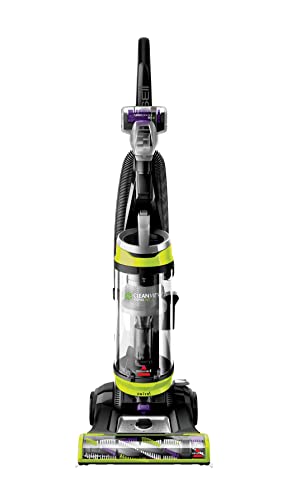
In this guide
Quick Picks: Corded Vacuums by Need
| Pick | Model | Why it stands out | Link |
|---|---|---|---|
| Best overall | Shark Navigator Lift-Away NV356E | Upright that turns into a portable canister for stairs and furniture | Check on Amazon |
| Best for pet homes | Bissell CleanView Swivel Pet 2252 | Swivel steering and pet-minded tools in a bagless upright | Check on Amazon |
| Best for small spaces | Eureka PowerSpeed NEU182A | Lighter bagless upright that is easy to store | Check on Amazon |
| Best premium | Miele Classic C1 Pure Suction | Bagged canister with a long reach across mixed floors | Check on Amazon |
How We Selected These Corded Vacuums
We have not used these machines ourselves, so this guide rests on manufacturer listings and published specifications. We looked for well-known corded models that cover the main body styles: swivel uprights, lift-away uprights and a bagged canister. We then compared how each maker describes the bin, the attachments and the cleaning head. Kit contents can differ between sellers, so read the live listing before you order.
6 Best Corded Vacuums for Whole-Home Cleaning
Shark Navigator Lift-Away Professional Upright Vacuum NV356E
The Navigator Lift-Away is a favourite for homes that mix rugs, hard floors and stairs. It suits households that want one vacuum to handle the main floor and then be carried up to the bedrooms.
- A lift-away canister design, so you can detach the pod and carry it to stairs or upholstery.
- Swivel steering that helps the head turn around chair legs and furniture.
- A bagless dust cup, which means no bag purchases and a simple empty routine.
The lift-away idea solves a real problem. A conventional upright is awkward on stairs, because you have to hold the whole body at an angle. With this design the pod comes off, and you carry a lighter portion while the hose and wand do the reaching. The bagless cup also has a see-through section, so you can judge when it is time to empty it. Look at the listing to see which floor tools are bundled with this specific code.
Honest limitation: carrying the lifted pod with the hose attached is a bit awkward for some users, and it is not the lightest vacuum around.
Choose it if you want one flexible upright for the whole house. Skip it if you want the lightest possible body for storage in a tight closet.
Bissell CleanView Swivel Pet Upright Vacuum 2252
Bissell aims this upright at homes with shedding pets. The swivel steering and the pet-focused tool set make it a good fit for families who also own a dog or cat that sheds across the living room.
- Swivel steering to make turns around the sofa and dining chairs easier.
- A pet tool set listed on the product page; verify exactly what is in the box.
- A bagless dust container with a clear view of how full it is.
Pet households tend to judge a vacuum by two things: how it handles the thick mat of fur beside the sofa and how easily the bin empties afterward. A clear, wide-mouth dust container helps with the second, and a pet tool such as a small motorized or turbo head helps with the first on stairs and upholstery. Read the “in the box” section carefully, because the tool you want may be a separate item in some listings.
Honest limitation: a corded upright of this class is bigger than a stick and heavier than a light compact model, so stair carrying is a chore.
Choose it if you have pets and mostly carpet. Skip it if you need a vacuum that tucks away in a cupboard.
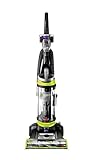
Eureka PowerSpeed Bagless Upright Vacuum NEU182A
The PowerSpeed is a lighter, simpler bagless upright. It suits people in small and medium homes who want corded consistency without a large, heavy machine.
- A lighter upright body that is easier to push and lift than larger models.
- A bagless dust cup that empties over a trash can.
- A straightforward layout with few parts to figure out.
A lighter upright is easier on wrists and shoulders, and it reduces the effort of pulling the machine backward across a rug. It is also the type of body that fits in a hall cupboard without a wrestling match. Its simple layout means fewer attachments to track, which some buyers see as a feature. If you want a specialty tool for tight corners, check whether one is included or sold separately.
Honest limitation: a lighter machine usually has a smaller bin and fewer extras, so people with large homes may empty it more often.
Choose it if you want an easy corded vacuum for a flat or mid-sized house. Skip it if you need the broadest range of attachments.
Miele Classic C1 Pure Suction Bagged Canister Vacuum
Miele is known for German-built floor care, and the Classic C1 is its straightforward bagged canister. It suits people who prefer the canister format, with a separate body that follows you around while you handle a light wand.
- A bagged canister system, which keeps dust sealed in a bag you throw away.
- A lightweight wand and head that make it easy to reach under furniture.
- A long operating reach from the cord and hose combination; check the listing for exact lengths.
Canisters appeal to people who hate pushing a heavy body in front of them. The motor unit sits on the floor and rolls along behind you, and the part in your hand is a wand with a head. That arrangement can feel gentler on a bad back and on a wooden staircase. Because the format is different from an upright, check the head options on the listing and find out whether a rug-friendly head or a hard floor head is included.
Honest limitation: a bagged vacuum needs replacement bags, so you have an ongoing supply to buy, and it costs more to buy than a basic upright.
Choose it if you like canisters and want a long-lasting machine. Skip it if you want a bagless design.
Hoover MAXLife Pro Pet Swivel Bagless Upright Vacuum UH74220PC
The MAXLife Pro Pet is Hoover’s pet-minded corded upright with a swivel head. It suits a household with carpet and a pet who sheds, where the focus is on pick-up and ease of emptying.
- A swivel steering head for easier turns.
- A pet-oriented design with a tool set listed on the product page.
- A bagless dust cup for no-bag operation.
Hoover has a long track record in upright vacuums, and the Pro Pet model is aimed squarely at everyday carpet cleaning in a house with animals. The swivel head helps when the layout of your living room is more of an obstacle course than a rectangle. Cross-check the model code on the listing carefully, because Hoover sells several similar-looking uprights and a single character can point to a different set of features.
Honest limitation: details such as bin capacity and tool selection should be checked on the live listing, and it is a standard-size upright that needs floor storage.
Choose it if you want a conventional pet upright from a well-known brand. Skip it if you want a canister or a stick.

Dyson Ball Animal 3 Upright Vacuum
The Ball Animal 3 is Dyson’s corded upright with the ball design that helps the machine pivot. It suits buyers who want a premium corded upright and appreciate the way the body turns in a room.
- A ball-based steering design that lets the machine pivot around furniture.
- A bagless bin; check the listing for how it empties.
- A wand and tool set for stairs and upholstery.
Dyson positions the Ball Animal 3 as an upright for carpets and mixed floors in homes with pets. The ball design lets the machine pivot and steer with a turn of the wrist, which many users like in rooms with furniture. You are also paying for a recognised brand and its parts network, so read the listing for the warranty terms and for what replacement parts are available.
Honest limitation: it is a premium purchase, and the ball format makes the machine larger than a slim stick, so it needs real storage space.
Choose it if you want a premium corded upright. Skip it if you want the simplest design or the lowest cost of ownership.

Why Choose a Corded Vacuum
A corded model never fades. The motor gives the same airflow at minute one and minute sixty, so a long cleaning session across carpet, rugs and stairs does not leave you recharging halfway. Corded machines also tend to have larger bins and broader heads, which means fewer passes and fewer trips to the trash. The trade is the cord: it limits reach and needs a clear path to the outlet. If you plan your route from a central socket and wind the cord as you go, it quickly becomes a minor point.
Upright or Canister: Which Corded Style Fits
An upright has the motor and bin in one body, so it feels like pushing a tool. Uprights usually give wide heads and strong carpet performance, and they are popular for large living areas. A canister separates the motor body from the wand, so the part in your hand is light and the body trails behind you. That format is liked for stairs, bare floors and under furniture, but the body can bump into door frames. If you have mostly carpet, lean toward an upright. If you have mostly hard floors and stairs, a canister like the Miele C1 may suit you better.
Cord Length, Reach and Outlets
Check the cord length on each listing and measure your largest room. A longer cord means fewer plug changes. As a rule of thumb, imagine walking from your central outlet to the farthest corner and back, then add the length of your vacuum’s reach. If the cord cannot cover the path, consider a canister with a long hose or plan to switch outlets once. Always unplug the machine by pulling the plug, not the cord, and let the cord rewind or wind it loosely to avoid kinks.
Bagged or Bagless: The Everyday Trade-Off
Bagless machines like the Navigator NV356E and the PowerSpeed NEU182A let you empty a cup and carry on, so you never run out of bags. Bagged machines like the Miele C1 keep dust sealed in a disposable bag and avoid the puff that can happen at the trash can, but they require a supply of the correct bag. Think about which routine you prefer, then check the bag type and filter details on the listing before you order.
Corded Vacuums for Stairs, Rugs and Hard Floors
Whole-home cleaning means meeting different surfaces. On wall-to-wall carpet, a wide head and a strong brushroll make the biggest difference. On a hard floor, the brushroll often needs to be off or replaced by a soft roller so it does not scatter debris. On stairs, you need a hose, wand and a small tool, or a lift-away pod you can carry. On rugs, look for a head with adjustable height or an off switch for the brushroll, which reduces fringe wrap and rug shifting.
Walk through your home in your mind and list the surfaces. If more than half is carpet, put an upright at the top of your list. If hard floors and stairs dominate, a canister earns a closer look. If it is truly mixed, a lift-away upright, such as the Navigator NV356E, tries to cover both.
Weight, Noise and Day-to-Day Comfort
Spec sheets rarely describe how a vacuum feels after twenty minutes. Weight matters most when you lift the machine over a threshold or carry it upstairs, so look at the listed weight and compare it with the heaviest part you will lift. Noise is harder to judge from a listing; read customer comments about volume if sound matters in your household, and remember that uprights and canisters differ in character, with canisters often feeling quieter in the hand because the motor sits behind you.
Handle shape, wand length and the position of the power switch also shape comfort. Tall users often prefer a longer wand, and shorter users benefit from a lightweight head that does not tug on the wrist. If you share the vacuum with another adult, choose a model that suits both of you, not only the person who cleans most often.
Comparison Table: All Six Corded Vacuums
| Model | Type | Key feature | Best use | Link |
|---|---|---|---|---|
| Shark Navigator NV356E | Bagless upright | Lift-away pod | Mixed floors and stairs | Check on Amazon |
| Bissell CleanView Swivel Pet 2252 | Bagless upright | Swivel steering, pet tools | Pet homes, carpet | Check on Amazon |
| Eureka PowerSpeed NEU182A | Bagless upright | Lighter body | Small to mid-sized homes | Check on Amazon |
| Miele Classic C1 | Bagged canister | Sealed bag, light wand | Stairs, hard floors | Check on Amazon |
| Hoover MAXLife Pro Pet UH74220PC | Bagless upright | Swivel head, pet design | Carpet and pet hair | Check on Amazon |
| Dyson Ball Animal 3 | Bagless upright | Ball steering | Large living areas | Check on Amazon |
How to Choose a Corded Vacuum
- Decide on the body style: upright for carpet and big rooms, canister for stairs and bare floor.
- Choose bagged or bagless based on how you like to empty it and whether you accept buying bags.
- Check the weight on the listing, especially if you carry it up stairs.
- Compare cord length with the size of your largest room.
- Look at the head. Can you switch off the brushroll for bare floor?
- Check which attachments are in the box: crevice tool, upholstery tool, pet tool and extension wand.
- Read filter details, and see whether replacements are listed for the model code.
- Review the seller’s return window.
Common Buying Mistakes
- Buying an upright for a home that is mostly stairs, then finding it awkward to carry.
- Forgetting to check the cost and supply of bags for a bagged model.
- Ignoring the cord length and ending up swapping outlets in every room.
- Assuming every corded vacuum comes with the same tools; kits vary by listing.
- Skipping storage planning for a tall upright.
Care and Storage for Corded Models
Empty the dust cup before it is completely full, because a full cup reduces airflow. Follow the maker’s guidance on filters; some can be rinsed and dried, others are replaced. Check the brushroll for thread and hair, and always unplug the machine before you do. Wind the cord loosely so the insulation does not crease, and store the vacuum upright or on its base as the manual directs.
Final Recommendation
- Best all-rounder: Shark Navigator Lift-Away NV356E.
- Best for pets: Bissell CleanView Swivel Pet 2252 or Hoover MAXLife Pro Pet UH74220PC.
- Best lighter choice: Eureka PowerSpeed NEU182A.
- Best canister: Miele Classic C1 Pure Suction.
- Best premium upright: Dyson Ball Animal 3.
A corded vacuum is a long-term purchase, so spend a few extra minutes on the details that you will notice every week: weight, bin size, tool storage and cord handling. If you are still unsure, choose the style first and the brand second. A lift-away upright suits mixed homes, an upright with swivel steering suits pet households and a canister suits stairs and hard floors. Then open the listing, confirm the kit and order.
Related guides
- Best Home Vacuums Light Weight
- Best Hot Tub Vacuums
- Best Leaf Blowers Vacuums
- Best Vacuums For Holiday Cleanup
Frequently Asked Questions
Is a corded vacuum better than a cordless one?
It depends on your home. Corded models give constant power and larger bins, while cordless models are lighter and quicker to grab. Many homes use a corded vacuum for weekly deep cleans.
How long is the cord on these models?
Each listing states the cord length. Compare that figure with the distance between your outlets and the farthest room.
Do I need to buy bags for the bagless models?
No. Bagless models use a dust cup that you empty. Only the Miele Classic C1 in this list uses bags.
Can a corded upright be used on stairs?
Models with a hose and wand can, and the lift-away design on the Navigator helps. Check the listing for the hose length.
Which model suits small storage space?
The Eureka PowerSpeed NEU182A is the lighter option in the list, and the Miele canister stores in a closet or cupboard.
Where can I find replacement filters and bags?
Search by the model code shown in this guide. Makers list filters and bags by the exact product name and code.
What if the vacuum does not fit my home?
Review the seller’s return policy on the listing and keep the packaging until you are sure the vacuum is the right size and style.
How often should I replace a filter or bag?
Follow the manual for your model. Makers usually give a schedule for filters, and bag-based machines list the replacement bag type by name or code.
Going Deeper: How to Judge Corded Vacuums Beyond the Headlines
Choosing a corded vacuum is a decision about stamina and reach rather than raw novelty. The cord buys you unbroken power for whole-house sessions, and in exchange it asks you to think about cord length, outlet positions and how the machine travels from room to room. The picks above span uprights, a lift-away design and a bagged canister, and those formats behave differently on stairs, under furniture and in storage even when their cleaning power is similar. The sections below work through the criteria that separate them in daily use, from how each format handles your longest cleaning route to how the cord itself should be wound, stored and treated so it lasts as long as the motor it feeds.
A vacuum earns its keep in small, repeated moments rather than in a single demonstration. The questions that decide whether a purchase works are mostly practical. What floors do you actually have, room by room, including the rugs and thresholds between them? How large is the area you clean in one session, and how is it laid out? Are there pets, children, allergies or hobbies that change what lands on the floor? Are there stairs, and if so, who carries the machine up them? And where will the vacuum live between uses, because a machine that is awkward to store becomes a machine that is used less? Answering those questions honestly does more for the outcome than any headline figure, and the picks in this guide differ in format, weight, capacity and tools in ways that only become meaningful once your own answers are on the table.
Headline numbers deserve a slower look than they usually get. Suction figures are measured under conditions that vary between makers, so two similar numbers may not describe the same real-world pickup, and a lower figure with the right brush and a clean filter often outperforms a higher one that is clogged and neglected. Filtration claims likewise depend on the whole path the air takes, not on one component. The facts listings do state plainly are the ones to build on: the machine’s weight, its dust capacity, its cord length or stated run time where relevant, the tools included in the box, and the maintenance the maker asks of you. Matched against your floors and your routine, those stated facts separate the candidates far more reliably than marketing language.
The Buying Criteria That Matter Most
Suction and pickup on your actual floors
Pickup is a partnership between airflow and the cleaning head. On carpet, a rotating brush that agitates the pile helps lift grit and hair that suction alone leaves behind. On hard floors, a head that seals reasonably to the surface and does not scatter debris ahead of it matters more than raw power. Think about the worst surface in your home rather than the average one: the deep rug by the door, the mat under the dining table, the strip of carpet on the stairs. If a machine handles your worst surface well, the rest of the house is easy. Check the listing for how the head adjusts between surfaces, and be wary of any design that asks you to change parts constantly for ordinary rooms, because a step that is annoying will eventually be skipped.
Tools, reach and the jobs beyond the open floor
Most homes ask a vacuum to do more than open floors. Edges and skirting boards collect a line of dust that a floor head never quite reaches, upholstery holds crumbs and hair, curtains and high corners gather cobwebs, and car interiors and stairs each present their own awkward shapes. Look at the tools included with each pick in this guide and picture them against your own list of jobs. A crevice tool, an upholstery nozzle and a dusting brush cover most households. Reach matters too: hose length and wand design decide whether you can clean a staircase from one position or must carry the machine step by step, and whether ceilings and the tops of cupboards are realistic targets or permanent dust farms.
Dust capacity, filtration and routine maintenance
Capacity decides how often cleaning is interrupted by emptying, and the honest figure is not the size of the container but how much it holds before performance starts to fall. Bagged designs tend to hold more and empty more cleanly; bagless designs save the ongoing purchase of bags but ask you to empty a bin outdoors or into a bag if dust bothers you. Filtration matters most to households with allergies, and it only works as a system: filters must be cleaned or replaced on the maker’s schedule, and seals must stay intact. Read the maintenance the listing and manual describe before you buy, and be honest about whether you will do it. A vacuum whose filter is washed or changed on time keeps its pickup for years; the same machine neglected slowly strangles.
Weight, handling and where the machine lives
Weight is a cleaning feature, because a machine that is heavy to carry gets left in the cupboard on the days when only a quick pass is needed. Consider who will use it most, whether it must be carried between floors, and how it moves around furniture legs and under low pieces. Steering, wheel size and the balance of the body all change how a session feels by the third room. Then consider storage: measure the cupboard, corner or hook where the vacuum will live, including room for its hose and tools, and compare that with the machine’s dimensions on the listing. A vacuum that stores neatly in the space you actually have will be grabbed for small messes; one that must be wrestled out will wait for a full cleaning day that keeps not arriving.
Noise, build quality and living with it daily
Noise decides when cleaning can happen. In homes with sleeping children, shift workers, nervous pets or thin walls, a very loud machine narrows the hours it can be used, and a job that can only happen at awkward times often does not happen. Listings do not always state noise plainly, so treat any stated figure as one input among several and read the design for clues: larger bodies and brush housings tend to behave differently from slim stick formats. Build quality shows in the small parts: latches, hose cuffs, wheel axles and the bin release are what wear first. A design whose wear parts and filters are easy to source will outlast a sealed design that is marginally stronger on paper but cannot be maintained.
Everyday Scenarios: Matching the Machine to the Household
In an apartment or small home, the winning qualities are usually compact storage, easy handling on mixed floors, and a machine that can be grabbed for a two-minute rescue after a spill as readily as for a full clean. Pet households add a different emphasis: hair volume fills bins faster, wraps brush rolls, and works its way into upholstery, so capacity, brush access for cleaning, and a good upholstery tool move up the list. Homes with children add crumbs in improbable places and favor machines that tolerate frequent short sessions without fuss. In each case the right pick is the one whose strengths line up with the mess your household actually produces, which is why this guide groups its picks by situation rather than by headline numbers.
Multi-floor homes put weight and stair handling at the center: a machine that cleans beautifully but is miserable on the stairs will leave the upstairs slowly dirtier than the downstairs. Kitchens ask for quick pickup of dry spills and grit tracked in from outside, and benefit from a machine that lives nearby rather than in a distant cupboard. Workshops, garages and utility spaces produce heavier, sharper debris and favor sturdier builds and larger capacity. If your home spans several of these scenarios, it is reasonable to let the most frequent one choose the main machine and to judge the rest of the picks by how gracefully they cover the remainder, rather than hunting for a single design that claims to be best at everything.
Setup, Care and Keeping Performance Steady
When a new vacuum arrives, the first ten minutes set up years of service. Assemble it exactly as the manual directs, charge or prepare it as instructed if the design requires it, and check that every tool listed is in the box. Run it once over a familiar room and learn where its controls and releases are before the first real mess. From then on, performance is mostly a maintenance story: empty the bin or change the bag before it is packed full, clean or replace filters on the maker’s schedule, and clear hair and thread from the brush roll regularly, because a wrapped brush both cleans badly and strains the machine. The manual for your specific model is the authority on intervals and parts; follow it over any general advice, including this guide’s.
Storage habits matter more than they sound. Coil cords loosely rather than wrenching them tight, keep hoses un-kinked, and store the machine dry and indoors rather than in a damp corner where filters and fabrics suffer. Keep the small tools together, ideally with the machine, because a crevice tool in a distant drawer might as well not exist. Every few months, give the machine a short inspection: wheels turning freely, hose cuffs seated, latches closing properly, no splits in the hose. Ten minutes of this catches the small faults that otherwise announce themselves as a dead vacuum on the morning of a big clean, and it keeps the pick you chose performing the way it did when you bought it.
How the Picks in This Guide Compare Side by Side
The picks above are best read as answers to different versions of the same problem. Some prioritize deep, thorough cleaning of large areas. Others prioritize light weight, quick sessions and easy storage. A few try to bridge the two, and bridges always involve compromise on both sides. When you compare two similar-looking options, look for the differences that listings do state: format and weight, dust capacity, cord length or stated run time, the tools included, and the maintenance each design asks for. Those stated facts, matched against the routine you mapped in the criteria sections, will separate the candidates more reliably than demonstration photographs. If your home has distinct zones, such as carpeted bedrooms and a hard-floored kitchen, it is perfectly sensible to favor the pick that serves the larger or harder zone best.
It is also worth deciding what would make you return a machine before it arrives: a weight you know your household will resent, a size that cannot fit its storage spot, a format that cannot handle your main floor type. Checking those deal-breakers first, while the packaging is still at hand, is far easier than organizing your cleaning around a poor fit. Read the current return terms on the listing as part of the purchase, keep the packaging until the vacuum has survived a real week of use, and judge it by that week rather than by the first impressive pass. A vacuum proves itself over time, in the small moments when a mess appears and the machine is grabbed without a second thought.
Common Mistakes to Avoid
The commonest mistake is buying by headline suction alone and discovering the machine is wrong for the floors, the stairs or the cupboard it must live in. The second is neglecting filters and brush rolls until performance fades and blaming the machine for a maintenance debt. The third is choosing a capacity or format for a household you wish you had rather than the one producing the mess. The fourth is storing the machine somewhere damp or awkward, which quietly shortens its life and its use. Measured, maintained and matched to the real home beats powerful on paper every time, and the picks in this guide will serve any household that holds to those habits.
A Weekly Cleaning Rhythm That Actually Holds
The households whose floors stay clean are rarely the ones doing heroic monthly sessions; they are the ones with a rhythm small enough to survive a busy week. A workable pattern is a quick pass over the high-traffic paths, entry, kitchen and the route between them, two or three times a week, taking minutes rather than an hour, and one fuller session weekly that adds bedrooms, edges and under the furniture that moves easily. Bathrooms and utility corners can join the fuller session or alternate weeks. The point is not the exact schedule but the honesty of it: a rhythm fitted to your real energy and your real rooms will still be running in six months, while an ambitious one collapses by the third week and takes the habit with it.
Pair the rhythm with a monthly machine moment. Empty and wipe the bin or check the bag, wash or replace filters as the manual directs, clear the brush roll of hair and thread, and glance over the hose and tools for blockages or splits. Put the two together, rhythm plus monthly care, and the vacuum’s performance stays near its best without any single session feeling like a project. If several people share the cleaning, write the rhythm down where the machine lives; a system that exists only in one person’s head quietly becomes that person’s job, and then, when they are away, nobody’s job at all.
Troubleshooting the Small Problems First
Most vacuum complaints trace back to a short list of small causes, and checking them in order saves both money and temper. If pickup fades, empty the bin or change the bag first, then check the filters, then look for a blockage where the hose meets the body and in the cleaning head; those three account for the great majority of suction losses. If the brush roll stops turning or the machine strains, switch it off and clear the wrapped hair and thread, and check the manual before assuming a belt or motor fault. If a strange smell appears during use, an overfull bin or a filter overdue for attention is the usual suspect. Deal with these promptly rather than running a struggling machine harder, because a vacuum forced to work against a blockage wears itself in exactly the places that are hardest to repair. When the small checks do not solve it, the maker’s support and the manual’s own troubleshooting pages are the right next step.
More Questions Buyers Ask
How do I choose between the different vacuum formats in this guide?
Start from your floors and your home’s layout rather than from specifications. List your main surfaces, whether you have stairs, where the machine will be stored and who will use it most. Then read the picks against that list: format decides handling, capacity decides how often you empty, and the included tools decide which extra jobs are realistic. The best format is the one that fits your answers with the fewest daily compromises, because a vacuum that suits the home gets used, and a vacuum that gets used keeps floors clean.
How often should I empty the dust bin or change the bag?
Earlier than feels necessary. Performance starts to fall before a bin looks completely full, and a bag packed solid strains the machine and dulls pickup. As a habit, empty a bagless bin after any big session and whenever debris approaches the fill line marked on it, and change bags when they feel heavy and firm rather than waiting for suction to drop. Households with pets or several children will do this more often than the averages suggest, because hair and grit accumulate faster than plain dust.
How often do filters need cleaning or replacing?
Follow the schedule in your model’s manual, because designs differ: some filters are washable and reusable once fully dry, others are replaceable only. What is universal is the consequence of neglect: a clogged filter quietly strangles airflow, and the machine loses pickup while sounding as though it is working harder. Mark filter care on the same calendar as your monthly machine check so it happens by routine rather than by symptom, and never run a washable filter while it is still damp.
Why does a vacuum lose suction over time?
Almost always because air cannot move. Work through the path in order: an overfull bin or bag, a clogged filter, a blockage in the hose or cleaning head, and a brush roll so wrapped in hair that it can no longer sweep debris toward the intake. Clear each in turn and test again; in most cases one of them is the whole story. True motor decline is comparatively rare, and it usually arrives only after long use or after the machine has been run for a long period against exactly these blockages.
Can one vacuum handle both carpet and hard floors well?
Yes, provided the cleaning head adjusts between them, either automatically or with a control you will actually use. Carpet wants agitation from a brush; hard floors want a head that does not scatter debris and will not scratch delicate surfaces. Check the listing for how the pick handles the change, and think about how often you cross between surfaces in a single session. If your home is mostly one surface with a little of the other, favor the machine that is strongest on your main floor and adequate on the rest.
What is the best way to clean stairs with a vacuum?
Safely, above all. Work from a stable footing, keep the machine below you or secured on a step as the manual advises, and never stretch a hose or cord past the point where a tug could pull the machine or you off balance. Tools usually beat the full floor head on steps: a crevice tool for the edges and a small upholstery or stair tool for the treads. If your stairs are a major part of your cleaning, let that fact weigh heavily when you compare the picks, because weight and reach matter more there than anywhere else in the home.
How do I stop pet hair clogging the brush roll?
You will not stop it entirely, but you can keep it from becoming a problem. Clear the brush roll little and often, a minute with scissors or the seam ripper many makers suggest, rather than waiting until it is a solid felted roller. Empty the bin more often than the fill line suggests, because hair takes volume quickly. Run the vacuum over the pet’s favorite spots more frequently with shorter sessions, which keeps the load per session down. Check the listing and manual for how the brush roll is removed on your model, since easy access is what turns this from a chore into a habit.
Where should I store a vacuum in a small home?
Measure first, then choose. A hall cupboard, the gap beside a wardrobe, a hook inside a utility closet or the space under stairs can all work if the machine’s dimensions on the listing fit with its hose and tools. Keep the storage dry and indoors, and keep the tools with the machine so a quick job does not become a search. If storage is genuinely tight, let it influence the pick itself: a format that stands or hangs compactly will be used more in a small home than a larger machine that must be fetched from somewhere awkward.
Does a heavier vacuum clean better?
Not by itself. Weight sometimes travels with larger capacity and sturdier build, but cleaning performance comes from airflow, the cleaning head’s design and the condition of filters and brushes, not from mass. A lighter machine that is maintained and matched to your floors will out-clean a heavy one with a clogged filter, and it will be grabbed for the small messes that make up most of real cleaning. Judge weight by who must carry it and where it must go, especially stairs, rather than as a proxy for quality.
What should I check in the first week with a new vacuum?
That it fits your life as well as your floors. Confirm it stores where you planned, reaches the far corners and stairs without a struggle, handles your worst surface, the deep rug or the kitchen grit, and that emptying and filter access are as easy as the listing suggested. Run your normal routine rather than a special test. Keep the packaging until the week is done and review the current return terms on the listing, because a mismatch discovered in week one is simple to fix and expensive to live with for years.
How long should a vacuum last with normal care?
A well-kept machine should give years of service, and the difference between a short life and a long one is usually maintenance rather than luck. Filters cleaned or changed on schedule, brush rolls kept clear, bins emptied before they are packed, and storage indoors and dry will carry most designs a long way. Wear parts such as filters, belts where fitted, and brush rolls are consumables on many models; check that replacements for your pick are easy to source, because a machine that can be maintained can be kept.


