Disclosure: airfryerkitchensupply.com is reader-supported. When you buy through links on our site, we may earn an affiliate commission at no extra cost to you.
Where to Buy
Shopping for the best bread baking machines starts with verified models: every pick below was cross-checked by brand and model against Amazon’s catalog data for this site, and links were added only where the returned listing title matched the exact machine. Check price on Amazon through each review’s link before you buy — appliance pricing shifts with promotions, so this page never prints static prices.
- Zojirushi Home Bakery Virtuoso Plus BB-PDC20BA — check price on Amazon
- Breville Custom Loaf BBM800XL — check price on Amazon
- Cuisinart Convection Bread Maker CBK-210 — check price on Amazon
- Panasonic SD-R2550 Bread Machine — check price on Amazon
- KBS 17-in-1 Bread Maker, 710W, Dual Heaters — check price on Amazon
- Cuisinart Compact Automatic Bread Maker CBK-110 — check price on Amazon
The best bread baking machines do something quietly remarkable: they turn flour, water, yeast and salt into a finished loaf while you do something else entirely. But the category has matured far beyond the basic bread boxes of decades past. Today’s machines offer convection fans for better crusts, dual heaters for even browning, collapsible paddles that do not tear a hole in the loaf, automatic dispensers for fruit and nuts, gluten-free and sourdough programs, and delay timers that let you wake to fresh bread. Choosing well means matching those features to the bread you will actually bake.
Every machine in this guide was verified by brand and model connected to this site, and each ASIN comes from a verified API response whose title matched the intended model. Program counts, loaf sizes and features quoted in the reviews come from those verified listings. We print no prices and no ratings — both change too often to stay truthful — so use the links to check price on Amazon on the day you order.
One honest framing note: a bread machine’s loaf will never be identical to a Dutch-oven artisan loaf, and it is not trying to be. What it offers is excellent everyday bread — sandwich loaves, whole wheat, soft enriched doughs, pizza dough, jam — with five minutes of hands-on work. Judged on that promise, the best machines here deliver remarkably well, and the differences between them are about crust, customization and capacity rather than basic competence.
This guide uses ‘bread baking machines’ and ‘bread makers’ interchangeably, as most shoppers do, and it covers the machines themselves. If your interest is really the ingredients or the baking vessel, the internal links at the end point to our flour and Dutch oven guides on this site.
A word about who should not buy one, because honest guides say this too: if you bake bread twice a year, a machine is cupboard clutter, and a stand mixer plus an oven will serve those occasions better. If you only eat crusty artisan loaves, the machine’s everyday output will mildly disappoint you no matter which model you choose. But if your household goes through sliced bread, rolls and pizza dough every week — and most households do — a bread machine quietly pays for itself in money, in ingredients you control, and in the small daily pleasure of bread that was in your kitchen because you decided it would be. The six machines below are the ones we would consider, at every tier from budget to flagship.
In this guide
Quick Picks
In a hurry? These six cover the flagship all-rounder, the customization champion, a convection-crust specialist, a sensor-driven automatic, a feature-packed budget model and a compact classic. Badges match the detailed reviews below, and each badge names the baker a machine suits rather than a simple rank — in a category this mature, the match between machine and baking personality matters far more than any league table, so start from the badge that sounds like you.
- Zojirushi Home Bakery Virtuoso Plus BB-PDC20BA — Best Overall. The flagship standard: dual heaters for even browning, dedicated gluten-free and whole-wheat programs, and a 13-hour timer on a 2 lb machine. — Check price on Amazon
- Breville Custom Loaf BBM800XL — Best for Customization. Control every detail: custom programs you can save, a collapsible paddle that prevents the hole in the loaf, custom crust settings and an automatic fruit and nut dispenser. — Check price on Amazon
- Cuisinart Convection Bread Maker CBK-210 — Best Convection Crust. A convection fan for artisan-style crust, 16 programs including a sourdough starter cycle, and an automatic mix-in dispenser on a 2 lb platform. — Check price on Amazon
- Panasonic SD-R2550 Bread Machine — Best Automatic Sensor Baking. 20 presets, an advanced temperature sensor that adapts the cycle to your kitchen, a raisin and nut dispenser, and programs spanning bread, cake and pizza dough. — Check price on Amazon
- KBS 17-in-1 Bread Maker, 710W, Dual Heaters — Best Budget Features. A feature list that reads premium — dual heaters, convection, ceramic pan, nut dispenser, 3 loaf sizes, 15-hour timer — at the most accessible tier in this guide; check price on Amazon. — Check price on Amazon
- Cuisinart Compact Automatic Bread Maker CBK-110 — Best Compact. A vertical, counter-friendly design with 12 programs, 3 loaf sizes, 3 crust shades, a 13-hour delay start and a paddle-removal alert — full-size loaves from a compact machine. — Check price on Amazon
How These Picks Were Chosen
Verification came first. Each candidate was searched by brand and model, and only machines whose returned listing title matched the intended model exactly were eligible; ASINs were recorded from those verified responses. Unverifiable models were excluded, however famous.
We then assessed the verified field on what decides bread machine satisfaction. Loaf quality fundamentals: heating design (single versus dual heaters, convection), pan shape and coating, and kneading action. Program usefulness: gluten-free, whole wheat, sourdough and dough cycles that bakers actually use, versus program-count padding. Convenience engineering: delay timers, mix-in dispensers, paddle designs that reduce the hole in the loaf’s base, and keep-warm behavior. And finally size honesty — the machine’s footprint against the loaf sizes it truly bakes well.
The six that remain span the real market: Zojirushi’s flagship and Breville’s customizable Custom Loaf at the premium end, Cuisinart’s convection and compact models, Panasonic’s sensor-equipped automatic, and the KBS as the feature-rich budget alternative. Between them they cover nearly every baking personality we meet.
A note on loaf-size language: manufacturers describe capacity by the largest loaf the pan accepts. Most homes bake the middle size most often — big enough for sandwiches, small enough to finish while fresh — so we discuss each machine’s range rather than only its maximum.
The 6 Best Bread Baking Machines, Reviewed in Detail
Each review explains who the machine suits, its strengths, its honest trade-offs, and the verified specifications from its listing. Use the link in each review to check the current price on Amazon. Read the trade-offs with as much care as the strengths — with appliances this long-lived, the thing that will mildly annoy you every week for a decade matters more than the feature that delights you twice a year.

1. Zojirushi Home Bakery Virtuoso Plus BB-PDC20BA — Best Overall
The Virtuoso Plus is the machine experienced bread machine bakers measure others against, and the verified listing shows why: dual heaters — including a lid heater, the detail that browns the top crust instead of leaving it pale — dedicated gluten-free and whole-wheat programs, and a 13-hour delay timer on a 2 lb platform. Dual heating is not a spec-sheet flourish; the pale, under-baked top is the classic bread machine flaw, and this design attacks it directly.
Zojirushi’s kneading and program tuning are the other half of the reputation. Whole wheat doughs, which punish weak motors and lazy cycles, come out properly developed; gluten-free loaves, which need different handling entirely, get a program designed for their batter-like doughs rather than a relabeled standard cycle.
It is a premium machine in price positioning and size, and it makes no apology for either. For a household that will bake weekly for years, the Virtuoso Plus is the buy-once answer in this category.
Strengths
- Dual heaters brown the top crust — the classic bread machine weakness, solved
- Dedicated gluten-free and whole-wheat programs, properly tuned
- 13-hour delay timer; 2 lb capacity suits family loaves
Trade-offs
- Premium tier pricing and a substantial footprint
- More machine than a casual monthly baker needs
- Large unit demands permanent counter or cupboard space
| Capacity | 2 lb loaves |
| Heating | Dual heaters |
| Programs | Includes gluten-free and whole-wheat |
| Timer | 13-hour delay timer |
The lid heater deserves emphasis because it changes the finished loaf’s identity. Bread from single-heater machines often tastes right but looks steamed on top; the Virtuoso’s top heat produces a loaf that reads as oven-baked at the table. If your household eats with its eyes — and most do — that difference decides whether machine bread becomes the default or stays a novelty.
Long-term ownership is the other argument. Zojirushi supports its machines with parts and a track record measured in decades, and the Virtuoso Plus is built to that standard. Amortized over years of weekly loaves, the premium narrows considerably against replacing a budget machine twice.
Best for: serious home bakers who want the best all-round machine, including gluten-free households / Not suited for: casual bakers, or very small kitchens
Check the current price on Amazon

2. Breville Custom Loaf BBM800XL — Best for Customization
The Breville Custom Loaf is the tinkerer’s bread machine, and its verified listing leads with the right promise: control every detail. Beyond its preset programs, it lets you adjust and save your own cycles — knead times, rise times, bake times — which is the feature that turns a good machine into your machine once you have a recipe dialed in.
Two engineering details set it apart. The collapsible kneading paddle folds flat before baking, preventing the torn hole most machines leave in the loaf’s base — a small thing that changes every slice. And the automatic fruit and nut dispenser adds mix-ins at the right moment in the cycle, rather than relying on you hearing a beep from another room.
Custom crust settings complete the picture. If you bake the same three loaves in rotation and care about repeatability, nothing else in this guide matches the Custom Loaf’s depth of control.
Strengths
- Fully customizable, savable programs — unique depth of control
- Collapsible paddle prevents the hole in the base of the loaf
- Automatic fruit & nut dispenser; custom crust settings
Trade-offs
- Premium tier pricing
- The customization depth is wasted on set-and-forget bakers
- Large footprint in brushed stainless — a counter commitment
| Design | Brushed stainless steel |
| Paddle | Collapsible kneading paddle |
| Dispenser | Automatic fruit & nut dispenser |
| Controls | Custom programs + custom crust settings |
The collapsible paddle sounds minor until you have served a loaf with a paddle-shaped crater through its middle slices. For sandwich bread especially — where every slice should be whole — it is the difference between machine bread that looks homemade and machine bread that looks machine-made. Combined with the dispenser, the Custom Loaf removes the two most common visual tells of the category.
Choose it if you are the kind of baker who keeps notes. Its custom memory rewards iteration: bake, adjust one variable, save, repeat. Bakers who want the machine to decide everything should take the Panasonic or the Zojirushi instead — both are happier being in charge.
Best for: detail-oriented bakers who iterate recipes and want whole, clean slices / Not suited for: set-and-forget users who will never open the custom settings
Check the current price on Amazon

3. Cuisinart Convection Bread Maker CBK-210 — Best Convection Crust
The Cuisinart CBK-210’s headline is moving air: a convection fan circulates heat during baking for the kind of even, artisan-leaning crust that still-air machines struggle to produce. The verified listing pairs that fan with 16 programs — including a sourdough starter program, a genuinely useful inclusion for bakers maintaining a starter culture — and an automatic mix-in dispenser for nuts, seeds and fruit.
Sixteen programs is a sensible count: enough to cover white, whole wheat, gluten-free, dough, jam and specialty cycles without descending into novelty. The 2 lb capacity matches family loaves, and Cuisinart’s controls are approachable for first-time machine bakers.
Against the Zojirushi it trades the lid-heater refinement for convection and a friendlier tier; against the Breville it trades deep customization for breadth and simplicity. It is the crust-focused middle of this guide, and a strong one.
Strengths
- Convection fan for more even, artisan-style crust
- 16 programs including a sourdough starter cycle
- Automatic mix-in dispenser; 2 lb capacity
Trade-offs
- Fan adds a little noise during the bake cycle
- Less customization depth than the Breville
- Convection crust is better, not identical to a Dutch oven crust
| Capacity | 2 lb |
| Heating | Convection fan |
| Programs | 16, including sourdough starter |
| Dispenser | Automatic mix-in dispenser |
The sourdough starter program deserves a word, because it signals who Cuisinart built this for: bakers whose bread life extends beyond the machine. A temperature-controlled environment for starter maintenance solves a real winter-kitchen problem, and the dough program lets the machine do the kneading and rising for loaves you finish in your own oven — the hybrid workflow many enthusiasts settle into.
If your complaint about bread machines has always been the crust, start here. The fan genuinely changes the bake, and the rest of the package is complete enough that you will not outgrow it quickly.
Best for: crust-focused bakers and sourdough keepers who also bake in the oven / Not suited for: bakers wanting savable custom programs or the quietest possible bake
Check the current price on Amazon
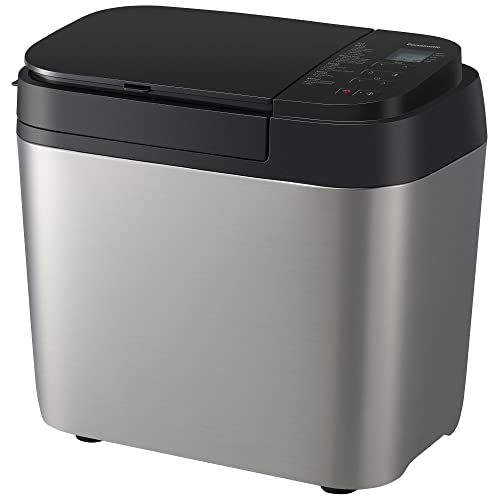
4. Panasonic SD-R2550 Bread Machine — Best Automatic Sensor Baking
Panasonic’s SD-R2550 bets on intelligence over control: 20 presets and an advanced temperature sensor that adjusts the process to ambient conditions. That sensor matters more than it sounds — dough behavior changes with a cold winter kitchen or a warm summer one, and a machine that compensates produces consistent loaves across seasons instead of mysterious failures in January.
The program range is the broadest here: breads, gluten-free baking, cake and pizza dough among the 20 presets, with a raisin and nut dispenser for mix-ins. Panasonic has made bread machines for decades, and the SD-R2550’s tuning reflects it — this is the machine for people who want to press a button and trust the result.
Its personality is the opposite of the Breville’s: minimal tweaking, maximal delegation. Bakers who enjoy adjusting variables will feel constrained; bakers who want Tuesday’s loaf to equal Sunday’s will feel understood.
Strengths
- Temperature sensor adapts cycles to your kitchen’s conditions
- 20 presets covering bread, cake, pizza dough and gluten-free
- Raisin & nut dispenser; decades of Panasonic bread machine tuning
Trade-offs
- Limited manual customization compared with the Breville
- Preset breadth includes some cycles most owners rarely use
- Mid-to-premium tier positioning
| Programs | 20 presets |
| Sensor | Advanced temperature sensor |
| Dispenser | Raisin & nut dispenser |
| Range | Bread, cake, pizza dough, gluten-free |
Seasonal consistency is the SD-R2550’s quiet superpower. Home bakers know the pattern: a recipe that works in October fails in a cold February kitchen because the rise ran long and cold. A sensor-driven machine narrows that variance automatically, which is worth more to a weekly baker than almost any single program on the list.
It is also the most forgiving pick for beginners in this guide — not because it is basic, but because its automation absorbs the variables beginners cannot yet judge. If this is your first bread machine and you want results before education, start here.
Best for: set-and-forget bakers and beginners who want seasonal consistency / Not suited for: tinkerers who want to program their own cycles
Check the current price on Amazon

5. KBS 17-in-1 Bread Maker, 710W, Dual Heaters — Best Budget Features
The KBS 17-in-1 is the value disruptor of this category, and its verified listing is startlingly complete: dual heaters and convection, a ceramic-coated pan, a nut dispenser, three loaf sizes up to 2.2 lb, three crust colors, a 15-hour delay timer and a touch panel, all at the budget end of this guide’s range. On paper it matches machines costing far more.
The ceramic pan is a real differentiator for buyers avoiding conventional nonstick coatings, and the dual-heater design addresses the pale-top problem that plagues cheap machines. Low-noise operation is also claimed in the listing — a consideration for overnight timer baking in small homes.
The honest caveats are about the unknown rather than the known: brand support, long-term parts availability and durability are less proven than Zojirushi’s or Panasonic’s decades-long records. The KBS is a calculated value bet — exceptional features per dollar, with longevity as the open question.
Strengths
- Dual heaters, convection and ceramic pan at a budget tier
- 3 loaf sizes, 3 crust colors, 15-hour timer, nut dispenser
- Touch panel and low-noise positioning for overnight baking
Trade-offs
- Long-term durability and parts support less proven than legacy brands
- Feature breadth can mean shallower tuning on some cycles
- Ceramic pan needs gentler handling than metal nonstick
| Capacity | Up to 2.2 lb, 3 loaf sizes |
| Heating | Dual heaters + convection, 710W |
| Pan | Ceramic-coated |
| Timer | 15-hour delay |
Who should take the bet? Bakers entering the category who want real features without a premium commitment, and households that specifically want a ceramic pan. The KBS lets you learn what you actually use — dispensers, timers, loaf sizes — before any future upgrade, and many owners will find they never need one.
Handle the ceramic pan with wooden or silicone tools and avoid thermal shock, and it will repay the care with easy release. Treat the KBS as what it is — the most features available at its tier — and it is easy to recommend with the longevity caveat stated plainly.
Best for: budget-conscious bakers who want premium features and a ceramic pan / Not suited for: buyers who prioritize decades-proven brand support above features
Check the current price on Amazon

6. Cuisinart Compact Automatic Bread Maker CBK-110 — Best Compact
The CBK-110 solves the category’s most common objection — size — with a vertical design that bakes up to 2 lb loaves from a footprint suited to small counters. Its verified listing covers the essentials properly: 12 programs, three loaf sizes, three crust shades and a 13-hour delay start for morning bread.
The paddle-removal alert is a thoughtful touch: the machine signals the moment to remove the kneading paddle before baking if you want a loaf without the paddle hole — a manual answer to the Breville’s collapsible paddle, at a much friendlier tier.
Vertical loaves are the design’s signature and its main caveat: slices are taller than a horizontal pan’s, which some sandwich makers love and others find awkward for toasters. Know your toaster slot before choosing, and the CBK-110’s compactness becomes a pure win.
Strengths
- Compact vertical footprint, yet bakes up to 2 lb loaves
- 12 programs, 3 loaf sizes, 3 crust shades, 13-hour delay
- Paddle-removal alert for a hole-free loaf base
Trade-offs
- Tall vertical slices may not suit every toaster
- Fewer programs and no dispenser versus bigger siblings
- Single heater — top browning is good, not flagship level
| Capacity | Up to 2 lb, 3 loaf sizes |
| Programs | 12 |
| Timer | 13-hour delay start |
| Feature | Paddle-removal alert |
The CBK-110 is the machine we point to when someone says ‘I’d love a bread maker but my kitchen is tiny.’ It stores where a stand mixer stores, bakes a real family loaf, and covers the programs home bakers genuinely use. Apartment bakers and first-time buyers are its natural audience.
It also makes a sensible second machine for a holiday home or an RV-adjacent lifestyle — anywhere bread is wanted and space is not. Within the Cuisinart family, choose the CBK-210 for crust and breadth, and the CBK-110 for footprint and simplicity.
Best for: small kitchens, apartments and first-time bread machine buyers / Not suited for: bakers wanting dispensers, convection or horizontal sandwich slices
Check the current price on Amazon
Comparison Table
| Pick | Badge | Key Spec | Best For |
|---|---|---|---|
| Zojirushi Home Bakery Virtuoso Plus BB-PDC20BA | Best Overall | 2 lb, dual heaters, 13-hour timer | serious home bakers who want the best all-round machine, including gluten-free households |
| Breville Custom Loaf BBM800XL | Best for Customization | Custom programs, collapsible paddle | detail-oriented bakers who iterate recipes and want whole, clean slices |
| Cuisinart Convection Bread Maker CBK-210 | Best Convection Crust | 2 lb, convection, 16 programs | crust-focused bakers and sourdough keepers who also bake in the oven |
| Panasonic SD-R2550 Bread Machine | Best Automatic Sensor Baking | 20 presets, temperature sensor | set-and-forget bakers and beginners who want seasonal consistency |
| KBS 17-in-1 Bread Maker, 710W, Dual Heaters | Best Budget Features | 2.2 lb, dual heaters, ceramic pan | budget-conscious bakers who want premium features and a ceramic pan |
| Cuisinart Compact Automatic Bread Maker CBK-110 | Best Compact | Compact, up to 2 lb, 12 programs | small kitchens, apartments and first-time bread machine buyers |
The table hides one real divide: philosophy. The Zojirushi and Panasonic automate quality in different ways (heat design versus sensors), the Breville hands control to the baker, the Cuisinarts split on crust versus footprint, and the KBS bets on features per dollar. All six bake good bread; they differ in what they ask of you and what they forgive. If you are stuck between two rows, decide by failure mode: which disappointment would bother you more — a pale top crust (argues for dual heaters or convection), a hole in every loaf (argues for the collapsible paddle or the removal alert), or a cupboard of features you never touch (argues for the simpler machines)? Bread machines are long-lived appliances, so the annoyance you avoid is worth more than the feature you occasionally use.
What Should You Look for in a Bread Baking Machine?
Start with heat, because heat is crust. Single-heater machines bake from below and often leave pale tops; dual heaters (Zojirushi, KBS) add top heat for full browning; convection (Cuisinart CBK-210, KBS) circulates air for even color. If you have ever been disappointed by a bread machine loaf, it was probably the top crust — prioritize the heating design that fixes it.
Next, the pan and paddle. Pan shape decides slice shape: horizontal pans give classic sandwich slices, vertical pans give taller ones. Coatings divide into conventional nonstick and ceramic, the latter chosen by buyers avoiding traditional coatings. Paddles either stay in (leaving a hole), alert you for removal (Cuisinart CBK-110), or collapse flat (Breville) — a small detail that affects every single slice.
Then programs — but count usefulness, not numbers. The cycles home bakers actually live on are white/basic, whole wheat, dough (for oven finishing and pizza), gluten-free if needed, and a delay timer for morning bread. Dispensers for fruit and nuts matter if you bake enriched loaves; sourdough starter programs matter if you keep a culture. Everything beyond your real list is decoration.
- Heating design: dual heaters or convection for a properly browned top crust
- Pan shape matched to your slices; coating material you are comfortable with
- Paddle solution: collapsible, removable on alert, or accept the hole
- Programs you will use weekly — not the longest list
- Delay timer length that covers your overnight window
What Loaf Size Do You Actually Need?
Most machines here bake up to 2 lb (the KBS to 2.2 lb), with smaller settings below that. The right everyday size is the one your household finishes within two days, because machine bread — preservative-free by design — stales faster than shop bread. For a couple, that is often the middle setting; for a family of five, the maximum, baked twice a week.
Bigger is not automatically better: an oversized loaf in a small household becomes stale slices and waste, while a right-sized loaf on a timer becomes fresh bread every other morning. Also check the machine’s physical size against your storage — a 2 lb machine is a substantial appliance, and the compact CBK-110 exists precisely because counter space is a real constraint.
If you bake for gatherings as well as daily life, prefer a machine whose maximum is generous and whose middle settings are well tuned, rather than a small machine you will outgrow by the first holiday.
Are Bread Machines Worth It vs Baking in the Oven?
The honest answer depends on which bread you mean. For crusty artisan boules, the oven and a Dutch oven win, and no machine in this guide pretends otherwise. For the everyday bread a household actually eats — sandwich loaves, whole wheat, soft rolls, pizza dough, sweet breads — a good machine matches the oven for quality while reducing hands-on time to about five minutes, and it does the kneading and rising for oven-finished doughs too.
Energy and heat matter in summer: a bread machine bakes a loaf without heating the whole kitchen the way an oven does. And the delay timer has no oven equivalent — waking to a finished loaf requires either a machine or a very dedicated baker.
Many enthusiasts end up hybrid: machine for weekday loaves and all dough work, oven for weekend artisan projects. The machines in this guide with strong dough programs (all six, honestly) support that life well. Buy the machine for the bread you eat on Tuesdays, and it will earn its place.
How Do You Get the Best Results from a Bread Machine?
Weigh ingredients rather than scooping when you can — flour volume varies enough between scoops to swing a loaf — and bring ingredients to room temperature unless your machine’s manual says otherwise, because cold liquids slow the yeast’s start. Add ingredients in the order the manufacturer specifies (usually liquids first, flour, then yeast kept dry on top), since that order protects the yeast until the cycle begins, especially on a delay timer where the yeast must not touch liquid for hours.
Respect the machine’s signals: dispensers and paddle alerts exist to be used, and opening the lid repeatedly during rising and baking dumps heat and invites a sunken top — peek through the window if your model has one. When the loaf finishes, remove it promptly to a rack; leaving it steaming in the pan softens the crust you just paid a heating system to create.
Finally, keep notes for your first dozen loaves: flour brand, liquid amount, program, result. Bread machines are consistent enough that small recorded adjustments converge quickly on your household’s perfect loaf — and if your machine saves custom programs, like the Breville, those notes become permanent settings.
How Do You Clean and Maintain a Bread Machine?
Bread machines ask for very little: the pan and paddle wash after each loaf (a warm soak releases any baked-on dough), the interior crumb tray or chamber wipes out weekly, and the heating element area should be kept free of flour dust, which scorches and smells if it accumulates. Never immerse the machine body, and let the pan cool before soaking to protect its coating — ceramic pans in particular dislike thermal shock.
The paddle shaft deserves occasional attention: dough works its way into the mechanism, and a stiff paddle that no longer turns freely is usually a cleaning issue rather than a mechanical failure. Soak, work the paddle gently back and forth, and dry thoroughly before the next bake. Check your manual for whether the shaft seal needs periodic replacement — on well-supported brands it is an inexpensive part that prevents leaks into the machine.
Store the machine with the lid slightly ajar if your space allows, so the chamber airs between bakes, and keep the pan inside the machine to protect both. Treated this way, a bread machine’s working life is measured in many years and thousands of loaves; most premature deaths in this category trace back to water in the electrics or a seized, dough-bound paddle shaft, both entirely preventable.
How to Bake Your First Loaf in a Bread Machine, Step by Step
This walkthrough assumes a basic white or whole wheat loaf on any machine in this guide. Your manual’s ingredient order and program names take precedence — this is the universal shape of the process.
- Fit the paddle and pan. Seat the kneading paddle firmly on its shaft and click the pan into the machine. A loose paddle is the cause of most ‘it never kneaded’ failures.
- Add ingredients in the manual’s order. Typically: liquids first, then flour covering the liquid, salt and sugar in separate corners, and yeast last in a small well in the flour — kept dry, especially if using the delay timer.
- Choose program, size and crust. Select the program matching your recipe, the loaf size you weighed for, and your crust shade. Close the lid and press start.
- Check the dough ball once, early. About ten minutes into kneading, peek: the dough should form a smooth, soft ball. Too dry and shaggy — add water a teaspoon at a time. Too wet and sloppy — add flour a tablespoon at a time. This single check rescues more loaves than any other step.
- Use the signals. Add mix-ins when the dispenser or beep prompts (unless your machine dispenses automatically), and remove the paddle at the alert if you want a hole-free base and your model supports it.
- Leave the lid shut through rising and baking. Heat loss from peeking causes sunken tops. Use the viewing window instead.
- Remove and cool properly. At the beep, take the pan out with oven gloves, turn the loaf onto a rack within a few minutes, and cool at least 30 minutes before slicing — cutting hot bread gums the crumb.
- Clean while it is easy. Soak the pan and paddle in warm water as soon as they cool; dried dough is the only genuinely annoying cleanup this appliance ever creates.
Judge the loaf after it cools, and change one variable at a time on the next bake. Within three or four loaves, most bakers have a house recipe they can run on the timer without thinking — which is the moment the machine stops being a gadget and becomes the household bakery.
If the first loaf disappoints, diagnose before you despair: a dense loaf points to yeast or liquid measurement, a collapsed top points to too much liquid or a lid lifted mid-bake, a pale top points to the crust setting or the heating design, and a torn base points to the paddle. Every one of those has a known fix, and the guide sections above cover each in turn. Bread machines reward exactly one virtue — small, recorded adjustments — and punish exactly one vice, which is changing three things at once and learning nothing.
Common Buying Mistakes
Bread machines are forgiving, but these are the mistakes behind most failed loaves and abandoned appliances. Read them before your first bake rather than after your third disappointing one — every entry on this list is a loaf somebody else already sacrificed so that yours does not have to be.
- Using old or dead yeast. Yeast is a living ingredient with a shelf life. If loaves stop rising, test the yeast before blaming the machine — it is the culprit far more often than the appliance.
- Scooping flour carelessly. A packed cup can hold a third more flour than a spooned one. Weighing flour is the single biggest upgrade to machine bread consistency.
- Ignoring the dough ball check. Five minutes of attention during the first knead — a teaspoon of water or a spoon of flour — prevents most dense or collapsed loaves.
- Peeking during the bake. Every lid lift dumps heat. Sunken, pale tops usually trace back to curiosity, not equipment.
- Leaving the loaf in the pan. Steam trapped in the pan softens crust within minutes. Turn the loaf onto a rack promptly.
- Buying by program count. Twenty novelty cycles lose to six well-tuned ones. Buy for the bread you eat weekly: basics, whole wheat, dough, and gluten-free if you need it.
Final Recommendation
Whatever you choose, bake the first loaf the day the machine arrives, while the manual is open and the enthusiasm is fresh — bread machines reward momentum, and the households that love theirs are simply the ones that started. Our headline pick is the Zojirushi Virtuoso Plus — dual heaters, serious gluten-free and whole-wheat programs, and the build to bake weekly for years. The Breville Custom Loaf is the choice for bakers who iterate and want whole slices, the Cuisinart CBK-210 for crust lovers and sourdough keepers. The Panasonic SD-R2550 automates consistency, the KBS packs premium features into a budget tier, and the Cuisinart CBK-110 fits the smallest counters. Check price on Amazon for the machine that matches your baking personality.
Related guides on this site: Best Bread Machines For Sourdough if starter loaves are your goal, Best Bread Machines For Pizza Dough for dough-cycle specialists, Best 2 Lb Bread Machines for a size-focused comparison, Best Affordable Bread Machines if budget leads, and Best Bread Machines For Home Bakers for a broader field of options.
Frequently Asked Questions
Is bread from a machine as good as oven-baked bread?
For everyday loaves — sandwich bread, whole wheat, soft enriched breads — a good machine produces bread most households are delighted to eat daily, with five minutes of work. For crusty artisan boules, the oven and Dutch oven remain better. Many bakers use the machine’s dough cycle for those loaves too, letting it knead and rise before oven finishing.
Why does my bread machine loaf have a pale top?
Single-heater machines bake from below, so the top steams more than it browns. Dual-heater machines like the Zojirushi Virtuoso Plus and KBS, and convection models like the Cuisinart CBK-210, exist specifically to fix this. Choosing a darker crust setting also helps on any machine.
What is the hole in the bottom of the loaf?
It is where the kneading paddle sat during baking. Solutions: the Breville’s collapsible paddle folds flat to prevent it, the Cuisinart CBK-110 alerts you to remove the paddle before baking, or simply accept it — most owners slice around it without a thought.
Can bread machines make gluten-free bread properly?
Yes, with a dedicated gluten-free program — gluten-free doughs are batters that need different mixing and rising handling. The Zojirushi Virtuoso Plus and Panasonic SD-R2550 in this guide both include gluten-free programs, and using gluten-free-specific recipes matters as much as the program itself.
How long does a bread machine loaf keep?
Machine bread has no preservatives, so it is best within two days, stored in a bread box or bag at room temperature. Slice and freeze for longer keeping — it toasts beautifully from frozen. Refrigeration stales bread faster and is best avoided.
Do I need special flour for a bread machine?
Bread flour’s higher protein gives machine loaves better structure and rise, and it is the reliable default. All-purpose flour works for many recipes with slightly softer results. Whole wheat benefits from the dedicated whole-wheat programs in this guide, which allow the longer rise whole grains need.
Can I use the delay timer with any recipe?
The timer works with most standard loaves, with two cautions: keep the yeast dry and separated from the liquid until the cycle starts (the standard ingredient order does this), and avoid recipes with perishable ingredients — eggs, milk, soft cheese — that would sit at room temperature for hours before baking. Plain, whole wheat and seeded loaves are ideal timer candidates; enriched fresh-dough recipes are better baked immediately or with a short delay.
How noisy is a bread machine overnight?
Kneading is the loud phase — a rhythmic thumping for the first half hour or so — while rising is silent and baking is nearly so. Most owners set the timer so kneading happens before bedtime or accept it in a closed kitchen. The KBS in this guide specifically positions itself as low-noise, and placing any machine on a stable, level surface away from a bedroom wall makes more difference than the model choice.


