Disclosure: airfryerkitchensupply.com is reader-supported. When you buy through links on our site, we may earn an affiliate commission at no extra cost to you.
Where to buy
Every model in this guide to the best bullet smokers was verified as a current Amazon listing before inclusion. Bullet smokers come in several sizes under similar names, so use the links below to check the current price on Amazon and confirm the size and model before ordering.
Quick links to the picks in this guide: Weber Smokey Mountain Cooker 22-inch; Weber Smokey Mountain Cooker 18-inch; Oklahoma Joe’s Bronco Pro 21.5-inch Charcoal Drum Smoker; Oklahoma Joe’s Bronco 18-inch Charcoal Drum Smoker; Weber Smokey Mountain Cooker 14-inch; Realcook Charcoal BBQ Smoker Grill, 20-inch Vertical.
The best bullet smokers are built on the most elegant design in barbecue: a charcoal fire at the bottom, a water pan in the middle, two cooking grates above, and a domed lid on top — a vertical cylinder that looks like its nickname and cooks like a much more expensive machine. Bullet smokers hold temperature with a steadiness that surprises everyone who meets one, sip fuel, fit on the smallest patio, and have produced a disproportionate share of the great barbecue cooked in backyards for forty years.
This roundup covers the format’s full current range: the porcelain-enameled benchmark line in its three sizes, the heavy drum-style bullets that hang meat and run hotter, and the budget bullets that put the design within everyone’s reach. All six picks are verified current listings. Each review is honest about the format’s shared truths — these are charcoal machines that ask for basic fire skills, reward them generously, and have no interest in your phone.
If you are choosing a first serious smoker, or replacing a complicated one with a simpler joy, this is the category where the most cooking happiness per dollar lives. The picks below are ordered to prove it.
In this guide
Quick Picks
Weber Smokey Mountain Cooker 22-inch — Best Overall. The bullet against which all bullets are measured, in its largest size: a 22-inch porcelain-enameled cooker with dual grates that holds temperature for hours on a single charcoal load and fits the briskets, multiple butts, and rib loads that smaller bullets cannot. The default recommendation. Check price on Amazon.
Weber Smokey Mountain Cooker 18-inch — Best for Most People. The sweet spot of the line: the same porcelain-enameled stability and dual-grate design in the 18-inch size that suits most households, most briskets (with minor persuasion), and most patios — while sipping noticeably less charcoal than the 22. The bullet most people should buy. Check price on Amazon.
Oklahoma Joe’s Bronco Pro 21.5-inch Charcoal Drum Smoker — Best Drum-Style Bullet. The bullet reimagined as a heavy drum: 366 square inches, sealed construction, an intake system built for precision, and the ability to hang meat for the drum style’s signature results — plus grilling duty when the cook is burgers, not brisket. Check price on Amazon.
Oklahoma Joe’s Bronco 18-inch Charcoal Drum Smoker — Best Value Drum. The Bronco Pro’s smaller, gentler-priced sibling: the same sealed-drum idea at 18 inches and 284 square inches, with hanging and grilling versatility intact. The way into drum cooking without the flagship drum’s bill. Check the current price on Amazon. Check price on Amazon.
Weber Smokey Mountain Cooker 14-inch — Best Compact and Portable. The benchmark bullet in miniature: the same porcelain-enameled design and damper control at 14 inches, sized for couples, small patios, camping, and tailgates — and beloved as a second smoker by owners of its big brothers. Check price on Amazon.
Realcook Charcoal BBQ Smoker Grill, 20-inch Vertical — Best Budget Bullet. The budget doorway into the bullet format: a 20-inch vertical charcoal smoker-grill that stacks the classic fire-pan-grates arrangement at the lowest price in this roundup. Lighter build than the benchmarks — and an honest first smoker for the money. Check price on Amazon.
How These Picks Were Chosen
Picks were verified through Amazon’s catalog data and judged on the bullet format’s decisive criteria: temperature stability (the design’s whole promise), build and enamel or steel quality, grate capacity in honest terms — what actually fits, not just diameter — vent precision, water-pan design, and portability. The benchmark line’s three sizes are treated as distinct picks because in this format, size is the most consequential choice a buyer makes.
Prices are not printed; check the current price on Amazon, noting that the format’s value is legendary — the cost of entry to genuinely excellent barbecue is lower here than anywhere else in this series.
A closing note on evidence: this format’s picks rest on the deepest owner record in all of barbecue. The benchmark line has been cooked on, modified, competed with, and written about for decades, and the drum models have a decade of intense community scrutiny behind them. Where this guide makes a confident claim — about stability, longevity, or method — it is summarizing that record, not extrapolating from a review unit. In a market full of smokers launched last spring, the bullet category’s gift to the buyer is that almost nothing about it is unproven.
The 6 Best Bullet Smokers

Weber Smokey Mountain Cooker 22-inch — Best Overall
The Smokey Mountain’s reputation rests on a single, verifiable behavior: it settles at cooking temperature and stays there, hour after hour, with a composure that offsets costing far more struggle to match. The 22-inch model adds the capacity the format’s fans graduate to — full packer briskets lie flat, four pork butts ride together, and rib racks stop being a geometry problem. The porcelain enamel shrugs off weather and cleans easily, and the dampers give fine, predictable control.
It suits the serious home cook and the aspiring competitor alike — this model has won more amateur trophies than any smoker in this roundup. It does not suit the tiny household cooking two chicken halves; the 18-inch below exists for them, at a friendlier appetite for charcoal.
Strengths
- Benchmark temperature stability — set it and genuinely leave it
- 22-inch capacity fits whole briskets and crowd loads flat
- Porcelain-enameled build with Weber’s parts and support behind it
Trade-offs
- Uses more charcoal per cook than its smaller siblings
- No side door convenience on par with cabinet loaders — access is via the front door
- Lid-off heat loss means cooks must be planned, not peeked at
| Size | 22-inch |
| Grates | Dual cooking grates |
| Body | Porcelain-enameled |
| Control | Temperature control dampers |
Some products lead their categories by being best at the category’s central promise, and the bullet’s central promise is stability per dollar. The 22-inch Smokey Mountain delivers it at the size serious cooks actually need, with a build that owners measure in decades. Its aftermarket — thermometers, gaskets, hinge kits, extra grates — exists because the base machine deserves the investment.
If the budget and the appetite are there, this is the bullet to buy and the smoker many owners keep for life. Check the current price on Amazon; it is the premium of the line, and it earns it.
Competition cooks deserve a direct word: this is the bullet that shows up on contest grounds, not as a mascot but as working equipment, because its temperature behavior under a full load — the contest condition — is the most predictable in charcoal barbecue at any price. Teams build their timelines around that predictability. You do not need trophies to benefit from the same property; a family dinner with a serving time is a small competition, and the 22-inch treats it with the same calm. Predictability is the luxury this smoker sells, disguised as a black cylinder.
Its grate also fits a full-size steam pan, which turns the big bullet into a superb rib and burnt-ends finisher — one more role in a machine that already holds most of them.
Best for: serious home cooks and crowd feeders wanting the benchmark bullet / Not suited for: small households cooking small loads
Check on Amazon — check the current price on Amazon before you decide, because configurations and included accessories change.
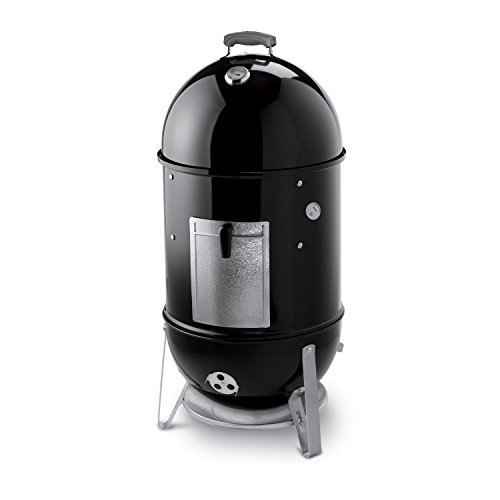
Weber Smokey Mountain Cooker 18-inch — Best for Most People
Sizing is the bullet buyer’s real decision, and the 18-inch is where the format’s economics shine brightest: enough grate for a couple of pork butts, several chickens, or a brisket that may need a slight curve over a rib rack to fit, with fuel consumption and heat-up behavior matched to weekly cooking rather than events. The build, enamel, dampers, and support are identical in kind to the flagship’s.
It suits the great majority of households — families of three to six, weekly smokers, first serious-smoker buyers. It does not suit regular crowd feeders, who will feel the grate’s limits at exactly the wrong moments and should buy the 22-inch once instead of this twice.
Strengths
- Same benchmark stability and build as the 22-inch, sized for real life
- Frugal with charcoal — the economical weekly smoker
- Huge owner community and accessory ecosystem
Trade-offs
- Full packer briskets can require a curve or trim to fit
- Rib capacity is good, not generous
- Same lid-off discipline as the whole format
| Size | 18-inch |
| Grates | Dual cooking grates |
| Body | Porcelain-enameled |
| Control | Temperature control dampers |
The 18-inch is the recommendation experienced owners give when they like you, because it is the size they actually cook on most. Its slightly tighter quarters are a fair trade for a smoker that heats faster, burns less, stores smaller, and still produces the format’s signature stability. More great barbecue has come off this model than any other single smoker design in the world, which is not a statistic — it is a reputation you can verify at any barbecue forum in an afternoon.
Buy it unless your gatherings regularly exceed its grates. Check the current price on Amazon; the step down from the 22-inch pays for a season of charcoal.
Its second career is worth noting: the 18-inch is the smoker experienced cooks buy for other people. It is the wedding gift, the housewarming anchor, the recommendation given without a follow-up apology — because its combination of price, stability, and support makes it nearly impossible to regret. When a product becomes the default gift of an entire hobby, that is information about failure rates, learning curves, and long-term satisfaction that no specification sheet can carry. If you are buying for someone else, the search ends at this pick.
A rib rack is the one accessory this size genuinely earns: standing ribs vertically multiplies the grate’s generosity, and with it, the 18-inch feeds gatherings its diameter says it should not.
Best for: most households — the format’s sweet spot / Not suited for: regular feeders of large crowds
Check on Amazon — check the current price on Amazon before you decide, because configurations and included accessories change.
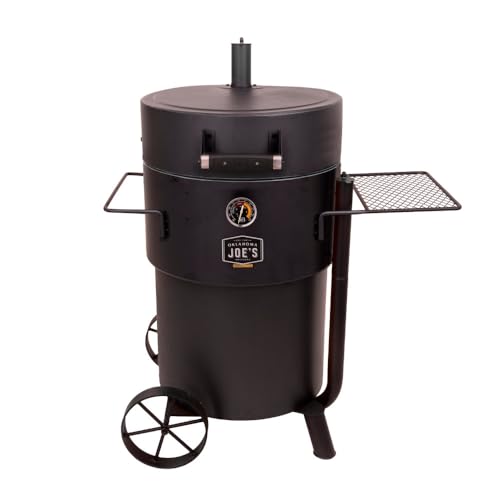
Oklahoma Joe’s Bronco Pro 21.5-inch Charcoal Drum Smoker — Best Drum-Style Bullet
Drum smokers are the bullet’s rowdier cousins: no water pan, direct radiant heat from a charcoal basket below, and meat that can hang vertically for the even, mahogany results drum cooks evangelize. The Bronco Pro is the factory-built pinnacle of the style — heavy-gauge construction, a sealed drum that holds temperature with bullet-like calm, and airflow control precise enough to run low-and-slow or climb for poultry and grilling.
It suits the cook who wants drum character — hanging ribs, hot-and-fast capability, a sealed and sturdy build — without building a drum from a barrel. It does not suit the water-pan traditionalist; the drum’s direct-heat method is a different, prouder technique.
Strengths
- Heavy, sealed drum build with excellent temperature behavior
- Hanging capability delivers the drum style’s signature results
- Versatile — low-and-slow smoking to genuine grilling in one drum
Trade-offs
- Direct-heat drum method has a learning curve for bullet veterans
- 366 sq in is grate area; hanging capacity is the real measure and varies by cut
- Heavier than the enamel bullets — less portable than it looks
| Cooking area | 366 sq in |
| Size | 21.5-inch drum |
| Type | Drum smoker and grill |
The drum revival happened because cooks discovered that direct radiant heat, managed well, produces bark and flavor that water-pan bullets approach differently — and the Bronco Pro is how you buy that experience factory-built and sealed tight. Its build quality is the story: drums live or die on air control, and air control is a function of fit, which this model’s owners consistently praise.
Choose it if the drum style calls to you; choose the Weber if you want the classic water-smoker method. Check the current price on Amazon — it prices as the premium drum, against a field of DIY barrels.
Hanging deserves its own explanation for bullet veterans considering the switch. Suspended over the coals, a rack of ribs cooks in its own basting juices, evenly on all sides, with no grate marks and no flipping — and the drippings hitting the coals return as a vapor that seasons the meat in a way water-pan cooking cannot imitate. That flavor loop is the drum method’s soul, and the Bronco Pro’s sealed build is what makes it controllable rather than chaotic. One cook of hung ribs explains the drum revival better than this entire review.
Learn its hanging hooks on chicken first — halves hung over the coals emerge with a color and evenness that will make the method’s case to any skeptic at the table.
Best for: cooks wanting drum-style results in a factory-sealed build / Not suited for: water-pan traditionalists or the highly portable crowd
Check on Amazon — check the current price on Amazon before you decide, because configurations and included accessories change.

Oklahoma Joe’s Bronco 18-inch Charcoal Drum Smoker — Best Value Drum
Everything that makes the Bronco line interesting survives the step down: a sealed heavy drum, precise intake control, the option to hang meat above a charcoal basket, and a second life as a capable grill. What shrinks is capacity and price — 284 square inches suits households rather than events, and the drum’s appetite for charcoal shrinks with it.
It suits the curious bullet owner who wants to learn the drum method, and the small household that grills as much as it smokes. It does not suit crowd cooking, where the Pro’s extra room — or the 22-inch Weber’s grates — earn their keep.
Strengths
- Drum method and sealed build at the line’s friendliest price
- Hangs meat and grills — two techniques in one footprint
- Manageable size and fuel appetite for weekly use
Trade-offs
- 284 sq in fills quickly with crowd loads
- Drum technique still asks a learning curve of bullet converts
- Shares the format’s lid-off discipline
| Cooking area | 284 sq in |
| Size | 18-inch drum |
| Type | Drum smoker and grill |
As an entry to drum cooking, the standard Bronco is the rational purchase: the method is identical to the Pro’s, the build philosophy is the same, and the savings buy the hooks, charcoal, and meat for a season of learning. Owners who fall for the drum can graduate with knowledge; owners who do not still own a fine grill and a capable small smoker.
It is the value pick of the drum world and a legitimate alternative to the mid-size Weber for households that grill often. Compare both when you check the current price on Amazon.
The smaller Bronco has a party trick its size enables: it travels. Not to a park bench like the 14-inch Weber, but across a yard, into a truck bed, to the lake house — a real drum smoker that two people can move without a strategy meeting. For the household whose smoking happens in more than one place, that mobility, plus honest drum cooking and grilling in the same body, makes it the most versatile single purchase in this roundup. Versatility is a spec too; it just never fits in a table.
As a grill it is better than its billing: the drum’s sealed body and direct heat produce a fierce, even sear, and many owners find it quietly replacing a kettle they expected to keep.
Best for: households curious about drum cooking, and grill-smoke combos / Not suited for: crowd feeders needing maximum grate space
Check on Amazon — check the current price on Amazon before you decide, because configurations and included accessories change.
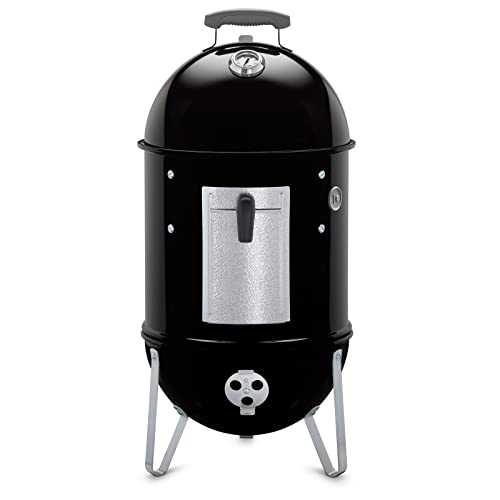
Weber Smokey Mountain Cooker 14-inch — Best Compact and Portable
Small smokers usually mean compromised smokers; the 14-inch Smokey Mountain is the exception that owners of the larger models buy deliberately. The design scales down intact — dual grates, water pan, precise dampers, real stability — into a cooker that handles a pork butt, a chicken or two, or a couple of rib racks, travels in a car trunk, and sips charcoal like it is rationed.
It suits couples, small households, apartment patios with permission, and campers. It does not suit anyone whose typical cook is plural briskets; physics is physics, and the 18-inch is the honest step up.
Strengths
- Full Smokey Mountain stability and build at portable size
- Extremely fuel-efficient — small charcoal loads, long cooks
- The travel and second-smoker favorite of experienced owners
Trade-offs
- Capacity is genuinely small — plan cuts accordingly
- Small parts and grates can feel fiddly next to the larger models
- Ribs and briskets need trimming or curving to fit
| Size | 14-inch |
| Grates | Dual cooking grates |
| Body | Porcelain-enameled |
| Control | Temperature control dampers |
The 14-inch earns its place by refusing to be a toy. Its cooks are shorter in list but not in quality, and its portability opens venues — the campsite, the tailgate, the friend’s yard — that no other pick in this roundup can reach. As a first smoker for a small household, it teaches the complete bullet craft at the lowest running cost in the line.
Buy it for the life you actually live most weekends. Check the current price on Amazon; it is the gentlest entry into the benchmark line.
Do not overlook its role as the gateway to the whole line’s ecosystem: the techniques, accessories philosophy, and owner literature of the Smokey Mountain family apply to the 14-inch without translation, so the smallest purchase buys full membership in the best-documented cooking community in barbecue. Owners who graduate to the 18 or 22 keep the 14 for travel and small cooks rather than selling it — a retention pattern that tells you the little bullet is not a compromise to outgrow but a specialist to keep.
For camping, pre-measure charcoal into bags at home; the little bullet’s frugality means a weekend of smoking rides in a corner of the trunk, fuel included.
Best for: couples, small patios, camping, and tailgating / Not suited for: cooks whose typical load is large
Check on Amazon — check the current price on Amazon before you decide, because configurations and included accessories change.

Realcook Charcoal BBQ Smoker Grill, 20-inch Vertical — Best Budget Bullet
Realcook’s vertical follows the bullet blueprint — charcoal and water pan below, stacked cooking levels above, a domed top — at a price that undercuts the benchmark line substantially. The trade is build weight: thinner steel and simpler fittings mean more attention to the fire and a shorter cosmetic life, in exchange for a genuine introduction to the format’s cooking method at a genuinely accessible cost.
It suits the first-time buyer testing whether smoking is their hobby, and the occasional smoker whose cooks are monthly rather than weekly. It does not suit the enthusiast who will cook fifty weekends a year; that reader’s money belongs in the Weber line, where it will be spent once.
Strengths
- Lowest price in the roundup for the true bullet layout
- 20-inch size is usefully larger than most budget rivals
- Doubles as a charcoal grill for everyday cooking
Trade-offs
- Lighter steel needs more fire attention and ages faster
- Fittings and finish are a grade below the benchmark line
- Temperature stability is good for the price, not Weber-class
| Size | 20-inch vertical |
| Type | Charcoal smoker and grill |
Budget bullets should be judged as tuition. This one teaches the real method — water pan, vents, charcoal management, the patience of low-and-slow — on equipment honest enough that the lessons are true. If the hobby takes, every skill transfers upward to a benchmark smoker; if it does not, the loss is the smallest in this guide.
That is a respectable role, and this model fills it at the right size. Check the current price on Amazon, and spend the savings on a good thermometer and charcoal — the two upgrades that matter most at this level.
Used well, this budget bullet has one more virtue: it makes an excellent laboratory. Because its steel is lighter and its responses quicker, experiments — a new charcoal arrangement, a vent strategy, a wood species — report back within a single cook, legibly. Owners who learn on responsive equipment develop sharper instincts than owners of perfectly damped machines, for the same reason pilots train in small aircraft. If your plan is to become genuinely good at charcoal cooking, there are worse strategies than a season on an honest, lively, inexpensive smoker.
Give its fire a wind-sheltered corner and a patient first hour, and it will repay the courtesy with a steadier cook than its price led you to expect — most budget-smoker disappointment is weather, not steel.
Best for: first-time buyers testing the smoking hobby / Not suited for: heavy weekly users wanting a decade-long build
Check on Amazon — check the current price on Amazon before you decide, because configurations and included accessories change.
Comparison Table
| Pick | Badge | Key spec | Best for |
|---|---|---|---|
| Weber Smokey Mountain Cooker 22-inch | Best Overall | 22-inch, dual grates, porcelain-enameled body | serious home cooks and crowd feeders wanting the benchmark bullet |
| Weber Smokey Mountain Cooker 18-inch | Best for Most People | 18-inch, dual grates, porcelain-enameled body | most households — the format’s sweet spot |
| Oklahoma Joe’s Bronco Pro 21.5-inch Charcoal Drum Smoker | Best Drum-Style Bullet | 366 sq in heavy-duty drum, smokes and grills | cooks wanting drum-style results in a factory-sealed build |
| Oklahoma Joe’s Bronco 18-inch Charcoal Drum Smoker | Best Value Drum | 284 sq in drum smoker and grill | households curious about drum cooking, and grill-smoke combos |
| Weber Smokey Mountain Cooker 14-inch | Best Compact and Portable | 14-inch compact bullet, dual grates | couples, small patios, camping, and tailgating |
| Realcook Charcoal BBQ Smoker Grill, 20-inch Vertical | Best Budget Bullet | 20-inch vertical charcoal smoker-grill | first-time buyers testing the smoking hobby |
How to Choose a Bullet Smoker: Size Is the Decision
More than any other smoker format, the bullet purchase is a sizing decision, because the design is essentially perfected and the models differ mainly in diameter and build grade. Work backward from your typical cook. A couple of chickens, one pork butt, ribs for four: the 14-inch or a budget 20-inch serves, with the 14 the quality choice. Family dinners and a brisket at a time: the 18-inch Smokey Mountain, the format’s sweet spot. Crowds, multiple butts, whole packers laid flat: the 22-inch, without debate. Buy one size above your honest average if you entertain often — grate space is the one specification you cannot add later, though the drums complicate the math pleasantly, since hanging meat multiplies their effective capacity.
Build grade is the second decision, and it is really a frequency decision. Weekly cooks justify the porcelain-enameled benchmark line on cost-per-cook alone; monthly cooks can rationally choose the budget bullet and accept its lighter steel. What you should not do is buy the budget model for weekly use or the flagship for annual use — the format is honest enough that the right match is easy to see.
Water Pan vs Drum: The Bullet Format’s Two Schools
Classic bullets cook over a water pan, and the water is not superstition: it caps the temperature near the food, adds humidity that helps bark and moisture, and turns the fire’s spikes into gentle swells. The result is the most forgiving cooking environment in charcoal barbecue — which is why beginners succeed on bullets and competitors trust them. The drum school removes the pan and cooks directly over the coals, hanging meat in the rising heat. The reward is a distinctive, intensified barbecue character and faster cooks; the price is attention, because direct heat forgives less.
Neither school is correct. Choose the water pan if you value set-and-forget stability and classic results — the Weber line is its cathedral. Choose the drum if you are drawn to hanging ribs and hot-and-fast brisket and want a sealed, factory-built instrument for it — the Bronco line. Many serious households eventually own one of each, which tells you everything about how the argument ends.
Accessories That Matter for a Bullet (and Those That Do Not)
The bullet aftermarket is enormous, but the upgrades that matter are few and specific. First, a quality dual-probe thermometer — one probe for the grate, one for the meat — because the lid thermometer’s reading is a rumor about a different altitude. Second, a chimney starter sized to the minion method’s small lit loads. Third, a cover that actually fits, because enamel and steel alike age by weather. Those three purchases complete the bullet for most owners, at a total cost below most single ‘premium’ accessories.
Everything beyond that is taste: hinge kits for the lid, gasket sets for the door, extra grates, upgraded handles. They are pleasant, and the benchmark line’s ecosystem makes them easy, but none of them changes the barbecue the way the thermometer does. Buy in that order, cook between purchases, and let each addition justify itself — the bullet philosophy, applied to shopping.
Charcoal and Wood for Bullets: A Short, Opinionated Field Guide
Briquettes are the bullet’s home fuel: uniform, long-burning, and predictable, which is everything the minion method asks. Lump charcoal burns hotter and cleaner-tasting but less evenly and less long — excellent for drum-style and shorter cooks, a management challenge for overnight bullets. Many owners run briquettes for the bed and lump for special cooks, and the honest answer is that consistency of brand matters more than the choice itself, because your vent notes only transfer between cooks when the fuel does.
For smoke wood, chunks beat chips in a bullet — they smolder for hours inside the charcoal bed rather than flashing off. Bury three or four fist-sized chunks through the unlit charcoal, and the fire will find them in sequence across the cook. Fruitwoods for poultry and pork, oak and hickory for beef, and restraint everywhere: in a sealed bullet, smoke has nowhere to go but into dinner, and a light hand is the difference between seasoning and saturation.
Overnight Brisket on a Bullet: A Calm Timeline
The bullet’s finest party trick deserves a schedule. Late evening: build the minion-method fire with a full charcoal ring and buried wood chunks, fill the water pan hot, and put the brisket on as the temperature settles at target — usually an hour of calm adjustment, best spent with the notebook and no anxiety. Set the vents where your notes say stability lives, confirm the plateau twice, thirty minutes apart, and then do the radical thing: go to bed.
Morning: check the grate probe, top up the water pan if your model asks, and adjust nothing that is not asking to be adjusted. The brisket will stall, rest, and surrender on its own schedule through the late morning, and by early afternoon you are resting it in a cooler while the pit, still warm, takes the beans. This timeline — impossible on most charcoal equipment, routine on a bullet — is the entire reputation of the format, experienced in one cook. Run it once and you will understand every word of this guide differently.
How to Run a Bullet Smoker: The Minion Method, Step by Step
The bullet’s legendary stability comes from a charcoal technique as much as from the steel. This is the method its owners swear by, applicable to every pick in this roundup.
- Fill the charcoal ring most of the way with unlit charcoal, mixing in a few chunks of smoke wood. Make a shallow well in the center. This unlit bed is the fuel reserve the method burns through slowly.
- Light a small number of coals in a chimney — a coffee-can’s worth, not a full chimney — until they are ashed over. Pour them into the well. A small lit start is the entire secret: the fire spreads gradually through the unlit bed over hours instead of peaking early.
- Assemble the smoker immediately: water pan filled (hot water speeds stabilization), grates in, food on, lid closed. Set the top vent fully open and the bottom vents mostly open until the temperature approaches target, then close the bottoms down to a crack to settle.
- Resist adjustment. Give the smoker thirty minutes after any vent change before judging it, and expect a slow, stately climb to a plateau that holds for hours. Note the vent positions that worked — they will work again, in similar weather, nearly exactly.
- Cook with the lid on. Every peek costs the plateau you built. Use a probe at grate level, plan door access for water or charcoal only when truly needed, and let the method do what it is famous for.
- After the cook, close all vents to smother the fire. Unburned charcoal, once cool and dry, can be reused — one more economy of the method. Empty ash once fully cold, and wipe the grates while the smoker’s warmth still helps.
Master this once and the bullet becomes the most trustworthy cooker you own: light it in the morning, and dinner is a matter of time rather than attention. It is the technique behind the format’s forty-year reputation, and it works on the budget bullet exactly as it works on the benchmark — which is the deepest compliment this category can pay.
Common Buying Mistakes
Lighting all the charcoal at once. A full chimney of lit coals gives a hot first hour and a fading fourth. The minion method — a small lit start in an unlit bed — is not a suggestion; it is how the bullet’s stability is manufactured. Learn it before blaming the smoker.
Lifting the lid to look. Bullets store little spare heat in their air, and every peek costs twenty minutes of plateau. Probe through the vent or grommet, trust the method, and open the lid with food in one hand and a plan in the other.
Fighting the water pan. Running the pan dry ‘for better bark’ usually buys temperature spikes and dried surfaces. The pan is the design’s thermostat and humidifier in one. Experiment later; learn the smoker as designed first.
Buying too small to save money. The 14-inch is a jewel for couples and a frustration for a family of five. Size from your typical cook as the guide above insists — in this format, the wrong size is the only real mistake available, because the design itself is proven.
Closing the top vent to control temperature. The exhaust should stay open; a choked top vent traps stale smoke and creosote over the food. Control heat at the bottom intakes, keep the top breathing, and the smoke stays sweet.
Modifying the smoker before learning it. The bullet aftermarket tempts new owners to gasket, hinge, and gadget the machine in its first month. Resist until you have cooked the stock smoker through a season: most ‘flaws’ the mods address are either imaginary at your cooking volume or are actually the operator’s learning curve wearing a disguise. The stock bullet, run with the minion method and a good thermometer, is a complete instrument. Modify from knowledge later, if at all — many owners never do, and their barbecue lacks nothing.
Final Recommendation
For most households, the 18-inch Smokey Mountain is the best bullet smoker recommendation — the benchmark design at its sweetest size and price. Step up to the 22-inch if crowds are your normal, down to the 14-inch if your cooks are small or mobile, and sideways to the Bronco drums if hanging meat and direct-heat character call to you. On the tightest budget, the Realcook teaches the true method for the least money in the category.
Check the current price on Amazon for your size, and remember the format’s happy economics: the smoker is a one-time cost, but the charcoal discipline of the minion method will save you fuel money for as long as you cook. Buy the size once, learn the method once, and eat well for decades.
One last word on timing: bullets are evergreen products that rarely see dramatic discounts, so there is little to gain by waiting for a sale that may not come — the better economy is to buy your size now and start the learning curve that makes every future cook better. The charcoal you will burn this season costs more than any plausible discount, and the cooks you will have had by the time a sale arrives are worth more than either. Choose the size, light the first fire this weekend, and let the notebook start filling.
Revisit the shortlist: Weber Smokey Mountain Cooker 22-inch; Weber Smokey Mountain Cooker 18-inch; Oklahoma Joe’s Bronco Pro 21.5-inch Charcoal Drum Smoker; Oklahoma Joe’s Bronco 18-inch Charcoal Drum Smoker; Weber Smokey Mountain Cooker 14-inch; Realcook Charcoal BBQ Smoker Grill, 20-inch Vertical.
Keep reading in this series: Best Built Vertical Smokers; Best Box Smokers; Best Built Bbq Smokers; Best Built Vertical Propane Smokers; Best Books On Custom Smokers.
Frequently Asked Questions
Why are bullet smokers so popular?
Because the design is nearly perfect for its job: the vertical stack, water pan, and controlled vents produce remarkably stable temperatures and forgiving cooks from a simple, affordable, long-lived machine. They ask for basic charcoal skills and repay them with results that rival far more expensive smokers — a combination no other format matches at the price.
What size bullet smoker should I buy?
Size from your typical cook. The 14-inch suits couples and portability; the 18-inch is the sweet spot for most households; the 22-inch is for crowds and whole packer briskets laid flat. The drums measure differently — hanging meat multiplies their capacity — but the principle holds: buy for your real average, with modest headroom.
Do bullet smokers need a water pan?
Classic bullets are designed around one: it stabilizes temperature, adds humidity, and catches drips. Drum-style bullets are the deliberate exception, cooking directly over the coals for a different character. Within a water-pan model, run the pan filled while learning; experiment only after the method is yours.
How long will a bullet smoker hold temperature?
With the minion method — a small lit start in a full bed of unlit charcoal — the benchmark models hold cooking temperature for many hours on one load, long enough for briskets and butts without refueling in most weather. Wind and cold shorten the run; a sheltered spot and a full charcoal ring are the countermeasures.
Can a bullet smoker also grill?
The drum models grill by design, and the Weber bullets can grill in a pinch with the grate set over the charcoal bowl, though they are smokers first. Households wanting equal grilling should consider the Bronco line or keep a kettle beside the bullet — a pairing many owners happily maintain.
Are bullet smokers good for beginners?
They are the best first serious smokers in barbecue. The method is learnable in one cook, the temperature stability forgives beginner errors, the cost of entry is low, and the skills — fire, vents, patience, cues — transfer to every cooker you will ever own afterward.
How much charcoal does a bullet smoker use?
A full ring in the larger Smokey Mountain models — on the order of a large bag’s generous portion — can run a long cook with charcoal left over, thanks to the minion method’s slow burn. The 14-inch and budget bullets use proportionally less. Shutting all vents after cooking smothers the fire and preserves unburned charcoal for the next session, a genuine economy of the format.
Can I use a bullet smoker in an apartment or condo?
Only where rules allow: bullets are live-fire charcoal appliances, and most multi-unit buildings prohibit them on balconies regardless of the smoker’s quality. Where a house, yard, or permitted space is available, the bullet’s small footprint and modest smoke output make it one of the more neighbor-manageable charcoal options — but the lease and local fire code decide, not the product page.


