Disclosure: airfryerkitchensupply.com is reader-supported. When you buy through links on our site, we may earn an affiliate commission at no extra cost to you.
Where to buy
Every machine in this roundup is sold on Amazon, and each verified pick links to its listing so you can check the current price on Amazon before buying. We never print prices — they change too often to stay accurate — and every model below was matched by brand and model against Amazon’s product data feed for this site before it earned a link.
- Technivorm Moccamaster KBGV Select 10-Cup — check the current price on Amazon
- Rancilio Silvia Espresso Machine — check the current price on Amazon
- La Pavoni Europiccola Lever Espresso Machine (EPC-8) — check the current price on Amazon
- BUNN CSB3T Speed Brew Platinum Thermal Coffee Maker, 10-Cup — check the current price on Amazon
- Bonavita 8 Cup Coffee Maker BV1900TS — check the current price on Amazon
- Zojirushi EC-YTC100XB 10-Cup Coffee Maker — check the current price on Amazon
The best built coffee makers are the ones still brewing when their contemporaries have been replaced twice. ‘Best built’ is a claim about materials, construction and repairability — metal where rivals use plastic, boilers and frames borrowed from commercial machines, parts that can be ordered and replaced instead of a sealed box designed to be thrown away. This guide ranks coffee makers by exactly that standard, across formats: a hand-assembled Dutch drip brewer, two Italian espresso machines built like small industrial equipment, a commercial-heritage American drip line, and two drip machines whose simplicity is itself a form of durability.
Why does build deserve its own guide? Because the coffee maker is the most-used heated appliance in most kitchens, cycled daily through heat, water, steam and scale — the four horsemen of appliance death. A machine’s brew quality gets it bought; its construction decides whether it is a three-year purchase or a fifteen-year one, and the cost difference between those outcomes dwarfs any difference in purchase price within this guide’s tiers. Every pick below was chosen because its build story is documented in its materials and its service culture, not because a brochure used the word ‘premium’.
Every pick was also verified against this site’s Amazon product feed, brand and model matched, before earning its link. A note on method before the reviews: build quality shows itself in specific, checkable things — frame and boiler materials, whether the manufacturer sells parts, whether the design has survived a decade of production, and whether owners repair these machines or replace them. Those are the criteria applied below, and where a pick’s durability comes from simplicity rather than mass, the review says so. Different roads lead to a long life; this guide respects all of them.
In this guide
Quick Picks
Six machines that treat longevity as the product: hand-built Dutch drip, commercial-frame Italian espresso, a brass-and-chrome lever icon, commercial-tank American drip, and two studies in durable simplicity.
- Technivorm Moccamaster KBGV Select 10-Cup — Best Overall: Hand-built in the Netherlands: a copper heating element, metal construction and a repair-first culture behind the drip world’s longevity benchmark. — Check on Amazon
- Rancilio Silvia Espresso Machine — Best Espresso Build: The iron-framed benchmark: a stainless-paneled home espresso machine built on commercial bones, and repaired by its owners for decades. — Check on Amazon
- La Pavoni Europiccola Lever Espresso Machine (EPC-8) — Best Heritage Build: The chrome-and-brass lever icon: a manual espresso machine of Italian craftsmanship that owners keep, polish and pass down for decades. — Check on Amazon
- BUNN CSB3T Speed Brew Platinum Thermal Coffee Maker, 10-Cup — Best Commercial-Tank Drip: Commercial DNA for the home counter: a stainless internal hot-water tank that keeps water ready, brewing a full thermal pot in about four minutes. — Check on Amazon
- Bonavita 8 Cup Coffee Maker BV1900TS — Best Simple Build: Durability by subtraction: an SCA Certified one-touch brewer with a powerful heater, a thermal carafe and almost nothing else to fail. — Check on Amazon
- Zojirushi EC-YTC100XB 10-Cup Coffee Maker — Best Japanese Build: The insulation specialists’ brewer: a 10-cup drip machine in stainless and black, built around a thermal carafe and Zojirushi’s fit and finish. — Check on Amazon
How These Picks Were Chosen
Selection for a ‘best built’ guide inverts the usual process. Features, menus and modes were ignored in the first pass; candidates were gathered purely on construction evidence — metal frames and boilers, commercial-derived components, hand assembly, long production runs and active parts ecosystems — and only then checked for the coffee being worth drinking. A beautifully built machine that brews badly is a sculpture, and none appear below. Each surviving candidate was then matched by brand and exact model against Amazon listing data feed for this site; all six picks confirmed and carry purchase links.
The six organize into three durability philosophies. The first is mass and material: the Rancilio Silvia’s iron frame and the La Pavoni’s brass boiler are espresso machines built the way commercial equipment is built, because that is literally their lineage. The second is craft assembly: the Technivorm Moccamaster is hand-built and tested unit by unit, with a repair-first service culture behind it. The third is subtraction: the BUNN, Bonavita and Zojirushi drip machines pursue longevity by putting commercial-grade tanks and heaters inside designs with as little else as possible to fail. All three philosophies work; the reviews match them to the households they suit.
Two rules of this site apply with special force here. No prices are printed, because a build-quality argument is about cost per year, and the honest way to run that math is with the current price on Amazon in front of you — a machine at twice the price that lasts four times as long is the cheaper machine, and each linked pick lets you check the current figure yourself. And no star ratings or review counts appear, because a machine’s durability is measured in years of owner reports and parts availability, not in a number that changes daily. Spec boxes contain only feed-verified details.
The 6 Best Built Coffee Makers

Technivorm Moccamaster KBGV Select 10-Cup — Best Overall
The Moccamaster is the drip machine for buyers who intend to keep it for a very long time. Each unit is hand-built and individually tested in the Netherlands, the copper boiling element holds brewing temperature with rare discipline, and the design — a nine-hole spray arm over a simple basket, a glass carafe, almost no electronics — is built to be serviced rather than sealed. It suits filter drinkers who value permanence over programmability. It does not suit anyone who needs a timer or thermal carafe in this configuration; it brews superbly when you press the switch, and that is the whole contract.
Strengths
- Hand-built and individually tested; metal construction throughout the brew path
- Copper heating element — fast, stable, and famously long-lived
- Repair-first manufacturer culture: parts and service instead of replacement
Trade-offs
- No timer, no programmability — manual start by design
- Glass carafe in this configuration; a breakable part on an unbreakable machine
- Premium pricing justified only if you keep it for years — which is the point
| Model | KBGV Select 53941 |
| Capacity | 10 cups, 40 oz (1.25L) |
| Heating | Copper boiling element |
| Finish | Polished silver |
| Assembly | Hand-built in the Netherlands |
The Moccamaster’s build case rests on decisions most manufacturers reversed decades ago. The housing and brew components favor metal over molded plastic; the copper element reaches and holds the narrow temperature band where coffee extracts properly, cycle after cycle, year after year; and the machine comes apart the way appliances used to, so that a failed switch or a worn spray arm is a part and an afternoon rather than a funeral. Technivorm’s multi-decade production of essentially this design is itself evidence: products that fail in the field do not survive unchanged for generations.
In the cup, that construction buys consistency — the same 40-ounce pot, brewed in about six minutes, tasting the same in year five as in week one, because the element has not tired and the water path has not drifted. Ownership asks for descaling on rhythm and a carafe treated as the glass it is. Nothing else. For a buyer whose metric is cost per year and whose horizon is a decade or more, the Moccamaster is not the expensive option in drip coffee. Priced over its realistic lifespan, it is among the cheapest — and it is the standard this entire guide is measured against.
Technivorm Moccamaster KBGV Select 10-Cup — Check on Amazon to check the current price on Amazon before buying; listings, bundles and included accessories change over time.
Best for: filter drinkers buying a drip machine for a decade or more / Not suited for: anyone who needs auto-start programmability
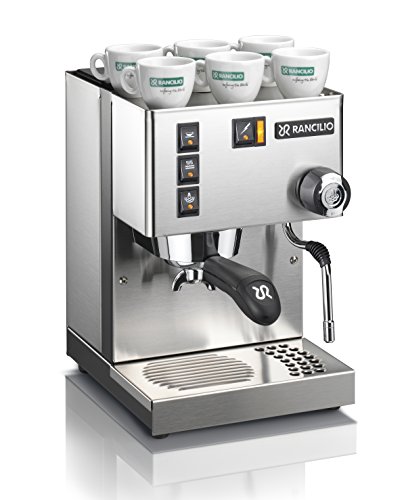
Rancilio Silvia Espresso Machine — Best Espresso Build
The Silvia is what ‘built’ means in espresso: an iron frame clad in stainless steel panels, a brass boiler and group in the commercial tradition, and a design that has been in production, refined but recognizable, for over two decades. It suits the home barista who wants a machine that can be maintained, modified and repaired essentially forever — the Silvia’s owner culture of parts, upgrades and rebuilds is the strongest in home espresso. It is a manual single-boiler machine with the workflow that implies, and it contains no grinder; households wanting push-button espresso should look at this site’s bean-to-cup guides instead.
Strengths
- Iron frame and stainless panels — commercial construction, not appliance plastic
- Brass boiler and group for thermal stability and longevity
- Legendary parts and knowledge ecosystem; a machine owners rebuild, not replace
Trade-offs
- Single boiler: brewing and steaming take turns, with a rhythm to learn
- No built-in grinder — budget for a serious burr grinder
- Manual technique required; this is a craft machine, not an appliance
| Model | Rancilio Silvia |
| Frame | Iron frame, stainless steel side panels |
| Type | Manual single-boiler espresso machine |
| Footprint | 11.4 by 13.4 inches (per listing) |
Most home espresso machines are appliances with espresso styling. The Silvia is a small commercial machine that happens to live in homes — Rancilio’s café heritage is in its frame, its boiler and its group, and the result is a machine whose failure modes are gaskets and elements: wear parts, orderable and replaceable by an owner with a screwdriver and an afternoon. That is why Silvias are handed down, sold on, rebuilt and modified rather than landfilled, and why its production run stretches across decades with the design’s essentials intact.
The coffee case matches the build case. Brass holds temperature the way espresso demands, the commercial-style group and portafilter reward good technique with genuinely café-grade shots, and the steam power embarrasses most home rivals. The honest costs are workflow and learning: a single boiler means a sequence, not simultaneity, and the Silvia famously teaches its owners technique by refusing to hide behind automation. For the buyer who wants the last espresso machine they need to buy — maintained, not replaced — nothing in home espresso makes the argument more completely.
Rancilio Silvia Espresso Machine — Check on Amazon to check the current price on Amazon before buying; listings, bundles and included accessories change over time.
Best for: home baristas who want a repairable, commercial-built machine for the long term / Not suited for: push-button households, or anyone without a grinder budget

La Pavoni Europiccola Lever Espresso Machine (EPC-8) — Best Heritage Build
The Europiccola is espresso as mechanical craft: a chrome lever machine with a 0.8-litre boiler, where your arm provides the extraction pressure and the machine provides — for decade after decade — the brass, steel and seals to make that possible. It suits romantics and minimalists: no pump, no electronics, almost nothing that can become obsolete. It does not suit anyone in a hurry or anyone who wants repeatability without skill; a lever machine’s consistency lives in its operator, and its learning curve is the steepest in this guide.
Strengths
- Chrome and brass construction — materials chosen for a lifetime, not a product cycle
- No pump or electronics to fail: the simplest possible espresso mechanism
- Authentic Italian craftsmanship; a design in production for generations
Trade-offs
- Fully manual lever extraction — real skill, real learning curve
- Small 0.8L boiler: a few drinks, then a refill and reheat
- Temperature management is the operator’s job, drink by drink
| Model | EPC-8 Europiccola |
| Type | Manual lever espresso machine |
| Boiler | 0.8 L water capacity |
| Finish | Chrome and silver |
| Origin | Italian craftsmanship (per listing) |
The Europiccola makes the purest build argument in this guide: remove everything that can fail electronically, build what remains from brass and chrome, and the result is a machine with no natural lifespan. Lever machines of this design have been in continuous production since the middle of the last century, and examples from every decade of that run are still pulling shots today, maintained with gaskets and seals that remain available because the design never orphaned them. As an object it is also, frankly, beautiful — the eagle-capped chrome silhouette is the espresso machine as sculpture, except that the sculpture works.
The trade is total involvement. You grind, dose, tamp, manage boiler temperature by feel and timing, and pull the lever with the pressure your arm judges right — a bad morning produces a bad shot with no microchip to blame. Owners describe the ritual as the point, and the espresso, once mastered, as having a clarity pump machines chase. Buy the Europiccola as a lifetime instrument you intend to learn, and its build quality will outlast every other appliance in your kitchen. Buy it as a convenience, and its build quality will outlast your patience instead.
La Pavoni Europiccola Lever Espresso Machine (EPC-8) — Check on Amazon to check the current price on Amazon before buying; listings, bundles and included accessories change over time.
Best for: craft-minded espresso lovers buying a lifetime mechanical instrument / Not suited for: anyone who values speed or push-button consistency

BUNN CSB3T Speed Brew Platinum Thermal Coffee Maker, 10-Cup — Best Commercial-Tank Drip
BUNN built its name in diners and offices, and the CSB3T is that heritage scaled for a home counter: an internal stainless steel tank holds water at brewing temperature around the clock, so a full 10-cup pot brews in roughly half the time of a heat-from-cold machine, into a thermal carafe. It suits households that drink pot after pot and value speed and tank-grade durability over features. The always-hot tank is the trade: it uses standby energy to buy that speed, and households that brew once a day may not value the bargain.
Strengths
- Commercial-style stainless internal tank — the durability heart of the machine
- Speed Brew: a full pot in about four minutes from kept-hot water
- Thermal carafe serving — no warming plate, no stewed coffee
Trade-offs
- Always-hot tank consumes standby energy for its speed
- Few features: no programmability theater, by design
- Tank machines want regular descaling to protect the reservoir
| Model | CSB3T Speed Brew Platinum (55200) |
| Capacity | 10 cups |
| Tank | Internal stainless steel hot water tank |
| Carafe | Thermal carafe |
| Finish | Stainless steel, black |
The internal tank is the oldest durability idea in American coffee: a reservoir of properly hot water, held in stainless steel, doing the one job that kills ordinary drip machines — heating from cold under load, thousands of times. BUNN’s commercial machines made that architecture famous in the hardest service environment there is, and the CSB3T’s home version inherits the tank, the sprayhead distribution and the thermal carafe that completes the system. The result is a brewer that is both fast and unfussy, with a parts story rooted in commercial service rather than seasonal retail.
In daily life the speed changes behavior: a full fresh pot is a four-minute decision, not a fifteen-minute project, so households brew fresh instead of reheating. The thermal carafe keeps the pot kind for hours. Ownership is the commercial rhythm — descale the tank on schedule, keep the sprayhead clean — and the machine will repay it with the uneventful longevity its diner ancestors were bought for. For drip households that measure a machine in pots per week and years per purchase, the CSB3T is the build-quality pick with the strongest working pedigree in this guide.
BUNN CSB3T Speed Brew Platinum Thermal Coffee Maker, 10-Cup — Check on Amazon to check the current price on Amazon before buying; listings, bundles and included accessories change over time.
Best for: high-volume drip households wanting commercial-tank durability and speed / Not suited for: once-a-day brewers who will not value an always-hot tank

Bonavita 8 Cup Coffee Maker BV1900TS — Best Simple Build
The BV1900TS argues that the best-built machine may be the one with the fewest parts. Its construction centers on a heater strong enough to hold certified brewing temperature and a showerhead that distributes water properly, wrapped in a one-button design with no clock, no board full of modes and no pump-fed extras. It suits drip drinkers who equate reliability with simplicity and want certified extraction in the bargain. It does not suit feature shoppers — there is no timer — or large households, since its 8 cups are the traditional 5-ounce measure, about 40 ounces.
Strengths
- SCA Certified brewing from a powerful, temperature-true heater
- Radical simplicity: minimal electronics, minimal failure surface
- Thermal carafe keeps coffee hot without a plate cooking it
Trade-offs
- No programmability or auto-start of any kind
- About 40 oz per brew — three mugs, not eight
- Fixed tank design; filling under low cabinets takes care
| Model | BV1900TS |
| Capacity | 8 cups (about 40 oz) |
| Carafe | Thermal carafe, stainless steel |
| Certification | SCA Certified |
| Operation | One-touch brewing |
Every component a machine lacks is a component that cannot fail, and the BV1900TS is the disciplined extreme of that philosophy in this guide. What it keeps, it keeps properly: a heater with the wattage and control to hold the SCA’s temperature band through a full cycle — the specification cheaper machines fake — and a wide showerhead that treats the grounds bed evenly. What it omits is the entire layer of clocks, displays and mode boards that dates and kills modern appliances. A decade from now, this machine’s interface will not be obsolete, because it barely has one.
The ownership record follows the design: these brewers are kept, descaled and kept again, and the thermal carafe removes the warming plate — another wear component and flavor enemy — from the system entirely. Capacity honesty matters here as everywhere with this brand: plan on three generous mugs per brew. For the household whose size fits, the BV1900TS offers the guide’s purest trade — certified coffee, almost nothing to break, and a price tier well below the hand-built flagship it quietly rivals in lifespan. Simplicity this deliberate is not a lack of engineering. It is the engineering.
Bonavita 8 Cup Coffee Maker BV1900TS — Check on Amazon to check the current price on Amazon before buying; listings, bundles and included accessories change over time.
Best for: simplicity-first drip drinkers who want certified brewing and few failure points / Not suited for: feature shoppers or households needing large pots

Zojirushi EC-YTC100XB 10-Cup Coffee Maker — Best Japanese Build
Zojirushi’s reputation was built on vacuum insulation and meticulous small-appliance manufacturing, and its 10-cup coffee maker applies both: drip brewing into a stainless thermal carafe, in a machine whose fit, finish and detailing reflect a brand that treats a coffee maker as a precision product. It suits households that want thermal keeping with Japanese build discipline and a clean, compact counter presence. It is a drip-only machine with a mainstream feature set — buyers chasing brewing modes or espresso should look at the specialists elsewhere in this guide.
Strengths
- Zojirushi build discipline: fit, finish and thermal expertise in one machine
- Stainless thermal carafe — the brand’s home territory, done properly
- 10-cup capacity sized for real households
Trade-offs
- Drip only, with a conventional feature set — no exotic modes
- Thermal carafe hides the remaining level
- Less of a repair-culture story than the guide’s European picks
| Model | EC-YTC100XB |
| Capacity | 10 cups |
| Carafe | Thermal carafe |
| Finish | Stainless steel and black |
Build quality is partly a culture, and Zojirushi’s culture is visible in the details other brands treat as afterthoughts: the way the carafe seats, the finish of the stainless, the sense that tolerances were chosen by people who make vacuum bottles trusted with soup at altitude. The thermal carafe is the center of the proposition — this is the brand that perfected portable insulation — and coffee held in it stays hot and unstewed across a morning, which is the daily experience this machine is bought for.
As a brewer it is a well-executed mainstream drip machine rather than a laboratory instrument, and the review keeps that proportion: the case here is manufacturing quality and thermal keeping, not extraction exotica. For households that have learned — often from a drawer of dead appliances — that Japanese fit and finish predicts years of uneventful service, the Zojirushi is the drip pick that matches the lesson. It will not be rebuilt by hobbyists in twenty years like the Silvia; it is simply very unlikely to give anyone a reason to think about replacing it.
Zojirushi EC-YTC100XB 10-Cup Coffee Maker — Check on Amazon to check the current price on Amazon before buying; listings, bundles and included accessories change over time.
Best for: households that trust Japanese manufacturing and want thermal keeping / Not suited for: mode-chasers or espresso drinkers
Comparison Table
| Pick | Badge | Key spec | Best for |
|---|---|---|---|
| Technivorm Moccamaster KBGV Select 10-Cup | Best Overall | Hand-built, copper element, repairable design | filter drinkers buying a drip machine for a decade or more |
| Rancilio Silvia Espresso Machine | Best Espresso Build | Iron frame, brass boiler, commercial group | home baristas who want a repairable, commercial-built machine for the long term |
| La Pavoni Europiccola Lever Espresso Machine (EPC-8) | Best Heritage Build | Brass boiler, chrome lever, zero electronics | craft-minded espresso lovers buying a lifetime mechanical instrument |
| BUNN CSB3T Speed Brew Platinum Thermal Coffee Maker, 10-Cup | Best Commercial-Tank Drip | Stainless internal tank, ~4-minute full pot, thermal | high-volume drip households wanting commercial-tank durability and speed |
| Bonavita 8 Cup Coffee Maker BV1900TS | Best Simple Build | SCA Certified, one-touch, thermal carafe | simplicity-first drip drinkers who want certified brewing and few failure points |
| Zojirushi EC-YTC100XB 10-Cup Coffee Maker | Best Japanese Build | 10-cup thermal, Zojirushi fit and finish | households that trust Japanese manufacturing and want thermal keeping |
The table’s key spec column is really a philosophy column: copper element and hand assembly (Moccamaster), iron and brass (Silvia), brass and chrome with no electronics (La Pavoni), a commercial stainless tank (BUNN), certified simplicity (Bonavita), and insulation-led Japanese manufacturing (Zojirushi). All six will outlast feature-led rivals; they differ in what they ask of you — technique from the espresso pair, descaling rhythm from the tank and drip machines, and nothing much at all from the simple ones.
How to Choose the Best Built Coffee Makers
Shop for build with a checklist, not a vibe. Frame and boiler materials first: iron, brass, copper and stainless predict decades; thin plastic predicts a product cycle. Parts second: does the manufacturer sell gaskets, elements, carafes and switches for your model, and have they done so for years? A parts catalogue is a durability promise with a price list attached. Production history third: a design sold essentially unchanged for a decade has survived the only testing that matters. Electronics last, and inversely: every board and touchscreen is a component with a shorter natural life than the metal around it, so the more a machine’s value lives in its electronics, the more skeptical a build-first buyer should be.
Repairable vs reliable — know which you are buying
Two different virtues hide inside ‘well built’. Repairable machines — the Silvia, the Moccamaster, the La Pavoni — assume wear and answer it with parts and access; they reward owners willing to change a gasket or an element every several years. Reliable machines — the Bonavita, Zojirushi and BUNN — minimize wear’s opportunities through simplicity and commercial-grade cores, and reward owners who simply descale and carry on. Neither is superior. A household that enjoys maintenance should buy repairable and keep a machine for twenty years; a household that wants silence from its appliances should buy reliable and expect a long, boring, excellent service life.
Match the build to the format you actually drink
The best-built drip machine will not make espresso, and the best-built espresso machine is an absurd way to brew a morning pot for six people. Fix your format first — drip, espresso, or both across two machines — then apply the build checklist inside it. Within drip, this guide’s spread is honest: hand-built craft at the premium end, commercial tank in the middle, certified simplicity as the value form of the same virtue. Within espresso, the Silvia is the working benchmark and the La Pavoni the mechanical heirloom. There is no wrong row in the table, only wrong matches to households.
Finally, do the cost-per-year math with live numbers. This guide prints no prices, deliberately: build economics only work with today’s figure in front of you, which is one click away at each verified listing. Divide the price by the years you honestly expect — three for a feature appliance, ten to twenty for the machines in this guide — and the ‘expensive’ picks routinely become the cheap ones. That arithmetic, more than any single review, is the argument for buying build quality once.
The Enemies of a Coffee Maker — and How These Six Resist Them
Coffee makers die of four causes, and every pick in this guide is a specific answer to at least one of them. Heat cycling fatigues cheap elements and thin boilers; copper, brass and commercial tanks are the resistance. Scale chokes water paths and insulates heaters; accessible descaling and honest water habits are the resistance, and machines designed to be opened make both easier. Steam and moisture attack electronics; the La Pavoni’s answer is to have none, and the simple drip machines minimize theirs. Mechanical wear consumes gaskets, valves and switches; repairable designs treat those as consumables with part numbers, while sealed designs treat them as expiration dates.
The fifth cause is not in the machine at all: obsolescence by fashion. A touchscreen interface dates a brewer the way tailfins date a car, while a lever, a switch and a steel tank look the same in every decade. The machines in this guide share a resistance to that too — designs that were never fashionable cannot go out of fashion. When you buy build quality, you are partly buying immunity from the replacement itch that the appliance industry manufactures on purpose. A machine that still looks right and brews right in year nine does not get replaced in year nine, and that, in the end, is the whole economics of this guide in one sentence.
There is also an environmental ledger worth one honest paragraph, because it follows from the same facts rather than from fashion. A coffee maker kept for fifteen years is one appliance manufactured, shipped and landfilled where a disposable cycle uses four or five — and the machines in this guide are, not coincidentally, also the ones whose materials (steel, brass, copper, glass) are the most recyclable at the end of even their long lives. Nobody should buy a Silvia to save the planet; the espresso is reason enough. But a buyer choosing between a repairable machine and a sealed one is also choosing between those two ledgers, and the guide would be incomplete if it pretended the choice had only one dimension. Durability is the rare purchase that pays the owner, the kitchen and the landfill less, all at once.
How to Maintain a Well-Built Coffee Maker for a Decade of Service
A well-built machine is not a maintenance-free machine — it is a machine whose maintenance works, because parts exist and systems open. This routine is the owner’s half of the longevity bargain, common to every pick in this guide with format-specific notes where they matter.
- Descale on a calendar, not on symptoms. Set the interval by your water hardness — monthly in hard areas, quarterly in soft — and keep it whether the coffee still tastes fine or not. By the time scale announces itself in the cup, it has been taxing the heater for months.
- Use filtered water where you can. Every litre of mineral you keep out of the machine is scale it never has to shed. This single habit does more for a boiler’s lifespan than any product you can buy for it afterward.
- Replace wear parts before they fail. Gaskets, seals and showerhead screens are consumables on espresso and drip machines alike. On the repairable picks in this guide they are cheap, available and user-fitted — change them at the first sign of hardening, dripping or uneven flow.
- Keep seals and threads clean and lightly lubricated where the manual directs. Lever and portafilter machines reward a clean group and a supple gasket with both better coffee and longer seal life. Five minutes with a brush after use is the highest-value habit in espresso.
- Wipe steam wands instantly; purge always. Baked milk is the fastest way to make a premium machine feel cheap and work badly. The five-second wipe is non-negotiable on any machine in this guide with a wand.
- Store the machine dry when it will sit. Holidays and second homes kill more good machines than daily use does. Empty tanks, dry carafes, and a descale before a long rest protect boilers and seals from their quietest enemy: standing water.
- Keep the manual and the parts list. Photograph the model plate, save the exploded parts diagram, and note your gasket sizes somewhere durable. The household that can name its parts in year eight is the household still brewing on the same machine in year twelve.
None of this is heavy — it totals perhaps fifteen minutes a month — but it is the difference between owning a well-built machine and merely having bought one. Manufacturers like Technivorm, Rancilio and BUNN hold up their half with parts and designs that respect the work. Hold up yours, and the machine will hold up its coffee.
Common Buying Mistakes
Confusing heavy with well-built
Weight is a clue, not a proof. What matters is where the mass is — frame, boiler, element — and whether the design gives that mass a service path. A heavy sealed box is just a heavier thing to throw away; judge by materials and parts, not by the grunt test alone.
Buying a lifetime machine and maintaining it like a disposable
The repairable picks in this guide last decades for owners who change gaskets and descale boilers — and die early for owners who do neither, because quality components still wear. The purchase is only half the longevity equation; the routine in this guide is the other half.
Ignoring the grinder in espresso budgets
A Silvia or La Pavoni paired with a poor grinder produces poor espresso from magnificent hardware, and the machine gets blamed. In espresso, the grinder is part of the build budget. Buy the system, not the silhouette.
Letting a tank machine scale up
Internal-tank brewers like the BUNN hide their mineral load inside the reservoir, where it quietly insulates the heater and slows the brew. Descale tank machines on schedule even when — especially when — they still seem to be working perfectly.
Replacing instead of repairing at the first fault
On the machines in this guide, a first fault is usually a wear part announcing itself: a gasket, an element, a switch. Check the parts catalogue before the shopping sites. The most expensive sentence in coffee is ‘it stopped working, so we bought a new one,’ spoken about a machine designed to be fixed.
Final Recommendation
Buy build quality by philosophy and you cannot go far wrong. The Moccamaster is the drip benchmark — hand-built, copper-hearted, repairable — with the BUNN as its commercial-tank counterpart for high-volume households, the Bonavita as the value form of the same virtue through simplicity, and the Zojirushi as the Japanese-manufacturing expression of it. In espresso, the Silvia is the working lifetime machine and the La Pavoni the mechanical heirloom, both built from materials that were old-fashioned when their competitors were new.
Whichever you choose, sign the owner’s half of the contract: filtered water where you can, descaling on a calendar, wear parts replaced before they fail. A well-built coffee maker is not an appliance you consume. It is a tool you keep — and kept tools, as any craftsman will tell you, are the cheapest ones you ever own.
- Best Overall: Technivorm Moccamaster KBGV Select 10-Cup
- Best Espresso Build: Rancilio Silvia Espresso Machine
- Best Heritage Build: La Pavoni Europiccola Lever Espresso Machine (EPC-8)
- Best Commercial-Tank Drip: BUNN CSB3T Speed Brew Platinum Thermal Coffee Maker, 10-Cup
- Best Simple Build: Bonavita 8 Cup Coffee Maker BV1900TS
- Best Japanese Build: Zojirushi EC-YTC100XB 10-Cup Coffee Maker
Keep reading in this coffee makers series: Best 10 Cup Coffee Makers Best Bonavita Coffee Makers Best Breville Coffee Makers Best 12 Cup Thermal Coffee Makers Best Bean To Cup Coffee Makers
Frequently Asked Questions
What makes a coffee maker ‘well built’?
Materials and serviceability. Frames, boilers and heating elements in iron, brass, copper or stainless steel; a design that opens for repair instead of sealing for disposal; a manufacturer that sells parts for the model years after launch; and a production history long enough to prove the design in the field. Features do not make a machine well built — several picks in this guide are deliberately feature-light, because everything omitted is something that cannot fail.
Is a heavier coffee maker always better built?
No. Weight hints at metal content, but the real tests are what the metal is doing — a brass boiler and an iron frame matter; decorative weight does not — and whether wear parts can be replaced. Judge by the frame and boiler materials, the parts catalogue and the design’s track record, not by how the box feels on the way in from the porch.
How long should a well-built coffee maker last?
The machines in this guide are bought on a ten-to-twenty-year horizon, and their designs support it: hand-built and commercial-derived machines are routinely kept for decades with gasket, element and descale maintenance, while the simple drip picks remove most of what could end a machine’s life early. The honest variable is the owner — water care and wear-part replacement decide which end of the range any individual machine reaches.
Are expensive coffee makers worth it for build quality?
Only when the money bought construction rather than features. A premium spent on metal, boilers and repairability returns itself in years of service — the cost-per-year math in this guide’s buying section shows how. The same premium spent on touchscreens and modes buys components with the shortest lives in the machine. Read listings for materials and parts support, and let features be the tiebreaker, never the headline.
Can these machines actually be repaired at home?
The repairable picks can, to a genuinely useful degree: gaskets, seals, screens, switches and many elements on the Moccamaster, Silvia and La Pavoni are owner-serviceable with basic tools, supported by long-standing parts availability and owner communities that document the work. Boiler and electrical work beyond your comfort belongs to a technician — but the point stands that these machines have a service path at all, which sealed appliances do not.
Which is better built: the Moccamaster or the BUNN?
They are built for different definitions of the word. The Moccamaster is craft-built — hand assembly, copper element, repairable components, premium materials. The BUNN is commercially built — a stainless tank architecture proven in diner service, designed for volume and uptime. A low-volume household gets more from the Moccamaster’s precision and repairability; a high-volume household gets more from the BUNN’s tank and speed. Both will outlast several generations of ordinary drip machines.


