Disclosure: airfryerkitchensupply.com is reader-supported. When you buy through links on our site, we may earn an affiliate commission at no extra cost to you.
Where to buy
Every model in this guide to the best box smoker grills was verified as a current listing before inclusion, and prices move with the season, so the linked picks below go to each manufacturer’s Amazon listing, where you can check the current price on Amazon and confirm the exact configuration. Vertical smokers ship in large, heavy boxes and some arrive with assembly required, so check the delivery and assembly notes on the listing before ordering — and measure your patio door or gate if the assembled unit needs to pass through it.
- Dyna-Glo Wide Body Vertical Offset Charcoal Smoker (DGO1890BDC-D) (Best Overall Box Smoker) — Check the current price on Amazon
- Masterbuilt 40-Inch ThermoTemp Propane Vertical Smoker (MB20051316) (Best Propane Box Smoker) — Check the current price on Amazon
- Masterbuilt 30-Inch Digital Electric Vertical Smoker (MB20071117) (Best for Beginners) — Check the current price on Amazon
- Oklahoma Joe’s Highland Offset Charcoal Smoker (900 sq in) (Best Offset Barrel) — Check the current price on Amazon
- Char-Griller Smokin Pro Charcoal Grill and Offset Smoker (1,130 sq in) (Best Budget Offset) — Check the current price on Amazon
- Royal Gourmet CC1830S Charcoal Grill and Offset Smoker (783 sq in) (Best Value Barrel Combo) — Check the current price on Amazon
If you are comparing the best box smoker grills, it helps to know the term covers two related architectures. A true box smoker is a vertical cabinet: fire or heating element at the bottom, water pan above it, and stacked cooking racks inside a tall box with a door. An offset box smoker keeps the fire in a separate side box and lets smoke travel into the cooking chamber. Both designs exist for the same reason — to hold low, steady heat and smoke around food for hours — and both beat a kettle or a gas grill at that job by a wide margin.
The honest market picture is this: the vertical box is where most buyers should land, because cabinet smokers are easier to load, easier to seal, and available in charcoal, propane, and electric versions at every tier. Offset barrel smokers, represented here by the Oklahoma Joe’s, Char-Griller, and Royal Gourmet picks, ask more skill and more fire-tending, and repay it with a flavour profile and a bark that purists chase. Neither camp is a compromise; they are different tools that happen to share a name.
This guide covers six verified models across both architectures and all three fuel types, then walks through the decisions that actually determine your results: fuel, capacity measured in real food, sealing and temperature control, and the fire-management habits that separate tender brisket from expensive jerky. Every pick was verified against its manufacturer’s Amazon listing before inclusion, and specifications are quoted only from those listings.
In this guide
Quick Picks
The six box smoker grills worth your money, at a glance.
Dyna-Glo Wide Body Vertical Offset Charcoal Smoker (DGO1890BDC-D) — Best Overall Box Smoker. The truest box smoker in the roundup: a wide vertical cabinet fed by an offset charcoal firebox, so you get cabinet capacity and rack access with genuine wood-fire flavour and none of the direct heat of a barrel. Check price on Amazon
Masterbuilt 40-Inch ThermoTemp Propane Vertical Smoker (MB20051316) — Best Propane Box Smoker. A thermostat for a smoker: set the temperature and the ThermoTemp valve holds it, delivering propane’s convenience without the constant knob-fiddling that gives gas smokers a bad name. 960 square inches across its racks. Check price on Amazon
Masterbuilt 30-Inch Digital Electric Vertical Smoker (MB20071117) — Best for Beginners. The easiest first smoker in the category: digital temperature control, a side wood-chip loader you refill without opening the door, and 710 square inches — the classic starter cabinet, for good reason. Check price on Amazon
Oklahoma Joe’s Highland Offset Charcoal Smoker (900 sq in) — Best Offset Barrel. The benchmark affordable offset: a heavy barrel chamber, a real firebox, and 900 square inches of cooking area — the smoker that teaches traditional fire management without a custom pit’s price. Check price on Amazon
Char-Griller Smokin Pro Charcoal Grill and Offset Smoker (1,130 sq in) — Best Budget Offset. A grill and an offset smoker in one footprint, with a side fire box, dual damper control, and 1,130 total square inches — the most cooking versatility per dollar in the roundup. Check price on Amazon
Royal Gourmet CC1830S Charcoal Grill and Offset Smoker (783 sq in) — Best Value Barrel Combo. A compact barrel grill with an offset smoker chamber, front and side tables, and 783 square inches — a space-efficient way into offset smoking for smaller patios and campsite cooks. Check price on Amazon
If you already know your fuel, skip straight to that pick: charcoal purists to the Dyna-Glo or the offsets, set-and-forget cooks to the Masterbuilt electric, and propane fans to the ThermoTemp. Everyone else should read the fuel section of the buying guide first — it matters more than any single feature.
How These Picks Were Chosen
Picks were chosen by architecture first. A roundup of box smokers that ignored the vertical cabinet would miss the design most people mean by the term, so three of the six picks are true vertical boxes across charcoal, propane, and electric. The three offset models earned their places as the verified, widely supported representatives of the firebox tradition, at three distinct tiers.
The second filter was temperature honesty. A smoker’s job is holding a narrow low range for six to fourteen hours, so preference went to models with real control mechanisms — dampers that actually meter air on the charcoal units, a thermostat on the propane Masterbuilt, digital control on the electric — over models that ask you to improvise control the design should have provided.
Price tiers were treated as information, not as rankings. The box smoker category has honest products at every level, and the differences are mostly steel thickness, control sophistication, and sealing quality rather than the ability to produce good food. A value offset in patient hands will out-cook a premium cabinet in careless ones, which is why this guide spends as much space on fire management and technique as on the products themselves — the picks were chosen to reward the cook you intend to be, at the tier you intend to spend.
Capacity claims were translated into food before any pick was accepted. Square-inch figures were compared against what the racks or chamber genuinely hold — briskets, pork butts, racks of ribs laid flat — because a smoker that fits four butts on paper and two in practice is a return waiting to happen. Finally, every model had to be a current product with a live manufacturer listing; discontinued cabinets and no-name boxes with no parts support were excluded, however attractive their paper specifications looked.
The 6 Best Box Smoker Grills
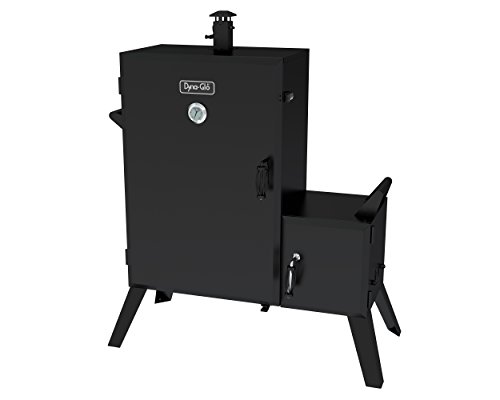
Dyna-Glo Wide Body Vertical Offset Charcoal Smoker (DGO1890BDC-D) — Best Overall Box Smoker
The Dyna-Glo Wide Body is the design this category is named after, refined. The fire lives in an offset box at the base, smoke and heat rise into a wide vertical cabinet, and food cooks on stacked racks behind a full-height door. That layout solves the two classic offset problems at once: you are not crowding food onto a single barrel grate, and opening the door to mop or rotate does not dump the heat the way lifting a barrel lid does, because the fire is in its own compartment. The ‘wide body’ part matters in practice — full racks of ribs and packer briskets fit flat on the shelves without the trimming and shoehorning narrow cabinets demand.
Strengths
- True vertical cabinet with offset firebox — capacity and real charcoal flavour together
- Wide body fits full racks and briskets flat on the shelves
- Door access lets you tend food without disturbing the fire
Trade-offs
- Charcoal fire management is a skill you will spend your first cooks learning
- Cabinet seams benefit from the sealing attention described in the guide below
- Assembly is a real project — set aside an afternoon and a second pair of hands
| Model | DGO1890BDC-D |
| Design | Wide body vertical offset |
| Fuel | Charcoal |
| Format | Vertical cabinet smoker with side firebox |
Cooking on the Wide Body teaches you why vertical smokers have such loyal followings. Heat and smoke travel upward past every rack, the water pan in the base evens out spikes when you add fuel, and the vertical stack means a pork butt on the top rack bastes the beans you wisely put under it. Temperature control is by damper and fire size — analogue skills, but responsive ones once you learn how this particular box breathes, and the learning curve is measured in two or three cooks, not a season.
It is also the best brisket teacher in this list at its tier. The cabinet holds a steady low range without the hot end / cold end gradient of a barrel, so a long cook is about the fire, not about rotating meat away from the firebox every hour. Buyers who want charcoal flavour with the least babysitting per pound of food should start here.
Best for: charcoal smokers who want cabinet capacity and door access for briskets, butts, and full rib racks / Not suited for: cooks who want to press a button and walk away for eight hours
Check the current price on Amazon

Masterbuilt 40-Inch ThermoTemp Propane Vertical Smoker (MB20051316) — Best Propane Box Smoker
Propane box smokers have always promised the middle path — real fire and wood smoke without charcoal tending — and have often delivered a fiddly one, with temperatures that wander as the tank cools and the wind changes. The ThermoTemp design attacks that directly with thermostat control: a temperature probe and valve regulate the burner the way an oven regulates itself, so the cabinet holds the neighbourhood of your setting instead of requiring a check every half hour. In a 40-inch cabinet with 960 square inches of cooking area, that turns propane smoking into a genuinely relaxed way to cook for a crowd.
Strengths
- Thermostatic temperature control — the feature propane smokers always needed
- Large 960 sq in capacity in a footprint smaller than a barrel smoker
- Wood chip tray delivers real smoke over gas heat
Trade-offs
- You manage a propane tank as well as wood chips — two consumables
- Analogue control dial is less precise than digital electric rivals
- Propane cabinets need the same door-seal attention as any box smoker
| Model | MB20051316 |
| Size | 40-inch vertical cabinet |
| Cooking area | 960 sq in |
| Control | Analog temperature control (ThermoTemp) |
The lived experience of this smoker is the absence of a chore. Once the cabinet is at temperature and the chips are smoking, the thermostat absorbs the small disturbances — a breeze, a door opening to spritz ribs — that send basic gas smokers drifting. You still add chips periodically and you still cook by internal temperature, not by clock, but the mental load drops to something close to the electric models while the flavour stays closer to live fire, because the heat source is one.
Capacity is the other half of the story. Four racks in a 40-inch box swallow the classic party load — a couple of butts, ribs above them, chicken finishing below — in a patio footprint a barrel smoker cannot match. For hosts who smoke a few times a month and entertain when they do, this is the sweet spot of the entire category.
Best for: hosts who want live-fire flavour with near-electric convenience and crowd capacity / Not suited for: purists who consider tending a charcoal fire part of the point
Check the current price on Amazon

Masterbuilt 30-Inch Digital Electric Vertical Smoker (MB20071117) — Best for Beginners
More people have learned to smoke on this cabinet than on any other design, and the reasons are ergonomic rather than romantic. Digital control holds the set temperature without your involvement. The side wood-chip loader — the feature that defines this model — lets you add smoke wood through a tube from outside, so refreshing the smoke does not mean opening the door and dumping the heat you spent an hour building. At 710 square inches it is sized for learning: big enough for a brisket or a pair of butts, small enough to heat quickly and forgive mistakes cheaply.
Strengths
- Side wood chip loader adds smoke without opening the door
- Digital control makes temperature one less thing to learn
- Right-sized 710 sq in cabinet for learning and family cooks
Trade-offs
- Electric heat produces a milder smoke profile than charcoal or propane fire
- Requires an outdoor outlet within cord reach
- Chrome racks are functional rather than heavy-duty
| Model | MB20071117 |
| Size | 30-inch vertical cabinet |
| Cooking area | 710 sq in |
| Features | Digital control, side wood chip loader, chrome racks |
The pedagogical value of this smoker is that it isolates variables. With temperature held constant by the controller, a beginner’s attention goes where it belongs: meat selection, rub, wood choice, and the feel of a properly rendered brisket. Your third cook is dramatically better than your first because the smoker was not changing underneath you. Experienced cooks keep one around for the same reason — it is the reliable second cabinet for sides, fish, and cheese while the fire smoker does the headline meat.
Accept its honest limits. Electric elements cycle rather than burn, so the smoke is cleaner and lighter; if your goal is competition-style bark and a deep smoke ring, you are shopping for the charcoal picks. If your goal is excellent ribs, salmon, and pulled pork with a Saturday left over for other things, this cabinet is the category’s best-selling answer because it is the right one.
Best for: first-time smokers and busy cooks who want digital ease and door-closed chip loading / Not suited for: competition-style bark chasers who want heavy charcoal smoke
Check the current price on Amazon

Oklahoma Joe’s Highland Offset Charcoal Smoker (900 sq in) — Best Offset Barrel
The Highland is the offset smoker against which every other value-tier offset is judged, and it earns that status with mass and layout: a substantial barrel cooking chamber, an offset firebox sized for real splits and charcoal, and 900 square inches of cooking area that takes a brisket and ribs together. This is the traditional architecture — fire in the box, heat and smoke drawn across the meat, out the stack — and cooking on it is a craft activity. You will tend the fire every 45 minutes or so. In exchange you get the flavour and bark that made offset cooking famous.
Strengths
- Traditional offset layout with genuine fire-management depth
- 900 sq in chamber handles brisket plus ribs in one cook
- Heavy construction for the tier, with a large community of owner knowledge
Trade-offs
- Temperature gradient from firebox end to stack end must be managed
- Demands regular tending — this is a hobby, not an appliance
- Barrel format uses far more patio space than a vertical box
| Model | Highland Offset |
| Cooking area | 900 sq in |
| Fuel | Charcoal/wood |
| Format | Offset barrel smoker grill |
Cooking on the Highland is a rhythm: build a coal bed, feed splits, watch the stack for clean smoke, and learn how the chamber’s gradient can be used rather than fought — thicker cuts toward the firebox, delicate items at the far end, rotation at the mop. Owners commonly add the sealing and tuning touches described in the guide, and the smoker rewards them by settling into long, steady runs. The community knowledge around this model is a genuine asset; every problem you will have has been solved publicly by someone who had it first.
Choose it knowingly. If your Saturdays are for the pit, the Highland is the most satisfying smoker in this roundup. If your Saturdays are for everything else and the smoker must fit around them, the vertical cabinets above will make you happier, and there is no shame in that trade — only in discovering it after the purchase.
Best for: aspiring pitmasters who want to learn traditional offset fire craft / Not suited for: set-and-forget cooks or small patios
Check the current price on Amazon

Char-Griller Smokin Pro Charcoal Grill and Offset Smoker (1,130 sq in) — Best Budget Offset
The Smokin Pro splits its personality deliberately: a main charcoal grill for weeknight burgers and steaks, and a side fire box that converts the same unit into an offset smoker for weekend briskets. For households that will own exactly one outdoor cooker, that duality is the argument, and the numbers support it — 1,130 cooking square inches in total, dual damper control for managing airflow, and a warming rack for holding finished food. It is a value-tier build and feels like one in the metal, but the design brief is sound and the capability is real.
Strengths
- Grills directly and smokes offset — two cookers in one footprint
- Largest total cooking area in this roundup at 1,130 sq in
- Dual damper control gives real airflow management
Trade-offs
- Thinner steel than the Highland loses heat faster in cold weather
- As a smoker it needs the sealing attention common to value offsets
- Jack of two trades — dedicated units outperform it at each job
| Model | Smokin Pro |
| Cooking area | 1,130 sq in total |
| Fire box | Side fire box (offset) |
| Controls | Dual damper control, chrome-plated steel warming rack |
The Smokin Pro’s honest role is the starter pit for the undecided. Cook on it for a season and you will know whether you are a smoker who grills or a griller who smokes, knowledge worth more than the price difference to a dedicated unit. Its smoking manners are typical of the tier: it holds temperature happily in mild weather with a managed fire, and asks for more attention — and the gasket and sealing tweaks in the guide — when the wind picks up or the temperature drops.
As a grill, it is better than its smoker-first reputation suggests: the cast cooking grates and direct-fire layout handle weeknight cooking without fuss, and the warming rack earns its keep at parties. Households replacing a dead gas grill and curious about smoking could do far worse than landing here.
Best for: one-cooker households that want weeknight grilling and weekend smoking on a budget / Not suited for: dedicated pitmasters who will outgrow its steel and sealing within a season
Check the current price on Amazon

Royal Gourmet CC1830S Charcoal Grill and Offset Smoker (783 sq in) — Best Value Barrel Combo
The CC1830S packages the grill-plus-offset idea into a smaller barrel than the Smokin Pro, with working surfaces — a front table and a side table — that small-patio cooks genuinely need and often forget to budget for. The 783 square inches divide between the main barrel and the offset arrangement, enough for a family cook with a smoked centrepiece, and the adjustable elements let you manage the fire’s height and airflow within the limits of the format. It is a value-tier unit in a category where value-tier is a legitimate choice for learning.
Strengths
- Compact barrel footprint with useful front and side tables built in
- Grill and offset smoker functions in one unit
- Adjustable fire management for the tier
Trade-offs
- Smallest capacity here — plan menus around it
- Light construction means attentive fire care in wind and cold
- Not the tool for whole packer briskets every weekend
| Model | CC1830S |
| Cooking area | 783 sq in |
| Format | Barrel charcoal grill with offset smoker |
| Extras | Front and side tables |
Judge the CC1830S by the cooks it is sized for: a rack or two of ribs in the smoke while burgers grill direct, a pork butt on a slow Sunday, chicken halves that take smoke beautifully in a couple of hours. Within that envelope it is a cheerful, capable unit, and its tables make it more pleasant to work at than larger rivals that leave you holding tongs, sauce, and a tray with two hands. The listing itself nods to camping use, and trailer campers with the carrying capacity do take these along.
The upgrade path from here is well-trodden: cook a season, learn fire management on forgiving foods, and you will know exactly which dedicated smoker — vertical cabinet or heavy offset — deserves your patio next. As a low-risk entry ticket to offset cooking, the CC1830S makes its case.
Best for: small patios and learners who want offset flavour without a full-size pit / Not suited for: high-volume cooks feeding a crowd from the smoker alone
Check the current price on Amazon
Comparison Table
Architecture and fuel explain most of the differences: pick your camp first, then your model.
| Pick | Badge | Key spec | Best for |
|---|---|---|---|
| Dyna-Glo Wide Body Vertical Offset Charcoal Smoker (DGO1890BDC-D) | Best Overall Box Smoker | Wide-body vertical cabinet, offset charcoal firebox | charcoal smokers who want cabinet capacity and door access for briskets, butts, and full rib racks |
| Masterbuilt 40-Inch ThermoTemp Propane Vertical Smoker (MB20051316) | Best Propane Box Smoker | 960 sq in, thermostatic propane control, 40 in cabinet | hosts who want live-fire flavour with near-electric convenience and crowd capacity |
| Masterbuilt 30-Inch Digital Electric Vertical Smoker (MB20071117) | Best for Beginners | 710 sq in, digital control, side wood chip loader | first-time smokers and busy cooks who want digital ease and door-closed chip loading |
| Oklahoma Joe’s Highland Offset Charcoal Smoker (900 sq in) | Best Offset Barrel | 900 sq in offset barrel, charcoal/wood firebox | aspiring pitmasters who want to learn traditional offset fire craft |
| Char-Griller Smokin Pro Charcoal Grill and Offset Smoker (1,130 sq in) | Best Budget Offset | 1,130 sq in total, side fire box, dual dampers | one-cooker households that want weeknight grilling and weekend smoking on a budget |
| Royal Gourmet CC1830S Charcoal Grill and Offset Smoker (783 sq in) | Best Value Barrel Combo | 783 sq in barrel, offset smoker, built-in tables | small patios and learners who want offset flavour without a full-size pit |
How to Choose a Box Smoker Grill: Fuel First
Fuel decides your Saturdays, so decide it first. Charcoal and wood — the Dyna-Glo, Highland, Smokin Pro, and Royal Gourmet — deliver the deepest smoke flavour and the most engaging cooking, at the cost of active fire management: adding fuel, watching dampers, and learning your particular smoker’s habits. Electric, represented by the Masterbuilt 30-inch, inverts the trade: near-zero tending and precise temperatures, with a cleaner, lighter smoke that some palates prefer and bark-chasers find wanting. Propane with thermostat control, the Masterbuilt ThermoTemp, sits honestly between them: live fire and real smoke with most of the tending removed.
There is no tier of seriousness here, only fit. Competition cooks win on electric-assisted pits and lose on offsets; backyard cooks produce dreadful food on expensive charcoal and superb food on a starter cabinet. Choose the fuel whose workload matches the time you will actually give it, because the best smoker is the one that gets used every month rather than admired every year.
- Charcoal/wood: deepest smoke, active tending, lowest purchase tiers available
- Propane + thermostat: live fire, light tending, tank management required
- Electric digital: minimal tending, mildest smoke, needs an outdoor outlet
- Decide by your available attention, not by anyone’s hierarchy of authenticity
Running costs follow the same pattern. Charcoal and wood are bought by the bag and the bundle; propane by the tank refill; electricity by the kilowatt-hour at rates most owners find trivial beside the cost of the meat. None should decide the purchase — the brisket costs more than the fuel that cooks it in every format — but storage might: charcoal needs dry space, propane needs a ventilated spot, and electric needs a cable run that is not a trip hazard.
Capacity, Translated: How Much Food Actually Fits
Manufacturers quote square inches; cooks should think in food. A vertical cabinet’s stacked racks multiply its footprint — the 40-inch Masterbuilt’s 960 square inches arrive in layers that suit butts, ribs, and chicken in combination — while a barrel’s area is one level, which suits long items like briskets and full rib racks laid flat. The Smokin Pro’s headline 1,130 square inches is a total across its grill and smoker roles, not a single smoking chamber, and the Royal Gourmet’s 783 is similarly a whole-unit figure; compare like with like when you cross-shop.
As working rules: a pork butt needs roughly a 12-inch square of rack; a full rack of spare ribs needs about 19 by 6 inches laid flat; a packer brisket wants 24 inches of clear length. Check your signature cook against the chamber before buying, and remember that crowded meat smokes worse than a smaller load — air and smoke must circulate, which is why the pick you can load at 80 percent beats the pick you must load at 110.
Sealing, Smoke Leaks, and Temperature Control
Every smoker in this roundup leaks a little smoke at doors and seams, and a little is fine — the meat does not care about the wisp escaping at a hinge. What matters is control: a smoker whose leaks are small and stable can be managed with its dampers, while a smoker with a warped door or a gaping seam forces the fire to run hot to compensate, and temperature swings follow. This is why owner communities around the value offsets talk about gaskets and latches; a strip of high-temperature gasket tape on a door is a cheap, reversible improvement, not an admission of defeat.
Judge control by the mechanism, not the marketing. On charcoal units, look for dampers on both intake and exhaust that move through a useful range — the Smokin Pro’s dual dampers and the Highland’s firebox and stack controls qualify. On propane, a thermostat, as in the ThermoTemp, is a generation ahead of a bare valve. On electric, digital control with a remote or app readout is convenience, but the core win is simply that the element answers to a sensor instead of to your vigilance.
Fire Management: The Skill Every Charcoal Box Smoker Asks For
Charcoal smokers run on air. The intake damper is your throttle and the exhaust is your brake, and the fire answers both with a delay that beginners find unnerving and experienced cooks find relaxing. The working method is boring on purpose: build a coal bed slightly larger than the cook needs, set the exhaust open, and steer with small intake changes, waiting a quarter of an hour between them. A smoker steered this way settles into a groove where an hour passes between meaningful adjustments, even on the value-tier offsets.
Fuel arrangement matters as much as damper craft. Methods that let charcoal burn gradually — a ring or line of unlit coals that the fire travels along, with wood chunks placed along the path — stretch a single load across many hours and flatten the temperature curve. In the vertical Dyna-Glo, the same idea applies in the firebox; in the barrels, it applies in the offset box. Whichever pattern you adopt, adopt one: a written-down, repeatable fuel routine turns your smoker from a mood into a machine.
Weather is the silent variable. Wind strips heat from thin steel and feeds oxygen to fires; cold ambient temperatures lengthen every preheat. None of this is a reason to avoid charcoal — it is a reason the vertical cabinets, with their smaller exposed surface and enclosed fire, forgive more than barrels do, and a reason to keep cooks logged: your notes from a windy October cook are the instruction manual for the next one.
Water Pans, Wood Choice, and Smoke Quality
Most box smokers run a water pan between fire and food, and it earns its place three ways: it buffers temperature spikes, it adds humidity that helps smoke stick and bark form, and it catches drippings before they reach the fire. Keep it filled during long cooks — a dry pan at hour six is a temperature excursion waiting to announce itself — and consider sand or a foil-wrapped pan for very long cooks where you would rather not open the door to refill.
Wood choice matters more than wood quantity. Clean, thin blue smoke from a small hot fire flavours food; thick white smoke from a smouldering pile bitters it. In cabinets, chips or chunks sized to the firebox keep smoke gentle and continuous. Match wood to food with a light hand — fruitwoods and oak for most things, stronger woods in smaller doses for beef — and remember you can always serve sauce to a smoke-shy guest, but you cannot un-smoke a brisket.
How to Run Your First Cook on a Box Smoker
A first cook should teach you the smoker, not test your ambitions. Choose a pork butt — the most forgiving cut in barbecue — and follow this sequence, which applies to every architecture in this guide with the fuel steps adapted to your model.
- Season and inspect: before the first food cook, run the smoker empty through a seasoning heat as the manufacturer directs, to burn off production residues and coat the interior.
- Load fuel for the whole cook: a full charcoal basket or chimney routine for charcoal models, a checked tank for propane, chips ready for electric — mid-cook fuel surprises are the beginner’s classic failure.
- Stabilise before food goes on: bring the smoker to your target range and hold it there for 20–30 minutes; a smoker that is still climbing or falling will lie to you all day.
- Place the meat, insert a probe thermometer if you use one, close the door or lid, and write down the time and the smoker’s temperature — a simple cook log is the fastest teacher there is.
- Manage by exception: check in at sensible intervals, adjust one variable at a time (damper, setting, or fuel), and give every change 15 minutes to show its effect before touching anything else.
- Cook to tenderness, not to the clock: use internal temperature as a guide and the probe test — sliding in with little resistance — as the verdict, especially on brisket and butt.
- Rest the meat wrapped and insulated for at least 30–60 minutes before slicing or pulling; the rest is part of the cook, not a delay before it.
- While the smoker is warm, brush the racks, empty cooled ash safely into a metal container, and note in your log what you would change — that note is the entire point of a first cook.
Run this same forgiving cook twice before inviting critics. By the second butt you will know your smoker’s damper habits, its true capacity, and its recovery time after the door opens — knowledge that transfers to every cut you smoke afterwards, and that no specification sheet can give you. Keep the log habit permanently, not just for the learning cooks: fuel brand, load size, weather, damper positions, and the result. Three months of entries will teach you more about your specific smoker than any general guide can, because smokers of the same model still differ by patio, wind exposure, and the charcoal available locally.
Common Buying Mistakes
Buying by headline square inches. Totals that combine grill and smoker areas, or count every rack a cabinet could theoretically hold, mislead. Translate capacity into your actual cooks — briskets, butts, rib racks — before comparing models.
Chasing temperature with constant adjustments. Every damper or dial change takes 15 minutes or more to fully register. Impatient cooks oscillate wildly and blame the smoker. Adjust once, wait, and keep a log.
Cooking by time instead of tenderness. Two briskets of the same weight can finish hours apart. Time plans the day; internal temperature and the probe test decide when food is done.
Over-smoking with thick white smoke. More smoke is not more flavour. A small, clean-burning fire gives the gentle smoke that improves food; a smouldering pile deposits bitter compounds. If the stack pours white, the fire needs air, not more wood.
Skipping the seasoning run. New smokers carry manufacturing oils and residues. The empty seasoning cook the manual describes protects your first meal and starts the interior coating that makes the smoker easier to run.
Ignoring door and seam leaks entirely. A small wisp is normal; a door that visibly gaps makes temperature control a fight. A gasket strip or latch adjustment is a cheap fix that transforms value-tier smokers.
Final Recommendation
For most buyers, the Dyna-Glo Wide Body Vertical Offset is the box smoker to beat: true cabinet capacity, real charcoal flavour, and door access that makes long cooks calmer. It asks you to learn fire management and repays the effort on every brisket. If learning is precisely what you want to avoid, the Masterbuilt 30-inch digital electric is the friendliest teacher in the category, and its side chip loader remains a genuinely better idea.
Hosts cooking for crowds with minimal tending should take the ThermoTemp propane cabinet, while traditionalists should take the Highland and enjoy the craft. The Smokin Pro and the Royal Gourmet CC1830S are the honest budget doors into offset cooking — buy them as the capable starters they are, and they will teach you exactly what your next smoker should be. One last piece of advice applies to every pick on this page: whatever you buy, cook on it within the week it arrives. Smokers improve their owners quickly, but only when they are used, and the difference between the first cook and the fifth is larger than the difference between any two models in this roundup.
The linked picks, for a final side-by-side check of current pricing: Dyna-Glo Wide Body Vertical Offset Charcoal Smoker (DGO1890BDC-D), Masterbuilt 40-Inch ThermoTemp Propane Vertical Smoker (MB20051316), Masterbuilt 30-Inch Digital Electric Vertical Smoker (MB20071117), Oklahoma Joe’s Highland Offset Charcoal Smoker (900 sq in), Char-Griller Smokin Pro Charcoal Grill and Offset Smoker (1,130 sq in), Royal Gourmet CC1830S Charcoal Grill and Offset Smoker (783 sq in).
Related guides in this series: Best Beginner Smoker Grills Best Built Charcoal Grills And Smokers Best Bbq Combo Grills Best Big Charcoal Grills Best Boat Grills
Frequently Asked Questions
What is the difference between a box smoker and an offset smoker?
A box smoker cooks in a vertical cabinet with the heat source at the bottom, using stacked racks. An offset smoker keeps the fire in a side box and draws heat and smoke horizontally through a barrel chamber. Some models, like the Dyna-Glo Wide Body, combine both: an offset firebox feeding a vertical box. Cabinets are generally easier to load and control; offsets are the traditional craft tool.
Which fuel is best for a beginner?
Electric, for most people. Digital control removes temperature management from the learning list, so a beginner can focus on meat and smoke. Propane with a thermostat is a close second. Charcoal teaches the most and tastes the deepest, but expect your first cooks to be lessons as much as meals.
How long does a brisket take in a box smoker?
Plan by weight and temperature rather than a fixed promise: at typical low-and-slow cabinet temperatures, a full packer brisket commonly takes most of a day, and two briskets of the same weight can differ by hours. Cook to tenderness — verified by internal temperature and a probe sliding in easily — and build rest time into the plan. If the brisket finishes early, a wrapped hold in an insulated cooler keeps it serving-ready for hours, which is why experienced cooks aim to finish early rather than exactly on time.
Do I need a water pan?
In most box smokers, yes — the pan buffers temperature swings, adds humidity that helps bark and smoke uptake, and catches drips. Keep it filled on long cooks. Some cooks substitute sand for stability on very long runs; either way, an empty neglected pan is the wrong answer.
Why does my smoker leak smoke from the door?
Because it is a steel box with a door, not a sealed vessel. Small leaks are normal and harmless. Large gaps that disturb temperature control can be improved with high-temperature gasket tape and latch adjustment — a standard, inexpensive owner fix, especially on value-tier offsets.
Can a box smoker also grill?
Some can. The offset combos in this guide — the Smokin Pro and the Royal Gourmet CC1830S — grill directly over charcoal as their second job, and the Highland grills in its firebox and chamber. Pure vertical cabinets like the Masterbuilts and the Dyna-Glo are smokers only; their low, indirect heat is the point.


