Disclosure: airfryerkitchensupply.com is reader-supported. When you buy through links on our site, we may earn an affiliate commission at no extra cost to you.
Where to buy
If you are shopping for the best behringer mixers, start with the shortlist below. Behringer builds mixers at almost every size and price a small act will ever meet — tiny USB starter boards, the long-running XENYX analog consoles, app-controlled digital mixers and powered boxes with amplifiers inside — and every model below is a current listing sold through Amazon. Buy through the listing for the exact variant: Behringer reuses family names across generations, and the difference between two near-identical model names is often the effects engine or the interface you were counting on.
- Behringer XENYX X1204USB 12-Input Mixer — check the current price on Amazon and confirm the exact variant on the listing before you order.
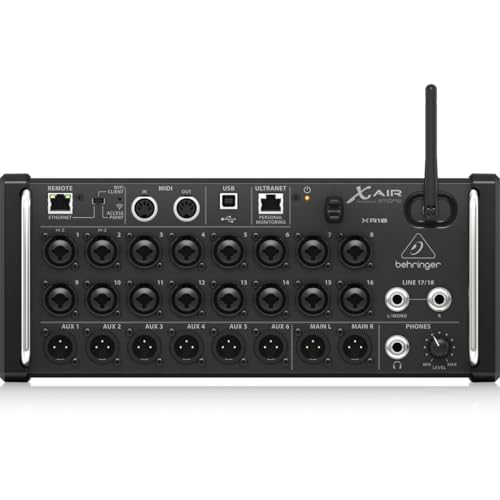
- Behringer X AIR XR18 Digital Mixer — check the current price on Amazon and confirm the exact variant on the listing before you order.
- Behringer FLOW 8 Digital Mixer — check the current price on Amazon and confirm the exact variant on the listing before you order.
- Behringer XENYX 802S 8-Input Mixer — check the current price on Amazon and confirm the exact variant on the listing before you order.
- Behringer EUROPOWER PMP500 Powered Mixer — check the current price on Amazon and confirm the exact variant on the listing before you order.
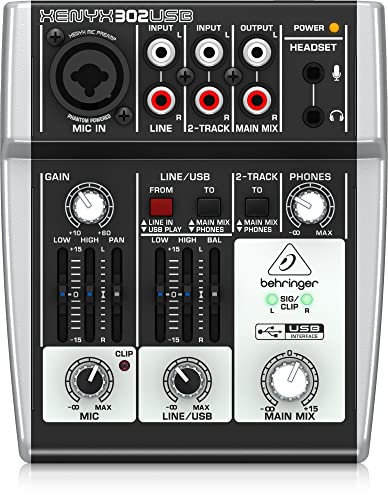
- Behringer XENYX 302USB 5-Input Mixer — check the current price on Amazon and confirm the exact variant on the listing before you order.
Decide your format first — analog, digital or powered — and only then compare models inside it. Behringer’s range makes sense once you shop by job: the six below are the strongest current answer to each of the six jobs buyers actually bring to this brand.
Shoppers looking for the best behringer mixers usually arrive with a budget and leave with a question, because the range is enormous and the naming is dense. Behringer is the value engine of small-format mixing: the company puts features that used to cost professional money — compressors on microphone channels, respected effects processors, USB interfaces, tablet-controlled digital mixing — into boards that schools, churches, bands and creators can actually afford. The trade for that value is homework. Model names differ by a letter, generations overlap, and two boards that look alike can serve completely different rigs.
This guide cuts the range the way an experienced buyer does: by format. The XENYX analog consoles are the traditional centre — physical knobs, instant access, stereo USB at most. The digital end, the FLOW 8 and the X AIR XR18, trades the big surface for app control, recallable settings and, on the XR18, proper multitrack USB and Midas-designed preamps. The EUROPOWER powered mixer answers a different question entirely, combining console and amplifier for unpowered speakers. And the tiny 302USB remains the classic first step for a single voice at a desk.
All six picks were confirmed as current Amazon listings before writing, with specifications taken from those listings rather than from memory of older generations. One honesty note belongs up front: Behringer’s headline channel counts, like every maker’s, include stereo line inputs, so the microphone preamp count in each review is the number to plan a band around. Read the reviews by the job you need done, not by the size of the box, and the right Behringer usually identifies itself.
In this guide
Quick Picks
Six formats, six jobs. The badges below match the full reviews, and together they cover the realistic Behringer shortlist for most buyers.
Best Overall — Behringer XENYX X1204USB 12-Input Mixer
The X1204USB is the Behringer most small acts should buy. Its listing confirms the full classic recipe: XENYX mic preamps with compressors, British EQ, a 24-bit multi-FX processor and a USB audio interface in a 12-input, 2/2-bus console. Four proper microphone channels with one-knob compression is exactly the toolkit a working duo or small band needs, at the price point that made this family famous.
Best Digital — Behringer X AIR XR18 Digital Mixer
The XR18 is Behringer’s serious small digital mixer: an 18-channel, 12-bus stagebox controlled from a tablet or phone, with 16 programmable Midas preamps, an integrated WiFi module and multi-channel USB, per its listing. There is no big surface to carry — the mixer lives on stage near the inputs and you mix from anywhere in the room. For bands that record, it is in a different league from stereo-USB analog boards.
Best Compact Digital for Creators and Small Gigs — Behringer FLOW 8 Digital Mixer
The FLOW 8 splits the difference between analog touch and digital brains: an 8-input digital mixer with real 60 mm channel faders, Bluetooth audio, app control, two FX processors and a USB interface, per its listing. It suits the solo performer or creator who wants saved settings and app-assisted setup without giving up a physical surface. Think of it as the X1204USB’s smarter, smaller digital cousin.
Best Budget Analog — Behringer XENYX 802S 8-Input Mixer
The 802S is the value pick of the analog line: a premium analog eight-input mixer with a USB streaming interface, per its listing. It covers the classic beginner and small-act brief — microphone, instrument, stereo playback, powered speakers, and a computer for streaming or simple recording — at the friendliest commitment in this guide. If the X1204USB is more board than you need, this is your Behringer.
Best Powered Mixer — Behringer EUROPOWER PMP500 Powered Mixer
The PMP500 answers the other question: what if the speakers are unpowered? It is a 500-watt, 12-channel powered mixer with a Klark Teknik multi-FX processor, compressors, FBQ feedback detection and a wireless option, per its listing. For a hall, school or band with passive speakers already in the cupboard, it is console and amplifier in one lift — the only pick here that can drive speakers directly.
Best Ultra-Portable for Podcast and Desk — Behringer XENYX 302USB 5-Input Mixer
The 302USB is the little Behringer that launched a million podcasts: a five-input mini mixer with a XENYX mic preamp and a USB audio interface, per its listing. One microphone, one stereo source, headphones, and a computer — a complete voice desk in a box that fits in a laptop bag. It is the cheapest legitimate way into this entire guide, and for a solo voice it is genuinely enough.
If you perform live with a changing lineup, start at the X1204USB or the XR18. If you create at a desk, start at the FLOW 8 or the 302USB. The format decision matters more than any single feature.
How These Picks Were Chosen
Picks were chosen from Behringer’s current, verifiable range rather than from reputation alone. Every model had to appear as a live Amazon listing with an exact title match, because Behringer’s back catalogue contains discontinued generations that still circulate second-hand and in old reviews. Anything we could not verify as a current listing was excluded, however famous.
Within the verified range, we selected one clear answer per format and scale instead of six variations of the same board: the mid-size analog all-rounder, the serious digital stagebox mixer, the compact digital surface, the budget analog streamer, the powered all-in-one, and the mini USB starter. That spread reflects how people actually buy this brand — by the job and the room, with budget as the constraint rather than the goal.
We also weighted ownership reality: documentation quality, the size of the user community producing tutorials, and whether the model’s headline features survive contact with a beginner. A board whose effects, interface and routing can be understood from its own front panel or a well-designed app scores ahead of a board with a longer feature list and a steeper cliff of confusion. Prices in this range move with promotions constantly, so the guide uses check-price links throughout.
- Current model verified as a live Amazon listing, exact title match
- One clear winner per format: analog, digital surface, digital stagebox, powered, mini
- Microphone preamp count stated honestly, not just headline channel count
- Features a real owner can reach: panel-legible analog or a mature control app
- Documentation and community tutorials sufficient for a first-time owner
- No fixed prices or ratings printed — check price on Amazon for the current figure
The 6 Best Behringer Mixers
Each review covers the job the mixer does best, its genuine strengths, its honest limitations, and the specifications confirmed in its current listing.

Behringer XENYX X1204USB 12-Input Mixer — Best Overall
The XENYX X1204USB is the centre of gravity of Behringer’s analog range, and it earns Best Overall by being the board against which small-format value is measured. The verified listing reads like a checklist of what a small live act actually uses: XENYX microphone preamps with compressors on the mic channels, British-style EQ, a 24-bit multi-effects processor, and a USB audio interface, wrapped in a 12-input, 2/2-bus layout. For a duo, trio or small worship or school group performing through powered speakers and occasionally recording a stereo mix, this is the complete traditional answer in one box.
Strengths
- One-knob compressors on mic channels tame uneven singers instantly
- British EQ and 24-bit multi-FX cover the classic live toolkit
- USB interface records the stereo mix and returns computer playback
Trade-offs
- USB is stereo, not multitrack — individual channels cannot be remixed later
- Twelve inputs means four mic preamps; a full drum kit outgrows it
- Analog recall is a notebook: settings are not stored or automated
Key specs (from the manufacturer’s Amazon listing title):
- Inputs: 12-input, 2/2-bus, per listing title
- Preamps: XENYX mic preamps with compressors, per listing title
- EQ: British EQ, per listing title
- Effects: 24-bit multi-FX processor, per listing title
- Interface: USB/audio interface, per listing title
What keeps the X1204USB on stages year after year is that its features map to real gigs. The compressors forgive a vocalist who leans in and out. The effects give that voice a finished room sound without extra hardware. The subgroups and routing give a small group room to organise itself, and the USB port turns any laptop into a rehearsal recorder and backing-track source. Its limits are the limits of its class: when a band needs every drum miked and every channel recorded separately, or when a venue wants saved scenes for different acts, you have left analog territory and should be reading the XR18 review below. Within its class, though, this remains the Behringer benchmark — the board to beat on value, and the one the other five picks are alternatives to rather than replacements for.
Best for: duos, trios and small groups wanting a complete analog live board with recording basics / Not suited for: bands needing multitrack recording or saved digital scenes
Check the XENYX X1204USB on Amazon — check price on Amazon and read the full listing details for the current configuration.
Behringer X AIR XR18 Digital Mixer — Best Digital
The X AIR XR18 represents the other Behringer: a stagebox digital mixer with no conventional control surface at all. Its verified listing confirms the specification that matters — 18 channels and 12 buses, 16 programmable Midas preamps, integrated WiFi, and a multi-channel USB audio interface — controlled entirely from an iPad or Android tablet. Midas is Behringer’s sister brand with genuine high-end console heritage, and those preamps are the headline: this is a small mixer that records like a studio interface while it runs the live show from the stage box.
Strengths
- 16 Midas preamps with multitrack USB — record every channel separately
- Stagebox format: inputs live on stage, mixing happens anywhere via tablet
- Full digital recall, effects and processing on every channel
Trade-offs
- No physical faders — a tablet, charged and connected, is your control surface
- Built-in WiFi is fine for small rooms; busy venues reward an external router
- Learning curve is real: digital routing takes an evening to understand
Key specs (from the manufacturer’s Amazon listing title):
- Channels: 18-channel, 12-bus, per listing title
- Preamps: 16 programmable Midas preamps, per listing title
- Control: For iPad/Android tablets, integrated WiFi module, per listing title
- Interface: Multi-channel USB audio interface, per listing title
The XR18 changes what a small act can do. Soundcheck from the audience’s seats with the tablet in your hand. Save the whole show as a scene and recall it at the next venue. Record the gig multitrack and mix it properly at home — the same performance becomes your demo. Those are capabilities that simply do not exist in the analog half of this guide. The costs are discipline and dependence: your mixer is now software, so a flat tablet battery or a congested venue network is a sound problem, which is why experienced XR18 owners carry a small external router and a backup device. Bands that gig and record seriously will find this the most capable mixer in the six by a wide margin; acts that value grab-and-go simplicity above all should stay analog and be happy.
Best for: gigging bands that want tablet mixing, scene recall and multitrack recording / Not suited for: users who want physical faders and zero software between them and the sound
Check the X AIR XR18 on Amazon — check price on Amazon and read the full listing details for the current configuration.

Behringer FLOW 8 Digital Mixer — Best Compact Digital for Creators and Small Gigs
The Behringer FLOW 8 is the digital mixer for people who still want faders under their fingers. The verified listing confirms its unusual and appealing combination: eight inputs, Bluetooth audio and app control, physical 60 mm channel faders, two effects processors and a USB audio interface. Where the XR18 hides the mixer in a stagebox, the FLOW 8 keeps a compact surface on the table and uses its app as an assistant — guiding setup, storing settings, and adding the automation a small analog board cannot offer. For solo performers, small duos and creator desks, that balance is well judged.
Strengths
- Real 60 mm faders plus app control — both worlds at once
- Bluetooth audio simplifies backing tracks and break music
- Two FX processors and USB cover live polish and recording basics
Trade-offs
- Eight inputs is a firm ceiling for anything beyond a duo
- Digital depth lives partly in the app; panel-only users miss features
- Not a multitrack recorder in the XR18’s class
Key specs (from the manufacturer’s Amazon listing title):
- Inputs: 8-input digital mixer, per listing title
- Faders: 60 mm channel faders, per listing title
- Effects: 2 FX processors, per listing title
- Connectivity: Bluetooth audio, app control, USB/audio interface, per listing title
The FLOW 8’s natural owner moves between two rooms: a desk where content is made, and small stages where a compact rig must set up fast and sound consistent. Stored settings are the quiet superpower — the mix that worked last Friday returns this Friday in seconds, and the app’s assisted setup genuinely helps a less technical performer reach a good starting sound. Bluetooth playback removes a cable and a failure point from the backing-track chain. The board’s boundaries are scale and depth: eight inputs end the conversation for a full band, and engineers who want the XR18’s per-channel processing arsenal and multitrack capture should buy that instead. As a compact, modern, creator-friendly digital mixer, though, the FLOW 8 has few direct rivals at its position in the range.
Best for: solo performers, duos and creators wanting faders, recall and Bluetooth in a compact board / Not suited for: full bands or anyone needing multitrack recording
Check the FLOW 8 on Amazon — check price on Amazon and read the full listing details for the current configuration.

Behringer XENYX 802S 8-Input Mixer — Best Budget Analog
Not every Behringer buyer needs twelve inputs and a bus structure. The XENYX 802S distils the line to its essentials: a premium analog eight-input mixer with a USB streaming interface, exactly as its verified listing describes. It is aimed at the enormous middle of small-format use — a singer with an instrument, a teacher with a piano and a laptop, a podcaster with a co-host, a small venue corner that needs voice and music balanced — and it serves that middle without the cost or the panel density of the bigger XENYX boards.
Strengths
- Eight inputs cover most solo and duo source lists
- USB streaming interface connects the rig to a computer in one cable
- Simple analog panel that a first-time owner can learn in an evening
Trade-offs
- No compressors or full effects engine of the X1204USB class
- Stereo USB only — no multitrack path
- Compact panel means smaller, closer controls than the larger boards
Key specs (from the manufacturer’s Amazon listing title):
- Inputs: 8, per listing title
- Design: Premium analog mixer, per listing title
- Interface: USB streaming interface, per listing title
The 802S earns its place by completing workflows rather than collecting features. A lesson teacher can balance voice and instrument for the room and send the identical mix to an online student. A cafe performer can run a microphone, a guitar and phone playback through powered speakers and record the set in stereo for review. Those are complete, satisfying jobs. What the board deliberately omits is headroom for ambition: there are no channel compressors to polish a difficult singer, no subgroups to organise a band, and no path beyond its eight inputs. Buy it when your source list is stable and small, and it will feel like exactly enough. Buy the X1204USB instead when a group’s needs are already growing — that judgement, made honestly at purchase time, is the whole secret of shopping this range well.
Best for: solo acts, teachers, podcasters and small venues with a stable, short source list / Not suited for: growing bands that need compressors, subgroups or more inputs
Check the XENYX 802S on Amazon — check price on Amazon and read the full listing details for the current configuration.

Behringer EUROPOWER PMP500 Powered Mixer — Best Powered Mixer
The EUROPOWER PMP500 is the odd one out in this guide and proud of it: a powered mixer, meaning the amplifier lives inside the console. Its verified listing confirms a 500-watt, 12-channel design with a Klark Teknik multi-effects processor, compressors, FBQ feedback detection and a wireless option. This format exists for a specific and common situation — a venue, school, house of worship or band that owns passive speakers and wants one box to run them. If that sentence describes your cupboard, the PMP500 is not a compromise; it is the correct architecture.
Strengths
- Built-in 500-watt amplification drives passive speakers directly
- FBQ feedback detection helps inexperienced operators in live rooms
- Klark Teknik effects and compressors cover the live vocal toolkit
Trade-offs
- Amplifier power is fixed forever — no upgrading one half of the system
- Heavier than a passive console, and a fault in either half sidelines both
- Useless advantage if your speakers are already powered models
Key specs (from the manufacturer’s Amazon listing title):
- Power: 500 watt, per listing title
- Channels: 12 channel powered mixer, per listing title
- Effects: Klark Teknik multi-FX processor, per listing title
- Features: Compressors, FBQ feedback detection system, wireless option, per listing title
Powered mixers reward a particular kind of buyer: the one with a fixed room and a fixed job. A school hall that hosts assemblies and small concerts with the same passive speakers every week gets genuine simplicity here — one box to store, carry and learn, with feedback detection quietly protecting inexperienced operators from the most embarrassing live-sound failure. The compromises are structural and permanent. The amplifier you buy is the amplifier you keep, the box is a heavier lift than any passive console in this guide, and the day the venue upgrades to powered speakers, the PMP500’s defining feature becomes dead weight. Match the format to the speakers you truly own, and this is a strong, sensible Behringer; buy it speculatively and it is the easiest pick here to regret.
Best for: venues and bands with passive speakers wanting one-box console-plus-amplifier simplicity / Not suited for: owners of powered speakers or anyone planning to upgrade the system in stages
Check the EUROPOWER PMP500 on Amazon — check price on Amazon and read the full listing details for the current configuration.
Behringer XENYX 302USB 5-Input Mixer — Best Ultra-Portable for Podcast and Desk
Some mixers earn their fame by being small in exactly the right way. The XENYX 302USB is a five-input mini USB mixer built around a single XENYX microphone preamp, per its verified listing, and it has been the default first interface-mixer for podcasters, streamers, voice artists and online teachers for years. Its proposition is focus: one voice, captured cleanly, blended with one stereo source such as music or a computer feed, monitored in headphones, and sent to the computer over USB. Nothing in that sentence is a compromise for a solo desk worker — it is the whole job, done in the smallest possible footprint.
Strengths
- Complete one-voice desk setup: preamp, blend, monitoring and USB in one mini box
- Travels anywhere — the mixer a laptop bag can carry
- Simple enough to master in a single session
Trade-offs
- One microphone preamp — a co-host with a second mic outgrows it at once
- Minimal EQ and no effects; polish must come from software
- Stereo USB only, and no path to live-room scale
Key specs (from the manufacturer’s Amazon listing title):
- Inputs: 5-input audio mixer, per listing title
- Preamps: Mic preamp (XENYX), per listing title
- Interface: USB audio interface, per listing title
- Format: Mini USB mixer, per listing title
The 302USB should be judged as a desk appliance rather than a small live console, and on that standard it is excellent. It removes the two classic solo-creator frictions — hearing yourself properly while you record, and blending a voice against music or a call without software gymnastics — with physical controls that never need a driver panel or a menu. Its limits are equally physical: a second microphone has nowhere proper to go, and a live audience needs a real board with speaker outputs, monitoring options and effects. Many owners keep a 302USB on the desk even after buying a bigger mixer for the stage, which tells you the honest truth about it: within its one-voice world, it is not a starter compromise at all, but the finished tool.
Best for: solo podcasters, streamers, voice artists and teachers with one microphone / Not suited for: co-hosted shows with two microphones or any live-room application
Check the XENYX 302USB on Amazon — check price on Amazon and read the full listing details for the current configuration.
Comparison Table
Format first, model second: the table shows why these six rarely compete with each other once the job is clear.
| Pick | Badge | Key spec | Best for |
|---|---|---|---|
| Behringer XENYX X1204USB 12-Input Mixer | Best Overall | 12 inputs, compressors, British EQ, 24-bit FX, USB | duos, trios and small groups wanting a complete analog live board with recording basics |
| Behringer X AIR XR18 Digital Mixer | Best Digital | 18 channels, 16 Midas preamps, multitrack USB, WiFi control | gigging bands that want tablet mixing, scene recall and multitrack recording |
| Behringer FLOW 8 Digital Mixer | Best Compact Digital for Creators and Small Gigs | 8 inputs, 60 mm faders, Bluetooth, app control, 2 FX | solo performers, duos and creators wanting faders, recall and Bluetooth in a compact board |
| Behringer XENYX 802S 8-Input Mixer | Best Budget Analog | 8 inputs, analog, USB streaming interface | solo acts, teachers, podcasters and small venues with a stable, short source list |
| Behringer EUROPOWER PMP500 Powered Mixer | Best Powered Mixer | 500 W powered, 12 channels, Klark Teknik FX, FBQ | venues and bands with passive speakers wanting one-box console-plus-amplifier simplicity |
| Behringer XENYX 302USB 5-Input Mixer | Best Ultra-Portable for Podcast and Desk | 5 inputs, 1 mic preamp, USB interface, mini format | solo podcasters, streamers, voice artists and teachers with one microphone |
How to Choose a Behringer Mixer
Choose the format before the model. Analog XENYX boards give you physical controls, instant access and prices that defined the value end of mixing; their USB, where fitted, is stereo. Digital boards — the FLOW 8 with its surface, the XR18 without one — add saved scenes, deeper processing and, on the XR18, multitrack recording, at the cost of learning software. Powered EUROPOWER models exist for one reason: driving passive speakers. A buyer who picks the format honestly has usually picked the model, because within each format the range steps cleanly by size.
Next, count microphone preamps, never headline inputs. The X1204USB’s twelve inputs include four mic preamps; the XR18’s eighteen channels include sixteen. A band’s drum kit alone can consume four to eight microphones, which is why the same buyer can be perfectly served by a 12-input analog board for a trio and genuinely need the XR18 for a five-piece. Write your fullest realistic source list, mark the microphones, and let that second number choose your size class.
Finally, think about the second year. Will you record properly, stream seriously, or play bigger rooms? Behringer ownership commonly runs in steps — a 302USB or 802S first, an X1204USB or FLOW 8 next, an XR18 when the band records — and the brand’s low entry prices make that staircase affordable. Buying one step above today’s need is sensible; buying three steps above it usually means paying for a learning curve you will resent.
- Format first: analog for simplicity, digital for recall and recording, powered for passive speakers
- Count mic preamps against your fullest realistic source list
- Stereo USB suits demos and streams; multitrack needs the XR18 class
- Check the exact model suffix — generations and variants overlap in this range
- Budget for cables, stands and speakers alongside the console
Behringer Mixer Generations and Names, Explained
Behringer naming follows a rough grammar worth learning. XENYX is the analog console family, with numbers that hint at input count and letters that hint at features: USB in the name signals an interface, an X or QX variant typically signals the Klark Teknik effects generation, and S-suffix models are the recent streaming-oriented refresh of the small boards. X AIR is the digital stagebox family, FLOW is the compact digital surface line, and EUROPOWER is the powered range. Two listings with near-identical names can be a generation apart, which is why this guide verified every pick against its current listing instead of trusting catalogue memory.
The sister-brand names in the listings are also real information. Midas preamps in the XR18 and Klark Teknik effects in the powered and QX models come from Behringer’s professional sister companies, and owners consistently rate those elements as the range’s high points. When you compare two similar Behringer boards, the preamp and effects lineage in the title is one of the few headline differences that reliably matters in use.
What a Behringer Mixer Still Needs Around It
Except for the powered PMP500, every mixer in this guide is a passive console: it needs powered speakers or an amplifier for passive speakers before it can fill a room. Add microphones with balanced XLR cables, a stand for any vocalist, headphones for setup and recording, and speaker leads of the right type. Digital models add one more line to the list — a tablet or phone you can dedicate to the show, kept charged, plus for the XR18 in busy venues a small external router so your mixing network is yours alone.
Keep the firmware and app side maintained on digital models, and photograph your analog panels once a setup works. Small mixers reward small disciplines: labelled cables, a saved scene or a photographed panel, and a note of what worked in each room you play regularly.
- Powered speakers (or amplifier plus passive speakers) for all passive models
- Balanced XLR microphone cables, one per microphone
- A charged tablet or phone for digital models, plus an external router for busy venues
- Headphones for setup, monitoring and recording checks
- Labels and a photographed panel or saved scene for every working setup
Owning a Behringer Mixer: Care, Firmware and the Second Year
Behringer ownership rewards the same small disciplines as any mixer, plus one digital habit. Keep the board covered or cased between shows — faders and rotary pots ingest dust in rehearsal rooms, and a cover is cheaper than a service. Work every control through its full travel occasionally, especially on a board that sits set-and-forgotten, because pots that never move are the ones that crackle when finally asked to. And label your inputs with tape and a marker at the first soundcheck that works; the second year of ownership is mostly the first year’s lessons, and labels are how a band keeps them.
On the digital models, treat firmware and apps as part of the instrument. Update deliberately — at home, midweek, never on show day — and keep a note of the app version that pairs with your board’s firmware, because a phone that updates itself on Friday afternoon is a classic small-venue plot twist. Save your scenes with venue names and dates, and export or photograph a known-good configuration as a paper backup. Owners who do these unglamorous things describe their Behringers the way owners of any good tool do: it just works, every time we ask it to.
How to Set Up a Behringer Mixer for a Small Live Show
The routine below works for the analog and powered picks in this guide, and the digital models follow the same signal logic inside their apps. The order matters more than speed: sources first, speakers last, levels one channel at a time.
- Place the mixer where the operator can reach it during the show, and the speakers ahead of the microphones, aimed at the audience.
- With everything off, connect microphones by XLR to the mic inputs, instruments and playback to line inputs, and the main outputs to your powered speakers — or, on the PMP500, connect the passive speakers to its powered outputs.
- Set all gains and the master to minimum, EQ centred, effects returns down. Power on in order: sources, mixer, then speakers or amplifier last.
- Soundcheck one channel at a time at real performance level: set the channel gain for a strong clean signal, then balance with the fader. On XENYX boards, ease in a little one-knob compression on any uneven vocal.
- Add effects to voices sparingly from the FX send, and on the PMP500 let the FBQ system show you any ringing frequencies before the audience arrives.
- Balance stereo playback underneath the live sources, then walk the room and adjust master level and EQ for the seats, not the stage.
- On digital models, save the finished show as a scene before doors; on analog boards, photograph the panel.
- Shut down in reverse: speakers or amplifier off first, then mixer, then sources.
If something hums, crackles or vanishes mid-show, change one thing at a time — cable, channel, source — in that order. Most small-rig faults are a cable or a single channel, and methodical substitution finds them faster than panic. Note what failed in your phone while it is fresh; your future self at the next venue is the audience for that note.
Common Buying Mistakes
Behringer’s range rewards informed buying and punishes assumptions. These are the errors that generate the returns and the regret.
- Comparing headline channel counts across brands instead of counting microphone preamps
- Buying a powered mixer for powered speakers — or a passive console for passive speakers with no amplifier
- Assuming every USB mixer records multitrack, when most small boards send a stereo mix only
- Choosing a near-identical model name without checking the suffix, generation and effects engine on the listing
- Running an XR18 on its built-in WiFi in a crowded venue without an external router as backup
- Skipping the speakers, cables and stands in the budget, then owning a console that cannot make a sound
Final Recommendation
If one Behringer has to be named for most buyers, it is the XENYX X1204USB: the complete analog small-act board, with compression, effects and stereo USB at the range’s defining value. Bands that record and want their settings back every night should step to the X AIR XR18 and accept its tablet discipline as the price of multitrack power. The FLOW 8 is the modern compact answer for solo performers and creators, the 802S the budget analog answer for stable small setups, the PMP500 the correct answer only for passive-speaker rooms, and the 302USB the finished tool for a single voice at a desk.
Neighbouring guides in this programme cover the surrounding decisions: the beginner-first view is in Best Beginner Passive Mixers and Best Beginner Mixers, the wider channel-count comparisons live in Best 12 Channel Audio Mixers, and the value hunt continues in Best Bang For Your Buck Audio Mixers. If your mixer question is actually about a kitchen rather than a stage, the same category word is covered from the cooking side in Best Bowl Mixers.
Before you decide, re-check the shortlist leaders at their current listings: Behringer XENYX X1204USB 12-Input Mixer, Behringer X AIR XR18 Digital Mixer, Behringer FLOW 8 Digital Mixer — check price on Amazon for each and confirm the exact variant.
- Best Beginner Passive Mixers
- Best Beginner Mixers
- Best 12 Channel Audio Mixers
- Best Bang For Your Buck Audio Mixers
- Best Bowl Mixers
Frequently Asked Questions
Are Behringer mixers good enough for live gigs?
Yes — the XENYX analog boards and the X AIR digital range are working tools used nightly by small acts, schools and venues. Their strengths are feature completeness and value: compressors, respected effects and interfaces at prices other makers charge for bare boards. Their honest limits are the limits of their classes — stereo rather than multitrack USB on small analog models, and tablet dependence on the stagebox digital models. Matched to the right job, a Behringer is a professional purchase, not a placeholder.
What is the difference between XENYX, X AIR and FLOW mixers?
XENYX is the analog console family: physical knobs and faders, immediate access, stereo USB at most. X AIR is the digital stagebox family, controlled entirely from a tablet or computer, with full processing, scene recall and — on the XR18 — multitrack USB recording and Midas preamps. FLOW is the compact digital middle ground: a small physical surface with real faders, assisted by an app, with Bluetooth and USB. Choose by how you want to mix — hands on a panel, from a tablet in the room, or both.
How many microphone inputs does a Behringer mixer really have?
Fewer than the headline number, as with every maker. A 12-input analog board such as the X1204USB provides four microphone preamps, with the remaining inputs as stereo line channels for keyboards and playback. The XR18 is the exception in this guide, with sixteen preamps among its eighteen channels. Always plan a band around the preamp count in the listing and the review, and keep one spare above your fullest source list.
Can I record my band with a Behringer mixer?
In stereo, yes, with any USB model here: the finished mix records to a laptop as a two-track, which suits demos, rehearsals and streams. For separate tracks you can remix later, you need the XR18’s multi-channel USB interface — it records its channels individually while it runs the live mix. The FLOW 8 and XENYX boards do not offer per-channel recording, and no adapter changes that; it is a class difference, not a setting.
Do I need a powered Behringer mixer or a passive one?
It depends entirely on your speakers. Passive (unpowered) speakers need amplification, so either a powered mixer like the PMP500 or a separate amplifier must drive them. Powered speakers contain their own amplifiers and pair with a normal passive console — which is every other pick in this guide. Buying both a powered mixer and powered speakers wastes the mixer’s amplifier; buying a passive console for passive speakers with no amplifier produces silence. Match the format to the speakers first.
Is the tiny 302USB a real mixer or just an interface?
Both, deliberately. It is a five-input mixer with a genuine XENYX microphone preamp, blending controls and headphone monitoring, whose mixed output reaches the computer over USB. For one voice plus one stereo source — the classic podcast, stream or online-lesson desk — that is the complete tool. Its limits are equally real: one microphone only, minimal EQ, no live-room outputs strategy. Owners commonly keep it on the desk for years alongside a larger board for the stage.


