Disclosure: airfryerkitchensupply.com is reader-supported. When you buy through links on our site, we may earn an affiliate commission at no extra cost to you.
Where to buy
Buying the best 12 volt camping cooler: Every cooler below was verified against current catalog data before this guide was published, and all are sold through Amazon. Thermoelectric coolers are priced across a wide spread and listings change with the seasons, so use the links to check the current price on Amazon and confirm the capacity and power cords included before you order.
- Igloo IE24 Thermoelectric Cooler & Warmer (Best Overall) — Check the current price on Amazon
- Igloo IE42 Roller Thermoelectric Cooler & Warmer (Best for Groups and Base Camps) — Check the current price on Amazon
- Koolatron 12V Iceless Cooler & Warmer (18 qt) (Best Compact Hard-Sided) — Check the current price on Amazon
- Wagan EL6214 Personal Thermoelectric Cooler/Warmer (14 Liter) (Best Personal Cooler) — Check the current price on Amazon
- Wagan EL6206 12V 6 Quart Personal Thermoelectric Cooler Warmer (Best for Console and Day Use) — Check the current price on Amazon
- AooDen Electric Car Cooler and Warmer (26 Quart) (Best Value Mid-Size) — Check the current price on Amazon
Choosing the best 12 volt camping cooler starts with understanding the technology inside the box, because a 12 volt cooler is not a small fridge. The coolers in this guide are thermoelectric: a solid-state Peltier module moves heat from inside to outside, cooling the contents to a set margin below the surrounding air — the best-known models here cool about 36 degrees Fahrenheit below ambient. On a 75-degree day that means food at a genuinely cold temperature. On a 100-degree day in a closed car, it means food that is merely cool — and that honest limit should shape what you pack and which cooler you buy.
That is not a dismissal. Thermoelectric coolers are light, simple, inexpensive to run, tolerant of rough roads, and have no compressor to protect from tilting or vibration. For road trips, day camps, boat decks, work trucks and hotel-room overflow, they are often the right tool — especially since most of these models also warm, holding food hot on the way to a tailgate. Campers who need guaranteed fridge-and-freezer temperatures regardless of weather should look at the compressor camping fridges in our companion guide; campers who need affordable, forgiving cool storage for drinks and food will find their cooler here.
This guide ranks six verified thermoelectric models from personal size to family size. The buying-guide sections explain the ambient-temperature math in plain terms, how to pre-chill and pack for best performance, and how the power draw interacts with your vehicle’s battery at a campsite. The how-to section covers running a 12 volt cooler through a full camping day without flattening the starting battery — the one mistake that ruins more trips than any cooler fault.
A quick orientation on value before the picks: a thermoelectric cooler is one of the few camping purchases where spending modestly is genuinely rational. The technology is mature, the performance ceiling is set by physics rather than by price, and the differences between a budget box and a premium one are capacity, build, cords included and brand support — not a different order of cold. That is why this guide badges by size and role rather than by price ladder, and why the value pick here is a real recommendation rather than a consolation.
In this guide
Quick Picks
Igloo IE24 Thermoelectric Cooler & Warmer — Best Overall. The benchmark mid-size: holds 32 cans, cools 36F below ambient, warms to 136F, and runs on AC or DC — the one-cooler answer for most campers. — Check price on Amazon
Igloo IE42 Roller Thermoelectric Cooler & Warmer — Best for Groups and Base Camps. The family-size version: 59 cans, a telescoping handle and wheels, bringing the same cooler-warmer formula to group camps. — Check price on Amazon
Koolatron 12V Iceless Cooler & Warmer (18 qt) — Best Compact Hard-Sided. An 18 quart hard-sided iceless cooler from a brand that has specialized in 12 volt cooling for decades — the tidy two-person size. — Check price on Amazon
Wagan EL6214 Personal Thermoelectric Cooler/Warmer (14 Liter) — Best Personal Cooler. A 14 liter personal unit with 12/24V flexibility and a UL listing — sized for one camper’s food and drinks, at the seat or the tent door. — Check price on Amazon
Wagan EL6206 12V 6 Quart Personal Thermoelectric Cooler Warmer — Best for Console and Day Use. The smallest pick at 6 quarts — a console-class cooler-warmer for drinks and snacks on day trips and short hops to the campground. — Check price on Amazon
AooDen Electric Car Cooler and Warmer (26 Quart) — Best Value Mid-Size. A 26 quart thermoelectric with both 12V DC and 120V AC in the box — the value-priced route to the family mid-size format. — Check price on Amazon
How These Picks Were Chosen
Each cooler was verified against live catalog data through this site’s product-verification system, confirming the model, capacity and power arrangement as currently listed. Only true 12 volt thermoelectric coolers were included — passive ice chests and compressor fridges were excluded so this guide compares one technology honestly. Performance figures quoted, such as cooling below ambient or warming range, come from the verified listings themselves.
The six picks were spread deliberately across sizes — personal, mid-size and family — and across camping styles from solo car camping to group base camps, rather than listing six versions of the same box.
- Confirmed 12 volt thermoelectric cooler, with AC power arrangement noted where listed
- Capacity stated from the listing, matched to a realistic party size
- Cooling margin below ambient stated honestly where the listing provides it
- Warming function noted — a genuine second use for these models
- Portability details that matter at a campsite: handles, wheels, weight class
- Limitations stated plainly, especially performance in extreme heat
The 6 Best 12 Volt Camping Coolers

Igloo IE24 Thermoelectric Cooler & Warmer — Best Overall
The Igloo IE24 is what the thermoelectric category looks like when a major cooler brand does it properly. The specifications tell a complete story: room for 32 cans, cooling to 36 degrees below the surrounding air, a warming mode that heats to 136 degrees for transporting hot food, and both AC and DC power so the same box pre-chills in the kitchen, rides in the car, and runs at a powered campsite. That flexibility is why it leads this guide — it is the cooler that fits the most camping lives.
In practice the IE24 is the two-to-four-person road-trip and weekend-camp size: drinks, sandwich supplies, breakfast basics, and leftovers, without the bulk of the big roller models. Igloo’s distribution also means replacement cords and support exist in a way no-name listings cannot match, which matters for a product whose whole job is to be plugged in and forgotten in the back of a vehicle for years.
Strengths
- Full specification: cooling margin and warming temperature both stated
- AC and DC power covers home, vehicle and campsite
- Mainstream brand support and accessory availability
Trade-offs
- Mid-size capacity will not serve a large group alone
- Thermoelectric limits apply in extreme heat like all rivals
- No freezer capability of any kind
| Spec | Detail |
|---|---|
| Capacity | Holds 32 cans |
| Cooling | 36 F below ambient |
| Warming | Heats to 136 F |
| Power | AC / DC |
Buy this cooler if your camping is weekends, road trips and festival camps where daytime temperatures are warm rather than desert-extreme, and where the warming mode will genuinely get used — hot food for a tailgate is a trick no ice chest performs. Pre-chill it on AC power at home, load cold food, and it will hold its side of the bargain all weekend.
Ownership is as simple as the technology: keep the fan vents dust-free, wipe the seals, and store it with the lid ajar so it never smells like last season. The IE24’s mainstream support means a lost cord is an order, not an obituary — a small thing that becomes a big thing in year four.
Best for: weekend campers and road-trippers wanting one versatile cooler / Not suited for: desert summer camping or freezer needs
Check on Amazon — check price on Amazon before you order, and confirm the listing matches the model described here.

Igloo IE42 Roller Thermoelectric Cooler & Warmer — Best for Groups and Base Camps
Groups change the cooler problem from temperature to logistics. The IE42 Roller answers with volume — 59 cans’ worth — and with the telescoping handle and wheels that make a full, heavy cooler a one-person move from car to picnic table instead of a two-person carry. In the same cooler-warmer family as the IE24, it brings the thermoelectric convenience to base camps, team tailgates, family reunions and multi-family campsites where one mid-size box would be emptied by lunch.
The honest trade is footprint: this is a big box in a small car, and a thermoelectric unit this size still obeys the same ambient-temperature physics as its smaller sibling. For group duty that is usually the right trade — drinks and food for a crowd, kept properly cool in ordinary summer weather, with no ice runs and no meltwater soaking the sandwiches by day two.
Strengths
- Group-size capacity for base camps and events
- Wheels and telescoping handle tame the loaded weight
- Cooler and warmer roles in one unit
Trade-offs
- Bulky in compact vehicles
- Same thermoelectric heat limits as smaller models
- Heavier draw on the vehicle battery over long stops
| Spec | Detail |
|---|---|
| Capacity | Holds 59 cans |
| Handle | Telescoping handle, roller design |
| Power | 12V portable, AC/DC class |
| Use | Truck, RV, car and home |
The roller’s real value shows at the end of the day: everything cold goes back in one box, the box rolls to the car, and nothing drips. Camp organizers and parents — the people who actually carry group logistics — will understand immediately why this pick exists. Pair it with the battery discipline in the how-to section and it runs a whole weekend event without drama.
The roller’s wheels and handle are its long-term story: they are what keep a 59-can box in weekly service instead of garage exile. Check the telescoping handle’s stops each season and rinse grit from the wheel axles after beach trips, and the mobility that sold you the cooler will still be there in five years.
Best for: group camping, base camps, tailgates and family events / Not suited for: solo campers or small cars
Check on Amazon — check price on Amazon before you order, and confirm the listing matches the model described here.
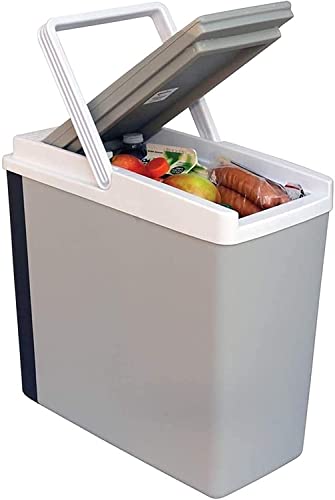
Koolatron 12V Iceless Cooler & Warmer (18 qt) — Best Compact Hard-Sided
Koolatron is one of the original names in 12 volt thermoelectric cooling, and this 18 quart hard-sided model is its classic format: big enough for two people’s drinks and lunch for a day on the road or water, small enough to sit on a seat or a boat deck without rearranging the vehicle. The hard sides matter more than they appear to — they protect contents from the knocks of travel and give the lid a proper seal, which is where thermoelectric efficiency is won or lost.
The listing’s own application list — car, truck, camper, boat, office — captures its real life: it is the cooler that commutes during the week and camps at the weekend. As a warmer it keeps a casserole or a rotisserie chicken at serving temperature on the way to a gathering, a party trick that owners end up using constantly.
Strengths
- Specialist 12 volt brand with a long track record
- Hard-sided build seals and protects better than soft bags
- Ideal two-person day-trip size
Trade-offs
- 18 quarts fills fast with group supplies
- No wheels — it is a carry cooler
- Thermoelectric ceiling in hot weather applies
| Spec | Detail |
|---|---|
| Capacity | 18 qt |
| Design | Hard-sided iceless cooler / warmer |
| Use | Car, truck, camper, boat, office |
| Power | 12V |
Choose the Koolatron when your camping is woven into driving: the scenic-route picnic, the fishing day, the two-person overnight where dinner is bought fresh anyway. It is the size that actually gets used weekly rather than stored, and in this category the cooler that gets used is the cooler that was worth buying.
Koolatron’s longevity in this niche means the 18 qt format is a known quantity — owners keep them for decades because there is so little to fail: a fan, a module, a seal. Keep the fan breathing and the lid seal clean, and this is close to a buy-it-for-life appliance by camping standards.
Best for: couples, anglers and road-day-trippers / Not suited for: feeding a group from one box
Check on Amazon — check price on Amazon before you order, and confirm the listing matches the model described here.
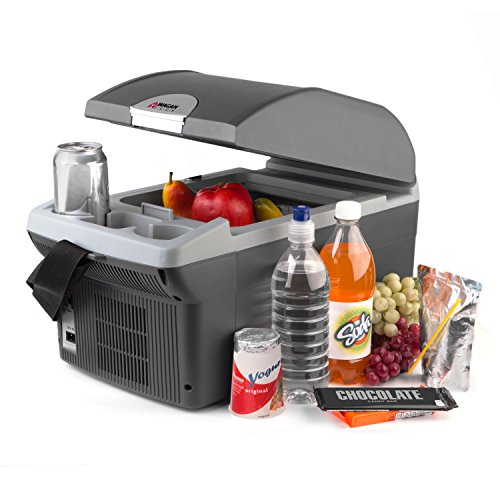
Wagan EL6214 Personal Thermoelectric Cooler/Warmer (14 Liter) — Best Personal Cooler
The EL6214 is the solo camper’s and long-haul driver’s format: 14 liters for your drinks, your lunch, your medication that needs cool storage, and tomorrow’s breakfast, in a box that rides on the passenger floor or beside the tent. Wagan sells it as a personal fridge for car, RV and camping, and the 12/24 volt flexibility means it also works in trucks and larger RV systems without adapters.
The UL listing is a quiet but real differentiator in a category full of anonymous electronics — an independently checked electrical safety baseline for a device that runs unattended in vehicles. Personal size also means personal power draw: this is the gentlest of these coolers on a vehicle battery, and the easiest to justify running through a long lunch stop.
Strengths
- Personal size suits solo campers and drivers
- 12/24V input widens vehicle compatibility
- UL Listed electrical safety certification
Trade-offs
- Too small for shared group supplies
- No warming headline spec in this model’s listing summary
- Seat-space footprint still matters in small cars
| Spec | Detail |
|---|---|
| Capacity | 14 liter |
| Power | 12/24V DC |
| Certification | UL Listed |
| Use | Car, RV and camping personal fridge |
There is a strong case that most people should buy this size first. Group coolers sit in garages; personal coolers live in cars and get used daily — for work lunches, for sports days, for the drive to the trailhead. If your camping party is one or two and your vehicle is ordinary, the EL6214 is the proportionate choice.
Personal coolers live in vehicles, so their real enemy is the vehicle’s own heat cycles and clutter. Give the EL6214 a fixed home — footwell or behind a seat, vents clear — rather than letting it migrate under luggage, and it will reward the routine with years of unnoticed, reliable service.
Best for: solo campers, drivers and personal food storage / Not suited for: group provisioning
Check on Amazon — check price on Amazon before you order, and confirm the listing matches the model described here.

Wagan EL6206 12V 6 Quart Personal Thermoelectric Cooler Warmer — Best for Console and Day Use
Six quarts is not a camping cooler for a weekend — it is something more specific and, for the right buyer, more useful: a powered console box that keeps a few drinks properly cold and a hot snack warm on the drive itself. Day campers, beach-day families, anglers making the dawn run, and anyone whose ‘camping cooler’ need is really about the journey will recognize the format immediately.
It shares the EL6214’s virtues in miniature: 12/24 volt input, UL listing, and Wagan’s long presence in the category. The tiny capacity is the trade, stated plainly — a handful of cans and a sandwich or two. Within that brief it is excellent, and its negligible power draw means it can run through any stop without a thought for the battery.
Strengths
- Smallest footprint — fits where full coolers cannot
- Minimal power draw, safe for long stops
- Cooler and warmer modes in a tiny box
Trade-offs
- 6 quarts is drinks-and-snacks only
- No role in group or multi-day provisioning
- Hard-sided small size still needs a flat spot to sit
| Spec | Detail |
|---|---|
| Capacity | 6 quart / 6 liter |
| Power | 12/24V DC |
| Certification | UL Listed |
| Use | Personal car, RV and camping |
Buy the EL6206 as a travel accessory that happens to camp, not as camping infrastructure. Paired with a real cooler at the site, it handles the road hours — cold drinks at the rest stop, warm food on arrival — better than any big box opened repeatedly in transit. Small, honest, and used constantly is a fine product brief.
The EL6206’s tiny draw makes it the one cooler here you can be casual about — and casual is its use case. It will not punish a long lunch stop or a forgotten afternoon. Just remember its scale: it is a drinks box with ambitions, and it performs best when nobody asks it to be more.
Best for: day trips, console drinks storage and travel snacks / Not suited for: multi-day or group camping
Check on Amazon — check price on Amazon before you order, and confirm the listing matches the model described here.

AooDen Electric Car Cooler and Warmer (26 Quart) — Best Value Mid-Size
The AooDen makes its case on completeness per dollar: a family-useful 26 quart capacity, thermoelectric cooling and warming, and — the detail that matters — both the 12V DC vehicle cord and a 120V AC home cord accounted for in the listing, so the cooler pre-chills in the kitchen and rides in the car without an extra purchase. In a category where the AC adapter is often a separate, forgotten line item, that completeness is the value proposition.
As a lesser-known brand it asks you to accept thinner long-term support than Igloo or Koolatron offer, and that trade is stated plainly here. The cooler itself follows the proven category formula — iceless, fan-cooled, cooler and warmer — sized for a family’s day or a couple’s weekend. For buyers whose budget is real and whose camping is fair-weather, it covers the brief at the friendly end of the price tier.
Strengths
- Both vehicle and home power covered in one purchase
- 26 quart family mid-size capacity
- Cooler and warmer functions included
Trade-offs
- Smaller brand — support and spares are thinner
- Same thermoelectric ambient limits as the category
- Fewer refinements than the premium-brand picks
| Spec | Detail |
|---|---|
| Capacity | 26 quart |
| Power | 12V DC and 120V AC |
| Design | Thermoelectric iceless cooler / warmer |
| Use | Travel, camping, vehicles, truck, home |
The AooDen is the right answer to a common question: ‘we camp four weekends a year — what should we spend?’ Enough cooler to matter, both cords in the box, no premium for a badge. Treat it well, pre-chill it, and it will handle those weekends for years. Heavy users should buy the Igloo; occasional campers can buy this with a clear conscience.
For the AooDen, ownership value hinges on treating the included cords as the kit they are: coil them with the cooler, store the box with its lid ajar, and it will deliver the same service as the famous badges for the four-weekends-a-year life it was bought for.
Best for: occasional campers wanting family size on a budget / Not suited for: heavy users who prize long-term brand support
Check on Amazon — check price on Amazon before you order, and confirm the listing matches the model described here.
Comparison Table
| Pick | Badge | Key spec | Best for |
|---|---|---|---|
| Igloo IE24 Thermoelectric Cooler & Warmer | Best Overall | 32 cans, 36F below ambient, AC/DC, warmer to 136F | weekend campers and road-trippers wanting one versatile cooler |
| Igloo IE42 Roller Thermoelectric Cooler & Warmer | Best for Groups and Base Camps | 59 cans, telescoping handle and wheels | group camping, base camps, tailgates and family events |
| Koolatron 12V Iceless Cooler & Warmer (18 qt) | Best Compact Hard-Sided | 18 qt hard-sided, cooler + warmer | couples, anglers and road-day-trippers |
| Wagan EL6214 Personal Thermoelectric Cooler/Warmer (14 Liter) | Best Personal Cooler | 14L personal, 12/24V, UL Listed | solo campers, drivers and personal food storage |
| Wagan EL6206 12V 6 Quart Personal Thermoelectric Cooler Warmer | Best for Console and Day Use | 6 qt console size, 12/24V, UL Listed | day trips, console drinks storage and travel snacks |
| AooDen Electric Car Cooler and Warmer (26 Quart) | Best Value Mid-Size | 26 qt, 12V DC + 120V AC included | occasional campers wanting family size on a budget |
How to Choose the Best 12 Volt Camping Cooler: The Ambient Rule
Every thermoelectric decision flows from one sentence: these coolers chill to a margin below the surrounding air, not to a fixed temperature. The Igloo IE24’s stated margin — 36 degrees below ambient — is a strong figure for the class, and it makes the shopping math easy. Expecting a 70-degree campsite? Contents around the mid-30s to 40 are realistic once the box is pre-chilled and loaded cold. Expecting 105-degree desert heat? Contents land in the high 60s — fine for drinks, wrong for raw chicken. If your camping includes serious heat or any freezing need, you are shopping for a compressor fridge, and this guide’s honesty about that will save you a spoiled weekend.
Size is the second decision, and campers chronically overbuy it. A bigger thermoelectric box takes longer to pull down, works its fan harder, and tempts you to open it constantly for a crowd. Match capacity to the party: 6–14 liters for personal use, 18–26 quarts for couples and small families, the 40-plus class for groups. The right size, pre-chilled and packed full, outperforms the wrong size every trip.
- Personal / console: Wagan EL6206, EL6214
- Couples and days out: Koolatron 18 qt, AooDen 26 qt
- Families and weekends: Igloo IE24
- Groups and events: Igloo IE42 Roller
Getting the Best From a Thermoelectric Cooler
Technique closes most of the gap between a thermoelectric cooler and a fridge. Pre-chill the empty cooler on home AC power for an hour before loading. Load food and drinks already cold from the household fridge — asking the cooler to pull warm cans down wastes its limited margin. Freeze water bottles at home and pack them in as thermal ballast; they are not needed for cooling, but their cold mass steadies the temperature every time the lid opens. Keep the cooler in shade, out of a hot trunk, and open it in planned raids rather than constant browsing.
Mind the fan vents. A thermoelectric cooler breathes through its lid or side vents, and a blanket, sleeping bag or tightly packed cargo wall suffocates it — performance falls off a cliff when the hot side cannot shed heat. Leave a hand’s width of air around the vents in the vehicle, and never run the cooler inside a closed, sun-baked car; the ambient air it samples is the ceiling on everything it does.
Power at the Campsite: Draw, Batteries and Solar Manners
Thermoelectric coolers sip compared with most vehicle accessories, but they sip continuously, and continuous is what flattens batteries. A typical unit in this class draws a few amps; across a long evening and night at a site without hookups, that is a serious share of a starting battery. The discipline is simple: run the cooler while driving, switch to a powered site or a separate leisure battery at camp, or accept a few hours of runtime and then let the box coast as an insulated chest — which, well packed and unopened, it does respectably.
Campers who fall for these coolers often graduate to a small portable power station, which pairs beautifully: the station runs the cooler overnight, recharges from the car or a solar panel by day, and the vehicle’s starting battery is never involved. However you power it, put a low-voltage cutoff or a simple timer habit between any cooler and a starting battery. The best cooler in this guide is not worth a jump start at a remote trailhead.
Thermoelectric vs Ice: The Honest Running-Cost Comparison
The traditional rival is not another appliance — it is the bag of ice. An ice chest costs little to buy and then charges rent forever: bags of ice every day or two, meltwater management, and food that slowly swims. A thermoelectric cooler inverts the economics: more to buy, almost nothing to run, no water, and a warming mode ice can never offer. Over a single long road trip the ice bill alone can rival the price difference; over a few seasons of regular camping the electric box wins the arithmetic comfortably, before counting the meals saved from the meltwater line.
Where ice still wins is absolute cold in brutal heat and total independence from power. A premium ice chest in a heatwave holds near-freezing temperatures a thermoelectric box cannot reach, and it works in a blackout, a breakdown or a boat with a dead battery. Many experienced campers therefore run a hybrid system: the thermoelectric cooler as the daily, vehicle-powered box, and a good passive chest as the deep-storage backup for the hottest trips. The two technologies are complements more than rivals, and this guide’s picks are chosen to fill the powered role in that system well.
Whichever system you run, the disciplines rhyme: pre-chill everything, open rarely and briefly, keep the box shaded and full, and let the coldest items live at the bottom. Campers who master those habits get fridge-like results from humble equipment; campers who ignore them can defeat the most expensive cooler ever sold. The box matters. The habits matter more.
Cooler Placement and Vehicle Setup for Best Results
Where the cooler lives in the vehicle quietly decides how well it works. The worst seat in the car is the sun-baked rear window shelf or a black trunk on a July afternoon, where ambient air can exceed anything the cooler’s margin can fight. The best seats are low, shaded and ventilated: the rear footwell in the cabin’s air-conditioned air, or a shaded cargo corner with the vents facing open space. A cooler riding in conditioned cabin air starts its day tens of degrees ahead of one riding in trunk heat, and it holds that advantage all day.
Secure the box as you would any heavy object: a full cooler sliding under braking is a hazard and a spill in one. A simple strap or a snug nest in the cargo does it. Route the power cord where doors and seat rails cannot pinch it, and coil the spare length rather than letting it dangle near the fan vents it might block. These are thirty-second habits, done once per setup, that protect both the cooler and the trip.
At the site, the same placement logic continues: shade over sun, ventilation over enclosure, and a level spot where the lid opens fully without tipping drinks into the grass. Campers who set the cooler station up properly once — box, shade, a small table for the raid-and-retrieve routine — find the whole camp’s food discipline improves around it. The cooler becomes a kitchen, not just a cold box, and kitchens are where camps are won.
How to Use a 12 Volt Cooler Through a Full Camping Day
This routine assumes a thermoelectric cooler, a vehicle, and a campsite without hookups — the hardest common case. With a powered site, simply stay plugged in and skip the battery steps.
- The night before: plug the cooler into home AC power, let it run empty for an hour, then load food and drinks already chilled from the fridge
- Add two frozen water bottles as cold ballast, fill gaps with a towel so cold air is not wasted on empty space, and close the lid until departure
- In the vehicle, plug into 12V, position the cooler with its vents clear, and keep it shaded from direct sun through the glass
- While driving, the alternator carries the cooler easily — this is free cooling, so arrive with the box at its coldest
- At camp, move the cooler into shade; if you have a power station or leisure battery, transfer the plug to it now
- Open the cooler in planned raids — drinks for everyone at once — rather than one can at a time, and close the lid fully every time
- In the evening, if power is limited, run the cooler until bedtime, then unplug and let it coast closed overnight; a full, cold box loses surprisingly little by morning
- Before the drive home, plug back into the vehicle and let the alternator take over again
Two habits protect both food and battery. First, keep a cheap fridge thermometer in the cooler for the first few trips: knowing the real internal temperature in your weather teaches you your cooler’s true margin faster than any specification. Second, treat raw meat as the canary — pack it lowest, coldest, and first to be cooked, and in genuinely hot weather, let a compressor fridge or fresh daily shopping handle it instead. Thermoelectric coolers reward campers who plan around their physics and punish those who pretend the physics away.
One refinement separates good cooler campers from great ones: run two temperature zones socially, not technically. Keep the cooler for food and the day’s drinks, and let a small insulated bottle bag handle the constant-access drinks that otherwise open the lid twenty times a day. Lid openings are the tax every thermoelectric cooler pays in performance; organizing the camp so the tax is paid rarely is worth more than any specification on any box in this guide.
Common Buying Mistakes
Expecting fridge temperatures in desert heat. A thermoelectric cooler delivers a margin below ambient, not a set temperature. In extreme heat that margin leaves food cool, not cold — plan menus accordingly or buy a compressor fridge.
Loading warm drinks and expecting miracles. Pulling a case of warm cans down consumes the cooler’s whole margin for hours. Pre-chill everything; the cooler’s job is holding temperature, not creating it from scratch.
Running all night on the starting battery. Continuous draw plus a sleeping campsite equals a morning jump-start problem. Use site power, a leisure battery or a power station — or unplug and coast.
Blocking the vents. A cooler buried under camping gear cannot shed heat and barely cools. Keep the fan vents clear in the car and at the site.
Opening the lid constantly. Every opening dumps the cold air you paid to make. Pack in layers by meal, use a drinks-first arrangement, and open in raids, not drips.
Leaving it in a hot closed car. A sun-baked car interior defeats any thermoelectric margin. Shade, ventilation, or moving the cooler out of the vehicle are all better than baking it.
Final Recommendation
For most campers the Igloo IE24 is the buy: the strongest stated cooling margin in this group, both power modes, a warming function, and a size that fits real weekends. Groups should step up to the IE42 Roller and enjoy the wheels. Couples and day-trippers will get more use from the Koolatron 18 qt, solo travelers from the Wagan EL6214, and value hunters from the AooDen with both cords in the box. The little EL6206 is the travel-day specialist that rounds out a kit.
Buy with the ambient rule in mind and a thermoelectric cooler is one of camping’s great conveniences — no ice, no meltwater, hot food when you want it. Buy expecting a fridge and it will disappoint you by Thursday. The campers who love these coolers are the ones who understood them first.
A closing thought on pairing: the thermoelectric cooler reaches its best life as half of a two-box system. Let it handle the daily traffic — drinks, today’s food, the things opened constantly — powered by the vehicle and forgiven its ambient limits. Let a passive chest or, later, a compressor fridge handle the deep storage that must not warm. Campers often arrive at this pairing after one hot weekend teaches them the limits of asking a single box to be both the fridge and the bar. The picks in this guide are chosen to be excellent daily boxes: quick to cool, easy to power, honest about their physics. Give yours that job, run it with the pre-chill and shade disciplines, and it will repay you in the currency campers actually spend — cold drinks at the end of a hot trail, dinner ingredients that survived the drive, and one less bag of ice bought at one less petrol station, every trip, for years.
If a single sentence could travel with every cooler in this guide, it would be this: the cooler keeps cold, it does not create it. Load it cold, keep it shaded, open it rarely, power it wisely — four small disciplines that together are worth more than the difference between the cheapest and the finest box here. Master them on whichever pick you choose, and your thermoelectric cooler will serve the way the category’s veterans promise: quietly, cheaply, and for far longer than you expected when you bought it.
- Igloo IE24 Thermoelectric Cooler & Warmer (Best Overall) — Check on Amazon
- Igloo IE42 Roller Thermoelectric Cooler & Warmer (Best for Groups and Base Camps) — Check on Amazon
- Koolatron 12V Iceless Cooler & Warmer (18 qt) (Best Compact Hard-Sided) — Check on Amazon
- Wagan EL6214 Personal Thermoelectric Cooler/Warmer (14 Liter) (Best Personal Cooler) — Check on Amazon
- Wagan EL6206 12V 6 Quart Personal Thermoelectric Cooler Warmer (Best for Console and Day Use) — Check on Amazon
- AooDen Electric Car Cooler and Warmer (26 Quart) (Best Value Mid-Size) — Check on Amazon
Keep exploring the cluster: Best 12 Volt Camping Fridge Best 12 Volt Camping Heater Best 12 Volt Camping Shower Best 12 Volt Cab Heater
Frequently Asked Questions
How cold does a 12 volt thermoelectric cooler get?
It cools to a margin below the surrounding air — about 36 degrees below ambient for the strongest model here. In mild weather that means genuinely cold food; in extreme heat it means cool drinks rather than fridge temperatures. Pre-chilling and loading cold food makes a large real-world difference.
Can a 12 volt cooler freeze food or make ice?
No. Thermoelectric coolers cannot reach freezing, and none of the models here should be bought with ice-making in mind. If you need a freezer compartment at camp, you need a compressor camping fridge — see our companion guide to 12 volt camping fridges.
Will a 12 volt cooler drain my car battery?
It can if left running for many hours with the engine off, because the draw is continuous. Run it while driving, use campsite power or a separate battery or power station at camp, and unplug overnight if starting-battery power is all you have.
What is the warming mode for?
It reverses the heat flow to keep contents warm — up to 136 degrees on the Igloo IE24 — which is ideal for transporting hot dishes to a tailgate, keeping takeaway warm on a drive, or holding cooked food at a site. Owners consistently end up using it more than they expected.
Thermoelectric cooler or compressor fridge — which should I buy?
Choose thermoelectric for lightness, simplicity, low cost and drink-and-food cooling in mild-to-warm weather. Choose a compressor fridge for guaranteed fridge temperatures in any heat, for raw-meat confidence on long trips, and for any freezing. Many serious campers own the thermoelectric first and add the compressor later.
Why is my cooler not cooling well in the car?
The usual causes are blocked vents, a hot closed car interior, warm-loaded contents, or constant lid opening. Clear the vents, shade the box, pre-chill and load cold, and check the real internal temperature with a thermometer before blaming the cooler.
Can I run a thermoelectric cooler from a solar panel?
Yes, with a battery in between: the panel charges a leisure battery or power station by day, and the cooler draws from it steadily. Direct panel-to-cooler running is unreliable because clouds interrupt the fan. Sized sensibly, solar plus a modest battery runs these coolers indefinitely in sunny camps.
Why does my cooler work better at night?
Because its margin is measured against the surrounding air: cooler night air means a colder box interior at the same setting, and the vehicle’s interior is no longer sun-heated. Many campers exploit this — run the cooler hard overnight on site power, then let it coast through the hot afternoon with the lid shut.


