Disclosure: airfryerkitchensupply.com is reader-supported. When you buy through links on our site, we may earn an affiliate commission at no extra cost to you.
Where to buy
The fastest way to compare the best chamber vacuum sealers in this guide is on Amazon, where each model below is sold with its full specification sheet, current configuration options, and delivery terms in one place. Every pick in this article was cross-checked against Amazon’s own catalog data before it earned a link, so the product name and model you see here match the listing you will land on. Prices move with promotions and configurations, so we do not print fixed prices in this guide — use the links to check price on Amazon for the exact size, color, or bundle you want. If a pick is marked as unlinked in our notes, that means we could not confirm a confident catalog match for it, and we would rather describe it honestly than send you to the wrong listing.
- VacMaster VP210 Chamber Vacuum Sealer — view on Amazon
- Avid Armor USV20 Chamber Vacuum Sealer — view on Amazon
- VacMaster VP230 Chamber Vacuum Sealer — view on Amazon
- Avid Armor USVX Chamber Vacuum Sealer — view on Amazon
- Gasbye Chamber Vacuum Sealer — view on Amazon
- VacMaster VP95 Chamber Vacuum Sealer — view on Amazon
Shopping for the best chamber vacuum sealers means understanding one mechanical difference that changes everything: a chamber sealer evacuates the air from an entire chamber, not just from the bag. Because pressure equalizes inside and outside the pouch, the best chamber vacuum sealers can seal soups, marinades, sauces, and brined meats flat and clean — jobs that make an edge sealer suck liquid into its pump and fail. If you seal wet food more than occasionally, a chamber machine is not a luxury upgrade; it is the correct tool.
The six machines below span the real market, from compact home chamber sealers that fit on a counter to oil-pump commercial units built for all-day duty. Every model was verified against Amazon’s catalog data. We explain pump types, chamber sizes, and bag economics in plain terms, because the cheapest machine can become the expensive one once you price the pouches it eats.
In this guide
Quick Picks
Six picks cover the realistic spread of best chamber vacuum sealers. Each one earned its badge for a different reason, and each one is reviewed in full further down the page with its strengths, trade-offs, and a clear verdict on who should buy it and who should skip it.

VacMaster VP210 Chamber Vacuum Sealer — Best Overall
The classic home-and-light-commercial chamber sealer. The VP210’s maintenance-free dry pump needs no oil changes, the chamber takes pouches up to 10 x 13 inches, and it seals liquids without drama. It is the machine most buyers should start with.
Check on Amazon — check price on Amazon.
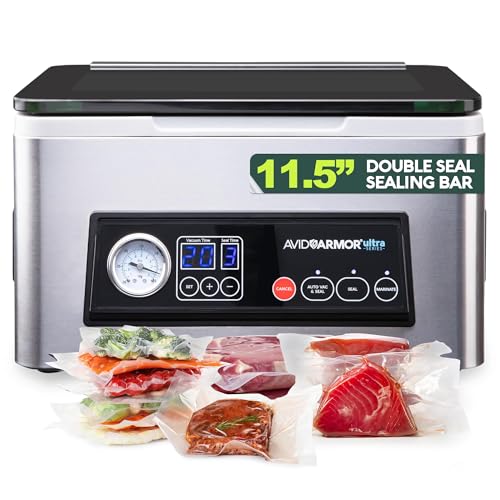
Avid Armor USV20 Chamber Vacuum Sealer — Best Compact for Home Kitchens
A home-first chamber sealer with an 11.5-inch seal bar in a footprint designed for real kitchens. The USV20 handles wet foods and marinades, includes a marinate mode, and suits serious meal preppers who found edge sealers limiting.
Check on Amazon — check price on Amazon.

VacMaster VP230 Chamber Vacuum Sealer — Best Oil-Pump Upgrade
The step up to a rotary oil pump: deeper vacuum, faster cycles, quieter running, and a 12.25-inch bar for 12 x 15 pouches. The VP230 suits heavy home use and small commercial kitchens that seal all day.
Check on Amazon — check price on Amazon.
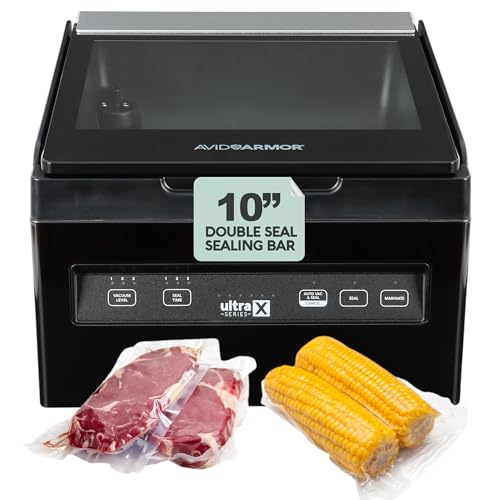
Avid Armor USVX Chamber Vacuum Sealer — Best Value Chamber Sealer
The entry point to true chamber sealing. The USVX pairs a 10-inch dual-wire seal bar with a compact body at the most accessible tier in this guide, and it still seals soups and marinades the way only a chamber machine can.
Check on Amazon — check price on Amazon.

Gasbye Chamber Vacuum Sealer — Best Large Home Chamber
A big-chamber home option with a thoughtful detail: a replaceable 11.5-inch sealing bar with double seal. The 5.3-quart chamber swallows generous portions, stainless construction cleans easily, and starter pouches are included.
Check on Amazon — check price on Amazon.

VacMaster VP95 Chamber Vacuum Sealer — Best for Small Restaurants
Commercial oil-pump performance in a footprint aimed at food trucks, caterers, and small restaurants. The VP95 portions, marinates, and seals liquids at service pace without demanding VP230-scale space.
Check on Amazon — check price on Amazon.
How These Picks Were Chosen
We filtered the chamber sealer market on five criteria. First, true chamber operation — the whole pouch sits inside the chamber; lid-style pseudo-chamber designs were excluded. Second, pump type and duty: dry-piston pumps suit home volumes, while oil pumps deliver deeper vacuum and longer service life for heavy use. Third, chamber and seal bar dimensions, which decide the largest pouch and therefore the largest food you can seal. Fourth, controls: adjustable vacuum time, seal time, and a marinate function separate serious machines from basic ones. Fifth, total ownership cost, including pouch prices, because chamber pouches are smooth, do not need the embossed texture edge-sealer bags require, and cost dramatically less per bag over time.
Every pick was cross-checked against Amazon’the Amazon catalogue before receiving a link. Machines whose listings could not be confidently matched were left out rather than guessed at, and we note where a home user is better served by a smaller, cheaper model instead of buying commercial capacity they will never use.
The 6 Best Options for best chamber vacuum sealers
VacMaster VP210 Chamber Vacuum Sealer — Best Overall
The VacMaster VP210 has earned its bestseller status the slow way: it does the chamber sealer job reliably without demanding commercial infrastructure. The dry piston pump is maintenance-free — no oil to check, change, or spill — which removes the main objection home users have to chamber machines. The chamber accepts pouches up to 10 by 13 inches on a 10.25-inch seal bar, covering family-size portions of meat, full marinade bags, and quart-scale batches of soup or sauce. Vacuum and seal times are adjustable, so delicate items get a gentler cycle and dense items get a full evacuation.
Strengths
- Maintenance-free dry pump — no oil changes ever
- Seals liquids, marinades, and soups cleanly
- Adjustable vacuum and seal times for delicate or dense foods
Trade-offs
- Heavier and larger than any edge sealer — it needs a permanent counter spot
- Dry pump is louder and slower per cycle than oil-pump rivals
- Chamber height limits very bulky items like whole large roasts
| Specification | Detail |
|---|---|
| Seal bar | 10.25 inches |
| Max pouch | 10 x 13 inches |
| Pump | Dry piston, maintenance-free |
In daily service the VP210 feels like what it is: light commercial equipment adapted for homes. Cycles are measured and unhurried compared with an edge sealer, and the machine’s weight means you will park it, not store it in a cabinet. In exchange you get seals that hold in the freezer for long storage, flat liquid pouches that stack like books, and pouch costs low enough that sealing leftovers stops feeling extravagant. For hunters, gardeners, bulk buyers, and sous vide households, this is the benchmark pick.
Long-term VP210 owners develop a simple rhythm: stock two pouch sizes, portion food to the chamber rather than forcing the chamber to fit the food, and keep the seal bar area wiped clean between sessions. The dry pump asks for nothing — no oil, no warm-up ritual — which is why this machine thrives in homes where a maintenance schedule would quietly be ignored. Expect a full cycle to take longer than an edge sealer’s quick pull; chamber sealing is a deliberate process, and the payoff is seal integrity over months of freezer storage. Bought once and used weekly, the VP210’s cost spreads across years of bulk purchases that would otherwise demand far pricier embossed bags.
Best for: home users who seal liquids and bulk food regularly and want no pump maintenance / Not suited for: small kitchens without a permanent counter spot or occasional sealers
Check on Amazon — check price on Amazon.
Avid Armor USV20 Chamber Vacuum Sealer — Best Compact for Home Kitchens
Avid Armor designs for the home user first, and the USV20 shows it: a compact 4-liter chamber that still fits an 11.5-inch seal bar, straightforward controls, and a footprint that competes for counter space far more politely than commercial boxes. It seals soups, sauces, and marinating proteins without the liquid-in-the-pump failures that kill edge sealers, and a dedicated marinate cycle speeds flavor into meat by cycling vacuum pressure. For meal prep households sealing a week’s proteins and sauces in one session, the workflow is calm and repeatable.
Strengths
- Compact footprint for a true chamber machine
- 11.5-inch seal bar fits generous pouch sizes
- Marinate function genuinely speeds up flavor penetration
Trade-offs
- Chamber volume limits very large items despite the wide bar
- Home-duty pump is not built for all-day commercial runs
- Fewer fine adjustments than VacMaster’s commercial line
| Specification | Detail |
|---|---|
| Seal bar | 11.5 inches |
| Chamber | 4L compact chamber |
The USV20 is the pick when the VP210’s commercial bulk feels like too much machine. It trades ultimate chamber volume and duty rating for livability — lighter, smaller, and simpler — while keeping the essential chamber advantage with wet food. Avid Armor also sells its own chamber pouches in sensible counts, which makes restocking painless. If your sealing is weekly and enthusiastic rather than daily and industrial, this is the sweet spot.
The USV20 rewards a meal-prep routine: dedicate one session a week, line up proteins, sauces, and portioned vegetables, and work through them in batches while the machine cycles. Because the chamber is compact, plan pouch sizes before the session rather than improvising — 8-inch and 11-inch widths cover most home work. The marinate mode is at its best with thicker cuts that normally need overnight soaking; a vacuum-cycled marinade before cooking gives weeknight chicken and pork a depth of flavor that a hurried surface rub cannot match. Keep the lid gasket clean and dry between sessions and the seal quality stays consistent for years.
Best for: meal preppers and home cooks sealing wet foods weekly / Not suited for: restaurants or processors running the machine all day
Check on Amazon — check price on Amazon.
VacMaster VP230 Chamber Vacuum Sealer — Best Oil-Pump Upgrade
The VP230 is where chamber sealing gets serious. Its half-horsepower rotary oil pump pulls a deeper, more consistent vacuum than dry pumps, cycles faster, and runs with a lower, smoother note — differences you feel on the fiftieth cycle of a processing day, not the first. The chamber takes 12 by 15 inch pouches on a 12.25-inch seal bar, which covers large roasts, whole fish, and family-pack portions that defeat smaller chambers. Controls allow vacuum time, seal time, and cooling adjustments, and the build quality is unambiguously commercial.
Strengths
- Oil pump delivers deeper vacuum and faster, quieter cycles
- Large chamber and bar handle big cuts and family packs
- Commercial build for heavy daily duty
Trade-offs
- Oil pump needs periodic oil checks and changes
- Premium-commercial tier pricing
- Size and weight demand a dedicated station
| Specification | Detail |
|---|---|
| Pump | 1/2 HP rotary oil pump |
| Seal bar | 12.25 inches |
| Max pouch | 12 x 15 inches |
Be honest about the maintenance trade: oil pumps reward care with longevity measured in many years, but they do need oil level checks and changes on schedule. For a small restaurant, food truck, farm stand, or a household processing game and garden harvests at scale, that is a trivial cost for the performance. For a light user, it is unnecessary machinery — the VP210 exists precisely for you. Judged on its intended job, the VP230 is the value peak of the commercial tier.
Oil-pump ownership on the VP230 comes down to one five-minute habit: check the oil sight glass on a schedule, keep the level where the manual specifies, and change oil when it clouds. In return, the pump delivers the same deep vacuum on a harvest weekend’s two-hundredth cycle as on the first — the consistency that separates commercial equipment from enthusiastic home gear. The large chamber also invites a batching discipline: process proteins by type, label everything at the machine, and freeze pouches flat so the freezer becomes a filing system instead of a pile. Operations that build that discipline around the VP230 rarely outgrow it.
Best for: small commercial kitchens and heavy home processors / Not suited for: occasional users who will resent oil maintenance
Check on Amazon — check price on Amazon.
Avid Armor USVX Chamber Vacuum Sealer — Best Value Chamber Sealer
The USVX answers the shopper who wants chamber performance without commercial size or price. Its 10-inch seal bar uses a dual-wire seal, which lays down a wider, more secure seal band than a single wire — a detail that matters for liquid pouches stored for months. The compact chamber covers the everyday job list: portions of meat, bags of sauce, marinated vegetables, cheese, and coffee. Controls stay simple, which suits home users who want to press a button and get a reliable seal rather than program a cycle.
Strengths
- Most accessible price tier for a true chamber sealer
- Dual-wire seal gives a wide, secure seal band
- Compact body fits home counters and storage
Trade-offs
- 10-inch bar limits pouch width versus larger rivals
- Chamber depth restricts tall or bulky items
- Not rated for continuous commercial duty
| Specification | Detail |
|---|---|
| Seal bar | 10 inches, dual wire |
| Design | Compact home chamber sealer |
The compromises are dimensional, not functional: it evacuates and seals with genuine chamber physics, so wet food behaves. You simply plan around a smaller box — portion roasts before sealing, choose pouches to fit, and batch in sensible sizes. For apartments, small households, and first-time chamber buyers testing whether the format fits their cooking, the USVX is the lowest-risk way in, and many owners will never need more machine than this.
The USVX makes the most sense when you treat it as the start of a system rather than a single purchase. Standardize on the pouch sizes that fit its chamber, keep a simple freezer inventory list on the door, and the small machine quietly handles a household’s weekly sealing without drama. Its dual-wire seal is the detail to appreciate over time: liquid pouches stored for a season place all their trust in that seal band, and the wider band is cheap insurance. If your volume eventually outgrows it, the USVX remains useful as a second machine for marinades and small batches beside a larger chamber — a common end state in serious home kitchens.
Best for: first-time chamber buyers and small households / Not suited for: buyers sealing very wide or bulky items regularly
Check on Amazon — check price on Amazon.
Gasbye Chamber Vacuum Sealer — Best Large Home Chamber
Gasbye’s chamber sealer competes on capacity per dollar for home users. The 5.3-quart chamber is large for the home tier, and the 11.5-inch sealing bar lays a double seal for extra security on liquid-heavy pouches. The detail that stands out is the replaceable seal bar: on most sealers, a worn bar means a service call or a new machine; here it is a user-swappable part, which extends the machine’s working life. Stainless steel surfaces wipe down quickly after messy sessions with marinades and sauces.
Strengths
- Large 5.3QT chamber for the home tier
- Replaceable sealing bar extends machine life
- Double seal and starter pouches included
Trade-offs
- Newer brand with a shorter track record than VacMaster or Avid Armor
- Home-duty cycle limits for back-to-back marathon sessions
- Fewer advanced cycle adjustments than commercial models
| Specification | Detail |
|---|---|
| Chamber | 5.3QT |
| Seal bar | 11.5 inches, replaceable, double seal |
Choose the Gasbye when chamber volume is your deciding factor at a home-tier price and you value the serviceability of that replaceable bar. Long-term brand support is the open question with any newer name, so weigh that against the specification advantage. For weekly family sealing — bulk meats, sauces, soups, and freezer organization — the machine’s fundamentals are right, and the included starter pouches let you begin the day it arrives.
The Gasbye’s replaceable seal bar deserves a practical note: order a spare bar when you buy the machine, not when the original wears, so a worn seal never interrupts a processing day. The large chamber tempts users to overload pouches; resist filling beyond two-thirds with liquids, and let hot foods cool before sealing, because steam is the enemy of every seal this machine makes. Stainless surfaces clean fastest while still slightly warm from a session. For a family that seals a weekly market haul — meats divided, sauces portioned, soups flattened for stacking — the chamber volume earns its counter space every single week.
Best for: families wanting maximum home chamber volume / Not suited for: buyers who prioritize decades-long brand track records above all
Check on Amazon — check price on Amazon.
VacMaster VP95 Chamber Vacuum Sealer — Best for Small Restaurants
The VP95 exists for businesses whose sealing volume is real but whose kitchens are small: food trucks, catering operations, cafes, and compact restaurants. Its industrial oil pump delivers the deep vacuum and cycle speed service work demands, while the machine’s footprint respects tight prep areas. Portioning proteins, sealing sauces for service, and rapid marinating are its home turf, and VacMaster’s commercial support network stands behind it — a consideration that matters when a machine is part of your revenue, not just your kitchen.
Strengths
- Industrial oil pump for service-pace duty
- Compact commercial footprint for tight kitchens
- Backed by an established commercial brand and parts network
Trade-offs
- Commercial pricing above home-tier machines
- Oil maintenance is part of ownership
- Overkill for purely domestic use
| Specification | Detail |
|---|---|
| Pump | Industrial oil pump |
| Intended use | Restaurants, catering, food trucks, portioning |
For a home user, the VP95 only makes sense at the serious end — a household processing harvests or game at near-commercial volume. For its intended buyers, the calculus is different: downtime costs money, pouch savings accumulate daily, and consistent seals protect both food cost and food safety practices. If sealing is part of your operation’s daily workflow, buy the machine built for operations. The VP95 is that machine in a compact body.
In commercial service the VP95’s value shows up in staff time: cycles are quick enough that sealing never becomes the task employees avoid, and the controls are simple enough that a new hire produces good seals on day one. Keep pump oil on the same checklist as fryer oil and refrigeration logs, and keep spare pouches stocked at the machine rather than in a storeroom — stock-outs at the sealer are how product ends up wrapped in film instead. Food trucks in particular benefit from the footprint: the machine fits the tight prep line while still delivering the portion consistency that keeps food cost predictable across service.
Best for: food trucks, caterers, and small restaurants sealing daily / Not suited for: casual home users with light weekly sealing
Check on Amazon — check price on Amazon.
Comparison Table
| Pick | Badge | Key spec | Best for |
|---|---|---|---|
| VacMaster VP210 Chamber Vacuum Sealer | Best Overall | 10.25-inch seal bar, dry maintenance-free pump | home users who seal liquids and bulk food regularly and want no pump maintenance |
| Avid Armor USV20 Chamber Vacuum Sealer | Best Compact for Home Kitchens | 11.5-inch seal bar, compact 4L chamber | meal preppers and home cooks sealing wet foods weekly |
| VacMaster VP230 Chamber Vacuum Sealer | Best Oil-Pump Upgrade | 1/2 HP oil pump, 12.25-inch seal bar, 12 x 15 pouches | small commercial kitchens and heavy home processors |
| Avid Armor USVX Chamber Vacuum Sealer | Best Value Chamber Sealer | 10-inch dual-wire seal bar, compact design | first-time chamber buyers and small households |
| Gasbye Chamber Vacuum Sealer | Best Large Home Chamber | 5.3QT chamber, 11.5-inch replaceable double-seal bar | families wanting maximum home chamber volume |
| VacMaster VP95 Chamber Vacuum Sealer | Best for Small Restaurants | Industrial oil pump, compact commercial footprint | food trucks, caterers, and small restaurants sealing daily |
How to Choose the Best Chamber Vacuum Sealers
Start with pump type, because it defines ownership. Dry piston pumps, like the VP210’s, are maintenance-free and ideal for home duty — no oil, no schedule, slightly slower and louder cycles. Rotary oil pumps, like those in the VP230 and VP95, pull deeper vacuum, cycle faster, run quieter, and last for years of heavy use, at the cost of periodic oil checks and changes. Match the pump to your honest weekly cycle count, not your most ambitious imaginable weekend.
Size the chamber to your largest regular job, with margin. Seal bar length sets maximum pouch width; chamber depth sets how tall food can sit. A household sealing portions and quart pouches is well served by a 10- to 11.5-inch bar. Processing whole primals, large roasts, or family packs pushes you to the 12.25-inch class. Remember that food can often be portioned before sealing — buying a smaller chamber and cutting a roast in half is a legitimate, money-saving strategy.
Finally, run the pouch math. Chamber pouches are smooth and inexpensive compared with the embossed bags edge sealers require, and the savings per pouch compound across hundreds of seals a year. Heavy users routinely recover a chamber machine’s price premium in pouch savings alone, before counting the liquid-sealing ability money cannot add to an edge sealer. Factor in seal bar replaceability, control adjustability for delicate foods, and the manufacturer’s parts support — a sealer is a decade-scale appliance, and it should be bought like one.
Chamber Sealer vs. Edge Sealer: An Honest Comparison
An edge sealer — the familiar FoodSaver style — pulls air out through the bag opening. It is compact, affordable, and excellent for dry goods. Its physics fail with liquids: the pump draws moisture toward itself, seals get contaminated, and wet food must be pre-frozen or sealed with workarounds. A chamber sealer equalizes pressure around the pouch, so liquid stays put, seals stay clean, and you gain rapid marinating and perfect sous vide preparation as bonuses.
The edge sealer’s advantages are real: size, price, and the ability to seal bags longer than any chamber — a whole brisket flat, for instance, in a long roll bag. Many serious kitchens own both: the chamber for daily and wet work, the edge sealer for oversize dry items. If you must choose one and you seal anything wet more than rarely, choose the chamber. If you seal only dry goods and storage space is tight, an edge sealer remains a rational, economical tool.
Budget Tiers for Chamber Sealers
Chamber sealers cost more than edge sealers because the chamber, lid, and pump are substantial hardware. The home tier buys true chamber physics in a compact body with simple controls — enough for weekly household duty. The prosumer tier adds maintenance-free commercial pumps or larger chambers. The commercial oil-pump tier buys duty cycle, speed, depth of vacuum, and serviceability for daily operational use. We do not print fixed prices since they move with promotions; instead, check price on Amazon for each pick and judge the tier against your cycle count. Buying one tier above your real need wastes money; buying one below guarantees frustration.
Pump Science: Vacuum Depth, Cycle Time, and What the Numbers Mean
Chamber sealers are often compared by vacuum percentage or pressure figures, but the practical measures are simpler: how completely the pouch collapses around the food, how consistent that collapse is across a long session, and how quickly the machine is ready for the next cycle. Oil pumps hold their vacuum depth as they warm and work; dry pumps trade a little depth and speed for zero maintenance. For food storage, both depths are far beyond what preservation requires — the differences show up in cycle time and in how the machine feels on cycle fifty, not in whether your green beans keep.
Cycle time deserves respect in your decision because it compounds. A machine that saves fifteen seconds per cycle saves a weekly meal-prepper a few minutes; it saves a processing household an hour across a harvest weekend, and a small business real labor cost every single day. Match the pump to the arithmetic of your actual sessions. The most satisfied chamber owners are not the ones with the deepest vacuum — they are the ones whose machine’s speed, size, and maintenance profile match the rhythm of their kitchen.
Pouch Economics and Building a Sensible Pouch Inventory
The chamber format’s quiet financial advantage deserves a full explanation. Edge sealers need embossed bags — textured so air can escape through channels — and that texture costs money on every bag, forever. Chamber pouches are plain smooth film, produced cheaply, and sold in bulk counts that drive the per-pouch cost down to a fraction of an embossed bag. A household sealing several hundred pouches a year saves a meaningful sum annually; a business sealing thousands saves the price of the machine itself on a short horizon.
Build your inventory around three sizes: a small pouch for portions, cheese, and herbs; a medium that handles most proteins and quart-scale liquids; and the largest your chamber accepts for family packs and roasts. Buy in bulk counts once you know your sizes, store pouches flat and clean, and resist the novelty sizes that seem useful once a year. Standardizing sizes also speeds your workflow — you stop deciding and start sealing — and it makes the tug-test seal check second nature because every pouch behaves like the last one.
Freezer Organization: Getting the Full Value From Flat Pouches
A chamber sealer transforms a freezer from a pile into a filing system, but only if you seal with the system in mind. Freeze liquid pouches flat on a tray first, then file them upright like books — a winter of soups and sauces occupies a fraction of the space containers demand, and any single portion can be found and thawed without excavating. Label with contents, quantity, and date at the machine, while the information is in front of you; the pouch you leave unlabeled is guaranteed to become the mystery pouch.
Rotate with intent: new pouches go behind or beneath older stock, and a simple freezer inventory on the door prevents the double-buying that quietly eats the savings vacuum sealing creates. Proteins sealed without air resist freezer burn for extended storage, but quality still declines eventually — vacuum extends the window, it does not abolish it. Households that pair the machine with this light discipline report the real payoff: less waste, faster weeknight cooking from a stocked freezer, and bulk buying that actually saves money instead of feeding a frosty archive.
Sous Vide With a Chamber Sealer: Why the Pairing Works So Well
Chamber sealers and sous vide cooking are natural partners for a practical reason: sous vide bags must be fully sealed with air removed, and they often contain liquid — marinades, butter, aromatics in oil — that defeats edge sealers. A chamber machine seals a bag containing both protein and liquid with a clean, strong seal, and the absence of air pockets means even water contact and even cooking. Bags sealed under proper vacuum also resist floating, the small annoyance that forces sous vide cooks to weight bags down with racks and clips.
A few working habits improve results. Chill marinades before sealing so they stay low in the pouch under vacuum. Leave generous headroom above the food so the seal zone stays clean. After cooking, chill sealed bags rapidly in ice water if you are storing them, and refrigerate or freeze promptly — vacuum sealing supports safe storage practices, it does not replace them. Cooks who adopt the chamber-plus-sous-vide pairing consistently report the same discovery: the sealer stops being a storage tool and becomes part of how they cook, from weeknight chicken to weekend short ribs.
Troubleshooting Weak Seals and Vacuum Problems
Most chamber sealer problems trace to a short list of causes, and most are fixable in minutes. A seal that peels open usually means a contaminated seal zone — liquid, fat, or crumbs across the seal line — or a seal time set too low for the pouch thickness. Wipe the pouch opening inside and out, increase seal time slightly, and test with a water pouch before blaming the machine. A pouch that inflates slowly in the freezer points to a micro-channel in the seal or a pinhole in the film; double-sealing liquid pouches, a habit several picks in this guide support with dual-wire bars, closes most of these cases.
Weak vacuum has its own checklist. Inspect the lid gasket for cracks, food debris, or a flattened profile that no longer seals against the chamber rim — gaskets are wear parts and replacing one restores many tired machines. On oil-pump models, check the oil level and clarity before suspecting the pump itself. On all models, confirm the pouch lies flat across the seal bar without wrinkles and that bulky food is not lifting the pouch off the bar. Work the checklist in order and the large majority of problems resolve at the gasket, the oil, or the loading — not at the wallet.
A Practical Buying Checklist Before You Order
Before ordering, measure the counter where the machine will live — width, depth, and the vertical clearance the lid needs to open fully — and confirm the spot can be permanent, because chamber sealers are heavy enough that nobody happily moves them per use. Check the electrical requirement against the circuit in that spot; oil-pump models in particular deserve a circuit that is not already sharing a heavy load. Then list your three most common sealing jobs and match them against the chamber dimensions and seal bar of your chosen model, in writing, rather than assuming they will fit.
Order the machine with its working kit in the same basket: pouches in your two main sizes, a spare seal bar or gasket where the model supports user replacement, and pump oil for oil-pump models. Starting with consumables on hand means the machine earns its place in your routine from the first week instead of waiting on a second delivery. Finally, run a deliberate first session — a batch of water pouches, a soup, a marinade, and a delicate item — and note the settings that worked for each on a card kept with the machine. That card, written once, is the difference between a chamber sealer that feels fussy and one that feels like the most reliable appliance you own.
How to Use a Chamber Vacuum Sealer for Liquids, Marinades, and Sous Vide
Set up the pouch correctly. Choose a chamber pouch sized to the chamber with the food sitting below the seal bar line, and keep the pouch opening clean and dry — wipe the inside top edges even with liquids, because a wet seal zone is the main cause of weak seals. For soups and sauces, fill the pouch no more than two-thirds full, and consider chilling liquids first; cold liquid boils less violently under vacuum than warm liquid, which keeps the chamber cleaner and the seal stronger.
Dial the cycle to the food. Dense, dry items take a full vacuum time. Delicate items — berries, soft cheese, flaky fish — need a shorter vacuum or a gentle setting so pressure does not crush them. Liquids need enough vacuum to remove air but a prompt seal before agitation climbs the pouch walls. Run one test pouch whenever you change food types, open it, and check the seal by tugging firmly; a good seal looks uniformly translucent with no channels or wrinkles.
For marinating, place meat and marinade in the pouch, run the marinate cycle if your machine offers one, or run two standard vacuum cycles back to back, then refrigerate. The pressure cycling opens the meat’s structure and drives marinade in a fraction of the usual time. For sous vide, seal with minimal added liquid, ensure the seal is flawless, and cook promptly or refrigerate or freeze. Label every pouch with contents and date before it goes into the freezer — flat, labeled, stackable pouches are the quiet superpower of chamber ownership.
Common Buying Mistakes
Mistake one: buying an edge sealer for a liquid-heavy workload and fighting it for years. If soups, sauces, and marinades are your routine, the chamber format is the fix, not another edge model. Mistake two: overfilling liquid pouches. Two-thirds full is the ceiling; more invites boil-over under vacuum and contaminated seals.
Mistake three: ignoring the seal zone. A single drip or crumb across the seal bar line creates a channel that leaks slowly in the freezer, and the food freezer-burns despite a strong vacuum. Mistake four: skipping oil maintenance on oil-pump machines. Cloudy or low oil shortens pump life dramatically — the five-minute check is the cheapest insurance in this entire category.
Mistake five: sealing hot food. Steam under vacuum condenses, weakens seals, and can damage pumps over time. Chill food first. Mistake six: using embossed edge-sealer bags in a chamber machine. They work poorly and cost more; smooth chamber pouches are the correct, cheaper consumable — one of the format’s core advantages.
Final Recommendation
For most buyers, the VacMaster VP210 is the recommendation: maintenance-free, proven, and sized for real households. The Avid Armor USV20 suits home kitchens that want a smaller footprint, the USVX is the value entry point, and the Gasbye offers the largest home chamber. Step up to the VP230 for oil-pump performance at home-plus scale, or the VP95 if sealing is part of a food business. Whichever you choose, you are buying the ability to seal the foods edge sealers cannot — and that ability changes what your freezer can do.
Compare the neighboring options before deciding: Best Vacuum Sealers, Best Commercial Grade Vacuum Sealers, Best Vacuum Sealer Bags, and Best Sous Vide Machines cover the edge-sealer alternatives, heavier commercial tier, consumables, and the cooking method these machines serve best.
Shortlist again with direct links: VacMaster VP210 Chamber Vacuum Sealer · Avid Armor USV20 Chamber Vacuum Sealer · VacMaster VP230 Chamber Vacuum Sealer — check price on Amazon for each before you decide.
Frequently Asked Questions
Can a chamber vacuum sealer seal liquids?
Yes — that is its defining advantage. Because the whole pouch sits inside the chamber and pressure equalizes around it, liquid stays in place while air is removed, so soups, sauces, and marinades seal cleanly without being drawn into a pump, as happens with edge sealers.
Are chamber vacuum sealers worth it for home use?
If you seal wet food, buy in bulk, garden, hunt, or cook sous vide regularly, yes. Chamber pouches also cost far less per bag than embossed edge-sealer bags, so heavy users save money over time. Occasional dry-goods-only sealers are better served by a compact edge sealer.
What is the difference between an oil pump and a dry pump?
Oil pumps pull a deeper vacuum, cycle faster, run quieter, and suit heavy or commercial duty, but need periodic oil checks and changes. Dry piston pumps are maintenance-free and ideal for home volumes, with slightly slower, louder cycles. Match the pump to your weekly cycle count.
What size chamber sealer do I need?
Size to your largest regular job. A 10- to 11.5-inch seal bar covers portions, quart pouches, and most family sealing. A 12.25-inch class machine handles large roasts and family packs. Portioning big items before sealing lets a smaller, cheaper chamber do almost any household job.
Can I use regular vacuum bags in a chamber sealer?
Chamber sealers use smooth chamber pouches, which are inexpensive and designed for the format. Embossed edge-sealer bags are unnecessary, cost more, and can seal less reliably in a chamber machine. Stock smooth pouches in two or three sizes for the best economics.
How long does vacuum-sealed food last in the freezer?
Properly vacuum-sealed food resists freezer burn far longer than wrapped food because air — the cause of freezer burn and oxidation — is removed. Exact times depend on the food and freezer temperature, so label pouches with dates and rotate stock, using oldest first.

