Disclosure: airfryerkitchensupply.com is reader-supported. When you buy through links on our site, we may earn an affiliate commission at no extra cost to you.
Where to buy
Every linked teapot below was verified against Amazon’s catalog data for this site before a link was added, and the pu-erh suitability in this guide is grounded in what those verified listings actually state — clay type, capacity and, in two cases, an explicit pu-erh or “Puerh” claim in the product title itself. Use the links to check price on Amazon, and confirm the capacity on the listing before ordering: pu-erh brewing rewards a pot in the 150 to 300 milliliter working range, and listings in this category occasionally change clay descriptions between production runs.
- HOHCNA Yixing Zisha Teapot, 10 oz Handmade Purple Clay — Best Overall for Pu-erh: Check the current price on Amazon
- YXHUPOT Purple Clay Xishi Teapot, Dark Brown Zini, 7 oz / 210cc — Best for Solo Pu-erh Sessions: Check the current price on Amazon
- CmengAo Yixing Teapot Set, 6 oz Zisha Purple Clay with 4 Cups — Best Pu-erh Starter Set: Check the current price on Amazon
- XUANTGY Yixing Clay Teapot, 14 oz Zini, Large Capacity — Best Large Pot for Shared Ripe Pu-erh: Check the current price on Amazon
- SILINE Artisan Yixing Clay Tea Set, Xishi Zhuni Red, 7.8 oz with 2 Cups — Best for Young Raw Pu-erh: Check the current price on Amazon
- YXHUPOT Chinese Yixing Zini Clay Xishi Teapot, Ball Filter, 6 oz / 180cc — Best Filtration for Cake Leaf: Check the current price on Amazon
Choosing the best chinese teapots for pu erh starts with what pu-erh demands that other teas do not. Pu-erh is a fermented tea from Yunnan, sold as loose leaf and in compressed cakes, and it comes in two temperaments: raw (sheng) pu-erh, which can be brisk, bitter and aromatically wild in its youth, and ripe (shou) pu-erh, pile-fermented for depth, earthiness and a thick, dark cup. Both brew at a full boil, both reward many infusions, and both are famously improved by a pot that holds heat fiercely and softens rough edges. That pot, in the Chinese tradition, is unglazed Yixing clay — and specifically its purple zini family, whose porous body and thermal mass were practically designed around this tea.
The six picks below are all clay-forward for that reason, and every one was verified through this site’s Amazon catalog check before earning a link. Two of them state their pu-erh purpose in their verified titles outright: the HOHCNA purple clay pot, sold as an “Oolong Puerh Brewer,” and the CmengAo zisha set, which names pu-erh among its intended teas. Around those anchors sit a dark zini Xishi pot at a focused 210 milliliters, a larger zini pot for shared ripe pu-erh sessions, the zhuni SILINE set — included deliberately for young raw pu-erh, where its dense clay handles aroma and heat differently — and a ball-filter zini Xishi whose filtration suits the broken leaf that cake prising produces.
One discipline governs everything that follows: a clay pot for pu-erh becomes a pu-erh pot. The clay absorbs the tea’s deep, earthy character and returns it to every later cup, which is glorious for pu-erh and ruinous for a delicate green tea brewed in the same vessel. This guide treats that dedication as the price of admission and explains the ripe-versus-raw split honestly — many experienced drinkers keep separate pots for each, because raw and ripe pu-erh season clay in noticeably different directions. Buy with that commitment understood, and the pot you choose will not just brew pu-erh; across a year of sessions, it will learn it.
In this guide
Quick Picks
For ripe pu-erh, start with zini purple clay and a capacity matched to your table. For young raw pu-erh, the dense zhuni pick earns its place. Every pot here is a dedication pot — that is the point.
HOHCNA Yixing Zisha Teapot, 10 oz Handmade Purple Clay — Best Overall for Pu-erh. The only pick whose verified title calls it a “Puerh Brewer” outright: unglazed purple clay at a session-sized 10 ounces, built to season on ripe pu-erh and roasted depth. Check price on Amazon.
YXHUPOT Purple Clay Xishi Teapot, Dark Brown Zini, 7 oz / 210cc — Best for Solo Pu-erh Sessions. A dark zini Xishi at the solo drinker’s ideal 210 milliliters: concentrated rounds, classic form, and the softening clay character ripe and aged pu-erh respond to best. Check price on Amazon.
CmengAo Yixing Teapot Set, 6 oz Zisha Purple Clay with 4 Cups — Best Pu-erh Starter Set. A 6-ounce purple clay pot with four cups and a built-in filter, whose verified title names pu-erh directly — the complete, correctly proportioned first setup for a shared pu-erh practice. Check price on Amazon.
XUANTGY Yixing Clay Teapot, 14 oz Zini, Large Capacity — Best Large Pot for Shared Ripe Pu-erh. The biggest clay in the roundup: 14 ounces of zini built for the long, topped-up ripe pu-erh sessions of a full table, where the pot works as the session’s anchor rather than a sprinter. Check price on Amazon.
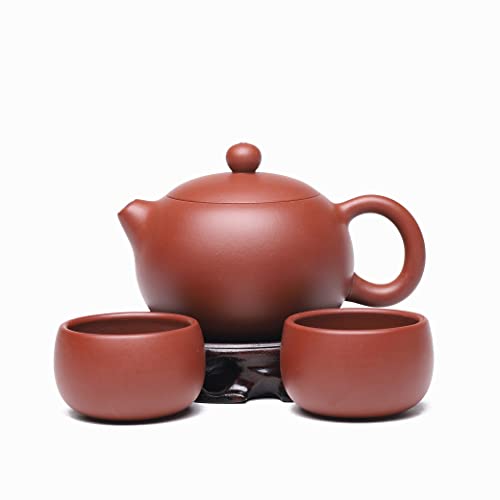
SILINE Artisan Yixing Clay Tea Set, Xishi Zhuni Red, 7.8 oz with 2 Cups — Best for Young Raw Pu-erh. The deliberate exception: dense zhuni clay that keeps young raw pu-erh’s aromatics vivid and its briskness honest, in an artisan Xishi set with cups — the raw-tea specialist’s clay. Check price on Amazon.
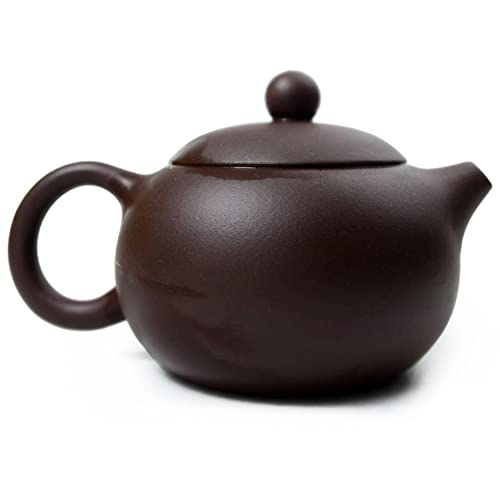
YXHUPOT Chinese Yixing Zini Clay Xishi Teapot, Ball Filter, 6 oz / 180cc — Best Filtration for Cake Leaf. A zini Xishi whose ball filter was made for pu-erh’s reality: prised cake leaf sheds fragments, and this spout strains them out for clean cups across every infusion. Check price on Amazon.
How These Picks Were Chosen
Pu-erh suitability was the filter, applied strictly. Candidates needed unglazed clay construction — the seasoning and heat retention this tea rewards — or a verified listing that positioned the pot for pu-erh by name. Each surviving pot was verified against Amazon’s catalog through this site’s system, with ASIN, clay and capacity confirmed from the returned title before any purchase link was added. Glazed pots, glass pots and general-purpose teapots were excluded from the picks, however well they brew other teas, because a guide to teapots for pu-erh that recommends a neutral vessel has answered a different question.
Within the clay field, we weighed the factors pu-erh actually stresses. Heat retention came first: pu-erh extracts best at a rolling boil across many infusions, and a pot that sheds heat quickly produces thin later rounds, so wall substance and clay density mattered. Filtration came second, because prising leaf from a compressed cake inevitably produces fragments, and a pot whose spout clogs on fines will sabotage a session; ball filters and multi-hole outlets scored accordingly. Capacity was judged against pu-erh’s social reality — this is a tea brewed in long, shared, many-round sessions — favoring the 180 to 300 milliliter band for most tables, with one focused smaller option for solo raw pu-erh drinkers.
Finally, we separated the ripe and raw cases rather than pretending one pot tops both. Zini purple clay’s softening, rounding character is the classic match for ripe pu-erh’s depth and for aged raw tea, while dense zhuni treats young raw pu-erh’s aroma and briskness with a precision some drinkers prefer. Both positions are represented below with their reasoning stated, so you can buy for the pu-erh you actually drink. No fixed prices appear in this guide — pu-erh teapot listings fluctuate — so check price on Amazon on any pick before deciding.
The 6 Best Chinese Teapots for Pu Erh

HOHCNA Yixing Zisha Teapot, 10 oz Handmade Purple Clay — Best Overall for Pu-erh
The HOHCNA pot — Best Overall for Pu-erh — takes the top spot on the strength of a single verified phrase: its own listing calls it a “Loose Leaf Oolong Puerh Brewer.” That positioning is backed by the right material — handmade, unglazed Yixing purple clay — and the right scale, a 10-ounce body that treats pu-erh as the long-session tea it is. Purple zini-family clay is the tradition’s answer to ripe pu-erh specifically: porous enough to absorb the pile-fermentation roughness that can shadow a young ripe cake, substantial enough to hold a rolling boil’s heat across a dozen infusions.
Strengths
- Verified listing positions it explicitly as a pu-erh brewer
- Unglazed purple clay seasons deeply on ripe pu-erh
- 10 oz capacity sustains long, pitcher-based sessions
Trade-offs
- Generous capacity for a solo drinker’s concentrated rounds
- Requires the full no-soap, one-tea dedication discipline
- Engraved traditional styling will not suit minimalists
| Specification | Detail |
|---|---|
| Clay | Yixing zisha purple clay, unglazed (per Amazon title) |
| Capacity | 10 oz (per Amazon title) |
| Positioning | Oolong Puerh Brewer (per Amazon title) |
Across a season of dedicated use, this is the pot that changes most — in the drinker’s favor. The first weeks brew a clean, correct ripe pu-erh; by the second month of regular sessions, the clay’s seasoning begins its quiet work, rounding the cup’s edges and thickening its middle in a way that drinkers consistently describe as the same tea tasting more settled. The capacity supports the way ripe pu-erh is actually enjoyed: rounds decanted to a fairness pitcher, a table drinking together, a pot topped up across a slow morning without ever going thin.
The commitments are the category’s commitments, stated plainly. This pot is for pu-erh (and its stated oolong sibling) only; the day a scented or green tea goes into it, the seasoning you built becomes a contaminant. Its size is a table size — solo drinkers brewing tight, concentrated rounds should take the smaller Xishi below instead. And the engraved calligraphy is a traditional aesthetic choice that will either complete your tea corner or clash with it. Judged purely as a pu-erh instrument, though, no pick in this roundup aligns material, capacity and stated purpose more completely.
Best for: Ripe pu-erh drinkers and shared long sessions / Not suited for: Delicate-tea drinkers or anyone unwilling to dedicate a pot
Check on Amazon to check price on Amazon and confirm the current configuration before you buy.

YXHUPOT Purple Clay Xishi Teapot, Dark Brown Zini, 7 oz / 210cc — Best for Solo Pu-erh Sessions
The YXHUPOT Zini Xishi — Best for Solo Pu-erh Sessions — is the connoisseur’s argument in this roundup: that pu-erh reveals itself best in small, concentrated rounds from a pot sized to the drinker, not the dinner party. Its verified title specifies dark brown zini clay in the Xishi form at 210cc, and each of those facts serves the tea. Zini’s porosity softens ripe pu-erh’s edges and seasons toward depth; the Xishi’s rounded body and balanced pour suit short, controlled infusions; and 210 milliliters is large enough for a pitcher’s worth per round and small enough to keep every round honest.
Strengths
- 210cc capacity hits the solo gongfu sweet spot for pu-erh
- Dark zini clay is the classic seasoning match for ripe pu-erh
- Xishi form pours smoothly and handles comfortably
Trade-offs
- Small capacity means constant refills at a shared table
- Entry positioning — finishing is honest rather than artisan
- Dedication required, as with all unglazed clay
| Specification | Detail |
|---|---|
| Clay | Zini purple clay, dark brown (per Amazon title) |
| Capacity | 7 oz / 210cc (per Amazon title) |
| Form | Xishi (per Amazon title) |
For the drinker who brews alone daily — the morning ripe pu-erh at a desk, the evening raw session taken slowly — this pot’s scale changes the economics and the experience at once. A full session uses a modest weight of leaf yet yields round after round, because the concentration is in the ratio rather than the volume. Aged raw pu-erh drinkers will find the same virtues: zini treats a mellowed sheng with the gentleness it has earned, and the pot seasons toward the shared character of the two great pu-erh families more gracefully than toward either extreme.
Its boundaries are capacity and company. Two drinkers can share it happily; four will spend the session watching the kettle. And as an accessibly positioned pot, its finishing is workmanlike rather than collectible — the clay and form are right, the artistry is modest. For the solo pu-erh practice, that trade is the correct one: money spent on correct clay at correct size, in the form the tradition settled on centuries ago, outperforms money spent on decoration at the wrong capacity every single session.
Best for: Solo pu-erh drinkers and focused gongfu sessions for two / Not suited for: Groups or drinkers wanting a large, forgiving pot
Check on Amazon to check price on Amazon and confirm the current configuration before you buy.

CmengAo Yixing Teapot Set, 6 oz Zisha Purple Clay with 4 Cups — Best Pu-erh Starter Set
The CmengAo set — Best Pu-erh Starter Set — is the only complete set in this roundup whose verified title names pu-erh outright, listing it alongside oolong and loose leaf as the teas this zisha set serves. The proportions are a practitioner’s: a 6-ounce purple clay pot, a built-in filter, and four small cups. For a household beginning pu-erh together, that single box contains the entire method at correct scale — concentrated pot, clean pour, small cups that make each of the many infusions a sip to attend to rather than a mug to drain.
Strengths
- Verified title names pu-erh among its intended teas
- Complete set with four cups for a shared first session
- Built-in filter handles cake-prising fragments cleanly
Trade-offs
- 6 oz pot refills often across a long table session
- Cups are serviceable set pieces, not artisan ceramics
- Concentrated capacity is a method, not a bulk brewer
| Specification | Detail |
|---|---|
| Clay | Zisha purple clay (per Amazon title) |
| Capacity | 6 oz (per Amazon title) |
| Includes | Teapot with 4 cups, built-in filter (per Amazon title) |
The built-in filter deserves its mention in a pu-erh-specific guide, because pu-erh leaf — prised from a cake — sheds more fragments than tidy rolled oolongs do, and a pot that strains cleanly keeps those fines out of the cup and out of the late infusions’ bitterness. Paired with the small capacity, it teaches the core pu-erh skill quickly: many short, fully decanted rounds, each one distinct, the table tasting the tea evolve rather than merely consuming it. Purple clay seasons under this regime exactly as it should, and a set begun on ripe pu-erh will be visibly — tasteably — better at its job within a season.
Scale is its only real limit. Six ounces is a teacher’s capacity and a host’s rhythm of constant, convivial refilling; a drinker who wants a large personal pot for a solitary morning should take the HOHCNA instead. The cups are honest set ware. But as a first pu-erh purchase for more than one drinker, nothing else here assembles the whole practice — correct clay, correct size, filtration suited to cake leaf, cups included — in one decision.
Best for: New pu-erh drinkers starting a shared gongfu practice / Not suited for: Solo drinkers wanting a larger personal pot
Check on Amazon to check price on Amazon and confirm the current configuration before you buy.

XUANTGY Yixing Clay Teapot, 14 oz Zini, Large Capacity — Best Large Pot for Shared Ripe Pu-erh
The XUANTGY pot — Best Large Pot for Shared Ripe Pu-erh — defends a proposition the small-pot picks cannot: that some pu-erh drinking is not a tasting flight but a table’s long companion. Its verified title describes a 14-ounce zini clay pot of large capacity, handmade, sold with a tea towel. Fourteen ounces exceeds strict gongfu sizing, and this review will not pretend otherwise — but ripe pu-erh, brewed strong and decanted round by round to a pitcher across a family table or a long evening, is a legitimate and beloved way to drink this tea, and it wants exactly this pot.
Strengths
- Largest capacity here, matched to shared ripe pu-erh drinking
- Zini clay seasons toward ripe pu-erh’s depth and sweetness
- Handmade positioning with a tea towel included, per the listing
Trade-offs
- Too large for true concentrated solo gongfu
- Long sessions in a big pot demand disciplined full decanting
- Entry-to-mid positioning rather than artisan finishing
| Specification | Detail |
|---|---|
| Clay | Zini clay (per Amazon title) |
| Capacity | 14 oz (per Amazon title) |
| Positioning | Large capacity, handmade (per Amazon title) |
The clay choice carries the design. Zini at this scale gives a big body of clay to season, and a household that runs ripe pu-erh through it weekly will build a deep, sweet seasoning that turns the pot into the taste of home tea itself. The discipline the size demands is decanting: with more liquor per round, leaving tea sitting on the leaf punishes faster, so the pitcher habit matters more here than with any other pick. Observed faithfully, the pot delivers round after generous round without the kettle fatigue of a 6-ounce set at a full table.
Choose it with eyes open about what it is not. It will not produce the concentrated, stopwatch-precise infusions the small Xishi exists for, and a solo drinker will find it wasteful of leaf and attention. It is a household pot, positioned accessibly rather than as an artisan object. For the family whose pu-erh habit is generous, social and ripe-leaning, it is the roundup’s most hospitable clay — the pot that is always on the table when people sit down.
Best for: Families and groups sharing ripe pu-erh over long sessions / Not suited for: Solo drinkers or concentrated gongfu purists
Check on Amazon to check price on Amazon and confirm the current configuration before you buy.
SILINE Artisan Yixing Clay Tea Set, Xishi Zhuni Red, 7.8 oz with 2 Cups — Best for Young Raw Pu-erh
The SILINE set — Best for Young Raw Pu-erh — is in this guide to make a distinction the other five picks deliberately do not. Young raw pu-erh is brisk, bitter-edged and intensely aromatic, and the softening porosity that makes zini perfect for ripe tea can mute exactly what a young sheng drinker paid for. Zhuni — the dense, fine red clay of this verified Xishi set — behaves differently: less absorptive, fiercely heat-retentive, and faithful to aroma, it brews young raw pu-erh with its energy intact and lets the drinker, not the pot, decide how to manage the briskness through infusion timing.
Strengths
- Dense zhuni preserves young raw pu-erh’s aromatics and energy
- Artisan Xishi form with cups included for a complete setup
- High heat retention suits pu-erh’s boiling-water brewing
Trade-offs
- Zhuni seasons less forgivingly — it will not soften a harsh young sheng
- Same pot cannot serve ripe pu-erh without cross-seasoning compromises
- Mid-tier craft pricing for a specialist tool
| Specification | Detail |
|---|---|
| Clay | Yixing zisha, zhuni red (per Amazon title) |
| Capacity | 7.8 oz (per Amazon title) |
| Form | Xishi, with 2 cups (per Amazon title) |
That fidelity is a genuine connoisseur’s preference, and the set around the clay supports it: an artisan Xishi form that pours fast and clean for the short early infusions young raw demands, a 7.8-ounce capacity sized for one or two attentive drinkers, and matched cups that present the pale, bright liquor as it should be seen. Across months, a zhuni pot dedicated to raw pu-erh seasons lightly and brightly, in keeping with its tea — a different but equally valid expression of the clay tradition.
The honesty clause matters most here: zhuni will not rescue a harsh tea. Where zini forgives, zhuni reveals, and a rough young cake will taste rough — instructively so, which is why evaluators love this clay, but newcomers whose pu-erh is ripe should buy the HOHCNA and never look back. For the growing population of raw pu-erh devotees, though, this set is the roundup’s one correct answer, and its presence is what makes this a pu-erh guide rather than a ripe-pu-erh guide with footnotes.
Best for: Young raw (sheng) pu-erh drinkers who prize aroma and clarity / Not suited for: Ripe pu-erh drinkers wanting zini’s softening character
Check on Amazon to check price on Amazon and confirm the current configuration before you buy.
YXHUPOT Chinese Yixing Zini Clay Xishi Teapot, Ball Filter, 6 oz / 180cc — Best Filtration for Cake Leaf
The YXHUPOT Ball Filter Xishi — Best Filtration for Cake Leaf — solves the most mechanical problem in pu-erh brewing, and solves it at the source. Pu-erh comes off a compressed cake in layers and fragments, and those fragments migrate to the spout of any pot they brew in. A single-hole spout clogs or, worse, passes the fines into the cup, where they keep extracting and bitter the round. This verified zini Xishi carries a spherical ball filter at the spout base — a many-holed strainer that passes liquor fast and holds fragments back — in a 180cc body of the right clay.
Strengths
- Ball filter strains prised-leaf fragments better than simple spout holes
- Zini clay seasons correctly for ripe and aged pu-erh
- Compact 180cc size brews true concentrated gongfu rounds
Trade-offs
- Small capacity refills often for groups
- Ball filter needs a rinse habit to stay free-flowing
- Entry positioning with honest, not artisan, finishing
| Specification | Detail |
|---|---|
| Clay | Yixing zini clay (per Amazon title) |
| Capacity | 6 oz / 180cc (per Amazon title) |
| Filter | Ball filter / spherical filter holes (per Amazon title) |
The result, across a session, is composure. Pours stay quick and complete from the first infusion to the twelfth, decanting stays total, and the cups stay clean — three unglamorous virtues that decide whether late infusions taste like the tea’s deep heart or like its sediment. The zini body seasons for ripe and aged pu-erh exactly as the tradition intends, and the compact capacity concentrates the brew the way gongfu method asks. It is, in the best sense, an engineer’s teapot wearing a classical form.
Its costs are smallness and upkeep. At 180cc it is a one-to-two-drinker pot that will keep a kettle busy at a full table, and a ball filter earns its keep only if it is rinsed promptly — fragments left to dry inside it will slow the pour it exists to speed. Neither cost is hidden, and both are trivial next to the problem solved. If your pu-erh comes from cakes, as most pu-erh does, this is the pot whose design has actually reckoned with your leaf.
Best for: Cake pu-erh drinkers tired of fines in the cup / Not suited for: Drinkers wanting a larger session pot
Check on Amazon to check price on Amazon and confirm the current configuration before you buy.
Comparison Table
For pu-erh, read this table by clay first and capacity second: zini for ripe and aged teas, zhuni for young raw leaf, and milliliters matched to whether you brew alone or across a table.
| Pick | Badge | Key spec | Best for |
|---|---|---|---|
| HOHCNA Yixing Zisha Teapot, 10 oz Handmade Purple Clay | Best Overall for Pu-erh | Yixing zisha purple clay, 10 oz, unglazed, pu-erh positioning (per Amazon title) | Ripe pu-erh drinkers and shared long sessions |
| YXHUPOT Purple Clay Xishi Teapot, Dark Brown Zini, 7 oz / 210cc | Best for Solo Pu-erh Sessions | Zini clay, 7 oz / 210cc, Xishi form (per Amazon title) | Solo pu-erh drinkers and focused gongfu sessions for two |
| CmengAo Yixing Teapot Set, 6 oz Zisha Purple Clay with 4 Cups | Best Pu-erh Starter Set | Zisha purple clay, 6 oz, 4 cups, built-in filter, pu-erh named (per Amazon title) | New pu-erh drinkers starting a shared gongfu practice |
| XUANTGY Yixing Clay Teapot, 14 oz Zini, Large Capacity | Best Large Pot for Shared Ripe Pu-erh | Zini clay, 14 oz, large capacity (per Amazon title) | Families and groups sharing ripe pu-erh over long sessions |
| SILINE Artisan Yixing Clay Tea Set, Xishi Zhuni Red, 7.8 oz with 2 Cups | Best for Young Raw Pu-erh | Yixing zisha, zhuni, 7.8 oz, teapot with 2 cups (per Amazon title) | Young raw (sheng) pu-erh drinkers who prize aroma and clarity |
| YXHUPOT Chinese Yixing Zini Clay Xishi Teapot, Ball Filter, 6 oz / 180cc | Best Filtration for Cake Leaf | Zini clay, 6 oz / 180cc, ball filter (per Amazon title) | Cake pu-erh drinkers tired of fines in the cup |
How to Choose a Chinese Teapot for Pu-erh: Clay, Heat and Capacity
Clay selection for pu-erh begins with the zini family — the purple-brown clays of Yixing — and the reasoning is chemical as much as traditional. Zini is comparatively porous among zisha clays, and that porosity does two things pu-erh loves: it absorbs and softens the rough, funky edges that ripe pu-erh can carry from pile fermentation, and across months of use it builds a seasoning that deepens the tea’s characteristic earthy sweetness. A zini pot that has brewed nothing but ripe pu-erh for a year produces a cup that a new pot, or a porcelain pot, measurably cannot — smoother at the edges, thicker in the middle. Aged raw pu-erh, mellowed by years of storage, asks for the same gentle treatment and belongs in zini for the same reasons.
Young raw pu-erh is the exception that proves the framework. A brisk, aromatic young sheng can be dulled by a heavily seasoned zini pot, and many drinkers brew it in denser, less porous clay — zhuni — or in porcelain, where heat stays high and aromatics stay vivid. This guide includes one zhuni pick for exactly that drinker, labeled honestly as the raw-tea specialist. What unites both cases is heat: pu-erh of either type wants water at a full, rolling boil and a pot that holds that heat through short infusions, so preheating the pot is not ritual decoration but extraction physics — a cold pot steals the first infusion’s temperature and returns a thin cup.
Capacity, finally, should follow your session style. Pu-erh sessions run long — ten infusions is ordinary, and good leaf goes further — so the liquor accumulates: a 200-milliliter pot across twelve rounds is well over two liters of tea. Solo drinkers do well at 180 to 220 milliliters, brewing concentrated rounds into a fairness pitcher. Shared tables and ripe pu-erh mornings, where the pot is topped up across a long conversation, suit the 280 to 330 milliliter class. Resist the Western instinct to oversize further; a giant pot of pu-erh brewed once, weakly, is precisely the cup that makes newcomers wonder what the fuss is about.
Ripe vs Raw Pu-erh: One Pot or Two?
The honest answer is that two pots are better and one pot is workable, and the deciding factor is how different your two pu-erhs are. Ripe pu-erh seasons clay toward depth, earth and sweetness. Raw pu-erh — especially young raw — seasons it toward brightness and aroma. A single zini pot brewed with both will settle into a middle character that flatters ripe tea slightly more, because ripe’s assertive fermentation notes dominate the clay’s memory. Drinkers whose collection leans heavily one way should dedicate the pot that way and lose nothing. Drinkers who love both styles equally, and drink them weekly, will genuinely taste the case for a second pot.
Sequencing softens the dilemma for new buyers. Start with one good zini pot and dedicate it to the style you drink most — for most newcomers that is ripe pu-erh, the more forgiving and immediately pleasurable of the two. Brew raw pu-erh in a porcelain gaiwan or any glazed vessel meanwhile; porcelain’s neutrality suits young raw tea well and costs little. If raw pu-erh grows from an occasional experiment into a habit, that is the moment a second, denser-clay pot earns its place. This staged approach spends money in the order the palate actually develops, rather than buying a full clay battery for a practice that is still forming.
Whichever structure you choose, the care rules do not change. A pu-erh pot is rinsed with hot water only, never soap; emptied of leaves promptly after a session; and dried fully with its lid off, because a sealed, damp pu-erh pot is the one reliable way to grow stale, musty flavors into clay that was seasoning beautifully. Treated that way, a zini pot is not a consumable but an heirloom in progress — the rare kitchen object that is worth more, in every sense, after five years of use than the day it arrived.
Preparing a New Clay Pot for Pu-erh and Prising Leaf from a Cake
A new Yixing pot should meet pu-erh deliberately. Rinse the pot thoroughly, then give it a first preparation: a soak in hot water, followed by brewing two or three sacrificial infusions of the pu-erh style it will serve — leaf you are willing to spend on the pot rather than the cup. Some traditional methods simmer the pot gently in a bath of the tea itself; the gentler soak-and-brew approach achieves the essential purpose, which is to clear any kiln or storage character from the clay and lay the first foundation of seasoning. From there, seasoning is simply use: the pot improves across its first dozen sessions noticeably, and across its first year quietly.
The other pu-erh-specific skill is prising leaf from a compressed cake, because how the leaf comes off the cake decides how the pot performs. Work a tea needle or a flat prising tool into the edge of the cake and lever off thin layers, keeping leaves as intact as the compression allows; stabbing and crumbling produces the fines that clog spouts and turn late infusions bitter. Intact layers are also why filtration still matters — even careful prising sheds fragments — and why the ball-filter pick in this roundup exists. Weigh or eyeball a generous portion: pu-erh gongfu brewing uses a high leaf ratio, and a timid hand with the leaf is the most common cause of the thin, disappointing cup that convinces beginners pu-erh is not for them. It is for them; the pot, the leaf quantity and the boiling water simply have to be allowed to do their work together.
How to Brew Pu-erh in a Clay Teapot, Step by Step
Pu-erh brewing in clay follows the gongfu rhythm with two signatures of its own: water at a true rolling boil, and a rinse that matters more than for any other tea. This sequence assumes a dedicated clay pot and works for ripe pu-erh as written; notes for raw follow at the end.
Step 1: Preheat the pot thoroughly. Fill the clay pot with boiling water, let it sit a minute, and pour the water over the cups. Pu-erh extracts with heat, and a cold clay pot will tax the first infusions heavily. Refill the kettle and keep it at a boil throughout the session.
Step 2: Add generous leaf. Pu-erh rewards a strong hand — as a starting guide, roughly a gram of leaf for every 15 to 20 milliliters of pot capacity, adjusted to taste over sessions. Prised cake leaf should go in as intact layers where possible, with the inevitable fragments settled at the bottom.
Step 3: Rinse the leaf — twice for ripe. Pour boiling water over the leaf, let it sit ten seconds, and discard the rinse completely. Ripe pu-erh, fresh from pile fermentation, often benefits from a second quick rinse; the liquor clears and the cup sweetens noticeably. Smell the lid after the rinse — that aroma is the session’s preview.
Step 4: Brew short, hot and many. Refill with boiling water and pour off the first drinking infusion after a brief steep, decanting completely so no liquor sits on the leaf. Early infusions are short; lengthen gradually as rounds accumulate. Good ripe pu-erh gives eight to twelve rounds, good raw often more, and the middle infusions — not the first — are usually the tea’s fullest expression.
Step 5: Rest and dry the pot. Remove the spent leaf, rinse the pot with hot water only, and dry it fully with the lid off. Never seal a damp pu-erh pot and never use soap in the clay. For raw pu-erh, keep everything identical except your expectations: young raw may want slightly shorter early infusions to manage its briskness, and it will show its aromatics most vividly in the zhuni or porcelain vessel discussed in the guide above.
Common Buying Mistakes
Brewing pu-erh below a boil. Pu-erh’s fermented depth needs genuinely boiling water. Water off the boil produces a flat, murky cup and is the single most common reason newcomers underrate the tea.
Skipping the rinse. The rinse wakes compressed leaf, washes away storage dust and, for ripe pu-erh, clears the last of the fermentation funk. A session that skips it starts a full step behind.
Using a glazed or glass pot and expecting clay results. Neutral vessels brew pu-erh honestly but cannot season, soften or deepen it. The clay is not a preference in this category — it is the mechanism.
Brewing green or delicate teas in the pu-erh pot. A seasoned pu-erh pot will lend its earthiness to everything it touches. Dedicate the pot, and keep a porcelain vessel for the rest of your tea shelf.
Crumbling the cake. Stabbed, shattered leaf clogs filters and bitters the late infusions. Prise in layers, keep leaves intact, and let the pot’s filter handle only the fragments that remain.
Final Recommendation
For most pu-erh drinkers, the HOHCNA Yixing Zisha Teapot is the pot to buy: unglazed purple clay, an explicit pu-erh purpose in its own listing, and a capacity built for long sessions. Solo drinkers who prize concentration should choose the YXHUPOT Zini Xishi Teapot, and households starting a shared practice get the most complete beginning from the CmengAo Yixing Teapot Set. Deepen the practice with our related guides: Best Chinese Teapots, Best Ceramic Teapots, Best Teapots For Loose Leaf Tea, and Best Glass Teapots.
Frequently Asked Questions
Why is Yixing clay considered the best material for pu-erh?
Because of what its porosity and thermal mass do to this specific tea. Unglazed zini clay holds boiling heat through many short infusions, absorbs and softens the rough fermentation edges ripe pu-erh can carry, and builds a seasoning over months that deepens the tea’s earthy sweetness. Porcelain brews pu-erh cleanly but neutrally; clay, dedicated to pu-erh, actively improves it across a year of use.
Should I use different teapots for ripe and raw pu-erh?
Ideally, yes, if you drink both regularly — ripe pu-erh seasons clay toward depth and earth, young raw toward brightness and aroma, and a shared pot settles into a compromise that flatters ripe tea more. A practical path is one zini pot dedicated to the style you drink most, with raw pu-erh brewed in porcelain meanwhile, adding a second clay pot only if raw becomes a weekly habit.
What size teapot is best for pu-erh?
Most drinkers are best served between 180 and 300 milliliters. Pu-erh sessions run to ten or more infusions, so total liquor adds up quickly; a pot in that band brews concentrated rounds for one or two people without waste. Smaller pots suit focused solo raw pu-erh sessions, and the largest sensible gongfu pots serve shared ripe pu-erh across a table.
How do I season a new teapot for pu-erh?
Rinse the pot, soak it in hot water, then brew several initial infusions of the pu-erh style it will serve, treating those first brews as an investment in the pot. After that, seasoning is simply dedicated use: brew pu-erh in it regularly, rinse with hot water only, never use soap, and dry it fully with the lid off. Noticeable improvement arrives within the first dozen sessions.
Can I brew pu-erh in a glass or porcelain teapot?
Yes, and the result will be an honest, unmodified cup — which is exactly why porcelain is the right vessel for evaluating a new pu-erh or for young raw tea whose aromatics you want unobscured. What neutral vessels cannot do is season, soften fermentation edges or add the depth a dedicated clay pot develops. Many serious drinkers own both and choose per tea and per mood.
Why does my pu-erh taste weak or muddy?
Three causes account for nearly every case: water below a full boil, too little leaf, or a skipped rinse. Pu-erh wants boiling water, a generous leaf ratio — roughly a gram per 15 to 20 milliliters of pot capacity as a starting point — and a ten-second rinse (two for ripe) before the first drinking infusion. Correct those three and the same leaf usually tastes like a different, far better tea.


