Disclosure: airfryerkitchensupply.com is reader-supported. When you buy through links on our site, we may earn an affiliate commission at no extra cost to you.
Where to buy
If you are shopping for the best amaretto mixers, start with the shortlist below. Amaretto’s partner of first resort is sour — lemon-led mixes that cut the liqueur’s almond sweetness — so this guide is built around the sour family in its best forms, plus one machine-capsule route and one alcohol-free route for the same flavour. Every pick is a current product sold through Amazon, where multipacks ship safely and the listing states the format and sweetener plainly. Check the current price on Amazon for the pack size you actually want before you order.
- Collins Whiskey Sour Syrup — check the current price on Amazon and confirm the exact configuration on the listing before you order.
- Stirrings Simple Sour Cocktail Mix — check the current price on Amazon and confirm the exact configuration on the listing before you order.
- Mr & Mrs T Sweet & Sour Mix — check the current price on Amazon and confirm the exact configuration on the listing before you order.
- Baja Bob’s Sweet n Sour Mix (Sugar Free) — check the current price on Amazon and confirm the exact configuration on the listing before you order.
- Bartesian Amaretto Sour Cocktail Mixer Capsules — check the current price on Amazon and confirm the exact configuration on the listing before you order.
- Lyre’s Amaretti Non-Alcoholic Amaretto Alternative — check the current price on Amazon and confirm the exact configuration on the listing before you order.
The best amaretto mixers all start from one fact about the liqueur itself: amaretto is sweet, rich and almond-forward, so it needs partners that bring acid, dilution or bitterness — never more sweetness alone. That is why the classic amaretto sour works, why amaretto disappears into cola for some drinkers and sings with ginger for others, and why the mixer shelf for this one liqueur is really a shelf of sour mixes at different quality levels, plus a few special routes for specific drinkers.
This guide ranks the sour family honestly. At the top sit a syrup made with orange juice that names amaretto sours on its own label, and a real-juice sour mix with no preservatives; in the middle, the crowd-feeding and sugar-free workhorses; and at the edges, two special cases — capsules for owners of one specific cocktail machine, and a non-alcoholic amaretto alternative that lets the abstaining drinker build the same sour.
One framing note: a ‘mixer’ here means the bottled partner you combine with amaretto at home — not fresh ingredients, though the buying guide and the how-to section are frank about where fresh lemon still wins, because a guide that pretends bottled sour beats fresh citrus in every glass would not be worth your trust. Bottled mixers win on consistency, speed and shelf life; the best of them, ranked below, get close enough on flavour that most home drinkers will happily make the trade.
A final orientation before the rankings: this guide takes no position on how sweet your sour should be, because households honestly differ. It takes a firm position on balance — that the almond and the acid should both be present in every sip, in every glass, for every drinker at the table — and every pick, ratio and technique below is aimed at that single, simple, non-negotiable standard of a properly made drink.
In this guide
Quick Picks
Collins Whiskey Sour Syrup — Best Overall for Amaretto Sours. A sour syrup made with orange juice whose own listing names amaretto sours — the rare mixer that was, in effect, briefed for this exact guide.
Stirrings Simple Sour Cocktail Mix — Best Real-Juice Sour Mix. Real juice and no preservatives, in a full-size bottle: the bottled sour that comes closest to the fresh-squeezed standard this category is judged against.
Mr & Mrs T Sweet & Sour Mix — Best for Crowds and Parties. The party workhorse: cane-sugar sweet and sour with orange and lime, in litre bottles and a six-pack format built for a house full of guests.
Baja Bob’s Sweet n Sour Mix (Sugar Free) — Best Sugar-Free Mixer. The sugar-free specialist: a sweet-and-sour built for low-sugar and keto drinkers, so an amaretto sour stays an option when sugar is off the table.
Bartesian Amaretto Sour Cocktail Mixer Capsules — Best for Bartesian Owners. The machine route: amaretto sour capsules made for the Bartesian cocktail maker — insert capsule, add the spirit, press, drink. Only for households that own the machine.
Lyre’s Amaretti Non-Alcoholic Amaretto Alternative — Best Alcohol-Free Route. Not a mixer for amaretto but the amaretto role itself, alcohol-free: almond, marzipan and vanilla notes built for amaretto sours, coffee and desserts without the spirit.
How These Picks Were Chosen
Each candidate was checked against the Amazon catalogue, matched by brand and product, and only listings that genuinely serve amaretto drinks were kept — the lead pick’s own listing names amaretto sours explicitly. Generic cocktail mixes with no sour profile were excluded, however popular, because sweetness without acid is precisely what amaretto does not need.
The scoring weights balance first: a mixer that leaves the drink cloying fails the category’s only job. Flavour honesty comes next — real citrus character over candy lemon — followed by versatility across the amaretto repertoire (sours, stone sours, highballs), format practicality for home bars, and dietary fit, since the sugar-free and alcohol-free routes serve drinkers the classic recipes exclude.
- Acid balance: enough citrus bite to cut amaretto’s sweetness without burying its almond character
- Citrus honesty: juice-based or juice-led flavour preferred over purely candy-style sour
- Versatility across amaretto sours, stone sours and longer highball serves
- Format practicality: bottle size, shelf behaviour and multipack logic for home bars
- Options for sugar-free and alcohol-free drinkers, without second-class flavour
- No static prices in this guide: picks are positioned by tier in words
The 6 Best Amaretto Mixers

Collins Whiskey Sour Syrup — Best Overall for Amaretto Sours
The Collins syrup suits the home bartender whose amaretto drink is the sour, made properly and often: it brings a rounded, orange-kissed sour profile that flatters amaretto’s almond notes instead of fighting them.
Strengths
- Made with orange juice, giving the sour a rounded citrus body rather than a one-note lemon sting
- The listing itself names amaretto sours — the pairing is the product’s intent, not our improvisation
- Syrup format means consistent sweetness and acid, glass after glass
Trade-offs
- A syrup is sweeter by design — drinkers who like their sours bone-dry should pour with a lighter hand
- The bottle size suits a home bar’s rhythm, not a party’s
- Those who want a purely lemon-led profile should look at the Stirrings pick
| Format | Ready-to-use cocktail syrup |
| Citrus base | Made with orange juice |
| Intended serves | Whiskey sours and amaretto sours (per listing) |
| Tier | Mid-range home-bar staple |
Amaretto and orange are an old Italian friendship — the almond liqueur’s marzipan depth sits naturally against orange’s round acidity — and this syrup builds the sour on exactly that pairing. Where a sharply lemon-led mix can strip amaretto down to a generic sweet-sour, the orange-juice base keeps the drink tasting like amaretto first and sour second, which is the correct order for the liqueur’s fans.
The syrup format is the other half of the appeal. Bottled sour mixes vary wildly in the sweetness-acid balance; a syrup made to a consistent recipe pours the same drink in December as in July, and consistency is what turns a home cocktail from an experiment into a house serve. For the amaretto sour specifically — a drink with essentially two moving parts — that reliability is worth more than novelty.
Use it at a slightly lighter measure than the label’s whiskey serve the first time, taste, and adjust: amaretto brings its own sweetness to the glass, and the syrup’s balance lets you find your ratio within two drinks. That adjustability, plus the explicit amaretto intent, is why it leads this list.
A serving note for syrup users: because a syrup concentrates both sweetness and acid, it rewards a jigger rather than a free pour more than any other format here. Measure the first three drinks you make with it, learn where your ratio sits, and only then pour by eye — the consistency that makes syrups valuable is only available to drinkers who are briefly precise.
Best for: home bartenders whose signature serve is the amaretto sour / Not suited for: drinkers who prefer a sharply dry, lemon-only sour
Check on Amazon — check the current price on Amazon for the exact variant described here.

Stirrings Simple Sour Cocktail Mix — Best Real-Juice Sour Mix
Stirrings Simple Sour suits the drinker who reads labels: real juice, no preservatives, and a flavour profile built to stand beside fresh citrus rather than imitate candy. It is the purist’s bottled option for amaretto work.
Strengths
- Real juice base — the citrus character tastes like fruit, not flavouring
- No preservatives, matching the fresh-ingredient philosophy
- Full-size bottle suits households that mix sours weekly
Trade-offs
- Real juice and no preservatives mean refrigeration and a shorter life once opened
- A purist profile: less sweet cushioning than the syrup and crowd picks
- Availability in multipacks varies — check the listing format
| Format | Ready-to-use sour cocktail mix, full-size bottle |
| Base | Real juice |
| Preservatives | None (per listing) |
| Tier | Premium end of the bottled sour shelf |
The honest benchmark for every bottled sour is a lemon squeezed thirty seconds ago, and most bottled mixes fail it audibly. Stirrings built its reputation on narrowing that gap with real juice, and in an amaretto sour the difference shows precisely where it should: the citrus tastes bright and fruit-true, so the almond can stay in the foreground instead of hiding behind a generic sweet-sour fog.
That purity comes with the fresh ingredient’s own logistics — refrigeration after opening and a use-it-while-it-is-good rhythm — which is exactly the trade the label-reading buyer is choosing on purpose. Households that mix a round of sours every weekend will finish bottles in their prime; occasional drinkers should consider the smaller or longer-keeping formats elsewhere in this list.
For the stone sour variation — amaretto, sour mix, a measure of orange juice, lengthened — this mix is the natural base, and for drinkers building a lower-sweetness sour it allows the driest, cleanest glass of the bottled options here.
Storage is the juice-based mix’s whole story after the first glass: refrigerate it, note the opening date on the label, and plan the fortnight’s sours accordingly. A household that mixes twice a week will never meet the problem; a household that mixes twice a season should honestly choose a different pick from this list, and lose nothing by admitting it.
Best for: label-reading drinkers wanting the closest bottled match to fresh citrus / Not suited for: occasional drinkers who need a bottle to wait months between serves
Check on Amazon — check the current price on Amazon for the exact variant described here.

Mr & Mrs T Sweet & Sour Mix — Best for Crowds and Parties
This is the pick for the host: amaretto sours for a table of eight, a self-serve bar at a family party, a holiday weekend where mixing must be fast, forgiving and consistent across many hands.
Strengths
- Made with cane sugar and an orange-and-lime citrus blend that suits amaretto’s profile
- Litre bottles in a six-pack: the format of least resistance for gatherings
- A forgiving, crowd-calibrated balance — sweet enough for guests, sour enough for the liqueur
Trade-offs
- Calibrated for crowds means sweeter than the purist picks; aficionados may add fresh lemon
- Six litres is a commitment for a solo drinker
- Plastic party format, not a back-bar beauty
| Format | 1 litre bottles, 6-pack (listing configuration) |
| Sweetener | Cane sugar |
| Citrus | Orange and lime blend |
| Tier | Budget-to-mid crowd staple |
Party mixing obeys different laws: the mixer must forgive imprecise pouring, please the median palate, and survive an evening at room temperature on a self-serve table. Mr & Mrs T’s sweet and sour has been the American answer to that brief for generations, and its orange-and-lime blend happens to sit comfortably with amaretto — the orange rounds the almond, the lime keeps the finish from cloying.
The cane-sugar base matters at crowd scale because it tastes like sweetness rather than syrup flavour, and the six-bottle format means the host’s maths is simple: one bottle open, the rest in reserve, no mid-party improvisation. For amaretto specifically, set out a small bowl of lemon wedges beside it; the one guest in five who wants a drier sour can sharpen their own glass, and everyone else drinks the calibrated version happily.
Purists building a single perfect sour should buy the Stirrings or the Collins. Hosts building forty good ones should buy this, and the distinction is a compliment to both.
A host’s upgrade worth knowing: decant the party mix into a jug with a handful of lemon wheels and a tray of ice beside the amaretto, and guests will build respectable sours with no instruction at all. The format’s forgiveness is the feature — presentation simply lets it look as considered as it tastes.
Best for: hosts mixing amaretto sours for groups and parties / Not suited for: solo drinkers or dry-sour purists
Check on Amazon — check the current price on Amazon for the exact variant described here.

Baja Bob’s Sweet n Sour Mix (Sugar Free) — Best Sugar-Free Mixer
Baja Bob’s suits the drinker managing sugar — keto, low-carb or simply cutting back — who refuses to surrender the amaretto sour entirely, and wants the mixer side of the glass to carry none of the sugar load.
Strengths
- Sugar-free formulation designed for low-carb and keto drinkers (per listing)
- From the brand that built its name on sugar-free cocktail mixes specifically
- Keeps the sour’s structure — acid and sweetness in balance — without sugar doing the work
Trade-offs
- The liqueur itself still contains sugar; this fixes the mixer’s share, not the drink’s whole profile
- Alternative sweeteners have their own flavour signature, noticeable to some palates
- A specialist bottle — households without a sugar concern are better served above
| Format | Ready-to-use sweet and sour mix, large bottle |
| Sweetening | Sugar free (per listing) |
| Positioning | Keto friendly, low calorie, low carb (per listing) |
| Tier | Mid-range specialist |
Sugar-free cocktail mixing usually fails by subtraction: remove the sugar and the drink collapses into sour water. Baja Bob’s built a brand on solving that properly — rebuilding the sweetness-acid balance with alternative sweeteners at a level that still reads as a cocktail — and the sweet-and-sour is the bottle an amaretto drinker needs, because the sour is where this liqueur lives.
Honesty requires the caveat stated in the trade-offs: amaretto itself is a sweetened liqueur, so a sugar-free mixer makes the drink lower-sugar, not sugar-free, and drinkers managing strict medical targets should treat it accordingly and consult their own guidance. For the large group simply cutting sugar where it is painless to cut, the mixer is the easiest place — the liqueur’s flavour is the point of the drink; the mixer’s sugar never was.
Within its brief it is the clear category leader in this guide, from the one brand in the list for whom sugar-free is the founding idea rather than a line extension.
Sugar-free drinkers should also experiment with the garnish as a flavour tool: a strip of lemon peel expressed over the glass adds aromatic brightness that costs no sugar at all, and partially answers the ‘something missing’ note that alternative sweeteners can leave at the finish.
Best for: low-sugar and keto drinkers keeping the amaretto sour in their life / Not suited for: anyone needing the finished drink itself to be sugar-free
Check on Amazon — check the current price on Amazon for the exact variant described here.

Bartesian Amaretto Sour Cocktail Mixer Capsules — Best for Bartesian Owners
This pick serves exactly one household type and serves it completely: Bartesian owners who want an amaretto sour with no measuring, no bottles and no washing-up beyond the glass.
Strengths
- Purpose-made for the amaretto sour — the capsule is the recipe, balanced by the manufacturer
- Zero measuring, zero leftover bottles: the tidiest route in this guide
- Consistent results for guests who want the drink without the bartending
Trade-offs
- Useless without the Bartesian machine — a total format lock-in
- Per-drink cost sits at the premium end of home mixing, as capsule formats do
- No ratio to adjust: the manufacturer’s balance is the drink you get
| Format | Cocktail mixer capsules, pack of 8 |
| Compatibility | Bartesian Premium Cocktail Maker (per listing) |
| Serve | Amaretto sour |
| Tier | Premium convenience |
Capsule cocktails are easy to sneer at and genuinely pleasant to live with, and the amaretto sour is an ideal capsule candidate: a two-part drink whose balance a manufacturer can dial in precisely, served in households where the alternative is not a hand-built sour but no sour at all. The capsule carries the mixer’s share of the recipe; you supply the amaretto and the machine handles proportion and dilution.
The lock-in is total and must be bought knowingly: these capsules fit one machine family, the per-serve economics are capsule economics, and the drink’s balance is fixed. Bartesian owners have already accepted those terms for the convenience across their whole drinks cabinet, and within that decision, an amaretto sour capsule that exists at all is a small gift — niche liqueurs are usually the last flavours capsule systems serve.
Everyone else should read this pick as a signpost: if your household’s mixing life is bottlenecked by effort rather than by flavour ambition, the machine ecosystem is a legitimate route — entered with open eyes and a stocked capsule drawer.
Capsule households get one more quiet benefit worth naming: portion discipline for the occasional drinker. A single capsule makes a single sour with no open bottle ageing in the fridge, which is precisely the occasional drinker’s problem with every other format in this guide.
Best for: Bartesian machine owners wanting effortless amaretto sours / Not suited for: everyone without the machine — the capsules cannot be used any other way
Check on Amazon — check the current price on Amazon for the exact variant described here.
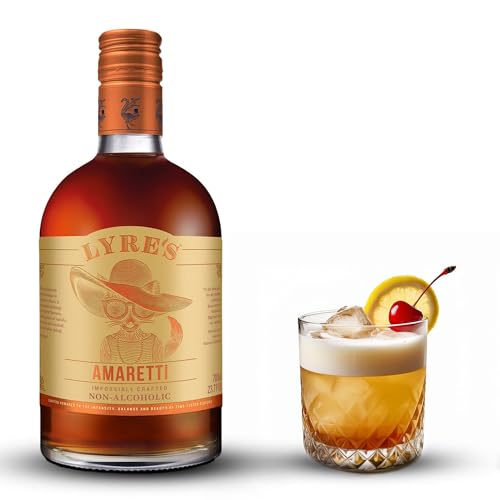
Lyre’s Amaretti Non-Alcoholic Amaretto Alternative — Best Alcohol-Free Route
Lyre’s Amaretti suits the drinker who is skipping alcohol — for an evening, a season or for good — and wants the amaretto sour ritual intact: same glass, same sour balance, same almond character, no spirit.
Strengths
- Crafted specifically as the amaretto alternative, with almond, marzipan and vanilla notes (per listing)
- Works with every sour mixer in this guide — pair it with the Collins or Stirrings for a full alcohol-free sour
- Extends beyond cocktails into coffee and desserts, so the bottle earns its shelf space
Trade-offs
- It replaces the liqueur rather than mixing with it — a different purchase than the other five picks
- Alcohol-free spirits have a lighter body; the sour’s balance may need a firmer hand with the mixer
- Premium tier, like most crafted alcohol-free spirits
| Format | Non-alcoholic spirit alternative, full-size bottle |
| Profile | Almond, marzipan and vanilla notes (per listing) |
| Uses | Amaretto sours, coffee, desserts, alcohol-free cocktails |
| Tier | Premium alcohol-free |
An amaretto mixers guide that ignores the alcohol-free drinker misses where the category is growing fastest. Lyre’s built its name on spirit alternatives that aim at the original’s flavour architecture rather than at generic sweetness, and the Amaretti’s brief — almond, marzipan, vanilla — is precisely the flavour set an amaretto sour needs from its base. Paired with a good sour mixer from this list, the resulting glass is recognisably the same drink in structure and ritual.
The technique adjusts slightly: alcohol-free bases are lighter in body, so build the sour with a confident measure of mixer, serve it well chilled over good ice, and consider the egg-white or foaming variation in the how-to section to restore the texture alcohol usually provides. Done that way, the alcohol-free sour stops being a substitute and becomes a serve in its own right — which is the standard this category should be held to.
It also works beyond the sour: in coffee, where amaretto has always been welcome, and over desserts, where a bottle that only mixed cocktails might otherwise wait months between uses. Versatility justifies the tier.
And for the alcohol-free bottle, a coffee note: a measure of Amaretti in a strong iced coffee, lightly sweetened by the base itself, is the serve most likely to make the bottle a weekly habit rather than a cocktail-only guest — which is how premium bottles justify themselves in real kitchens.
Best for: alcohol-free drinkers wanting a true amaretto sour ritual / Not suited for: drinkers looking for a mixer to combine with regular amaretto
Check on Amazon — check the current price on Amazon for the exact variant described here.
Comparison Table
The six picks divide by role rather than by rank: two quality bottled sours for the classic drink, one crowd format, one sugar-free specialist, one machine format and one alcohol-free base. Match the role to your household first; the badge then points to the review that matters to you.
| Pick | Badge | Key spec | Best for |
|---|---|---|---|
| Collins Whiskey Sour Syrup | Best Overall for Amaretto Sours | Orange-juice sour syrup, amaretto-named | The classic amaretto sour, consistently |
| Stirrings Simple Sour Cocktail Mix | Best Real-Juice Sour Mix | Real juice, no preservatives, full-size bottle | Purist bottled sour for amaretto |
| Mr & Mrs T Sweet & Sour Mix | Best for Crowds and Parties | Cane sugar, orange + lime, litre 6-pack | Crowd-calibrated party sours |
| Baja Bob’s Sweet n Sour Mix (Sugar Free) | Best Sugar-Free Mixer | Sugar-free sweet & sour, keto-positioned | Lower-sugar amaretto sours |
| Bartesian Amaretto Sour Cocktail Mixer Capsules | Best for Bartesian Owners | Capsules for Bartesian maker, pack of 8 | Machine-made amaretto sours |
| Lyre’s Amaretti Non-Alcoholic Amaretto Alternative | Best Alcohol-Free Route | Non-alcoholic amaretto alternative | Alcohol-free amaretto sours and coffee |
How to Choose a Mixer for Amaretto
Begin with your drink, not with the shelf. If your amaretto life is the sour, your mixer is a sour mix and the only questions are quality and format: syrup or juice-based, small bottle or party litre, sugared or sugar-free. If your amaretto life is longer drinks — topped with cola, ginger ale or soda — the mixer decision is about carbonation and dilution instead, and the sour shelf matters less; the guide’s second section maps those serves honestly.
Within the sour family, judge by citrus honesty and balance. Amaretto arrives sweet, so a mixer whose sweetness shouts over its acid will produce a cloying glass no technique can rescue; the picks here were chosen because their acid leads. Juice-based mixes taste brightest and live shortest; syrups pour most consistently; crowd formats forgive the most. None of those is a flaw — they are fits for different households, and choosing by your actual mixing rhythm beats choosing by label romance.
Finally, respect the format commitments. Capsules marry you to a machine; litre six-packs marry you to a guest list; a real-juice bottle marries you to a fortnight of regular mixing. The right mixer is the one whose commitment your household will happily keep.
Beyond the Sour: Amaretto’s Other Mixing Partners
The sour is amaretto’s headline, but the liqueur’s repertoire is wider, and a complete guide should map it. With cola, amaretto becomes a soft, marzipan-tinged long drink — choose a cola with real bite and serve over plenty of ice, because dilution is doing the balancing work acid does in a sour. With ginger ale or ginger beer, the spice cuts the sweetness and the almond reads almost like a baking note; this is the easiest crowd serve after the sour itself.
Orange juice gives the stone sour family: amaretto, sour mix and orange juice in a tall glass, the most forgiving serve in the repertoire and the one where the crowd-format mixer earns its keep. Cranberry juice brings the acid amaretto needs in a completely different accent, producing a crisper, redder drink that suits drinkers who find citrus sours too sharp. Coffee — hot or iced — is the oldest partner of all: amaretto’s almond against coffee’s roast needs no mixer at all, only a measure of each and, for the alcohol-free route, the Lyre’s pick from this list.
The pattern underneath every good pairing is the principle from this guide’s opening: amaretto brings sweetness and almond; the partner must bring acid, spice, bitterness or dilution. Any proposed mixer that brings only more sweetness — sweetened juices without acid, syrupy sodas in small measure over little ice — will disappoint, and you can now predict it before spending anything.
Storing Sour Mixes and Keeping a Home Bar Honest
Every mixer in this guide is a perishable product wearing a shelf-stable costume. Unopened, most keep well in a cool cupboard; opened, the clock starts — fastest for the real-juice, preservative-free bottle, slower for syrups and party formats, but always running. Refrigerate after opening as a universal rule, write the opening date on the label with the same marker you used for your house ratio, and treat any mix that smells flat, looks separated beyond a shake’s repair, or tastes dull as finished, whatever the printed date claims.
The home-bar discipline that follows from this is rotation: one sour open at a time, bought in the format your household finishes in its prime, with the next bottle waiting sealed. That single habit eliminates the most common home-cocktail disappointment — the promising drink ruined by a tired mixer — more reliably than any upgrade in the liqueur itself.
It also makes the amaretto the star it should be. Amaretto keeps beautifully and asks only for fresh partners; a bar that respects its mixers’ lifespans will taste the difference in every single glass, which is the cheapest quality improvement available to a home drinker.
Ice, Glassware and the Last Ten Percent of a Home Sour
Home drinkers chase bottles and ignore ice, which is backwards: in a shaken sour, the ice is a third of the recipe by the time it reaches the glass. Use the coldest, driest cubes your freezer makes, fill the shaker properly rather than rattling three cubes around, and always strain onto fresh ice. A sour shaken on tired ice and poured back over the same cubes loses its chill and its nerve within minutes, whatever mixer you bought.
Glassware is the smaller half of the same lesson. A rocks glass with some weight suits the amaretto sour’s richness, and a chilled glass buys the drink a longer prime on a warm evening. None of this requires a shopping expedition — it requires deciding that the serve matters as much as the shopping, which is the difference between a household that owns cocktail ingredients and a household that makes cocktails.
The last ten percent is temperature discipline at the table: sours are drinks of the moment, built to be drunk while the foam is fresh and the chill is exact. Make them one round at a time, even for guests — the shake takes ten seconds, and a batched, waiting sour is a compromise none of the mixers in this guide was designed to survive.
How to Make a Proper Amaretto Sour at Home
The amaretto sour is a two-ingredient drink with nowhere to hide, which is why the mixer choice above matters and why these few technique points matter almost as much. This is the house method this guide recommends, built on the bottled picks rather than fresh citrus, with the fresh variation noted.
- Chill everything you can: a cold glass and plenty of fresh ice are half the drink’s balance, because dilution from good ice is an ingredient, not an accident.
- Measure two parts amaretto to roughly one part sour mixer as your starting ratio with the bottled picks here — then taste and adjust toward your mixer: syrups may need a lighter hand, juice-based mixes a fuller one.
- Shake with ice, hard, for a full ten seconds. Amaretto’s richness needs the aeration and chill a shake gives; a stirred or built sour tastes flat by comparison.
- Strain over fresh ice in a rocks glass. Ice that has already shaken the drink is broken and wet; fresh ice keeps the second half of the glass as good as the first.
- For the upgraded version, add a small measure of bourbon alongside the amaretto — the modern bartender’s twist that gives the sour a backbone — and a spoon of aquafaba or a little egg white shaken in for the silky top the classic deserves.
- Garnish simply: a brandied cherry or a strip of lemon peel expressed over the glass. Amaretto’s almond is the aroma story; the garnish should frame it, not compete with it.
Once the house ratio is yours, write it on the bottle with a marker. The entire promise of a bottled mixer is repeatability — the same excellent sour in ten seconds on a Friday — and a ratio recorded is a ratio kept. Fresh-lemon drinkers can run the identical method with fresh juice and a touch of simple syrup, accepting the squeeze as the price of the brightest possible glass.
Troubleshooting
Problem: The sour tastes cloying and heavy → the balance has tipped to sweetness: your mixer measure is too generous for amaretto’s own sugar, or the ice is too scarce. Increase the sour proportion slightly, shake longer for dilution, and serve over more fresh ice before blaming the bottle.
Problem: The drink tastes thin and sharp instead → the opposite error — too much mixer or a very dry juice-based mix dominating. Pull the mixer back, and if using the Stirrings pick, remember its profile is intentionally lean; a fraction more amaretto restores the almond centre.
Problem: There is no foam or texture on top → the shake was too short or too gentle. Shake harder with plenty of ice, and for the classic silky cap, dry-shake with aquafaba or egg white first, then shake again with ice.
Problem: The flavour is right at first and watery by the end → the ice is the culprit — small, wet, freezer-burned ice melts into the drink. Use the largest, driest cubes you have, fill the glass fully, and strain the shaken drink over them fresh.
Problem: The alcohol-free version tastes light → body, not flavour, is missing. Serve it colder, shake it with aquafaba for texture, and choose the fuller-bodied sour syrup as its partner rather than the leanest juice mix.
Common Buying Mistakes
Treating all sour mixes as interchangeable. A syrup, a juice-based mix and a party-format sweet-and-sour produce three different drinks from the same bottle of amaretto. Match the mixer to your standard from this list instead of grabbing whichever is on offer.
Forgetting the liqueur is already sweet. Recipes written for whiskey sours assume a dry spirit. Pouring the same mixer measure over amaretto doubles the sweetness load — start lighter and adjust up, as the how-to section directs.
Skipping the shake. Built amaretto sours taste like two ingredients sharing a glass. The shake’s chill, dilution and aeration are what marry almond and citrus into one drink.
Buying party volume for a party of one. Sour mixes are perishable joys: real-juice bottles want drinking within their prime, and even shelf-stable formats fade once opened. Buy the format your rhythm finishes happily.
Judging the alcohol-free route by the neat taste. Alcohol-free bases are built to perform in a finished drink, not in a tasting spoon. Judge the Amaretti in a properly built, well-chilled sour before forming a verdict.
Buying a mixer for a drink you do not actually make. The sour shelf is full of bottles bought for an imagined repertoire. If your amaretto is always a sour, buy the best sour mixer and stop; if it is always lengthened with ginger ale, the sour shelf is a distraction. The picks in this guide are organised by the drink you actually pour, and the most common home-bar waste is ignoring that organisation in favour of a bottle that merely looked versatile on the shelf.
Final Recommendation
For the classic drink, the Collins Whiskey Sour Syrup is this guide’s first pour: an orange-juice sour that names amaretto on its own label and pours the same balanced glass every time. Drinkers who want the brightest, freshest profile in a bottle should take the Stirrings Simple Sour, and hosts should stock the Mr & Mrs T litre bottles without a second thought.
The specialist picks are equally clear: Baja Bob’s for the sugar-conscious, the Bartesian capsules for machine households, and Lyre’s Amaretti paired with any sour above for the alcohol-free glass. Amaretto rewards drinkers who respect its sweetness and answer it with acid — every pick here does exactly that.
Stock the mixer that matches your rhythm, write your ratio on its bottle, keep it cold and fresh, and the amaretto sour becomes what it should be in a home bar: a ten-second drink with a decades-old soul, ready whenever the evening asks for one, and remembered kindly the morning after by everyone who shared it together.
Start here: Collins Whiskey Sour Syrup, Stirrings Simple Sour Cocktail Mix, Mr & Mrs T Sweet & Sour Mix — check the current price on Amazon for each before you decide.
Related guides in this series: Best 4 Mixers For Cocktails; Best And Easiest Vodka Mixers; Best Anejo Tequila Mixers; Best 0cal Mixers For Rum; Best Apple Crown Mixers; Best 151 Mixers.
Frequently Asked Questions
What is the best mixer for amaretto?
For the drink most people mean — the amaretto sour — a quality sour mix is the answer, and the Collins Whiskey Sour Syrup leads this guide because its orange-juice base flatters amaretto’s almond and its own listing names the pairing. For longer drinks, ginger ale and cola are the classic partners; the guide’s pairing section explains when each works.
Can I use whiskey sour mix for an amaretto sour?
Yes — it is the standard approach, and the lead pick here is literally a whiskey sour syrup whose listing names amaretto sours. The one adjustment is measure: amaretto is sweeter than whiskey, so start with a slightly lighter pour of mix than a whiskey recipe suggests and adjust to taste.
What is the ratio for an amaretto sour with bottled mix?
Start at two parts amaretto to one part sour mixer, shaken hard with ice, and adjust from there. Syrups may need a little less, lean juice-based mixes a little more. The ratio is a starting point, not a law — your mixer and your palate settle it within two drinks.
Is there a sugar-free way to make an amaretto sour?
A lower-sugar way, yes: a sugar-free sour mix such as Baja Bob’s removes the mixer’s sugar entirely. The liqueur itself still contains sugar, so the finished drink is reduced-sugar rather than sugar-free — a distinction this guide states plainly so drinkers can judge it against their own needs.
What can I mix with amaretto besides sour mix?
Ginger ale or ginger beer for a spiced long drink, cola for a soft marzipan-tinged serve, orange juice in the stone sour style, cranberry juice for a crisper red drink, and coffee — hot or iced — for the oldest pairing of all. The rule is constant: the partner must bring acid, spice, bitterness or dilution to balance the liqueur’s sweetness.
Can I make an alcohol-free amaretto sour?
Yes, and it can be genuinely good: use a crafted alcohol-free amaretto alternative such as Lyre’s Amaretti as the base, pair it with a full-bodied sour mixer from this list, shake it hard — aquafaba restores the classic foam — and serve it very cold over fresh ice. The ritual and the flavour structure survive intact.


