Disclosure: airfryerkitchensupply.com is reader-supported. When you buy through links on our site, we may earn an affiliate commission at no extra cost to you.
Where to buy
Every blender below was verified against Amazon’s live catalog data for this guide — brand, model, jar type, and ASIN confirmed — so the review and the link describe the same machine. For hot-soup work the jar and lid details matter more than usual; check the current price on Amazon and confirm the exact model and jar configuration on the listing before ordering.
- Vitamix 5200 Professional-Grade Blender — Check on Amazon
- Oster Pro 1200 Blender — Check on Amazon
- Vitamix Propel Series 750 — Check on Amazon
- Blendtec Classic 575 Blender — Check on Amazon
- KitchenAid K400 Variable Speed Blender with Tamper — Check on Amazon
- Oster Classic Series 8-Speed Blender — Check on Amazon
Introduction
The best affordable blenders for pureeing hot soup are chosen by rules that do not apply to any other job in the kitchen, because hot soup is where a blender can hurt you. Steam expands, pressure builds, and a sealed or overfilled jar of near-boiling liquid is a genuine hazard — which is why this guide leads with jar design, lid venting, and batch discipline rather than with power. Within those safety rules, the category divides into two honest families. The friction-heating machines — Vitamix and Blendtec — spin fast enough and long enough to take a soup from raw ingredients to steaming in the jar itself, and they sit at the top of this guide as clearly-badged step-ups. The affordable core — glass-jar Osters and a tamper-equipped KitchenAid — purees cooked soup beautifully and safely at a fraction of the commitment, provided you respect the venting and batching technique this guide teaches. Six verified machines cover both families, and the how-to section is as important as the picks: read it before your first batch, whatever you buy.
One boundary stated plainly, because lives in this category depend on it: no personal or single-serve blender belongs in this guide. A sealed cup of hot liquid is a pressure vessel with a blade in it. Every pick here is a pitcher machine with a ventable lid, and the technique section explains exactly how that venting keeps you safe.
In this guide
Quick Picks
- Best Overall: Vitamix 5200 — the 64-ounce classic whose variable speed and friction power puree soup to silk and can heat it in the jar. Check on Amazon
- Best Affordable Pick: Oster Pro 1200 — a glass jar, seven speeds, and a dual-direction blade for safe, even hot purees at the tier’s friendliest commitment. Check on Amazon
- Best with Programs: Vitamix Propel Series 750 — a 64-ounce container and four programs, including the hands-off cycles soup cooks live on. Check on Amazon
- Best for Soup Cycles: Blendtec Classic 575 — preprogrammed cycles and a WildSide+ jar that purees big soup batches with professional consistency. Check on Amazon
- Best with Tamper: KitchenAid K400 with Tamper — a tamper to fold thick purees into the blades, with Intelli-Speed control for a cook’s workflow. Check on Amazon
- Best Budget Classic: Oster Classic Series 8-Speed — the all-metal-drive glass-jar traditionalist that has pureed soups for generations. Check on Amazon
How These Picks Were Chosen
Safety architecture came first, before any performance judgment: a pitcher format, a lid that vents steam, a jar suited to hot liquids, and a base stable enough for a full, heavy, hot load. Machines failing any of those — every personal blender, every sealed-cup design — were excluded categorically, whatever their power. Verification followed this series’ standing rule: exact model and ASIN confirmed against live Amazon catalog data before a link was earned.
Performance was then judged on the soup workflow itself: how evenly the machine purees cooked vegetables without a food mill, how it handles thick purees that want to ride above the blades, whether its capacity matches a pot of soup in one or two batches, and how its cleanup behaves after a turmeric-colored batch. The list’s shape — two friction-heating step-ups, one programmed Vitamix, one tamper machine, and two affordable glass classics — mirrors the real market for this job, and the badges keep the price tiers honest.
One more consideration shaped the final six: base stability under a hot, heavy load. A full jar of soup is the densest cargo a blender carries, and a machine that walks, rocks, or vibrates across the counter with cold smoothies is a genuine liability with hot ones. Every pick here plants itself — by weight, footprint, or both — and the reviews favor machines whose controls can be worked confidently with one hand while the other stays on the lid, because that is the posture hot blending is actually done in. It is an unglamorous criterion, and in this category it outranks several glamorous ones.
The 6 Best Affordable Blenders for Pureeing Hot Soup

Vitamix 5200 Professional-Grade Blender — Best Overall
The 5200 is the soup blender against which the category is measured, for two reasons that compound. First, pureeing: its variable-speed control and legendary circulation turn cooked vegetables, beans, and broths into genuinely silken soup — no straining, no food mill, no gritty remainder — in a 64-ounce container that swallows most of a pot in one batch. Second, friction: run at high speed for several minutes, the blades’ friction heats the contents, so a soup can go from raw ingredients to steaming entirely in the jar, the trick that made this machine’s reputation. The high-speed switch and self-cleaning design complete a tool that has anchored professional and home kitchens for years. It sits above the affordable core and is badged accordingly — as the destination machine for soup lovers. It does not suit strict budgets, and its power demands respect with hot loads: vent the lid and mind the fill line, as the how-to section details.
Strengths
- Silkiest hot purees in this guide, with variable speed for full control.
- Friction heating can take soup from raw to steaming in the jar.
- 64-ounce container handles most pots in one or two batches.
Trade-offs
- The premium step-up of the list — priced like the professional tool it is.
- Powerful and loud at the long high-speed cycles soup heating requires.
- No tamper in the classic configuration — thick loads want a scrape and patience.
| Spec | Detail |
|---|---|
| Container | 64 oz |
| Controls | Variable speed, high-speed switch |
| Blades | Stainless steel blades |
| Cleaning | Self-cleaning |
Soup cooks who own the 5200 tend to describe the same conversion: pureeing stops being a step and becomes a setting. A roasted squash goes in with broth and comes out as a restaurant puree; a bean soup reaches a creaminess that reads as dairy and contains none. The machine’s longevity in professional kitchens is the other half of its case — this is the rare appliance whose cost genuinely amortizes across decades of soup seasons. If soup is a weekly ritual in your home, this is the guide’s answer at the top of the shelf.
Best for: devoted soup cooks wanting the finest puree and in-jar heating. / Not suited for: strict budgets.
Check the current price on Amazon
Oster Pro 1200 Blender — Best Affordable Pick
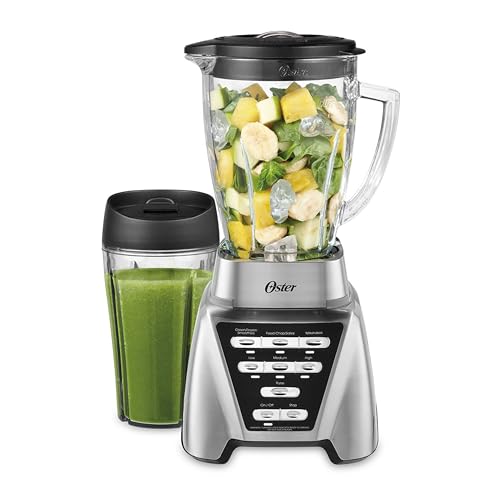
The Pro 1200 is the affordable heart of this guide: a glass jar that handles hot purees gracefully, seven speeds for controlled work, and a dual-direction blade that keeps a thick soup moving instead of letting it stratify — hot at the blades, chunky at the top. That reversing action is worth more for soup than for almost any other job, because purees are thick by definition and a one-direction vortex leaves the top of the jar behind. It will not friction-heat a soup from raw; cook your soup on the stove, as cooks have always done, and let this machine do the pureeing superbly and safely with a vented lid and sensible batches. The included smoothie cup is a bonus for the rest of the week. It suits home cooks who make soup regularly and budget honestly. It does not suit anyone wanting in-jar heating or fully automated soup programs.
Strengths
- Dual-direction blade keeps thick hot purees circulating evenly.
- Glass jar suits hot liquids and resists soup staining.
- Seven speeds give controlled, safe ramping for hot loads.
Trade-offs
- No friction heating — the soup cooks on the stove first.
- Mid-sized jar means big pots puree in two batches.
- Texture ceiling sits below the Vitamix pair, honestly.
| Spec | Detail |
|---|---|
| Jar | Glass jar |
| Controls | 7 speeds |
| Blade | Dual-direction blade technology |
| Extras | 24 oz smoothie cup included |
The Pro 1200’s soup case is the case for the whole affordable approach to this category: most home soup is cooked in a pot anyway, for flavor no blender can build, and the machine’s one job is to puree it well and safely. At that job, with the venting technique in this guide, the Oster performs with a competence that makes the premium machines a luxury rather than a necessity. For the majority of soup households, this is the correct purchase in this guide, and it is badged as the affordable pick without any apology.
Best for: regular soup cooks who want safe, even purees at an affordable level. / Not suited for: in-jar heating or program seekers.
Check the current price on Amazon

Vitamix Propel Series 750 — Best with Programs
The Propel 750 adds automation to the Vitamix formula: a 64-ounce container, variable control when you want it, and four programs — including the smoothie and hot-soup style cycles — that run the long, ramping patterns soup work rewards while you attend to the rest of dinner. Programs matter more for soup than for almost any other job, because hot pureeing is a patience discipline: start slow so the load settles without splashing, build speed as the puree forms, and hold long enough for silk. The 750 executes that discipline identically every time, and its self-cleaning cycle handles the aftermath. It suits soup households that cook in parallel and value a free pair of hands. It does not suit budget-first buyers — it shares the 5200’s premium shelf — or minimalists who prefer two knobs to a program dial.
Strengths
- Four programs automate the ramping cycle hot soup rewards.
- 64-ounce container matches a family pot of soup.
- Professional Vitamix puree quality with self-cleaning ease.
Trade-offs
- Premium positioning, like its sibling.
- Programs are fixed patterns; some cooks prefer full manual command.
- Full-size footprint and professional volume at high speed.
| Spec | Detail |
|---|---|
| Container | 64 oz |
| Programs | 4 programs |
| Controls | Variable speed with pulse |
| Cleaning | Self-cleaning program |
Choose between the two Vitamix picks by temperament: the 5200 for the cook who drives, the 750 for the cook who delegates. Their purees are siblings; their workflows are not. In a kitchen where soup night is also homework night and two other dishes are moving, the 750’s programs are worth their premium in reclaimed attention — and its soup will be, night after night, exactly as silky as the night before.
Best for: busy soup households wanting automated, repeatable perfection. / Not suited for: strict budgets or manual-only cooks.
Check the current price on Amazon

Blendtec Classic 575 Blender — Best for Soup Cycles
The Classic 575 brings Blendtec’s professional approach to the soup pot: a 90-ounce WildSide+ jar whose geometry drives a powerful vortex, five speeds, four preprogrammed cycles, and the blunt-blade, high-force blending that turns cooked vegetables into uniform puree at serious scale. The big jar is its soup argument — a double batch of butternut or a full pot of bean soup purees in one go, where mid-sized machines need two rounds — and the self-cleaning design closes a messy job in a minute. Like the Vitamix pair, its sustained high-speed power can warm a puree through friction over a long cycle. It suits large households and batch cooks. It does not suit small kitchens, small pots, or budget-first buyers; it is a step-up pick, badged honestly.
Strengths
- 90-ounce WildSide+ jar purees double batches in one cycle.
- Preprogrammed cycles plus five speeds cover soup and beyond.
- Professional consistency across large, thick loads.
Trade-offs
- Above the affordable core in positioning.
- The wide jar is oversized for a two-person soup night.
- Professional power means professional noise.
| Spec | Detail |
|---|---|
| Jar | 90 oz WildSide+ jar |
| Controls | 5 speeds, 4 preprogrammed cycles |
| Cleaning | Self-cleaning design |
| Class | Professional-grade power |
Batch soup cookery — the Sunday pot that becomes the week’s lunches — is where the 575 earns its shelf. Its vortex handles the volume that makes smaller machines stratify, and its cycles repeat that performance without supervision. If your soup life is measured in gallons and freezer containers, this is the machine in the guide built at your scale, and its frozen-drink and smoothie talents come along as a considerable bonus.
Best for: batch soup cooks and large households. / Not suited for: small kitchens or strict budgets.
Check the current price on Amazon

KitchenAid K400 Variable Speed Blender with Tamper — Best with Tamper
Thick purees have one enemy: the air pocket that forms above the blades while the soup below them spins alone. The K400’s included tamper is the direct answer — you push the load down into the blades through the lid while the machine runs, safely and without stopping — and for bean soups, thick squash purees, and other heavy work, it changes the job from a scrape-and-repeat chore into a single continuous blend. The K400 adds a five-speed dial with Intelli-Speed motor control that holds speed under load, plus preset programs for icy work that serve the rest of the week. For hot soup, use it as a pureeing machine with a vented lid and the batch discipline in this guide. It suits cooks whose soups run thick. It does not suit buyers wanting in-jar heating, and its jar is mid-sized for very large pots.
Strengths
- The tamper defeats the air-pocket problem that plagues thick purees.
- Intelli-Speed control holds blending speed as the load thickens.
- Five-speed dial plus presets make it a versatile all-week machine.
Trade-offs
- Purees hot soup; does not friction-heat from raw like the step-ups.
- Mid-sized jar means the largest pots take two batches.
- Tamper technique takes a batch or two to learn by feel.
| Spec | Detail |
|---|---|
| Model | KSB4028, Contour Silver |
| Controls | 5-speed variable dial, Intelli-Speed control |
| Presets | Ice Crush, Icy Drinks, Smoothie |
| Accessory | Tamper included |
The tamper is one of those features whose value is invisible until the first thick batch, after which it is impossible to give up. Cooks who make hummus-adjacent soups — split pea, black bean, thick lentil — will find the K400 the most cooperative machine in this guide at its level, because it lets them participate in the blend instead of interrupting it. As the middle path between the affordable Osters and the professional step-ups, it is a genuinely distinct answer, and its badge reflects a tool, not a tier.
Best for: thick purees and cooks who want tamper control. / Not suited for: in-jar heating or the largest batches.
Check the current price on Amazon

Oster Classic Series 8-Speed Blender — Best Budget Classic
Generations of soup were pureed in exactly this machine’s ancestors: a 6-cup glass jar, a Crush Pro 4 blade, eight speeds, and Oster’s all-metal drive turning steadily underneath. The Classic’s soup virtues are the traditional ones — glass that handles heat and shrugs off turmeric, a jar size that matches a family pot in one or two batches, controls simple enough to run with oven mitts nearby, and wear parts that are cheap and everywhere when the gasket eventually asks. It asks for the classic technique in return: vent the lid, batch sensibly, start low. It suits budget buyers and traditional cooks completely. It does not suit anyone wanting programs, friction heating, or hands-off operation — it is a cook’s tool, proudly manual.
Strengths
- Glass jar handles hot purees and resists staining for years.
- All-metal drive delivers the affordable class’s durability benchmark.
- 6-cup capacity matches a family pot; parts are inexpensive and universal.
Trade-offs
- Fully manual — technique is the program.
- Thick purees need the scrape-and-pulse routine without a tamper.
- No in-jar heating; the stove does the cooking, as it always has.
| Spec | Detail |
|---|---|
| Motor | 700 watts |
| Jar | 6-cup glass |
| Blade | Crush Pro 4 stainless blade |
| Drive | All-metal drive |
The Classic closes this guide where home soup began: with a glass jar, a steady motor, and a cook who knows the venting ritual. Its purees are honestly good — a cooked soup does not need professional force to become smooth, it needs circulation, time, and a cook’s patience, all of which this machine supports. Bought for soup and kept for everything, it is the budget pick that has outlived every trend in this category, and it will likely outlive this guide.
Best for: budget buyers and traditional cooks pureeing pot-cooked soups. / Not suited for: automation or in-jar heating.
Check the current price on Amazon
The Soup Repertoire: What Each Texture Demands of the Machine
Velouté-style vegetable soups — squash, carrot, cauliflower
These are the showcase purees: soft vegetables, broth, and a finish that should pour like cream. Every machine in this guide handles them, and the differences show in the last ten percent of silkiness — where the Vitamix pair leads, the Blendtec follows at scale, and the Oster Pro 1200’s reversing blade keeps the affordable end honest. Cook the vegetables completely soft before blending; no machine can puree a crunchy carrot into a velouté, and blaming it for trying is the home cook’s classic error.
Bean, pea, and lentil soups — the thick brigade
Thick, starchy, and prone to the air pocket: this family is the tamper’s reason to exist and the reversing blade’s best argument. Work in half-batches, keep enough broth in the jar for circulation, and expect to add liquid as you go, because these soups thicken as they blend. The K400 and the professional machines lead here; the Oster Classic manages with the scrape-and-pulse patience its owners have practiced for decades.
Tomato and broth-forward soups — the easy family
Thin soups puree effortlessly everywhere in this guide; the technique points are the safety ones — venting, headroom, ramping — because a thin hot liquid splashes more readily than a thick one. This is the family where a beginner should learn the ritual, on the most forgiving load there is.
Cream soups and chowders — the judgment call
The professional secret is to puree only part of the pot: blend half the soup to silk, stir it back into the unblended half, and the result has body and texture at once. Any machine here executes the pureed half; the cook’s restraint executes the rest. Chowders especially punish the blend-everything instinct — a lesson worth learning on an inexpensive batch before it is learned on a holiday one.
Soup Season: Batching, Storing, and Reheating What You Puree
A soup blender’s real workload is seasonal and batched, so a few production habits complete this guide. Puree in the order you cooked: if a double pot needs two jar batches, blend them back into the same pot and stir, so the whole pot shares one texture rather than alternating between two. Cool soup quickly before refrigerating — shallow containers, not one deep pot — and freeze in portions sized to your household’s meals, because a blender-bought habit of making soup should end in a freezer that makes weeknights easier, not in a science project at the back of the fridge.
Reheating has one blender-adjacent secret: a pureed soup that has separated in storage is restored by thirty seconds of re-blending or a vigorous whisk as it warms, and a splash of fresh liquid returns its pour. Bean soups thicken in the fridge toward a spread; thin them confidently at reheating, tasting for salt only after the texture is right, because a thick soup reads as underseasoned until it flows. The machines in this guide made the soup; these habits make the soup worth making in batches — which is, in the end, the economic and culinary point of owning one.
Comparison Table
| Pick | Badge | Key spec | Best for |
|---|---|---|---|
| Vitamix 5200 | Best Overall | 64 oz, variable speed, friction heating | Finest purees and in-jar soup heating |
| Oster Pro 1200 | Best Affordable Pick | Glass jar, dual-direction blade | Safe, even hot purees on a budget |
| Vitamix Propel 750 | Best with Programs | 64 oz, 4 programs | Automated soup cycles |
| Blendtec Classic 575 | Best for Soup Cycles | 90 oz WildSide+ jar, 4 cycles | Double batches and big pots |
| KitchenAid K400 with Tamper | Best with Tamper | 5-speed dial, Intelli-Speed, tamper | Thick purees without air pockets |
| Oster Classic 8-Speed | Best Budget Classic | 700W, 6-cup glass, all-metal drive | Traditional pot-soup pureeing |
How to Choose a Blender for Hot Soup
Jar and lid: the safety specification
Before power, before capacity, ask two questions. Is the jar suited to hot liquids — glass or a professional container rated for the work? And does the lid vent, so steam escapes in a controlled way instead of pressurizing the jar? Every pick in this guide answers yes to both. Any machine that cannot — above all, sealed personal cups — is disqualified for hot soup regardless of its other talents, and this guide’s exclusion of that entire format is the most important sentence in it. Check the lid physically when the machine arrives, before the first soup: seat it, find the vent or the removable center cap, and rehearse the towel position. Two minutes of familiarity in daylight is worth more than any instruction read mid-steam with a pot in hand.
Friction heating vs. pureeing: know which job you are buying
Two different promises circulate in this category. Friction machines (the Vitamix pair, the Blendtec) generate enough sustained high-speed energy to heat a soup in the jar, taking it from raw or cooked to steaming without a stove. Pureeing machines (the Osters, the KitchenAid) assume the soup is cooked and hot from the pot, and their job is texture. Neither promise is better in the abstract — most home soup is pot-cooked for flavor anyway — but confusing them leads to the category’s classic disappointment. Decide which workflow is yours, then buy the machine built for it. A practical test: think of the last three soups you made. If they all simmered in a pot for half an hour or more, you are a pureeing household and the affordable end of this guide serves you fully; if you dream of a ten-minute soup from raw vegetables on a weeknight, you are describing the friction machines, and their premium is buying you evenings, not just texture.
Capacity against your pot
Soup batches should fill the jar no more than halfway to two-thirds when hot — hot liquid expands, splashes, and needs headroom — so divide your typical pot by that working fraction, not by the jar’s headline size. A 64-ounce container purees most family pots in one or two comfortable batches; the 90-ounce Blendtec exists for the double-batch household; the 6-cup Oster matches the classic family pot it was designed beside. Do the arithmetic with your real pot before ordering: measure what you actually cook, halve it for the hot-fill rule, and the jar size chooses itself. Buyers who skip this step are the ones surprised twice — first that the big jar was necessary, or first that it was not.
Thick purees want a plan for the air pocket
Bean, pea, and squash soups thicken as they puree and can trap an air pocket over the blades. Your options, all represented here: a tamper (K400) to fold the load down continuously, a reversing blade (Oster Pro 1200) to keep it moving, professional vortex power (Vitamix, Blendtec) to pull it through, or the classic scrape-and-pulse patience (Oster Classic). Pick the plan that matches your soups and your temperament. Liquid discipline helps every option: hold back some broth, blend the solids with just enough to circulate, and thin to the final pour afterward. A thick puree blended with all its liquid at once is the hardest version of the job; staged liquid is the cook’s quiet advantage, and it costs nothing.
How to Puree Hot Soup Safely and Silky-Smooth
This technique applies to every machine in this guide and matters more than the choice between them.
- Let the soup settle first. Take the pot off a rolling boil and give it two or three minutes. Pureeing a violently boiling liquid is the riskiest version of this job; a just-off-the-boil soup is the safe one.
- Fill halfway, never to the line. Hot liquid expands and climbs when blended. Half a jar per batch is the professional habit, and it produces better texture as well as a safer kitchen.
- Vent the lid. Remove the center cap or open the vent, and cover the opening loosely with a folded towel. Steam must have a door; your hand, protected by the towel, is the doorkeeper.
- Start at the lowest speed. Hold the lid down firmly and begin low for several seconds so the load settles without surging, then climb gradually to high. The surge at startup is when hot splashes happen.
- Blend to the texture, then stop. Most cooked soups reach silk in 30 to 60 seconds of high-speed blending once circulating. For friction-heating machines running a soup from raw or reheating by blending, follow the maker’s timed cycle — several minutes — and expect steam when you open the lid.
- Open away from your face. Tilt the lid so the steam escapes away from you, every time, as a reflex. Steam discipline is a habit, not a decision.
- Rinse immediately. Soup residue — especially bean and squash — sets like plaster. A hot rinse or self-clean cycle now keeps cleanup at a minute.
Two prohibitions complete the technique, and they are absolute. Never blend hot liquid in a sealed personal cup or any vessel without a vent. And never leave a blender running a hot load unattended — hot work is attended work, from the first batch to the last.
The Soup Lineup for Every Kitchen
The weekly soup ritual: the Vitamix 5200 for the cook who drives, the Propel 750 for the cook who delegates — both turn soup night into a texture guarantee.
The honest home kitchen: the Oster Pro 1200, pureeing pot-cooked soup safely and evenly at the affordable tier’s best balance of jar, blade, and control.
The batch-and-freeze household: the Blendtec 575, whose 90-ounce jar matches the double pot and the freezer-container production line.
The thick-soup specialist: the KitchenAid K400, because split pea and black bean soups meet their match in a tamper.
The traditional budget kitchen: the Oster Classic, glass jar and all-metal drive, doing the job the way it has been done for decades.
Troubleshooting: Hot Soup Problems, Solved
Problem: The puree is smooth at the bottom, chunky at the top. Stratification in a thick load. Work in smaller batches, use the tamper or reversing action if your machine has it, and give the blend more time at circulation before judging it. Judge the top, not the bottom, when you check: spoon from the surface, because the bottom of the jar is always the first part finished and the most flattering sample in the kitchen.
Problem: The lid lifts or soup escapes during blending. Overfill, an unvented lid, or a full-speed start. Halve the batch, vent and towel the lid, and always ramp from the lowest speed with a hand on the lid.
Problem: The soup tastes smooth but looks dull and gray. Over-blending incorporated too much air, or the soup sat hot too long. Blend to texture and stop; a swirl of cream, oil, or fresh herbs at serving restores the look honestly. Color also lives in the cooking: vegetables browned before simmering keep a deeper hue through pureeing than vegetables boiled pale, so the fix for a gray soup often starts in the pot an hour before the blender is involved.
Problem: An air pocket forms and the blades spin free. The classic thick-puree stall. Stop, tamp or scrape the load down, add a splash of broth, and restart low. Tamper machines exist to make this a non-event.
Problem: The jar smells of the last soup. Residue in the gasket groove. Remove, wash, and reseat the gasket; run a self-clean cycle with a drop of soap; store the jar unsealed so it airs. Garlic-heavy soups are the usual culprits, and a rinse with a spoon of baking soda dissolved in warm water, left to stand for an hour, clears what soap alone leaves behind.
Care of a Soup Blender: Heat, Starch, and Turmeric
Soup service leaves three signatures on a blender, and the care routine answers each. Starch films — from beans, potatoes, and squash — coat jars and blade assemblies and harden as they dry; the immediate hot rinse or self-clean cycle is the entire defense, and it is why this guide repeats it like a refrain. Turmeric and tomato stain: glass resists them best, professional containers tolerate them well, and a paste of baking soda and water, left to sit in a stained jar, lifts most of what a season deposits. Heat itself is gentle on these machines when the venting rules are followed — the jars and seals in this guide are built for hot work — but thermal shock is not: never take a jar from a hot blend straight under cold water, and let a hot jar rest a minute before its rinse.
The gasket, as ever, is the wear part to watch: it flexes with heat cycles, and a soup household should inspect it at the season’s start and keep a spare if the model is a classic Oster, whose parts are priced like the consumables they are. Blade assemblies dull across years of service, not months, and every model here has a replaceable assembly or a jar system designed for the long haul. A soup blender maintained this way does not wear out on any schedule a home cook will notice — which is precisely the ownership experience this category’s best machines, at every level of this list, were chosen to deliver.
Common Buying Mistakes
- Using a personal blender for hot soup. The category’s one dangerous mistake. Sealed cups and hot liquid do not belong in the same sentence, let alone the same appliance.
- Filling the jar to the line with hot liquid. Hot loads need headroom — half a jar is the working rule, and it improves texture as well as safety.
- Buying friction heating you will not use. If your soups are always pot-cooked, a pureeing machine serves you fully for far less. Buy the workflow you actually cook.
- Ignoring the lid. In this category the lid is a safety device. A vented, well-sealing lid is a feature; treat listings that hide it as a warning.
- Skipping the ramp. Full speed from a standstill with a hot load is how splashes happen. Low first, always, with a hand on the lid.
- Letting soup residue dry. Bean and squash purees set like cement. The one-minute rinse is the difference between a tool and a project.
Final Recommendation
For the finest hot-soup work at any budget, the Vitamix 5200 remains the reference — silk purees and in-jar heating from the category’s most proven machine. The Oster Pro 1200 is this guide’s affordable heart: glass, control, and a reversing blade for safe, even purees of pot-cooked soup. Automate with the Propel 750, scale up with the Blendtec 575, tame thick purees with the KitchenAid K400, and keep it classic with the Oster Classic. Whichever you choose, learn the venting technique before the first batch — in this category, method is safety, and safety is the whole recipe. Then make the soup that made you want the machine, and make it twice in the first week: the second batch is where the ritual becomes reflex, the texture becomes your standard, and the purchase quietly proves itself. Soup season rewards the prepared kitchen, and every machine on this list, honestly matched to its household, is preparation enough.
More from this cluster: Best Affordable Blenders, Best Affodable Blenders, Best Affordable Blenders For Green Smoothies, Best Affordable Hand Blenders, and Best All Purpose Blenders.
Frequently Asked Questions
Can I put boiling soup directly in a blender?
Let it come off the rolling boil for two or three minutes first, fill the jar only halfway, vent the lid under a towel, and start at the lowest speed. Handled that way, hot soup is a normal blender job for every pitcher machine in this guide. Boiling liquid filled to the line in a sealed jar is the version to avoid. If you are new to hot blending, rehearse the whole ritual once with hot water from the kettle — the sounds, the steam, the ramp — and the first real batch will feel familiar instead of dramatic.
Which blenders can heat soup while blending?
The friction-heating machines: the Vitamix 5200 and Propel 750 and the Blendtec Classic 575 in this guide can take a soup to steaming over a long high-speed cycle. The Oster and KitchenAid picks are pureeing machines — they assume the soup arrives cooked and hot from the pot. Neither approach changes the flavor work — browning, sweating aromatics, simmering — which still happens best on the stove; friction heating’s gift is the final stage, turning cooked or even raw-blended ingredients into a steaming, silken soup without another pot to wash.
Why does hot soup explode out of some blenders?
Steam pressure plus expansion plus a sudden start. A sealed or overfilled jar gives the steam nowhere to go, and the lid becomes the exit. Venting, half-fills, and low-speed starts remove all three causes. Treat every dramatic blender story you have ever heard as this same physics wearing different costumes, and you will understand why this guide’s technique section reads the way it does — the rules are short because the physics is simple, and the physics is unforgiving because the water inside the sealed jar is very nearly at full boiling point indeed.
Is glass or plastic better for hot soup?
Both appear in this guide and both work when designed for the job: glass jars (the Osters) handle heat classically and resist stains, while the professional containers (Vitamix, Blendtec) are engineered polymers built for exactly this work. The disqualifier is not material — it is any sealed, unvented vessel. Choose glass if staining and tradition lead your priorities, and a professional container if you want the lightest jar to lift when it is full of hot soup.
How do I get soup silky without a Vitamix?
Cook the vegetables fully soft, puree in half-batches with enough liquid, blend a full minute once circulating, and pass the soup through a sieve only if you demand absolute silk. The Oster Pro 1200’s reversing blade and the K400’s tamper get home cooks remarkably close to the professional texture. One more cook’s trick narrows the gap further: puree the soup slightly thicker than you want it, then thin it at the end with hot broth to the exact pour — it is far easier to arrive at silk by dilution than by trying to blend a thin soup thick.
Can I puree soup in a personal blender if I let it cool?
Warm — not hot — small batches are the personal format’s soup limit, and even then the texture and capacity make it the wrong tool. This guide recommends a pitcher machine for soup without qualification; it is the rare category where the safe answer and the good answer are the same. If soup is a real part of your cooking life, the affordable pitcher picks here cost less than the regret of a cracked cup, a scalded hand, or a winter of chunky purees — and they will still be pureeing, safely, long after the personal machine has retired to the smoothie shelf where it belongs.


