Disclosure: airfryerkitchensupply.com is reader-supported. When you buy through links on our site, we may earn an affiliate commission at no extra cost to you.
Where to buy
Every pick in this best 10 air fryers guide is sold through Amazon. Check the exact listing for each model named: the Ninja DZ401 Foodi DualZone XL 10 Qt, the Cosori TurboBlaze Air Fryer 6 Qt, the Ninja AF101 Air Fryer 4 Qt, the Philips Premium Airfryer XXL (HD9650/96), the Chefman 2 Qt Mini Air Fryer, and the Ninja SL401 DoubleStack XL 10 Qt. A cross-market ranking spans many model lines, so match the model number in each review to its listing before ordering.
Ranking the best 10 air fryers on the market means answering a harder question than any single-size guide faces: not “which 4-quart is best” but “which machines, at any size, define what an air fryer should be right now?” Our answer, after verifying the current catalog end to end, is the six machines reviewed in depth below — the dual-basket flagship that changed how families cook dinner, the fan-engineered single basket that leads the family class, the 4-quart benchmark that remains the default recommendation for most households, the premium Philips that still teaches rivals about build quality, the 2-quart mini that proves small can be complete, and the stacked Ninja that folds ten quarts into a narrow footprint. Around those six detailed reviews, this guide maps the rest of the top tier — the sizes and formats that round out a true top-10 conversation — so you can see where each class champion sits and why the ranking falls the way it does.
Method first, because rankings invite suspicion. Every machine named in this guide was verified against live Amazon catalog data through the Amazon Creators API: ASIN, exact listing title, capacity and headline specifications confirmed. Nothing here is ranked on star ratings or review counts — those numbers fluctuate with promotions and measure momentum, not merit — and we print no prices, because they change too often to be honest in print; each pick links to its live listing so you can check the current price on Amazon. Our criteria, weighted for a cross-market ranking: cooking performance against the machine’s own class standard, capacity honesty, control and feature intelligence, materials and cleanup, brand support, and the strength of the machine’s reason to exist. A pick had to be the best answer to some real household’s question — no filler slots, no participation trophies.
Who should read a ranking this way? The first-time buyer who wants the market’s shortlist without reading nine size guides; the upgrader deciding which direction the category has moved; and the gift buyer who needs one name they can trust. If you already know your size, our dedicated guides go deeper — they are linked throughout — but if you want the whole field on one page, ranked with reasons, you are in the right place. One structural note: the detailed reviews below cover the six machines we would actually buy across the market’s sizes; the comparison table and the class-by-class section that follows place the remaining top-tier contenders — the 3.2-quart compacts, the 5–6 qt specialists, the glass innovators — in their proper context, so the “10” in the title is honored by the guide’s full map, not just its podium.
In this guide
Quick Picks
- Ninja DZ401 DualZone XL 10 Qt — Best Overall. Two independent 5 qt zones with Smart Finish syncing — the machine that turned air frying into a full dinner system. Check the current price on Amazon.
- Cosori TurboBlaze 6 Qt — Best Single Basket. Five fan speeds, a 90–450°F range and PFAS-free ceramic — the family class’s engineering leader. Check the current price on Amazon.
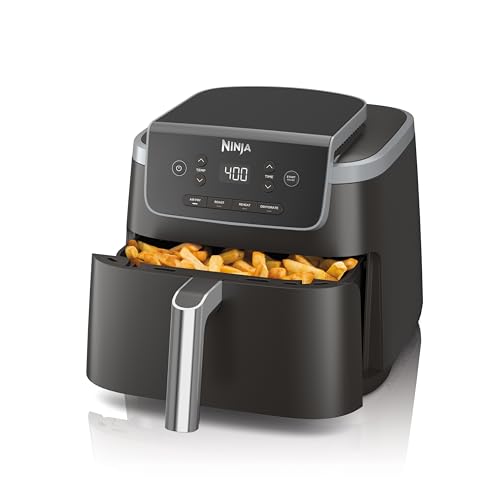
- Ninja AF101 4 Qt — Best for Most Households. The benchmark default: 1550W, four functions, proven for years. If one fryer must be named for the median kitchen, it is this one. Check the current price on Amazon.
- Philips Premium Airfryer XXL — Best Premium. Fat-removal technology, a 7 qt family capacity, five presets and keep-warm, built to a standard rivals still chase. Check the current price on Amazon.
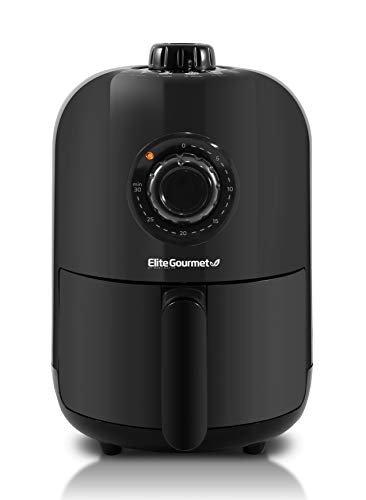
- Chefman 2 Qt Mini — Best Compact. Digital controls and a shake reminder in a true mini — the small-kitchen and dorm champion. Check the current price on Amazon.
- Ninja DoubleStack XL 10 Qt — Best Space-Saving Capacity. Ten quarts stacked vertically, four foods at once — flagship volume for narrow counters. Check the current price on Amazon.
How These Picks Were Chosen
We started from the live Amazon catalog, pulled through the Creators API, and verified every serious contender in every size class — minis, compacts, the 4-quart mainstream, the family 5–6 qt class, and the 10-quart flagships — confirming ASIN, listing title, capacity and key specifications for each. Machines with unverifiable listings or open safety recalls were excluded regardless of fame. We then applied the ranking criteria in order: does it lead its class on cooking performance; is its capacity claim honest; do its controls and features serve real cooking rather than a spec sheet; are its materials and cleanup sustainable for daily use; does a real support ecosystem stand behind it; and — the ranking’s tiebreaker — does it have a clear, defensible reason to exist that no other machine duplicates? The six detailed picks each win a distinct argument, and together they span the sizes a household might plausibly need, from a dorm desk to a holiday kitchen. Class champions that narrowly missed the detailed six — the glass-basket innovators, the square-basket Cosori, the budget 6-quart Chefman — are placed in the class map after the reviews, because a ranking you cannot see the edges of is a ranking you should not trust.
The Best 10 Air Fryers: Our 6 Top Picks in Depth

Ninja DZ401 Foodi DualZone XL 10 Qt — Best Overall
First place goes to the machine that expanded the category’s ambition. The DZ401 runs two independent 5 qt baskets with six functions, IQ Boost power sharing, Match Cook for mirrored batches and Smart Finish to land two different foods at the same moment. It suits families and two-dish cooks of every kind. It does not suit whole-bird cooking or the narrowest counters — its own sibling below answers the counter problem.
Strengths
- Dual-zone choreography that genuinely changes weeknight cooking.
- Each 5 qt zone is itself a family-class basket — no compromise zones.
- The deepest owner ecosystem in the category: recipes, parts, accessories, knowledge.
Trade-offs
- Premium-tier positioning and a wide footprint.
- No single large cavity for birds or big roasts.
- Overkill for solo cooks — its talents need a household to serve.
| Spec | Value (verified from listing) |
|---|---|
| Capacity | 10 qt — two independent 5 qt baskets |
| Functions | 6-in-1: air fry, roast, broil, bake, reheat, dehydrate |
| Sync features | Match Cook, Smart Finish, IQ Boost |
| Model | DZ401 |
Rankings should reward the machine that moves the category, and the DZ401’s move — parallelism — is the most consequential in air frying since the basket itself. Before dual zones, the air fryer was a brilliant side-dish appliance orbiting the oven; after them, it became the dinner system, with the oven demoted to holidays. The hardware honors the idea: zones big enough to matter, synchronization that works without supervision, power management that keeps both zones honest when they run together. It is not the cheapest, the smallest or the simplest machine in this guide, and overall crowns are not awarded for those virtues — they are awarded for being the best answer to the most households’ hardest question, which is how to get a real dinner, all of it, hot at the same time.
Best for: families and two-dish households who want the category’s flagship. / Not suited for: solo cooks, whole-bird cooking, or narrow counters.

Cosori TurboBlaze Air Fryer 6 Qt — Best Single Basket
The TurboBlaze is the single-basket class’s engineering peak: nine functions, a 90–450°F range, five fan speeds, 1725W, and a PFAS-free ceramic-coated 6 qt basket with dishwasher-safe cleanup and a safety lock. It suits family cooks who want one basket to do everything from proofing dough to searing wings. It does not suit two-temperature dinners — no single basket can — or the strictest budgets.
Strengths
- Five fan speeds and the widest temperature range in this ranking.
- Ceramic PFAS-free surface answers the materials question elegantly.
- Evenness across a full family layer is the class benchmark.
Trade-offs
- Flagship-tier pricing within its class.
- Its range rewards a learning week that casual users may skip.
- One basket, one temperature — parallelism belongs to the duals.
| Spec | Value (verified from listing) |
|---|---|
| Capacity | 6 qt |
| Temperature range | 90–450°F |
| Fan | 5 speeds |
| Power | 1725W |
| Functions | 9-in-1 |
| Coating | PFAS-free ceramic |
If the DZ401 wins on concept, the TurboBlaze wins on craft. Fan speed control sounds like a specification for engineers until you watch it proof dough at a whisper on Sunday and drive a full tray of wings evenly crisp on Friday — the same machine, two temperaments, no compromise at either end. In a ranking that weighs cooking performance first, the TurboBlaze’s evenness across the hardest load in single-basket cooking — a full, wide, family layer — earns it the second podium step and the single-basket crown. Households whose dinners are one-dish or sequentially cooked will never miss the second basket, and will enjoy the class’s finest instrument every night.
Best for: families who cook in one basket and value engineering. / Not suited for: two-temperature dinners or budget-tier shopping.


Ninja AF101 Air Fryer 4 Qt — Best for Most Households
The AF101 is the ranking’s anchor of sanity: a 4 qt, 1550W, four-function machine — air fry, roast, reheat, dehydrate — with room for 2 lbs of fries and dishwasher-safe parts, proven across years of service in more kitchens than any rival here. It suits couples, small households, and every first-time buyer who wants the answer rather than the research. It does not suit families of five at full dinners or buyers chasing glass, windows or 450°F ceilings.
Strengths
- The class-defining balance of power, size and simplicity.
- Years of proven reliability with a deep support and recipe ecosystem.
- Four honest functions — nothing padded, nothing missing for daily cooking.
Trade-offs
- Familiar to the point of plainness beside the innovators.
- No window, no glass, standard temperature ceiling.
- Four quarts serves two fully; bigger households batch or step up.
| Spec | Value (verified from listing) |
|---|---|
| Capacity | 4 qt (fits 2 lbs fries) |
| Power | 1550W |
| Functions | 4-in-1: air fry, roast, reheat, dehydrate |
| Cleanup | Dishwasher-safe parts |
| Model | AF101 |
Every ranking needs the pick it would defend in an argument with a stranger, and for the median household that pick is the AF101. It is the machine with no asterisk: the size most kitchens need, the power the size deserves, the functions people actually cycle through, from the brand that supports its products like infrastructure. Its presence at number three — ahead of flashier machines — is the ranking’s thesis in miniature: most households do not need the flagship or the innovator; they need the fryer that will cook dinner tonight, tomorrow, and three years from now without a single surprise. That is the AF101, and it has been that for a long time.
Best for: couples and first-time buyers who want the proven default. / Not suited for: large families or feature and materials explorers.

Philips Premium Airfryer XXL (HD9650/96) — Best Premium
Philips invented this category, and the Premium XXL is its flagship statement: a family-size machine (3 lb / 7 qt class) with fat-removal technology, Rapid Air circulation, a digital display, five cooking presets, keep-warm mode and app connectivity through HomeID. It suits buyers who prioritize build quality, refined cooking results and a premium ownership experience. It does not suit budget shoppers — its tier is the ranking’s highest — or dual-zone cooks.
Strengths
- Fat-removal technology separates and captures excess fat from food as it cooks.
- Premium build and finish, with the category originator’s engineering depth.
- Keep-warm mode and five presets tuned by the company that wrote the playbook.
Trade-offs
- The ranking’s premium tier — value shoppers should look at every other pick first.
- Single basket: no parallelism, no dual temperatures.
- Its refinements are incremental for cooks who simply want fries fast.
| Spec | Value (verified from listing) |
|---|---|
| Capacity | 3 lb / 7 qt family size |
| Technology | Fat Removal, Rapid Air |
| Presets | 5, plus keep warm |
| Connectivity | HomeID app |
| Model | HD9650/96 |
The Philips earns its podium-adjacent place the way premium products should: not by feature count but by the quality of the result and the object. Fat-removal is a real, physical distinction — the basket’s design drains and sequesters fat away from food rather than letting it pool and re-fry — and the cooking shows it, particularly on wings, sausages and other fatty staples. The build feels a class apart in the hand, the controls are calm, and keep-warm respects real family schedules. Buyers who cook daily and keep appliances for a decade will find the premium amortizes; buyers who want the category’s value frontier should take the AF101 or the TurboBlaze and never look back.
Best for: quality-first buyers and fatty-food cooks who keep appliances long-term. / Not suited for: budget shoppers or dual-zone households.


Chefman 2 Qt Mini Air Fryer — Best Compact
The ranking’s smallest machine earns its place by completeness at scale: a true 2 qt mini with digital controls, a shake reminder, and a nonstick dishwasher-safe basket. It suits dorms, RVs, offices, solo cooks and anyone adding a second fryer for sides and reheating. It does not suit family dinners — and does not pretend to.
Strengths
- Digital repeatability and a shake reminder — features minis usually skip.
- Genuine compact footprint that stores where family machines cannot.
- The fastest preheat-to-plate cycle in this ranking.
Trade-offs
- Two quarts is a one-to-two-person ceiling, firmly.
- No presets library or advanced functions.
- Touch controls in a class where dials are the durable tradition.
| Spec | Value (verified from listing) |
|---|---|
| Capacity | 2 qt |
| Controls | Digital, with timer and shake reminder |
| Basket | Nonstick, dishwasher-safe |
A top-10 ranking that ignores the compact class misunderstands how air fryers are actually owned: millions of households run a mini daily and a big machine rarely, and the mini’s virtues — two-minute preheat, one-minute cleanup, cabinet storage — are the virtues of frequency. The Chefman leads its class because it refuses to treat small as basic: the shake reminder alone fixes the mini category’s most common failure, and digital timing makes a dorm cook’s rotation repeatable. As a first fryer for one person, a second fryer for any household, or the only fryer a tiny kitchen can hold, it is not the ranking’s token small pick; it is the right answer to a question the flagships cannot even hear.
Best for: solo cooks, small spaces, and second-fryer households. / Not suited for: family dinners or batch cooking.

Ninja DoubleStack XL 10 Qt (SL401) — Best Space-Saving Capacity
The DoubleStack closes the detailed six with the ranking’s cleverest packaging: ten quarts in two stacked baskets within a narrow footprint, six functions, racks for cooking four foods at once, room for a 5 lb chicken, and the full Ninja sync suite. It suits narrow kitchens that refuse to surrender flagship capability. It does not suit cooks who dislike managing stacked levels or whose items run tall.
Strengths
- Flagship dual capacity in a footprint closer to a mid-size single basket.
- Four foods at once with racks — genuine party utility.
- Smart Finish and Match Cook, undiluted from the DZ401.
Trade-offs
- Stacked levels interact thermally; level awareness is a learned skill.
- Premium-tier positioning.
- Per-zone height limits tall items.
| Spec | Value (verified from listing) |
|---|---|
| Capacity | 10 qt, two stacked baskets |
| Functions | 6-in-1: air fry, broil, roast, bake, reheat, dehydrate |
| Capacity note | Cooks 4 foods at once; fits a 5 lb chicken |
| Sync features | Smart Finish, Match Cook |
| Model | SL401 |
Counter width is the scarcest currency in real kitchens, and the DoubleStack is the only flagship that budgets it. Everything the DZ401 does choreographically, the SL401 does in a body that fits galley counters and apartment kitchens — the ranking includes it not as a variant but as the answer for the large class of households whose kitchens, not whose appetites, are small. The stacked format’s one lesson — which level runs hotter, and loading accordingly — is learned in a week of fries. After that, it is simply a 10-quart dual machine that happens to fit where no other 10-quart dual machine can.
Best for: narrow kitchens needing flagship dual capacity. / Not suited for: tall-item cooking or stack skeptics.
Comparison Table
| Pick | Badge | Key spec | Best for | Link |
|---|---|---|---|---|
| Ninja DZ401 | Best Overall | 2× 5 qt zones, Smart Finish | Two-dish families | Check on Amazon |
| Cosori TurboBlaze 6 Qt | Best Single Basket | 90–450°F, 5 fan speeds, ceramic | One-basket families | Check on Amazon |
| Ninja AF101 | Best for Most Households | 4 qt, 1550W, 4-in-1 | Couples, first-timers | Check on Amazon |
| Philips Premium XXL | Best Premium | 7 qt class, fat removal, 5 presets | Quality-first buyers | Check on Amazon |
| Chefman 2 Qt Mini | Best Compact | 2 qt, digital, shake reminder | Solo cooks, small spaces | Check on Amazon |
| Ninja DoubleStack SL401 | Best Space-Saving Capacity | Stacked 10 qt, 4 foods at once | Narrow counters | Check on Amazon |
The Rest of the Top Tier: A Class-by-Class Map
A credible top-10 map owes you the near-misses. In the 4-quart class, the glass innovators — Ninja’s Crispi with its PFAS-free cook-and-store containers and Cuisinart’s windowed AFC-4 — are the machines we would rank immediately behind the AF101, and ahead of it for coating-averse buyers; the Instant Vortex pair owns the function-lover niche there. In the family class, Ninja’s AF161 is the crispness extremist’s alternative to the TurboBlaze, the square-basket COSORI Pro Gen 2 is the flat-food household’s champion, and the Chefman 6 QT is the budget tier’s honest best. At 10 quarts beyond our two Ninjas, the oven-format Instant and Chefman own the rotisserie-and-tray argument, and Gourmia’s dual is the value door into two-zone cooking. In the compacts, the OVENTE 3.2 qt and DASH Tasti-Crisp lead the dial tradition the Chefman mini leads digitally, and the Elite Gourmet 1.1 qt remains the only true 1-liter answer in the market. Any of those machines could headline its class guide — several do, in our sibling guides linked below — and the six detailed picks above were chosen because each answers the broadest version of its question.
How to Choose Among the Best 10 Air Fryers
Choose by household arithmetic first. Count the people at your typical dinner and the components it has. One to two people, one component: the compact or 4-quart class (Chefman mini, AF101). Three to five people, one main dish: a family single basket (TurboBlaze, Philips). Any household whose dinners have two components at two temperatures: dual (DZ401, or DoubleStack where width constrains). Regular crowds, birds and trays: the 10-quart oven formats in our dedicated guide. Second, choose by materials and maintenance temperament: ceramic (TurboBlaze) for the coating-conscious who still want a basket; glass (Crispi, Cuisinart, in the class map) for the fully coating-free; conventional nonstick for the pragmatic majority. Third, by control philosophy: presets and sync smarts for the choreographed household, four honest functions for the decisive one. Finally, budget honestly across the ranking’s span — it runs from a mini’s entry tier to the Philips premium — and remember that the most expensive mistake is not the premium machine; it is the wrong-sized one bought twice.
How to Use Any of These Machines Well: The Universal System
Whichever pick you take home, one system governs them all. Place the machine with exhaust clearance and a direct outlet; run the first-use burn-off with ventilation. Preheat — two minutes for minis, three to five for family and flagship sizes — because food meeting a hot basket crisps instead of steaming. Prep dry: surface moisture is browning’s enemy at every scale. Oil the food lightly in a bowl, season before loading, and respect the single layer for anything that must crisp; use batching and a two-minute re-crisp to reunite loads rather than stacking them raw. Shake, flip or rotate at the halfway point without exception — dual owners, let sync features choreograph, then verify. Rest proteins, check thick items with a thermometer, and wash baskets warm before grease sets. Keep a phone note of your proven settings; within a fortnight it outperforms every preset library, on any machine, at any tier. The ranking above chooses your hardware; this system decides your dinners.
What Changed in Air Fryers: Why This Ranking Looks the Way It Does
Three shifts explain the current top tier. First, parallelism won: the category’s center of gravity moved from “a faster oven for sides” to “a dinner system,” and dual-zone machines — side-by-side or stacked — now define the flagship tier because they solve the real weeknight problem, which is sequencing, not crisping. Second, materials diversified: ceramic coatings went mainstream at the top of the family class, and glass arrived from serious brands, so the coating question is now a genuine fork in the buying road rather than a niche anxiety — our class map gives glass two of the strongest near-miss slots for exactly that reason. Third, control intelligence replaced raw wattage as the differentiator: fan speeds, synchronization, shake reminders and learning presets do more for a Tuesday dinner than another hundred watts ever did. What did not change: the physics. A single layer, dry surfaces, hot air and a halfway shake still decide results on a flagship exactly as they do on a mini — which is why the humble AF101, a machine of no particular novelty, still anchors this ranking’s podium steps. Buy the intelligence and the format; respect the physics; and the current generation will serve you for years.
Troubleshooting: When a Top Machine Disappoints
Problem: my flagship crisps worse than my old mini did. → Load physics: the big basket tempts heaping, and a heaped flagship steams like any machine. Return to a true single layer and compare again before doubting the purchase. Problem: dual zones finish unevenly despite sync. → Loads differ in density and starting temperature; sync assumes typical portions. Apply a manual head start to the denser zone and note your house correction. Problem: everything tastes faintly of the last cook. → Grease film in the cavity and on the element guard; wipe the interior warm, wash the basket properly, and run a short empty cycle. Problem: the new machine is louder than expected. → Fan power is the sound of airflow doing work; check that the machine sits level, vents are unobstructed, and the basket is fully seated — resonance from a crooked stance is the usual fixable cause. Problem: presets disappoint. → Presets are calibrated for typical loads in a test kitchen, not your portions in yours; treat them as starting points, adjust once, and save or note the correction — that is what customizable programs and phone notes are for.
A Week of Dinners Across the Ranking
Monday belongs to the DZ401: salmon and asparagus in synchronized zones, on the table together, the oven never woken. Tuesday is the AF101’s quiet shift — two chicken breasts and a side of green beans for a couple, one basket, one wash, the default doing what defaults do. Wednesday, the TurboBlaze proofs pizza dough at its gentle floor in the afternoon and crisps the assembled pizza’s toppings at its ceiling by evening — one machine, two temperaments. Thursday is the Chefman mini’s reheating masterclass in a small apartment: leftover fried chicken and fries restored in minutes, in a machine that lives in a cabinet. Friday, the Philips takes wing night, its fat-removal basket draining as it crisps, keep-warm holding the first batch while the cook socializes. Saturday, the DoubleStack runs a four-food party load in a galley kitchen that has no business hosting one. Read the week as the ranking’s argument in narrative form: there is no single best machine here, there are six best answers — and the household that matches its dinners to its machine will think the ranking obvious, while the household that buys against its dinners will think it wrong. Both reactions are correct, which is why the guide insists on fit before fame.
Care and Longevity: Keeping a Top Machine at Its Best
The ranking’s machines span every material in the category, and each asks a slightly different loyalty. Coated baskets (Ninja, Chefman) want soft tools, no aerosol sprays on the surface, and prompt warm washing. Ceramic (Cosori) wants the same gentleness with even less tolerance for abrasive pads. Glass (in the class map) wants thermal respect — no cold counters under hot containers — and a warm wipe to stay transparent. Dual and stacked machines multiply baskets, so their owners should treat the dishwasher as infrastructure rather than indulgence, and wipe zone seals and drip areas weekly where grease migrates. All of them share the universal laws: clear vents, no closed-cabinet cooking, an occasional wipe of the cavity ceiling, and a cord stored loosely. Observe those laws and the premium tiers amortize beautifully — a flagship used daily for years costs less per dinner than a budget machine replaced twice. Neglect them and even the best-built machine in this ranking will age in dog years. The ranking chose the hardware; the ownership habits, as always, choose the lifespan.
Accessories Worth Owning, Whatever You Buy
Four accessories serve every machine in this ranking. Silicone-tipped tongs, sized to your basket, protect every surface chemistry represented here while making flips precise. Perforated parchment liners, honestly sized, convert fatty cooks into lift-out cleanup — weighed down with food, never preheated empty. An instant-read thermometer ends doneness debates from a 2-quart chicken breast to a dual-zone thigh, and it is the single highest-value tool any air fryer owner can add. A heat-safe landing zone — trivet, board or rack beside the machine — gives hot baskets and finished batches somewhere to be during the nightly choreography. Dual owners add a second crisper tray; dehydrators add racks; glass owners add a soft drying mat. Everything else in the accessory economy is optional garnish, and in small kitchens it is worse than optional. Buy the four, master the system in the how-to section above, and your machine — whichever of the six it is — will perform like the ranking promised.
Energy and Noise Across the Classes
The ranking’s machines draw from mini-class modesty up to flagship heating power, but the efficiency story is uniform: short cooks in fitted cavities beat long cooks in big ovens for the same food, every time, and parallelism (the duals) compresses two cooks into one heating cycle. The honest cautions are circuit-level, not consumption-level: high-draw flagships should not share a tired circuit with another heating appliance, and older kitchens should treat a tripped breaker as wiring information. Noise follows size and ambition — minis hum briefly, flagships announce a purposeful fan — and in every class the sound is measured in minutes per day, which is why it has never, in our judgment, decided a satisfied purchase. Heat is the footnote with teeth: exhaust clearances are part of the machine’s real footprint at every size, and the ranking’s larger picks deserve the tape-measure day on your counter before they arrive. Attend to circuit, clearance and a level stance once, and the entire top tier repays you with the same indifference to everything except dinner.
The 60-Second Decision: A Walk-Through
Answer four questions and the ranking resolves itself. How many people eat your typical dinner, and does it have two components? Two components or a family table points to the DZ401 — or the DoubleStack if your counter is narrow — and no further questions matter much. One component for three to five people points to a family single basket: the TurboBlaze if you value range and materials, the Philips if you value build and fat handling, with the tie broken by whether you proof and dehydrate (TurboBlaze) or cook fatty staples nightly (Philips). One or two people points down the ranking’s sizes: the AF101 as the default that will never embarrass you, the Chefman mini if your space or your second-fryer logic says small is the whole point. And the fourth question, for everyone: what will you do with the machine in month thirteen? The honest answer — the same five dinners, in rotation — favors the proven and the supportable over the novel, which is why this ranking’s podium is built from machines with ecosystems. Novelty is a fine reason to buy the class map’s innovators, and many households should; but buy novelty knowingly, as a choice, not as a default. That is the whole method: fit, format, materials, future — in that order — and any of the six detailed picks becomes, for the right household, obviously the best air fryer on the market.
Common Buying Mistakes
Mistake one: buying the ranking instead of the fit — the DZ401 is the best overall machine and the wrong purchase for a solo cook in a studio. Mistake two: the mirror error, buying the mini for a family because it was charming and cheap, then batching forever. Mistake three: comparing quart figures across formats — a dual’s 10 is two 5s, a square 5.8 lays out like a bigger round, and a mini’s 2 is honest in a way some flagship drawers are not; compare layers and zones, not labels. Mistake four: paying for intelligence you will not use — sync features, fan speeds and apps reward engaged cooks and decorate the lives of decisive ones; know which you are. Mistake five: ignoring the second-fryer pattern — many households are happiest with a flagship and a mini, and forcing one machine to be both is how good fryers get resented. Mistake six: skipping verification — model numbers in this category differ by a digit and a destiny; confirm the exact listing, as every pick here was confirmed, before money moves.
Final Recommendation
If one machine must be named: the Ninja DZ401 is the best air fryer most family households can buy, and the Ninja AF101 is the best answer for everyone else — between those two sentences sits most of the market. One-basket families should take the Cosori TurboBlaze, quality-first buyers the Philips Premium XXL, small spaces the Chefman 2 Qt Mini, and narrow kitchens with big ambitions the DoubleStack XL. To go deeper on any class, see Best 4 Qt Air Fryers, Best 5 6 Qt Air Fryers, Best 10 Quart Air Fryers and Best 2 Quart Air Fryers.
Frequently Asked Questions
What is the best air fryer overall right now?
For family households, the Ninja DZ401 DualZone XL — its two synchronized zones solve the sequencing problem that defines weeknight cooking. For couples and smaller households, the Ninja AF101 is the better buy: same brand discipline in the size most kitchens actually need. The honest meta-answer is that “overall” crowns the machine that serves the most households’ hardest problem, and today that problem is getting a two-part family dinner to the table at the same moment. If your hardest problem is different — space, budget, materials, a single perfect fry — the ranking’s other badges name your champion, and choosing by badge rather than by podium is exactly what this guide is for.
Is a dual-basket air fryer worth it over a single basket?
If your dinners regularly pair two foods at different temperatures or times, yes — the parallelism changes how you cook, not just how fast. If your dinners are one main dish, a top single basket like the TurboBlaze serves you better and simpler. The households that regret dual machines are the ones that bought parallelism for a menu that never needed it and now store a wide appliance to cook one dish at a time; the households that regret single baskets bought them for two-part dinners and spend their evenings sequencing. Both regrets are menu mismatches, not machine failures — which is why this guide keeps returning to the same unglamorous advice: audit the dinners first, and let them, not the podium, make the decision.
Which air fryer size should a first-time buyer choose?
Match the largest regular dinner: solo and couples, 2–4 quarts; families of three to five, 5–6 quarts or a dual; regular crowds, 10 quarts. When torn between two sizes, buy the larger — an under-filled big fryer crisps fine, an over-filled small one never does. First-time buyers should also weigh the learning curve honestly: every size in this ranking cooks beautifully once its routine is learned, and the routine is shortest in the middle sizes, which is one more reason the 4-quart and family classes anchor so many first purchases. Start where your dinners live, learn the system, and let the second machine — most households eventually own one — cover the opposite extreme.
Are expensive air fryers actually better?
At the verified top tier, the premium buys format (dual zones), intelligence (sync, fan speeds), materials (ceramic, glass, Philips-grade build) and support — not a magically different fry. The budget end of this ranking still cooks honestly; spend where your cooking exercises the difference. A useful test: name the specific dinner that the premium machine cooks better than the mid-tier one. If you can name it and you cook it weekly, the premium is rational. If the answer is a shrug, the mid-tier machine plus a year of ingredients is the better purchase, and this ranking’s middle steps exist precisely for that realization.
Ceramic, glass or nonstick — which surface should I choose?
Nonstick is the proven, forgiving default. Ceramic (TurboBlaze) offers a PFAS-free basket with excellent release. Glass (Ninja Crispi, Cuisinart AFC-4) removes coatings entirely and adds visibility and cook-and-store convenience, with careful handling as the price. All three crisp identically in competent machines. When in doubt, choose by the handling you will enjoy daily — weight, washing, visibility — because the surface you like is the surface you will maintain, and maintained surfaces are the ones that last.
How long should a good air fryer last?
With basic care — soft tools on coatings, warm prompt washing, clear vents — the branded machines in this ranking serve daily for years. The parts that wear first are baskets and coatings, which is why brand support and replacement availability factored into the ranking itself. As a planning figure, households that cook with a fryer four or more times a week should expect a quality machine to outlast several cheaper ones bought in sequence, which is the arithmetic behind this ranking’s respect for ecosystems and parts channels. When a basket’s coating eventually fails after long service, replace the basket where the brand offers one; the machine’s motor and electronics typically have years left, and a ranking that ignored that repairability would be steering you toward landfill economics.
Prefer a tighter shortlist? Best 5 Air Fryers distills the field further, and Best 5 Hot Air Fryers ranks purely on high-heat crisping. One last piece of ranking honesty: lists like this one age, because the category moves — a new fan design, a new material, a new format can redraw the podium within a product cycle. What does not age is the method: verify the exact model, match the format to your dinners, respect the physics of the single layer, and buy the machine whose reason to exist matches your kitchen’s reason for owning one. Readers who internalize the method will keep making good choices long after this particular top six has been succeeded — and the households eating well in the meantime will not have waited for a perfect list to start.