Disclosure: As an Amazon Associate, airfryerkitchensupply.com earns from qualifying purchases. Links on this page are affiliate links; they cost you nothing extra. Prices and availability change often, so check the current Amazon listing before you buy.
A good paper towel holder buying guide should save you from the two mistakes that dominate this category: buying a holder that does not fit the rolls your household uses, and mounting one in a way that fails within the month. This paper towel holder buying guide works through the types, the tear mechanisms, the fixing realities and the placement rules in plain language, then matches designs to real households, so the holder you choose settles into daily life instead of becoming a small daily negotiation.
Key Takeaways
Decide format first: countertop for flexibility, wall or under-cabinet to save space. Check roll fit before finish. Prioritise a steady one-handed tear through a ratchet or tension arm. Mount with screws into studs or proper anchors, never adhesive alone. Place near the sink, well clear of stove flames. Judge by structure, fixing, tear and reloading, in that order.
In this guide
Paper Towel Holder Buying Guide: What a Paper Towel Holder Does and the Main Types
Countertop Holders
Cleaning a holder is easy to forget until the day you notice the film of cooking grease that settles on everything near a stove. A quick wipe with a damp cloth during your regular counter clean keeps most designs looking new, and models with fewer crevices collect less grime in the first place. Holders near the sink collect water spots instead; a soft dry cloth after washing up handles those. If the base has a foam or rubber underside, lift it occasionally and dry beneath it, because trapped moisture on a wooden counter can mark the surface over time. None of this is difficult, but simple designs make it effortless.
Think about who else uses the kitchen before you commit to a style. Children pulling sheets for craft projects, a partner who cooks differently from you, or an older relative who visits often will all interact with the holder in their own way. A stable countertop model that everyone can reload without instructions often serves a busy household better than a clever mechanism that needs explaining. Reloading itself should be a ten-second job: if changing the roll involves unscrewing caps, squeezing stiff springs or threading the roll through a narrow gap, that small friction repeats every few days for years, and it adds up.
Counter space is a budget, and a holder spends it every single day. In a small kitchen, a wall-mounted or under-cabinet design returns that footprint to chopping boards, small appliances and the general sprawl of cooking. In a larger kitchen with counter to spare, a freestanding holder offers flexibility: it can move to the dining table for a messy family meal, out to a garden table in summer, or next to the hob area, at a safe distance, during a big batch cook. Neither answer is universally right. The honest question is whether your counter feels crowded on an ordinary Tuesday, not on the tidiest day of the year.
The humble question of sheet size also plays a part. Many households now buy select-a-size rolls, where each sheet is shorter, and a holder with a clean tear mechanism makes those perforations work as intended instead of tearing mid-sheet. If you mostly use towels for drying hands and wiping counters, shorter sheets reduce waste noticeably over a year. A holder that tears reliably supports that habit; one that shreds sheets works against it. It is a small example of a larger truth: the holder is not really about storage at all. It is about the half-second interaction, repeated dozens of times a week, going smoothly every time.
Wall-Mounted Holders
Counter space is a budget, and a holder spends it every single day. In a small kitchen, a wall-mounted or under-cabinet design returns that footprint to chopping boards, small appliances and the general sprawl of cooking. In a larger kitchen with counter to spare, a freestanding holder offers flexibility: it can move to the dining table for a messy family meal, out to a garden table in summer, or next to the hob area, at a safe distance, during a big batch cook. Neither answer is universally right. The honest question is whether your counter feels crowded on an ordinary Tuesday, not on the tidiest day of the year.
The humble question of sheet size also plays a part. Many households now buy select-a-size rolls, where each sheet is shorter, and a holder with a clean tear mechanism makes those perforations work as intended instead of tearing mid-sheet. If you mostly use towels for drying hands and wiping counters, shorter sheets reduce waste noticeably over a year. A holder that tears reliably supports that habit; one that shreds sheets works against it. It is a small example of a larger truth: the holder is not really about storage at all. It is about the half-second interaction, repeated dozens of times a week, going smoothly every time.
Consider the sound and feel of daily use, because small irritations compound. A holder that rattles against a wall, scrapes across stone, or clatters when the roll is replaced will quietly annoy you in a way that never quite justifies replacing it. Felt or rubber contact points, a smooth spindle and a mechanism that engages with a soft click rather than a snap all contribute to a kitchen that feels calm to work in. These details rarely headline a product page, which is why thinking about your own sensitivities, and reading descriptions for how a design handles contact and movement, pays off more than chasing extra features.
Bathrooms, utility rooms and workshops change the calculation slightly, and many households buy a second holder once the kitchen one proves itself. In a bathroom, humidity favours stainless or plastic over untreated wood. In a workshop or garage, a wall-mounted holder keeps towels clear of benches and tools, and durability matters more than looks. The kitchen lessons still apply: secure fixing, honest clearance, safe distance from heat, and a tear that works one-handed when the other hand is holding something awkward. Buying the same design twice is perfectly sensible when the first one has already taught you what your household values.
Under-Cabinet Holders
Consider the sound and feel of daily use, because small irritations compound. A holder that rattles against a wall, scrapes across stone, or clatters when the roll is replaced will quietly annoy you in a way that never quite justifies replacing it. Felt or rubber contact points, a smooth spindle and a mechanism that engages with a soft click rather than a snap all contribute to a kitchen that feels calm to work in. These details rarely headline a product page, which is why thinking about your own sensitivities, and reading descriptions for how a design handles contact and movement, pays off more than chasing extra features.
Bathrooms, utility rooms and workshops change the calculation slightly, and many households buy a second holder once the kitchen one proves itself. In a bathroom, humidity favours stainless or plastic over untreated wood. In a workshop or garage, a wall-mounted holder keeps towels clear of benches and tools, and durability matters more than looks. The kitchen lessons still apply: secure fixing, honest clearance, safe distance from heat, and a tear that works one-handed when the other hand is holding something awkward. Buying the same design twice is perfectly sensible when the first one has already taught you what your household values.
Finally, remember that a paper towel holder is one of the cheapest upgrades in the kitchen, which cuts both ways. The modest outlay means a mistake is not costly, but it also means the category is full of flimsy designs that look fine in photographs and disappoint within weeks. Judge by structure rather than shine: how it fixes or stands, how it holds the roll during a tear, how it reloads, and how it cleans. A holder that gets those four things right will be touched more often than almost any gadget you own, and it will quietly earn its place every single day.
Placement is the first decision, and it matters more than finish or brand. A paper towel holder only earns its place if the roll sits within easy reach of where spills actually happen, which for most households means near the sink and the main prep area rather than at the far end of the counter. Stand at your board, picture a pan of oil spitting or a glass tipping over, and notice which hand moves first and where it reaches. That instinctive reach is where the holder belongs. If you have to cross the kitchen with wet hands, the holder is furniture, not a tool, and you will stop using it within a month.
Top Picks at a Glance
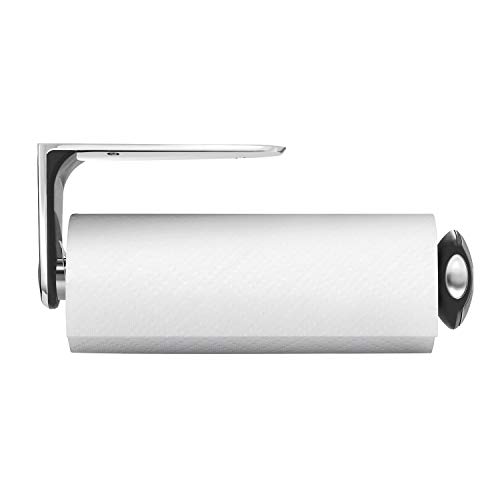
simplehuman Wall Mount Paper Towel Holder
The simplehuman Wall Mount Paper Towel Holder is a wall-mounted design that frees counter space and suits kitchens where every inch of worktop is spoken for. In prose terms it sits in the mid tier of this category for most households, judged on structure rather than shine: how it stands or fixes, how it behaves during a one-handed tear, and how quickly the roll can be changed when the kitchen is busy. Treat the notes in this guide as a framework for judging it in your own space, because placement and roll size will change the experience more than any single design detail.
What to check before choosing it: measure your space first, confirm the roll size your household actually buys will fit and turn freely, and picture the tear with one hand occupied. If those three checks pass, this style of holder tends to settle into daily life quickly and stay there.

OXO Good Grips SimplyTear Paper Towel Holder
The OXO Good Grips SimplyTear Paper Towel Holder is a countertop design built around a spring-loaded arm that holds the roll steady for a one-handed tear. In prose terms it sits in the mid tier of this category for most households, judged on structure rather than shine: how it stands or fixes, how it behaves during a one-handed tear, and how quickly the roll can be changed when the kitchen is busy. Treat the notes in this guide as a framework for judging it in your own space, because placement and roll size will change the experience more than any single design detail.
What to check before choosing it: measure your space first, confirm the roll size your household actually buys will fit and turn freely, and picture the tear with one hand occupied. If those three checks pass, this style of holder tends to settle into daily life quickly and stay there.
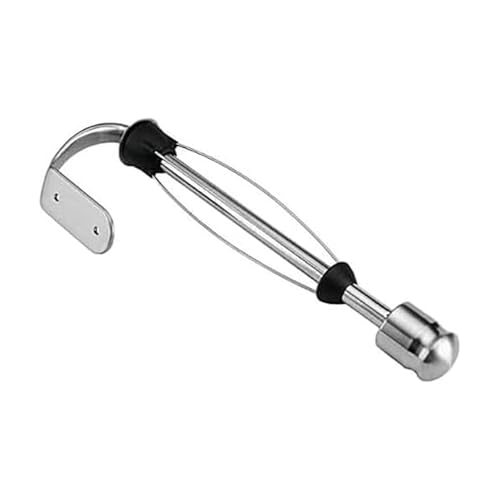
Kamenstein Perfect Tear Paper Towel Holder
The Kamenstein Perfect Tear Paper Towel Holder is a countertop design known for its ratchet-style mechanism that stops the roll spinning freely. In prose terms it sits in the mid tier of this category for most households, judged on structure rather than shine: how it stands or fixes, how it behaves during a one-handed tear, and how quickly the roll can be changed when the kitchen is busy. Treat the notes in this guide as a framework for judging it in your own space, because placement and roll size will change the experience more than any single design detail.
What to check before choosing it: measure your space first, confirm the roll size your household actually buys will fit and turn freely, and picture the tear with one hand occupied. If those three checks pass, this style of holder tends to settle into daily life quickly and stay there.

Spectrum Euro Paper Towel Holder
The Spectrum Euro Paper Towel Holder is a simple upright countertop design in a classic wire form that suits traditional kitchens. In prose terms it sits in the mid tier of this category for most households, judged on structure rather than shine: how it stands or fixes, how it behaves during a one-handed tear, and how quickly the roll can be changed when the kitchen is busy. Treat the notes in this guide as a framework for judging it in your own space, because placement and roll size will change the experience more than any single design detail.
What to check before choosing it: measure your space first, confirm the roll size your household actually buys will fit and turn freely, and picture the tear with one hand occupied. If those three checks pass, this style of holder tends to settle into daily life quickly and stay there.
madesmart Paper Towel Holder
The madesmart Paper Towel Holder is a practical countertop design from a brand known for straightforward kitchen organisation. In prose terms it sits in the mid tier of this category for most households, judged on structure rather than shine: how it stands or fixes, how it behaves during a one-handed tear, and how quickly the roll can be changed when the kitchen is busy. Treat the notes in this guide as a framework for judging it in your own space, because placement and roll size will change the experience more than any single design detail.
What to check before choosing it: measure your space first, confirm the roll size your household actually buys will fit and turn freely, and picture the tear with one hand occupied. If those three checks pass, this style of holder tends to settle into daily life quickly and stay there.
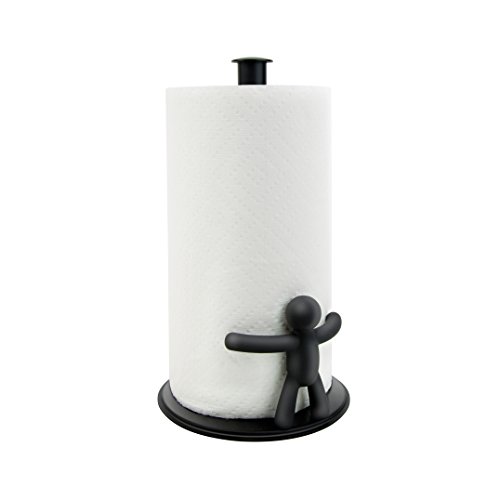
Umbra Tug Paper Towel Holder
The Umbra Tug Paper Towel Holder is a modern countertop design with a distinctive curved form and a weighted feel in the hand. In prose terms it sits in the mid tier of this category for most households, judged on structure rather than shine: how it stands or fixes, how it behaves during a one-handed tear, and how quickly the roll can be changed when the kitchen is busy. Treat the notes in this guide as a framework for judging it in your own space, because placement and roll size will change the experience more than any single design detail.
What to check before choosing it: measure your space first, confirm the roll size your household actually buys will fit and turn freely, and picture the tear with one hand occupied. If those three checks pass, this style of holder tends to settle into daily life quickly and stay there.
Will It Fit the Rolls You Actually Buy?
Finally, remember that a paper towel holder is one of the cheapest upgrades in the kitchen, which cuts both ways. The modest outlay means a mistake is not costly, but it also means the category is full of flimsy designs that look fine in photographs and disappoint within weeks. Judge by structure rather than shine: how it fixes or stands, how it holds the roll during a tear, how it reloads, and how it cleans. A holder that gets those four things right will be touched more often than almost any gadget you own, and it will quietly earn its place every single day.
Placement is the first decision, and it matters more than finish or brand. A paper towel holder only earns its place if the roll sits within easy reach of where spills actually happen, which for most households means near the sink and the main prep area rather than at the far end of the counter. Stand at your board, picture a pan of oil spitting or a glass tipping over, and notice which hand moves first and where it reaches. That instinctive reach is where the holder belongs. If you have to cross the kitchen with wet hands, the holder is furniture, not a tool, and you will stop using it within a month.
Fire safety deserves plain language here. Paper towels are fuel, and a holder that parks the roll beside a stove is a quiet hazard that grows more serious the longer it goes unnoticed. Keep the roll well clear of open flames, hot burners and the side of a toaster oven that vents heat, and never drape a loose sheet over a rack near a hob. Gas flames in particular can catch a trailing corner faster than you can react. A holder near the sink, by contrast, pairs naturally with water, washing up and the damp cloth work that makes up most kitchen messes.
Mounting honesty matters with wall and under-cabinet models. Screws into studs or proper wall anchors hold; adhesive pads on painted or textured surfaces often do not, especially once a heavy full roll adds leverage and a firm one-handed pull adds a daily tug in the same direction. If you rent, weigh the small screw holes, which are easy to fill later, against the near certainty of an adhesive mount letting go mid-tear and taking paint with it. Under-cabinet mounting also needs a clearance check: measure so the roll hangs freely and does not rub the wall or the cabinet face as it turns.
One-handed tearing is the feature that separates a good holder from a merely adequate one. Ratchet mechanisms and tension arms hold the roll still while you pull, so a single sheet separates cleanly instead of unspooling across the counter. The difference shows up when your other hand is holding a hot pan, a raw chicken or a wriggling toddler. A free-spinning roll is not a disaster, but it asks for two hands and a moment of patience you do not always have. Test the idea in the shop or picture it honestly: if a design needs a second hand to steady it, plan your placement so that second hand is usually free.
How Important Is a One-Handed Tear?
Fire safety deserves plain language here. Paper towels are fuel, and a holder that parks the roll beside a stove is a quiet hazard that grows more serious the longer it goes unnoticed. Keep the roll well clear of open flames, hot burners and the side of a toaster oven that vents heat, and never drape a loose sheet over a rack near a hob. Gas flames in particular can catch a trailing corner faster than you can react. A holder near the sink, by contrast, pairs naturally with water, washing up and the damp cloth work that makes up most kitchen messes.
Mounting honesty matters with wall and under-cabinet models. Screws into studs or proper wall anchors hold; adhesive pads on painted or textured surfaces often do not, especially once a heavy full roll adds leverage and a firm one-handed pull adds a daily tug in the same direction. If you rent, weigh the small screw holes, which are easy to fill later, against the near certainty of an adhesive mount letting go mid-tear and taking paint with it. Under-cabinet mounting also needs a clearance check: measure so the roll hangs freely and does not rub the wall or the cabinet face as it turns.
One-handed tearing is the feature that separates a good holder from a merely adequate one. Ratchet mechanisms and tension arms hold the roll still while you pull, so a single sheet separates cleanly instead of unspooling across the counter. The difference shows up when your other hand is holding a hot pan, a raw chicken or a wriggling toddler. A free-spinning roll is not a disaster, but it asks for two hands and a moment of patience you do not always have. Test the idea in the shop or picture it honestly: if a design needs a second hand to steady it, plan your placement so that second hand is usually free.
Weighted bases solve one problem and create another worth understanding. A heavier base resists the pull of a tear and keeps a countertop holder planted, which is exactly what you want during busy cooking. Yet weight alone does not prevent tipping if the base is narrow and the roll sits tall, because a hard sideways pull applies leverage at the top. A wide, low base with a grippy underside behaves better than a tall, narrow one of similar weight. On smooth stone or glossy counters, a holder that slides is as annoying as one that tips, so the underside material matters as much as the mass.
Roll size compatibility is the unglamorous check that prevents the most returns. Standard rolls fit almost everything, but the larger mega and jumbo rolls sold for busy households can bind on holders with tight clearances, rub against walls on mounted models, or sit awkwardly tall on compact countertop designs. If your household buys big rolls in bulk, treat that as a hard requirement and check the stated fit before anything else. A holder that only works with smaller rolls quietly changes your shopping habits, and not in a direction most people enjoy. Equally, a very small roll on an oversized holder can spin too freely and tear unevenly.
How Will You Fix or Stand It?
One-handed tearing is the feature that separates a good holder from a merely adequate one. Ratchet mechanisms and tension arms hold the roll still while you pull, so a single sheet separates cleanly instead of unspooling across the counter. The difference shows up when your other hand is holding a hot pan, a raw chicken or a wriggling toddler. A free-spinning roll is not a disaster, but it asks for two hands and a moment of patience you do not always have. Test the idea in the shop or picture it honestly: if a design needs a second hand to steady it, plan your placement so that second hand is usually free.
Weighted bases solve one problem and create another worth understanding. A heavier base resists the pull of a tear and keeps a countertop holder planted, which is exactly what you want during busy cooking. Yet weight alone does not prevent tipping if the base is narrow and the roll sits tall, because a hard sideways pull applies leverage at the top. A wide, low base with a grippy underside behaves better than a tall, narrow one of similar weight. On smooth stone or glossy counters, a holder that slides is as annoying as one that tips, so the underside material matters as much as the mass.
Roll size compatibility is the unglamorous check that prevents the most returns. Standard rolls fit almost everything, but the larger mega and jumbo rolls sold for busy households can bind on holders with tight clearances, rub against walls on mounted models, or sit awkwardly tall on compact countertop designs. If your household buys big rolls in bulk, treat that as a hard requirement and check the stated fit before anything else. A holder that only works with smaller rolls quietly changes your shopping habits, and not in a direction most people enjoy. Equally, a very small roll on an oversized holder can spin too freely and tear unevenly.
Materials shape both cleaning and longevity. Stainless steel wipes clean and shrugs off splashes, though it shows fingerprints in bright light. Painted and coated finishes can look warmer and match other kitchen pieces, but chips near the base reveal themselves over time where the holder meets the counter. Plastic designs are light and easy to move, which suits renters and small kitchens, yet they rely more heavily on base design to stay planted. Wood adds warmth and suits country-style kitchens, but it dislikes standing water, so a wooden holder belongs away from the sink splash zone and needs drying after a wet-handed grab.
Cleaning a holder is easy to forget until the day you notice the film of cooking grease that settles on everything near a stove. A quick wipe with a damp cloth during your regular counter clean keeps most designs looking new, and models with fewer crevices collect less grime in the first place. Holders near the sink collect water spots instead; a soft dry cloth after washing up handles those. If the base has a foam or rubber underside, lift it occasionally and dry beneath it, because trapped moisture on a wooden counter can mark the surface over time. None of this is difficult, but simple designs make it effortless.
How to Prioritise by Use Case
Roll size compatibility is the unglamorous check that prevents the most returns. Standard rolls fit almost everything, but the larger mega and jumbo rolls sold for busy households can bind on holders with tight clearances, rub against walls on mounted models, or sit awkwardly tall on compact countertop designs. If your household buys big rolls in bulk, treat that as a hard requirement and check the stated fit before anything else. A holder that only works with smaller rolls quietly changes your shopping habits, and not in a direction most people enjoy. Equally, a very small roll on an oversized holder can spin too freely and tear unevenly.
Materials shape both cleaning and longevity. Stainless steel wipes clean and shrugs off splashes, though it shows fingerprints in bright light. Painted and coated finishes can look warmer and match other kitchen pieces, but chips near the base reveal themselves over time where the holder meets the counter. Plastic designs are light and easy to move, which suits renters and small kitchens, yet they rely more heavily on base design to stay planted. Wood adds warmth and suits country-style kitchens, but it dislikes standing water, so a wooden holder belongs away from the sink splash zone and needs drying after a wet-handed grab.
Cleaning a holder is easy to forget until the day you notice the film of cooking grease that settles on everything near a stove. A quick wipe with a damp cloth during your regular counter clean keeps most designs looking new, and models with fewer crevices collect less grime in the first place. Holders near the sink collect water spots instead; a soft dry cloth after washing up handles those. If the base has a foam or rubber underside, lift it occasionally and dry beneath it, because trapped moisture on a wooden counter can mark the surface over time. None of this is difficult, but simple designs make it effortless.
Think about who else uses the kitchen before you commit to a style. Children pulling sheets for craft projects, a partner who cooks differently from you, or an older relative who visits often will all interact with the holder in their own way. A stable countertop model that everyone can reload without instructions often serves a busy household better than a clever mechanism that needs explaining. Reloading itself should be a ten-second job: if changing the roll involves unscrewing caps, squeezing stiff springs or threading the roll through a narrow gap, that small friction repeats every few days for years, and it adds up.
Counter space is a budget, and a holder spends it every single day. In a small kitchen, a wall-mounted or under-cabinet design returns that footprint to chopping boards, small appliances and the general sprawl of cooking. In a larger kitchen with counter to spare, a freestanding holder offers flexibility: it can move to the dining table for a messy family meal, out to a garden table in summer, or next to the hob area, at a safe distance, during a big batch cook. Neither answer is universally right. The honest question is whether your counter feels crowded on an ordinary Tuesday, not on the tidiest day of the year.
First Setup and Care Essentials
Cleaning a holder is easy to forget until the day you notice the film of cooking grease that settles on everything near a stove. A quick wipe with a damp cloth during your regular counter clean keeps most designs looking new, and models with fewer crevices collect less grime in the first place. Holders near the sink collect water spots instead; a soft dry cloth after washing up handles those. If the base has a foam or rubber underside, lift it occasionally and dry beneath it, because trapped moisture on a wooden counter can mark the surface over time. None of this is difficult, but simple designs make it effortless.
Think about who else uses the kitchen before you commit to a style. Children pulling sheets for craft projects, a partner who cooks differently from you, or an older relative who visits often will all interact with the holder in their own way. A stable countertop model that everyone can reload without instructions often serves a busy household better than a clever mechanism that needs explaining. Reloading itself should be a ten-second job: if changing the roll involves unscrewing caps, squeezing stiff springs or threading the roll through a narrow gap, that small friction repeats every few days for years, and it adds up.
Counter space is a budget, and a holder spends it every single day. In a small kitchen, a wall-mounted or under-cabinet design returns that footprint to chopping boards, small appliances and the general sprawl of cooking. In a larger kitchen with counter to spare, a freestanding holder offers flexibility: it can move to the dining table for a messy family meal, out to a garden table in summer, or next to the hob area, at a safe distance, during a big batch cook. Neither answer is universally right. The honest question is whether your counter feels crowded on an ordinary Tuesday, not on the tidiest day of the year.
The humble question of sheet size also plays a part. Many households now buy select-a-size rolls, where each sheet is shorter, and a holder with a clean tear mechanism makes those perforations work as intended instead of tearing mid-sheet. If you mostly use towels for drying hands and wiping counters, shorter sheets reduce waste noticeably over a year. A holder that tears reliably supports that habit; one that shreds sheets works against it. It is a small example of a larger truth: the holder is not really about storage at all. It is about the half-second interaction, repeated dozens of times a week, going smoothly every time.
Mistakes to Avoid
Counter space is a budget, and a holder spends it every single day. In a small kitchen, a wall-mounted or under-cabinet design returns that footprint to chopping boards, small appliances and the general sprawl of cooking. In a larger kitchen with counter to spare, a freestanding holder offers flexibility: it can move to the dining table for a messy family meal, out to a garden table in summer, or next to the hob area, at a safe distance, during a big batch cook. Neither answer is universally right. The honest question is whether your counter feels crowded on an ordinary Tuesday, not on the tidiest day of the year.
The humble question of sheet size also plays a part. Many households now buy select-a-size rolls, where each sheet is shorter, and a holder with a clean tear mechanism makes those perforations work as intended instead of tearing mid-sheet. If you mostly use towels for drying hands and wiping counters, shorter sheets reduce waste noticeably over a year. A holder that tears reliably supports that habit; one that shreds sheets works against it. It is a small example of a larger truth: the holder is not really about storage at all. It is about the half-second interaction, repeated dozens of times a week, going smoothly every time.
Consider the sound and feel of daily use, because small irritations compound. A holder that rattles against a wall, scrapes across stone, or clatters when the roll is replaced will quietly annoy you in a way that never quite justifies replacing it. Felt or rubber contact points, a smooth spindle and a mechanism that engages with a soft click rather than a snap all contribute to a kitchen that feels calm to work in. These details rarely headline a product page, which is why thinking about your own sensitivities, and reading descriptions for how a design handles contact and movement, pays off more than chasing extra features.
Bathrooms, utility rooms and workshops change the calculation slightly, and many households buy a second holder once the kitchen one proves itself. In a bathroom, humidity favours stainless or plastic over untreated wood. In a workshop or garage, a wall-mounted holder keeps towels clear of benches and tools, and durability matters more than looks. The kitchen lessons still apply: secure fixing, honest clearance, safe distance from heat, and a tear that works one-handed when the other hand is holding something awkward. Buying the same design twice is perfectly sensible when the first one has already taught you what your household values.
More Detail Worth Knowing
Counter space is a budget, and a holder spends it every single day. In a small kitchen, a wall-mounted or under-cabinet design returns that footprint to chopping boards, small appliances and the general sprawl of cooking. In a larger kitchen with counter to spare, a freestanding holder offers flexibility: it can move to the dining table for a messy family meal, out to a garden table in summer, or next to the hob area, at a safe distance, during a big batch cook. Neither answer is universally right. The honest question is whether your counter feels crowded on an ordinary Tuesday, not on the tidiest day of the year.
The humble question of sheet size also plays a part. Many households now buy select-a-size rolls, where each sheet is shorter, and a holder with a clean tear mechanism makes those perforations work as intended instead of tearing mid-sheet. If you mostly use towels for drying hands and wiping counters, shorter sheets reduce waste noticeably over a year. A holder that tears reliably supports that habit; one that shreds sheets works against it. It is a small example of a larger truth: the holder is not really about storage at all. It is about the half-second interaction, repeated dozens of times a week, going smoothly every time.
Consider the sound and feel of daily use, because small irritations compound. A holder that rattles against a wall, scrapes across stone, or clatters when the roll is replaced will quietly annoy you in a way that never quite justifies replacing it. Felt or rubber contact points, a smooth spindle and a mechanism that engages with a soft click rather than a snap all contribute to a kitchen that feels calm to work in. These details rarely headline a product page, which is why thinking about your own sensitivities, and reading descriptions for how a design handles contact and movement, pays off more than chasing extra features.
Bathrooms, utility rooms and workshops change the calculation slightly, and many households buy a second holder once the kitchen one proves itself. In a bathroom, humidity favours stainless or plastic over untreated wood. In a workshop or garage, a wall-mounted holder keeps towels clear of benches and tools, and durability matters more than looks. The kitchen lessons still apply: secure fixing, honest clearance, safe distance from heat, and a tear that works one-handed when the other hand is holding something awkward. Buying the same design twice is perfectly sensible when the first one has already taught you what your household values.
A Pre-Purchase Fit Audit for Paper towel holder: Space, Habits and the Constraints Listings Skip
Specifications and shortlists only get a buyer so far. What decides whether a paper towel holder works out is the fit between the product and the counter, wall or cabinet spot where towels get torn one-handed, and that fit can be audited before any money moves. Work through the checks below in order, because each one eliminates a different kind of disappointment: the wrong size, the wrong format for the routine, and the right product undermined by one ignored constraint in the room or the household.
Treat this first check as a gate, not a preference. Start with fit, because fit failures cannot be fixed by enthusiasm later. In practice that means three things: measure the spot against the holder footprint and the height of a full roll; check the tearing action suits one-handed use with your usual towel brand; and confirm the base weight or mounting suits how hard your household pulls. Write the answers down rather than holding them in your head, because a paper towel holder is usually chosen over several browsing sessions, and the constraint you checked on Monday is the one forgotten by Friday. If any of the three checks produces an awkward answer, treat it as information about format, not as a problem to wave away — a different format of paper towel holder often removes the conflict entirely, while a compromise on fit tends to be re-litigated every time the product is used.
On a shortlist, this is where weak candidates quietly fall away. Then picture the product in its real situations rather than its best one. The routine cases are easy to imagine: a busy prep counter where hands are wet or floury mid-recipe, or a sink-side spot for quick spills and hand drying. The more useful exercise is the harder day: oversized or tightly wound rolls that some holders grip too firmly; and a holder beside the sink catching constant spray and going rusty at the base. A paper towel holder does not need to be perfect in those moments, but it does need a workable answer to them — a way to be moved, covered, adjusted, cleaned or simply tolerated until conditions improve. If the honest answer is that the hard day would make you stop using it altogether, that is a decision-grade fact, and it is far cheaper to learn it now than after delivery.
Before you order anything, run this closing pass against the audit above. A final decision pass can be kept deliberately short. Confirm the measurements against the space one last time. Confirm the format against the routine it will actually join, including who else uses it and how often. Confirm the upkeep list is acceptable as a standing habit, not a launch-week intention. And confirm that the edge case most likely in your household has a workable answer. Four confirmations, honestly answered, separate a considered purchase of a paper towel holder from a hopeful one.
Frequently Asked Questions
Will a paper towel holder fit larger mega rolls?
Many holders do, but not all, and this is the single most common source of disappointment in the category. Larger rolls can bind on tight spindles, rub the wall on mounted designs, or sit too tall on compact countertop models. If your household buys mega or jumbo rolls as a habit, check the stated roll fit before anything else, and favour designs with generous clearance. A holder that forces you to change the rolls you buy is solving the wrong problem, so treat roll compatibility as a hard requirement rather than a detail to discover after delivery.
Are adhesive mounts strong enough for a wall holder?
Usually not for long, and honesty matters here. Adhesive pads can hold a light, empty holder, but a full roll adds weight and every one-handed tear adds a repeated tug in the same direction. On painted, textured or steamy kitchen walls, pads commonly let go within weeks and can take paint with them. Screws into studs or proper wall anchors are the reliable route, and the small holes they leave are easy to fill later. If you truly cannot drill, choose a countertop model instead of gambling on adhesive in the room where you cook most.
How do I stop a countertop holder tipping over?
Start with base design rather than raw weight. A wide, low base with a grippy underside resists the leverage of a firm sideways pull far better than a tall, narrow base, and placing the holder on a dry, flat stretch of counter helps more than most people expect. Pull sheets toward you and slightly downward rather than sideways, and keep the roll size sensible for the holder. If a holder still tips during normal use, it is the wrong design for your kitchen, and a wall or under-cabinet model will solve the problem permanently.
Where is the safest place to put a paper towel holder?
Near the sink and your main prep area, within one easy reach of where spills happen, and well clear of open flames, hot burners and heat vents. Paper is fuel, and a trailing sheet near a gas hob can catch faster than you can react, so distance from the stove is a genuine safety rule rather than a style preference. The sink side of the kitchen also matches how towels are actually used: drying hands, wiping counters and mopping splashes. If your only free spot is beside the cooker, choose a mounted position further away instead.
Do one-handed tear mechanisms really make a difference?
Yes, in the specific moments that define kitchen work. A ratchet or tension arm holds the roll steady so one hand can pull a clean sheet while the other holds a pan, raw ingredients or a child. Without that resistance, a roll spins freely and the job takes two hands and a pause. You will not notice the benefit on a quiet morning, but during a busy evening cook it is the difference between a holder that helps and one that merely stores. If you cook often with full hands, prioritise the tear mechanism over finish.
How do I clean and maintain a paper towel holder?
Wipe it during your regular counter clean with a damp cloth, and dry beneath the base occasionally so moisture does not sit against wooden worktops. Holders near the stove collect a fine film of cooking grease, so a mild degreasing wipe now and then keeps finishes looking new, while holders near the sink mainly collect water spots that a soft dry cloth removes. Check wall fixings once or twice a year and tighten if needed. None of this takes more than a minute, and simple designs with fewer crevices make the job genuinely effortless.
Related Guides
Keep exploring with these connected guides: paper towel holder review, paper towel holder reviews, paper towel holder pros and cons, is a paper towel holder worth it, how to choose a paper towel holder, best automatic can openers, all-around kitchen faucets, affordable kitchen faucets, basic kitchen faucets.