Disclosure: As an Amazon Associate, airfryerkitchensupply.com earns from qualifying purchases. Links on this page are affiliate links; they cost you nothing extra. Prices and availability change often, so check the current Amazon listing before you buy.
Ask is a towel warmer worth it and the honest answer is that the question has a household-shaped hole in the middle: worth it for whom, in which bathroom, on what routine. So is a towel warmer worth it for you? This article answers with the cases rather than a slogan. Worth it if you shower at home daily, if your towels never dry, if you host guests you enjoy spoiling. Not worth it if the bathroom sits idle, the only placement breaks the safety clearances, or the money should fix the bathroom’s heating first.
Key Takeaways
- Worth it when it runs daily: the cost spreads across hundreds of warm, properly dried towels.
- Not worth it when the bathroom is occasional, the placement is unsafe, or instant heat is the expectation.
- Drying is the underrated half of the value, especially in humid or windowless bathrooms.
- Buy reversible first if you are unsure: a bucket or freestanding rail tests the habit at entry tier.
- Hardwired only earns its electrician inside a settled renovation; plug-in delivers the same towel.
In this guide
Is A Towel Warmer Worth It: The Short Answer First
Worth it if the warmer will run most days in a bathroom with a safe place for it, sized for the towels your household actually uses. Not worth it if it will sit in a spare room, crowd an unsafe corner, or substitute for heating the bathroom itself needs. The rest of this article earns that short answer out in detail, case by case, so you can place your own household on the right side of it.
What You Actually Get
What you actually get is a towel that is warm through at the exact moment you want it, every day you remember the timer, which after a fortnight is every day. You get a towel that then dries properly instead of slumping damp on a hook, in the rail format especially. You get a bathroom that feels finished in the way good hotels feel finished, and a guest detail people mention at breakfast. You get a small ritual at both ends of the day. None of these is dramatic; their value is that they repeat, daily, for years, at a running cost measured in scheduled bursts rather than constant draw.
The warm-towel habit sounds like a small luxury until you live with it through a cold month. Stepping out of a shower into a cool bathroom is the moment the warmer justifies itself, and it does so every single morning rather than on special occasions. That repetition is the real product here. You are not buying a heated rail or a heated bucket; you are buying a reliably better five minutes at the start of the day, and a towel that feels looked after rather than merely hung up.
Drying is the quieter half of the value. Towels in busy bathrooms often never fully dry between uses, especially in winter or in homes where the bathroom has no window and modest ventilation. A damp towel folded over itself on a hook stays damp in the fold, and that is where the stale smell begins. Spread over a warm rail, or hung to dry after warming in a bucket household’s rotation, the same towel dries through, feels fresher and goes longer between washes, which is kinder to the fabric as well.
Guests change the calculation too. A warm towel is one of those details visitors remember and mention, in the same league as good water pressure and a bed made with decent sheets. Hosts who keep a spare set of towels for the guest bathroom find a warmer, especially a portable bucket that can move rooms, turns a perfectly fine guest bathroom into one that feels considered. If your home hosts family often, that hosting value belongs in the decision alongside your own morning routine.
Seasons matter, but not as simply as people assume. Winter is the obvious season for a warmer, yet plenty of owners run theirs in summer too, particularly in air-conditioned homes where the bathroom feels cool and towels dry slowly in humid weather. The drying role is seasonless. What changes with the seasons is how long you run the warmer and when: a timer schedule that suits January may be longer than July needs, and adjusting it is part of owning the appliance well.
The Real Costs Beyond Money
The real costs are space, patience and responsibility. Space: a rail takes a wall, a bucket takes a counter, and in a small bathroom either is a genuine allocation. Patience: the warmer must start before the shower, forever, which is a habit some households never form. Responsibility: a heated appliance in a wet room carries permanent safety rules, GFCI protection for plug-in models, clearances respected, hot rails supervised around children, buckets loaded with suitable fabrics only and unplugged when done. None of these costs is large. All of them are real, and pretending otherwise is how worth-it purchases turn into cupboard clutter.
Safety First: The Non-Negotiables
Hardwired towel warmers are not a do-it-yourself wiring project. A hardwired model connects directly to your home’s electrical system, and that work belongs to a licensed electrician, no exceptions. The electrician confirms the circuit, the junction box position and local code requirements, and makes the connection safely inside the wall. If a listing describes hardwired installation as a quick weekend job, treat that as a warning sign about the listing, not as permission to improvise with household wiring.
Plug-in models are simpler, but the bathroom rules still apply. A plug-in warmer should run from a GFCI-protected bathroom outlet, the kind with test and reset buttons that cuts power quickly if current leaks toward water or a fault. Position the warmer exactly where the maker says it can go, respecting the clearances the manual specifies from the tub, the shower spray and standing water. A cord stretched across a wet floor to reach a distant outlet is the wrong answer; move the warmer or choose a different format instead.
Rail surfaces get hot in normal use, hot enough that you should treat them with the same respect you give a radiator or a heated appliance. Keep flammable items off the rails, never drape paper, aerosols or cleaning products over a running warmer, and supervise children around one until they understand it is a heater, not a climbing frame or a towel rack they can hang from. A warm towel is the goal; a crowded, overloaded rail works worse and is harder on everyone.
Bucket warmers ask for a few habits of their own. Load only fabrics the maker lists as suitable, never leave a bucket warmer running unattended for long periods, and unplug it when the warming cycle is done, following the maker’s instructions rather than treating it as an always-on appliance. Give the bucket counter space with ventilation around it, keep the lid and cord in good condition, and stop using any warmer, bucket or rail, if the cord frays, the plug runs unusually hot or the unit behaves erratically.
Who It Pays Off For
The daily home showerer
If your showers happen at home, daily, the warmer earns its keep on the fastest schedule there is. The routine forms, the timer runs, and the purchase divides itself across a year of mornings so quickly that the question stops making sense by spring.
The host
Hosts get a second dividend: guests. A warm towel is remembered and mentioned, and a portable bucket can serve whichever bathroom has guests that weekend. If your home fills with family several times a year, the hosting value alone can carry the purchase for personalities who enjoy that kind of detail.
The humid-bathroom household
If your towels live damp, smell stale by day two and queue constantly for the wash, the drying dividend may exceed the warming one. A rail that dries towels fully between uses changes the bathroom’s whole laundry rhythm, and households in humid climates or windowless bathrooms report this as the reason they would buy again.
Who Should Skip It
The occasional bathroom
A warmer in a bathroom used twice a week delivers its joy too rarely to justify its space and responsibility. Buy nothing, or buy a bucket that also travels to the main bathroom and earns its keep there.
The unsafe placement
If the only available spot ignores the maker’s clearances, crowds the shower spray or stretches a cord across a wet floor, the answer is no at any tier. Safety is the one cost that cannot be discounted, and a bathroom with no safe home for a warmer is a bathroom that should not have one.
The wrong problem
If the bathroom is freezing, mouldy at the ceiling or short of storage, a warmer is a garnish on an unfinished meal. Spend on heating, ventilation or storage first. The warmer will still be there, and will feel far more worth it, when the room deserves it.
Strengths and Trade-Offs of Owning One
Strengths
- Daily, repeatable comfort with no skill or effort once the timer is set.
- Towels dry fully on a rail, staying fresher and lasting longer between washes.
- Guest impact out of all proportion to the purchase.
Trade-Offs
- A head start is always required; there is no instant mode.
- Wall, counter or floor space is committed permanently to the appliance.
- Safe placement and supervision are permanent responsibilities, not setup steps.
Alternatives to Consider
Before buying, price the alternatives honestly in your head. A better plain rail plus a hook arrangement costs little and solves storage, though not warmth or drying. A heated floor solves cold tiles at renovation scale. Warming a towel in a dryer works occasionally and impractical daily. Each alternative covers one slice of what a warmer does; the warmer is the only option that covers warming, drying and readiness together, which is precisely its worth-it case when all three matter to you.
The Models, Matched to the Verdict
Brookstone Towel Warmer Bucket
Brookstone’s towel warmer bucket is the friendly face of the bucket format: a lidded countertop bucket sized for a bath towel or a robe, with simple controls aimed at people who want warmth without any installation at all. It suits guest bathrooms, gifts and anyone renting, because it arrives, plugs into a GFCI-protected outlet and works the same day. Load only fabrics the maker lists as suitable, do not leave it running unattended for long stretches, and unplug it when the cycle is done. In tier terms it is an accessible entry point to the whole category.
worthit
Amba Radiant Towel Warmer
Amba’s Radiant line is the name many shoppers meet first in wall-mounted rails, offered in a range of widths and bar counts in polished and matte finishes. The appeal is choice: a narrow model for a small ensuite, a wider one for a family bathroom, in plug-in or hardwired versions depending on how permanent you want the installation to be. In prose terms it sits in the mid-to-premium tier of rails, and it suits buyers who want a fixture that looks deliberate rather than added on. Remember that the hardwired versions belong to a licensed electrician, and the plug-in versions belong on a GFCI-protected outlet placed per the maker’s clearances.
worthit
Brandon Basics Towel Warmer
Brandon Basics offers a bucket warmer that has become a common gift and first-bucket choice, sized for towels and small blankets with straightforward operation. It is the kind of unit that ends up in a guest room before a visit or in a nursery-adjacent bathroom for warming a robe, and its simplicity is the point: load, close the lid, wait, enjoy. It sits in the entry tier of buckets. The same bucket discipline applies: follow the maker’s fabric guidance, never leave it running unattended for long periods, and unplug it when you are done.
worthit
WarmlyYours Towel Warmer
WarmlyYours builds towel warmers as part of a wider home-heating range, and its rails tend to suit buyers who like the idea of the warmer as part of the bathroom’s heating picture rather than a standalone gadget. Designs run from compact rails for a single towel to larger formats for shared bathrooms, with plug-in and hardwired options across the range. It positions in the mid-to-premium tier. As with any rail, judge it on bar spacing for your towel size, the timer story, and whether its finish sits well with the rest of your fittings.
worthit

Zadro Towel Warmer
Zadro’s towel warmer bucket leans into capacity, with a roomy interior intended to take oversized bath sheets and robes that smaller buckets struggle with. For households whose towels are genuinely large, that interior volume is the whole argument, and the timer-style controls on the range suit a set-it-before-your-shower routine. It stands on the counter or floor, so measure that footprint honestly. Treat it like every bucket: suitable fabrics only, supervised use, unplugged when finished, and positioned away from tub and shower water per the maker’s guidance.
worthit
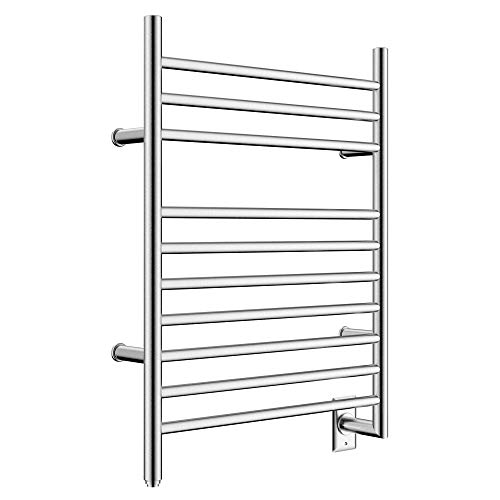
HEATGENE Towel Warmer
HEATGENE sells wall-mounted and freestanding rail warmers that appeal to value-minded buyers who still want the ladder-rail format and a choice of finishes. The freestanding options are worth a look for renters, while the wall-mounted versions follow the usual rule: plug-in models on a GFCI-protected outlet with the maker’s clearances respected, and anything hardwired handed to a licensed electrician. In tier terms HEATGENE generally sits at the accessible end of rails, which makes it a sensible first rail for a household deciding whether the warm-towel habit will stick.
worthit
How to Get the Most Value If You Buy
Care starts with the towel, not the warmer. Towels washed with too much detergent or fabric softener build up residue that makes them less absorbent and slower to dry, and no warmer can fix a towel that repels water. Wash towels hot enough for the fabric, skip the softener habit, and the warmer’s drying job gets easier. A warmer paired with tired, coated towels underperforms for reasons that have nothing to do with the appliance itself.
Wipe rails and bucket interiors down regularly once they have cooled completely. Bathroom dust, lint and the fine spray of toiletries settle on warm surfaces, and a soft cloth keeps finishes looking right and heat transfer clean. Never spray cleaner onto a warm or running unit, and never use abrasive pads on polished or coated finishes. The maker’s care notes for your specific finish override any general advice, including this paragraph.
Check the cord, plug and fixings as part of a seasonal bathroom once-over. A plug that sits loose in the outlet, a cord pinched behind furniture, or a wall fixing that has worked slightly loose are all small things caught early. Hardwired models need none of the cord checks, but if a hardwired warmer ever behaves oddly, the answer is an electrician, not experimentation. Appliances that heat and live in humid rooms deserve this modest, regular attention.
When a warmer will sit unused for a long stretch, such as in a holiday home or a guest bathroom between visits, switch it off at the outlet or unplug it rather than leaving it in standby indefinitely. Buckets should be left clean, dry and with the lid ajar so the interior airs. Rails simply need the towels taken off them. These small shutdown habits keep the appliance ready for the season when it earns its keep again.
Bathroom size cuts both ways. In a small bathroom, a rail warmer can replace a plain towel rail rather than adding a new object, so the footprint argument mostly disappears, and the drying help matters more because small bathrooms ventilate worst. In a large bathroom, a warmer anchors a comfort zone near the shower or bath, and a bucket can live on a generous counter without crowding it. The format should follow the room you have, which is why measuring comes before shopping in every sensible guide.
Families use warmers differently from couples, and couples differently from people living alone. A household with children may warm towels for bath time in the evening rather than the morning, and needs capacity and supervision in equal measure. A person living alone can be perfectly served by the smallest bucket or a compact rail, because the queue is one person long. Matching the warmer to the household’s actual bathing pattern is worth more than any single feature a listing can boast about.
The Decision Checklist
- Do we shower or bathe at home most days?
- Is there a placement inside the maker’s clearances, near a GFCI-protected outlet if plug-in?
- Will we honestly run a timer or a switch ahead of bathing?
- Have we sized for everyday towels, not for a crowd?
- Are the bathroom’s bigger problems, heating, ventilation, leaks, already solved?
- If unsure, are we buying the reversible, entry-tier version first?
Five or six yes answers: buy, at the tier your bathroom’s permanence justifies. Three or fewer: skip it for now, and revisit after the routine or the room changes. The checklist is short because the decision genuinely is, once the household facts are on the table.
More Depth: Living With a Towel Warmer
Think about the towel itself as part of the system. A warmer cannot rescue a towel that has lost its absorbency to years of softener build-up, and it flatters a good towel enormously. Thick cotton with a bit of loft holds warmth in its fibres and feels generous; thin, tired towels warm fast and cool fast. If a new warmer disappoints in week one, wash the towels without softener and try again before blaming the appliance, because the fix is often already in your laundry cupboard.
Sound and light are small but real ownership details. A good warmer is effectively silent and asks for no attention; a simple indicator light that confirms it is on prevents the two classic errors, leaving it running all day and showering while it sits cold. When comparing models, these humble details, a clear switch, a visible indicator, a timer that keeps its setting, predict daily satisfaction better than any headline feature, because they are the parts you interact with every single morning.
Resale and moving house deserve a sentence in any honest guide. Plug-in rails, freestanding models and buckets move with you, which quietly raises their value for anyone not in a forever home. Hardwired rails stay with the house, where they read as a finished-bathroom feature that estate agents are happy to list. Neither is a reason to buy or avoid on its own, but households that move often should weight portability, and households renovating for the long term can treat a hardwired rail as part of the room’s fabric.
Finally, buy from the listing details, not the lifestyle photograph. The photograph shows a spa bathroom with perfect light; the details show dimensions, installation type, control type and the maker’s own clearance and fabric instructions, which are the things that decide whether the warmer works in your room. Read the manual before the first use, keep it, and let it settle any question this guide has raised generally, because the maker’s word for your model outranks every general guide, including this one.
Consider the morning from the towel’s point of view for a moment. It hangs in a cool, steamy room, it is asked to dry a person and then dry itself in air that is already full of moisture, and in many bathrooms it is folded while damp and left that way until tomorrow. A warmer changes every term of that arrangement. The towel starts warm, works once, and then dries in moving, warmed air instead of stagnating in a fold. When owners say the category changed their bathroom, this unglamorous cycle, repeated daily, is most of what they mean.
There is a hotel lesson hiding in this category. Hotels did not adopt warm towels as theatre; they adopted them because guests reliably rate the bathroom higher when one small moment feels considered. Homes work the same way on a longer timescale. You stop noticing the warmer consciously within a month, in the same way you stop noticing good water pressure, but the bathroom’s overall feeling keeps the benefit. Judging a warmer by whether you still exclaim over it in month three is judging it by the wrong standard entirely.
Energy questions deserve a calm answer. A warmer is a modest electrical load run in short, deliberate windows, and its footprint in a household budget is governed almost entirely by the schedule you give it. Timer discipline is therefore both an economic and a practical virtue: the warmer works when the household bathes and rests when it does not. Owners who master that one habit stop thinking about running costs altogether, because there is so little left to think about.
Think, too, about who else uses the bathroom. A partner on an earlier shift, a teenager before school, an elderly parent staying for the month: each has a bathing time, and a timer schedule can be shaped around the household’s real sequence rather than a single person’s. Warmers reward households that treat them as shared infrastructure, set for everyone’s mornings, instead of as one person’s gadget that everyone else encounters cold and switched off.
The aesthetics question is worth settling plainly. A rail warmer in a finish that matches the taps looks like part of the bathroom’s design, because it is one: a fixture, chosen like the mirror and the lighting. A bucket looks like an appliance, because it is one, and in a guest room or a rental that honesty is fine. Neither look is superior; they belong to different kinds of rooms, and choosing between them is partly choosing what kind of object you want living in your bathroom.
Noise, or the absence of it, is an underrated virtue in a bathroom appliance. A warmer asks for no attention while it works: no fan, no cycle sounds, no beeps demanding a response at dawn. In a house where the morning already contains alarms, kettles and plumbing, an appliance that simply waits, warm and silent, fits the hour it serves. It is one reason owners describe the category as calming rather than merely convenient.
Durability expectations should be set like a fixture’s, not a gadget’s. A warmer has no software to abandon, no subscription to lapse and no consumables to reorder. Treated according to its manual, kept clean, loaded sensibly and run on a schedule, it should serve for years with the same indifference as the towel rail it may have replaced. That longevity is part of the value case: the purchase is amortised across a very large number of ordinary mornings.
A word about towels themselves, since the warmer and the towel are a system. Cotton towels with decent loft hold warmth generously and dry predictably; very dense luxury towels take longer to warm through and reward a longer head start; quick-dry travel towels warm fast and cool fast. None of this requires a special purchase, but if you replace towels in the same season as the warmer, choose with the system in mind and the pairing will feel designed rather than accidental.
Placement has a social dimension as well as a safety one. The warmer should be reachable without a negotiation: not behind the door’s swing, not across the room from the shower, not in the one spot where laundry baskets and bath toys accumulate. A warmer that requires a small expedition at the wettest moment of the morning will be used less, then resented, then ignored. Reach, tested with a mime from the shower door, is a specification as real as any dimension in the manual.
Seasons change the routine, and good owners adjust without thinking about it. Winter schedules run longer and earlier; summer schedules shrink or shift to drying duty after evening showers. A warmer on a timer invites that seasonal tuning, and households that do it find the appliance feels correctly sized all year. Households that set one schedule in January and never revisit it sometimes conclude the warmer is too much in July, when in fact only the timetable is.
The gift angle deserves respect rather than embarrassment. A bucket warmer is one of the rare household gifts that is used the week it is given, requires nothing of the recipient’s home, and suits people who are otherwise impossible to buy for. New parents warming a robe for night feeds, hosts upgrading a guest room, anyone in a cold house with a cold bathroom: the category keeps appearing in gift guides because the use case is universal and the commitment is zero.
Renovation timing is the strategic version of the same point. The cheapest day to add a hardwired rail is the day the walls are already open and an electrician is already in the house; the most expensive day is the one after the tiles set. If a bathroom renovation is anywhere in your two-year plans, the warmer decision belongs in that plan even if the purchase waits, because the placement and wiring decisions are the renovation’s to make, not the appliance’s.
Water quality and laundry habits echo quietly through ownership. Towels in hard-water homes stiffen over time and warm less pleasantly until they are washed with that in mind; towels in any home benefit from a wash routine that keeps them absorbent. The warmer exposes towel condition mercilessly, which owners initially read as the appliance underperforming. More often it is the appliance reporting, accurately, that the towels themselves need attention.
Finally, there is the question of enough. One warmer, correctly placed and correctly sized, serves a bathroom completely; a second warmer in the same room adds nothing but redundancy. The category rewards restraint: buy the format that fits, size it honestly, and stop. Households chasing the perfect bathroom sometimes stack upgrades until the room feels like a showroom, and the warm towel, the simplest pleasure in it, gets lost among the features competing to impress.
Bathroom routines are among the most stable habits in a house, which is why appliances that attach to them age so well. People change sofas, phones and even kitchens, but the morning shower happens in the same room, at roughly the same time, in roughly the same order, for years. A warmer plugged into that stability inherits it. When you evaluate any claim in this article, test it against your own routine’s stability: the more fixed the routine, the more completely the appliance’s advantages apply to you.
Humidity is the silent character in every towel story. A bathroom after a shower holds warm, wet air that condenses on cool surfaces and soaks into anything fibrous left folded or bunched. Towels live in that air twice a day. Anything that moves a towel from damp to dry between uses is fighting the room’s basic physics on the towel’s behalf, and that fight, more than the moment of warmth, is what keeps towels pleasant across a week of use instead of turning by day three.
There is a modest choreography to a well-run warm-towel morning. The timer starts the warmer, the first person showers while the towels come up to warmth, the rail or bucket hands over its towel, and the used towel goes back spread out to dry while the next person showers. Nobody directs this; the schedule does. Articles about appliances rarely say it plainly, but the schedule is the product, and the hardware is merely what the schedule switches on.
Children read a warmer differently from adults, and households should plan for the reading. To a child, a warm towel after a bath is pure ceremony, one of the small luxuries they will describe decades later, and bath time resistance often softens around it. The same household must hold the other truth at the same time: hot rails are not for climbing, buckets are not toys, and supervision is part of the ceremony until the lesson is thoroughly learned.
Older relatives are the other audience worth planning for. A warm towel is kind to someone who feels the cold after a bath, and a rail at the right height doubles as a reassuringly warm thing to steady against, though it should never be treated or loaded as a grab rail, which it is not designed to be. Guest rooms and family bathrooms that host older visitors get disproportionate gratitude from this category, a fact hosts discover in thank-you messages rather than in specification tables.
Laundry day tells the truth about a warmer’s second job. Households with rails often find the towel wash becomes calmer: fewer emergency washes for towels that turned stale midweek, less urgency, longer intervals that are kinder to the fabric. None of this eliminates laundry, and no honest guide should pretend otherwise. It smooths it, and smoothed chores are the kind a household actually feels across a year.
A warmer also exposes the bathroom’s other weaknesses honestly. If the room is so cold that a warm towel’s comfort evaporates in seconds, the warmer has revealed a heating problem, not failed at its own job. If towels still smell stale despite drying, the wash routine needs attention. Treat the appliance as a diagnostic as much as a comfort: what it cannot fix was never its assignment, and fixing those things first makes its own contribution shine.
Counter space and wall space are currencies, and every household spends them differently. A minimalist bathroom may begrudge a bucket its footprint while welcoming a rail that replaces an existing fitting at no extra cost in space. A spacious bathroom may absorb a bucket without noticing and gain a movable warmer for guests. There is no universal exchange rate, which is why this guide keeps returning to your room, your towels and your routine as the only reliable measures.
The secondhand and hand-me-down life of warmers is a quiet compliment to the category. Buckets and freestanding rails move between homes, get given to adult children setting up first flats, and reappear in guest rooms years after purchase. Simple appliances with no software and no consumables have that kind of afterlife. Buying a soundly made one is therefore not only a purchase for this bathroom; it is a small, durable good that tends to stay in circulation.
When in doubt, return to the towel test that decides everything in this category. Tomorrow morning, notice the towel you actually use: where it hangs, whether it dried, how it feels against your skin after the shower, and whether anyone else in the house queues for a better one. That thirty-second audit contains your answer about formats, sizes and value more reliably than any catalogue, because it measures the exact problem a warmer exists to solve, in the exact room where it would have to solve it.
One more angle is the evening. Many households discover, a month in, that the warmer’s best hour is not the morning at all but the evening bath: a robe warmed during a soak, a towel waiting at the end of a long day, children who stop negotiating about bath time. Evening use changes the sizing maths slightly, because baths cluster towels differently from showers, and it changes the timer schedule, but it asks nothing new of the appliance. A warmer bought for mornings that also wins the evenings has quietly doubled its value without costing a penny more.
Travel provides the comparison that settles many fence-sitters. A week in a hotel with a heated rail, or a spa day with towels from a warmer, recalibrates what a home bathroom feels like on return. People rarely come home and renovate; they come home and notice the towel. That noticing is the market this category serves, and it explains why so many purchases trace back to a trip rather than to an advertisement or a neighbour’s recommendation.
Storage of spare towels interacts with the warmer more than shoppers expect. Towels stored folded in a cupboard arrive at the rail cold and sometimes musty from the shelf; towels rotated directly from the wash onto the rail’s drying warmth stay in better condition. Households that keep the working set small, a few good towels in constant rotation between wash, rail and use, often report better results than households with a linen cupboard of dozens, because the system stays in motion.
The economics of tiers reward a clear head. The warmth a towel receives does not scale with the badge on the warmer; what scales is finish, size choice, installation neatness and control refinement. A household that knows which of those it is paying for can shop any tier calmly. A household paying a premium for warmth itself is buying a feeling the entry tier already provides, and the disappointment that follows is a budgeting error, not a product failure.
Accessibility deserves a thoughtful paragraph. Controls that can be reached without stretching over a hot rail, a bucket placed where it can be loaded without lifting a wet towel high, timers that remove the need to remember a switch at all: these details decide whether a warmer serves everyone in the house or only the person who installed it. When you choose, choose for the least agile person who will use the bathroom, and the appliance will serve the whole household gracefully.
A warmer’s relationship with ventilation is cooperative, not competitive. The extractor fan handles the room’s moisture; the warmer handles the towel’s. Households sometimes expect one to do the other’s job and blame both. Run the fan for the room, spread the towel for the warmer, and each system does the half it was built for. Bathrooms feel noticeably better when the two are not confused, especially in winter when windows stay shut.
There is also the simple matter of touch. Bathroom quality is unusually tactile: water pressure on skin, tile underfoot, the weight of a towel. A warmer speaks directly to that tactile register, which is why its effect is out of proportion to its simplicity. Designers who plan bathrooms by eye alone underrate it; households that plan by the morning’s actual sensations rarely do. If you are choosing between visual upgrades and this one, ask which you will feel with your eyes closed.
Worth It for Whom? A Towel Warmer Break-Even Test Based on Your Actual Routine
The purchase is the easy part. A towel warmer proves itself at the bathroom, near the bath or shower exit, in the middle of warming towels so stepping out feels finished rather than rushed, long after the packaging has gone. Judge in this order: routine first, space second, features last. Reversing that order is how most disappointing purchases of a towel warmer begin. The first check is the rail or bucket capacity against the number of towels your household uses, and it outranks everything else, because no styling or extra capacity compensates when that basic fit is wrong. When performance slips, troubleshoot in order: position, load, cleanliness, alignment and whether the routine has quietly changed since the towel warmer arrived all come before blaming the item itself.
Think about handing the task over: if someone else had to use, clean or reset the towel warmer from your brief description alone, the design and your setup would pass or fail together. Compatibility deserves a slower look than it usually gets, because a towel warmer never works alone; it must suit the surfaces, fittings, storage, light and other items already around it. The purchase price is the smallest part of some ownership stories. Space, upkeep and the occasional replacement part are where a towel warmer keeps charging you. The easiest items to own are the ones that ask for nothing between uses. If a towel warmer asks for something, make sure the routine gives it automatically rather than relying on memory.
- Count honest uses in a typical month before deciding.
- Add storage, cleaning and replacement-part costs to the reckoning.
- Name the simpler alternative and what it cannot do for you.
- Decide the usage level below which it stops earning its place.
- Calendar a one-month check against your prediction.
Keep the paperwork, digital or printed, in one known place: instructions, guarantee details and the measurements you took. Future you, troubleshooting at an inconvenient hour, will be grateful. Where the towel warmer involves weight, heat, blades, water or power, and most do in some combination, the safe choice is the one whose correct use is also its easiest use. Plan the end at the beginning: a towel warmer should be repairable, passable on, recyclable or at least easy to dispose of responsibly when its service ends, and designs differ widely on this. Worth-it questions are really frequency questions, so count how often the towel warmer will be used in an honest month and let that number, not optimism, carry the argument.
Prevention is unglamorous and effective: wiping rails down, keeping vents clear and following the maker’s guidance for your model, done consistently, protects performance better than any occasional rescue effort after problems have set in. Keep a brief note of when any problem started and what changed around then, because that record turns a vague complaint into a solvable question if you ever need parts, repair or a replacement decision. Wear arrives at predictable points: hinges, seals, edges, handles, surfaces and anything that is folded, dragged, filled or emptied. Inspect those areas in photographs and descriptions before you buy. Before ordering, list everything the first week of use requires and confirm, item by item, whether it arrives with the towel warmer or has to be found separately.
Flexibility is worth paying for only if you will use it. A towel warmer that folds, moves or converts impresses in the listing and matters only if your routine actually asks it to. Add up the minutes honestly: the washing, wiping, descaling, emptying, airing or reassembly a towel warmer demands each week is part of its real specification. Every item leaves a footprint on the home beyond its dimensions: noise, mess, heat, moisture, effort or visual clutter. Weigh that footprint for a towel warmer as seriously as its size. Also picture the opposite extreme, because a household that showers at scattered hours, where timed warming rarely lines up, and a choice that only works in average conditions will quietly disappoint at both ends of real life.
Frequently Asked Questions
Is a towel warmer worth it for one person?
Often yes, and sometimes it is the cleanest case of all. One person needs only a compact bucket or small rail, the queue is one towel long, and the routine is entirely under your control. The per-person cost is higher than a family splitting a big rail, but the usage rate, daily showers in a home you control, is exactly what makes any warmer pay off. If you shower at home daily, a modest first warmer is an easy yes.
How long does a towel warmer take to pay for itself?
Payback is the wrong frame for a comfort appliance, but the honest version is this: divide the purchase by the mornings you will use it and the figure shrinks fast for daily users, while staying stubborn for occasional ones. Add the softer returns, towels drying properly and lasting longer between washes, guests remembering the detail, a bathroom that feels finished, and daily users cross into worth-it territory quickly. Occasional users should buy entry tier or not at all.
Is a towel warmer worth it in a warm climate?
It can be, because the drying role does not depend on cold weather. Humid climates are where towels dry worst on a hook, and a rail that dries them between uses solves a year-round problem. The warming role matters less when the bathroom is already warm, though air-conditioned homes can feel cool after a shower in any season. Judge a warm-climate purchase on drying and routine, not on the winter-morning image the category advertises.
What is the cheapest way to find out if it is worth it for me?
Buy the reversible version: a bucket or freestanding rail at an entry tier, run it on a timer for a month of real mornings, and watch whether the routine survives tired weekdays. If it does, you have your answer and a warmer you can keep, gift or move to the guest room when you upgrade. If it does not, you have spent the smallest possible amount learning something no review could have told you about your own household.
Is a hardwired towel warmer worth the electrician?
Only inside a renovation or a bathroom you are confident is finished. The electrician’s visit buys a cord-free fixture and a freed outlet, which are aesthetic and practical gains, but they are permanent and priced accordingly. In a settled, renovated bathroom the answer is commonly yes. In a bathroom whose layout may change, or a home you may sell soon, a plug-in rail delivers the same warm towel without the commitment, and the worth-it maths favour flexibility.
Who should definitely skip a towel warmer?
Skip it if your bathroom offers no placement inside the maker’s clearances, if the household showers elsewhere most days, at a gym or a second home, or if the money is needed for the bathroom’s real problems first: ventilation, heating, leaks. A warmer is a finishing comfort, and it cannot compensate for a bathroom that is cold, damp at the walls or short of storage. Fix the fundamentals, then let a warmer be the reward at the end of the list.
Related Reading
For more on this topic, see our towel warmer review and our towel warmer reviews roundup.
Go deeper with the towel warmer buying guide and towel warmer pros and cons.
Also useful: how to choose a towel warmer and how to use a towel warmer.
For the guest-room side of bathroom comfort, browse best blankets for couples and guest room bed sheet sets.
You may also like guest room closet organizers and guest room blackout curtains.

